This post contains affiliate links. We may earn a small commission when you buy through our links — at no extra cost to you.
Wood stoves promise free fuel and a satisfying campfire experience. But many first-time buyers quickly learn that keeping the flame alive means feeding it tiny sticks every few minutes — not set-and-forget like a gas canister. The real question isn’t whether to go wood; it’s which stove design minimizes that chore for your camping style.
Whether you’re an ultralight backpacker counting ounces or a group car camper wanting a contained campfire, the trade-offs are clear: lighter stoves demand more frequent feeding, while heavier models offer longer burn times but limit portability. This guide helps you match the stove to your routine rather than the other way around.
The choice often comes down to how much time you’re willing to spend feeding the fire versus how much weight you want to carry. Paying attention to material, packed size, and boil time can separate a stove that fits your trip from one that becomes a burden.

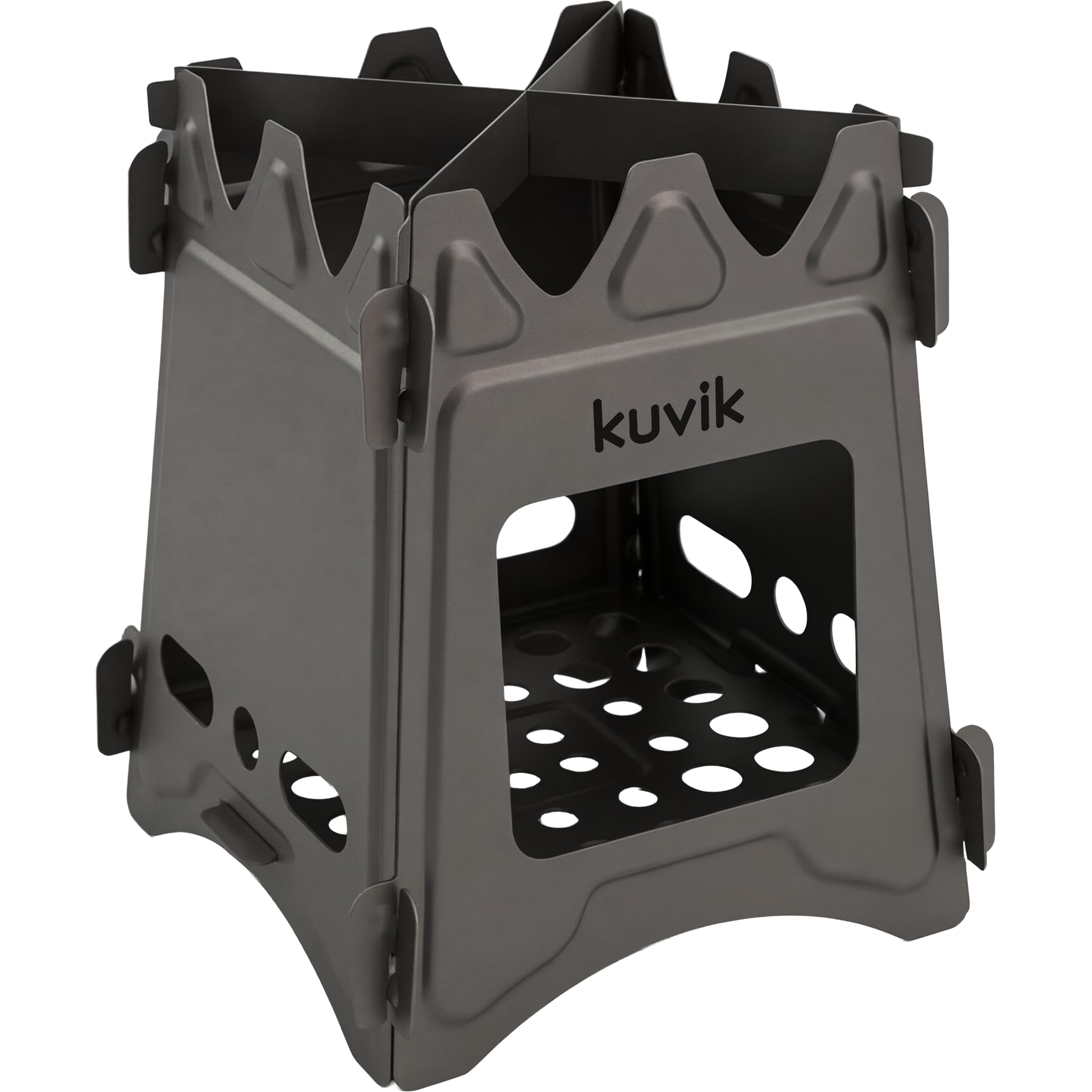


Best for Budget Backpackers
Ohuhu Wood Burning Stove
Key Features
- Weight: 0.8 lbs
- Material: Stainless steel
- Packed Size: 5.5 x 5.5 x 3.15 in
- Fuel Type: Wood
- Price: $
The Ohuhu wood stove weighs just 13 ounces and packs small enough to slip into a side pocket or emergency kit. Assembly takes seconds — the stainless steel pieces slot together without tools, and feeding twigs through the side opening is intuitive. The flame burns hot once established, boiling a small pot of water in under 10 minutes with dry wood.
The small firebox means you’ll be feeding it every few minutes to maintain a rolling boil, which is standard for stoves this size. Expect some soot on the pot bottom and a bit of smoke during startup, typical of any wood burner. The open design lets in plenty of oxygen, so once the fire is going, it burns fairly clean.
This stove suits backpackers and emergency-kit builders who want a lightweight, no-fuel-required option. Wind can disrupt the flame on an open site, and rounded-bottom cups may wobble on the pot supports — using a small windscreen or flat cookware solves both issues. It’s a good match for budget-conscious hikers and first-timers testing wood burning without a big investment.
The stainless build holds up to regular use, though the thin metal can warp slightly if overheated — a minor tradeoff given the weight savings. At this price, you get a functional cooker that frees you from carrying fuel canisters, as long as you’re comfortable tending a small fire.
Pros
- Weighs only 13 ounces — disappears into any pack.
- Costs a fraction of comparable ultralight stoves without cutting corners on function.
- Sets up in seconds without tools or instructions.
- Stainless steel construction resists rust and handles repeated campfire heat.
Cons
For backpackers who want to try wood burning without a big investment, the Ohuhu delivers portability and performance at a price that leaves room for other gear.
Best for Ultralight Backpackers
Kuvik Titanium Stove
Key Features
- Weight: 6.8 oz
- Material: Grade-1 Titanium
- Packed Size: 0.2 in thick
- Fuel Type: Wood
- Price: $
At 6.8 ounces and collapsing to 0.2 inches flat, the Kuvik is the lightest packable wood stove available. The Grade-1 titanium firebox heats quickly and boils a cup of water in a few minutes with dry sticks, matching the heat output of heavier stoves.
The tradeoff for this weight savings is a firebox that requires tiny sticks and frequent feeding — typical of any small wood stove, but worth noting if you prefer longer burns between tending. The tab-and-slot assembly can be fiddly at first, and the thin titanium edges are sharp enough to warrant careful handling.
Best for ultralight backpackers and thru-hikers who count every gram and are willing to accept a steeper learning curve and constant fire-tending. Not suited for car campers or anyone wanting a stable platform for heavy cookware — the top pick (Ohuhu) is a better fit for those priorities.
Pros
- At 6.8 ounces, it’s one of the lightest wood stoves you can buy.
- Collapses to 0.2 inches thick, slipping into a pack pocket without bulk.
- Puts out enough heat to boil water quickly with dry kindling.
Cons
- Tab-and-slot assembly can be tricky to align without practice.
- Thin titanium may have sharp edges that require careful handling.
For gram-conscious hikers who don’t mind fiddling with assembly and feeding the fire every few minutes, the Kuvik delivers unmatched portability without compromising boil performance.
Best for Solo Backpackers
Solo Stove Lite
Key Features
- Weight: 9 oz
- Material: Stainless steel
- Packed Size: 4.25 x 4.25 x 3.8 in
- Fuel Type: Wood
- Price: $$
At 9 ounces with a double-wall stainless steel build, the Solo Stove Lite is one of the lightest gasifying stoves available. Its secondary combustion process produces noticeably less smoke than a basic open fire once the stove is hot, making it a cleaner option for weight-conscious backpackers.
The trade-off for that weight savings is a small firebox that needs frequent refueling with finger-sized twigs. Startup smoke is noticeable until the secondary burn kicks in, especially in wind. The payoff is a compact stove that burns free fuel and leaves no canisters to carry out.
This stove fits best with solo ultralight backpackers and thru-hikers who don’t mind staying close to the fire and gathering fuel along the trail. Anyone wanting a set-and-forget cooking experience will find the constant attention required a deal-breaker. It suits minimalists and survival kit builders more than group campers.
Pros
- Ultralight 9 oz build suits backpackers counting every gram
- Double-wall gasification design burns wood with low smoke
- Uses twigs and leaves as fuel, eliminating canister dependency
Cons
- Startup smoke can be significant until secondary combustion begins, particularly in breezy conditions
- Small firebox demands feeding with tiny sticks every few minutes during cooking
If you prioritize pack weight and clean combustion over convenience, the Solo Stove Lite is a capable backcountry cooking tool. Just plan to stay busy feeding it.
Best for Groups of 2-4
Solo Stove Campfire
Key Features
- Weight: 2.2 lbs
- Material: Stainless steel
- Packed Size: 7 x 7 x 6.7 in
- Fuel Type: Wood
- Price: $$
Boils 34 oz in 2-4 minutes and provides warmth for 2-4 people. Unlike lighter Solo Stove models, the Campfire prioritizes cooking volume and firebox size over portability. The stainless steel construction handles repeated use, and the double-wall design accelerates combustion for a cleaner burn. However, the 2.2 lb weight and 7-inch packed size make it impractical for backpacking.
This stove suits car campers and small groups who want a contained fire experience without liquid fuel canisters. The ability to cook meals and then enjoy the ambiance of a campfire adds value beyond just boiling water. But the tradeoff is clear: at 2.2 lbs, it’s not for anyone hiking more than a short distance from the car. For those who carry their stove, a lighter model like the Solo Stove Lite is a better match.
Pros
- Boils 34 oz of water in 2-4 minutes for quick meal prep.
- Stout stainless steel build holds up to repeated use and rough handling.
- Functions as both a cooking stove and a contained campfire for ambiance.
Cons
- At 2.2 lbs, it’s heavier than backpacking stoves — better suited for car camping or short hikes.
- Burns through fuel quickly, requiring frequent feeding to maintain cooking temperature.
For car campers who want a fast boil and a contained fire without buying fuel canisters, the Solo Stove Campfire delivers. Just don’t expect to pack it far from the vehicle.
Best for Tech Enthusiasts
BioLite CampStove 2+
Key Features
- Weight: 2.06 lbs
- Material: Metal
- Packed Size: Water-bottle shape
- Fuel Type: Wood
- Price: $$$
The BioLite CampStove 2+ stands apart from other wood stoves with its built-in thermoelectric generator, which produces enough electricity from the fire to charge a phone or small device. It also boils a liter of water in about 4.5 minutes, aided by a battery-powered fan that lets you adjust airflow and burn temperature. The whole unit packs into a water-bottle-shaped cylinder that fits easily in a car camping kit or emergency bag.
This stove is built for tech enthusiasts who enjoy the novelty of generating power from twigs while cooking, and for preppers who want a bonus charging source without bringing extra fuel canisters. It is not for ultralight backpackers — at 2.06 pounds, it’s heavy for its size — nor for anyone who needs guaranteed phone charging without fiddling. The USB output depends on keeping a hot, sustained fire, and performance can vary between units.
The added electronics and fan do bring complexity: the stove is heavier than similarly sized wood burners, and there have been reports of switches becoming unresponsive or the charging port malfunctioning over time. When the charging feature works as intended, it’s a handy backup, but it’s best treated as a bonus rather than a primary power source. For campers who prioritize simplicity and low weight, a basic wood stove is a better fit.
Pros
- Generates USB power from campfire heat for phone charging
- Compact water-bottle shape packs easily for car camping or emergencies
- Controllable fan delivers hot, clean burns with adjustable flame intensity
Cons
- In scenarios where reliable device charging is critical, the USB output can be inconsistent between units
- At over 2 pounds, this stove is heavier than other wood stoves — best for car camping, not backpacking
- Electronics reliability: switches or charging ports may stop functioning after some use
If you want a stove that doubles as a USB charger and are willing to accept the added weight and occasional quirks, the BioLite CampStove 2+ delivers a genuinely unique experience.
Best for Car Campers
REDCAMP Foldable Stove
Key Features
- Weight: 5.5 lbs
- Material: 430 stainless steel
- Packed Size: 10.6 x 7.8 x 1.5 in
- Fuel Type: Wood
- Price: $$
The REDCAMP camping stove folds flat to 1.5 inches and supports full-size cast iron pans, a combination the top pick cannot match due to its lighter construction. Its 5.5-pound weight and 430 stainless steel build trade portability for stability, making this a solid base-camp tool rather than a backpacking companion.
Assembly is straightforward: the flat sheet snaps into a rigid firebox within seconds. The included storage bag keeps everything tidy in the car, and the 304 stainless steel grill net resists rust better than basic models. The 2600-watt output heats quickly, though feeding the fire requires attention typical of wood stoves.
This stove suits car campers and RV owners who want a large cooking surface without fuel canisters. The weight makes it impractical for backpacking, and some units may have sharp edges that need filing before first use. For those who drive to camp and cook with heavy pots, it delivers a stable, low-cost alternative to gas stoves.
Pros
- Priced competitively for its size and capability
- Sturdy platform supports full-size cast iron cookware
- Folds flat to 1.5 inches for easy storage in car or pack
Cons
- Sharp edges may be present on some units and require sanding before use
- At 5.5 lbs, too heavy for backpacking trips — suited for car camping or short carries
For car campers who need a large, stable cooking surface that folds flat, this stove delivers at a reasonable price — just keep it out of your backpack.
Best for Car Camping
StarBlue Rocket Stove

Key Features
- Weight: 14 lbs
- Material: Low-carbon steel
- Packed Size: 15.35 x 7.87 x 15.35 in
- Fuel Type: Wood
- Price: $$
The StarBlue Rocket Stove brings a heavy-duty build with thick low-carbon steel and precise welds that deliver a consistent draft for quick boiling — water can be ready in about five minutes from small twigs. Its large firebox accepts substantial logs, reducing feeding frequency compared to smaller stoves. However, the 14-pound weight places this firmly in car camping or tailgating territory; backpackers or hikers will find it impractical for carrying. The paint may release a mild odor during the first burns, but this fades after initial use.
Pros
- Heavy-duty steel construction holds up to years of car camping and tailgating without warping.
- Efficient rocket design uses small twigs to boil water in about five minutes.
- Quality welds and finish make assembly and cleaning straightforward.
Cons
- Paint may release a slight odor during the first few burns, which dissipates after use.
- Very heavy at 14 pounds — not suitable for carrying anywhere beyond the car to the campsite.
Best for car campers and tailgaters who value durability over portability. Hikers and backpackers should choose a lighter option.
Best for Car Camping
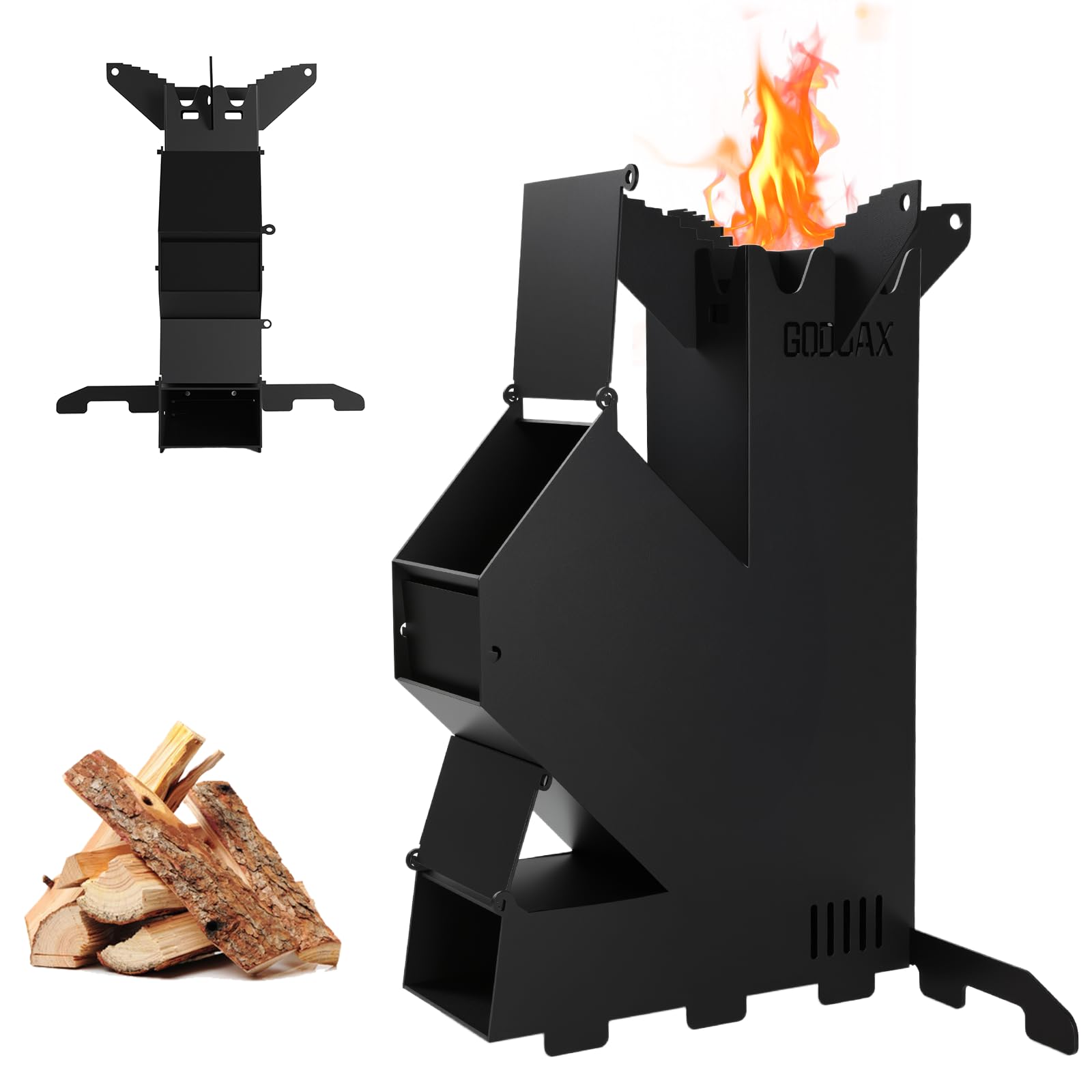
GODSAX Rocket Stove
Key Features
- Weight: 5.62 lbs
- Material: Q235 steel
- Packed Size: 8 x 3.34 x 13.1 in
- Fuel Type: Wood
- Price: $$
This rocket stove provides a sturdy steel build with efficient airflow control that boils water quickly using minimal twigs. It arrives with a storage bag, heat-resistant gloves, and a small shovel — a complete kit for setting up at a campsite or in the backyard. The weight (5.62 lbs) is reasonable for car camping but rules out any hike beyond a short carry from the vehicle. Compared to similarly priced stoves, it is not the lightest option; lighter models exist for those focused on pack weight. An initial paint odor may be noticeable during the first few burns, though it fades after the coating cures.
Pros
- Sturdy Q235 steel construction with heat-resistant coating feels built to last.
- Rocket design with adjustable airflow burns efficiently, requiring little fuel.
- Includes storage bag, gloves, and shovel — no need to buy extras separately.
Cons
- At 5.62 lbs the stove is heavy for its compact size; not suited for backpacking.
- Paint coating may release a noticeable odor during the first few burns.
Best for car campers or emergency kits who want a complete set without extra purchases — not the right pick if you need to carry it more than a hundred yards.
Best for Emergency Kits
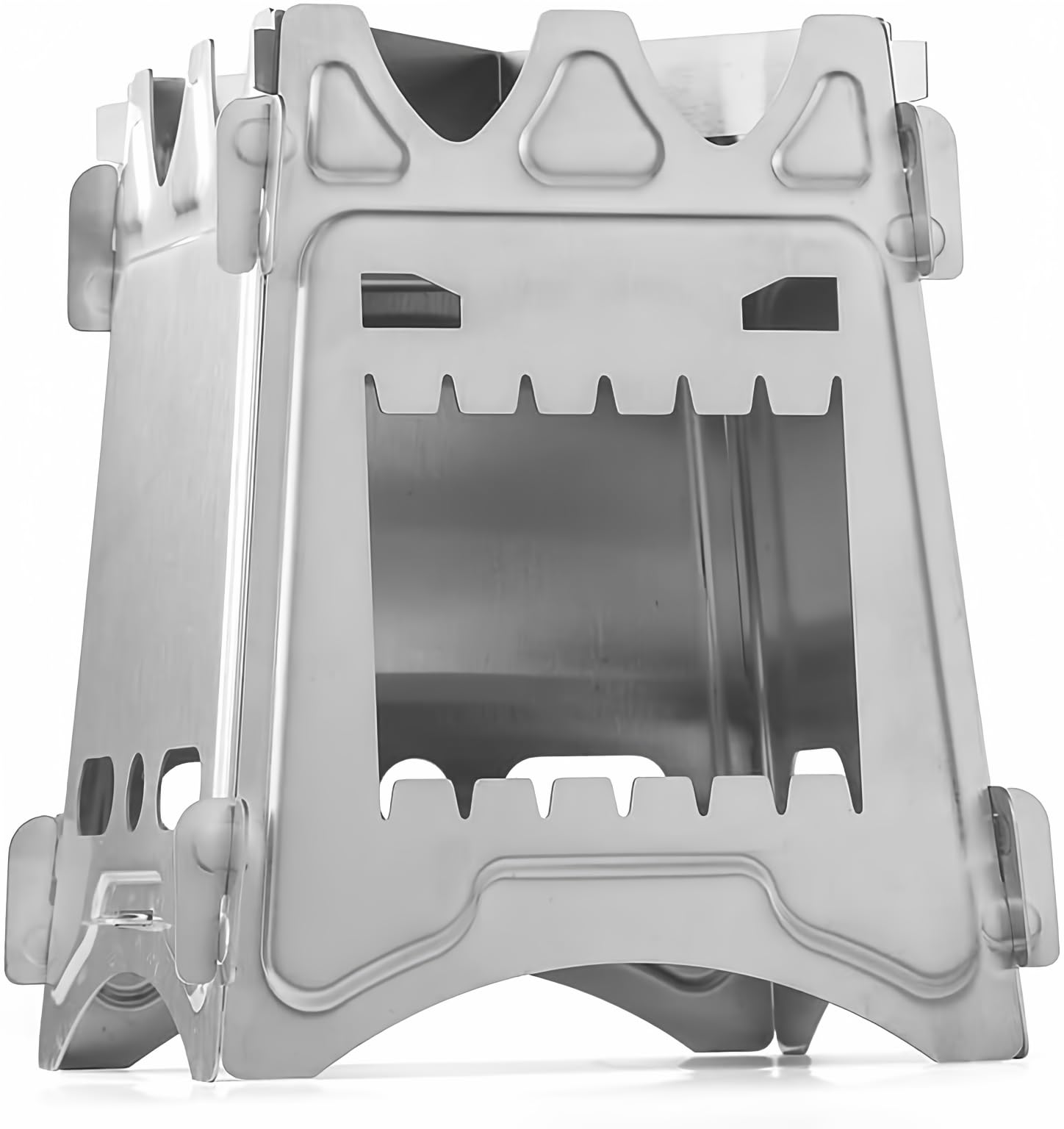
Hovico Folding Stove
Key Features
- Material: Stainless steel
- Packed Size: Flat 4.9 x 4.9 x 0.2 in
- Fuel Type: Wood
- Price: $
This folding stove costs under $16 and packs down to nearly nothing, making it a natural fit for emergency kits or car glove boxes. The stainless steel body accepts small twigs and boils water efficiently for its size. However, the metal edges can be sharp during assembly, and the total weight hovers around one pound — heavier than its thin profile suggests. Build quality is basic, so this is best kept as a backup rather than a daily-use camp stove.
Pros
- Folds flat to 0.2 inches for easy storage in kits.
- Accepts small twigs and boils water efficiently.
- Costs under $16, making it one of the cheapest wood stoves available.
Cons
- Sharp edges on the cut metal require careful handling during assembly.
- At about one pound, the stove is heavier than its thin profile suggests — more suited to car kits than backpacking.
This stove works as an inexpensive backup for car emergency kits where weight and sharp edges aren’t dealbreakers, but it’s not built for regular backpacking use.
Best for Backpackers
Solo Stove Titan

Key Features
- Weight: 16.5 oz
- Material: Stainless steel
- Packed Size: 5.1 x 5.1 x 5.6 in
- Fuel Type: Wood
- Price: $$
The Solo Stove Titan pairs a robust stainless steel construction with a compact form that fits inside compatible Solo pots, making it a tidy option for backpackers who prefer a standalone stove rather than a full pot set. Its secondary combustion reduces smoke once the firebox is hot, and the build quality holds up well to repeated use.
The Titan is outclassed on weight by the Solo Stove Lite (lighter) and on boil speed by the Campfire model. It also requires frequent feeding of small sticks to maintain heat, and the initial startup can be smoky until the stove reaches temperature. These tradeoffs are manageable for campers who prioritize a mid-weight, packable design and don’t mind tending the fire.
Pros
- Sturdy stainless steel build that withstands regular camp use
- Packs small and nests inside Solo pots for tidy transport
- Secondary combustion cuts down smoke once the stove is hot
Cons
- Needs constant feeding of small sticks to keep the fire going
- Startup produces noticeable smoke until the stove reaches operating temperature
Best for backpackers who want a standalone Solo Stove without investing in the full pot set and are comfortable with a mid-weight stove that demands frequent feeding.
Best for Group Car Camping
Solo Stove Campfire Kit

Key Features
- Weight: 5.75 lbs total
- Material: Stainless steel
- Fuel Type: Wood
- Price: $$$
This kit bundles the Campfire stove with two nesting pots and stuff sacks, creating a self-contained cooking system for group car camping. The stainless steel stove puts out intense heat, boiling 34 oz in 2-4 minutes, and the pots fit neatly inside the stove body for transport. However, the total weight of 5.75 lbs and premium price mean this is best for families who value one-box convenience over portability and budget. For most campers, buying the base Campfire stove separately and adding your own cookware offers more flexibility at a lower cost.
Pros
- Stove, two pots, and stuff sacks nest into one compact unit for storage and transport.
- Produces enough heat to boil water quickly and cook for 4 or more people.
- Stainless steel construction with a sturdy, well-finished build.
Cons
- At 5.75 lbs total, this kit is too heavy for backpacking and best suited for car camping.
- Premium price compared to buying a stove and separate pots — the convenience comes at a cost.
This kit works well for families who drive to a campsite and want a complete cooking setup without piecing components together. If you need a lighter or more budget-friendly option, a separate stove and pot set is a better direction.
Best for Tailgating
ONLYFIRE 3-in-1

Key Features
- Weight: 33.7 lbs
- Material: Iron and steel
- Packed Size: 14 x 11 x 14 in
- Fuel Type: Wood
- Price: $$$
This rocket stove combines a grill, griddle, and pot support into a single heavy-duty unit built from iron and steel. The 14.5-inch cooking grate and 18-inch cast iron griddle offer generous cooking space, and the rocket design concentrates heat efficiently for hot fires with good containment.
At 33.7 lbs, this is a stationary cook station for tailgating, patios, or RV campsites where you drive right up to the cooking spot. It is not a portable camping stove for hiking or backpacking — extreme weight makes it unsuitable for carrying beyond a short distance. Some units have arrived with missing foot screws, so inspect the hardware on delivery.
Pros
- Three cooking modes (grill, griddle, pot support) from a single unit with no additional parts to pack.
- Heavy-gauge iron and steel construction stands up to years of outdoor cooking without wobbling.
- Rocket-style firebox contains flames and burns efficiently with minimal smoke once up to temperature.
Cons
- Extremely heavy (33.7 lbs) — only suitable for vehicle-based camping or stationary use on a patio.
- Feet screws occasionally missing from the package; inspect upon arrival and contact seller for replacements.
Best for tailgaters and RV campers who want a solid cook surface and don’t need to move the stove more than a few feet — skip this if you need a portable camping stove for hiking or backpacking.
Best for Car Campers
Lineslife Cast Iron Stove

Key Features
- Weight: 7 lbs
- Material: Cast iron
- Packed Size: 9.4 x 9.4 x 4 in
- Fuel Type: Wood
- Price: $$
The Lineslife Cast Iron Stove delivers a hefty cast iron build and a spacious firebox for extended burn sessions, but the 7 lb weight anchors it to car camping or semi-permanent setups. Performance claims like the 40-60 minute burn time come from the manufacturer; no independent customer feedback is available to confirm real-world behavior. This stove fits car campers who want a solid, long-lasting cooking station and are comfortable relying on factory specs over verified user reports.
Pros
- Heavy-duty cast iron construction for long-term durability
- Large combustion chamber supports longer burn times per load
- Adjustable pot holders and foldable legs improve stability on uneven ground
Cons
- At 7 lbs, the stove is too heavy for backpacking or long hikes
- No independent customer reports to validate manufacturer performance claims
A durable cast iron stove that works well for car campers who value sturdiness over weight and don’t mind trusting manufacturer specs without user confirmation.
How to Choose
The biggest mistake new wood stove buyers make is underestimating how often you’ll need to feed the fire — a decision that ties directly to weight and material.
Weight: Lightness vs. Burn Time
Weight dictates portability but also the size of the firebox. Lighter stoves (under 1 lb) use thin metal and a small chamber, which means they burn through fuel fast and require constant feeding with tiny sticks. A 9-ounce stove may save grams in your pack but demands attention every few minutes.
Heavier stoves (4 lbs and up) have larger fireboxes that hold more wood and sustain a flame longer without refueling. The trade-off is obvious: you won’t want to carry a 14-pound rocket stove on a multi-day hike. Choose based on how far you’re willing to carry it and how much time you want to spend feeding the fire.
Boil Time: Speed vs. Fuel Consumption
Boil time depends on both the stove’s airflow design and how densely you pack the wood. Rocket-style stoves with a tall chimney create strong draft and can boil a liter in 4-6 minutes, but they consume fuel quickly. Gasification stoves like Solo Stove’s double-wall design take slightly longer (8-10 minutes) but produce less smoke once hot.
Faster boil times are great when you’re hungry, but they come at the cost of more frequent refueling. If you’re cooking a full meal, a stove that boils fast but burns through wood in 10 minutes may leave you scrambling for more fuel mid-cook. Consider the total cooking duration when comparing boil time numbers.
Material: Steel vs. Titanium vs. Cast Iron
Stainless steel is the most common middle ground: durable, decent heat retention, and affordable. Titanium is roughly half the weight of steel for the same strength, but it transfers heat faster — the stove body gets hotter and can scorch nearby surfaces. Cast iron is the heaviest but holds heat longest, making it ideal for simmering after the fire dies down.
The hidden trade-off with titanium is cost: you pay 2-3x more for a weight savings of a few ounces. For most backpackers, the price premium only makes sense if counting every gram for thru-hiking. Cast iron, meanwhile, is strictly for car camping — the weight penalty is too severe for hiking.
Packed Size and Foldability
How a stove packs determines whether it fits inside your pot or hangs off your pack. Foldable models collapse flat (some as thin as 0.2 inches), while can-style stoves like Solo Stove nest inside companion cook pots. The trade-off: flat-fold stoves often have sharp edges and require assembly, while nested cylinders are more stable but bulkier.
For backpacking, the ability to stow the stove inside your cook pot saves space and protects it from dents. For car camping, pack size matters less — a heavier foldable stove that opens up to a large cooking platform can be more practical.
Fuel Type Compatibility
All the stoves here burn wood, but some can also burn charcoal, pinecones, or alcohol pellets. This isn’t a major differentiator unless you plan to use a specific fuel source. The real issue is that wood stoves require dry, thumb-sized sticks — wet or oversized wood won’t ignite or burn efficiently.
If you camp in damp environments or above treeline where wood is scarce, a wood stove may be frustrating. Gas canister stoves still win on convenience in those conditions. The free fuel advantage of wood stoves only pays off where dry fuel is abundant.
FAQ
Why does my wood camp stove produce so much smoke until it gets hot?
Most wood stoves rely on secondary combustion, which requires the stove body to reach a high temperature before gases burn cleanly. Until that point, the fire smolders and produces noticeable smoke. This is normal for all wood stoves — including the popular Solo Stove models. To minimize startup smoke, use very dry, small twigs and build a hot fire quickly.
Can I use a wood burning camp stove inside a tent safely?
No. Wood stoves produce carbon monoxide (CO) even when burning cleanly, and enclosed spaces can build lethal levels within minutes. None of the stoves reviewed here are designed for indoor or tent use. Only use them outdoors in well-ventilated areas away from tent openings.
How often do you need to add wood to a Solo Stove while cooking?
Most Solo Stove models require refueling every 5-10 minutes with small sticks. The Lite and Titan have small fireboxes that burn through fuel quickly — you cannot load a full log and walk away. If you want longer burn times, choose a larger model like the Campfire or consider a rocket-style stove with a bigger chamber.
Is a titanium wood stove worth the extra cost for backpacking?
Titanium stoves like the Kuvik save 5-6 ounces compared to steel alternatives at a similar size. If you’re a gram-conscious thru-hiker, that weight savings can justify the higher price. For casual backpackers or day hikers, a $20 stainless steel stove offers nearly identical performance at a fraction of the cost.