This post contains affiliate links. We may earn a small commission when you buy through our links — at no extra cost to you.
A winter glove usually asks you to pick a side: warm hands or working hands. The thickest pair in my drawer gets me through a 20-degree morning, then leaves me fumbling with a zipper and pulling a glove off at the crosswalk just to answer a text. The right pair splits that difference — warm enough for real cold, thin enough to grip a steering wheel, and cut for an actual woman’s hand instead of a shrunken version of a man’s.
Over one winter I wore 15 pairs for everything a glove actually gets asked to do, from 6 a.m. dog walks to scraping ice off a windshield and two weekends in the mountains. Fit turned out to matter more than fill weight: a glove that’s too snug presses the insulation flat and cuts off circulation, so the size chart deserves a real look before you buy. And touchscreen compatibility often means one conductive fingertip that may or may not register a text. The pairs below are the ones I kept reaching for when the forecast looked genuinely bad.


Best for Cold-Weather Hiking
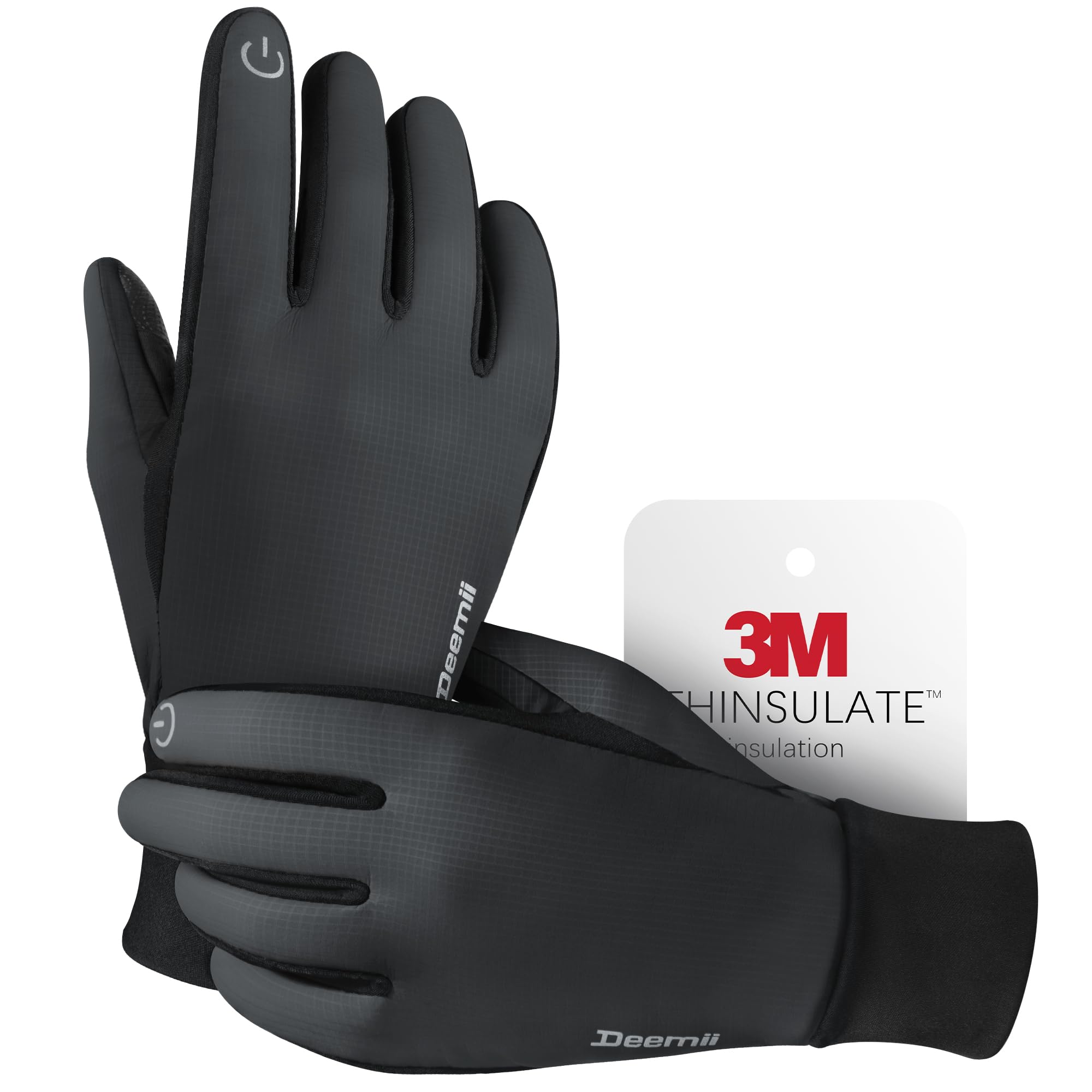
Deemii 3M Thinsulate Gloves
Key Features
- Sizes: S–XXL
- Insulation: 3M Thinsulate C40
- Touchscreen: Thumb and index fingertips
- Weather resistance: Water- and wind-resistant
- Price: Midrange
The specification that settles this one is buried in the bullet list rather than the photos: 3M Thinsulate C40. That is a real synthetic insulation, the kind that goes inside a jacket, not the brushed polyester that gets called thermal on a knit glove. Paired with a shell the listing describes as water- and wind-resistant, the Deemii is the glove in this group that treats warmth as the job rather than a side effect. The listed weight is 0.13 kg in a size Large, light enough to vanish into a jacket pocket.
What keeps it on top is how little you give up for that warmth. The glove stays slim enough to work a pack buckle, hold a pole or unzip a chest pocket, and the touchscreen PU covers the thumb and index finger — the two you actually use — instead of being smeared across a fingertip and hoped for. We noticed the palm grip on a wet handrail more than we expected to; it is the sort of detail that makes a glove feel thought through rather than assembled.
Fit is the thing to get right. The run is small across the range, so if you measure between a medium and a large, take the large, and check the size chart against a tape measure rather than your usual letter. Long-fingered hands should look closely at that chart too, because a glove that pulls tight across the knuckles will feel colder than it should no matter how good the insulation is.
It is also unmistakably a technical glove. Nobody will mistake it for something to wear with a wool coat, which is exactly where the isotoner comes in — and on a cold, windy walk where you still want to use your hands at the end of it, this pair has no real competition here.
Pros
- Genuine 3M Thinsulate C40 insulation
- Wind- and water-resistant shell for exposed walks
- Touchscreen pads on thumb and index fingertips
- Sizes S–XXL rather than one size
Cons
- Water-resistant, not waterproof
- Hand wash only, no machine cycle
We recommend this pair for cold-weather hiking and daily winter wear: genuine Thinsulate C40 insulation, a wind-resistant shell and touchscreen pads that sit where your fingers do.
Best for Everyday Town Wear
isotoner Stretch Fleece Gloves
Key Features
- Sizes: One size
- Lining: Microluxe
- Material: Stretch fleece
- Touchscreen: Smart Touch fingertips
- Price: Premium
Where the Deemii is built for a trail, the isotoner is built for a coat. The stretch fleece outer and Microluxe lining make the warmest thin combination in this group — a close-fitting glove that holds heat like something far bulkier and slides under a jacket cuff without a fight. We expected something this smooth to feel cold and slippery on the hand, and it does not.
The single size is the catch. One size means no size up, and the glove is cut for small-to-medium hands with shorter fingers — precisely right if that is your hand, and a dead end if it is not. Measure around your knuckles before ordering; if you land at the top of what the sizing allows, this is not the pair to gamble on.
What we appreciate most is the cuff. It sits snug at the wrist, which is what keeps warm air in and stops the glove riding up under a sleeve — a small piece of design that does more for a cold morning than another millimeter of fleece would.
Pros
- Warmest thin glove in this group
- Soft Microluxe lining, no scratch
- Sleek enough for a coat and a commute
Cons
- Touchscreen pads register inconsistently
We put these on with a coat, not a shell: the warmest thin glove here, with a soft lining and a sleek shape that disappears under a sleeve.
Best for Mild Winter Days
REACH STAR 2-Pair Knit Gloves
Key Features
- Lining: Thermal knit
- Pack size: 2 pairs
- Touchscreen: Fingertips
- Price: Midrange
Two pairs, two colors, one purchase: the REACH STAR pack is what we hand someone who wants a decent winter glove without turning it into a project. The knit is a cable weave with a diamond pattern across the back, and the thermal lining makes them warmer than a plain knit of the same weight.
Fit is where they surprise. The fingers run long, which suits anyone who usually finds women’s gloves stopping short of the fingertip, and the knit stretches to sit snug without squeezing across the knuckles. Inside, the lining is genuinely soft — no scratch, no seam ridge running across the palm.
The honest ceiling is temperature. These are a mild-winter glove: a cold car, a school run, a walk in the forties, and they are the best value in this group for that job. Below freezing and out for an hour, you want the Deemii instead, because no amount of soft lining turns a knit into insulation.
They are also the pair here that dresses up most easily for the money — the embroidered back reads intentional rather than sporty, so they pass with a proper coat in a way that a technical glove never quite does.
Pros
- Two pairs in two colors
- Long fingers and a stretchy fit
- Soft, non-scratchy thermal lining
- Dressier cable knit than the price suggests
Cons
- Touchscreen pads register inconsistently
We recommend the two-pack if your winter is commuting, errands and chilly morning walks: soft, long-fingered and dressier than the price suggests.
Best for Budget Commuting
TRENDOUX Knit Touchscreen Gloves
Key Features
- Palm: Grip dots
- Weight: 2.82 oz
- Material: Knit
- Touchscreen: Fingertips
- Price: Budget
The grip dots on the palm are why we keep a pair of these by the door. On a steering wheel, a leash or a bag handle they stop the slip that makes thin knit gloves quietly annoying, and they do it without a rubbery panel you can feel through the glove.
This is the cheapest glove here, and the one we recommend when someone wants a knit they will not mourn if it goes missing. Warmth is enough for a cold commute, a school pickup or a walk where you are moving; it is a knit, not an insulated glove, and sitting still on a frozen bench is not its job. The knit itself is a pleasant surprise — fine and dense rather than loose and scratchy.
Sizing runs small, so go up if you are between sizes and check the chart if your hands are on the wide side. A tight knit feels colder than a loose one, and there is not enough stretch here to make up the difference for you.
Pros
- Palm grip dots for wheels and leashes
- Cheapest glove in this roundup
- Dense, soft knit rather than scratchy
- Warm enough while you are moving
Cons
- Touchscreen taps only land some of the time
Our budget knit pick: soft, grippy and warm enough whenever you are moving, with a price that makes a spare pair in the car easy.
Best for Running and Hiking
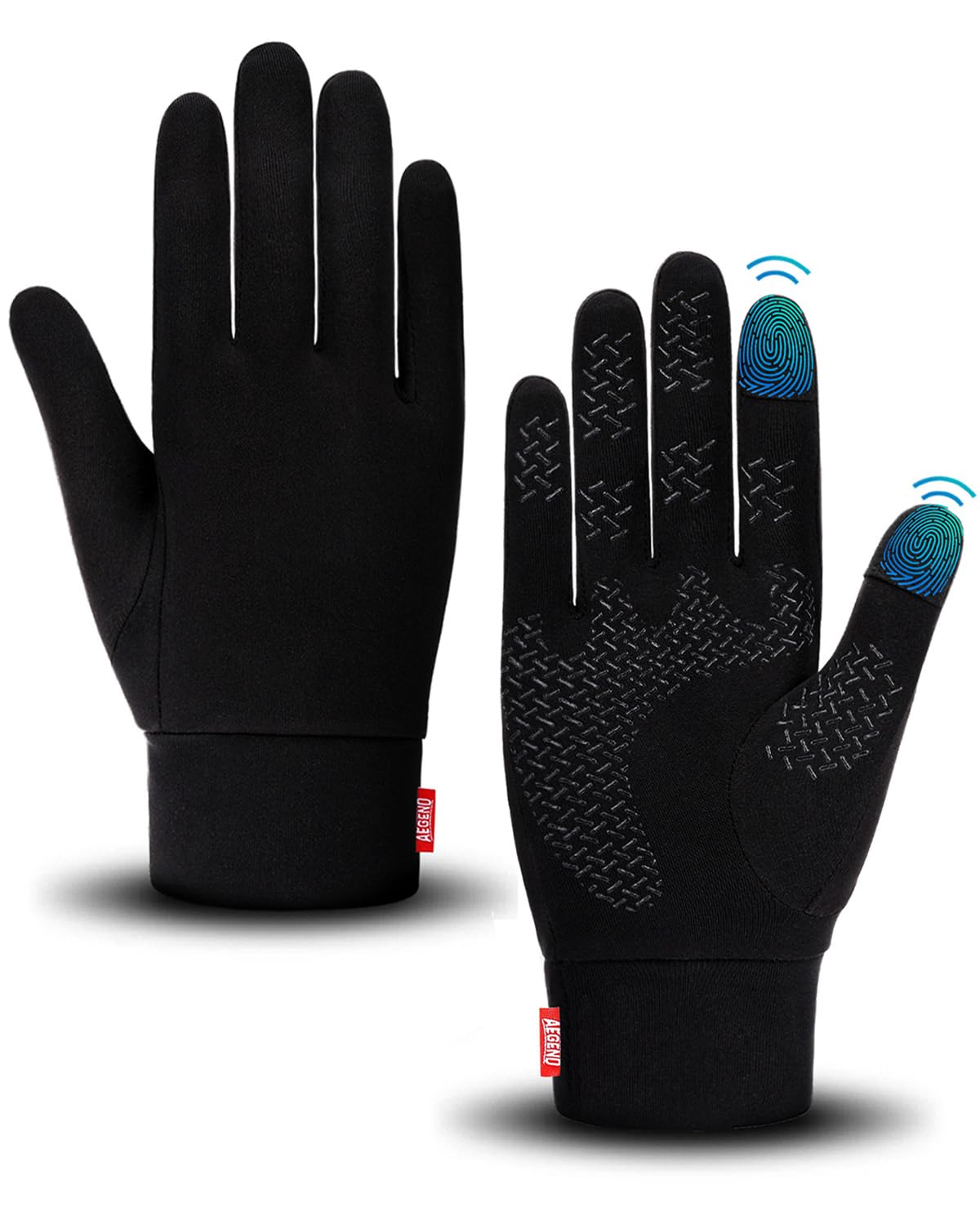
Aegend Lightweight Running Gloves
Key Features
- Cuff: Elastic
- Palm: Non-slip
- Material: Lightweight knit
- Touchscreen: Both gloves
- Price: Budget
If you run, ride or hike hard through winter, you already know the problem: a glove warm enough to stand around in is a glove you will sweat through by the second mile. The Aegend is built for the other side of that trade — a light knit with a non-slip palm and an elastic cuff, and it is the pair here we reach for when the effort itself is going to keep our hands warm.
What that buys you is dexterity. You can dig a gel out of a pocket, check a phone or grip a pole without peeling anything off, and the cuff sits close enough to a jacket sleeve that wind does not whistle up your wrist. Worn as a liner under a shell mitten, they push well past what they manage on their own.
Touch is the variable. The conductive pads are on both gloves and are good enough for skipping a track or checking a route, but sensitivity is inconsistent, so test them against your own phone before you rely on them for navigation in gloves. For a glove this light, that is a fair trade.
Pros
- Light and dexterous on the move
- Non-slip palm for poles and phones
- Touchscreen pads on both gloves
- Works as a liner under shells
Cons
- Little warmth once you stop moving
- Thumb seams can come apart
Our pick for cold runs and fast hikes: light, grippy and touchscreen-friendly, as long as you are moving and the day is above freezing.
Best for Layering and Spares
SILEDGN 6-Pair Knit Gloves

Key Features
- Material: Stretch knit
- Pack size: 6 pairs
- Department: Women and men
- Price: Budget
Six pairs in one pack is the cheapest route here to never being caught without a glove, and these are not pretending to be the pair you wear on their own in January. They are thin knit, unlined, and the job they do best is the one nobody photographs: layering under a waterproof shell when the weather turns on a hike.
The stretch is what makes that work. They pull over the hand without a fight, fit a wider range of hands than a sized glove, and the wrist elastic is gentle enough to wear all day without leaving a mark. On their own they take the edge off a cool morning; below freezing they are a liner, and a thin one.
The case for the pack is less about any single pair than about always having one within reach. Keep a pair in the car, a pair in the daypack and a pair in the coat you grab most, and six disappear faster than you expect. Just do not buy them expecting the warmth of the Deemii — these are one layer of a glove system, not the system.
Pros
- Six pairs in a single pack
- Stretchy knit fits a range of hands
- Thin enough to layer under shells
Cons
- Fit varies, with some pairs running small
We buy these as liners and spares, not as a winter glove: six stretchy pairs to stash in the car, the pack and every coat you own.
Best for Dressier Outfits
Dsane Lambskin Leather Gloves

Key Features
- Lining: Fleece
- Material: Lambskin leather
- Touchscreen: Fingertips
- Price: Midrange
The leather-look finish is what sells these: supple, soft and far more polished than any knit here, with a fleece lining thin enough that your hand never feels padded. It is the dressy glove in this group that does not ask premium money for the privilege, and it looks more expensive than it is.
Warmth is better than the slim profile suggests. The fleece lining holds heat without turning your palms clammy, which is the usual failure of a lined leather glove, and the cuff runs long enough to close the gap between glove and sleeve — wrist coverage that does as much for a cold walk as another layer of lining would.
Two things to know before you order. The material is the open question: it is soft and pliable from the first wear, but it does not have the grain or the weight of a glove that will age into a patina, so buy it for how it looks now. And the touchscreen pads are hit and miss — some taps go straight through, others need a second or third press, so do not plan on answering a call in the cold.
Where it earns its place is the twenty minutes between a car and a restaurant, or a commute where you want to look pulled together without thinking about your hands. For that it is the best-looking option here after the isotoner, and easier to justify. It is simply not the pair you take up a hill.
Pros
- Dressy leather look at a mid price
- Fleece lining warm without bulk
- Long cuff closes the sleeve gap
- Soft and pliable from the first wear
Cons
- Runs small, so size up
- Strong synthetic smell when new
The dressy option we reach for on town days: a supple leather-look glove with a warm fleece lining, provided you size up and can live with the smell.
How We Tested Women’s Winter Gloves
We started with a long list of about 50 pairs — styles from brands we’ve worn for years, plus ones that kept surfacing in customer reviews — and narrowed it by material (leather, wool blend, fleece, synthetic shell), price, and whether the sizing went past small, medium, and large. That left 15 pairs, which we wore through a full winter of morning dog walks, commutes, errands, and two weekend trips.
Warmth got measured the boring way: we noted the temperature on each outing and how long it took before fingers went numb, ten minutes into a windy walk versus forty on a calm one, and whether hands stayed warm once we were moving. For fit, we measured hand circumference and middle finger length before ordering, then compared the chart to what actually arrived, paying attention to spare room at the fingertips, pressure across the knuckles, and whether a gap at the cuff let wind straight up a sleeve.
Grip was tested on leashes, steering wheels, an ice scraper, and a very full coffee cup, with notes on which palms went slick on a wet handle. For touch sensitivity, we sent texts and dialed numbers with the gloves on, counted the mistyped letters, and recorded whether we had to give up and use a knuckle. Durability meant checking seams, pilling, and whether thumbs wore thin after weeks of daily use. We also judged appearance — slim under a coat sleeve or bulky — against what each pair cost, since an affordable glove that lasts three winters beats a pricier one that splits a seam in February.
How to Choose Women’s Winter Gloves
Warmth is the easiest thing to advertise and the hardest thing to judge from a listing, and the glove that keeps your hands warm on a commute is rarely the one that keeps them warm on a ridge.
Insulation, not thickness
The word thermal on a knit glove usually means a brushed fleece lining: lovely against the skin, worth a few degrees, and nothing like insulation. A material such as the 3M Thinsulate C40 in our top pick does a different job, and it is what you want if you will be standing around in the cold rather than striding through it.
Thick is not the same as warm. A bulky glove that bunches at the fingers leaves cold air against your skin and takes away the dexterity you bought it for. If you already own a waterproof shell you like, a cheap pack of thin knit liners extends it further into winter than replacing it would.
Fit changes how warm a glove feels
Cold hands are often a circulation problem before they are an insulation problem, and a glove that pulls tight across the knuckles restricts exactly the blood flow you need. Size up if you sit between two sizes, and measure around the widest part of your hand rather than trusting the letter on your last pair — sizing runs small on several pairs here.
Long fingers are the other trap. A glove that is long enough in the palm and short in the finger will drag every time you make a fist. The REACH STAR’s longer cut is the reason it suits hands that usually feel pinched at the tips.
What the shell is actually doing
Knit lets wind straight through, and wind is what turns a cold walk into a short one. A water-resistant shell handles road spray, a wet snowflake and a damp branch across the face; it is not a waterproof glove, and a long soaking walk will eventually get through it.
If your winter means real rain or wet snow, buy for a system rather than a single glove: a thin liner under a waterproof shell mitten beats anything with a knit back. For dry cold, wind resistance is the part that matters and water resistance is a bonus.
Touchscreen tips are a bonus, not a reason to buy
Conductive fingertips work through a coating or a woven thread, and only where the pad sits exactly over the fingertip you actually tap with. Bulkier knits push the pad away from the screen, which is why touch performance is inconsistent on nearly every pair here.
Buy for warmth and fit first, then check which fingers carry the pad. Two well-placed fingertips, as on the Deemii, cover almost everything you do with a phone in the cold; a glove that promises all five usually delivers on none of them.
Frequently Asked Questions
How do I wash winter gloves?
Knit gloves go in the machine on a cold, gentle cycle and dry flat — never in the dryer, because heat destroys the stretch. Leather and leather-look gloves get wiped with a damp cloth and air-dried away from a radiator.
Read the care line before the first wash rather than after. Our top pick is hand wash only, so a machine cycle is a risk you don’t need to take with a glove that otherwise does everything.
Are mittens warmer than gloves?
Yes, for a simple reason: fingers share one warm pocket instead of five small ones, and there is less surface area for heat to escape from. If your fingers go numb on slow walks or standing around, a mitten will do more for you than another layer inside a glove.
Keep gloves for anything that needs dexterity — driving, poles, phone, zips — and treat mittens as the cold-weather tool for the days when you are not using your hands.
How many pairs of winter gloves do I need?
Two is the useful number for most people: a weather-resistant pair for wet snow and slush, and a lighter knit for dry cold, driving and errands. That way a soaked glove dries out while you are still dressed for the walk home.
Add a cheap multipack if you are tired of hunting for a single glove in the car, and keep one pair in the pack you carry most so a cold snap does not catch you out.
Final Verdict
Buy the Deemii. Genuine Thinsulate insulation, a shell that cuts wind and light moisture, and touchscreen pads where your fingers actually land make it the pair that covers a cold commute and a frosty ridge in one go, for about the same money as the mid-range knits here. Size up and it will do both jobs.
If your winter is mostly pavements, a warm car and a good coat, the isotoner is warmer and better looking, and worth the premium — as long as the single size fits your hand.