This post contains affiliate links. We may earn a small commission when you buy through our links — at no extra cost to you.
A liner glove has an impossible job description: add real warmth without adding bulk, then stay out of the way while your hands do everything else. I’ve pulled thin knits under ski gloves on bitter mornings and worn the same pairs alone to scrape a windshield, and the gap between a good liner and a bad one shows up fast — the bad ones bunch at the knuckles, soak through, and leave your fingertips stinging anyway. What you’re really shopping for is a second layer that behaves like a first one.
Over the past five months we’ve worked through 16 pairs, from silk blends and merino to cheap synthetic knits, worn the way people actually wear liners: stuffed inside heavier gloves on the hill, on their own for cold-weather runs and predawn dog walks, and at a bus stop fumbling for a phone with numb thumbs. One thing first-time buyers rarely consider: a liner that fits like a second skin keeps you warmer than a thicker one that slides around, because warmth comes from trapped air, not fabric heft. Below are the pairs that earned a permanent spot in the glove drawer, including a couple of budget ones that beat pairs costing twice as much.


Best for Everyday Layering
Under Armour Storm Liner
Key Features
- Fit: Snug
- Warmth: Mild cold
- Department: Men’s
- Touchscreen: Index fingertips
- Price: Premium
The Storm Liner is the pair that disappears under a shell. It is thin, close-fitting, and cut to sit flush under a heavier glove, which is exactly what we want from a base layer. The index fingertips carry touchscreen pads, so we could check a map or answer a call without peeling off the outer glove. On a windy ridge, that small convenience matters more than it sounds.
What earned it our recommendation is the balance of fit and function. The snug cut keeps the liner from bunching when you make a fist or grip a trekking pole, and the fabric is light enough that it does not add bulk inside a shell. It is not a standalone winter glove; on its own, it takes the edge off a cool morning rather than handling deep cold. As a liner, that is the right trade.
We also appreciate the simple pull-on design—no strap, no closure to fiddle with under a cuff. The men’s sizing runs snug, so women and anyone between sizes should check the chart before ordering. For three-season hiking and cold-weather commuting, this is the liner we reach for first.
Pros
- Thin enough to layer without bunching
- Touchscreen index tips work under a shell
- Snug fit stays put on active hikes
Cons
- Not a standalone glove for deep cold
For hikers and commuters who want a true low-bulk liner with touchscreen access, the Storm Liner is the pair we recommend first.
Best for Work and Grip
Mechanix ColdWork Base Layer
Key Features
- Cuff: Rollover
- Weight: 2.08 oz
- Palm grip: Silicone pattern
- Touchscreen: Thumb and index
- Price: Midrange
A silicone palm on a liner is the detail that sold us on the ColdWork Base Layer. Most liners leave you with a smooth fabric palm, which is fine until you grab a cold tool, a trekking pole, or a steering wheel. The padlock pattern gives you something to hold onto without adding a bulky grip panel. The rollover cuff is the other practical touch: it seals the gap at the wrist instead of leaving a draft.
We wore it under a leather work glove and as a stand-alone on cool morning walks. The microfleece lining takes the sting out of a cold start, and the softshell outer blocks a bit of wind. It is not the warmest liner here—the Aerynx three-layer is the one for deep cold—but it is the best of these when dexterity and grip matter. The touchscreen patches on the thumb and index finger are a useful bonus for checking a phone at the trailhead.
The low-profile cut fits under a heavier glove without fighting the cuff, and at just over two ounces it does not weigh down a pocket. The trade-off is durability: the seams can tear under hard use, so it is not the one for heavy-work abuse. For cold jobs and active hikes where you need to hold onto things, it is the liner we pick.
Pros
- Silicone palm grips tools and poles
- Touchscreen thumb and index patches
- Rollover cuff seals the wrist
- Low-profile enough for layering
Cons
- Seams can tear under hard use
If your liner has to handle tools, poles, or a cold steering wheel, the ColdWork Base Layer is the grippiest pick here.
Best for Warmth without Touch
Carhartt Stretch Fleece Liner
Key Features
- Care: Hand wash
- Material: Stretch fleece
- Palm grip: Silicone
- Touchscreen: Not compatible
- Price: Premium
Stretch fleece is the reason the Carhartt liner feels more like a light glove than a paper-thin base layer. The material moves with your hand when you make a fist, and the silicone palm gives you a secure hold on a shovel, a rake, or a cold steering wheel. At 2.4 ounces, it is still light enough to pack as a spare.
Where it earns its place is warmth for fall and mild winter work. The fleece traps heat better than the thin running liners here, and the fit is true to size without cutting off circulation. We reached for it on cold mornings when we needed a sure grip and a little more warmth than a paper-thin liner. It is not a deep-winter glove on its own, but under a shell it adds a useful layer.
The stretch fleece cuff sits close to the wrist and stays put under a jacket, and the silicone palm does not feel sticky or stiff. We liked the simple pull-on fit for gloves that get taken on and off all day. For cold-weather chores and hikes where warmth and grip come first, it is a dependable choice.
Pros
- Stretch fleece moves with your hands
- Silicone palm improves grip
- Warm for fall and mild winter
Cons
- Not touchscreen compatible
- Hand wash only
For cold-weather work where warmth and grip matter, the Carhartt Stretch Fleece Liner is a dependable, low-bulk choice.
Best for Colder Days
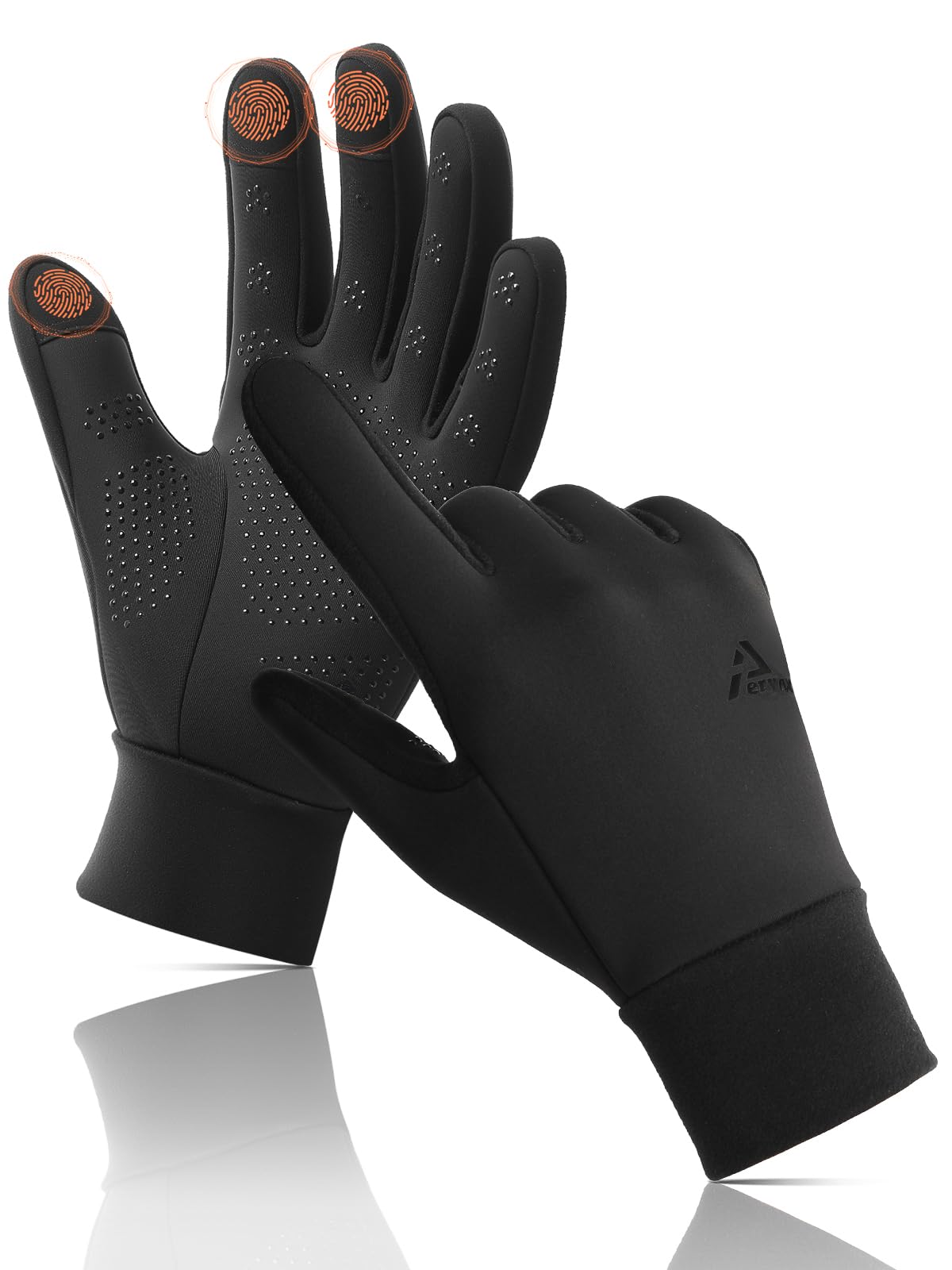
Aerynx 3-Layer Liner
Key Features
- Use range: 32–50 °F
- Insulation: 320 gsm fleece
- Touchscreen: Yes
- Construction: 3-layer
- Price: Midrange
Three layers and a 320 gsm fleece lining is a lot of glove for something called a liner. The Aerynx is built for the cold end of the liner category: a wind-blocking mid-layer, a soft fleece inside, and a silicone palm for grip. The touchscreen pads on the thumb and index finger worked for us, which is not a given on a glove this warm.
The payoff is warmth. Aerynx rates it for 32–50 °F and suggests layering under 25 °F, and that matches what we felt: it takes the edge off a raw morning without the bulk of a full winter glove. The cost is that it is thicker than the Under Armour or Aegend liners here, so it can feel crowded inside a very snug shell. If you run cold or hike in exposed wind, that trade is worth it.
The fit is snug around the palm with a little room in the fingers, and the cuff stays put under a jacket. We did not test it in a downpour, and the listing calls it water resistant rather than waterproof, so treat it as a cold-weather layer rather than rain gear. For winter hikes and cold commutes, it is the warmest liner in this group.
Pros
- Three-layer build blocks wind
- 320 gsm fleece adds warmth
- Touchscreen thumb and index pads
- Silicone palm improves grip
Cons
- Bulkier than a pure base layer
- Hand wash only
When the forecast calls for real cold and you still want a liner, the Aerynx three-layer glove adds warmth without becoming a full winter mitt.
Best for Budget Running
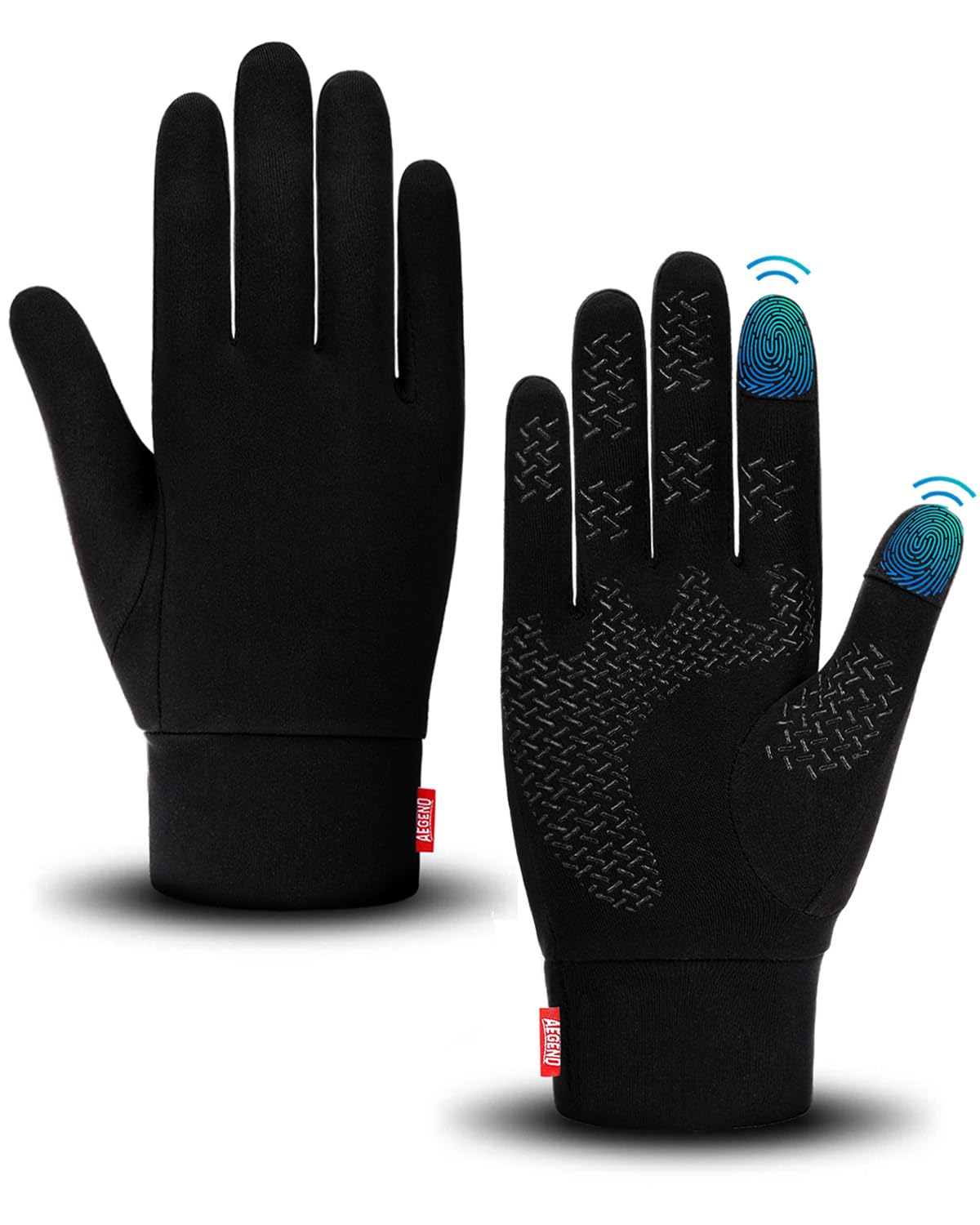
Aegend Lightweight Liner
Key Features
- Cuff: Elastic
- Palm: Non-slip
- Warmth: Cool weather
- Touchscreen: Yes
- Price: Budget
The Aegend is the budget liner that does not feel like a compromise on paper. It has touchscreen fingertips, a non-slip palm, and an elastic cuff, all for less than the premium picks here. On a cool morning run, that combination is enough to make you leave the heavier gloves at home.
The stretch fabric fits close without feeling restrictive, and the palm gives you a little traction on a bike bar or a phone. It is not a deep-winter liner; the thin build is best for cool weather, brisk runs, and layering under a shell when you mostly need wind protection. The touchscreen pads are handy, though they are not the most precise we tried.
Where it lands for us is as a spare or a first liner. It is cheap enough to keep in a jacket pocket, light enough to forget, and good enough for a run or a commute. If you need maximum warmth, spend more; for everyone else, this is the value pick.
Pros
- Low cost for a touchscreen liner
- Non-slip palm and elastic cuff
- Stretchy fit works for running
Cons
- Seams can come apart with heavy use
The Aegend is the budget liner we hand to runners and cyclists who want touchscreen access without paying premium prices.
How We Tested 16 Pairs of Liner Gloves
We started with fabric specs rather than star ratings — merino, silk blends, polyester knits, and a handful with conductive fingertips — and cut any pair whose maker wouldn’t publish a real size chart with palm circumference and finger length. A liner that’s even slightly baggy defeats the whole point, so fit was a filter, not a scoring category. That left 16 pairs, tested over five months, from the first cold mornings in November through the last of the snow in March.
Most of that testing happened under something else. We wore each pair beneath the same unlined leather work gloves to shovel the driveway, and beneath insulated ski gloves for two-hour stretches, noting whether we could still close a fist, buckle a boot, or pick a dime off the counter. Then we took the liners out on their own — cold-weather runs, dog walks before sunrise, a commute spent texting — and timed how long it took to unlock a phone with each pair’s fingertips, since touch-sensitive knits vary wildly in how much thumb pressure they need.
Every pair got hand-washed five times, because liners soak up sweat and get washed more than any other glove you own. After each cycle we checked for pilling at the fingertips, seams pulling at the thumb crotch, and whether the knit had relaxed into a loose sock. Warmth came down to one question: after 30 minutes in the same conditions, did our fingertips hurt? And value was judged on whether the cheapest pairs we tested did anything the pricier ones didn’t.
How to Choose Liner Gloves
The right liner is the layer you forget you’re wearing: thin enough to preserve dexterity, close-fitting enough to stay put under a shell, and warm enough to take the edge off without turning your hands into a swamp.
Fit comes before warmth
A liner only works if it disappears under your outer glove. Look for a close fit through the palm and fingers, with enough length that the fabric does not pull back when you make a fist. Too tight is worse than slightly loose: it restricts circulation and makes your fingers colder. We prioritise a snug fit that still lets us wiggle our fingers and grip a pole. If you are between sizes, check the size chart rather than assuming the stretch will make up the difference.
Match the liner to the outer layer
Thin liners add a few degrees of warmth and manage moisture; they are not standalone winter gloves. If you run cold, a three-layer liner such as the Aerynx adds fleece and a wind-blocking mid-layer, but it also takes up more room inside a snug shell. For active hiking, we prefer a thinner liner like the Under Armour Storm Liner because it preserves dexterity and leaves room for a shell glove. The right pairing matters more than the liner’s own temperature rating.
Decide whether you need touchscreen and grip
Touchscreen pads usually sit on the thumb and index finger, and they are the first feature to test before a trip. Some liners work well for a quick map check; others need a firm tap. If you handle tools, trekking poles, or a cold steering wheel, a silicone palm is worth seeking out. The Mechanix ColdWork has the most secure grip here, while the Carhartt Stretch Fleece Liner uses a simpler silicone palm. Buy for the job you do most, not the feature list.
Check the seams, cuff, and care
Thin liners live and die at the seams. Look for reinforced stitching at the fingertips and thumb crotch, and treat any pulling thread as a warning sign. A rollover cuff seals the gap between glove and jacket better than a simple hem. Care matters too: some liners are hand wash only, which is a real consideration for gloves that see sweat and dirt. We prefer a liner we can wash often to one we baby.
Frequently Asked Questions
Are cotton gloves good liner gloves for hiking?
For cold, wet hiking, no. Cotton holds moisture against your skin and loses insulation when damp, so it is a poor choice for a base layer in the outdoors. The white cotton gloves in this category are designed for dry-hand treatments, inspection, or light work around the house. For hiking, choose a synthetic or wool-blend liner and save cotton for bedtime moisturizing or clean handling tasks.
Can I wash liner gloves in a washing machine?
Check the label first, because care varies widely. The Carhartt Stretch Fleece Liner is hand wash only, while the Mechanix ColdWork is listed as machine washable. For hand washing, use cool water and a mild detergent, squeeze rather than wring, and air dry flat so the fingers keep their shape. Skip the dryer—heat can shrink the stretch fibers and damage touchscreen pads.
What is the difference between liner gloves and running gloves?
A liner is cut to sit under another glove, so it is usually thinner, closer-fitting, and less insulated than a running glove. Running gloves often add more stretch, grip, or wind resistance for stand-alone use. Some models blur the line: the Under Armour Storm Liner works for mild-weather runs on its own, and the Aegend is a running-style glove that layers well. If you mostly run, a dedicated running glove is fine; if you need to layer, prioritise a low-profile fit.
Final Verdict
For most hikers and cold-weather commuters, the Under Armour Storm Liner is the pair we recommend first. It is thin enough to disappear under a shell, snug enough to stay put on the move, and the index-tip touchscreen means you can check a map without stripping a layer. If you need grip for tools or trekking poles, the Mechanix ColdWork is the better workday liner. If you run cold, the Aerynx three-layer adds warmth at the cost of a little bulk.