This post contains affiliate links. We may earn a small commission when you buy through our links — at no extra cost to you.
Most solar power banks sold for camping promise effortless sun charging, but the built-in solar cells on these devices rarely deliver enough current to top off a phone in a single afternoon. In practice, they work best as standard power banks that happen to have a solar panel attached.
For backcountry trips where every ounce matters, a lightweight foldable solar panel paired with a small power bank gives you honest, usable power without the marketing hype. The trade-off is simple: panels need direct sunlight and proper angling, but they convert sun to electricity far more efficiently than any all-in-one unit.
This guide cuts through the noise to focus on the few panels and power banks that actually do what they claim – and helps you match the right tool to your camping style, whether that means ultralight backpacking or basecamp car camping.


Best for Backpacking, Direct Charge
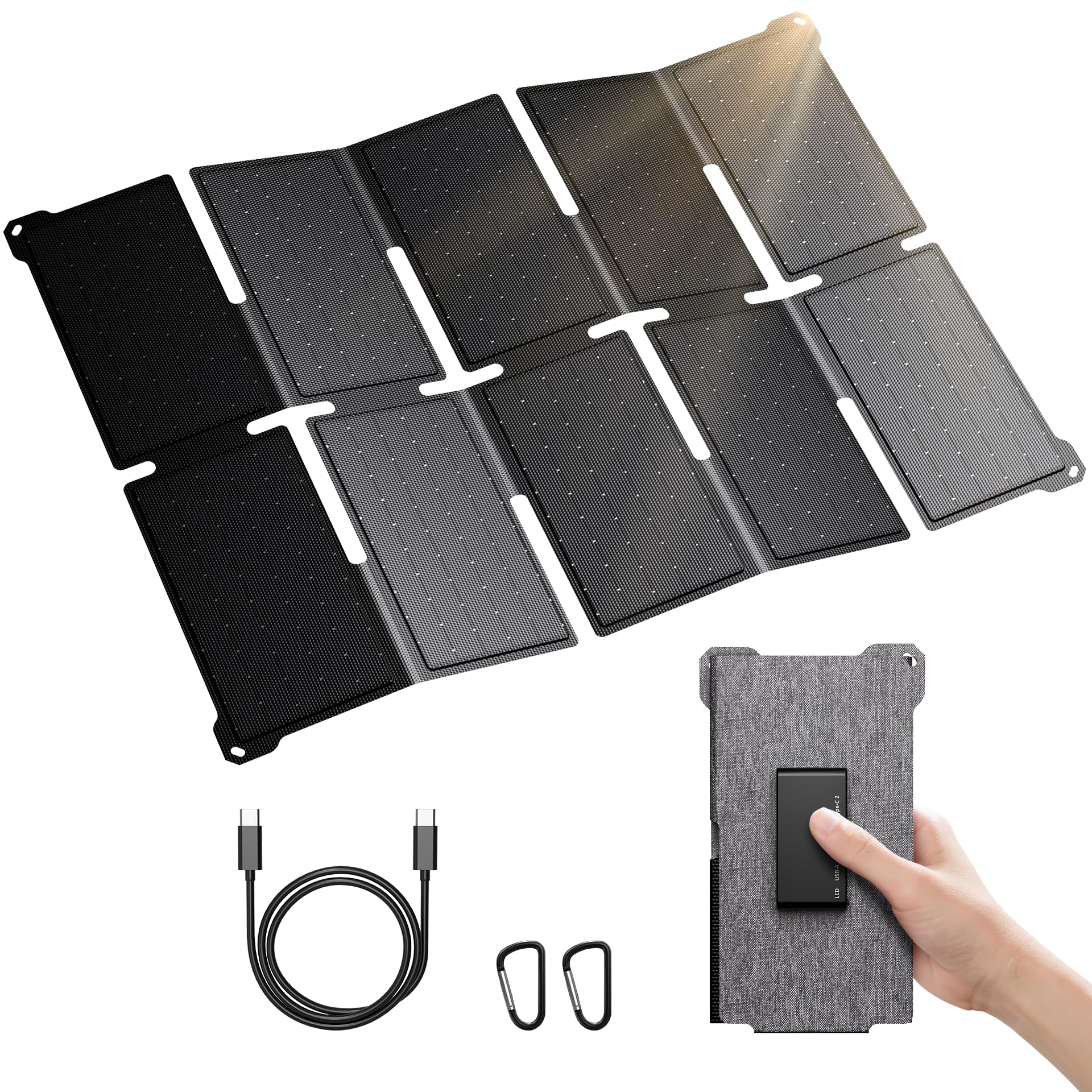
BigBlue 35W Solar Panel
Key Features
- Wattage / Charging Speed: 35W, 25W PD USB-C
- Portability: 1.54 lbs, foldable
- Durability: IP68, dual-circuit
- Ports: USB-C PD, USB-A QC, USB-C data
- Price: Mid-Range
The BigBlue 35W panel delivers 25-30W in partly cloudy conditions, which is rare for a portable solar charger. Its dual-circuit design keeps power flowing when one cell is shaded, so a phone or power bank charges steadily even under tree cover or shifting clouds. The IP68 rating means rain and dust aren’t deal-breakers — the panel itself is waterproof, though the junction box is not.
In real-world use, the USB-A port provides 18W fast charging for most phones, including iPhones, and the USB-C PD port pushes up to 25W for compatible Android devices. Charging a drained iPhone 15 from a USB-A connection takes roughly 1.5 hours in direct sun. When charging two devices simultaneously, the total output can drop and some users report intermittent stuttering — best to charge one device at a time for full speed.
This panel is built for backpackers and campers who need minimal weight without sacrificing charging reliability. At 1.54 lbs, it’s light enough for multi-day hikes and folds small enough to strap to a pack. The tradeoff: the USB-C PD port doesn’t work with Apple devices, so iPhone users must use the USB-A port — which still charges at 18W, about the same speed as the included wall adapter.
Compared to cheaper alternatives like the 40W FlexSolar panel, the BigBlue has fewer reports of USB port failures and maintains output better in partial shade. It’s not the budget option, but for consistent off-grid charging without guesswork, the extra cost buys reliable performance in conditions that would stop other panels entirely.
Pros
- Delivers 25-30W in partly cloudy conditions, charging phones and power banks quickly
- Dual-circuit design keeps power flowing when part of the panel is shaded
- IP68 water resistance handles rain and dust without damage
- Weighs only 1.54 lbs, making it packable for backpacking and hiking
Cons
- USB-C PD port does not work with Apple devices — iPhone users must use the USB-A port
- Charging two devices simultaneously can cause output drops and charging instability
For backpackers and campers who want a solar panel that actually works in shade and rain without adding pounds to their pack, this is the most dependable option at a competitive price.
Best for Budget, Car Camping
FlexSolar 40W Foldable Panel
Key Features
- Wattage / Charging Speed: 40W (real ~30-35W)
- Portability: 1.76 lbs, foldable
- Durability: IP67, rugged
- Ports: USB-C PD, USB-A QC, 19V DC
- Price: Mid-Range
The FlexSolar 40W undercuts most competitors on price while claiming the highest wattage in a portable panel. In practice, it delivers 30-35W under full sun rather than the full 40W — still enough to charge a phone and top off a power bank during a camping trip. The tradeoff is worth it for buyers who prioritize cost over absolute peak output.
This panel suits budget-conscious campers who set up at car camps or basecamps where weight matters less. The foldable design fits a day pack, and the monocrystalline cells hit about 24% efficiency. However, the real-world power output may not satisfy backpackers relying on every watt, and occasional USB port failures have been noted. If you can accept that the number on the box may be aspirational, the FlexSolar offers good value for the price.
Pros
- Packs the highest advertised wattage per dollar among foldable solar panels in its size class.
- Foldable and lightweight enough to carry in a day pack without hassle.
- Sturdy, rugged construction that feels like it can handle campsite conditions.
Cons
- Output can peak at 30-35W rather than the advertised 40W, especially in less than ideal sun.
- USB port failures have been reported in some units, which may limit charging options over time.
For campers on a tight budget who want the most wattage for their dollar and don’t mind a slight shortfall in real-world output, the FlexSolar 40W is a cost-effective option.
Best for Design, Durability
ELECOM NESTOUT 28W Panel
Key Features
- Wattage / Charging Speed: 28W, SunPower cells
- Portability: 1.7 lbs, foldable
- Durability: Water-resistant ripstop
- Ports: Dual USB-A only
- Price: Premium
The ELECOM NESTOUT 28W panel achieves the highest customer satisfaction rating in this comparison, driven by its water-resistant ripstop nylon fabric, clean stitching, and included zippered storage pouch. The SunPower MAXEON cells deliver real-world efficiency that keeps a 15000mAh power bank charging reliably even under partly cloudy skies — a direct result of the panel’s construction and cell quality.
This panel is best suited for campers who prioritize aesthetics, durability, and a compact foldable form over raw value. The 28W output is sufficient for topping off phones and small power banks at basecamp, and the adjustable stands make angling toward the sun straightforward. However, the decision to use only USB-A outputs means anyone with a modern USB-C phone will need an adapter and loses fast-charging capability — a notable gap in 2023.
Compared to the BigBlue 35W top pick, the NESTOUT costs nearly double per watt and lacks USB-C Power Delivery. The premium price is justified by exceptional build quality and a four-panel design that packs neatly into a carry-on. But if your priority is maximum charging speed for a phone or battery pack, the top pick delivers more power at a lower cost with better shade tolerance via its dual-circuit architecture.
Pros
- Premium build with water-resistant fabric and zippered storage pouch.
- SunPower cells maintain solid output even in partly cloudy conditions.
- Folds compactly to fit in a carry-on bag for easy transport.
Cons
- Only USB-A ports — no USB-C for direct modern device charging.
- Premium pricing for a 28W panel compared to similarly rated competitors.
Choose the ELECOM NESTOUT if you value a panel that looks and feels investment-grade and don’t mind carrying a USB-A to USB-C cable. For faster charging and better value, the top pick is the more practical choice.
Best for Car Camping, Families
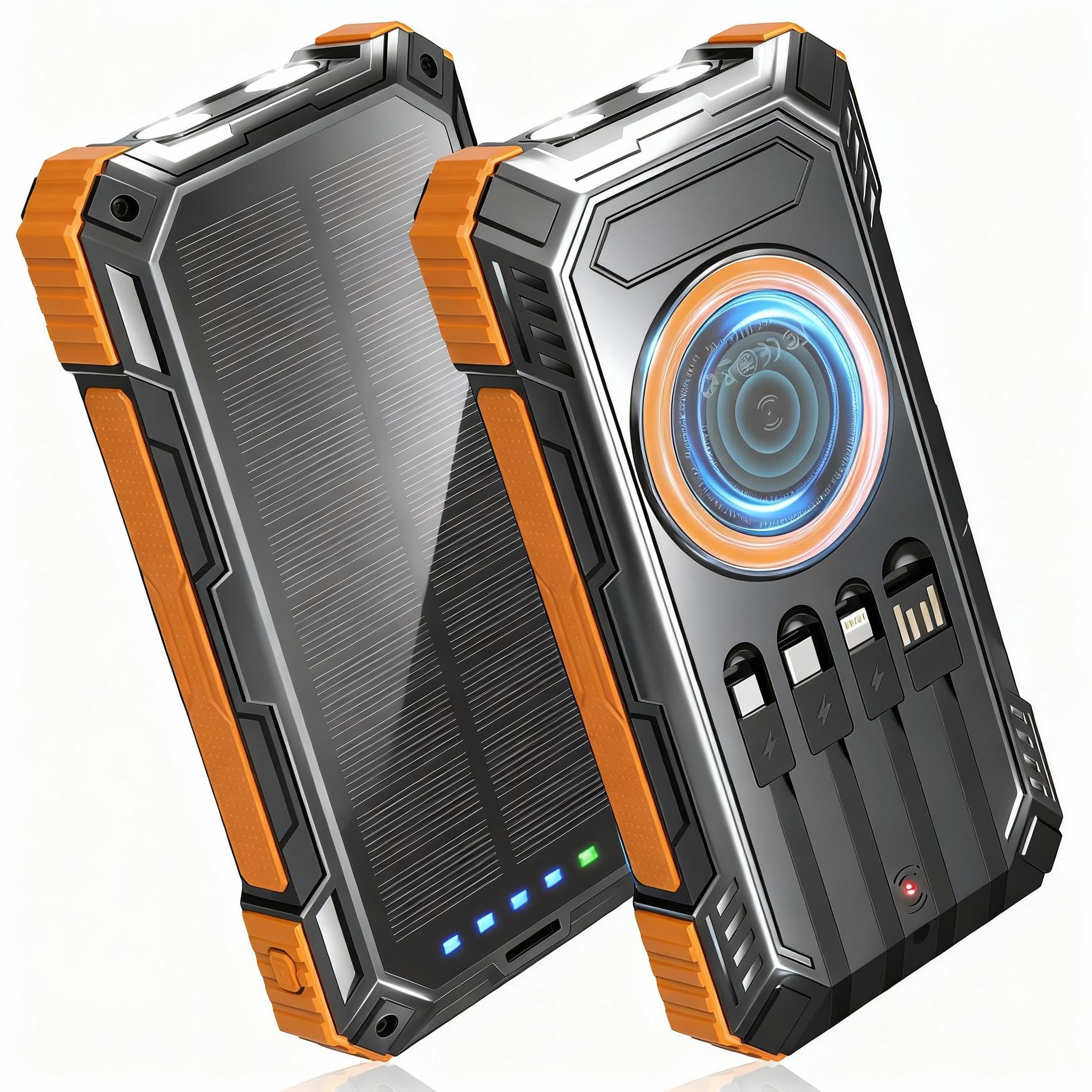
BLASOUL 49,800mAh Solar Bank
Key Features
- Wattage / Charging Speed: 22.5W PD, 15W wireless
- Portability: ~1.5 lbs est
- Durability: Not rated
- Ports: USB-C, USB-A, built-in cables
- Price: Budget
The BLASOUL 49,800mAh solar power bank is one of the few in this category where the solar panel meaningfully contributes to the battery level. Users confirm that leaving it in direct sunlight adds charge throughout the day, making it a functional backup for extended trips. Combined with a 22.5W PD input for wall charging, this bank offers more real off-grid utility than most similarly priced competitors.
This bank is best suited for car camping and basecamp use where weight is less of a concern. The unit is heavy and bulky — estimated around 1.5 pounds — so it is not appropriate for backpacking or ultralight trips. Solar charging is slow and works best as a trickle top-up rather than a primary charging method; expect only a partial phone charge per full day of sun exposure.
The built-in cables (iOS, USB-C, Micro) add convenience by eliminating the need to carry separate cords, though wireless charging tops out at 15W and is noticeably slower than wired. Some units have shown reliability issues after a few months of use, so buying from a retailer with a good return policy is worth considering.
Pros
- Solar panel meaningfully charges the internal battery in sunlight
- High 49,800mAh capacity and solid battery quality
- Excellent value given the functional solar and built-in cables
Cons
- Heavy and bulky — not suitable for backpacking or hiking
- Solar charging is slow; best used as a trickle top-up over many hours
- Reliability can vary between units, with some reporting issues after a few months
For car campers who want a large battery with solar that actually works and appreciate built-in cables, this is a cost-effective choice. Just plan ahead: solar is a slow helper, not a fast charger.
Best for Emergency, Preppers
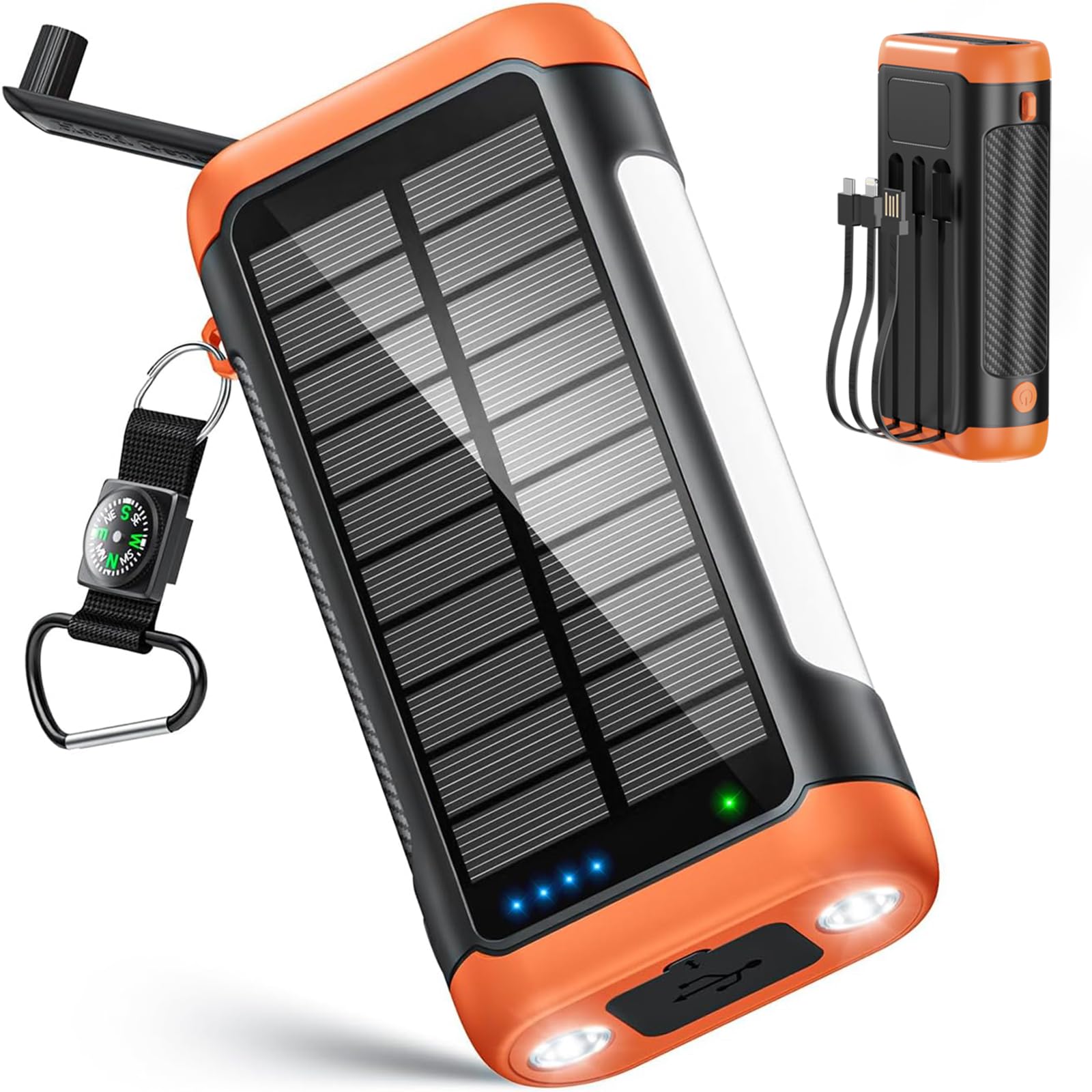
DJKK 66,800mAh Solar Bank
Key Features
- Wattage / Charging Speed: 22.5W claimed
- Portability: 1.06 lbs battery only
- Durability: Not rated
- Ports: 5 outputs, built-in cables
- Price: Mid-Range
The DJKK Solar Power Bank delivers a massive 66,800mAh capacity — enough to charge several phones and a tablet over a weekend car camping trip. It includes a hand crank, solar panel, and a built-in table lamp and flashlight, setting it apart from standard power banks. However, this capability comes in a heavy, bulky package that is best left in the car or campsite rather than carried on a trail.
This bank is designed for car campers, families, or emergency preparedness kits where weight is not a concern. The solar charging is extremely slow — expect it to take days to fully recharge the battery in direct sunlight — and the hand crank provides only a trickle of power. Some units may have charging or lamp defects, so it is worth testing the unit soon after purchase.
To get the most out of this bank, charge it fully at home via AC before heading out. The solar panel can help extend power during long stays, but it won’t replenish the battery quickly enough to rely on as a primary charging method.
Pros
- Massive 66,800mAh capacity charges multiple devices for days.
- Built-in hand crank and solar add backup charging options for emergencies.
- Integrated table lamp, flashlight, compass, and carabiner add convenience for camp use.
Cons
- Solar charging is very slow; the panel cannot keep up with the large battery.
- Some units may have trouble holding a charge or the lamp may malfunction.
A massive-capacity power bank best used as a pre-charged power station for car camping or emergency backup — rely on AC charging, not solar or crank.
Best for Budget Backpackers
BigBlue 28W Foldable Solar Panel

Key Features
- Wattage / Charging Speed: 28W
- Portability: 1.5 lbs, foldable
- Durability: IP44 panels
- Ports: 2 USB-C, 1 USB-A
- Price: Mid-Range
This 28W panel folds small enough for a pack and includes dual USB-C and USB-A ports, making it a viable option for topping off phones on sunny weekend trips. Its lightweight build suits backpackers who want minimal bulk. However, the charging output depends heavily on direct sunlight — clouds or shadows slow it considerably. Some units have experienced charge controller or panel issues in the first months, a risk less common in the newer 35W version. For occasional campers who can guarantee full sun, it is a cost-effective way to stretch phone battery life without purchasing a newer model.
Pros
- Compact and light at 1.5 lbs, folds to 11x6x1.4 inches for easy packing
- Includes multiple cable adapters, works with most phones and small devices
Cons
- Charging speed drops sharply in cloudy or shaded conditions; full sun required for useful output
- Some units may experience charge controller issues or dead panels within the first months
Fits occasional campers who can ensure direct sunlight and want a lightweight panel without investing in the newer 35W model’s shade tolerance and build improvements.
Best for Brand Loyalists
Anker Solix PS30 30W

Key Features
- Wattage / Charging Speed: 30W (real 10-15W)
- Portability: 2.2 lbs, foldable
- Durability: IP65
- Ports: USB-A, USB-C
- Price: Premium
The Anker Solix PS30 folds small enough for backpack pockets and carries the brand’s well-regarded warranty. But real-world charging output frequently sits at 10-15W – not the claimed 30W – making it slow to top up a phone while camping.
Pros
- Folds compactly for easy backpack storage
- Anker’s warranty provides peace of mind for long-term use
Cons
- Heavier than many 30-35W panels, adding noticeable bulk to a hiking pack
- Premium price per effective watt compared to alternatives with higher real-world output
Suitable for Anker brand loyalists or emergency backup where slow charging is acceptable – not for primary phone charging on camping trips.
Best for Emergency Kits
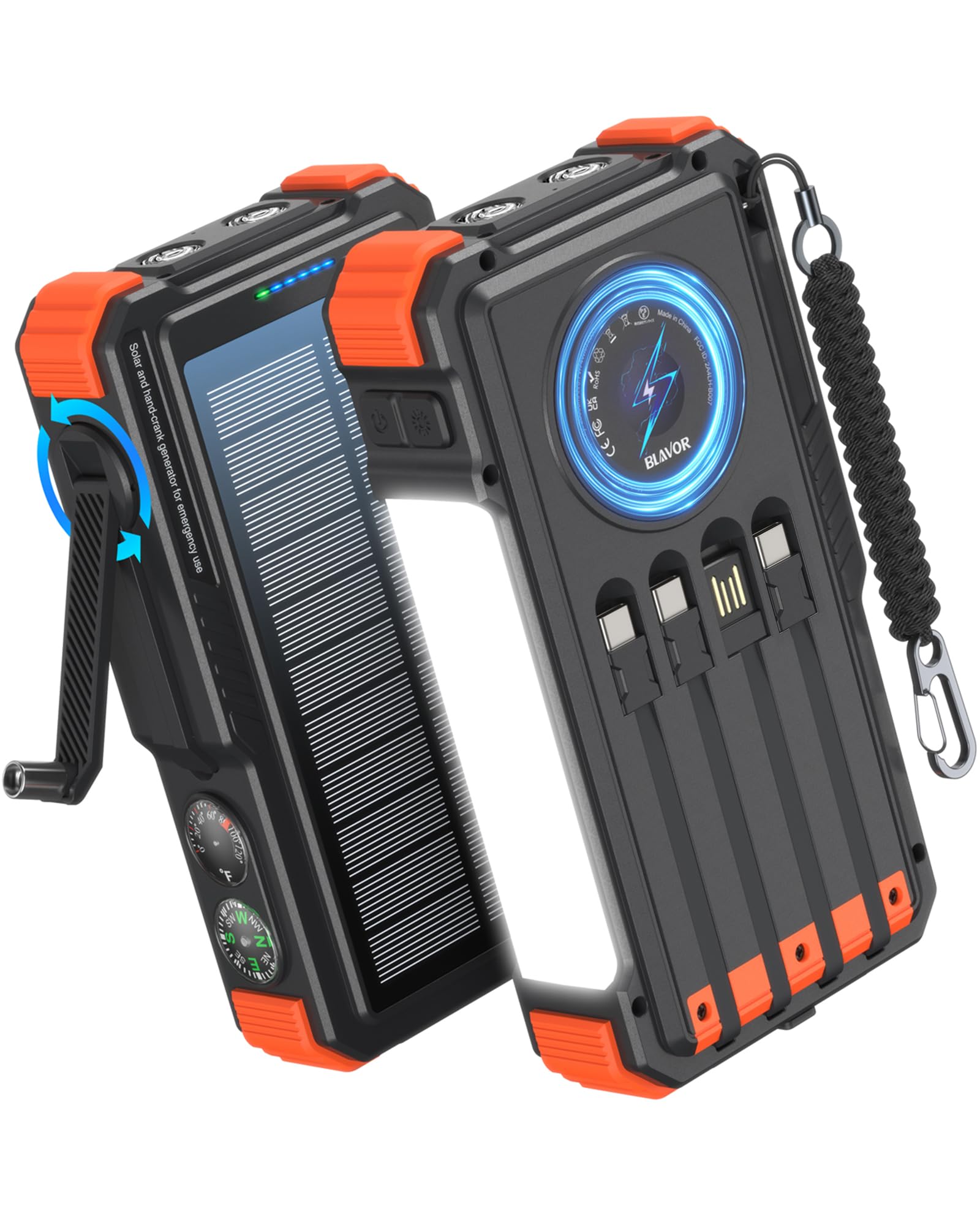
BLAVOR Hand Crank 20Ah
Key Features
- Wattage / Charging Speed: 20W USB-C
- Portability: ~1 lb est
- Durability: Not rated
- Ports: USB-C, built-in cables
- Price: Mid-Range
The BLAVOR Solar Power Bank combines a hand crank, wireless charging, four built-in cables, and a camping light in one device — a setup that makes sense for emergency kits where multiple power sources are valued over efficiency. The 20,000mAh battery holds enough charge for several phone top-offs when pre-charged from a wall outlet, but the solar panel and hand crank deliver only trickle-level power, insufficient for meaningful off-grid recharging. Its weight and bulk suit car camping or a go-bag better than hiking, and occasional unit defects mean the flashlight or charging circuits can arrive non-functional.
Pros
- Hand crank, wireless pad, and four cables reduce the need for separate accessories.
- Rugged construction with a solid feel that inspires confidence in a emergency kit.
Cons
- Solar and hand crank produce minimal power — expect a trickle that is too slow for practical recharging in the field.
- Heavy and bulky for a 20,000mAh pack, limiting carry options to vehicle or base camp use.
Worth considering for emergency kits where having multiple charging methods in one box matters more than solar speed or portability, but not a primary camping companion.
Best for Extreme Budget
YELOMIN 38,800mAh Solar Bank
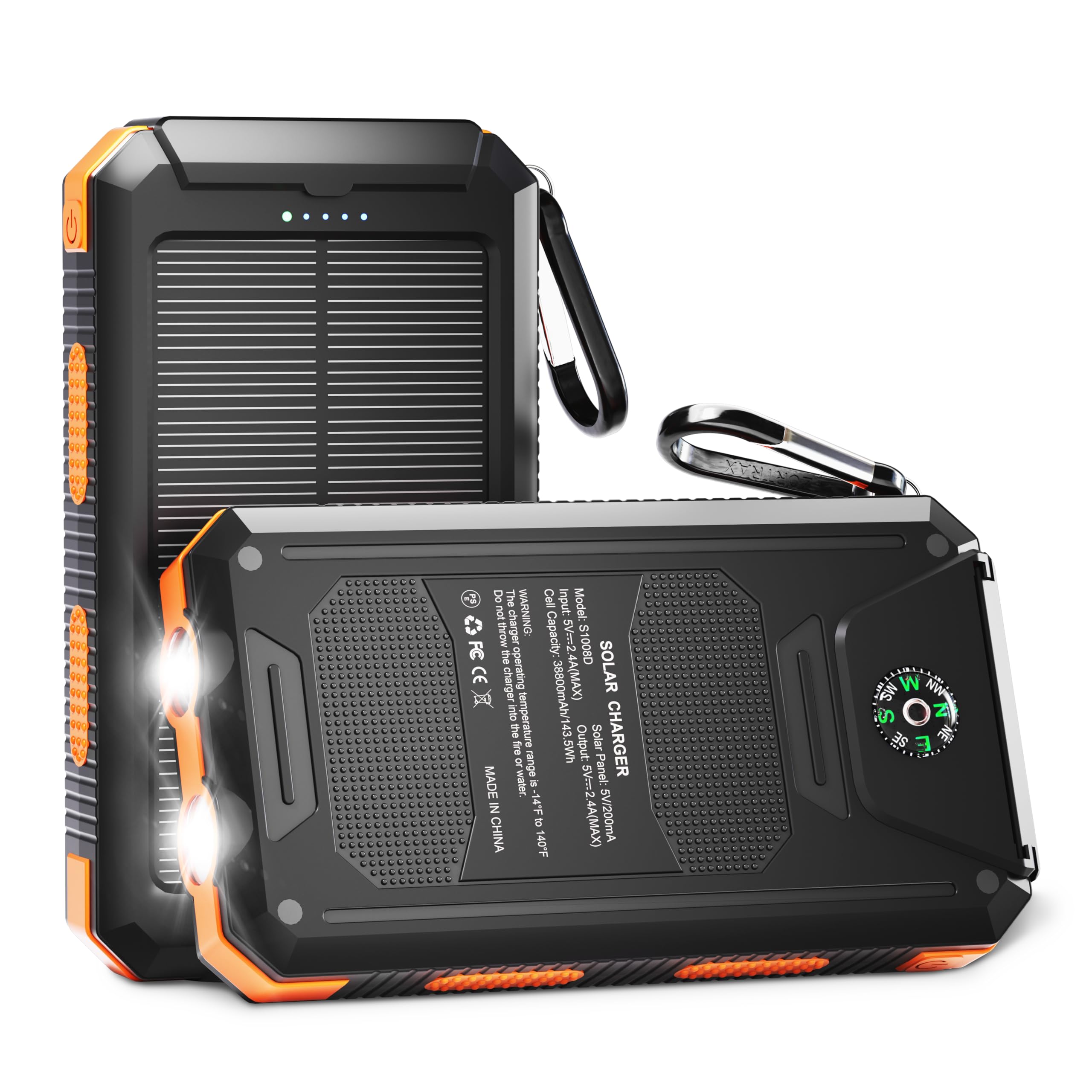
Key Features
- Wattage / Charging Speed: Slow USB-C
- Portability: 0.62 lbs
- Durability: Not rated
- Ports: USB-C, 2 USB-A
- Price: Budget
The YELOMIN 38,800mAh power bank is the cheapest way to get this much capacity in a lightweight, surprisingly solid-feeling package at just 0.62 lbs. However, the built-in solar panel adds almost no usable charge: after extended sun exposure, the battery gains negligible power, making it irrelevant for campers who need off-grid top-ups. The USB-C input also charges the bank slower than comparable power banks — expect overnight wall charging rather than quick refills. Unit reliability varies: some perform well for months, while others lose capacity or stop working sooner. This is a strict emergency backup for users who can pre-charge at home and want maximum capacity per dollar, accepting the gamble on longevity.
Pros
- Extremely affordable for a 38,800mAh capacity — one of the cheapest per milliamp-hour available.
- Lightweight at 0.62 lbs, easier to carry than most high-capacity power banks of similar capacity.
Cons
- Charging the bank itself via USB-C is slower than typical models — expect longer wait times for a full charge.
- Battery performance can vary between units; some lose capacity or stop functioning sooner than expected.
Only worth considering if you need a cheap, high-capacity emergency battery for home-precharged use and can look past the non-functional solar and possible unit variation.
How to Choose
The single most important decision in a solar charger is whether you need a foldable panel for direct charging or a power bank with solar backup — the two work very differently in the field.
Wattage and Charging Speed
Wattage determines how fast your phone charges in full sun. A 28W panel can fully charge a smartphone in about two hours of direct sunlight, while a 40W panel cuts that to under 90 minutes. But real-world output is often lower — panels rarely hit their advertised wattage unless the sun is directly overhead and the panel is perfectly angled.
The hidden trade-off: panels with higher wattage are heavier and larger. A 35W panel weighing 1.5 lbs balances portability with useful charging speed for backpacking. For car campers, a 40W panel weighing 1.76 lbs still packs small and charges faster.
Portability
Weight and folded size matter most for hikers. Every 0.2 lbs saved on a panel means easier miles. Panels under 1.6 lbs with a folded thickness under 2 inches fit inside a daypack water bottle pocket. Power banks with solar cells are heavier for the same capacity — a 20,000mAh bank that weighs 1.7 lbs offers less charging utility per ounce than a 1.5 lbs panel that can recharge multiple devices.
For basecamp or car camping, portability is less critical. Heavier power banks (50,000mAh) are fine if you don’t carry them far.
Durability
IP ratings tell you how well the panel handles rain and dust. IP67 means protected against immersion in 1 meter of water for 30 minutes — good for campers in wet environments. IP68 (like the top pick) offers deeper protection. But note: the junction box and USB ports are often not waterproof even if the panel fabric is.
Physical durability matters more: panels with stitched edging, ripstop nylon, and reinforced corners last longer when stuffed in packs or dropped on rocks. Panels that use thin PET laminate are lighter but prone to cracking after repeated folding.
Ports and Compatibility
USB-C PD ports enable fast charging for modern phones, but some panels limit PD output to specific devices (e.g., Apple incompatibility). USB-A ports are universal but slower. For power banks, having built-in cables reduces the need to carry extra cords — but they add weight and can break.
The hidden trade-off: charging two devices simultaneously from a single panel often splits wattage unevenly and can cause charging to stutter. For best results, charge one device at a time or use a panel with separate dedicated circuits.
FAQ
How long does it take to charge a phone with a 28W solar panel while camping?
In direct sunlight with the panel properly angled, a 28W panel charges a typical smartphone in about 2 hours. Cloud cover or partial shade can double or triple that time. For faster charging, a 35W panel cuts the time to roughly 90 minutes.
Can a solar power bank charge a phone on a cloudy day?
Most solar power banks produce negligible power under overcast skies — the solar cells need full, direct sun to generate useful current. If you camp in cloudy areas, rely on a pre-charged power bank or a foldable panel with high efficiency that can capture diffuse light, but expect very slow charging.
Is a solar power bank or a solar panel better for charging a phone while hiking?
For hiking, a lightweight foldable panel (1.5 lbs) paired with a small power bank is the most efficient setup. The panel charges the phone directly during breaks and tops off the bank during the day. A solar power bank alone is heavier per watt and its solar cells are too small to keep the battery full.
Why does my solar power bank stop working after a few uses?
Many budget solar power banks have poor charge controller circuits that overheat or fail under continuous sun exposure. Also, the battery cells themselves can degrade due to heat or manufacturing defects. If the bank stops charging, it’s often a failure of the internal electronics rather than the battery. Choose brands with solid warranty coverage.