This post contains affiliate links. We may earn a small commission when you buy through our links — at no extra cost to you.
Backpacking stove choices come down to a few hard trade-offs: light weight often means shaky pot supports, and a built-in igniter is convenient until it stops working after a few trips. The same stove that serves a solo ultralight hiker can frustrate a pair cooking in an exposed alpine camp.
Many models claim wind resistance, but only those with concave burners or pressure regulators actually keep the flame steady in gusty conditions. Piezo igniters fail across all price points – a backup lighter is the single cheapest insurance you can pack.
This guide breaks down the real-world differences in weight, boil speed, ignition reliability, and wind handling so you can match a stove to the terrain and group size you actually hike with. The right pick depends on whether you count grams or regularly camp on windy ridges.



Best for Ultralight All-Rounder
MSR PocketRocket 2
Key Features
- Weight: 2.6 oz
- Boil Time: 3.5 min per 1L
- Fuel Type: Isobutane
- Ignition: Manual
- Price: Mid-Range
At 2.6 ounces, the PocketRocket 2 is one of the lightest stoves that still handles a standard 1L pot without tipping. Its compact folded size – roughly 2x2x3 inches – means it disappears into the corner of a cook pot or stuff sack. Boil time for a liter of water averages 3.5 minutes, and the flame adjustment range is wide enough for both rapid boils and gentle simmering.
In typical camping conditions, the PocketRocket 2 provides consistent heat output even with a half-empty canister. However, it has no special wind resistance – a light breeze can slow boil time noticeably, so cooking in a sheltered spot or using a windscreen is helpful. Some stoves arrive with pot support arms that are slightly uneven; a gentle bend with pliers will level them, but it is worth inspecting before your first trip.
This stove fits best for ultralight backpackers who prioritize weight savings, solo or duo hikers who do not need a large pot, and first-time backpackers looking for a straightforward design. It is not suited for winter camping below freezing without a pressure regulator, as isobutane performance drops. The stove lacks a built-in igniter – you will need a separate lighter or matches – but many backpackers prefer this for reliability.
With thousands of field reviews and a mid-range price, the PocketRocket 2 has become a staple for a reason: its simple construction means fewer failure points, and replacement parts are widely available. For consistent wind performance, the SOTO WindMaster is a better bet, but the PocketRocket’s lighter weight and longer track record make it the default choice for most trips.
Pros
- Weighs just 2.6 oz and fits inside most cook pots for easy packing.
- Fast 3.5-minute boil time with a flame that adjusts well for simmering.
- Consistent heat output over many trips without performance degradation.
Cons
- Pot support arms may arrive slightly uneven, requiring a small adjustment with pliers for perfect leveling.
- No built-in igniter means you need to carry a separate lighter for ignition.
The PocketRocket 2 delivers steady performance at a weight and price that make it the default recommendation for solo and duo backpackers who value simplicity and packability.
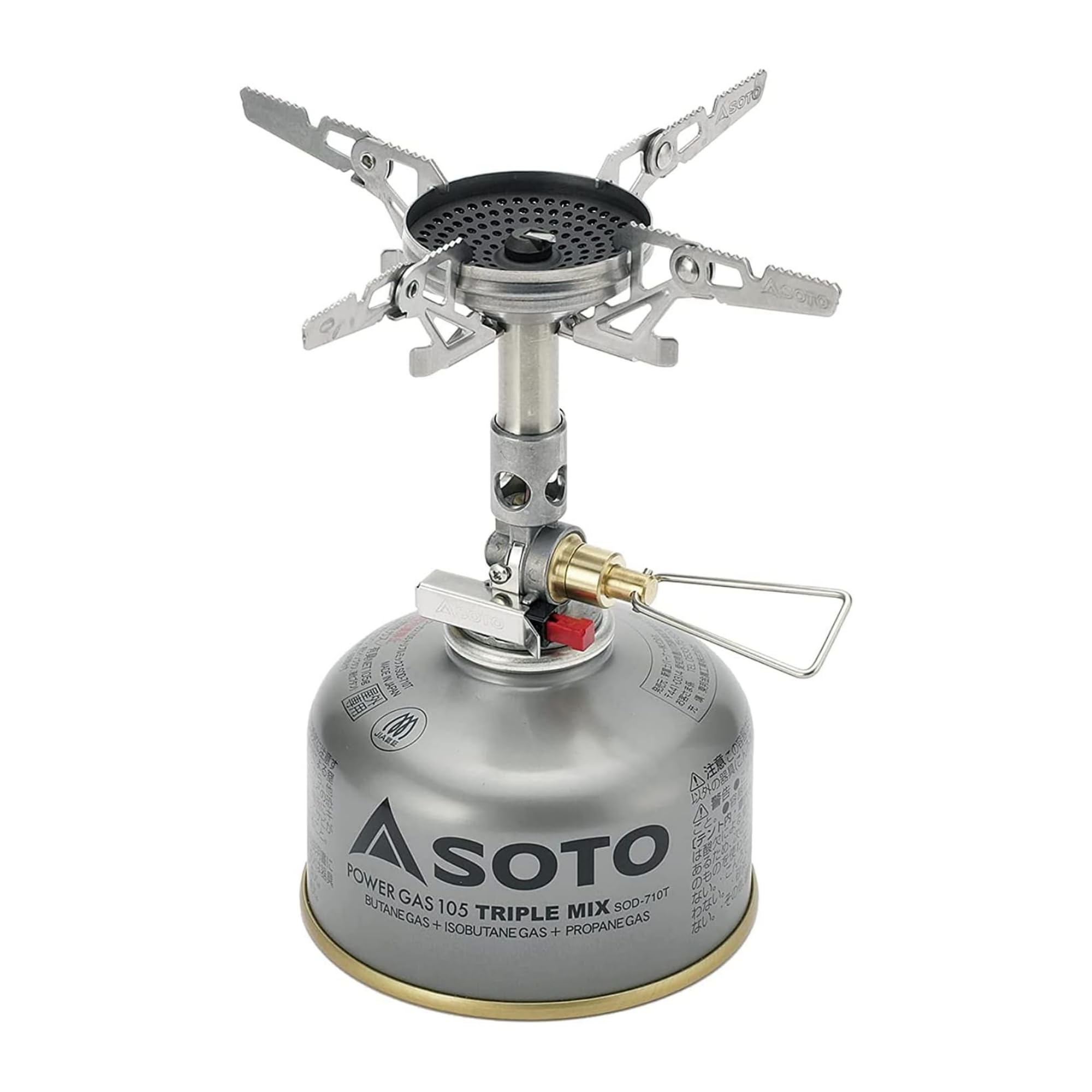
Best for Wind-Resistant Ultralight
SOTO WindMaster
Key Features
- Weight: 2.3 oz
- Boil Time: 2.5 min per 2 cups
- Fuel Type: Isobutane
- Ignition: Piezo
- Price: Premium
The concave burner and integrated regulator let the WindMaster hold a consistent flame where other canister stoves sputter – a class-leading feature for open ridgelines and breezy campsites. At 67g (2.3 oz) for the stove alone, it remains ultralight despite the added wind-fighting hardware; adding the 4Flex pot support brings it to 87g, still competitive with many regulated stoves.
This stove suits backpackers who regularly cook in windy conditions and prioritize flame stability over ignition convenience. The piezo igniter can be intermittent on some units – not a safety hazard, but enough to warrant carrying a backup lighter. With the 4Flex pot support, stability is good for 1-2 person cookware.
Beyond wind performance, the regulator provides consistent fuel output even as canister pressure drops, enabling a low simmer for sauces or rehydrating meals. Boil time for 2 cups lands around 2.5 minutes, competitive for its weight class. The design is slightly bulkier than the sleekest ultralight stoves like the BRS-3000T, but still packs inside a typical 750ml pot with a small fuel canister.
Pros
- Concave burner and regulator keep the flame steady in strong gusts, outperforming most ultralight stoves in wind.
- Weighs only 67g (87g with 4Flex) and packs compactly inside a small pot.
- Boils 2 cups in about 2.5 minutes with good simmer control for meal prep.
Cons
- Piezo igniter may not fire consistently on some units; a backup lighter is recommended.
- Slightly larger than the slimmest ultralight stoves like the BRS-3000T, though still packable for most backpackers.
For backpackers who face wind regularly, the WindMaster’s flame stability is a genuine advantage over the PocketRocket 2 – just remember a lighter.
Best for Fast-Boil Integrated
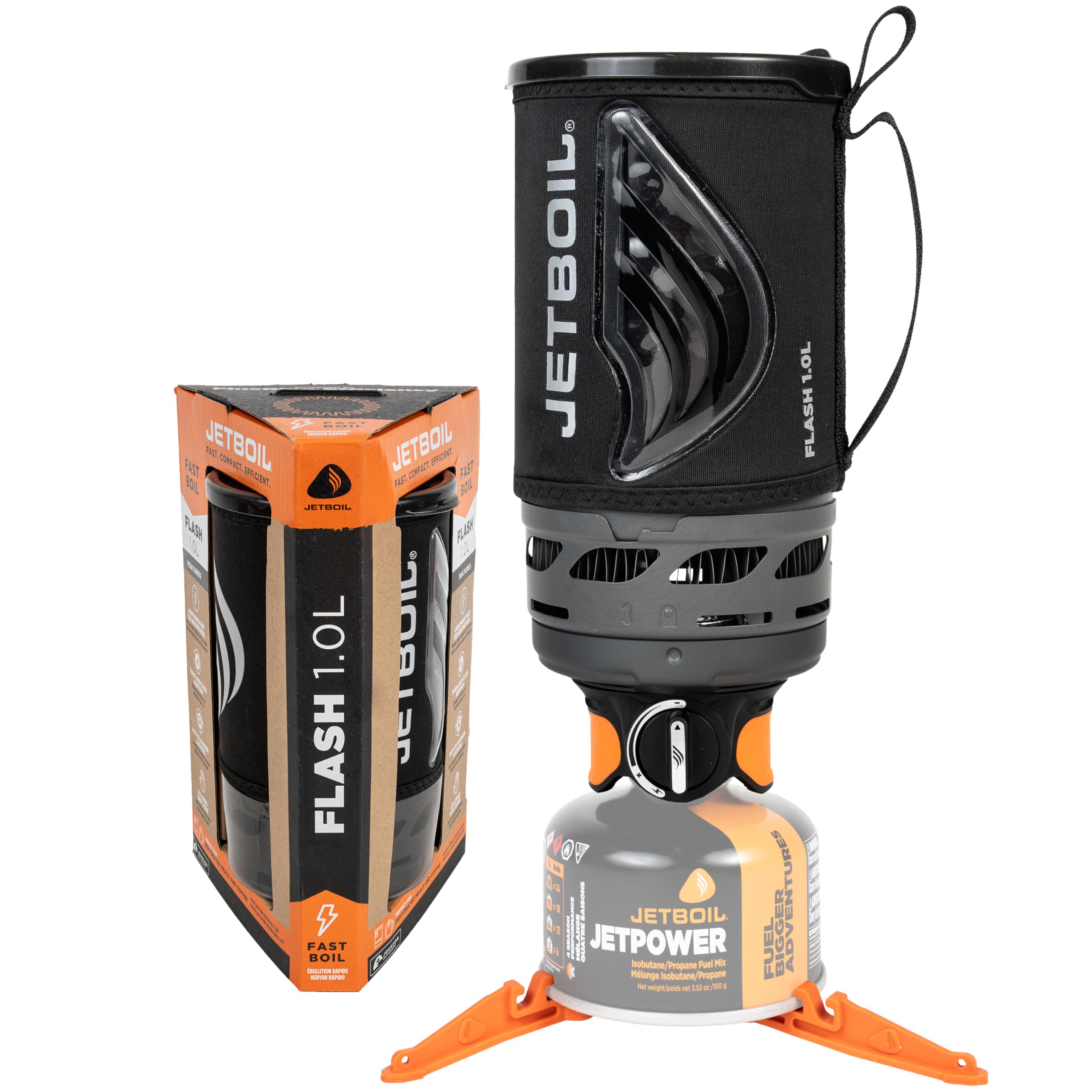
Jetboil Flash
Key Features
- Weight: 13 oz
- Boil Time: 2 min per 16 oz
- Fuel Type: Isobutane
- Ignition: Auto ignition
- Price: Premium
The Jetboil Flash reaches a boil in under two minutes – faster than any standalone canister stove we’ve tested. Its all-in-one design nests the 1L pot, burner, and fuel canister into a compact cylinder, and the auto-ignition and locking mechanism make lighting and securing the pot simple.
This system is best for backpackers who prioritize meal speed over pack weight. At 13 oz, it’s heavier than a separate stove setup, and the premium price reflects Jetboil’s brand and performance. The auto igniter may not fire reliably on every unit, so packing a backup lighter is recommended.
Compared to budget integrated systems like the Fire-Maple FMS-116T, the Jetboil offers a faster boil and better build quality, but at a significantly higher cost. For those who boil only occasionally, the savings may be more compelling.
Pros
- Boils 16 oz in under 2 minutes – one of the fastest boil times for an integrated system.
- Entire system stores inside the pot, saving space and simplifying packing.
- One-step auto ignition and a secure locking system make setup easy.
Cons
The Jetboil Flash is the go-to choice for backpackers who want the fastest possible boil and don’t mind the extra weight and cost – just remember to bring a backup lighter.
Best for Budget Integrated System
Fire-Maple Fixed Star 1
Key Features
- Weight: 18 oz
- Boil Time: 2 min per 16 oz
- Fuel Type: Isobutane
- Ignition: Piezo
- Price: Mid-Range
The Fire-Maple Fixed Star 1 matches the boil speed of integrated systems costing twice as much, and its detachable pot stand lets you use standard cookware — a flexibility that faster-boiling units lack. It also stows the burner, fuel canister, and stand neatly inside the 1L pot, creating a compact package for short trips.
This stove is a solid fit for backpackers who want an integrated system without paying Jetboil prices, especially on two-person outings focused on quick dehydration meals. At 18 oz it’s heavier than most separate stove setups, so it suits trips where pack weight isn’t the top priority. The piezo igniter can lose reliability over time — keep a backup lighter in your cook kit.
Pros
- Boils water as fast as premium integrated stoves — about two minutes per 16 oz.
- Costs roughly half of comparable Jetboil systems while maintaining similar performance.
- Folds components into the pot for a tidy, packable carry.
Cons
- Piezo igniter can become intermittent after repeated use; a backup lighter is recommended.
- Some units arrive with a cracked plastic bowl or other shipping damage.
For budget-minded backpackers who prioritize boil speed and pot-stand versatility over ultralight weight, this is a smart buy — just plan for the igniter’s quirks.
Best for Ultralight Weight Champion
BRS-3000T Titanium
Key Features
- Weight: 0.88 oz
- Boil Time: 3 min per 1L
- Fuel Type: Isobutane
- Ignition: Manual
- Price: Budget
At 25 grams (0.88 oz), the BRS-3000T has no peer among screw-on canister stoves — it nests inside a 750ml pot alongside a fuel canister, making it the smallest and lightest option for weight-obsessed backpackers. Boil speed is respectable given its size, reaching a rolling boil for a liter in about three minutes, which suits quick meals and coffee on short trips.
That extreme weight saving comes with deliberate tradeoffs. The pot support arms are short and thin, so stability drops sharply with anything wider than a 750ml pot — a 1.5L or larger cookset will feel tippy. The titanium arms can also bend over time under repeated use, and screwing the stove onto a canister spills some fuel because there is no valve shutoff. These limitations make the BRS a specialized tool, not a universal backpacking stove.
Pros
- Lightest screw-on canister stove available — 25g disappears in your pack.
- Compact enough to nest inside a 750ml pot with a fuel canister.
- Boils water fast for its weight class — about 3 minutes per liter.
Cons
- Short pot supports can shift under larger cookware — best limited to 750ml pots.
- Legs may bend after extended use; the stove suits occasional trips rather than daily abuse.
- Fuel spills when attaching or detaching from the canister due to the lack of a shutoff valve.
If your pack weight is the single deciding factor and you cook only for one with a small pot, the BRS-3000T delivers unmatched lightness — just accept that stability and longevity take a back seat.
Best for Budget Ultralight
Fire-Maple Greenpeak

Key Features
- Weight: 3 oz
- Fuel Type: Isobutane
- Ignition: Piezo
- Price: Budget
The Fire-Maple Greenpeak packs a 3-ounce stove with piezo ignition that stows inside a Petrel pot, creating a tidy ultralight kit. Its wide pot supports offer better stability than the BRS-3000T for small cookware. The trade-off: the piezo igniter may not fire on every unit, and the burner lacks wind resistance found on pricier regulated models. This is a budget-friendly option best suited for fair-weather trips where a backup lighter is part of the essentials.
Pros
- Weighs just 3 oz and hides inside Fire-Maple Petrel pots for a compact kit.
- Budget-friendly price delivers solid boiling and simmering for ultralight use.
Cons
- Piezo ignition can be intermittent; a backup lighter is a smart addition to your kit.
- No wind-resistant burner; flame may flicker in breezy conditions, extending boil times.
Best for ultralight backpackers on a budget who cook in calm weather and can accept the occasional igniter hiccup – pair it with a Petrel pot for a complete lightweight system.
Best for Regulated Budget Option
CAMPINGMOON XD-2F

Key Features
- Weight: 3.2 oz
- Fuel Type: Isobutane
- Ignition: Piezo
- Price: Mid-Range
The CAMPINGMOON XD-2F holds a steady flame in wind and cold, thanks to its regulator – a feature usually found on pricier stoves. Its wide folding base keeps larger pots stable on uneven ground. The tradeoffs: at 3.2 oz it’s heavier than ultralight options like the BRS-3000T, and the burner design won’t accept pots with heat-exchanger bottoms. For backpackers who cook with standard pots and prioritize consistent output over every gram, this is a cost-effective alternative to the Soto WindMaster.
Pros
- Regulated flame maintains steady output in wind and cold conditions.
- Wide base provides reliable stability with larger cookware.
- Cost-effective regulated performance at a mid-range price point.
Cons
- Cannot be used with heat-exchanger pots – requires standard cookware.
- At 3.2 oz, it’s heavier than ultralight stoves that weigh under 3 oz.
Best suited for backpackers on a budget who cook with standard pots and value regulated performance over the lowest weight – the extra 0.6 oz is a fair trade for stability and cost savings.
Best for Jetboil Separate Stove
Jetboil MightyMo

Key Features
- Weight: 3.36 oz
- Boil Time: 3 min per 1L
- Fuel Type: Isobutane
- Ignition: Auto ignition
- Price: Mid-Range
The Jetboil MightyMo delivers a regulated flame that holds steady in cooler conditions, and its 3.36-ounce weight makes it a viable choice for gram-conscious backpackers. It boils two cups of water in under two minutes, matching the speed of lighter stoves. However, the ignition system may stop working after a couple of years, and the initial flame height can be hard to control. For consistent wind resistance, the SOTO WindMaster handles gusts better, and for a longer reliability track record, the MSR PocketRocket 2 is the safer pick among separate stoves.
Pros
- Lightweight and compact design fits easily into a backpack.
- Regulated output provides consistent boil performance in cooler conditions.
- Boils two cups of water in under two minutes.
Cons
- Initial flame height can be high, making simmer control less predictable.
- The built-in igniter may stop working after a year or two of use.
This stove fits backpackers who already own Jetboil fuel canisters and want a separate burner for pot cooking, provided they are comfortable carrying a backup lighter once the igniter wears out.
Best for Reliable Budget Workhorse
Coleman Classic

Key Features
- Weight: 8.3 oz
- Boil Time: 4 min per 1L
- Fuel Type: Propane
- Ignition: Manual
- Price: Budget
The Coleman Classic outputs 10,000 BTUs from standard propane canisters and folds into a compact shape that stows easily in a gear bin. Its steel burner and simple construction hold up to years of repeated use — this is the stove Scout troops reach for season after season. At 8.3 ounces, it is significantly heavier than dedicated backpacking stoves (most ultralight models are under 3 ounces), and there is no piezo igniter; you will need a lighter or matches every time. That tradeoff makes sense for car campers or base-camp cooks who prioritize durability over gram-counting, but it does not suit ultralight backpacking.
Pros
- Steel burner and body withstand heavy outdoor use without issues.
- Priced well below most stoves while delivering consistent 10,000 BTU output.
Cons
- You must carry a separate lighter or matches – no built-in ignition.
- At 8.3 ounces, it sits on the heavy side for backpacking – most dedicated backpacking stoves are under 3 ounces.
Best for car campers, group outings, and budget-conscious cooks who value durability and low cost over minimal weight.
Best for Entry-Level Budget
AOTU Camping Stove
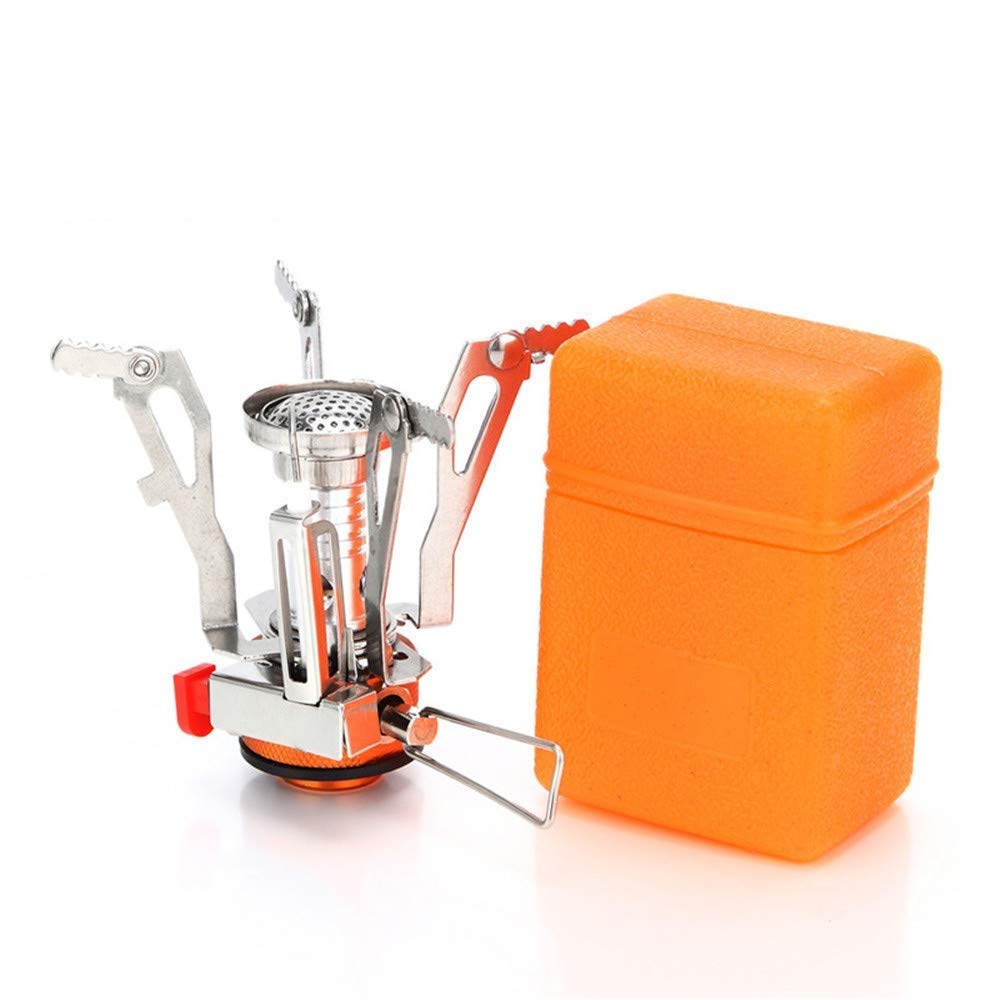
The AOTU camping stove delivers solid value for its low price: it’s compact enough to stash inside a mess kit, weighs next to nothing, and brings water to a boil quickly enough for a dehydrated meal. That makes it a practical option for car campers or as an emergency backup. But two tradeoffs keep it from serious backpacking duty. The piezo igniter can stop working after a few trips, so a lighter becomes necessary. And the short pot supports offer little stability with anything larger than a standard 1-liter pot – wobble is possible when you stir or set it on uneven ground. The stove performs well within its limits, but those limits are real.
Pros
- Costs less than many competitors while still delivering functional performance.
- Fits inside most mess kits for easy packing.
- Boils water fast enough for quick meals.
Cons
- In scenarios where one-handed lighting matters, the piezo igniter can stop working – a backup lighter is advisable.
- When using pots larger than a standard 1L, the short support arms can make the stove tip-prone.
Best suited as a backup stove or for car camping where weight isn’t critical.
Best for Emergency Ultralight
YCDMLJC Ultralight Stove

Key Features
- Weight: 3.8 oz
- Fuel Type: Isobutane
- Ignition: Piezo
- Price: Budget
At under $10 and 3.8 ounces, this stove is among the lightest and most budget-friendly options for emergency kits or one-off trips. The piezo ignition lights the burner without a separate lighter, and it heats water quickly for its size. However, the concentrated flame often scorches the center of a pan while leaving the edges undercooked, and the short pot supports make it unstable with anything larger than a 1-liter pot. Its limited track record and these cooking quirks mean it fits best as a spare, not a daily driver for regular backpacking.
Pros
- Very affordable – one of the cheapest ultralight stoves available
- Compact and lightweight, fits inside small pots
Cons
- Concentrated flame can burn food in the center while edges remain raw
- Small pot supports limit stability with larger cookware
This stove works best as a backup in a survival kit or for ultra-budget trips where compactness and low cost outweigh cooking precision.
How to Choose
The best backpacking stove for you is the one that matches the weight you’re willing to carry to the conditions you actually cook in.
Weight and Packability
Stove weight ranges from less than 1 ounce to over a pound. Every ounce saved in the stove often comes at the cost of stability and durability: ultralight stoves have thin pot supports that can bend and are unstable with anything larger than a 750ml pot.
For a weekend trip, a few extra ounces make little difference. For a multi-week thru-hike, the gram savings from a sub-2-ounce stove can add up to noticeable pack relief, but only if you accept the handling trade-offs.
Boil Time
Boil time matters most if you primarily make dehydrated meals or hot drinks. Integrated systems like the Jetboil Flash boil water in under 2 minutes because the pot couples directly to the burner, reducing heat loss.
Separate stoves are slower (3-4 minutes per liter) but more flexible – you can simmer, use different pots, and they pack smaller. The few minutes saved by a fast-boil system matter only if speed is your top priority over weight and versatility.
Fuel Type and Canister Compatibility
Most backpacking stoves use isobutane/propane canisters, which are light and easy to use in moderate weather. Performance drops significantly below freezing because the fuel mixture loses pressure. Regulated stoves maintain a steady flow in cold conditions.
Propane canisters (the green 1 lb tanks) work with an adapter but are bulky and heavy. They are better for car camping than backpacking. Always check canister compatibility – some stoves only work with threaded Lindal valves, not the snap-on kind.
Wind Resistance
Wind is the single biggest enemy of stove efficiency. A light crosswind can double boil time and waste fuel. Stoves with concave burners or wind-blocking designs keep the flame directed at the pot bottom, while flat-topped burners let gusts push the flame away.
Regulated stoves also help because they maintain a consistent gas flow even as the canister cools in wind. If you camp on exposed ridgelines or above treeline, prioritize a stove with proven wind performance over a few grams of weight savings.
Ignition Type
Piezo igniters are convenient but they are mechanical parts that can fail after a dozen trips – dirt, moisture, and wear make them intermittent. Manual ignition (lighter or matches) is more reliable because there is nothing to break.
Always carry a backup lighter even if your stove has a built-in igniter. The weight penalty is negligible and it saves you the frustration of a dead spark at a cold campsite.
FAQ
Why does my backpacking stove igniter stop working after a few trips?
Piezo igniters are mechanical components that collect dirt, moisture, and wear from thermal cycling. The striking mechanism can slip or the spark gap can clog. This happens across all price points – the only permanent solution is to carry a backup lighter or matches. Some users report success cleaning the electrode with a small brush, but don’t depend on it.
Can I use a 1lb propane canister on my isobutane backpacking stove?
Only if your stove has a removable canister and you use a propane adapter (such as the Coleman propane-to-Lindal valve). Never force a propane canister onto a stove designed for isobutane – the threading is different and can leak. The adapter adds weight, so this setup is best for car camping, not backpacking. Propane also performs worse in cold weather due to its lower vapor pressure.
What’s the best stove for simmering while backpacking?
Separate stoves with good flame control, like the SOTO WindMaster or MSR PocketRocket 2, allow for low-temperature simmering when the gas valve is turned down. Integrated systems like the Jetboil Flash are designed for fast boiling and have poor simmer control – they tend to cycle on/off or flare up. If you plan to cook real meals, choose a separate stove with a regulator for consistent low output.
How much does wind actually affect backpacking stove performance?
A steady 10 mph breeze can double your boil time and waste 30-50% more fuel because the flame is blown away from the pot. Stoves with concave burners or wind screens (like the SOTO WindMaster) reduce this loss dramatically. In calm conditions, any stove performs fine, but on exposed campsites the difference between a wind-resistant and a flat-topped stove is the difference between hot dinner and a cold meal.