This post contains affiliate links. We may earn a small commission when you buy through our links — at no extra cost to you.
Hunger on the trail is a different animal than hunger at your desk. Around mile ten, appetite turns picky — the bar you happily eat at home starts tasting like sweet cardboard, and the chewy snack you loved in the parking lot becomes a jaw workout. A good backpacking snack fixes that: it puts calories in you when you’d otherwise stop eating, without adding much weight or a wrapper you have to fight open with cold hands.
I’ve had summit pushes where I packed four snacks and ate none of them. So over four months, my team and I ate our way through 18 backpacking snacks on day hikes, overnights, and one very wet three-day trip — judging taste at hour six, how each one survived loose in a hipbelt pocket, and whether the portion earned its space. Flavor gets a snack picked up; portability and freshness are what keep it in the bag. Here’s what earned a permanent spot in mine.




Best for All-Day Trail Fuel
Nature’s Garden Trail Mix Pack
Key Features
- Dietary: Vegan, gluten-free
- Pack count: 24 pouches
- Pouch size: 1.2 oz each
- Total weight: 28.8 oz
- Price: Premium
The packaging is what sold us, not the nuts. Twenty-four pouches at 1.2 ounces each, split across three different mixes, and no chocolate anywhere in the lineup — which means nothing in this box turns into a smear on a warm afternoon. That single design decision is why it’s the first thing we put in a food bag.
What you get is nuts, seeds and dried fruit in three combinations, all vegan, dairy-free, gluten-free and free of preservatives, so the variety holds up over several days in a way a single flavor never does. The pouches are stiff enough to survive the bottom of a pack, and each one is a portion rather than a bag you have to reseal. The mix isn’t perfectly even — a nut named on one packet doesn’t turn up in every pouch — but nothing here has struck us as filler.
For most backpackers this is the easiest recommendation in the guide: the only pick that arrives already portioned, already varied and already safe to leave in a warm pack. The catch is cost. Per ounce it’s the most expensive thing on this page, and on a long trip with a tight budget a bulk bag and a handful of zip bags gets you most of the way there. We still pay for the pouches on shorter trips, where the convenience is worth more than the savings.
Pros
- 24 single-serve pouches, no repackaging
- Three mixes keep multi-day eating interesting
- No chocolate to melt in a warm pack
- Vegan, gluten-free and preservative-free
Cons
- Costs the most per ounce here
Buy this if you want one box that covers most of a food bag — it’s portioned, varied and melt-proof, and we think the higher cost is worth it.
Best for No-Mess Calories
Blue Diamond Almonds 100-Cal Packs
Key Features
- Sodium: 40 mg per serving
- Calories: 100 per pack
- Pack count: 32 packs
- Serving size: 0.6 oz
- Price: Midrange
Thirty-two packs of a hundred calories each sounds generous until you do the arithmetic: a long day on trail can go through eight or ten of them, and that’s eight or ten wrappers to carry out. We still reach for this box first on hot trips, because nothing in it can melt, crumble or leak, and the flat packs slide into a hipbelt pocket without a bulge.
The almonds are lightly salted at 40 milligrams of sodium per pack, which is the right call for something you might eat three times a day — but it’s mild. If you’re a heavy sweater or hiking somewhere hot, treat these as a base and add something saltier rather than expecting the nuts to cover your electrolytes. Texture holds up too: they arrive whole and stay crunchy, which is more than we can say for anything baked.
Where the box earns its place is the front half of a trip, when weight matters and you want calories you don’t have to think about. It isn’t the cheapest way to buy almonds, and a bulk bag decanted into a zip bag costs less per calorie. For a weekend the pre-portioned packs are worth the premium; for a two-week walk, buy the big bag and portion it yourself.
Pros
- Nothing in the pack can melt or crush
- Flat packs fit a hipbelt pocket
- Mild 40 mg sodium suits all-day eating
Cons
- 100 calories per pack means a wrapper each time
For hot trips where nothing else survives, these flat 100-calorie almond packs are the calories we trust in a hipbelt pocket.
Best for Savory Camp Protein
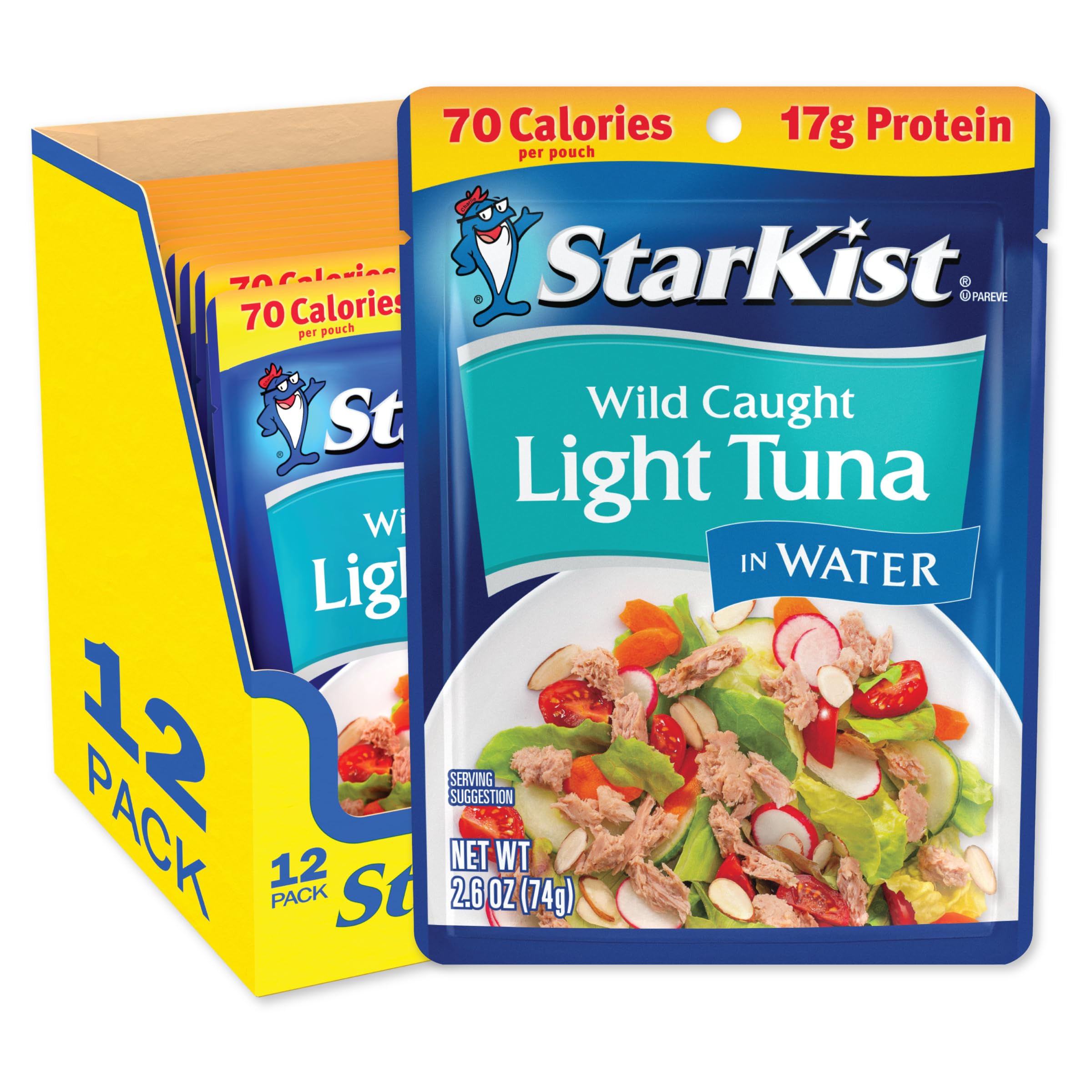
StarKist Tuna Pouches
Key Features
- Protein: 17 g per pouch
- Calories: 70 per pouch
- Pack count: 12 pouches
- Pouch weight: 2.6 oz
- Price: Midrange
Around the fourth day, when every bar in the food bag tastes like the bar before it, a pouch of tuna is what resets your appetite. That’s the case for carrying the extra weight of a wet pouch, and it’s a good one.
Twelve pouches, 2.6 ounces each, wild-caught light tuna in water, tear-open with no can opener and nothing to drain. Each one carries 17 grams of protein for 70 calories — the biggest protein number on this page — which is why we keep a couple in the bottom of the pack even on short trips. Straight from the pouch it’s fine. On a tortilla with a squeeze of something, it’s a genuine meal at a cold camp, and that’s worth more than the calorie count suggests.
Where it falls down is as fuel. Seventy calories is a rounding error against a backpacking day, so this supplements your snacks rather than replacing them. The pouch is also wet, which means it goes in the trash bag rather than a pocket for tomorrow, and a fishy wrapper wants double-bagging if you’re sharing a tent. Neither of those is a reason to leave it home.
Pros
- 17 g protein per pouch, the most here
- Tear-open, no can opener or draining
- Long shelf life for resupply boxes
Cons
- Only 70 calories, so it’s protein not fuel
- Wet pouch has to be packed out
Anyone who wants a real meal at a cold camp should carry a few of these pouches; just don’t count them as fuel.
Best for Fast Climbing Fuel
Honey Stinger Mini Waffles
Key Features
- Carbs: 18 g per serving
- Format: Mini waffles
- Bag weight: 5.3 oz
- Certification: USDA Organic
- Price: Budget
Eating while walking is a skill, and these mini waffles make it easier. Soft enough to chew at pace, sweet enough to be worth reaching for, and thin enough that a few fit in a jacket pocket without turning into a brick.
As a quick carbohydrate hit mid-climb, we think they’re the best of the sweet options here. Each serving carries 18 grams of total carbs from a honey filling between two thin wafers, they’re USDA Organic with no artificial sweeteners or preservatives, and they go down without the heavy, sticky feeling a chocolate bar leaves behind. On a long climb that lightness matters more than the number on the label.
What they aren’t is a food bag. A 5.3-ounce bag holds a handful of minis, so treat one bag as two or three snacks rather than a day’s fuel. The waffles also often arrive with crushed edges, which doesn’t change the taste but does leave crumbs in the bottom of the bag. Buy two bags if you’re relying on them, and keep them near the top of the pack.
Pros
- Easy to chew while walking
- 18 g carbs per serving from honey
- USDA Organic, no artificial sweeteners
Cons
- A bag is only a snack or two
- Edges arrive crushed and crumbly
Sweet, soft and easy to eat one-handed, these are what we reach for on a climb when chewing a bar feels like work.
Best for Budget Food Bag
Nature Valley Sweet & Salty
Key Features
- Base: Peanuts and granola
- Bar count: 30 bars
- Free from: Artificial flavors and colors
- Box weight: 36 oz
- Price: Midrange
Crunchy granola bars have a backpacking problem: by the second day they’ve become a bag of crumbs. These don’t do that. They’re chewy, with whole peanuts holding the bar together, and they come out of a stuffed pack in one piece.
Thirty bars in a 36-ounce box, no artificial flavors or colors, no high-fructose corn syrup, and enough peanut in each one that it eats like a candy bar rather than health food. The sweet-and-salty balance is what makes them work on trail — after a few hours of plain water, salt is the flavor you actually want.
Two practical notes before you commit. The peanut butter coating softens in heat, so in high summer keep the bars toward the middle of the pack rather than the top. And 30 bars arrive in a retail box, not a stuff sack, so plan on moving them into a zip bag before you leave. Neither is a dealbreaker, and both take about a minute to solve.
This is the bar we reach for when the day is long and we want something that feels like a proper snack rather than fuel, and of everything here it’s the best value per calorie — which matters if you’re buying for a week rather than a weekend. It’s the box most worth buying in quantity, and the one that has never come home unopened.
Pros
- Chewy bars survive a packed bag intact
- Best value per calorie in this set
- Peanuts make it eat like a treat
Cons
- Coating softens in hot weather
The bar we buy by the box: it survives a packed bag, tastes like a treat, and gives you the most calories for the money here.
Best for Light Protein Hit
Jack Link’s Beef Jerky
Key Features
- Protein: 7 g per serving
- Storage: No refrigeration
- Pack count: 5 pouches
- Pouch weight: 0.63 oz
- Price: Budget
There’s a small moisture pad inside each of these pouches, and it’s the reason the meat stays soft enough to bite through instead of splintering. It’s a tiny design detail that makes a real difference on a cold morning, and it’s why this is the meat snack we keep coming back to.
You get 7 grams of protein per serving from 100 percent beef, no refrigeration needed, and a pouch that weighs almost nothing — the classic thing to keep in a lid pocket for the last hour of a climb. What you don’t get is much jerky. The pouches run to a few pieces each, fine as a protein top-up and frustrating if you were counting on it as a snack. If jerky is going to be a real part of your food bag rather than a garnish, buy two multipacks.
Pros
- Moisture pad keeps the jerky soft
- 7 g protein with no refrigeration
- Almost no weight in a lid pocket
Cons
- Only a few pieces per pouch
A light, soft protein top-up for the last push of the day, as long as you buy it knowing the pouches are small.
Best for Morale Boost
Black Forest Fruit Strips

Key Features
- Flavors: Three flavors
- Added sugar: 0 g
- Strip count: 12 strips
- Strip weight: 0.5 oz
- Price: Midrange
A fruit strip weighs almost nothing, takes up the space of a bookmark, and gives you something to do with your hands on a break. That’s the whole case for carrying them, and it’s a decent one.
Twelve individually wrapped strips, half an ounce each, in three fruit flavors, made from fruit puree concentrate with no added sugar and colors and flavors from real sources. They stay soft rather than freezing solid, they don’t leave residue on your fingers the way chocolate does, and they’re the one snack on this list nobody argues about.
As a morale item for a mid-afternoon stop, we rate them. As calories, we don’t — half an ounce of fruit is a bite, not a course, and nobody is walking twenty miles on fruit strips. Texture also varies between batches, with some strips arriving soft and chewy and others hard and dry. Carry them for the moment you need a change rather than as the backbone of a day’s food, and they earn their tiny bit of pack space.
Pros
- Almost no weight or pack space
- No added sugar, real fruit puree
- Three flavors break up bar fatigue
Cons
- A strip is a bite, not real fuel
- Batches vary from soft to hard and dry
Carry a few for the moment a bar won’t do, not for the calories — they weigh nothing and lift a tired afternoon.
Best for Salty Snack Break
Wonderful Pistachios No Shells

Key Features
- Shells: No shells
- Bag weight: 0.75 oz
- Net weight: 6.75 oz
- Pack count: 9 bags
- Price: Midrange
No shells is the detail that turns pistachios from a party snack into trail food. You’re not spitting shells into the dirt or carrying them out in a pocket, and you can eat a bag one-handed while you walk.
They’re roasted and salted, which is exactly what you want on a hot climb — the salt is the point, not a flaw — and each 0.75-ounce bag is a small, satisfying handful rather than a bottomless bag. Nine bags to a box, plant-based protein, and certified gluten-free, kosher, halal and non-GMO, so they slot into most diets without a second thought.
The portion is the weak spot. Three-quarters of an ounce goes in about four bites, and nine bags empty fast on anything longer than a weekend. The salt that makes them welcome on a climb also means you’ll want water alongside, which is worth remembering on a dry stretch where every liter is planned.
For the end of a hard day, though, they do more for morale than anything else in this guide. A bag of pistachios and five minutes sitting down beats another bar by a mile, and that’s a different job from the one your calorie-dense staples are doing.
Pros
- No shells to deal with or carry out
- Plant protein, certified gluten-free
- A genuine treat at the end of the day
Cons
- Small bags empty fast
- Salted enough to need water alongside
A shell-free, genuinely enjoyable snack for the end of a hard day, provided you have water to spare.
How We Tested Backpacking Snacks
We started by gathering everything that plausibly belongs in a pack: grocery-store bars, drinkable calories, freeze-dried fruit, jerky, nut butter pouches, and a few items that read like candy but function like fuel. We read labels for calories per ounce and for ingredients that hold up in heat, ruled out anything needing refrigeration or a bowl, and landed on 18 snacks spread across a wide price range.
Those 18 went on day hikes and two- and three-night overnights across four months, with a few kitchen-table tastes as a baseline. On the trail we ate each one mid-climb, one-handed, while walking, and noted whether we finished it or passed it off to someone else. Taste got scored at the moment we were actually hungry, not before.
Portability took the roughest treatment: every snack rode loose in a hipbelt pocket for a week or more, and we checked how much of it ended up as crumbs at the bottom of the bag. We bit into bars at 40 degrees to see whether texture turned to brick or glue, timed how long a chewy bite took to clear, and compared portion size against the calories it delivered — a snack that took three bites to finish rarely made the return list. Value came down to cost per 100 calories and how many pieces actually came in the bag, and freshness got checked weeks later out of a resupply stash. Anything we quietly left uneaten at the end of a trip didn’t make the cut.
How to Choose Backpacking Snacks
The right backpacking snack is the one you still want to eat on day five, which is a different question from which one tastes best in your kitchen.
Calories per ounce beats calories per serving
Snack labels are written for people at desks, so they lead with portion size and calories per pack. On trail, the number that decides what goes in your bag is calories per ounce of carried weight. Nuts, granola and nut-based bars cluster near the top; fruit strips and anything mostly water sit near the bottom.
That doesn’t make the light stuff worthless — a fruit strip is morale in a wrapper — but it means the bulk of your food bag’s calories should come from dense food, with light and wet and crunchy items as accents. We build around nuts and bars first, then add the treats.
Single-serve or bulk?
Portioned pouches cost more per ounce and generate more trash, but they do three things a bulk bag can’t: they stop you eating a week of trail mix on day one, they keep the rest of the food dry in rain, and they let you ration without a scoop. Bulk wins on long trips and tight budgets, where you decant into zip bags at home and accept the fuss.
Our split: portioned for anything up to four or five days, bulk for longer trips and for anything eaten at camp out of a pot.
Pack for the temperature, not just the trip
Chocolate is the obvious casualty of a warm pack, but it isn’t the only one. Peanut butter coatings slump, chewy bars go sticky, and anything soft fuses to its wrapper by midday. In summer, favor nuts, jerky, tuna pouches and plain oat bars.
Cold brings its own problems: bars freeze into bricks and waffles stiffen, so keep the next day’s snacks in an inside pocket rather than an outer one. And whatever the season, anything crunchy arrives as crumbs by day three — if that bothers you, buy chewy.
Plan for appetite fatigue, salt and protein
The failure mode on a long trip isn’t running out of calories, it’s not wanting to eat the ones you brought. Sweet bars taste like wallpaper by day four. That’s why we pack savory and salty items even though they cost more per calorie: a tuna pouch or a bag of salted nuts resets your palate and replaces salt you’ve been sweating out.
Protein helps too, mostly by making a meal feel like a meal rather than a series of snacks. Aim for one savory item a day and two or three flavors in the sweet pile.
Frequently Asked Questions
Do I have to pack out snack wrappers?
Yes, anywhere that isn’t a developed site with bins. Wrappers don’t break down on any timescale that matters, and burying them just moves the problem a few inches underground. Count your wrappers as you seal the food bag and bring a dedicated trash bag — a rolled one with the air squeezed out weighs almost nothing. Wet pouches go in double-bagged.
Will my snacks freeze overnight?
Bars and waffles will stiffen, and anything with a soft coating gets hard to chew. Nuts, jerky and freeze-dried fruit come through better. The fix is temperature rather than product: put the next day’s snacks in your sleeping bag or an inside pocket, and keep the rest toward the center of the pack instead of an outer pocket where the cold gets in first.
Where should I store smelly snacks like tuna?
With everything else, in a bear canister or a proper hang, never in your tent. Tuna pouches are the smelliest thing in most food bags, so seal them inside a bag within the canister and plan canister space before you shop — a twelve-pack of pouches takes room that flat bars don’t. Check the rules for your area; some require a hard-sided canister.
Final Verdict
Start with the Nature’s Garden trail mix box if you want one decision that covers most of a food bag: portioned, varied, and indifferent to heat. Add a couple of StarKist pouches for the evening a cold dinner needs to feel like a meal, and a box of Blue Diamond almonds for calories you can eat one-handed while walking.
If money is the binding constraint, the Nature Valley Sweet & Salty bars give you the most calories for the spend here and hold together better than any crunchy bar will. Both routes beat a bag of chocolate, whatever the weather does.