This post contains affiliate links. We may earn a small commission when you buy through our links — at no extra cost to you.
Buying an axe seems straightforward: pick the one that looks right and swing. But a dull blade straight from the factory, a handle that cracks after a few rounds, or a head that is either too light for effective splitting or too heavy to carry on a hike – these are the real frustrations that turn a simple tool into a chore.
The fix isnt spending more money; it is matching head weight, handle length, and blade geometry to your actual use – whether that is splitting firewood at the cabin, chopping kindling on a campout, or clearing brush on a homestead. Budget models often compromise on steel quality and handle assembly, while established brands earn their reputation by getting these fundamentals right.
The best axe feels balanced in your hand and cuts cleanly on the first strike – because the tools design fits the task you actually do, not the one advertised.
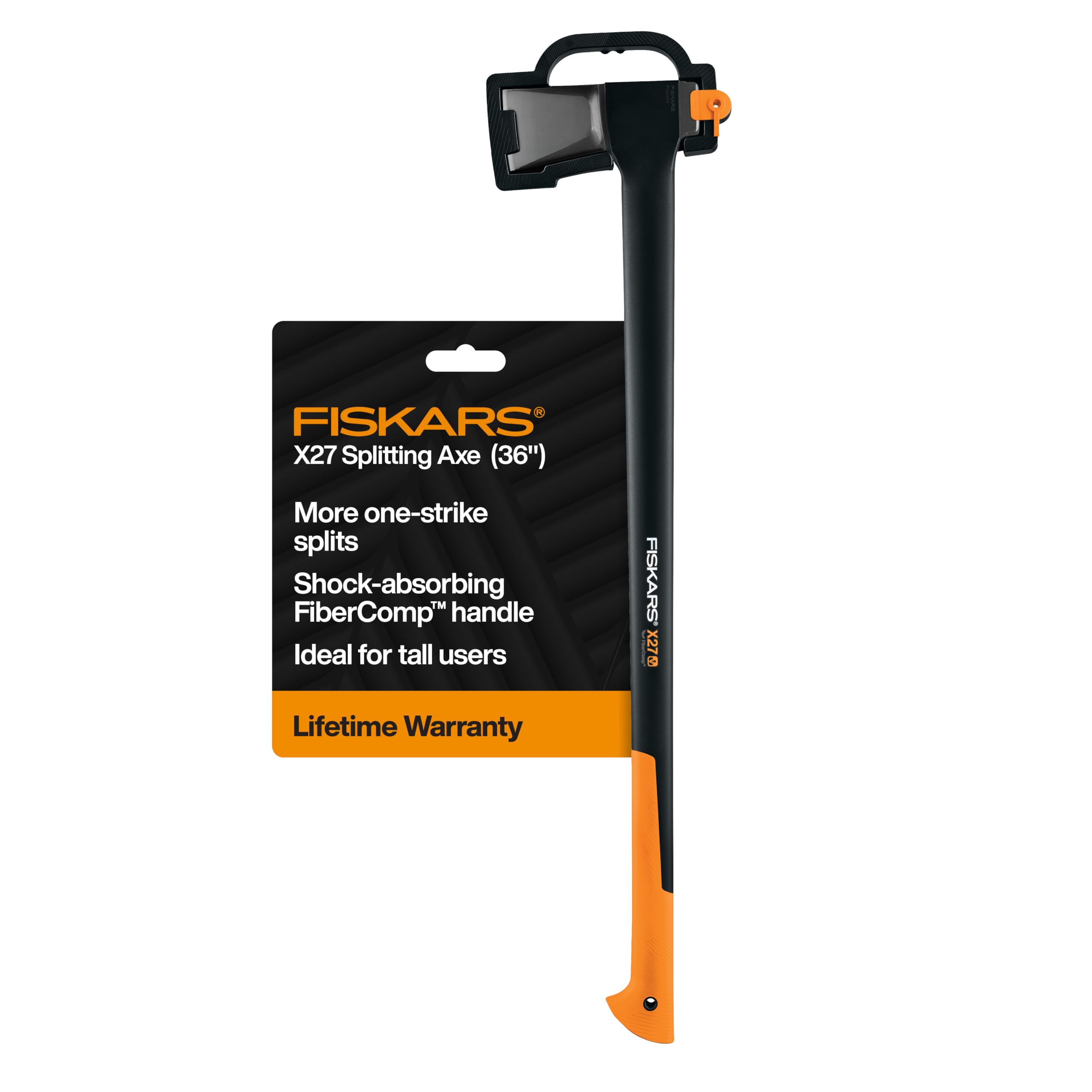


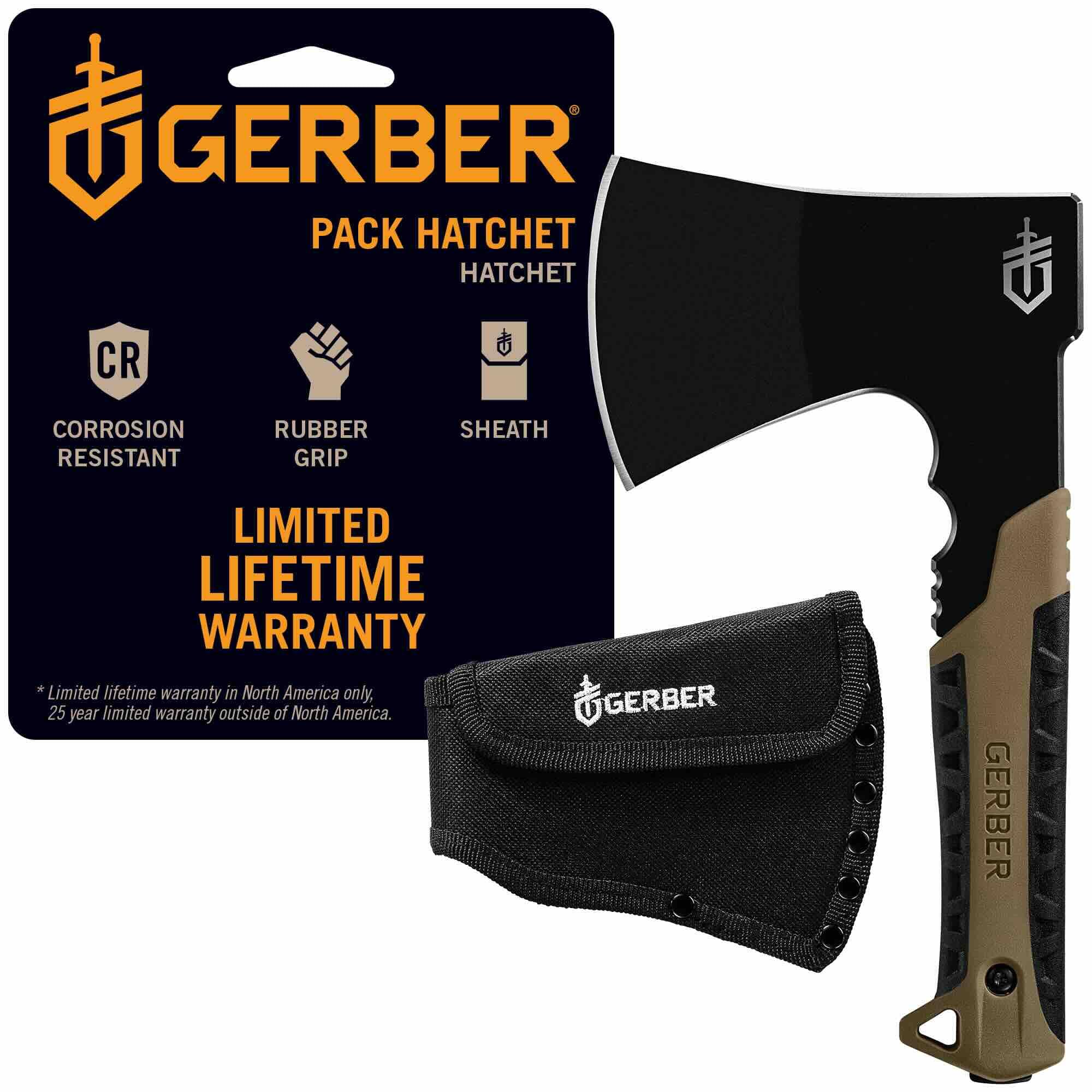
Best for Splitting Firewood
Fiskars X27 Splitting Axe
Key Features
- Total Weight: 6.3 lbs
- Handle Length: 36"
- Blade Sharpness: Sharp out of box
- Price: Mid-Range
The X27 uses its 36-inch handle and convex-ground blade to split medium-to-large logs in a single swing. At 6.3 pounds total, it feels light enough for repeated swings while delivering more force than many heavier mauls. The weight distribution limits fatigue during extended sessions, and the factory edge stays sharp through dozens of logs. The convex grind reduces friction, allowing each strike to penetrate deeply. Edge retention is good enough to go through a full cord without resharpening.
This axe suits homeowners who split firewood regularly and campers processing large rounds. The 36-inch handle gives tall users a comfortable swing arc without stooping. For someone handling a winter’s worth of wood, the X27 can split logs up to 12 inches in diameter with one swing, while larger rounds may need a second strike. The long handle provides leverage for knotty wood, making it a practical choice for mixed hardwood splits. It is not compact enough for backpacking or shaped for felling trees. Given its performance, the X27 is a cost-effective alternative to a splitting maul for most household needs.
Pros
- Splits medium-to-large logs in one swing, reducing effort needed.
- Blade arrives sharp and holds its edge through extended use.
- Well-balanced design limits fatigue during long splitting sessions.
Cons
- Under extreme stress, the head and handle can separate in a small number of units.
For homeowners and campers splitting large rounds, the X27 offers an unmatched balance of leverage and swing speed.
Best for Hardwood Splitting
Fiskars 8lb Splitting Maul
Key Features
- Total Weight: 10.4 lbs
- Handle Length: 36"
- Blade Sharpness: Dull (wedge profile)
- Price: Mid-Range
Where the top-pick X27 balances leverage and weight for all-day splitting, the Fiskars 8 lb Maul trades that finesse for raw wedging ability. Its 6.4-pound head and blunt wedge profile crush gnarly, knotty rounds that would stall a sharper axe, and the IsoCore handle damps vibration well during heavy sessions. The tradeoff is total weight of 10.4 pounds — this maul demands upper-body strength and works best when you’re stationary, swinging hard into a big round. It’s a terrible choice for camping or casual firewood; it’s a dedicated tool for homesteaders working through multiple cords of hardwood.
Pros
- Splits the toughest knotty hardwood rounds in few swings
- Durable enough for years of heavy use without failure
- Handle reduces hand strain during long splitting sessions
Cons
- Heavy enough to tire smaller users quickly; avoid if you have back or joint concerns
- Blade is intentionally dull and may stick in green or stringy wood, requiring a sledgehammer to free it
If you regularly split large, knotty hardwood rounds and have the strength to swing it, this maul is a efficient workhorse. For lighter or occasional use, the X27 splits faster with less fatigue.
Best for Kindling and Light Chopping
Estwing Sportsman’s Hatchet
Key Features
- Total Weight: 1.8 lbs
- Handle Length: 14"
- Blade Sharpness: Sharp out of box
- Handle Material: Leather (stacked)
- Price: Budget
The Estwing Sportsman’s Axe uses a single forged steel piece from head to handle, so there is no risk of the head loosening or flying off. At 14 inches and 1.8 pounds, it fits easily in a pack or on a belt but the short length reduces leverage for splitting larger logs. The lacquered leather grip can get slippery when wet or with gloves, which limits control in damp conditions. This hatchet suits campers and hikers who want a durable tool for kindling preparation, light chopping, and bushcraft tasks — not for heavy splitting or felling.
Pros
- Virtually indestructible one-piece steel construction — the head and handle are forged as a single unit.
- Holds a sharp edge well through moderate use, reducing the need for frequent sharpening.
- Excellent weight and balance for its size — substantial enough for chopping yet easy to carry.
Cons
- Leather handle can become slippery when wet or when wearing gloves, reducing grip security.
- 14-inch handle limits leverage for splitting medium-to-large logs or heavy chopping.
Best for campers who prioritize durability over raw chopping power — the short handle is a fair trade for packability.
Best for Light Splitting/chopping
Estwing Camper’s Axe
The 26-inch handle provides leverage for chopping and splitting kindling without the weight of a full-size axe. Its patented shock reduction grip reduces vibration during extended use, and the 2.5 lb head balances well for controlled swings. The thin blade geometry means it is not designed for splitting large rounds – expect to use a wedge for tough logs. Best for campers who process firewood for cooking and warmth and want a longer handle for leverage, but not for heavy firewood splitting.
Pros
- Cuts campfire kindling and small logs effectively with a 26-inch handle for leverage.
- Patented shock reduction grip reduces hand fatigue during prolonged use.
- Well-balanced for its size, allowing controlled swings without excessive weight.
Cons
- Blade geometry is too thin for splitting large rounds – you will need a wedge for tough logs.
- Powder coating can chip, and rust may develop if the blade is not kept dry and oiled.
Best for campers who need a mid-length axe for chopping and kindling splitting, but not for heavy splitting of large rounds.
Best for Emergency Packable
Gerber Pack Hatchet
Key Features
- Total Weight: 1.3 lbs
- Handle Length: 9.46"
- Blade Sharpness: Sharp out of box
- Handle Material: Rubber over steel
- Price: Mid-Range
At 1.3 pounds, the Gerber Pack Hatchet is the lightest axe in this lineup, fitting easily into a bug-out bag or backpack. Unlike the one-piece steel Estwing Sportsman Hatchet, this model uses a rubber grip for comfort but the lightweight head limits chopping to small branches and kindling. Backpackers who need a compact emergency tool for light processing will appreciate the portability, but those expecting to split logs or fell trees will find it underpowered. The nylon sheath can be tricky to re-sheathe, adding a minor frustration.
Pros
- Ultra-portable at 1.3 lbs — packs easily in a backpack or bug-out bag.
- Sharp out of the box with decent edge retention for light tasks.
Cons
- Requires significant effort on branches over 2 inches thick; head lacks mass for effective chopping.
- Nylon sheath catches on the blade, making re-sheathing difficult.
For backpackers who need a lightweight emergency hatchet for processing small kindling and branches, not for general camp wood splitting.
Best for Kindling Splitting
Estwing Fireside Friend

Key Features
- Total Weight: ~4.2 lbs
- Handle Length: 14"
- Blade Sharpness: Needs sharpening
- Price: Budget
Splits kindling and small logs quickly thanks to its 4-lb forged steel head and compact 14-inch handle. The one-piece construction is built to last, and the size fits easily in a camping kit or fireplace bin. However, the head is heavy for its size, tiring on the wrist during extended sessions, and the blade may arrive dull, requiring sharpening before first use. This is a niche tool for breaking down kindling efficiently, but it lacks the leverage and edge geometry for larger rounds or general chopping tasks a camper or homesteader would need.
Pros
- Splits kindling and small logs with remarkable efficiency.
- One-piece forged steel construction with no separate head or handle to fail.
Cons
- Heavy 4-lb head can be tiring on the wrist during extended kindling work.
Best for fireplace or fire pit owners who need a compact tool solely for breaking logs into kindling — not for campers or homesteaders needing a multipurpose axe.
Best for Budget Full-Size
Cold Steel Trail Boss

Key Features
- Total Weight: 2.6 lbs
- Handle Length: 27"
- Handle Material: Hickory Wood
- Price: Budget
The Cold Steel Trail Boss delivers good value for a full-size axe, with a lightweight 2.6 lb build and a 4-inch blade that sharpens easily. However, the hickory handle may crack under moderate use, and the head can loosen over time without additional wedging. This makes it a practical option for light chores on softwoods, provided you are willing to replace or reinforce the handle.
Pros
- Good value for a full-size axe
- Lightweight and easy to swing for extended periods
Cons
- Handle may crack under moderate use; head can loosen without additional wedging
Best suited for budget-conscious campers who stick to softwoods and don’t mind replacing or reseating the handle.
Best for Extreme Budget
Coleman Camping Axe

Key Features
- Total Weight: 2 lbs
- Handle Length: 13"
- Blade Sharpness: Dull out of box
- Handle Material: Steel with rubber grip
- Price: Budget
At under $15, the Coleman Camping Axe is one of the most affordable hatchets available, and its flat hammer poll is handy for driving tent stakes. But the edge arrives extremely dull and the alloy steel won’t hold sharpening for long, so it’s best reserved for occasional car camping where you’re willing to sharpen before each trip.
Pros
- Very affordable for a camping hatchet.
- Hammer poll works for driving tent stakes.
Cons
- Edge arrives dull and loses sharpness quickly after sharpening.
This hatchet fits the occasional car camper who already owns a sharpening stone and doesn’t mind touching up the blade before each trip – not a tool for serious wood processing.
Best for Budget Hatchet
KSEIBI 15" Hatchet

Key Features
- Total Weight: 1.3 lbs
- Handle Length: 15"
- Blade Sharpness: Often dull
- Handle Material: Fiberglass
- Price: Budget
This hatchet offers good value for its price — lightweight, comfortable grip, and a hammer poll for tent stakes — but the edge can arrive dull, requiring sharpening, and the fiberglass handle may not survive heavy splitting on hardwoods.
Pros
- Solid build and comfortable grip for a budget tool.
- Lightweight enough for easy carry on camping trips.
Cons
- Edge can arrive dull and needs sharpening before use.
A fitting choice for budget-conscious campers who process only small branches and don’t mind touching up the edge.
Best for Budget Kindling
DESHIL 15" Hatchet

Key Features
- Total Weight: 1.3 lbs
- Handle Length: 15"
- Blade Sharpness: Needs sharpening
- Handle Material: Fiberglass
- Price: Budget
The DESHIL 15" Hatchet offers a comfortable fiberglass handle with a non-slip grip and a hammer back useful for tent stakes. It handles kindling and small branches without trouble. However, the blade often arrives dull and loses its edge quickly, making it unsuitable for hardwoods or heavy splitting — better left to budget-sensitive campers who are comfortable with regular sharpening.
Pros
- Fiberglass handle with anti-slip grip stays comfortable during use.
- Flat hammer back works well for driving tent stakes.
Cons
- Blade may require sharpening before it can chop effectively.
A basic hatchet for light camping tasks like kindling and small branches, provided you are willing to sharpen it regularly.
Best for Emergency Compact
DESHIL 10" Hatchet

Key Features
- Total Weight: 1.1 lbs
- Handle Length: 10"
- Blade Sharpness: Dull out of box
- Handle Material: Fiberglass
- Price: Budget
The DESHIL 10-inch hatchet is the most affordable option in this lineup at under $10, and its 1.1-pound weight and compact 10-inch handle make it easy to tuck into a backpack or glovebox. However, the blade arrives without a usable edge — sharpening is required before any real cutting. The small size also limits it to splitting small kindling or trimming twigs; it is not suited for processing campfire wood or heavier tasks. For its intended role — an emergency backup or a child’s first tool — it can work after some preparation, but anyone needing a ready-to-use camp hatchet should look to the competitors like the Fiskars or Estwing models.
Pros
- Extremely budget-friendly — costs less than a dinner out.
- Compact and portable — fits in a backpack or glovebox without adding weight.
Cons
- For anyone expecting to use it immediately, the factory edge is too dull for even light cutting — sharpening is necessary.
Best suited for a car emergency kit or introducing a young camper to axe handling — not for anyone needing a functional camp tool out of the box.
Best for Axe Throwing
Estwing Double Bit Axe

Key Features
- Total Weight: 2 lbs
- Handle Length: 17.19"
- Blade Sharpness: Needs sharpening
- Price: Mid-Range
This double-bit axe is purpose-built for throwing and carving, with balanced weight and a one-piece steel handle that avoids loose-head failures. However, it is too short and light to chop or split firewood, and one of the two bits can arrive unsharpened from the factory. A dedicated throwing tool rather than a camp axe.
Pros
- One-piece forged steel construction eliminates handle-head separation.
- Balanced weight distribution suits axe throwing and carving after sharpening.
Cons
- One of the two cutting edges may be blunt from the factory and require grinding.
Best for axe throwing and bushcraft carving where precise balance and durable steel matter; not a replacement for a camp axe or splitter.
How to Choose
Matching handle length and head weight to your height and the wood you split determines whether an axe feels effortless or exhausting.
Head Weight vs Total Weight
Head weight is the force behind the split; a heavier head drives through knotty hardwood but demands more strength to swing. Total weight includes the handle, and a lighter overall tool reduces fatigue over a long session.
For example, a 4-pound head on a 3-pound handle (total 7 lbs) is more efficient for splitting than a 2-pound head on a 1-pound handle (total 3 lbs) because the head-to-total ratio is higher. A splitting maul at 10+ pounds can feel punishing for casual campers, while a hatchet under 2 pounds is ideal for hiking but useless on big rounds.
Handle Length
Longer handles (28-36 inches) multiply leverage, letting you split larger logs with less effort per swing, but they require more clearance and can be awkward in tight campsites. Short handles (under 16 inches) are packable and work for kindling but lack the arc to generate force on thicker wood.
A 36-inch handle suits tall users who want to avoid bending, while a 26-inch camp axe splits the difference for all-around camp chores. Backpackers should stay under 14 inches for pack space.
Blade Sharpness and Edge Retention
Many budget axes skip final grinding, arriving so dull they bounce off wood instead of biting. A sharp edge cuts safely and efficiently, but some axes – especially splitting mauls – use a deliberately blunt wedge profile to prevent the head from sticking in green wood.
If you plan to chop or fell, look for a thin, razor-sharp blade. If you only split logs, a blunt wedge works better. Always check the edge out of the box; if it is dull, a few strokes with a file or puck sharpener restore function.
Handle Material and Construction
One-piece forged steel handles (like Estwing) never break or loosen but are heavier and can transmit vibration. Composite handles (Fiskars FiberComp) are lightweight and absorb shock well, though rare breakage occurs under extreme stress. Wood handles (hickory) offer traditional feel but require oiling and can crack if left wet.
For campers who want zero maintenance, one-piece steel is the safest bet. For weight-conscious backpackers, composite is ideal. Wood is best for purists who enjoy tool care and accept the trade-off of occasional re-wedging.
FAQ
Why do some axes come dull out of the box and how do I fix it?
Most budget axes skip final grinding to cut costs. You can fix a dull edge with a mill file or puck sharpener – a few passes at a 25-degree angle restore cutting ability. For splitting mauls, however, the dull wedge is intentional; sharpening them reduces splitting efficiency.
Is a 36-inch splitting axe too long for someone under 6 feet tall?
A 36-inch handle provides maximum leverage but can feel unwieldy if you are under 5’8′. Taller users will appreciate the longer reach, while shorter users may benefit from a 28-inch axe for better control. Try swinging both lengths at a store to see what feels natural.
Can I use a splitting maul for felling small trees, or do I need a dedicated chopping axe?
Splitting mauls are designed to wedge wood apart, not cut across grain. Their thick, blunt blades bounce off unsawn logs and make poor felling tools. For felling small trees, a dedicated chopping axe with a sharp, slim blade is the right choice.
How do I know if an axe head is going to fly off during use?
Heads fly off when the handle dries out and shrinks, or when the wedge loosens. Check for gaps between the head and handle, and tap the handle on the ground to feel for wobble. Replace or re-wedge immediately if you notice play.