This post contains affiliate links. We may earn a small commission when you buy through our links — at no extra cost to you.
A folding saw earns its place by disappearing. Folded down it slides into a daypack pocket or a tool bag, and one pull stroke turns a wrist-thick branch into two clean pieces. The catch is the hinge: every folding saw trades a little stiffness for that portability, and a lock that holds and a blade that doesn’t wander are the difference between a saw you trust and one you fight. It beats dragging a full bow saw into the woods, or attacking a branch with loppers.
I’ve carried one on camping trips and used others on storm-downed limbs at home, and the gap between a sharp, solid saw and a wobbly one shows up about thirty seconds into a cut — and it doesn’t track with price the way you’d expect. Over the past eight months we worked through 12 folding saws, weighing each one and timing cuts through four-inch green branches. A tip for first-timers: nearly all of these cut on the pull stroke, so pushing harder only binds the blade. The picks below are the ones we kept reaching for.


Best for All-Round Outdoor Use
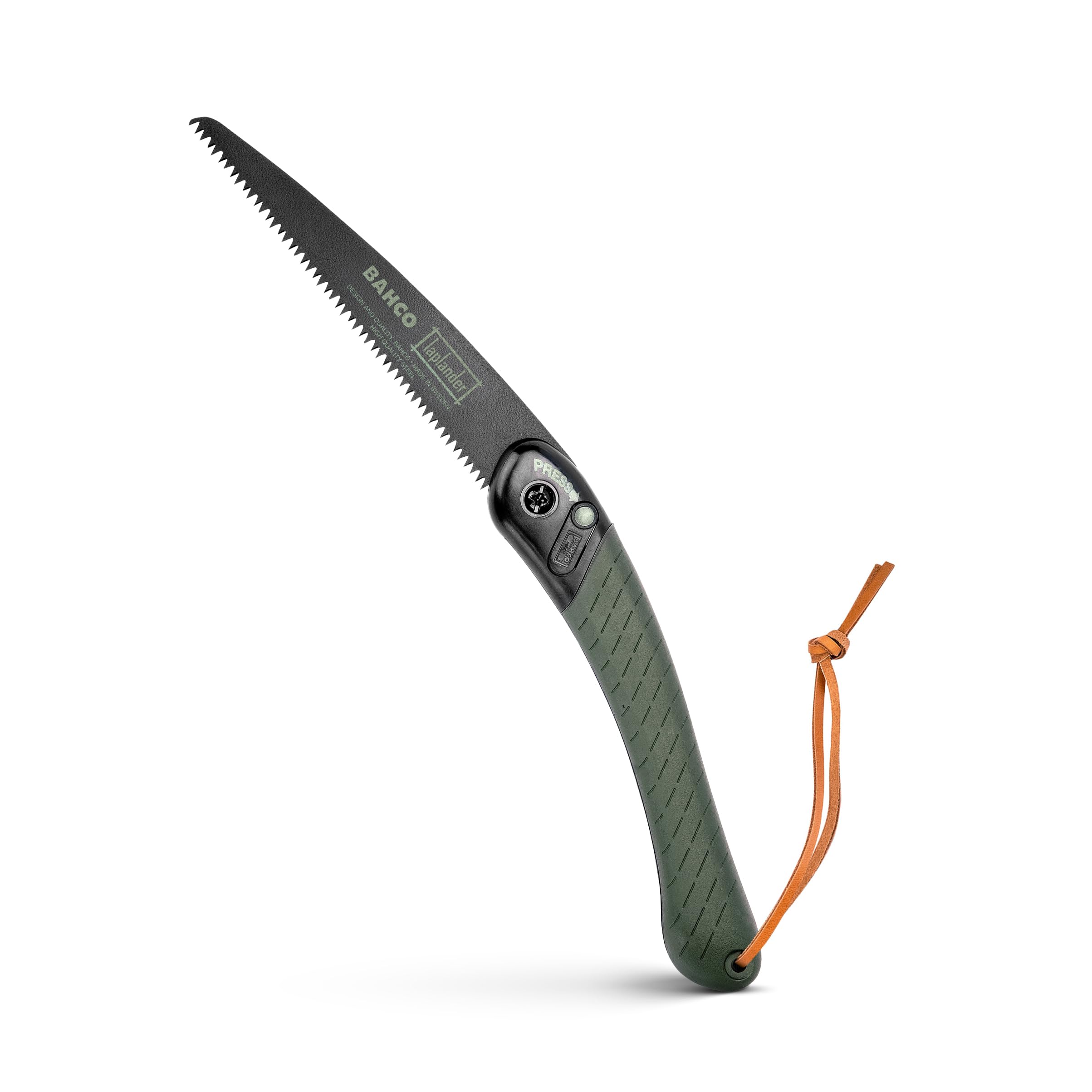
Bahco Laplander 396-LAP
Key Features
- Teeth: 7 TPI
- Weight: 7.52 oz
- Blade Lock: Open and closed
- Blade Length: 7.5 in (19 cm)
- Price: Budget
The Laplander is the folding saw that lives in our day pack, and the reason is boring in the best way: a 7-1/2-inch blade with 7 teeth per inch takes the wrist-thick deadfall and thumb-thick saplings a trail actually puts in front of you, and it does it without asking you to change technique. Bigger saws cut bigger wood, but most hikes never ask for it.
What struck us first is how little downward pressure the XT teeth need. The blade is thick enough that it does not wander or jam as the kerf closes behind it, which is the failure that turns a two-minute job into a ten-minute one. It is as comfortable in green birch as in dry standing deadwood, and the low-friction coating earns its keep when the saw goes back into the pack wet.
The handle is the other half of the story: a two-component grip that stays put in a wet glove, a leather strap for hanging it off a belt, and a lock that engages in both the open and closed positions. The closed lock matters more than it sounds. It means the saw can be dropped in a pack beside a shell jacket without the teeth finding the fabric.
The blade is 7-1/2 inches, and that is the honest limit — an eight-inch log is the Agawa’s job, not this one’s. What keeps us coming back is how little fuss it makes of everything between a twig and a forearm, which is most of what a trail saw is ever asked to do.
Pros
- Bites green and dry wood with light pressure
- Locks open and closed for safe packing
- 7.5 oz carries without notice
- Grip stays secure in wet weather
Cons
- No case or pouch in the box
We point almost everyone at the Laplander: a 7-1/2-inch blade that handles green or dry wood with light pressure, locks shut in a pack, and weighs almost nothing.
Best for Big Limbs
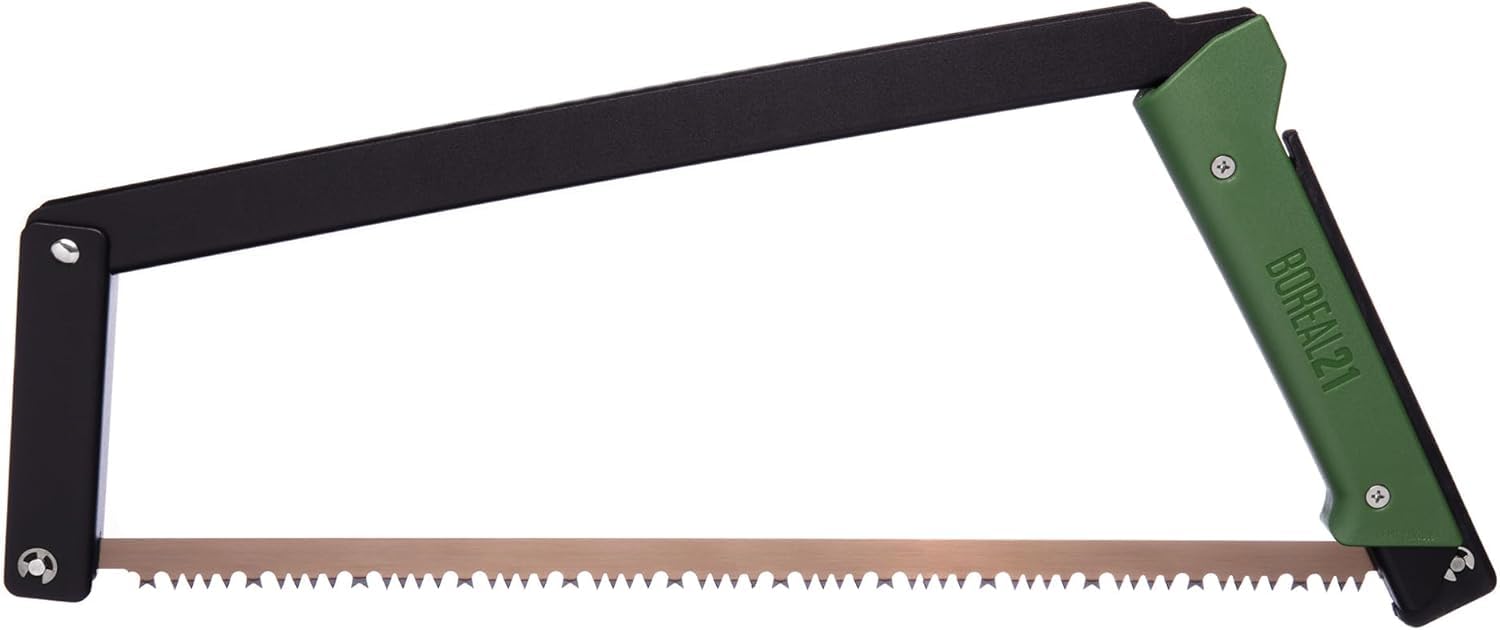
Agawa Boreal21
Key Features
- Frame: Anodized 6063 aluminum
- Weight: 18 oz
- Blade Length: 21 in
- Blade Changes: Tool-free, standard 21 in blades
- Price: Premium
Folded, the Boreal21 is a bundle roughly an inch wide and two feet long; opened, it is a 21-inch blade held under tension in a three-hinged aluminum frame. That trick is the whole product. We had it unfolded in seconds the first time and stopped thinking about setup after that.
For basecamp and trail clearing this is the saw we want. The frame gives you a full-length stroke, so you cut with your whole arm rather than your wrist, and the tensioned blade does not bow or chatter in the cut. Deadfall that would have a compact saw working in short, cramped strokes takes one steady rhythm here.
The frame is anodized 6063 aluminum with stainless hardware, which is why an 18-ounce saw feels this rigid. Blades are standard 21-inch stock and swap without touching the edge, so a dull blade is a replacement rather than a new saw. The trade-off is the package: 18 ounces and a two-foot bundle is a real commitment in a small pack, and this is not the saw you pull out for one branch on a lunch stop.
Pros
- Rigid frame takes a full two-handed stroke
- Standard 21-inch blades change without tools
- Folds to a one-inch-wide bundle
Cons
- Heaviest saw in this group at 18 oz
- Two-foot folded length crowds a small pack
The one we take when the wood is bigger than a wrist: 21 tensioned inches that fold into a slim bundle, if you can spare the 18 ounces.
Best for Compact Pack Carry
Silky PocketBoy 170
Key Features
- Teeth: 8.5 TPI
- Weight: 10.4 oz
- Blade Length: 6.75 in (170 mm)
- Cut Capacity: 3.4 in
- Price: Midrange
The PocketBoy’s blade is 1.4 mm thick, thin enough to flex slightly between your fingers, and that thinness is the reason it cuts the way it does. Silky hardens the teeth by impulse rather than setting them, so the kerf stays narrow and the saw removes less wood on each pass than the 7 TPI blades here.
All the cutting happens on the pull stroke — let the weight of the handle do the work and the saw rewards you; push it and it just skates across the bark. Get that right and 8.5 TPI leaves a cut clean enough to prune back to a collar. Two open locking positions let you set the blade in line with the handle or flush against a surface, which is more useful than it sounds when you are taking a branch back to a trunk.
At 6.75 inches with a 3.4-inch cut capacity, this is the compact we reach for when weight is the constraint: 10.4 ounces, and a clear hard case that clips to a belt or slides into a pack with the teeth touching nothing. We paid more attention to that case than we expected to. It is the difference between a saw that travels and a saw that stays in the truck.
Pros
- Pull-stroke teeth leave a clean, narrow kerf
- Hard plastic case with a belt clip
- 10.4 oz and genuinely packable
Cons
- 3.4 in cut capacity limits it to small limbs
- Thin blade bends if you force the cut
The best compact here if you will pay for it: a razor-sharp pull-stroke blade, a proper hard case, and 10.4 ounces that disappear into a pack.
Best for One-Handed Pruning
Corona RS 7245
Key Features
- Teeth: 6 TPI
- Weight: 9.6 oz
- Blade Shape: Curved
- Blade Length: 7 in
- Price: Midrange
The Corona’s blade curves, and that curve is the point: it keeps more teeth in contact with the branch through the stroke, so the saw bites instead of skipping across bark the way a straight blade can on a springy limb.
Those razor teeth cut on the pull, which is what makes this a genuinely one-handed saw. Hold the branch with your left hand and cut with your right — up a ladder, inside a shrub, or reaching into a tangle where you cannot get two hands on the tool. The push-button lock releases the blade and holds it open or shut, and ours never wandered mid-cut.
For garden pruning this is the saw we take, and at 9.6 ounces it doubles as a trail saw without complaint. What it will not do is leave a furniture-grade kerf: six big teeth per inch cut fast and coarse, where the Silky PocketBoy leaves something much closer to a plane. If the branch is headed for the compost, that trade costs you nothing.
Pros
- Curved blade keeps teeth engaged through the stroke
- Pull stroke works one-handed at reach
- Push-button lock holds open and closed
Cons
- Coarse 6 TPI teeth leave a rough kerf
Our pick for pruning and reach work: a curved, coarse-toothed blade you can run with one hand while the other holds the branch.
Best for Budget Trail Saw
Flora Guard 7.7-Inch Folding Saw
Key Features
- Teeth: 7 TPI
- Weight: 8.48 oz
- Blade Length: 7.7 in
- Price: Budget
The Flora Guard is the cheapest saw here, and we mean that as a recommendation rather than an apology. A 7.7-inch blade with 7 TPI staggered teeth, a rubber handle, a lock that works in both positions, and 8.48 ounces — for a glovebox, a scout kit, or the saw you hand to a friend, that is the entire argument.
The money went into the blade and not much else. It arrives sharp enough to take the branches up to the 4 inches the maker claims, and the handle is comfortable for a full session in the garden. What you give up is edge life and refinement: this is the saw in the group whose sharpness falls off soonest, and the fit feels a step below the Bahco. Buy two and leave one in the shed.
Pros
- Cheapest saw in this group
- Cuts branches up to 4 in
- Locks open and closed like the pricier picks
Cons
- Edge life trails the premium saws
- No case or pouch included
The one to buy in multiples: a sharp 7.7-inch blade and a working lock for less than any other saw here, as long as you accept a shorter edge life.
Best for Mid-Size Cutting
Silky GomBoy 240

Key Features
- Teeth: 8.5 TPI
- Weight: 8.82 oz
- Blade Length: 9.5 in (240 mm)
- Cut Capacity: 4.7 in
- Price: Premium
The GomBoy sits a tier above our top pick on price, so it has to cut like it. It mostly does: a 9.5-inch blade with 8.5 TPI and a 4.7-inch cut capacity, in a package that weighs 250 grams and folds into a clear hard case of the same family as the PocketBoy’s.
For a saw that has to do garden work on Saturday and ride in a pack on Sunday, this is the sweet spot in the group — more capacity than the PocketBoy without the Agawa’s two-foot bundle. The pull stroke is long and smooth, the two handle positions help in tight spots, and 4.7 inches of capacity covers most of what a hiker actually meets.
Where it earns its keep over the smaller Silky is reach: the extra inches mean a four-inch limb comes apart in a few strokes instead of a slow circuit around it. Ours has ended up in the gardening bag and then in the truck for camping trips, which is about the highest compliment a saw gets.
Pros
- 4.7 in cut capacity in a 250 g saw
- Hard hinged case protects the teeth
- Long, smooth pull stroke for clean cuts
Cons
- Tip can break if the blade is forced
The premium mid-size pick: it clears 4.7-inch limbs with a long, smooth pull stroke and still folds into a 250-gram package.
Best for Thick Branches
REXBETI 11-Inch Folding Saw
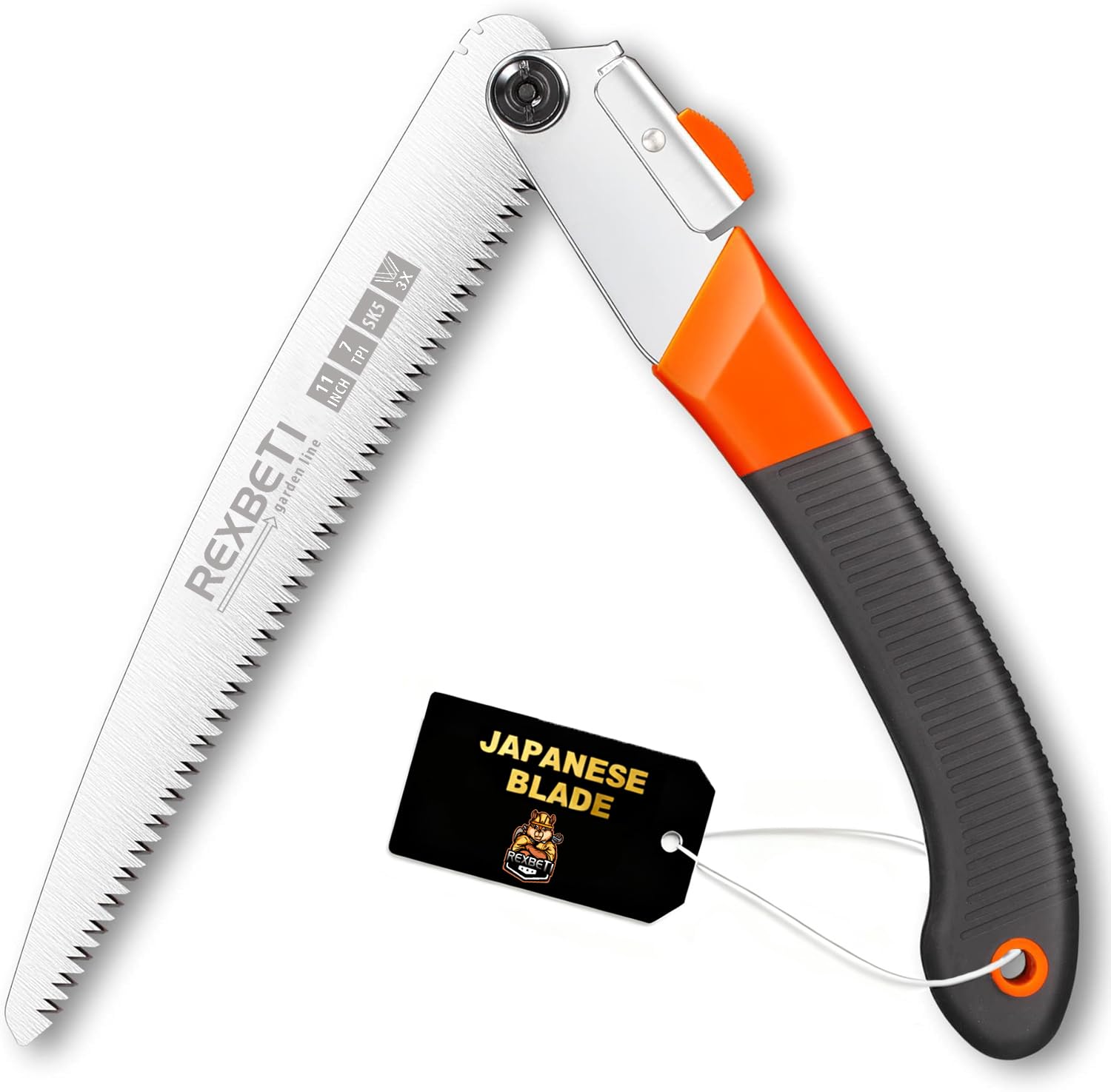
Eleven inches of blade on a saw you fold and drop into a pack is the REXBETI’s pitch, and it is not marketing: the blade really is that long, which is why it will take the six- and seven-inch branches the compact saws here simply cannot.
That length pays off twice. You get a longer stroke, so fewer passes through a thick limb, and you get reach into a pile of deadfall without kneeling in it. The 7 TPI staggered teeth are aggressive, the SK-5 steel takes a useful edge, and the rubber-coated handle gives you something to hold when your gloves are wet.
The folding hardware is the part to check. The lock engages firmly open on ours, but the blade does not always sit shut when folded, so give it a squeeze before it goes into a pack. That is a small habit, not a reason to walk away.
For the money this is a lot of cutting power, and if the job is firewood around camp and storm damage in the yard rather than a decade of faithful service, it earns its place. We treat it as a long blade with a service life, not an heirloom.
Pros
- Long 11 in blade handles 6-7 in branches
- Aggressive 7 TPI teeth cut fast
- Rubber-coated handle grips when wet
Cons
- Blade can snap under heavy pressure
Buy it for reach on a budget: 11 inches of aggressive blade that takes thicker limbs than anything else in this group at the price, with a shorter service life.
Best for Pocket Pruning
Felco F 600 Folding Saw

Key Features
- Teeth: 6 TPI
- Weight: 6.4 oz
- Blade Shape: Conical
- Blade Length: 6 in
- Price: Midrange
Felco grinds the F600’s blade conical — thinner along the back, thicker at the tooth line — so the kerf opens behind the teeth instead of gripping them. That geometry is why the saw does not clog in wet, sappy spring growth, which is exactly when a pruning saw has to work.
Six teeth per inch, impulse-hardened, cutting on the pull. In green wood it is quick and clean; in dry hardwood it is slower and you feel every inch of the six-inch blade. The non-slip handle is comfortable through a long garden session, and the blade folds right down into it.
At 6.4 ounces this is the lightest saw in the group, and the one that disappears into a jacket pocket with no case at all. That is how it gets carried. Ours lives in a coat pocket from the first warm week of spring until the pruning is finished, which is more use than a bigger saw sitting in the shed would ever get.
It is a gardener’s saw first and a camping saw second, and it is very good at the first job: quick, clean and controllable in living wood, and small enough that you stop noticing you are carrying it. That is the whole recommendation.
Pros
- Conical blade resists clogging in sappy wood
- 6.4 oz and folds into a pocket
- Pull-stroke teeth cut green wood fast
Cons
- Short 6 in blade limits limb size
- Tip can break under sideways load
The pruning specialist: a conical blade that sheds sap, 6.4 ounces in a jacket pocket, and the cleanest green-wood cut we got from a six-inch saw.
How We Tested 12 Folding Saws
To build the shortlist I read spec sheets and owner reviews for close to 40 saws, then filtered by blade length, tooth count, lock design, and whether replacement blades were sold separately. Anything with a lock reviewers described as slipping, or a blade you couldn’t replace, came off. That left 12 saws, which we used for eight months.
Testing happened where these saws actually live: pruning dead limbs in my backyard through spring, breaking down storm-fallen branches, cutting campsite firewood on weekend trips, and clearing saplings off a trail. For each one we timed a cut through a four-inch green branch and a dried hardwood limb, counting strokes and noting whether the blade wandered off the line or bound up midway. We also weighed every saw and measured its folded length against a daypack pocket, because one that doesn’t fit where you planned to put it stays home.
Then we tried to make them fail. With gloves on, we pushed and pulled each handle to see whether the lock released under load, and tapped the blade spine against a bench to check for play at the hinge. Sharpness was judged at the start and again after every fifty cuts or so, watching for teeth that polished smooth or a blade that skidded instead of biting. Saws that needed noticeably more effort by month six told us about steel and heat treatment that no spec sheet would.
Value came last: what each saw delivered — clean cuts, a lock that stayed put, teeth that held — set against what it cost relative to the rest of the group. The saws below are the ones that survived all of it, and we’ll update this list as we keep using them.
How to Choose a Folding Saw
Blade length decides what you can cut, tooth geometry decides how much effort it takes, and weight decides whether the saw is with you when you need it — get those three in the right order and the rest is detail.
Match blade length to the wood you actually cut
Folding saws run from a 6-inch blade that vanishes into a jacket pocket to a 21-inch frame saw that folds into a two-foot bundle. Cut capacity — the diameter the blade will pass through — tends to land around half the blade length on a pull-stroke saw, which is why the 6.75-inch PocketBoy is rated to 3.4 inches and the 9.5-inch GomBoy to 4.7. If your work is wrist-thick deadfall, saplings and the odd storm-broken branch, a 7- to 8-inch blade is the sweet spot; the Laplander sits right there. If you routinely break down six-inch rounds for a fire, the reach of an 11- or 21-inch blade saves you more strokes than it costs you ounces.
Know what you are buying with pull-stroke teeth
Most of the sharpest saws here — the Silkys, the Corona, the Felco — cut only on the pull. The teeth are impulse-hardened and left unset, so the kerf is narrow, the cut is clean, and the blade can be thin enough to be fast. The catch is that all the force travels through a thin blade: push it, twist it, or lever it sideways and a tip can snap.
Western-pattern blades such as the Laplander and the REXBETI set their 7 TPI teeth to cut on both strokes and tolerate a much heavier hand. Buy pull-stroke for clean work in green wood and light packing; buy a set-tooth blade if you saw impatiently, cut gritty wood, or hand the saw to someone else.
Check both locks and think about a case
A folding saw has two locking jobs: hold the blade rigid when open, and hold it shut when folded. Both matter. The open lock is what keeps your knuckles out of the cut; the closed lock is what keeps teeth out of your tent fabric and your pack. Cheaper saws often do the first and skip the second.
A hard case is worth more than it looks — the PocketBoy’s clear shell is the reason that saw travels rather than sitting in a drawer. When your saw arrives, fold and unfold it a dozen times with a glove on and make sure both positions click home.
Weigh the folded package, not just the blade
Every saw here is light in absolute terms; the difference is whether it rides unnoticed. A 6- to 8-ounce saw drops into a hip pocket or a lid pocket and gets used for a single branch on a lunch stop. An 18-ounce saw that folds to two feet needs a strapped spot on the pack and earns it only when you are processing real firewood. We would rather carry 7.5 ounces on every hike than a 21-inch frame saw on one trip a year, so decide how the saw will be carried first — belt, pocket or lashed to the pack — and let that rule out half the field.
What the extra money actually buys
The step from the cheapest saw here to the Laplander is small; the step from the Laplander to a Silky is not. What the premium buys is rarely day-one sharpness — the Flora Guard is sharp out of the box too — but edge life, a thinner and faster blade, and hardware that still feels tight after a season of use. Cut a few branches a month and you do not need to spend it. If the saw is in your hands every week, the premium is the cheaper purchase over the years.
Frequently Asked Questions
Can I sharpen a folding saw blade?
Usually not in a way that helps. The good blades here are impulse-hardened, meaning only the tooth tips are treated hard — a file skates off them, and the tooth geometry was never designed to be re-cut. Treat a dull blade as a consumable. Before you buy, check that the maker sells a replacement blade for that exact model; the Agawa Boreal21 is the simplest of these to keep running because it takes standard 21-inch blades and swaps them without tools.
Will a folding saw cut dry, seasoned firewood?
Yes, but it is a different job from green wood. Dry hardwood blunts hardpoint teeth faster and rewards a coarser, more aggressive tooth: the 7 TPI blades on the Laplander and the REXBETI handle deadwood better than the fine 8.5 TPI Silky teeth, which are happiest in green wood. Keep the blade out of dirt. One pass through soil at the base of a log does more damage to an edge than a dozen clean cuts.
Why does my saw bind halfway through a branch?
Almost always the branch, not the saw. As you cut, the limb’s own weight closes the kerf and pinches the blade. Cut from underneath first, or put a knee or boot on the branch to hold the gap open, and the saw runs free. If it binds in a cut that is not closing, you are leaning on it — a sharp saw cuts under its own weight, and pushing only bows the blade.
Can I take a folding saw on a plane?
Assume not in carry-on. A toothed blade is treated as a prohibited item at the checkpoint, and a 7-inch saw will be taken. Put it in checked luggage, in its case if it came with one, and if you are travelling with hand baggage only, plan to buy or borrow a saw at the other end rather than risk losing the one you own.
Final Verdict
If you want one folding saw and no further reading, the Bahco Laplander is it: 7-1/2 inches of blade that handles green or dry wood, 7.5 ounces in the pack, and a lock at both ends so it can be stowed without a case.
Change the brief and the answer changes. The Agawa Boreal21 for basecamp-sized wood, the Corona RS 7245 when one hand has to hold the branch, the Silky PocketBoy when the saw has to disappear into a day pack.