This post contains affiliate links. We may earn a small commission when you buy through our links — at no extra cost to you.
A folding knife is a compromise you carry in your pocket: the one light enough to forget about is often the one that balks at a stubborn zip tie, and the one that sails through cardboard tends to drag your waistband down by lunch. The right pick splits that difference for your hands and your days — it arrives sharp, holds an edge through real work, and feels solid the moment it clicks open. Get it wrong and it lives in a drawer; get it right and it becomes the thing you reach for without thinking.
I’ve spent the past eight months carrying 12 folding knives clipped to jeans, dropped in jacket pockets, and opened one-handed while the other hand held a box steady. A few earned a permanent spot; a couple lost their shine within a week. Along the way I learned that blade steel gets far more attention than it deserves — a comfortable handle and a lock you actually trust matter more. The picks below are the ones that survived, sorted by how you’ll really use them.

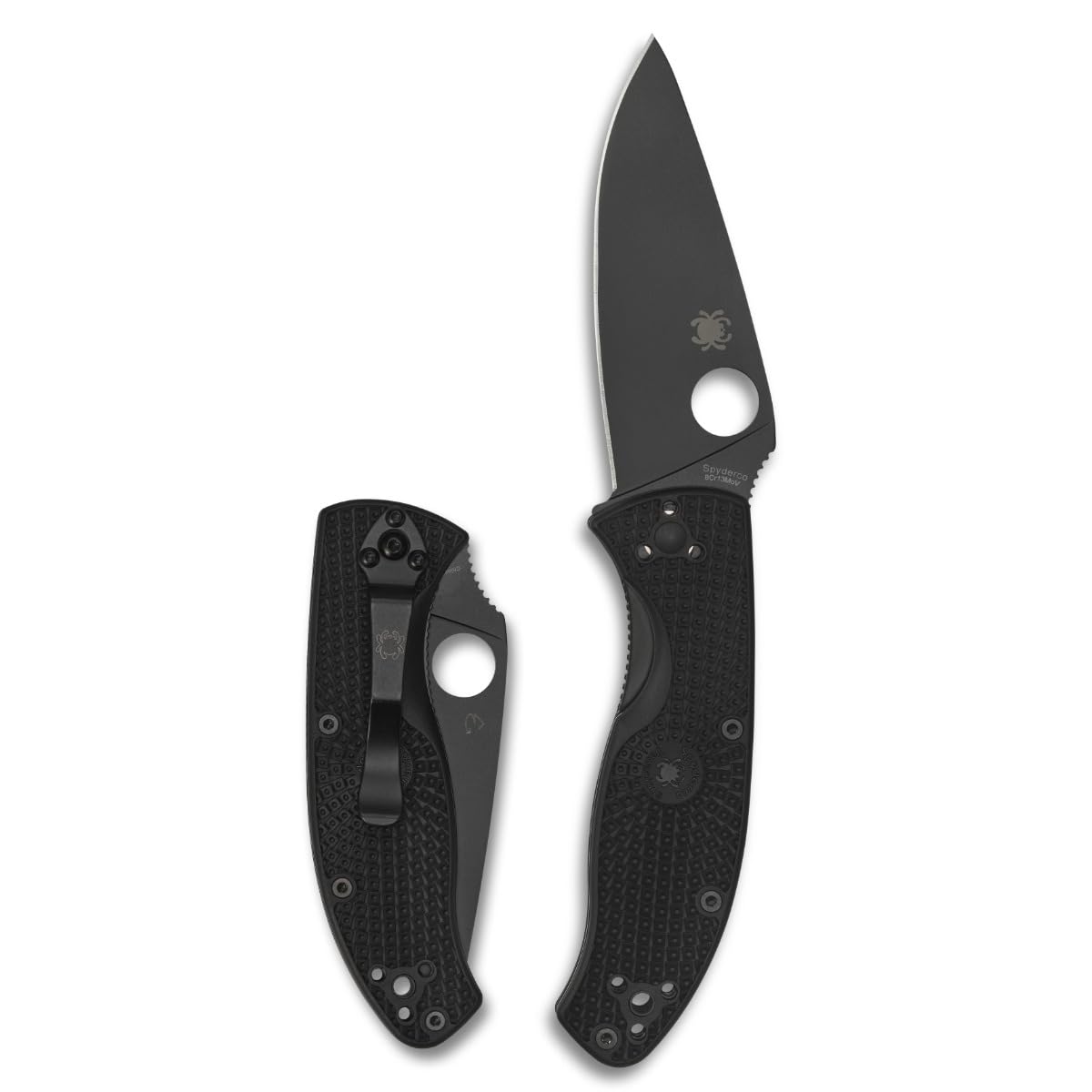


Best for All-Purpose Edc
Kershaw Clash
Key Features
- Handle: Glass-filled nylon
- Opening: SpeedSafe assisted
- Blade edge: Partially serrated
- Blade length: 3.1 in
One-handed speed is the Clash’s main argument: the flipper and SpeedSafe assist bring the blade out with one hand, and the deep index-finger contour gives your grip a home before you cut. We noticed that most when opening boxes and cutting strapping; the knife is ready without a two-handed fiddle. That speed is why it sits at the top of this set, not a spec-sheet accident.
The 3.1-inch partially serrated drop point is the practical part. The plain section handles cardboard and tape, while the serrations chew through rope and straps that punish a fine edge. It is a working edge, not a collector’s showpiece. The 8Cr13MoV steel is easy to maintain and takes a working edge without fuss.
We like the glass-filled nylon handle more than its price suggests: it is contoured, fills the hand, and stays secure when wet. The liner lock is simple, and the reversible clip accommodates left- or right-hand carry. At 7.5 inches overall, it takes real pocket space; this is a working folder, not a suit-pocket afterthought. The heft is reassuring in hand and noticeable in light trousers.
If you want a plain edge for cleaner push cuts, the Spyderco is our upgrade; if you want a smaller all-steel knife, the Cryo is the compact pick. Otherwise, the Clash is the one we hand to someone who wants a single do-it-all folder.
Pros
- Fast one-handed SpeedSafe opening
- Contoured glass-filled nylon grip stays secure
- 3.1-inch blade handles boxes, rope, and straps
- Easy-to-maintain 8Cr13MoV steel
Cons
- Partial serration is harder to sharpen
Our best all-around assisted folder here for everyday cutting, with a comfortable handle and a 3.1-inch blade for boxes and rope.
Best for Plain-Edge Carry
Spyderco Tenacious LW
Key Features
- Weight: 3.68 oz
- Blade edge: PlainEdge
- Pocket clip: Four-position
- Blade length: 3 in
Four clip positions is the detail that makes the Tenacious the easiest knife here to live with. Carry it tip-up or tip-down, left or right, and it sits where you expect; the 3-inch plain-edge blade stays out of the way until you need it. We found that configurability matters more than another quarter-inch of blade, especially when a jacket pocket and jeans pocket call for different carry.
The full-flat-ground 8Cr13MoV blade is the other reason we recommend it. It slices cardboard and food cleanly, and it is easy to bring back on a stone. The liner lock is solid, and the FRN handle’s bidirectional texture gives a secure grip without making the knife hard to pull from a pocket.
At 3.68 ounces, it has enough heft to feel planted without dragging shorts down. The blade is a little longer than the Cryo’s and a little shorter than the Clash’s, which puts it in the middle of this group for general utility. It is not the flashiest choice, but it is the one we carry when we want a plain edge and a no-drama lock.
Pros
- Four-position clip fits left or right carry
- Full-flat-ground plain edge slices cleanly
- Solid liner lock and textured FRN grip
- 3.68 oz carries without feeling flimsy
Cons
- Manual opening lacks assisted snap
Our pick for a plain-edge, left- or right-hand EDC here, with a solid lock and a four-position clip that carries easily.
Best for Compact Steel Upgrade
CIVIVI Mini Praxis
Key Features
- Handle: G10
- Weight: 4.05 oz
- Blade steel: D2
- Blade length: 2.98 in
- Price: Midrange
D2 steel in a small folding knife usually signals a premium, but the Mini Praxis is where we look first for materials per dollar. The 2.98-inch blade is black stonewashed D2, and the G10 handle resists moisture and temperature swings better than the smooth metal or wood handles here. That matters if the knife lives in a sweaty pocket or a damp pack.
The ceramic ball-bearing pivot gives it a quick, snappy flip that feels more expensive than the rest of the knife, and the detent and lock-up feel solid. We found the liner lock easy to find with a thumb. The blade came sharp and held a working edge through cardboard and packing tape. This is the compact knife we recommend when edge holding matters more than assisted opening.
D2 is less corrosion-resistant than the stainless steels here, so wipe it down after wet use and keep the pivot clean. At 4.05 ounces it is not a featherweight, and the action can feel tight until it breaks in. For a compact knife with real steel and a grippy handle, we still think it is one of the strongest values here.
Pros
- D2 blade holds an edge well
- G10 handle resists moisture and temperature
- Ceramic ball-bearing pivot flips smoothly
- Compact 2.98-inch blade for pocket carry
Cons
- Right-hand carry bias
Our best steel-and-handle package for a compact EDC here, as long as you carry right-handed and don’t mind D2 care.
Best for Small Pocket Carry
Kershaw Cryo
Key Features
- Handle: Stainless steel
- Opening: SpeedSafe assisted
- Blade steel: 8Cr13MoV
- Blade length: 2.75 in
- Price: Midrange
At 6.5 inches overall, the Cryo is the compact pick for someone who wants a small knife that still feels like a tool. Its 2.75-inch drop point and stainless handle give it a planted, all-metal feel that the plastic-handled budget knives here cannot match. It fits easily into a pocket without disappearing into the background the way a tiny keychain knife can.
Kershaw’s SpeedSafe assist is the part we keep coming back to. The flipper fires the blade out with one hand, and the liner lock holds it securely open. The 8Cr13MoV blade has a carbo-nitride coating for a little extra protection, and it sharpens easily after cardboard and tape duty. The pocket clip can be set for right- or left-handed, tip-up or tip-down carry.
The 2.75-inch blade is the real limit: it is plenty for boxes and packing tape, but large-handed users and camp cooks will want the longer Clash. The all-steel handle is what gives the Cryo its planted feel, and that solidity is the point. We choose it for city carry and office tasks, not for batoning or heavy camp prep.
Pros
- All-steel handle feels solid
- SpeedSafe assisted one-hand opening
- 2.75-inch blade keeps it compact
- Reversible clip for left or right carry
Cons
- Feels heavy for its size
Our compact pick for city carry: a small all-steel assisted folder that feels sturdier than its size suggests.
Best for Budget Work Knife
S&W Extreme Ops
Key Features
- Weight: 3.52 oz
- Blade edge: Serrated
- Blade steel: 7Cr17MoV
- Blade length: 3.1 in
- Price: Budget
For a glovebox, toolbag, or first EDC on a tight budget, the Extreme Ops is the knife we suggest. The 3.1-inch serrated clip point and aluminum handle give it a substantial feel, and the ambidextrous thumb knobs and flipper let either hand get the blade moving. It is not a refined knife, but it is a useful one.
The blade is 7Cr17MoV high-carbon stainless with a black oxide finish, and it comes sharp enough for boxes, rope, and yard work. The serrated edge keeps cutting after it dulls, which is a real advantage in a cheap knife. The liner lock is simple, the pocket clip holds, and the 3.5-ounce weight is reasonable for a full-size folder. We think of it as a beater: buy it to work, not to admire.
The action is the caveat. It can be stiff out of the box and may need a firm thumb push until it wears in; if it will not lock or close cleanly, send it back. Keep the pivot clean and the blade dry. For the money, that is a fair trade in a knife that is meant to be used hard and replaced without heartbreak.
Pros
- Serrated 3.1-inch blade cuts rope and boxes
- Ambidextrous thumb knobs and flipper
- Aluminum handle and solid feel
- 3.5 oz is reasonable for a full-size folder
Cons
- Screws can work loose with use
Our budget pick: a sharp, full-size folder that handles rough jobs without asking to be treated gently.
Best for Light Backup
Gerber Paraframe Mini

Key Features
- Handle: Stainless steel
- Weight: 1.6 oz
- Blade edge: Fine edge
- Blade length: 2.2 in
- Price: Budget
The fifth pocket is the natural home for the Paraframe Mini, and that tells you most of what you need to know. At 1.6 ounces and 5.25 inches open, it is the knife you can clip to light shorts or drop in a coin pocket and forget. The stainless-steel frame is simple and sturdy, and the 2.2-inch clip-point blade is sharp enough for tape, packaging, and stray threads.
The opening and closing action is the weak point. It takes two hands and a firm push, and the lock needs a deliberate release. If you have limited hand strength or want a fast one-hand knife, this is not it. The trade-off is easier to accept in a backup role, where the knife is there for small jobs rather than emergencies.
A car kit, a purse, or a lightweight hiking repair kit is where this knife makes sense. The 1.6-ounce weight is the reason to choose it; the 2.2-inch blade keeps it unobtrusive and manageable. In a life-jacket pocket or a small tool roll, the size and weight make more sense than a full-size folder. It is a good small knife with a narrow job, not a replacement for the Clash or Tenacious.
Pros
- 1.6 oz disappears in a pocket
- Sharp 2.2-inch blade for small tasks
- Stainless-steel frame feels sturdy
Cons
- Small 2.2-inch blade limits camp chores
A tiny, light backup for a coin pocket or emergency kit, not the knife we reach for first.
Best for Glovebox Utility
Mossy Oak Mini

Key Features
- Handle: G10
- Weight: 3.52 oz
- Blade steel: 3Cr13
- Blade length: 2.5 in
- Price: Budget
A bottle opener, glass breaker, and cord cutter on a 2.5-inch folder sounds like a lot of gadgetry for a small knife. The Mossy Oak Mini makes more sense when you treat those as emergency extras rather than the reason to buy it. The core knife is a 2.5-inch 3Cr13 drop point in a 3.5-ounce package, with a G10 handle that has a useful non-slip texture.
The liner lock keeps the blade secure in use, and the compact size is easy to manage for boxes, packaging, and light camp chores. The bottle opener is the extra we actually use; the glass breaker and cord cutter are there for the glovebox or a hiking kit, not for daily heroics. We don’t treat it as a rescue tool.
The 2.5-inch blade is fine for small tasks, but it is not the knife for batoning or heavy camp prep. The edge can arrive less sharp than the best knives here, and the action is not consistently one-handed. For occasional utility in a glovebox, those are acceptable; for daily carry, the Cryo or Civivi is a better use of pocket space.
The low price shows in the finish and the action rather than the steel alone. Still, as a small multi-tasker that lives in a car or a camp kit, it earns a place. The bottle opener earns its keep on a camp chair, and the glass breaker is the extra you hope never to use.
Pros
- Built-in bottle opener, glass breaker, and cord cutter
- G10 handle with non-slip texture
- Compact 2.5-inch blade for light tasks
- Liner lock secures blade
Cons
- Pocket clip can break under snags
A small, affordable multi-tasker for a glovebox or camp kit; it is not the folder we choose for daily one-hand use.
How We Tested the Best EDC Folding Knives
We began with the folders that keep turning up in the pockets of people who carry one every day, added a handful of well-reviewed newcomers, then trimmed the field by blade steel, handle material, lock type, and listed weight. Anything that couldn’t be opened one-handed, or that weighed as much as a small multi-tool, came off the list early. We also spread the field across budgets, keeping only the knives where the materials justified the next step up.
Twelve knives made the cut, and I carried each one for at least two weeks across eight months of ordinary days: breaking down moving boxes, cutting rope and paring apples at a picnic, trimming zip ties in the garage, sharpening pencils, and working a taped-up package open while holding the trash bag steady with my free hand.
Sharpness got checked twice — how cleanly each blade sliced printer paper and cut rope straight out of the box, then again after a few weeks of cardboard duty, to see whose edges rolled first. For the locking mechanism, I tapped each spine against a workbench and pressed the blade into a cutting board to watch for creep, then opened and closed it one-handed with work gloves on. Weight and size I judged by clipping each knife to the same jeans for a week and noting whether it printed, dragged, or disappeared. Durability showed up as pivot play, bent pocket clips, and specks of rust after sweaty summer afternoons.
How to Choose an Edc Folding Knife
The right EDC folder is the one you will actually carry and can open safely with one hand, so start with blade length, carry size, and lock type before you shop for steel.
Blade length and edge type
A 2.5- to 3.1-inch blade covers most daily cutting without making the knife awkward in a pocket. Shorter blades, like the 2.2-inch Gerber, suit a fifth pocket or a backup role; longer blades move into heavy-duty or tactical territory and take more pocket space. For a single do-it-all knife, 3 inches is the sweet spot. A plain edge slices cardboard and food cleanly, while a partially serrated edge like the Clash’s chews rope and straps but gives up some push-cut finesse. Choose the edge for the material you cut most, not for the one emergency you imagine.
Opening and lock: speed versus simplicity
Assisted opening, like Kershaw’s SpeedSafe on the Clash and Cryo, uses spring tension to finish the blade once you start it with a flipper or thumb stud. It is fast and easy with one hand, but it adds a mechanism and some people prefer a manual blade they control from the first inch. A liner lock or frame lock is simple to operate; either way, keep your fingers out of the blade path when you release it. If you often open a knife with gloves or weak hands, assisted opening is worth prioritizing. If you want the simplest possible knife, a manual folder is easier to live with.
Weight and pocket footprint
An EDC knife can weigh anywhere from 1.6 ounces to more than 6, and the difference changes where it lives. A 1.6-ounce knife like the Gerber Paraframe Mini disappears in a coin pocket; a 4-ounce knife like the Civivi Mini Praxis or a full-size folder asks for a dedicated pocket and a belt or waistband that can take it. Closed length matters as much as blade length, because a long handle is what pokes you when you sit. Check the pocket clip too: a four-position clip like the Tenacious’s lets you move the knife to the spot that does not fight your phone or wallet.
Steel, handle, and upkeep
Blade steel is a trade-off between edge holding and easy maintenance. D2, as on the Mini Praxis, holds an edge well but needs drying and a little care after wet use; 8Cr13MoV on the Clash, Cryo, and Tenacious sharpens quickly and resists rust with less fuss; 3Cr13 on the Mossy Oak is a budget steel that will need more frequent touch-ups. Handle material changes the feel: G10 is grippy and stable, aluminum is light and firm, and stainless steel gives a planted, all-metal feel at the cost of weight. Whichever you choose, dry the blade after wet use; D2 in particular will spot if it stays damp.
Frequently Asked Questions
Are assisted-opening knives legal to carry?
Rules vary by state and city, and some places treat assisted opening differently from a manual folder. Check your state’s blade-length limit and whether it restricts assisted knives before you carry. For air travel, put the knife in checked baggage, not a carry-on, and check the destination’s rules before you pack it.
Why is my new folding knife stiff, and will it loosen up?
Many new folders need a short break-in. Open and close it a few dozen times, add a drop of light oil to the pivot, and work it in. If it still will not lock open or close cleanly, stop using it and contact the seller or warranty; do not force it.
Can I put a folding knife in the dishwasher?
No. Heat, detergent, and prolonged water exposure can damage the handle and wash grit into the pivot. Hand wash the blade, dry it immediately, and keep the pivot lightly oiled.
How do I sharpen a serrated blade?
Use a tapered diamond or ceramic rod and work each scallop individually, keeping the rod at the blade’s existing angle. Sharpen the beveled side only; do not try to flatten the back. On a partially serrated knife like the Clash, use a flat stone on the plain section and the rod on the serrations.
Final Verdict
The Kershaw Clash is the one we recommend first. It opens fast with one hand, the 3.1-inch blade handles boxes and rope, and the handle stays comfortable through real work. If you want a plain edge and a more refined four-position carry, the Spyderco Tenacious is the upgrade. If pocket space is the deciding factor, the Kershaw Cryo is the compact choice; if you want the best blade steel for the money, the Civivi Mini Praxis is the one to try.