This post contains affiliate links. We may earn a small commission when you buy through our links — at no extra cost to you.
A pocket knife can feel like the perfect companion — until the clip screws start backing out or the blade refuses to open smoothly. Many sub-$30 knives promise sharp steel and assisted opening, but the real test comes after weeks of carry.
This guide focuses on the factors that actually matter: how the knife feels in hand, how reliably it deploys, and whether the pocket clip stays put. You’ll find picks that balance these traits for different carry styles — from belt loops to dress pants.


Best for Everyday Utility
Kershaw Clash 1605CKTST
Key Features
- Blade Steel: 8Cr13MoV
- Blade Length: 3.1 in
- Opening: SpeedSafe Assisted
- Lock Type: Liner Lock
- Handle Material: Glass-filled Nylon
- Price: $$
The Clash is built around SpeedSafe assisted opening — pull the flipper tab and the blade deploys smoothly every time. The 8Cr13MoV steel arrives razor-sharp and holds its edge through daily cutting tasks, while the glass-filled nylon handle provides a secure grip without feeling cheap. At this price point, few folding knives deliver this level of consistent performance.
This is a great fit for first-time EDC buyers who want a one-handed opener without any fuss, and for anyone needing a do-everything utility knife for boxes, tape, cord, and light cutting. Two tradeoffs: the pocket clip screws can loosen with use — applying a drop of threadlocker solves it — and at 4.3 oz it is heavier than ultra-slim models, so it may be noticeable in shorts or lightweight pants.
Pros
- Razor-sharp edge out of the box that holds up in daily use
- SpeedSafe assisted opening works reliably with one hand, every time
- Comfortable handle and solid build at a budget-friendly price
Cons
- At 4.3 oz, it is heavier than slim pocket knives — noticeable in lightweight shorts or thin pants
- Pocket clip screws can loosen over time; periodic tightening or threadlocker is needed
For anyone seeking a reliable daily carry knife that opens fast and stays sharp without breaking the bank, the Clash is the clear choice.
Best for Office/urban Edc
Kershaw Leek 1660
Key Features
- Blade Steel: Sandvik 14C28N
- Blade Length: 3.0 in
- Opening: SpeedSafe Assisted
- Lock Type: Frame Lock + Tip Lock
- Handle Material: 410 Stainless Steel
- Price: $$
The Kershaw Leek’s defining feature is its vanishingly slim profile — 3.0 oz and barely a bulge in denim. The Sandvik 14C28N blade arrives shaving-sharp and holds that edge through weeks of daily mail, tape, and cardboard. SpeedSafe assisted opening snaps the blade into a solid frame lock with one thumb flick, and the tip lock adds a secondary safety layer uncommon at this price.
This knife suits the office worker or urban commuter who opens boxes, trims threads, and slices apples at lunch — anyone who values pocket space and a keen edge over brute durability. The fine tip will deform if used as a pry bar or screwdriver, and the polished steel handle loses grip once wet. For heavier tasks, the top pick (Kershaw Clash) offers a tougher blade tip and more textured handle at a lower cost.
Pros
- Ultra-slim build – nearly invisible in pocket carry
- Sandvik 14C28N steel takes and holds a fine edge
- Smooth, fast assisted opening with secure lockup
Cons
- Thin tip can snap if subjected to prying or twisting forces
- Polished handle becomes slippery when hands are damp or wet
A refined everyday slicer that rewards those who treat it as a cutting tool — not a pry bar. If your tasks stay within that boundary, the Leek is one of the slimmest premium-steel folders available.
Best for Budget Premium Feel
CIVIVI Mini Praxis
Key Features
- Blade Steel: D2
- Blade Length: 2.98 in
- Opening: Flipper (Manual)
- Lock Type: Liner Lock
- Handle Material: G10
- Price: $
With D2 blade steel and G10 handle scales, the Mini Praxis brings material quality usually reserved for knives in a higher price bracket. The compact handle fits smaller hands well, but the liner lock can be very stiff out of the box, making one-handed closing a challenge until broken in. This knife is best suited for buyers who prioritize budget-friendly materials over immediate ease of use, and who are comfortable using two hands or breaking in the lock.
Pros
- Blade steel and handle construction rival knives costing twice as much.
- Razor-sharp edge out of the box with solid edge retention.
Cons
- Liner lock can be very stiff, requiring significant thumb pressure or break-in to close one-handed.
- Compact handle may feel cramped for larger hands during extended use.
The Mini Praxis is the right choice for budget buyers who want premium materials and are willing to work through a stiff lock, but those needing smooth one-handed operation should look elsewhere.
Best for Large Hands
Spyderco Tenacious
Key Features
- Blade Steel: 8Cr13MoV
- Blade Length: 3.3 in
- Opening: Thumb Hole (Manual)
- Lock Type: Liner Lock
- Handle Material: G10
- Price: $$
The Tenacious stands out for its contoured G10 handle and oversized thumb hole, giving users with larger hands a secure and comfortable grip that most budget folders lack. The blade arrives shaving-sharp, and the 8Cr13MoV steel holds a working edge well for everyday tasks.
At 4.8 ounces and nearly eight inches open, this knife is bulkier than typical EDC folders — it rides deep in a pocket and suits belt carry or larger pockets better. This Spyderco is best for buyers who prioritize ergonomics and brand reputation over pocket-friendly size, and who don’t mind the extra weight for a more substantial feel.
Pros
- Contoured G10 handle provides a secure, non-slip grip even with wet or gloved hands
- Factory edge is exceptionally sharp and the 8Cr13MoV steel takes a keen edge easily
- Build quality and materials feel more expensive than the mid-range price suggests
Cons
- At 4.8 oz and 7.77 inches open, the Tenacious is too large and heavy for comfortable pocket-only carry
A solid entry into Spyderco’s lineup for those who value ergonomics and heft over pocket-disappearing portability.
Best for Wood Carving
Opinel No. 08 Carbone
Key Features
- Blade Steel: XC90 Carbon
- Blade Length: 3.28 in
- Opening: Manual (nail nick)
- Lock Type: Virobloc Twist Collar
- Handle Material: Beechwood
- Price: $
Razor-sharp carbon steel and a lightweight beechwood handle set this traditional folder apart from more modern EDC knives. The blade takes a keen edge ideal for wood carving and food prep, but the carbon steel requires careful drying and oiling after each use to prevent rust. This knife suits those who appreciate manual tools and are willing to maintain the blade for its exceptional cutting performance.
Pros
- Takes a razor edge with minimal sharpening effort.
- Lightweight and comfortable beechwood handle for extended use.
Cons
- Locking collar can be stiff initially and may require some dexterity to rotate one-handed.
A budget-friendly traditional folder that prioritizes edge quality over convenience – best for carving and food prep.
Best for Heavy-Duty Belt
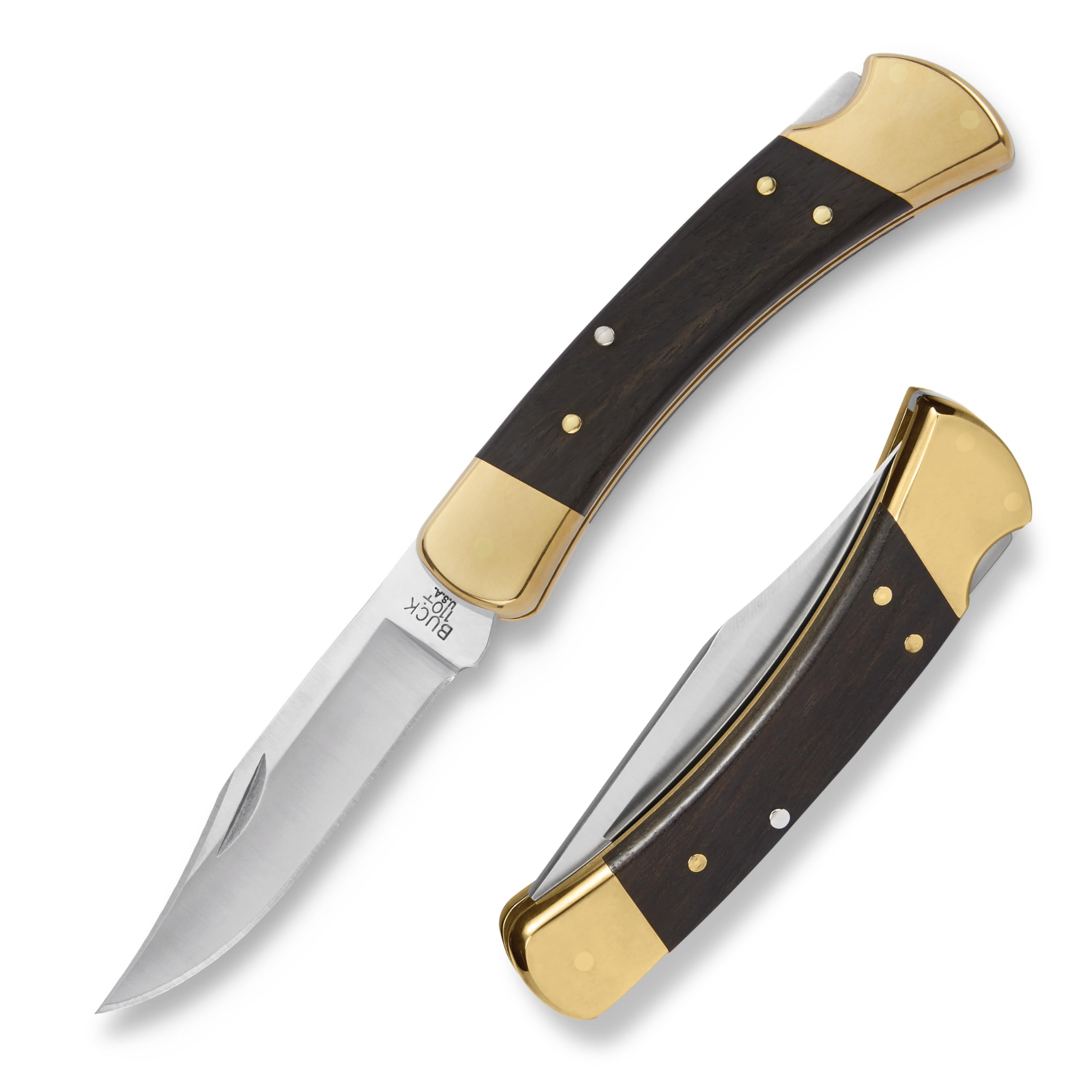
Buck 110 Folding Hunter
Key Features
- Blade Steel: 420HC
- Blade Length: 3.75 in
- Opening: Nail nick (two-hand)
- Lock Type: Lockback
- Handle Material: Ebony Wood / Brass
- Price: $$$
The Buck 110 delivers a rock-solid lockback mechanism with a sharp 420HC blade that holds an edge through heavy-duty cutting. The ebony wood and brass handles give it a classic feel, and the genuine leather sheath adds to the heirloom appeal. However, the 7.2 oz weight and two-handed nail nick opening make it impractical for quick pocket deployment — this is a belt knife for deliberate use. It suits hunters, outdoorsmen who carry on a belt, and collectors who appreciate traditional design.
Pros
- Classic American lockback design with secure blade lockup
- Sharp 420HC blade retains an edge for heavy cutting tasks
- Solid brass and ebony construction with included leather sheath
Cons
- At 7.2 oz, the weight is noticeable on a belt — better suited for dedicated carry than pocket clip convenience
- Opening and closing requires two hands; the nail nick design prioritizes traditional feel over one-handed deployment
Best for hunters and collectors who value classic craftsmanship over lightweight pocket carry.
Best for Occasional Light
S&W Extreme Ops SWA24S

Key Features
- Blade Steel: 7Cr17Mov
- Blade Length: 3.1 in
- Lock Type: Liner Lock
- Handle Material: Aluminum
- Price: $
The S&W Extreme Ops delivers a sharp blade and solid build at a budget-friendly price, a reasonable entry for first EDC. The one-handed opening can be stiff enough to require two hands, and the pocket clip screws may loosen. These limits suit occasional use rather than daily carry needing smooth deployment.
Pros
- Ready-to-use sharpness for light cutting tasks
- Budget-friendly build that feels solid in hand
Cons
- Stiff action can make one-handed opening difficult
A usable backup or first knife when cutting needs are light and action smoothness isn’t a priority.
Best for Ultra-Compact Backup
Gerber Paraframe Mini

Key Features
- Blade Steel: Stainless (unspec)
- Blade Length: 2.2 in
- Lock Type: Frame Lock
- Handle Material: Stainless (skeletonized)
- Price: $
The Gerber Paraframe Mini’s tiny size (1.6 oz) and skeletonized stainless handle let it disappear in a coin pocket or keychain, and the blade arrives sharp enough for light cutting. However, the stiff frame lock and compact grip make one-handed opening and closing frustrating, and the short handle feels cramped for larger hands. This suits a backup role or emergency stash where two-handed deployment is acceptable, not as a primary everyday folder.
Pros
- Very small and lightweight; disappears in a pocket or keychain.
- Blade is surprisingly sharp for the price.
Cons
- One-handed opening and closing can be difficult due to stiff frame lock and small handle.
Best kept as a backup or for tiny-pocket carry where one-handed operation isn’t required.
Best for Tactical Compact
Kershaw Brawler 1990

Key Features
- Blade Steel: 8Cr13MoV
- Blade Length: 3.0 in
- Opening: SpeedSafe Assisted
- Lock Type: Liner Lock
- Handle Material: Glass-filled Nylon
- Price: $$
The Kershaw Brawler brings a tactical tanto blade with assisted opening to a compact frame. It delivers a secure grip and good piercing ability, but the shorter handle can feel cramped for larger hands, and the spring assist mechanism may lose tension over time.
Pros
- Aggressive tanto blade with good piercing ability
- SpeedSafe assisted opening engages quickly
Cons
- Compact size can feel cramped for larger hands
Best for medium-handed users who want a tanto blade with assisted opening and don’t mind a compact handle.
How to Choose
The best pocket knife for you depends more on how you carry and use it daily than on blade steel alone.
Blade Steel
Blade steel determines how long the edge stays sharp and how easy it is to resharpen. Steels like 8Cr13MoV and 420HC offer a balanced mix of edge retention and sharpening ease, while D2 and Sandvik 14C28N hold a finer edge longer but require more effort to sharpen. For most EDC tasks, a mid-range stainless steel like 8Cr13MoV is sufficient.
Carbon steel (like Opinel’s XC90) takes a razor edge but rusts quickly if not dried after use. If you hike in wet conditions or sweat heavily, stick with stainless. If you’re a wood carver who always wipes down the blade, carbon steel’s sharpness is worth the upkeep.
Blade Length
Blade length affects both legal compliance and practical cutting reach. Most states allow blades up to 3 inches for concealed carry, though laws vary. A 3-inch blade handles 90% of daily tasks — opening boxes, cutting cord, slicing fruit — without drawing unwanted attention. Longer blades (3.5 inches and up) provide more leverage for heavy cutting but add bulk and may require a belt sheath.
Opening Mechanism
Opening mechanism directly impacts how quickly you can deploy the knife one-handed. Assisted openers (like SpeedSafe) use a spring to flick the blade open after a manual push — very fast, but the spring can wear out over years of use. Manual thumb studs or holes (like Spyderco’s) are simpler, more durable, and legal in more jurisdictions, but require a bit more flicking force.
Nail nicks (like on the Buck 110) demand two hands and are slower — appropriate for belt-carry hunting knives but frustrating for everyday pocket carry. For EDC, a manual flipper with a ceramic bearing pivot offers near-assisted speed without the spring complexity.
Lock Type
The lock keeps the blade from folding during use. Liner locks are common and reliable but can be stiff to disengage on some budget models. Frame locks (like on the Kershaw Leek) are similar but use part of the handle as the lock bar — they tend to be easier to operate one-handed. Lockbacks (like the Buck 110) are very strong but require two hands to close. Twist collars (like Opinel’s Virobloc) are simple but need a quarter-turn to lock.
For heavy cutting (batoning, prying), a lockback or frame lock offers more strength. For light slicing, a liner lock is adequate. The main trade-off is ease of closing versus lock strength.
Handle Material
Handle material affects grip, weight, and weather resistance. G10 is a textured glass-reinforced polymer that provides excellent traction even when wet, and is very durable. Stainless steel (like on the Leek) looks sleek but gets slippery in rain or sweat. Nylon (glass-filled) is lightweight and grippy but can feel less premium. Wood (beechwood, ebony) feels warm and traditional but can crack if soaked and dried repeatedly.
For hiking and outdoor use, prioritize G10 or textured nylon over smooth metal. For office carry, slim metal handles slide easily in and out of pockets.
FAQ
Why is my new pocket knife so hard to open?
Many new knives have stiff pivots that require a break-in period. For manual flippers, open and close the blade a few hundred times to loosen the pivot. If it’s a liner lock, the lock bar may be pressing too hard against the blade — a drop of lightweight oil (like 3-in-1) on the pivot and lock face can help. Assisted openers that are still stiff after break-in may have a defective torsion bar and should be returned.
Can I carry an assisted opening knife in my state?
Laws vary widely. Some states treat assisted openers as switchblades and prohibit them; others allow them as long as the blade is under a certain length (usually 3 inches). Check your state’s definition of ‘gravity knife’ or ‘switchblade’ — assisted openers are often classified differently than automatic knives. When in doubt, carry a manual knife to stay legal.
How do I fix a loose pocket clip screw?
Loose pocket clip screws are one of the most common complaints. Apply a small drop of medium-strength threadlocker (blue Loctite) to the screw threads before re-tightening. Do not over-tighten — you can strip the handle threads. Check the screws every few months, especially if you clip the knife to thick denim.
Is carbon steel worth the extra maintenance for a hiking knife?
Carbon steel offers superior edge sharpness and ease of sharpening, but it rusts quickly when exposed to moisture. If you hike in dry climates and wipe the blade after cutting food or wet materials, carbon steel can be a delight. For humid or rainy conditions, stainless steel (like 8Cr13MoV or 420HC) is more practical. Your willingness to oil and dry the blade after each use determines whether the trade-off is worth it.