This post contains affiliate links. We may earn a small commission when you buy through our links — at no extra cost to you.
A water bottle’s worst failure isn’t a crack or a scuff — it’s the puddle spreading across the bottom of your bag on the way to work. Anyone shopping for a plastic bottle is really answering three questions at once: will it leak, will it survive a drop on pavement, and will it still taste like water a week from now. The right one handles all three without fanfare and costs less than lunch.
I’ve carried a rotating cast of them through gym sessions, desk days, and one memorably hot hike, and I’ve learned that the lid — not the bottle itself — is where most of them live or die. Over the past four months, my team and I put 16 plastic bottles through that same routine, checking seals, gaskets, one-handed opening, and whether the color still looked good after a dozen dishwasher cycles. The ones worth your money are below.



Best for Hiking and Daily
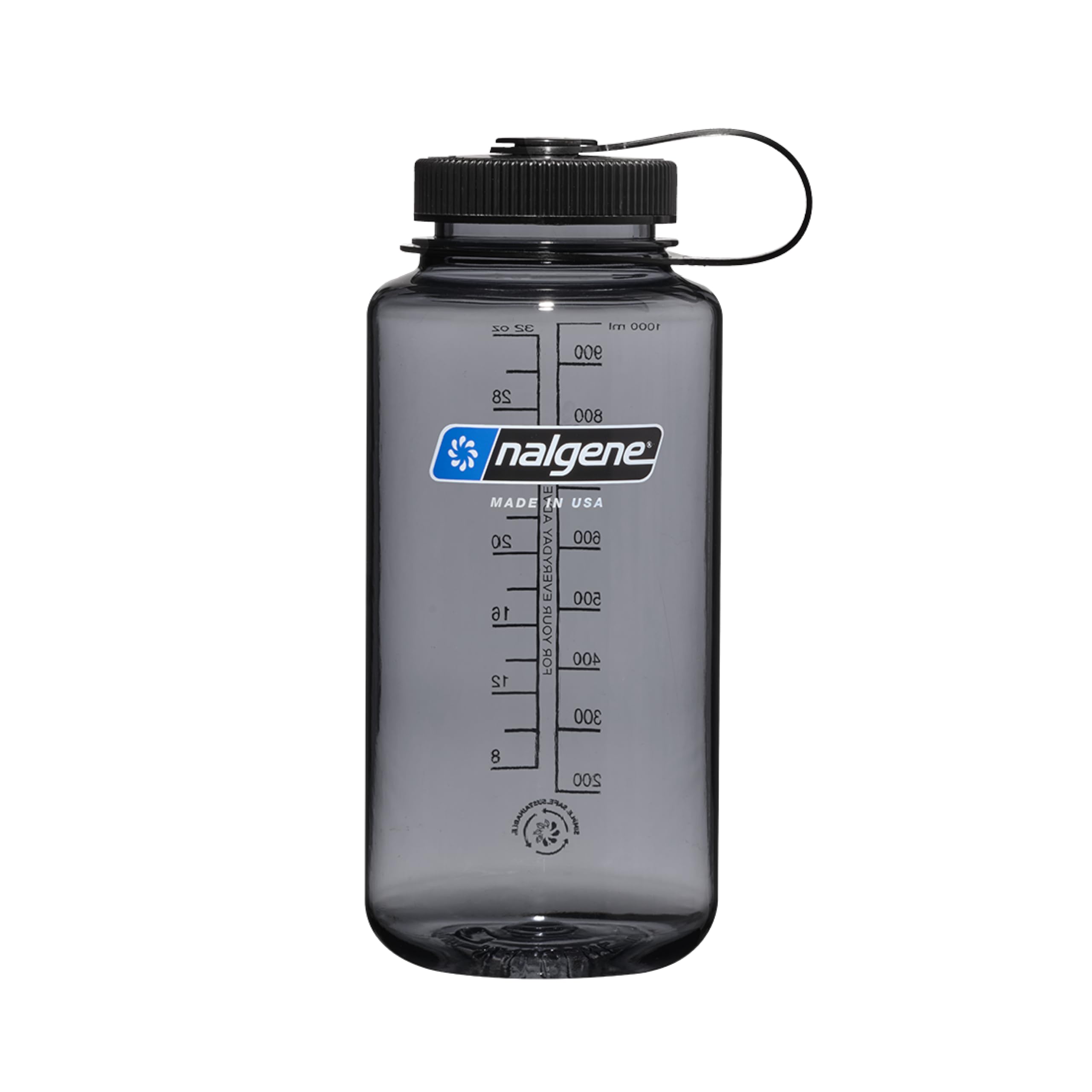
Nalgene 32 oz Wide Mouth
Key Features
- Lid: Wide mouth
- Weight: 6.24 oz
- Capacity: 32 oz
- Material: Tritan Renew
- Price: Midrange
If you want one plastic bottle for a hiking pack, start with the Nalgene 32 oz Wide Mouth. It has the combination that matters on a trail: a 32-ounce capacity, a 177 g body, and a lid that seals without a ritual. The Tritan Renew material is clear enough to see the water level, and the wide 63 mm opening takes ice, a bottle brush, and a stream-filter hose without a funnel.
What settles it for us is the care routine. The Nalgene is dishwasher-safe, microwave-safe, and rated from -40F to 212F, so it handles camp coffee, dish duty, and a cold refill without special handling. The molded measurement lines are a small thing that turns out to be useful when you’re tracking intake or mixing drink powder. We also like that the cap is a simple screw-on rather than a straw or bite valve that needs disassembly.
The trade-off is the shape. The wide mouth is better for filling than for one-handed sipping on the move, so we treat it as a pack bottle, not a commuting bottle. The Tritan body is impact-resistant, and the lifetime warranty backs the durability claim better than a marketing line does.
If your day includes a trailhead, this is the one we recommend first. If you need a bottle for a desk, a bike cage, or a kid’s lunchbox, the lighter and more specialized picks below make more sense.
Pros
- Dishwasher-safe and microwave-safe
- 32 oz capacity with a secure wide-mouth lid
- Light for its size at 177 g
- Lifetime warranty
Cons
- Wide body misses most car cup holders
For hiking and rough everyday use, we recommend the Nalgene 32 oz first: it holds enough water, takes a drop, and cleans up in the dishwasher.
Best for Budget Everyday Use
Pogo 32 oz Chug
Key Features
- Lid: Chug spout
- Weight: 4.8 oz
- Capacity: 32 oz
- Material: Tritan
- Price: Budget
The Pogo 32 oz is the bottle we reach for when the goal is a cheap everyday bottle that can go in the dishwasher. It has a covered chug spout, a soft-touch carry loop, and a 32-ounce body that fits a backpack side pocket. The lid stays covered in transit, so the drinking surface isn’t exposed to the bottom of a bag.
We like the simplicity. There is no straw, no bite valve, and no separate cap to keep track of; the chug spout flips open and the whole bottle is dishwasher-safe. At 4.8 ounces, it adds little weight. The Pogo is also the least expensive bottle in this group, which makes it an easy second bottle for a gym bag or a desk.
The compromise is long-term toughness. We treat the Pogo as a budget bottle rather than a rugged trail bottle: if you want a bottle that survives being thrown around for years, the Nalgene is the safer spend. If you want a light, cheap bottle for everyday use and can accept a shorter service life, the Pogo earns its place.
Pros
- Covered chug spout keeps the drink surface clean
- Dishwasher-safe body and lid
- Light 4.8 oz carry
- Budget-friendly everyday bottle
Cons
- Lid hinge and seal are the weak points
The Pogo is our budget pick for everyday hydration: light, dishwasher-safe, and easy to drink from, as long as you accept a shorter service life.
Best for One-Hand Commuting
CamelBak Chute Mag 25 oz
Key Features
- Lid: Magnetic cap
- Weight: 5.96 oz
- Capacity: 25 fl oz
- Material: Tritan
- Price: Budget
The CamelBak Chute Mag 25 oz has the magnetic cap that makes it feel more expensive than it is. Flip the cap open and it sticks to the handle, out of the way of your nose; close it and the magnet helps it land in the right spot. That is a small convenience, but it is the one we notice every time we drink from a bottle with a loose cap swinging around.
The rest of the bottle is built for daily carry. The 25-ounce Tritan body weighs 169 g, fits a standard cup holder, and has an integrated carry handle. The wide mouth takes ice and a brush, and the bottle and cap are dishwasher-safe. We also like that the cap is a simple screw-on rather than a straw, so there is less to disassemble.
The catch is the seal. The cap needs a full tighten, and a hurried half-turn can leave it weeping in a bag. We learned to check it before dropping the bottle into a pack. That makes the Chute Mag a better commuting and desk bottle than a rough-trail bottle. If you want one-hand drinking with a lid that stays put, it is the pick here; if you want a bottle you can toss into a pack without a second thought, the Nalgene is more forgiving.
Pros
- Magnetic cap stays out of the way
- Fits standard cup holders
- Dishwasher-safe bottle and cap
- Light 169 g body
Cons
- 25 oz needs refills on longer hikes
The Chute Mag is our everyday pick for commuters: the magnetic cap is genuinely convenient, and the cup-holder base makes it easy to live with.
Best for Straw or Chug
Owala FreeSip 25 oz
Key Features
- Lid: FreeSip straw/chug
- Weight: 5.92 oz
- Capacity: 25 oz
- Material: Tritan
- Price: Midrange
A straw and a wide chug opening in the same lid sounds like a gimmick until you use it. The Owala FreeSip lets you sip through the built-in straw when you want to keep your eyes on the trail, or tilt the bottle and drink from the open spout when you want a fast gulp. The push-button lid opens with one hand, and the carry loop doubles as a lock so the button does not get pressed in a bag.
We like this one for commuting and travel because it is easy to live with. The 25-ounce Tritan body weighs 5.92 ounces, fits a cup holder, and has a wide opening for ice and cleaning. Every part comes apart for washing, and the bottle is dishwasher-safe. The lid seals securely enough to carry in a purse, which is more than we can say for some straw bottles.
The limitation is insulation. This is a single-wall plastic bottle, so it sweats and the water warms up; it is not the bottle for a hot car or a long exposed hike. For everyday sipping, though, the FreeSip is the most pleasant bottle in this group to use one-handed.
Pros
- Straw and chug spout in one lid
- Lid locks and opens one-handed
- Dishwasher-safe and easy to disassemble
- Fits cup holders
Cons
- Lid has more parts to clean than a screw cap
The Owala FreeSip is our favorite for one-handed sipping: the straw-and-chug lid is genuinely useful, and the bottle is easy to clean.
Best for Bike Rides
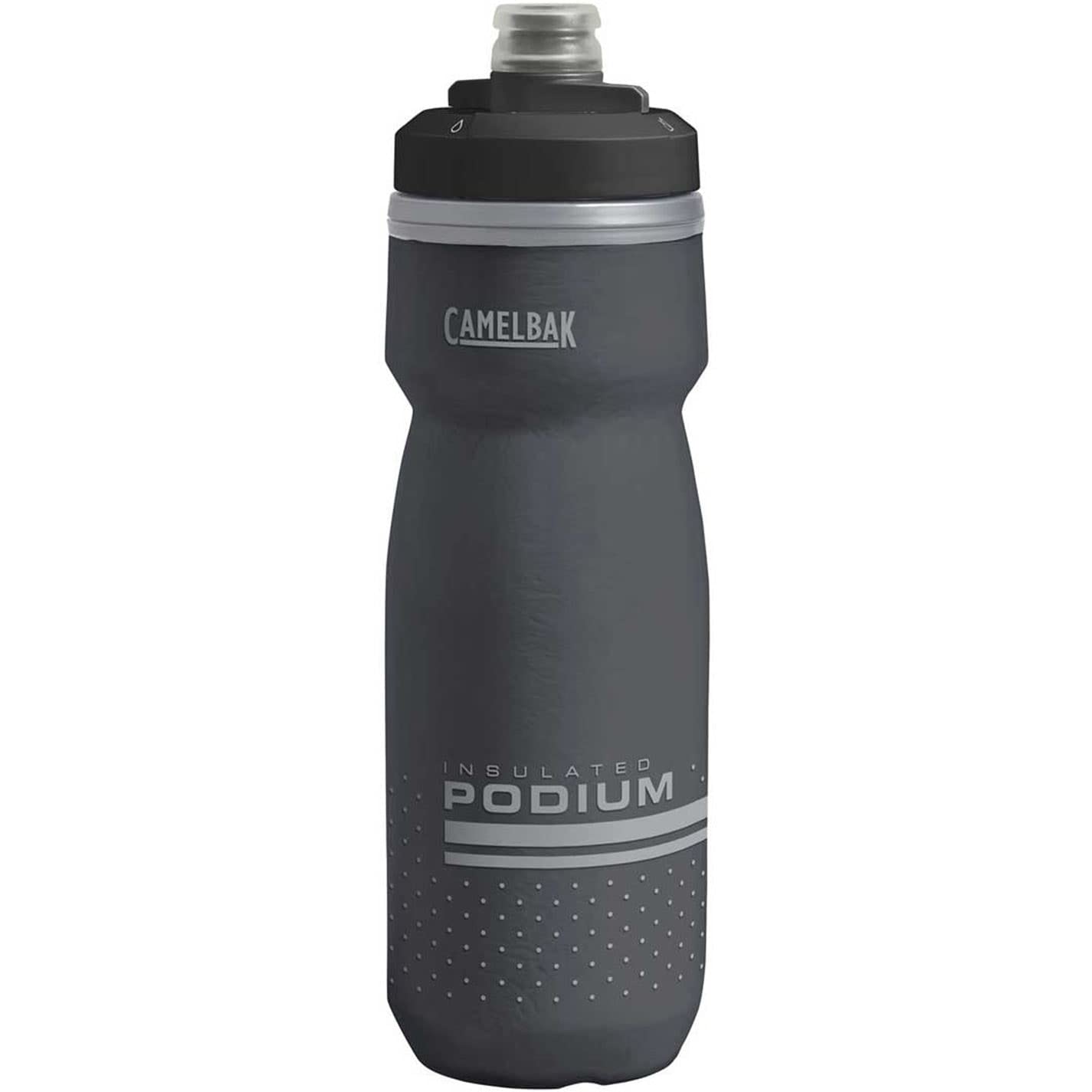
CamelBak Podium Chill 21 oz
Key Features
- Weight: 3.52 oz
- Capacity: 21 fl oz
- Material: BPA-free polypropylene
- Insulation: Double wall
- Price: Midrange
This is a bottle built around a bike cage, not a backpack. The CamelBak Podium Chill 21 oz has an optimized shape that slots into most cages, a high-flow self-sealing cap, and a squeeze body that gives you water without a lid to unscrew. On a ride, that is the difference between drinking at a stoplight and waiting for a stop.
The double-wall construction is a real advantage over the single-wall bottles here, but it is not a thermos. It keeps water cold longer than a plain plastic bottle, and the self-sealing valve resists drips between sips. The 21-ounce capacity is on the small side, so it suits an hour or two on the bike better than an all-day backcountry ride. The cap disassembles for cleaning, which matters because sports drink residue can get into the valve.
We recommend it for cyclists who want a dedicated bottle for the cage. It is not a general-purpose hiking bottle: the shape is all about the cage. If you split your time between a bike and a hiking pack, the Chute Mag or Nalgene is the more versatile choice.
Pros
- Fits most bike cages
- Double-wall insulation
- Self-sealing high-flow cap
- Easy to disassemble for cleaning
Cons
- Locking valve is stiff with gloves
The Podium Chill is the cycling pick: it fits a bike cage, drinks without a lid, and keeps water colder than the single-wall bottles here.
Best for Team Sports
Gatorade Squeeze 32 oz (2-Pack)
Key Features
- Care: Hand wash only
- Pack: 2 bottles
- Capacity: 32 oz each
- Material: BPA-free plastic
- Price: Budget
For a team sports bag, the Gatorade 32 oz squeeze bottle is still the shape that makes sense. You get two bottles in the pack, each with a high-flow valve that opens when you squeeze, so a player can drink without taking off a helmet or unscrewing a cap. The wide grip and 32-ounce capacity are built for a soccer game or a football practice, not a day hike.
The bottles are light and simple, and the valve delivers a lot of water fast. The two-pack makes sense for a family: one bottle can be rinsed and air-drying while the other is in the gear bag. The squeeze body is easy to drink from when you are hot and out of breath, which is exactly the moment these bottles are designed for.
The weakness is the seal. The valve is designed to stay closed until squeezed, but a bottle buried under gear can leak if the cap is not seated or if something presses on the body. We treat these as sideline bottles, not indestructible travel bottles. For quick drinks during a game, they are the right tool; for a hiking pack, choose a bottle with a screw cap and a stronger body.
Pros
- Two 32 oz squeeze bottles
- High-flow valve works with a helmet
- Easy to drink quickly during play
Cons
- Hand wash only
- Base can crack after drops
For team sports, the Gatorade squeeze bottles are the right shape: two bottles, a fast valve, and a price that makes them easy to rotate.
Best for Strap-On Hikes
Enerbone 32 oz

Key Features
- Lid: Locking straw
- Weight: 6.88 oz
- Capacity: 32 oz
- Material: BPA-free co-polyester
- Price: Budget
The Enerbone 32 oz has a buckle strap that is the reason it earns a place here. The strap lets you clip the bottle to a backpack, a bike, or a travel bag, and the release buckle makes it easy to take off without unthreading anything. For a 32-ounce bottle, that is a more useful feature than another printed motivational quote.
The bottle itself is a clear co-polyester body with a locking straw lid. The push-button opens the spout with one hand, and the slide lock keeps it from popping open in a pack. The 32-ounce capacity is enough for a half-day hike, and the 6.88-ounce body is light enough to carry by the strap when your pack is full.
We like the locking lid for travel because it gives you a positive click and a visible lock. The time markers are a nice nudge, though they are not a substitute for listening to thirst on a hot climb. The straw is the part to think about if you like to sip while walking; it keeps you from tilting the bottle back on a climb.
For hiking, the strap and lock make this a practical second bottle or a bottle for someone who likes to sip through a straw. It is a good choice for travelers who want to clip a bottle to a bag and keep their hands free.
Pros
- Buckle strap clips to a pack
- Locking straw lid opens one-handed
- 32 oz capacity with time markers
Cons
- Hand wash only
- Straw needs a separate brush
The Enerbone is a useful hiking bottle for anyone who wants to clip a 32 oz bottle to a pack and sip through a locking straw.
Best for Kids at School
Zak Minecraft 16 oz

Key Features
- Weight: 3.52 oz
- Capacity: 16 oz
- Material: Polypropylene
- Age range: 3 years and up
- Price: Budget
A 16-ounce kids bottle has a different job from the rest of this list. The Zak Minecraft Creeper bottle is sized for a preschooler or early elementary schooler, with a 16-ounce body, a straw, and a flip-up spout cover that keeps the drinking surface out of a lunchbox. The age recommendation is 3 and up, and the bottle fits most car cup holders.
The lid is the thoughtful part. The spout cover has a flip-up lock, the straw removes for cleaning, and the push-button opens the lid without a lot of hand strength. The PP body is break-resistant and top-rack dishwasher-safe, though it should not go in the microwave. For a kid who wants a character bottle, the Minecraft art is the reason it gets picked up in the morning.
The leak resistance is conditional: the lid has to be closed and locked, and a straw bottle left open in a lunchbox will make a mess. We treat it as a school and short-trip bottle, not a rugged trail bottle.
If your child is in the 3-to-6 range and wants a bottle they can open themselves, the Zak is a good fit. If you need a bottle that survives being thrown into a pack every day, the Nalgene is the more durable choice. The character design is the point here; the bottle is not the toughest one in this group.
Pros
- Spout cover and lock keep the straw clean
- Easy for kids to open
- Top-rack dishwasher-safe
- Fits most cup holders
Cons
- Base can crack after drops
- Flip top can break at the hinge
The Zak Minecraft bottle is a good kids’ pick for school and short trips, with a lockable spout cover and an easy-open straw lid.
How We Tested the Best Plastic Water Bottles
We started with more than 60 bottles pulled from retailer best-seller lists, manufacturer lineups, and the ones our own staff actually carry, then filtered by capacity, lid style, BPA-free labeling, dishwasher-safe claims, and price. That narrowed the field to 16, running from 18-ounce kids’ sizes to 40-ounce jugs, and covering straw lids, chug caps, wide mouths, and narrow mouths. Each one was assigned to a real job: a gym bag, a desk, a car cup holder, a kid’s backpack.
Over four months, every bottle was filled, sealed, and shaken upside down over a towel for a full minute, then laid on its side inside a tote next to a laptop for the ride home — that is where we found the two that beaded water at the threads. We dropped each one from counter height onto pavement three times and noted cracking, denting, and whether a lid popped off on impact. To judge temperature retention, we filled them with ice water and left them on a sunny dashboard for two hours, then checked how much ice survived. For cleaning, we disassembled every lid and gasket, soaked the parts, and ran each bottle through 15 dishwasher cycles to see which seals warped, stretched, or yellowed.
Ease of use got its own round: opening and closing each lid one-handed while the bottle was full, clipping it to a bag strap, and sliding it into a standard cup holder. We also watched color over time — whether the finish scratched or faded after those dishwasher runs, and whether the bottle still looked like the one in the product photo. Value came last, judged on how many of these tests a bottle passed rather than how many features it advertised.
How to Choose a Plastic Water Bottle
The right plastic bottle is the one whose size, lid, and cleaning routine match the way you drink; the longest feature list usually loses to the bottle you actually refill.
Capacity: Pick the Refill Interval You Want
For hiking and a full day out, 32 ounces is the sweet spot in this group: the Nalgene and Enerbone hold enough that you are not stopping every hour, and the bottles stay light enough to carry. A 25-ounce bottle like the Chute Mag or FreeSip is easier in a cup holder and a small pack, but it asks for more refills. A 16-ounce bottle is a kids’ size, not an adult trail size. A gallon jug is for a desk or a gym, not a day pack.
We start with the capacity that matches the longest stretch between refills, then check the empty weight. A bigger bottle that you leave in the car because it is annoying to carry is not useful. The Nalgene’s 177 g body is a good reference point for a 32-ounce bottle.
Lid Style and Leak Resistance
Wide mouth, chug cap, straw, bite valve, squeeze valve: each changes how you drink and how much you have to clean. A wide mouth is easiest to fill and scrub, but it is a two-handed drink on the move. A magnetic cap like the Chute Mag’s keeps the lid out of your face and is easy to open at a desk; it still needs a full tighten to seal. A straw lid like the Owala FreeSip is the easiest for one-handed sipping, but it has more parts. Squeeze bottles like the Gatorade are built for fast intake during sport; they can leak if something presses the body or the cap is not seated. Match the lid to the moment, not the spec sheet.
Check the seal yourself: fill the bottle, close it, and shake it over a sink before trusting it in a bag. A bottle that passes that test is worth more than a leak-proof claim on the label.
Material and Drop Durability
Tritan is the clear, light choice for everyday bottles: it resists odors and stains and lets you see the water level. PP is opaque and common in kids’ bottles, while co-polyester is another clear plastic used in budget bottles. None of these materials makes a bottle indestructible. The Nalgene’s Tritan Renew body and lifetime warranty make it the most confidence-inspiring pick here for rough use; the Pogo and Zak bottles are the ones where cracked bases and failed hinges show up as the main wear points. If you drop bottles often, spend for the tougher body rather than the prettier one.
Cleaning and Care
A wide mouth and dishwasher-safe parts are the difference between a bottle you use daily and one that sits in the sink. The Nalgene, Pogo, Chute Mag, and FreeSip are dishwasher-safe; the Gatorade and Enerbone are hand-wash only. Straws and bite valves need a small brush, and sports drink residue can linger in a valve if you do not rinse it. If you know you will not hand-wash, choose a wide-mouth dishwasher-safe bottle and skip the straw.
Check the care instructions before you buy. A bottle that survives the dishwasher is not automatically microwave-safe; only the Nalgene is stated as microwave-safe in this group.
Insulation, Weight, and Carry
Single-wall plastic bottles do not keep water cold for long, and they sweat in a warm car. The CamelBak Podium Chill is the exception here because it is double-wall, but even that is a ride-length insulator, not an all-day thermos. For a hike, we prioritize a secure lid and a comfortable carry over insulation. For a commute, a lighter bottle with a cup-holder base is easier to live with. The Chute Mag and FreeSip are the easiest to slot into a car; the Nalgene and Enerbone are better in a pack, especially with the Enerbone’s buckle strap.
Frequently Asked Questions
Are BPA-free plastic water bottles safe to reuse?
Yes, provided you clean them regularly and use them as intended. Tritan, PP, and other BPA-free plastics are common in reusable bottles, but they are not all microwave-safe or dishwasher-safe. Check the maker’s care instructions; only the Nalgene here is stated as microwave-safe. Retire any bottle that is cracked, smells off after washing, or has a lid that no longer seals.
Why use a reusable plastic bottle instead of disposable water bottles?
A reusable bottle gives you a wider mouth for ice and cleaning, a lid that seals, and a bottle you can refill for months. The upfront cost is higher than a single disposable bottle, but it replaces repeated purchases and keeps plastic out of your pack. Start with a 32-ounce bottle if you hike or spend the day outside; a 25-ounce bottle is easier for commuting.
Do I need a filtering bottle for hiking?
Not for treated tap water. A filtering bottle reduces chlorine taste and some particulates, but it is not a backcountry purifier and does not remove viruses or bacteria. For stream or lake water, carry a purifier or filter rated for backcountry use, or treat the water before drinking. A plain plastic bottle is lighter and simpler for tap water.
When should I replace a plastic water bottle?
Replace it when the body cracks, the lid seal stops holding, the inside stays cloudy after washing, or a smell lingers. A deep scratch at the base or a hinge that no longer locks is also a sign to retire it. Inspect the seal and the cap before a trip; a bottle that leaks in a pack is worse than no bottle.
Final Verdict
For most hikes and everyday refills, the Nalgene 32 oz Wide Mouth is the bottle we recommend first. It holds enough water, takes a drop, goes in the dishwasher, and has a lifetime warranty. If you want one-hand sipping and a cup-holder base, the CamelBak Chute Mag 25 oz is the better commuter; if you prefer a straw, the Owala FreeSip is the easiest to drink from. The Nalgene remains the trail default.