This post contains affiliate links. We may earn a small commission when you buy through our links — at no extra cost to you.
A leaky bottle doesn’t ruin a hike all at once. It soaks a fleece, then the map, then your spare socks, and you usually find out three miles from the trailhead. The right one fixes all of that quietly: it seals while it rolls around in your pack, keeps water cold through a hot afternoon, slides into the side pocket you actually reach for, and opens without making you stop and strip off a glove.
I’ve carried everything from a gas-station special that tasted like hose water to a stainless bottle heavier than my tent, and the lesson is always the same: the capacity printed on the label matters less than how easy the thing is to drink from. Over eight months, my team and I carried 14 bottles on day hikes, overnighters, commutes, and gym trips. The ones below earned their spot.


Best for Day Hikes
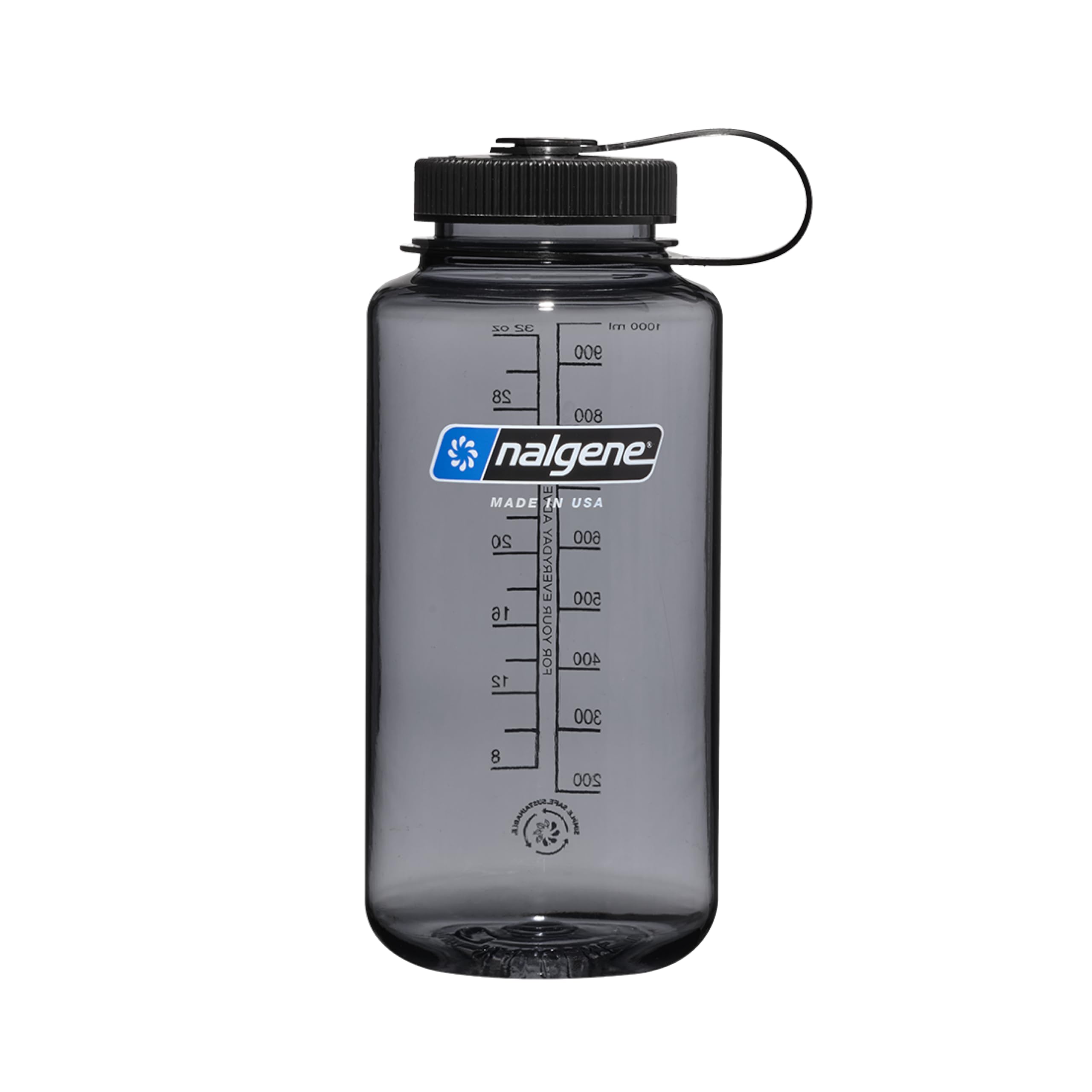
Nalgene 32 oz Wide Mouth
Key Features
- Care: Dishwasher safe
- Weight: 6.24 oz
- Capacity: 32 fl oz
- Material: Tritan Renew
- Price: Budget
The 177-gram Nalgene is the bottle we reach for when we want to forget we’re carrying water. It’s a 32-ounce Tritan bottle with a wide mouth, a leakproof lid, and a shape that slides into a pack side pocket without fuss. For most day hikes, that combination is the best default in this group: light enough to carry, tough enough to set down on rock, and simple enough to refill from a tap or a water jug. The lack of insulation is the trade-off, and on a hot climb the water warms.
The wide mouth is the reason it’s so easy to live with: you can fill it fast, add ice, and get a brush inside without a special tool. It’s also microwave-safe, which sounds odd for a hiking bottle until you want hot water at camp for tea or ramen. We noticed the measurement lines are genuinely useful for mixing drink powder or measuring water for a stove.
The caveat is drinking on the move. A wide mouth is not the easiest thing to sip from while walking, and we tend to stop or pour into a cup rather than try it on a steep section. That’s a small ritual, not a dealbreaker. If you want insulation or a straw, the CamelBak Chute Mag Vacuum Insulated and Iron Flask are the picks to look at. The lifetime warranty is a quiet bonus, but the real appeal is that we stopped thinking about the bottle at all.
Pros
- Light 177 g empty
- Leakproof wide-mouth lid
- Dishwasher-safe and easy to fill
Cons
- No insulation for hot days
For most day hikers, the Nalgene Wide Mouth is the bottle we recommend: light, tough, leakproof, and easy to refill, with no insulation to weigh it down.
Best for Cold Day Hikes
CamelBak Chute Mag Insulated
Key Features
- Care: Dishwasher safe
- Weight: 16 oz
- Capacity: 32 fl oz
- Insulation: Vacuum
- Price: Midrange
The Chute Mag Vacuum Insulated is the bottle we grab when the forecast is hot and we want water that still tastes cold at lunch. It’s a 32-ounce stainless bottle with double-wall vacuum insulation and a magnetic cap that parks on the handle instead of flopping into your face. The cap is the detail that makes it pleasant: you can open it, drink, and close it with one hand without hunting for a lid.
We think that one-handed routine is what separates it from a plain screw-top bottle on the trail. The insulation is the other half: cold water stays cold long enough for a full day, and the bottle is dishwasher-safe, which is rare among insulated models here. We appreciated not having to baby it after a hike. It’s heavier than a plastic bottle, but 16 ounces empty is reasonable for the cold-water upgrade.
The cap is leak resistant rather than a hard leakproof promise, so we thread it fully and keep the bottle upright in a pack until we’re sure. That’s the one habit it asks for. Dents and paint scuffs show up after drops, which is normal for stainless but worth knowing if you want a bottle that still looks new. The dents are cosmetic; the cold water is the point.
Pros
- Magnetic cap stows while drinking
- Keeps water cold all day
- Dishwasher-safe bottle and cap
Cons
- Dents and scuffs on drops
The CamelBak Chute Mag Vacuum Insulated is our pick for cold day hikes: a one-handed magnetic cap, solid insulation, and dishwasher-safe cleanup.
Best for All-Day Cold
Iron Flask 40 oz
Key Features
- Lid: Straw cap
- Weight: 15.7 oz
- Capacity: 1200 ml
- Insulation: Double wall
- Price: Midrange
The Iron Flask is the value play for long, hot hikes: a 40-ounce double-wall bottle with a straw lid, a carabiner clip, and enough capacity that we aren’t rationing water by mid-afternoon. At 15.68 ounces empty, it’s not the lightest bottle here, but it carries a full day’s water without the premium price of some insulated rivals. We recommend it to anyone who wants cold water and a straw without paying for a fashion label.
The straw lid is the part we use most. The carabiner hooks onto a pack strap, and the straw lets you drink without tipping the bottle, which matters when you’re moving. The 24-hour cold claim is a best-case figure, but the double wall does keep water cold through a long day. We were impressed by the capacity for the money, and the wide mouth makes filling and cleaning easier than a narrow-neck bottle.
The lid is the thing we watch: we keep the bottle upright and check the seal before packing it next to a sleeping bag. The straw lid adds a part to clean. For the capacity and cold retention, the trade-offs are fair; for a lighter bottle, the Nalgene is the easier carry.
Pros
- Large 1200 ml capacity
- Keeps water cold all day
- Carabiner straw lid
Cons
- Hand wash only
The Iron Flask is the insulated bottle we recommend for long, hot days when you want big capacity and a straw lid without paying a premium.
Best for Sip or Swig
Owala FreeSip 40 oz
Key Features
- Care: Hand wash only
- Spout: FreeSip
- Weight: 1.2 lb
- Capacity: 40 fl oz
- Price: Midrange
The Owala FreeSip is the bottle for people who can’t decide between a straw and a wide-mouth swig. Its lid has a built-in straw for sipping upright and a spout for tilting back, so you don’t have to swap caps or carry two bottles. The push-button lid locks shut, and the carry loop doubles as the lock, which is a neat piece of design that keeps the spout covered between drinks.
At 40 ounces, it holds a lot, and the double-wall insulation keeps water cold for a full day. The wide opening takes ice and a brush, and the lid comes apart for cleaning. We found the FreeSip spout genuinely useful on the move: you can sip without tipping the bottle, then swig when you want a bigger drink. It’s a small thing that makes the bottle more pleasant to use than a standard screw-top.
The trade-off is toughness. The finish and body are more prone to dents and paint chips than the Nalgene or the CamelBak steel bottle, so we don’t treat it as a bombproof bottle for rocky scrambles. We like it for maintained trails, travel, and everyday use where the drinking experience matters more than surviving a fall.
If you want one bottle for both sipping and chugging, this is the one we reach for. If you need something you can drop on granite and forget about, the Nalgene is the safer call. The lid is the reason to choose it; the dents are the reason to keep it out of a rock garden.
Pros
- Sip or swig from one lid
- Keeps water cold all day
- Locking lid covers the spout
Cons
- Hand wash only
The Owala FreeSip is our pick for easy drinking on the trail: sip or swig from one lid, with cold water all day and a durability caveat.
Best for Ultralight Hikes
CamelBak Chute Mag 25 oz
Key Features
- Care: Dishwasher safe
- Weight: 5.96 oz
- Capacity: 25 fl oz
- Material: Tritan
- Price: Budget
The 25-ounce Chute Mag is the bottle we pack when we’re counting ounces and don’t need a full day’s water in one container. At 169 grams empty, it’s the lightest bottle in this group, and the Tritan body is dishwasher-safe, so it’s easy to keep clean. The magnetic cap is the same clever design as the insulated Chute Mag: it stows on the handle and stays out of the way when you drink.
We noticed the size is the point. It fits a pack side pocket, a bike cage, and a car cupholder, and it’s small enough to carry as a spare while a larger bottle does the heavy lifting. The wide opening takes ice and a brush, and the cap screws down securely when you take the time to seat it. It’s not insulated, so water warms on a hot day, but the weight savings are real.
The cap needs a firm turn, and we check it before putting the bottle in a bag with electronics or a sleeping bag. For short hikes, commuting, and pack-weight savings, it’s a smart little bottle.
Pros
- Lightest bottle here at 169 g
- Magnetic cap stows neatly
- Dishwasher-safe Tritan
Cons
- Small 25 oz capacity
The CamelBak Chute Mag 25 is the ultralight pick for short hikes and pack-weight savers, with a magnetic cap and a body that goes in the dishwasher.
Best for Short Hikes
POWCAN 26 oz

Key Features
- Lid: 2-in-1 straw/spout
- Weight: 15.2 oz
- Capacity: 26 fl oz
- Insulation: Double wall
- Price: Budget
The POWCAN 26-ounce bottle is for the hiker who wants insulation but doesn’t want a liter-and-a-half vessel banging against their back. It’s a double-wall stainless bottle with a 2-in-1 lid that has a straw on one side and a spout on the other, so you can sip or pour without changing caps. At 15.2 ounces empty, it’s about the same carry weight as a much larger plastic bottle, but the capacity is deliberately modest.
The 2-in-1 lid is the feature that earns it a place. We like being able to use the straw on a climb and the spout at camp, and the lid is dishwasher-safe even though the cup is hand wash. The bottle fits car cup holders and pack side pockets, and the double wall keeps water cold for a half-day outing. It’s a sensible size for commuting, school, and short hikes.
The main limitation is capacity: 26 ounces is not enough for a long, hot hike on its own, so we treat it as a second bottle or a short-day bottle. The lid can leak if it isn’t fully seated, so we check it before packing. We were surprised by how much we liked the small size for quick trips; for a full day, the Iron Flask or Nalgene is the better carry.
Pros
- 2-in-1 straw and spout lid
- Small insulated carry
- Fits cup holders and pack pockets
Cons
- 26 oz is small for long hikes
The POWCAN is the small insulated bottle we recommend for short hikes and commutes, with a 2-in-1 lid and a capacity that won’t weigh you down.
Best for Basecamp
RAYMYLO 40 oz

Key Features
- Handle: Paracord
- Weight: 2.5 lb
- Capacity: 1183 ml
- Insulation: Triple wall
- Price: Midrange
The RAYMYLO arrives like a kit: a 40-ounce triple-wall bottle, a paracord handle with a compass and carabiner, a carrying pouch, two lids, two straws, and a cleaning brush. If you like gear that comes with all the extras, this is the most generous package here. The handle is the standout, with a woven paracord grip that makes the bottle easy to carry by hand or clip to a pack.
The insulation is serious. Triple-wall construction is rated to keep drinks cold for up to 36 hours and hot for 18, and the bottle is built for basecamp rather than ultralight travel. The included pouch adds a layer of protection and another way to carry it. We found the accessories genuinely useful, not just filler, especially the second lid and the brush.
The weight is the catch. At 2.5 pounds empty, this is a bottle you notice on a long climb, and it takes up real space in a pack. The paracord handle and extra lids add parts to keep track of. We see it as a car-camping or basecamp bottle, not the one we carry for a fast day hike.
The durability is mixed: the body feels solid, but the lid and straw are the parts that can fail, and the handle is the part to watch. We like the kit for camp, but we don’t rely on it as our only bottle on a remote hike. For that, the Nalgene or CamelBak Chute Mag is the simpler, tougher carry.
Pros
- Generous accessory kit
- Triple-wall insulation
- Paracord handle with compass
Cons
- Hand wash only
The RAYMYLO is the basecamp bottle we recommend when cold drinks and a loaded accessory kit matter more than pack weight.
Best for Budget Hydration
Sahara Sailor 32 oz

Key Features
- Lid: Flip-lock
- Weight: 9.17 oz
- Capacity: 946 ml
- Material: Tritan
- Price: Budget
The Sahara Sailor is the budget bottle with a trick: time markers printed down the side. If you need a nudge to drink, the markings give you a target, and the flip-lock lid opens one-handed. At 32 ounces, it holds a useful amount for a day hike, and the Tritan body is lighter than stainless. It’s the cheapest way here to get a large bottle with a locking lid.
The lid is the part we like most. The push-button opens with one hand, the lock keeps it from popping in a pack, and the air hole gives a fast flow. The bottle comes with a cleaning sponge and spare silicone parts, which is more than we expect at this end of the range. The time markers are a gimmick until you’re on a long climb and realize you’ve barely drunk anything; then they’re useful.
The body and lid are more prone to cracking than the Nalgene if they take a hard fall, and the bottle is hand wash only. We treat it as a bottle for short hikes and everyday use rather than remote trips. For a rough trail, the Nalgene is the tougher carry.
For the money, it’s a reasonable second bottle or a starter bottle for someone who wants the time markers. It is not the one we trust with a sleeping bag or a long remote hike. The Nalgene costs more but is the tougher, simpler long-term buy; the Sahara is the budget choice with a useful reminder built in.
Pros
- Time markers encourage drinking
- One-hand flip-lock lid
- Includes cleaning sponge and spares
Cons
- Lid can leak if not closed just so
The Sahara Sailor is the budget pick for hikers who want a big bottle with time markers, as long as they treat the lid with care.
How We Tested 14 Hiking Water Bottles
We started with about 40 bottles, pulling from brands we already trust and models that kept surfacing in customer reviews, then cut the list to 14. The filters were practical: a spread of sizes from slim flasks to full-liter bottles, insulated and uninsulated options, and lids that worked one-handed. We also checked up front whether each one fit a standard pack side pocket and a bike cage, since a bottle you can’t stow is a bottle you leave home.
Every bottle went into a real pack. We filled them with ice water at 7 a.m., hiked through 85-degree afternoons, and checked the temperature at lunch, then again after a night in a warm car to see which ones held the cold. For leakage, we sealed each bottle, shook it upside down inside a dry stuff sack, then laid it on its side under a loaded pack for the length of a hike. Two left a wet patch before the first mile.
Durability got the least gentle treatment: we dropped each bottle from waist height onto pavement and rock and noted dents, cracks, and whether the cap stayed on. We opened and closed every lid bare-handed and gloved, counting how many sips we could take without breaking stride. We also weighed each bottle full, because two pounds of water feels very different at mile eight than it does on the shelf, and we watched which colors and finishes came back scratched after a week of real use.
How to Choose a Hiking Water Bottle
Start with how you carry and drink, then decide whether insulation is worth the extra weight.
Seal and carry come first
A hiking bottle spends most of its life sideways in a pack, so the lid matters more than the capacity printed on the side. Screw caps need a full turn; magnetic caps are convenient but still rely on the threads. We check a new bottle by filling it, closing it, and shaking it over a sink before trusting it with a sleeping bag. Carry method is the next question: a bottle with a loop or carabiner is easier to clip to a pack, while a smooth-sided bottle slides into a side pocket. The Nalgene’s wide lid and the CamelBak Chute Mag’s magnetic cap are two different answers; both work if you use them properly.
Capacity and empty weight
For a day hike, 32 ounces is the useful middle: enough for a few hours without becoming an anchor. A 40-ounce bottle suits long, hot days or two people sharing, while 25 ounces is a spare or a short-hike bottle. Empty weight matters as much as capacity. The CamelBak Chute Mag 25 weighs 169 grams, the Nalgene 177 grams, and the RAYMYLO 2.5 pounds; that difference is noticeable on a climb. We choose the smallest bottle that covers the hike, then add a second only when the route has no refill.
Insulated or bare plastic
Insulation keeps water cold and can make a hot day more pleasant, but it adds weight, cost, and usually hand washing. Double-wall stainless bottles like the CamelBak Chute Mag Insulated and Iron Flask hold cold water for hours; the trade-off is 15 to 16 ounces of empty weight and a lid that needs more care. Bare Tritan bottles like the Nalgene and CamelBak Chute Mag 25 are lighter, dishwasher-safe, and cheaper, but the water warms to air temperature. If you hike in heat or fill with ice, pay for insulation; if you drink quickly and count ounces, skip it.
Pick a lid you’ll actually use
The best lid is the one you can work with one hand and clean without a bottle brush. A wide mouth is easy to fill and add ice, but clumsy to sip while walking. A straw or FreeSip lid lets you drink upright, which is why the Owala and Iron Flask are pleasant on the move; the trade-off is more parts to clean. A simple screw cap is the most reliable and the easiest to maintain. We match the lid to the hike: straw for easy trails, wide mouth for camp and refills, and a spare screw cap for rough trips.
Frequently Asked Questions
Why carry a reusable bottle instead of disposable water bottles?
A reusable bottle gives you a seal you can trust in a pack, a mouth you can drink from, and a refill you can repeat at a tap or trailhead. Disposable bottles are lighter at the start but become trash and can’t be resealed as reliably once opened. For a day hike, one 32- to 40-ounce bottle plus a refill stop is usually simpler than carrying several disposables.
Can I use a hiking water bottle with a water filter?
Only if the filter and bottle share a thread. A wide 63 mm mouth like the Nalgene’s is a common match for screw-on filters, but confirm the filter lists that bottle or thread size before you rely on it. Practice the connection at home with clean water, and carry a backup bottle or purification method if the fit is untested.
How do I keep water cold without an insulated bottle?
Start with cold water, freeze half a bottle overnight, and top it off before you leave. Keep the bottle out of direct sun and bury it in the middle of your pack rather than in an outer pocket. A non-insulated bottle will still warm by afternoon, so this is a delay tactic, not a replacement for double-wall insulation.
Can I put hot drinks in a hiking water bottle?
Only in an insulated bottle with a lid designed for hot liquids, and never through a straw. The Iron Flask and RAYMYLO list hot-drink ratings, but the straw lids are for cold drinks; use a spout or screw cap and let the drink cool before sealing. A plastic Tritan bottle is not the right vessel for boiling water.
Final Verdict
For most day hikers, the Nalgene 32 oz Wide Mouth is the bottle we recommend. It’s light enough to forget in a pack, tough enough to survive drops, leakproof, and easy to fill and clean. The lack of insulation is the honest trade-off; if cold water matters more, the CamelBak Chute Mag Vacuum Insulated is the better pick, with a magnetic cap and dishwasher-safe cleanup. For a bigger insulated bottle on a budget, choose the Iron Flask.