This post contains affiliate links. We may earn a small commission when you buy through our links — at no extra cost to you.
A leaky bottle is the quiet ruin of a camping trip: you find out when your spare socks are wet and your paperback has swollen to twice its size. The other tradeoff is weight — the bottles that genuinely hold the cold through a sunny afternoon are usually the ones that feel like a brick in your pack. A good camping bottle fixes both: it seals hard enough to ride upside down in a duffel, keeps water cold from first light to after-dinner stars, and still slides into a pack pocket.
I’ve been rotating the same three battered bottles through weekend trips for years, but over the past four months my team and I put 14 more through real campsites, trailheads, and a few regrettable 30-degree mornings. The pattern showed up fast: the bottles worth carrying have a lid you can work one-handed and a shape that slides into a side pocket without a fight. A few of the cheapest held their own against bottles at twice the price. Everything below is stuff we kept reaching for.


Best for Tough Everyday Camping
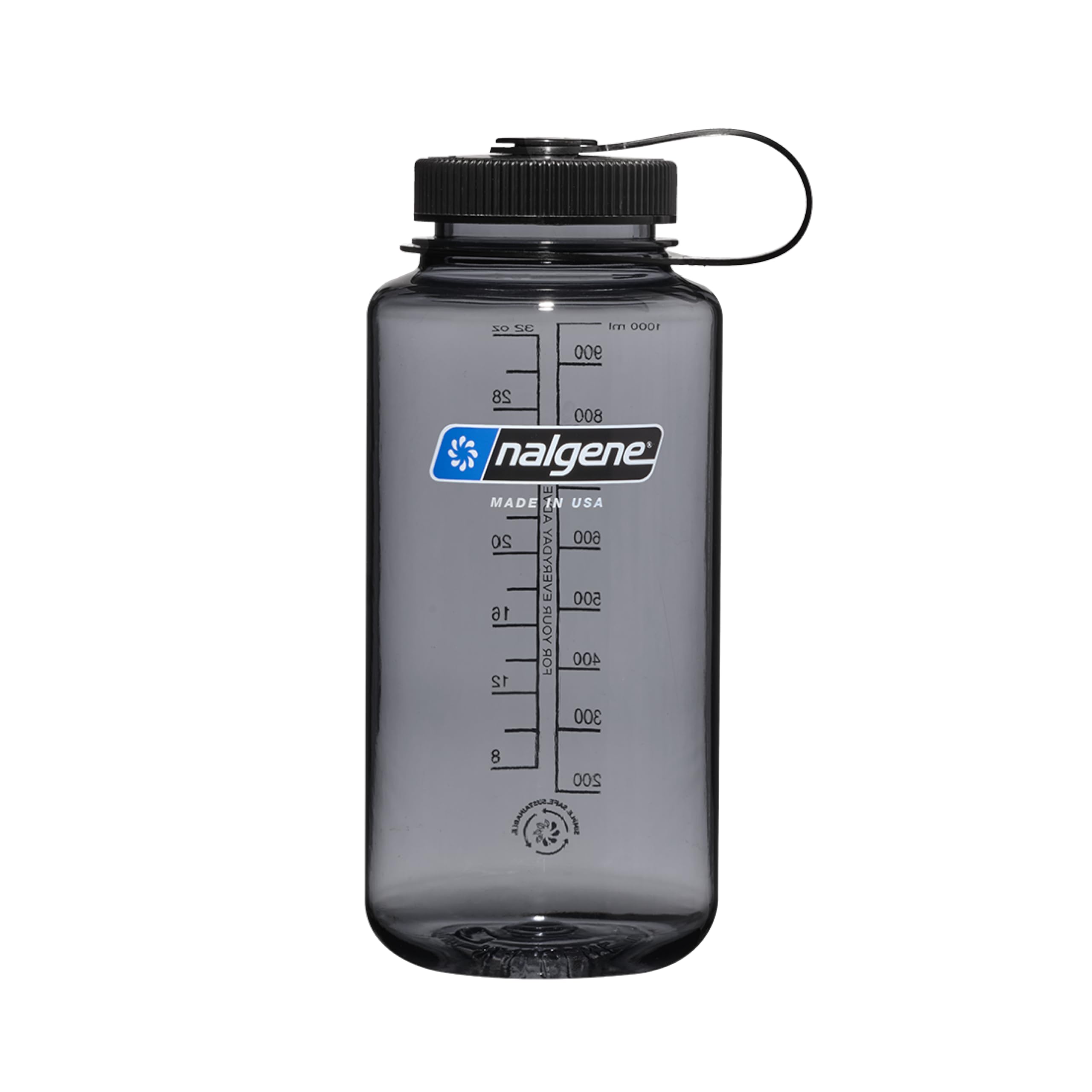
Nalgene 32 oz Wide Mouth
Key Features
- Care: Dishwasher safe
- Weight: 6.25 oz (177.25 g)
- Capacity: 32 fl oz
- Temperature range: -40F to 212F
- Price: Budget
Two numbers make the case for the Nalgene: 177 grams empty, and the lowest price of anything in this roundup. Set that against the Iron Flask’s 445 grams and the YETI’s 700 and you have a bottle that disappears into a pack instead of pulling on your shoulders all day.
That lightness is only half of it. The Tritan body is impact resistant, the lid seals flat and stays sealed in a bag, and the 63 mm mouth takes a bottle brush, a fistful of ice or water from a pump without a funnel. We also like that it comes out of a dishwasher clean — after a trip’s worth of camp coffee, that matters more than any line on the spec sheet.
The trade is temperature. Single-wall plastic has no answer to a hot afternoon, so the water inside ends up at whatever the air is doing, and on a cold morning it’s cold. If your camp is a car, a cooler and a folding chair, that’s an easy trade to accept. If you want water that’s still cold at the top of a climb in August, it isn’t.
One more thing to plan around: the wide mouth is excellent for filling and awkward for drinking while you walk, which is why a smaller-mouth cap ends up on ours for trail days. Ours is scuffed, the logo has worn away, and the seal is exactly as tight as it was on the first morning.
Pros
- Lightest full-size bottle here at 177 g
- Lid seals and stays sealed in a pack
- Dishwasher safe with a scrub-friendly wide mouth
- Rated for hot water and hard knocks
Cons
- No insulation, so water reaches air temperature
- Won’t fit a car cupholder
If you want one bottle that survives a full season of camping without fuss, this is the one we reach for: light, leak-tight, dishwasher safe and cheap enough to own two.
Best for Insulated Trail Bottle
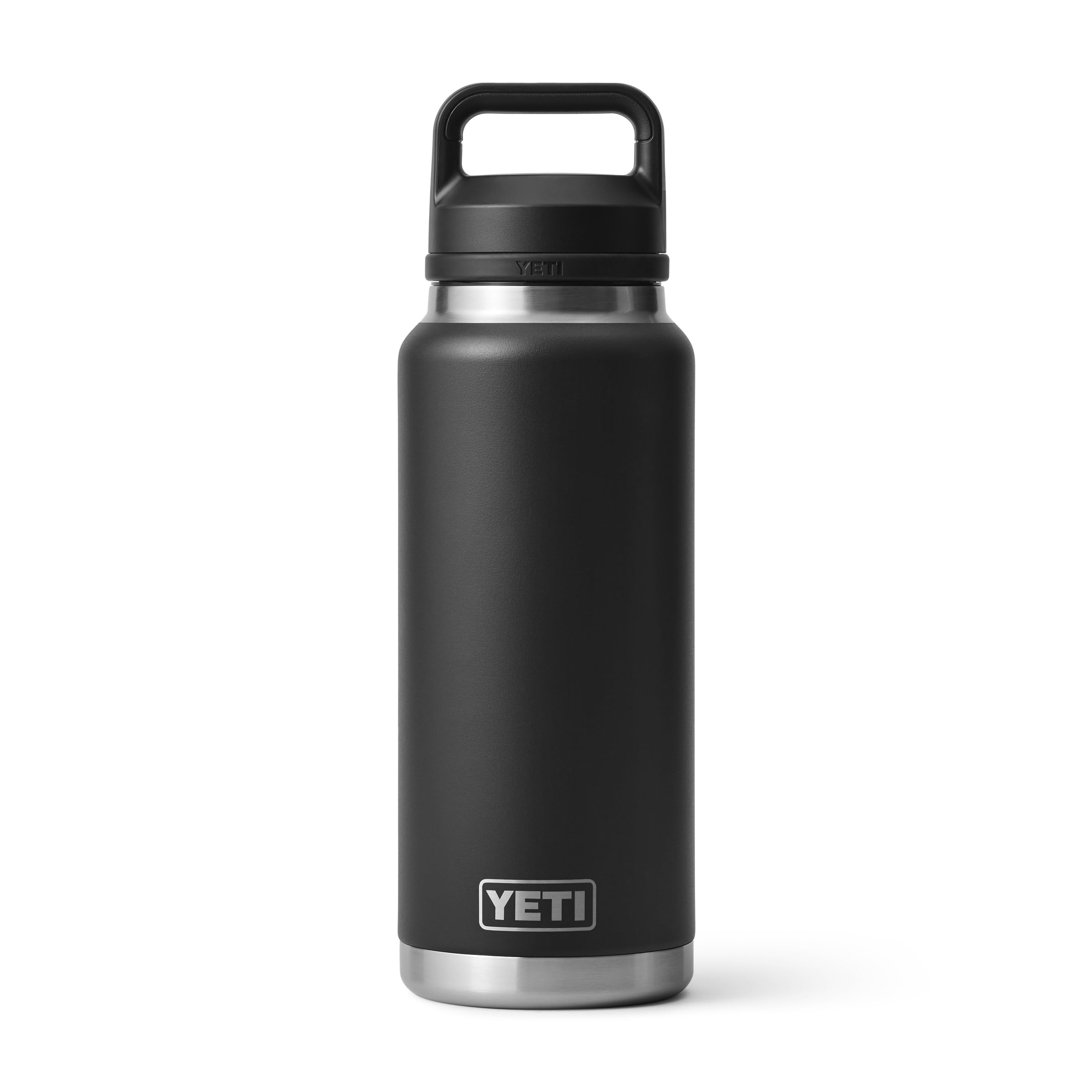
YETI Rambler 36 oz
Key Features
- Cap: Chug Cap
- Care: Dishwasher safe
- Weight: 1.54 lb
- Capacity: 36 fl oz
- Price: Premium
The Rambler is the most expensive bottle here, and we think the premium buys two things that matter at camp: a lid that opens with a half twist of its handle, and a body that can go in a dishwasher. At home neither is a big deal. On a trip, where the sink is a plastic tub and everything else you own is hand wash only, both are.
Cold is the real reason to buy it. Thirty-six ounces, ice still in the bottle when you stop for the afternoon, and a wall that doesn’t sweat onto your pack. The TripleHaul handle is the part we ended up using most: it takes a carabiner, it’s big enough for a gloved hand, and it gives you something to hold when the bottle is full and slick.
Two things to know before you pay for it. At 700 grams empty it’s the heaviest bottle in this guide, and a full one is a two-hand lift. The finish takes a beating as well — paint scuffs, steel dents, and a drop onto rock leaves a mark. Neither affects the seal, and the 3.8-inch base stands steady on a ledge while you get the cap off.
Pros
- Keeps water cold and ice solid all day
- Dishwasher safe, unlike most insulated picks
- Chug cap opens with a half twist
- Stable 3.8-inch base
Cons
- Heaviest bottle here at 700 g empty
- Paint scuffs and steel dents
We recommend the Rambler to campers who want cold water at the end of a hot day and don’t mind carrying the weight to get it.
Best for Insulated on a Budget
IRON °FLASK 40 oz
Key Features
- Care: Hand wash only
- Weight: 15.7 oz
- Capacity: 1200 ml
- Cold retention: Up to 24 hours
- Price: Midrange
Three lids arrive in the box: a straw cap with a built-in carabiner, a spout cap and a handle cap. That sounds like filler until you’ve carried a bottle clipped to a strap all day and then wanted something different to drink from at the table — which is the case this bottle makes for itself.
The body does the insulated job properly: 1,200 ml, cold for up to 24 hours by the manufacturer’s rating, no condensation on the outside, and a 3.5-inch base that sits steady on uneven ground. It’s a lot of capacity for the money, and the color range is wide enough to give everyone in the family their own.
The seals are the part we manage carefully. Each of those three caps has a gasket that has to seat evenly or the bottle weeps into your pack, so screw the lid down, check the seam, and only then put it in with your sleeping bag. Do that and the kit makes sense: straw on the trail, spout at the table, handle in the tent.
Pros
- Three lids cover trail, table and tent
- Holds cold up to 24 hours
- Carabiner straw lid clips to a pack
- 1200 ml for modest money
Cons
- Hand wash only
- Lid gaskets must seat evenly or it leaks
A full day of cold water, three lids and a carabiner clip for mid-range money — we think this is the insulated bottle most campers should start with.
Best for All-Day Basecamp Capacity
RAYMYLO 64 oz
Key Features
- Capacity: 1893 ml
- Included: Two lids, two straws, brushes, pouch, paracord handle
- Insulation: Triple-wall vacuum
- Cold retention: Up to 48 hours
- Price: Midrange
Sixty-four ounces changes how you use a bottle. Fill it in the morning and you’re finished — no refill stop at lunch, no second liter to filter, no rationing sips through the afternoon.
Where it made sense to us was basecamp. The paracord handle turns a full 1.9-liter bottle into something you can sling over a shoulder for the walk to the tap, and the pouch keeps it from clanking against a pack frame or scraping its paint. The kit is unusually complete — two lids, two straws, a straw brush, a bottle brush — and the triple-wall body is rated at 48 hours cold, which held up well enough that ice survived into the next morning.
It’s also a big object. At 4.92 inches across it won’t go near a car cupholder, so it rides in the pouch or a generous side pocket, and full it’s a two-hand pour. That’s the cost of the capacity, and for a trip where you’re not moving camp every day, it’s a fair one.
Pros
- 64 ounces covers a full day without refills
- Paracord sling makes a heavy bottle carryable
- Complete kit with two lids and cleaning brushes
- Triple-wall body rated 48 hours cold
Cons
- Hand wash only
- Lids and straws wear before the body
Fill it once and forget it: the Raymylo carries a full day of cold water on a paracord sling, which is exactly what a long day at basecamp needs.
Best for Ultralight Day Hikes
CamelBak Chute Mag 25 oz
Key Features
- Care: Dishwasher safe
- Weight: 5.96 oz
- Capacity: 25 fl oz
- Material: Tritan
- Price: Budget
At 169 grams empty, the Chute Mag is the bottle you forget is in your pack. That’s the whole argument for it on a day hike: 25 ounces of water, a magnetic cap that parks itself out of the way while you drink, and a body that goes in a dishwasher when you get home.
It’s the least expensive bottle here, and the saving comes out of insulation rather than out of the plastic. The Tritan is thick, doesn’t pick up flavors and has survived the drops we’ve given it. What it won’t do is keep water cold: on a hot climb it’s the same temperature as the air by early afternoon, which is the trade you’re making. The cap also needs a firm tighten before it goes in a bag — the magnetic park is for drinking, not for sealing.
Pros
- 169 g, the lightest bottle in this guide
- Bottle and cap go in the dishwasher
- Magnetic cap stays clear while you drink
- Least expensive bottle here
Cons
- No insulation, so no cold retention
- Cap must be screwed tight to seal
The Chute Mag is what we hand someone heading out for a day hike: it disappears into the pack, cleans up in the dishwasher and costs less than anything else here.
Best for One-Handed Sipping
Owala FreeSip 24 oz
Key Features
- Lid: FreeSip straw and swig spout
- Care: Lid is dishwasher safe
- Weight: 13.4 oz
- Capacity: 24 fl oz
- Price: Midrange
If you drink by sipping steadily rather than stopping to chug, this is the bottle that matches the habit. The FreeSip spout gives you a straw when the bottle is upright and a wide opening when you tip it back, so you never unscrew a cap with cold hands.
The push-button lid locks with its own carry loop, which is what turns it from a desk bottle into a pack bottle — the spout can’t pop open against your gear. The base is cupholder friendly, 24 ounces is light enough to hold and sip one-handed on a climb, and the straw pushes back into the lid in seconds if it works loose.
The body is where our enthusiasm cools. It’s thin-walled stainless steel and it shows: dents arrive from drops a Nalgene shrugs off, and the paint chips to bare metal at the edges. Nothing about that stops it holding water, but a bottle that looks a season old after one trip is hard to justify when it costs more than the tank-like Nalgene does.
So it’s a very good sipping bottle for day hikes, car camping and the drive to the trailhead, and not the one we reach for when a trip is going to be rough on gear. Save it for the days when convenience matters more than scars.
Pros
- Straw or swig from a single spout
- Lid locks shut inside a pack
- Cupholder-friendly base and light 13.44 oz body
Cons
- Thin walls dent and paint chips early
- Straw can work loose from the lid
We recommend the FreeSip to anyone who sips constantly and wants a hand free — just treat it gently, because this bottle wears its dents.
Best for Budget Car Camping
CIVAGO 32 oz

Key Features
- Weight: 12.8 oz
- Capacity: 32 fl oz
- Lids included: Three lids
- Cold retention: Up to 24 hours
- Price: Budget
The CIVAGO is the budget route to an insulated bottle: 32 ounces, three lids, a powder-coated body that’s dishwasher safe, and a silicone boot on the base that keeps it quiet when you set it down on a tent floor.
It does the job. Water stays cold through a hiking day, the 12.8-ounce body is light enough to carry, and the three caps cover straw, spout and handle duty. Ice is where it trails: the better insulated bottles here, the YETI and the Raymylo, hold solid ice noticeably longer, and on a hot afternoon that shows up in the first mouthful.
The lids are the part to test before you trust it. Fill the bottle, screw each cap on in turn, lay it on its side and watch for drips — the three caps don’t seal equally well, and finding that out on a tent floor is worse than finding it out on a kitchen counter. Do the test and you have a serviceable insulated bottle for car camping and weekends, at the lowest price of any insulated pick here.
Pros
- Cheapest insulated bottle in this guide
- Three lids for straw, spout and handle duty
- Dishwasher safe with a silicone base
Cons
- Ice retention trails the better insulated picks
A low-cost way into an insulated bottle: we recommend the CIVAGO for car camping and short trips, provided you water-test the lids first.
Best for Basecamp Hot Drinks
Stanley Heritage 1.1 qt

Key Features
- Lid: Screw cap with cup
- Weight: 16 oz
- Capacity: 1.1 quarts
- Retention: Up to 24 hours
- Price: Midrange
This isn’t a bottle you drink from on the move. It holds 1.1 quarts and it’s built around a stopper you twist and pour from into the cup that doubles as its lid.
At basecamp that design earns its keep. Hot water for coffee at six is still hot at lunch, the cup means you’re not passing one bottle around a group, and the folding handle makes a heavy, slick container carryable with gloves on. Pouring without taking the lid off sounds like a small thing until you’re doing it in the dark.
The build is old-school: 18/8 stainless with a powder coat and a wide base that won’t tip on uneven ground. The folding handle is the component that can break when the bottle goes over onto rock, and the cap will dent if it lands badly. Neither changes how well it holds heat.
So treat it as camp kitchen equipment rather than a drinking bottle. For coffee for four, soup, or hot water to wash up with, it does something none of the bottles here can. For the water you carry up the trail, take the Nalgene — or the YETI if you want it cold.
Pros
- Holds heat from breakfast through to lunch
- Lid doubles as a serving cup
- Collapsible handle makes a heavy bottle carryable
Cons
- 14.3 inches tall, so it won’t fit a pack pocket
- Folding handle can break off
We recommend the Stanley as a basecamp thermos for coffee, soup and hot washing-up water — not as the bottle you carry up the trail.
How We Tested 14 Camping Water Bottles
We started with every bottle that kept turning up in camping forums, on gear-shop shelves, and in the bottom of friends’ packs, then filtered by capacity (nothing under 18 ounces or over 40), insulation type, lid design, and whether replacement lids were sold separately — on a bottle, the part that fails first is almost always the lid. That left 14 bottles, which my team carried through four months of day hikes, overnight backpacking trips, and a run of car-camping weekends.
Every bottle was filled with ice water at 7 a.m. on a warm Saturday and probed again at 4 p.m. after riding in a pack through sun and shade; a few of those afternoons hit the mid-90s, which sorted the truly insulated from the insulated-looking. We weighed each one empty and full and tried it in three places: a pack side pocket, a stuffed duffel, and a car cupholder.
Leak testing was deliberately unkind. We filled each bottle, wrapped a paper towel around the lid, turned it upside down in a dry bag for an hour, then did it again with the bottle jammed against a hard cooler so the lid took a beating. Lids were opened and closed bare-handed, with a winter mitten, and one-handed while walking.
We dropped each one from waist height onto packed gravel and kept checking the dents, chipped paint, and gaskets that stopped sitting flat. To judge quality and value, we noted which bottles picked up a plastic taste, which scratched up in the first week, and whether the cheapest few held their cold as well as the pricier ones. Anything that leaked, warped, or needed two hands to open came out of the running.
How to Choose a Camping Water Bottle
The bottle that works at camp is the one you’ll actually carry, which usually means trading some cold retention for weight, toughness and a lid that seals.
Insulated or Single-Wall
Insulation costs weight. The single-wall Nalgene is 177 grams; the insulated YETI is 700. You feel that on a climb long before you notice the water temperature.
If you walk miles with the bottle on your back and refill from streams, single-wall plastic is the sensible default — light, dishwasher safe and rated to take water from minus 40 to 212 degrees Fahrenheit. If your water comes out of a cooler and gets drunk in camp, pay for insulation. Cold water at three in the afternoon is the whole point of the upgrade.
Capacity and the Weight You Carry
Capacity is a weight decision wearing a size costume. A full 64-ounce bottle adds roughly four pounds of water before you put anything else in the pack; a 32-ounce bottle adds about two.
For most hikers, 32 to 40 ounces is the sweet spot: enough for a few hours between refills, light enough to carry all day. Go bigger only when you’re based in one spot or the next water source is genuinely far — that’s where a bottle like the Raymylo earns its sling.
Lids, Seals and How You Carry It
Leak resistance is a property of the lid, not the bottle, and it’s the first thing to test: fill it, close it, lay it on its side for an hour and look. Straw and flip lids have more seals to fail than a plain screw cap, and the caps with a carabiner or a magnetic park are the easiest to live with on a pack strap.
Check the base against your pack’s side pocket too. Bottles over about four inches across fit a big pocket and not much else.
Cleaning at Camp
Anything with a straw, a gasket or a narrow neck is a chore without a sink. Wide-mouth bottles rinse in a stream, take a brush and come out of a dishwasher clean at home; hand-wash-only models are the ones that end up tasting of last week’s coffee by the third morning.
If you’re out for more than a couple of nights, favor a wide opening and fewer parts, and bring a small brush. It weighs almost nothing and it’s the difference between a bottle you keep using and one you retire.
Frequently Asked Questions
Can I put boiling water in a camping water bottle?
Only if the bottle says so. The Nalgene is rated from minus 40 to 212 degrees Fahrenheit, so hot water is inside its range; the Owala FreeSip bottles are explicitly labeled not for hot liquids. Leave an inch of headspace and let the water cool before you screw a lid down hard, and never pack a sealed bottle of boiling water against your gear.
Will my water filter screw onto a camping bottle?
Only if the threads match. Listings give a cap diameter — the Nalgene wide mouth is 63 mm — and screw-on filters are built for specific thread sizes, so compare the two before you buy. If they don’t match, plan on a separate filter and a bottle you fill from it.
Will a camping water bottle fit in a car cupholder?
Often not. Most cupholders take a base of roughly three to three and a half inches. The CamelBak Chute Mag is 2.99 inches wide and the Owala 3.24, so both clear it; the YETI’s 3.8-inch base is at the wide end, and the Raymylo’s 4.92 is out. Measure the holder in your vehicle before you count on it.
Final Verdict
The Nalgene 32 oz is the bottle we recommend to almost every camper: 177 grams, a lid that seals, a wide mouth you can clean in a stream, and a price low enough to buy two and leave one in the car. It asks nothing of you and it survives everything a trip does to it.
Add insulation only when you know you want it. The YETI Rambler 36 oz keeps water cold and ice solid all day and is worth the premium if cold water is the point of the purchase; if your problem is one fill lasting to dinner, the Raymylo’s 64 ounces is the better answer.