This post contains affiliate links. We may earn a small commission when you buy through our links — at no extra cost to you.
A canopy tent earns its keep in about ninety seconds — the time it takes to wrestle one out of the bag before a game, a market, or a cookout, with people already drifting toward the shade. The other seven hours are where it proves itself: whether the frame shudders in a crosswind, whether the top sheds a passing shower, whether what felt manageable in the driveway turns into a two-person job once everyone’s tired. What a good one fixes is unglamorous and real — it turns a patch of open asphalt or sand into a place people actually want to sit.
I’ve set up more of these than I’d care to count, and the rule holds: the ones you keep go up alone in under five minutes and carry in one trip. Over eight months my team and I lived with 10 canopy tents, from budget pop-ups to heavier frames, at ball fields, tailgates, and backyard parties, weighing sturdiness and water resistance against packed weight and counting versatility as a real virtue. The picks below earned their spot in the garage.


Best for All-Round Family Shade
CROWN SHADES 10×10 with Side Pockets
Key Features
- Footprint: 10 ft x 10 ft
- Side panel: One wall with mesh pockets
- Peak height: 9 ft
- Canopy fabric: 150D silver-coated, UPF 50+, CPAI-84
- Price: Midrange
Durability is where canopy tents go to die: frames bend at the truss joints, seams let go, and by the second summer the top is a sieve. It’s the first thing we compared, and it’s why this Crown Shades canopy is our pick. Of the 10x10s in this group, it’s the only one whose durability reads as an asset rather than a risk, and in a category where the frame is most of what you’re paying for, that outweighs every feature on the box.
The frame does most of the persuading. One push on the center hub spreads the trusses and locks all four legs, the height buttons are soft enough that you won’t pinch a finger, and the top clips onto the frame instead of threading through a dozen sleeves. CROWN SHADES describes setup as a two-person job; one person can raise it, and the second set of hands mostly makes it quicker. The frame arrives pre-assembled, so there’s nothing to bolt together in a parking lot.
The side panel is the detail we appreciate most. It clips on for shade and privacy and carries mesh pockets that hold gloves, water bottles, and the wrappers you’d otherwise chase across a field. Underneath, it’s 100 square feet of 150D silver-coated fabric rated UPF 50+ and CPAI-84 flame resistant, with sealed seams and a clip system that keeps the top tight so water doesn’t sit in it. The peak sits at about 9 feet, tall enough that most adults walk under it without ducking.
The bag measures 48 by 8 by 8 inches, short enough to live in a trunk between trips, and the frame is rated for 120 pounds distributed, which is gear and shade rather than a hammock. A canopy you can leave in the car is a canopy you actually use, and that’s the quiet advantage here.
Pros
- One push locks all four legs
- Side wall with mesh gear pockets
- 150D UPF 50+ fabric, CPAI-84 rated
- Frame arrives pre-assembled
Cons
- One side wall, not a full enclosure
This is the canopy we recommend to most buyers: one-push setup, a shade wall with pockets, and the steadiest durability picture in this group.
Best for Market Booths
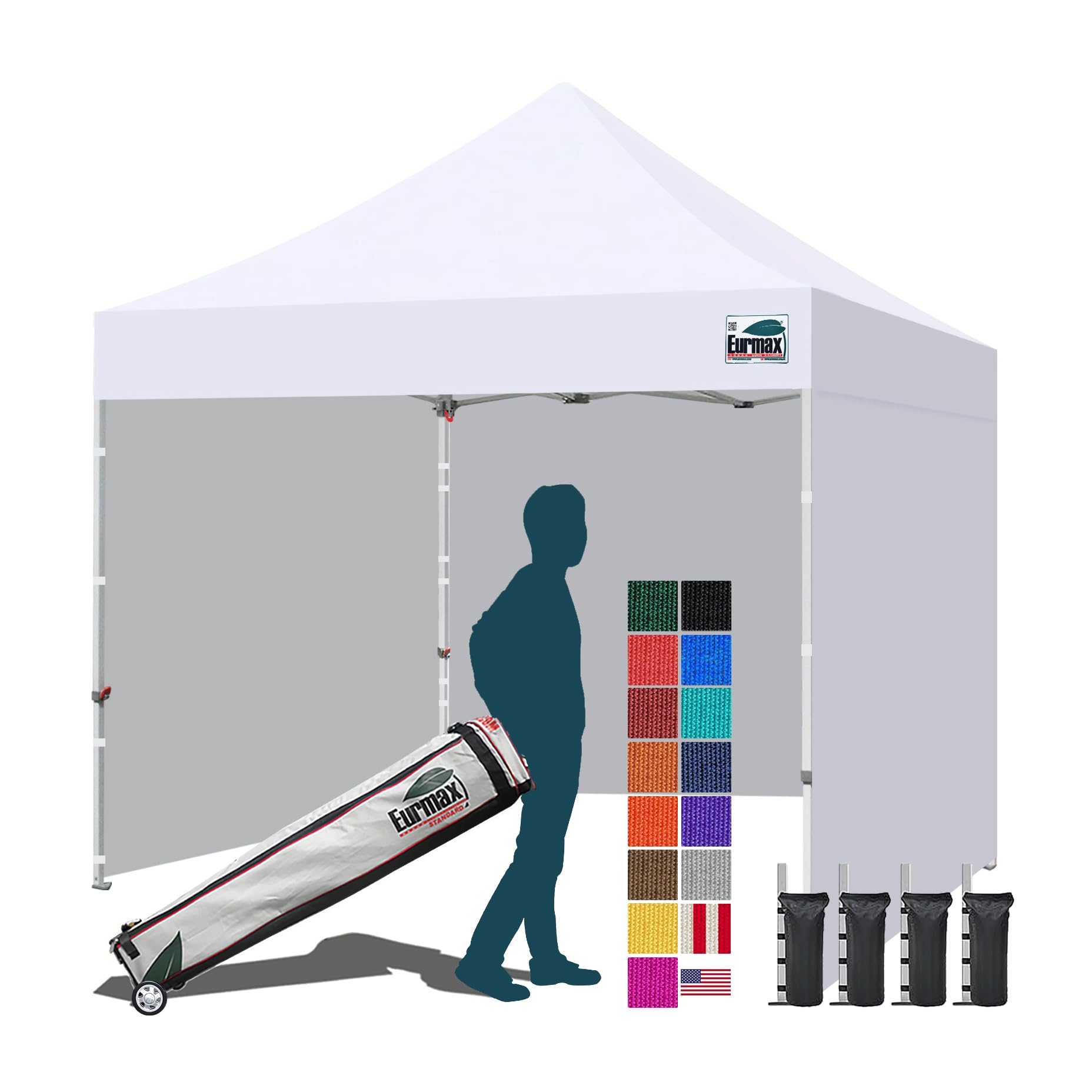
Eurmax USA 10×10 Commercial
Key Features
- Frame: Steel full truss
- Footprint: 10 ft x 10 ft
- Side walls: 4 zippered, removable
- Packed weight: 61 lb
- Price: Premium
Sixty-one pounds is the first thing you notice about the Eurmax, and it’s also the point. This is a commercial canopy: a full truss frame, four zippered walls that come off when you want the breeze, and enough rigidity that the shelter doesn’t shimmy every time someone brushes a leg. Weight is what buys that, and here you feel the trade the moment you lift the bag.
For market sellers, the walls are the reason to buy. They zip in on all four sides, so you can close up for privacy, keep rain off the merchandise, or leave one side open as a doorway. That makes it a booth rather than a roof on legs, and it’s the difference between a stall that looks improvised and one that looks like a business. The sandbags in the box are a small thing that saves an errand, and the one-year warranty is standard for the class.
Two people should plan to lift it. Getting the frame onto a truck bed alone is the moment the weight stops being theoretical. Check that every leg clicks into its detent before you load it up; a leg that doesn’t lock is the recurring snag with this frame, and it’s a two-second check that saves a collapsed corner at 2 p.m. Keep it staked and weighted, and take it down when the wind builds, because heavy is not the same as invincible.
Pros
- Four zippered, removable walls
- Full truss commercial frame
- Sandbags and roller bag included
Cons
- 61 pounds needs two people to load
- Legs can fail to lock into place
We recommend the Eurmax for weekend sellers: four zippered walls and a rigid truss turn a 10×10 into a proper booth, as long as a second person helps lift it.
Best for Light Solo Setup
EAGLE PEAK 10×10 Pop Up
Key Features
- Footprint: 10 ft x 10 ft
- Peak height: 112.2 in
- Canopy fabric: 150D silver-coated, CPAI-84
- Packed weight: 32.8 lb
- Price: Budget
At 32.8 pounds this is the lightest canopy in the group, and that number shapes the whole ownership experience. It goes from trunk to standing shade without a second person, which is the difference between a canopy you use and one that stays in the garage because setup is a chore. For a ball field, a beach afternoon, or a tailgate, that convenience is worth more than an extra wall or a heavier frame.
The Peak Push hub works on the same one-push idea as our top pick: spread the frame, extend the legs, clip the top on. The peak reaches 112 inches, and the 150D silver-coated oxford top is heat-sealed at the seams and rated CPAI-84, so it clears the flame requirement at most events. The wheeled bag is the part we’re glad to see at this level; it takes the weight off your shoulder on the walk from the car, and EAGLE PEAK says it fits most trunks.
Where it gives ground is weather. Steady rain works its way through the seams, and an unweighted frame bends when a gust gets under the top. That’s the trade for the low weight and the low price. Treat it as a fair-weather shelter: weight all four legs, drop the legs a notch when the wind builds, and don’t leave it up overnight. Do that and it’s a lot of canopy for the money.
Pros
- Lightest canopy here at 32.8 pounds
- One-person center-push setup
- Wheeled bag fits most trunks
Cons
- Seams let water through in steady rain
- Frame bends in unweighted gusts
Our budget pick, and the easiest to live with solo: the lightest canopy here, quick to raise, and honest about being a fair-weather shelter.
Best for Walled Booth Shelter
CROWN SHADES 10×10 Commercial with Sidewalls

Key Features
- Warranty: 2-year limited
- Footprint: 10 ft x 10 ft
- Peak height: 112 in
- Canopy fabric: 300D silver-coated, UPF 50+
- Price: Premium
The fabric is the difference here: 300D silver-coated polyester, a heavier yarn than the 150D tops most of this group uses, with sealed seams and a CPAI-84 flame rating. Thicker fabric hangs straighter, blocks more light, and takes more abrasion before it gives, which is what you want from a canopy that stays up weekend after weekend.
The frame is a steel truss with hardened bolts and reinforced eaves, and two of the legs have integrated wheels, so you tip the canopy and roll it instead of carrying the full load. Peak height is 112 inches, the top is rated UPF 50+, and sidewalls are included for shade, privacy, and weather. The warranty runs two years, with a full canopy replacement in the first.
We put this in also-consider rather than in a runner-up slot for one reason: it sits between the other two. It’s less of a solo project than the Eurmax and better enclosed than our top pick, but it’s heavier than the top pick and setup goes faster with two people. If you sell or exhibit regularly and want walls without the commercial weight, this is the sensible middle, and set it up once at home before you take it to a show so any stubborn leg or wall shows itself early.
Pros
- 300D silver-coated fabric, UPF 50+
- Two legs with integrated wheels
- Two-year warranty with canopy replacement
- Sidewalls included for shade and privacy
Cons
- Setup goes faster with two people
We point sellers here when they want walls without the Eurmax’s 61 pounds: heavier fabric, integrated wheels, and a two-year warranty.
How We Tested the Canopy Tents
We started by pulling together every canopy tent we could find with a footprint between 10×10 and 13×13, a listed packed weight, and a canopy fabric spec we could verify. We filtered out anything without replacement parts available or a stated UV rating, then narrowed by frame construction, price, and what actually came in the box — stakes, guy lines, weights, a wheeled bag. Ten made the cut.
Each one got the same first test: set up alone in a driveway or parking lot, stopwatch running from the moment the bag opened to the last stake in the ground, then torn down and packed away again. I noted whether the frame locked with one hand or demanded two, whether the canopy snagged on the corners, whether the bag swallowed the tent without a fight, and how heavy it felt lifting it into a trunk.
Then we lived with them — full days at ball fields, tailgates, and a backyard party or two. At midday we checked how much shade actually landed underneath and whether the fabric felt warm to the touch from below. On gusty afternoons we watched how far the legs flexed and whether the included stakes and guy lines were worth using or needed swapping out. We ran a hose over the roof for two minutes to see if seams wicked or water pooled in the valance, and after every use we checked corners for abrasion and joints for bending. Anything that leaked, stuck, or needed a second person to raise got cut.
How to Choose a Canopy Tent
The right canopy comes down to three things: who raises it, how often it’s up, and what the weather does where you use it. Everything else is trim.
Setup and weight: decide by frequency
A one-push center hub is now standard on good 10x10s, but frames still differ in how much muscle they ask for. The leisure canopies here run from about 33 to 38 pounds and one person can raise them; the commercial Eurmax weighs 61 pounds and wants two. Frequency is the honest test. If the canopy goes up twice a summer, buy on price and ignore the weight. If it goes up every Saturday, buy the lightest frame with a hub and a wheeled bag you can find, because the one that’s a chore stops going with you.
What fails first, and how to slow it down
Frames bend at the truss joints and fabric fails at the seams, usually after a season of sun and one afternoon of wind. Sun is the slow killer: UV stiffens coated polyester and the stitching goes first. Water is the fast one. Water resistant is not waterproof, and a top with heat-sealed or taped seams sheds rain far better than one without. Take the canopy down when you aren’t using it, let it dry before it goes in the bag, and store it out of the sun. A canopy that lasts five seasons is usually one that was never left up.
Wind: anchoring is part of the purchase
No pop-up canopy is freestanding, whatever the photos suggest. Every one here needs four weights, four stakes, or both before anyone stands under it, and the guy lines in the box are there for a reason. Walls change the maths: a closed sidewall is a sail, so weight the legs, drop the frame a notch when the wind picks up, and take the whole thing down in a gust rather than riding it out. Buy the sandbags at the same time as the canopy. They are not optional equipment.
Footprint, headroom, and walls
A 10×10 gives you 100 square feet, enough for six to ten people around a table, and it’s the size that fits most market pitches and campsites. Check the clearance under the valance, not just the peak: a nine-foot peak still has you ducking at the edge. Walls add shade and privacy, and they add wind load and setup steps, so pick the number you’ll actually use. Larger footprints exist but are heavier and need a second person, which is only worth it if the canopy stays in one place.
Frequently Asked Questions
Will a 10×10 canopy tent fit in my car?
Most 10x10s pack into a bag around four feet long and less than a foot square; the Crown Shades bag measures 48 by 8 by 8 inches, and the Eagle Peak bag is a similar shape with wheels. That lies across most trunks and back seats, but measure your cargo length first. In a small hatchback, plan on folding the rear seats.
How do I keep rain from pooling on the canopy roof?
Pooling happens when the top sags between the frame’s cross bars and can’t shed water fast enough, and a full puddle is weight the frame wasn’t designed to carry. Set the canopy with one corner a notch lower than the rest so water runs off, tighten the top down with its clips, and empty any puddle as soon as you see it. In heavy rain, take the canopy down rather than testing it.
Do farmers markets require flame-resistant canopies?
Many organizers do, and what they usually ask for is a CPAI-84 rating printed on the canopy or its tag. Check with the market before you buy rather than at the gate. All four canopies here carry a CPAI-84 rating, so any of them clears that hurdle; the buying decision is weight, walls, and price.
How long should a pop-up canopy last?
Fabric usually goes before the frame. A 150D top left in the sun all summer will fade and stiffen, and the seams are where it lets go first. Store it dry, take it down in wind, and expect several seasons from a leisure canopy. Warranties here run one year on the Eurmax and the Eagle Peak, and two years on the Crown Shades commercial model, which includes a full canopy replacement in the first year.
Final Verdict
The canopy we recommend to most people is the CROWN SHADES 10×10 with side pockets. It goes up with one push, the shade wall earns its keep at a ball field or a beach, and its durability is the steadiest in this group, which is usually the thing that decides whether a canopy sees a second summer.
Selling at markets every weekend? The Eurmax’s four zippered walls and rigid truss are worth the extra weight and the second pair of hands. Want walls without a 61-pound frame? The Crown Shades commercial model is the middle path, with heavier 300D fabric and a two-year warranty.