This post contains affiliate links. We may earn a small commission when you buy through our links — at no extra cost to you.
Car camping means you drive to your site, which means you can sleep on an actual mattress instead of a pad thin enough to fold into a backpack. That’s the appeal — and also the trap, because a mattress that feels luxurious in the tent still has to compress into something you can wedge between the cooler and the dog’s food bin. I’ve spent enough nights on the ground pretending a foam pad was fine to know the difference shows up around 2 a.m.
We spent six months sleeping on 12 car camping mattresses — drive-up sites, the back of an SUV, and a couple of guest-room floors between trips. The standouts stayed firm until morning and packed away without a fight; the disappointments were almost always about air, not padding. A few extra inches of width can make a mattress feel like a hotel bed or bow the walls of your tent, and that’s the judgment call this list makes for you.


Best for All-Around Car Camping
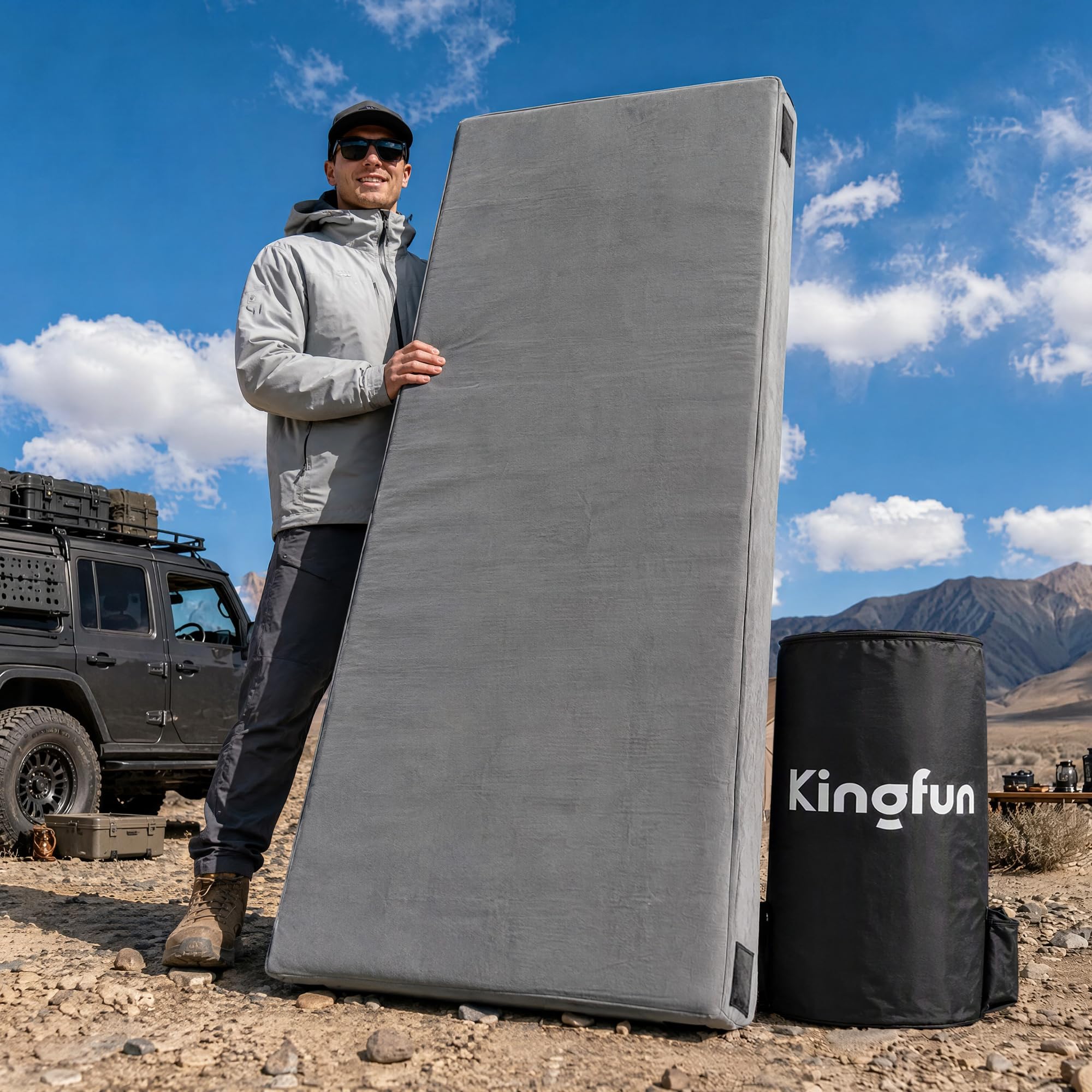
Kingfun Memory Foam Camping Mattress
Key Features
- Foam: 1 in gel memory foam + 2 in support foam
- Cover: Water-resistant, removable
- Thickness: 3 in
- Sleeping area: 75 x 30 in
- Price: Midrange
Seventy-five by thirty inches is the measurement that settles this one. Plenty of pads in this group run 24 inches wide, which is fine until you turn over in the night and your elbow finds the tent floor; those extra six inches are the difference between sleeping on a mattress and sleeping on a mat. Three inches of thickness clears the ground properly, and 75 inches of length keeps most adults’ feet off the end.
Under the cover it’s layered rather than one slab: an inch of gel-infused memory foam over two inches of denser support foam. We think that’s the right split for car camping — soft at the shoulder and hip, firm enough underneath that you don’t bottom out when you sit up to reach for a light. It’s CertiPUR-US certified, the velboa cover is water-resistant and zips off for washing, and the base is textured so the pad doesn’t slide on a tent floor. Velcro connectors let you pair two of them into a wider bed.
Rolling it up is where most pads lose their charm, and this one behaves: the straps hold a tight roll that slides into the included bag and stores on a shelf. The foam ships compressed, so unroll it and let it breathe for a few days before a trip. Rush that step and you’ll spend the first night on a pad that still remembers the box.
Pros
- 30-inch width leaves room to turn over
- Gel memory foam over a supportive base
- Rolls tight into its own bag
- Water-resistant cover zips off to wash
Cons
- Strap clips can work loose
- Carry bag can tear early
Our default for car camping: 30 inches wide, 3 inches of layered foam, and no pump, valve, or overnight deflation to think about.
Best for Tight Budgets
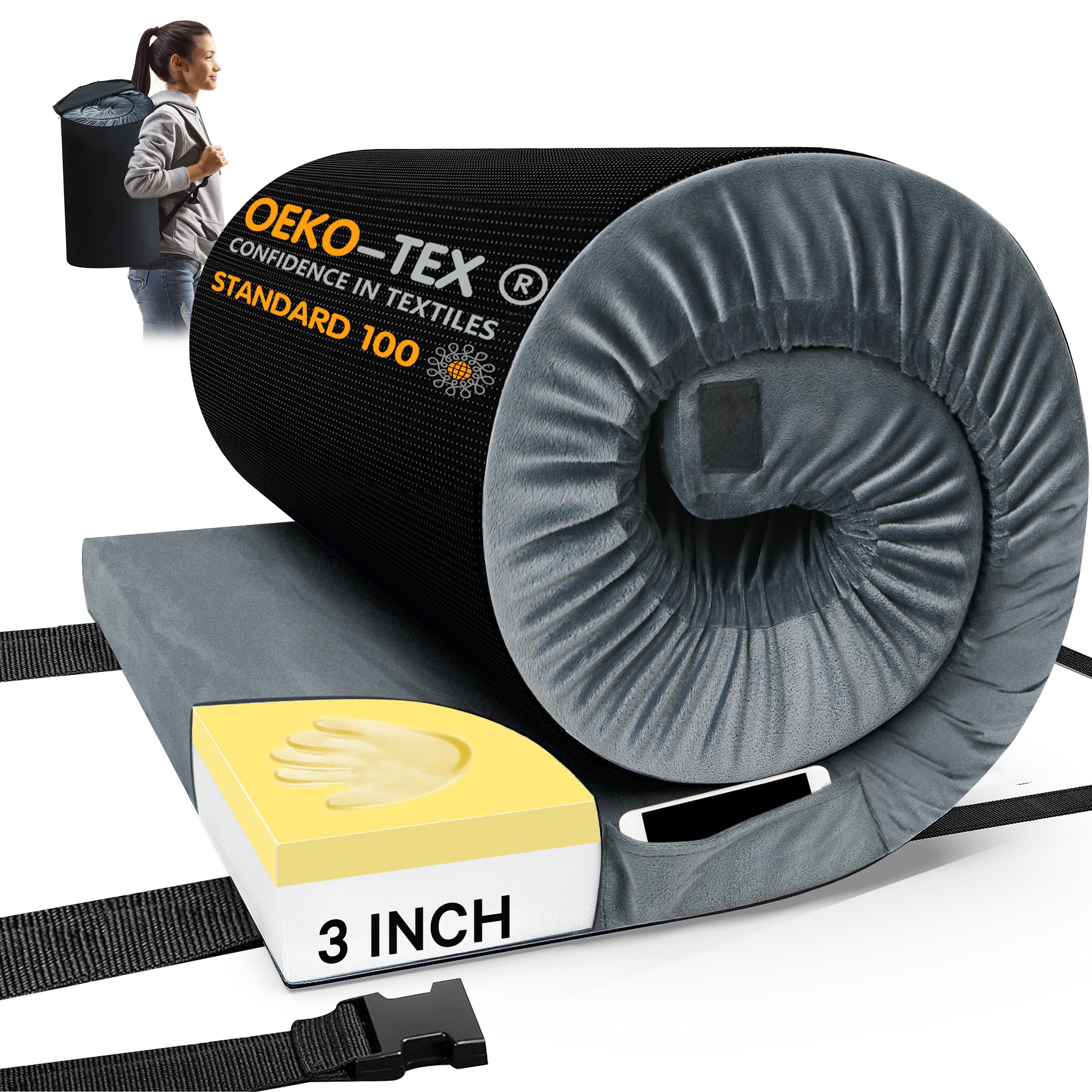
CYMULA Memory Foam Camping Mattress Pad
Key Features
- Foam: Memory foam
- Thickness: 3 in
- Certification: OEKO-TEX
- Sleeping area: 72 x 24 in
- Price: Budget
We keep coming back to this one when the question is how little you can spend and still sleep properly. It sits at the bottom of this group’s price range and still gives you three inches of memory foam — no valve, no pump, no 2 a.m. reunion with the ground. The catch is width: 72 by 24 inches is a solo berth, sized for someone who sleeps fairly still.
The foam carries a soft brushed cover that zips off for washing and a waterproof, non-slip base that keeps it from skating across a tent floor. It’s OEKO-TEX certified, the buckle straps hold a rolled pad snug, and the whole thing stows in the bag that comes with it. Rolled, though, it’s bulky — this is not a pad that disappears into a backpack, and even in a trunk it claims a real slice of space.
Sizing deserves a minute of thought, because the brand sells seven sizes and the 24-inch version here is the tight one. If your vehicle has room for a wider single, take it; that’s a better night for a modest amount of extra bulk. For a back sleeper in a small car, though, this is a lot of comfort for the money.
Pros
- 3 inches of memory foam at a budget price
- Washable cover with waterproof non-slip base
- Rolls up with straps into a bag
- OEKO-TEX certified materials
Cons
- 24-inch width is tight for restless sleepers
- Bulky package once rolled
We think it’s the value pick of the group, as long as 24 inches of width suits how you sleep.
Best for Suv Cargo Areas
KMZ SUV Air Mattress
Key Features
- Height: 5.5 in
- Chambers: 4
- Included: 12V pump, 2 pillows, repair patch
- Sleeping area: 76.8 x 49.6 in
- Price: Budget
This one is shaped for the back of a vehicle rather than the floor of a tent. At 76.8 by 49.6 inches it spans the cargo area of most mid-size SUVs between the wheel arches, and 5.5 inches of height puts you clear of the load floor and the tie-downs. If you sleep beside the car rather than in it, that width is wasted on you.
Four separate air chambers run across it, so you can inflate the whole bed or just the half you’re using, and the included pump plugs into the cigarette lighter — no batteries to forget at home. Two flocked pillows and a repair patch come in the bag, the flocked surface holds a sheet better than bare PVC, and setup takes a few minutes rather than a project.
Air is the trade. Pressure varies from one mattress to the next, and a slow overnight loss is the thing to watch for; inflate it at home the night before you leave and check it in the morning, and you’ll know what you’ve got before you’re committed. What we like is how little work it takes at the campsite after a long drive — park, unfold, plug in, done.
Pros
- Fits SUV cargo areas between the wheel arches
- Four chambers let you inflate only half
- 12V pump, two pillows and a repair patch included
Cons
- Needs a wide cargo area to make sense
- Inflation depends on the car’s 12V socket
If you sleep inside your vehicle, this is the one we point to: a wide, four-chamber bed that inflates from the car’s own socket.
Best for Two-Person Tent Camping
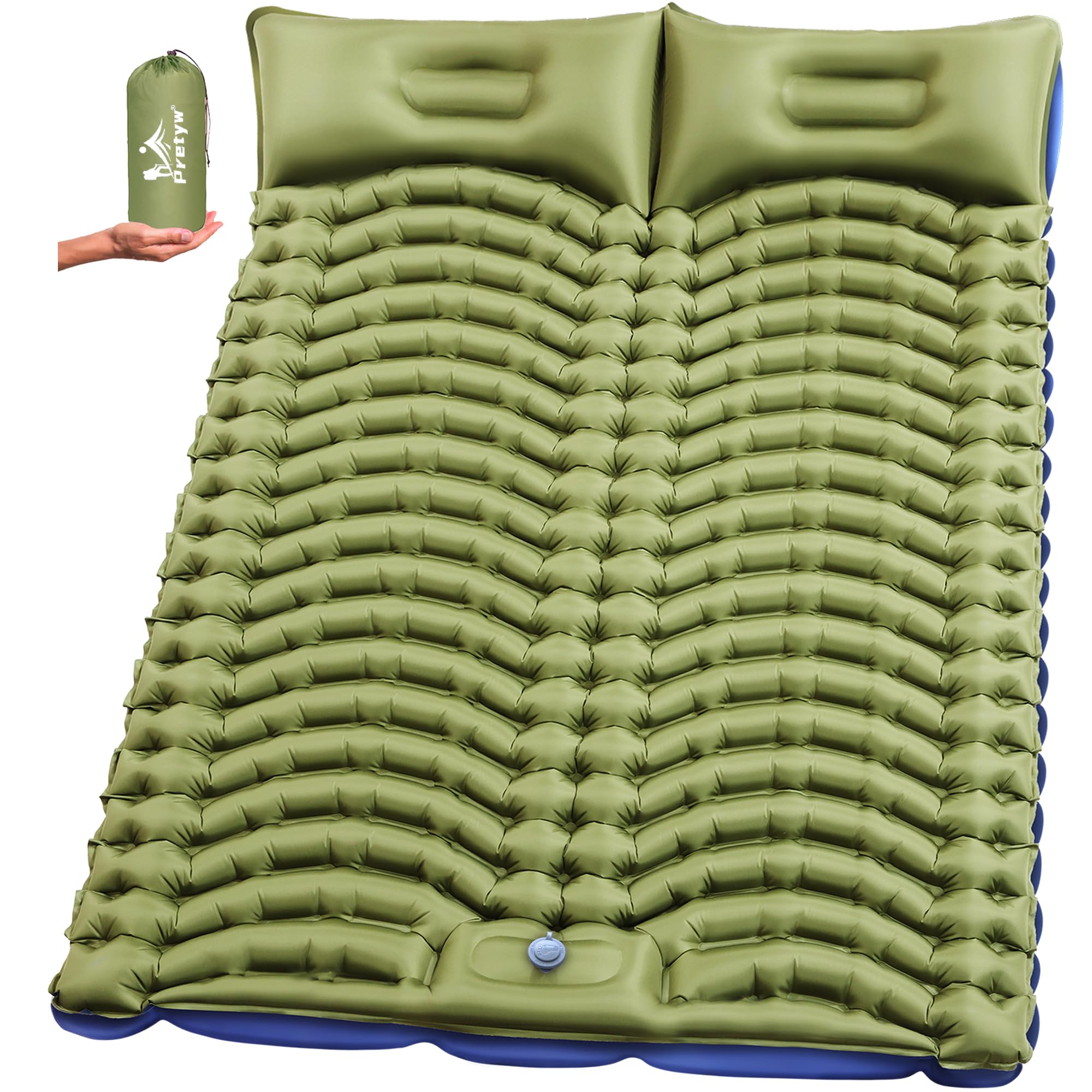
Pretyw Double Camping Sleeping Pad
Key Features
- Weight: 3 lb
- Thickness: 4 in
- Packed size: 10 x 5.9 in
- Sleeping area: 78 x 54 in
- Price: Budget
Bedtime with an air pad usually means hunting for a pump, batteries, or a set of lungs. This one has the pump built into the foot end: you step on it for a few minutes while the pad fills, and the same valve dumps the air in seconds when you pack up. We appreciated not having to pack anything extra for it.
At 78 by 54 inches it’s a genuine two-person pad, though 54 inches means two adults sleep close — closer than a queen bed. Four inches of thickness does the heavy lifting, keeping hips off the ground with two people aboard, and the pillow section firms up or softens with a little more or less air. The 40D nylon with a TPU layer wipes clean and shrugs off damp grass.
The figure that matters most here is the packed one: three pounds and 10 by 5.9 inches. Nothing else in this group disappears into a trunk like that, which counts when the car already holds a cooler, chairs, and a dog. It’s still an air pad, with the pressure check that implies — but it’s the best-behaved one here.
Pros
- Built-in foot pump, no batteries or separate pump
- Packs to 10 x 5.9 in at 3 lb
- 4 inches thick for two sleepers
- Wipes clean and resists damp
Cons
- 54-inch width is snug for two adults
- Foot pump takes several minutes of stepping
The two-person pad we reach for when trunk space is tight and nobody wants to hunt for a pump at bedtime.
Best for Cold-Weather Trips
hazli Matrix AirCell Memory Foam Mattress
Key Features
- Weight: 9 lb
- R-value: 7.5
- Thickness: 3 in
- Sleeping area: 72 x 26 in
- Price: Premium
An R-value of 7.5 is the number that separates this pad from everything else in the group. It’s the only stated insulation rating among these mattresses, and it’s high for foam — meaning less heat pulled out of your body and into cold ground on a shoulder-season trip. If you camp in spring or fall, or you sleep cold, that figure is worth more than an extra inch of foam.
Under the rating is three inches of memory foam with a water-resistant cover and an anti-slip backing, so it holds position on a tent floor and wipes down after a muddy weekend. The carry bag has a phone pocket, a small detail we noticed and liked: your phone has somewhere to live other than the tent floor. CertiPUR-US and OEKO-TEX certifications cover the materials.
The foam arrives compressed and settles a little below its listed three inches with use, so plan on a firm rather than plush surface — that’s the trade for the density. It’s the pad to choose when the forecast is uncertain and you’d rather not spend the night conducting heat into the ground.
Pros
- R-value of 7.5 for cold ground
- Water-resistant cover with anti-slip backing
- Carry bag with a phone pocket
- CertiPUR-US and OEKO-TEX foams
Cons
- Nine pounds, the heaviest foam pad here
- Six-month warranty
For cold-weather car camping the R-7.5 rating makes this the pad we name first, provided you like a firm surface.
Best for Budget Solo Campers
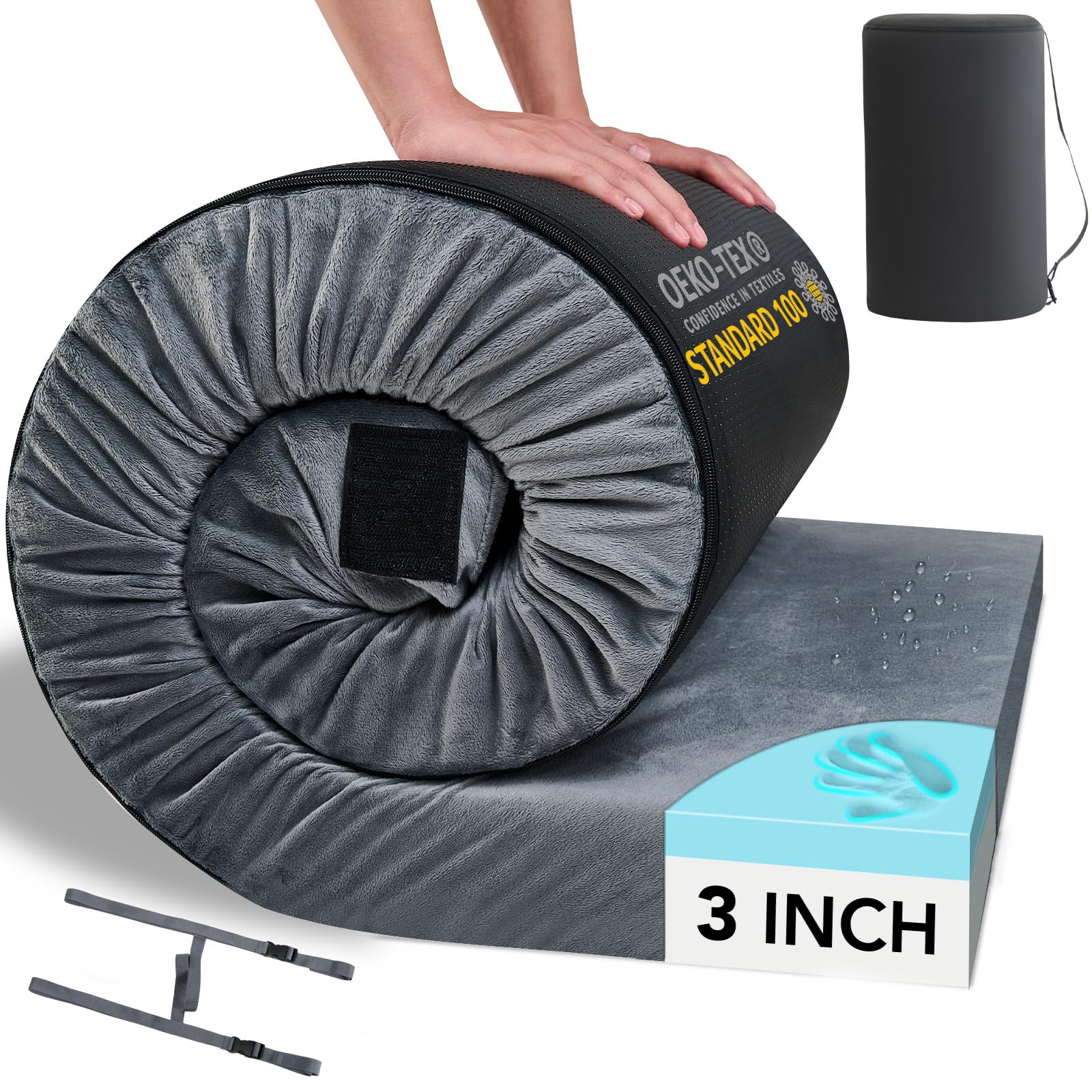
HomeMate Memory Foam Camping Mattress Pad
Key Features
- Cover: Removable, washable
- Weight: 7.8 lb
- Thickness: 3 in
- Sleeping area: 72 x 24 in
- Price: Budget
Seventy-two by 24 inches is a solo berth, and this pad doesn’t pretend otherwise. It’s for one person in a small car or a one-person tent, and at three inches thick with a memory foam top it’s softer under the shoulder than most pads at this end of the price range.
The build is simple: memory foam over a high-density support layer, a plush removable cover that unzips for washing, a waterproof anti-slip base, and straps for rolling. At 7.8 pounds it moves from car to tent in one hand.
Getting it back into the bag takes a couple of tries the first time — the foam wants to spring back while you’re rolling — but the straps are long enough to cinch down without a fight. The cover is the part that earns its keep over a season: mud, coffee, and damp all come out in the wash.
What we like most is that it asks nothing of you: no pump, no valve, no middle-of-the-night top-up. For a solo camper who wants a soft bed and doesn’t need to sprawl, this is a quiet, inexpensive way to get one.
Pros
- Soft memory foam top at a budget price
- Removable, washable cover
- Waterproof anti-slip base
- Light enough to carry in one hand
Cons
- 24-inch width leaves no room to sprawl
- Takes practice to roll tightly
If you sleep alone and want soft foam without spending much, this is the least fussy pad in the group.
Best for Room to Spread Out
Gaialoop Memory Foam Camping Mattress
Bulk is the first thing you deal with. At 12.8 pounds this twin rolls into a package closer to a duffel than a stuff sack, and if your car is packed to the roof that’s a real cost. What you buy with it is width: 75 by 38 inches is the roomiest foam surface in this group, enough for one person to sprawl or two small sleepers to share.
The foam is a memory layer over high-density support, with a plush removable cover, a non-slip base, and straps and a carry bag included. It’s OEKO-TEX and CertiPUR-US certified and carries a two-year warranty, the longest coverage of any pad here.
Firmness is the thing to get right before you order. It reads firm under a hip or shoulder — closer to a firm mattress than a plush topper — so side sleepers who like to sink in should look at the Kingfun instead. If you sleep on your back, or you want a surface that won’t wallow under you, the width and support make this a genuinely comfortable bed. It just isn’t soft.
Pros
- 38-inch width, the roomiest foam here
- Two-year warranty
- Washable plush cover and non-slip base
- OEKO-TEX and CertiPUR-US certified
Cons
- 12.8 pounds and bulky when rolled
- Firm surface with little give
For sprawlers and back sleepers with trunk space to spare, the extra width is worth the bulk and the firm ride.
How We Tested Car Camping Mattresses
We started with every mattress sold by the brands that turn up at outfitters and in camping forums, then cut anything that wouldn’t fit a standard two-person tent footprint, anything whose packed size rivaled a duffel bag, and anything priced like a piece of furniture. That left 12 models, which we rotated through six months of weekend trips so that each one got at least two full nights under a different sleeper.
Each mattress was inflated at the campsite with whatever pump came in the box, and we timed how long that took and whether the valve sealed on the first try or hissed until we reseated it. We measured the inflated size with a tape at the shoulder, hip, and foot, then slept on it and pressed a palm into the center the next morning to see whether it had gone soft overnight. For durability, we inflated a few and left them in a hot car for a week, then checked the seams for stretching or bubbling.
Portability got the same treatment: every mattress was deflated, rolled, and stuffed back into its own sack, with the clock running and the result weighed on a luggage scale. We carried each one from trunk to tent by its straps to see whether the buckles held and the webbing cinched tight, and we noted whether the bottom fabric gripped the tent floor or slid toward the corner every time someone rolled over. Comfort came down to whether the surface felt soft against skin or slick and plasticky, and value was a straight comparison of price against thickness, warranty, and how well the thing survived the week in the car.
How to Choose a Car Camping Mattress
The first decision isn’t brand or price — it’s foam or air, and each one fails in a different way.
Foam or air: pick your trade-off
Foam sleeps more like a bed and can’t deflate at two in the morning, but every foam pad here is bulky when rolled — the three-inch models run roughly eight to thirteen pounds and eat trunk space. Air packs down to almost nothing: our two-person inflatable folds to 10 by 5.9 inches and three pounds. The cost is that an air mattress depends on a seam and a valve holding all night. If the car has room and you want the least drama, choose foam. If the car is full of people and gear, choose air and test-inflate it at home first.
Width and thickness decide how you sleep
Twenty-four inches is a solo berth: fine on your back, tight when you turn. Thirty inches is the comfortable single, and 38 gives you room to sprawl. Thickness matters most under a hip — two inches of foam is a camp pad, three inches is a mattress, and four inches of air clears the ground entirely. Check width before anything else. A plush 24-inch pad is still a narrow bed, and that measurement decides more nights than any detail of the cover.
Insulation, and what sits between you and the ground
Cold comes up through the ground, and air mattresses are the worst offenders because the air inside them moves and pulls heat off your body. Foam insulates on its own, and one pad here states an R-value of 7.5 — the figure to look for if you camp in spring or fall. For summer car camping on warm ground, width matters more than warmth. For anything colder, put a closed-cell foam pad under an air mattress, or choose foam and a bag rated below the forecast low.
Pumps, batteries, and the inflation you didn’t plan for
Pumps come in three flavors here: one that plugs into the car’s 12V socket, a built-in foot pump, and nothing at all if you buy foam. A car-powered pump only works where the car is, which is fine for a mattress you’ll use beside it — just don’t count on carrying it to a hike-in site. Battery pumps need C cells that usually aren’t in the box, so check before you leave. Foam sidesteps the whole question, which is a large part of its appeal.
Straps, buckles, and the bag
The hardware is where these pads wear out first: a buckle that won’t stay cinched, a handle that tears off the bag, a strap that pulls out of its seam. None of it affects sleep, and all of it is annoying on the morning you pack up in the rain. Treat the bag as part of the product when you compare, and if the pad rides on a roof rack or in a trailer, pay for the heavier one. Stored in a trunk, a simple strap and stuff sack will do.
Frequently Asked Questions
Can I run the car heater while I sleep in my vehicle?
No. An idling engine or a fuel-burning heater in a closed vehicle can fill the cabin with carbon monoxide, which is odorless and can kill you in a parked car. Insulate instead: a foam mattress, a bag rated below the forecast low, dry clothes, and a window cracked for ventilation. A 12V blanket warms the bed fast — switch it off before you sleep so you don’t wake to a flat starter battery.
How do I clean a camping mattress?
Foam pads first: unzip the cover and machine wash it cold, then air dry. Spot clean the foam with a damp cloth and mild soap and never soak it. Air mattresses: wipe the flocked surface with a damp cloth, deflate fully, and let both sides dry before folding, because trapped moisture is what turns into mildew over a winter in the garage. Skip harsh cleaners on TPU and PVC.
How long does a new foam mattress take to reach full thickness?
Longer than most people allow. Rolled foam needs time to recover its loft — one mattress here specifies 72 hours. Unroll it in a spare room a few days before you leave, and don’t judge the thickness in the first hour. A pad that looks thin on day one is often noticeably thicker by day three, and one that never recovers was probably stored compressed too long.
Final Verdict
Start with the Kingfun. Thirty inches of width and three inches of layered foam is the combination that turns car camping into an actual bed, and it rolls back into its bag without a pump, a valve, or a midnight top-up. If two of you share one pad, the Pretyw is the better answer: it packs smaller than anything else here and inflates by foot. And if you sleep inside the vehicle rather than beside it, the KMZ is shaped for the cargo area.