This post contains affiliate links. We may earn a small commission when you buy through our links — at no extra cost to you.
Every camping trip has a moment of truth, and it usually arrives around 2 a.m., when you roll over and a tree root finds your hip. A roll mat is the one thing standing between you and the ground, and it decides whether you wake up rested or wrecked. Thickness matters, but so does how much of your pack it eats and how many breaths it takes to blow up. The right pad disappears beneath you; the wrong one you think about all night.
I’ve slept on everything from a closed-cell foam mat that cost less than lunch to an air pad that packed down to the size of a water bottle, and over the past nine months my team has rotated 12 mats through real trips, plus a few nights on the living room floor when the weather didn’t cooperate. The pattern is clear: the ones worth carrying are the ones you stop noticing. Here’s what earned a spot strapped to our packs.


Best for All-Round Camping
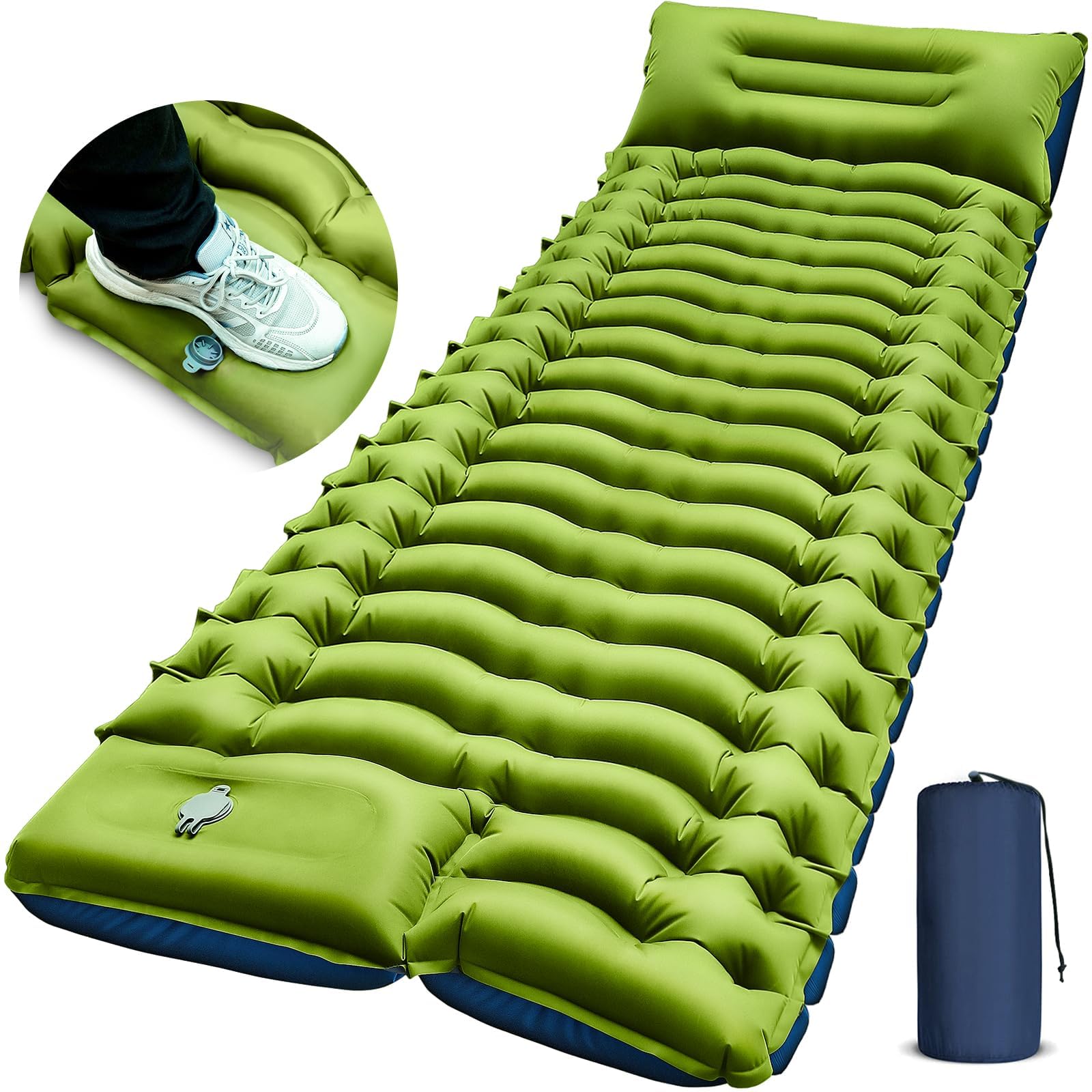
FUN PAC Sleeping Pad
Key Features
- Weight: 1.5 lb
- Inflation: Built-in foot pump
- Inflated size: 78 x 27 x 3 in
- Weight capacity: 400 lb
- Price: Budget
Thirty to sixty seconds of stepping on a built-in pump is the whole bedtime routine here. No mouth inflation, no separate pump to remember, no kneeling in the doorway working a valve. The FUN PAC inflates to 78 by 27 inches and 3 inches deep, weighs 1.5 pounds, and has a pillow built into the head end.
That mix is why it is our default recommendation. At 1.5 pounds it disappears into a pack, but 27 inches of width and 3 inches of air is more room than most backpacking pads allow, and the side buttons let you clip a second pad on for a double. The pump is the detail we keep coming back to: you can top the pad up from inside a small tent without stepping out into the rain to do it.
It is still an air pad, and that shapes where it belongs. Warmth comes from trapped air rather than foam, no R-value is published, and in a cold snap it wants a foil or foam layer underneath. The built-in pillow is more of a bumper than a pillow, and the nylon has a crinkle you notice on the first night and stop hearing by the third.
Ground preparation matters more than the price suggests: clear sticks and stones, and do not pitch it on a root. The 400-pound capacity means two people can sit on it without it bottoming out, and 78 inches of length leaves room for a six-footer’s feet. Inflate it at home, leave it overnight and check it is still firm in the morning; that one night tells you more than any listing.
Pros
- Foot pump inflates in under a minute
- 1.5 lb with 27-inch width and 3-inch depth
- Two pads clip together into a double
Cons
- No published R-value for cold nights
We recommend the FUN PAC as the default camping roll mat: 3 inches of air at 1.5 pounds, inflated by foot in under a minute, and wide enough to sleep on your side.
Best for Two-Person Tents
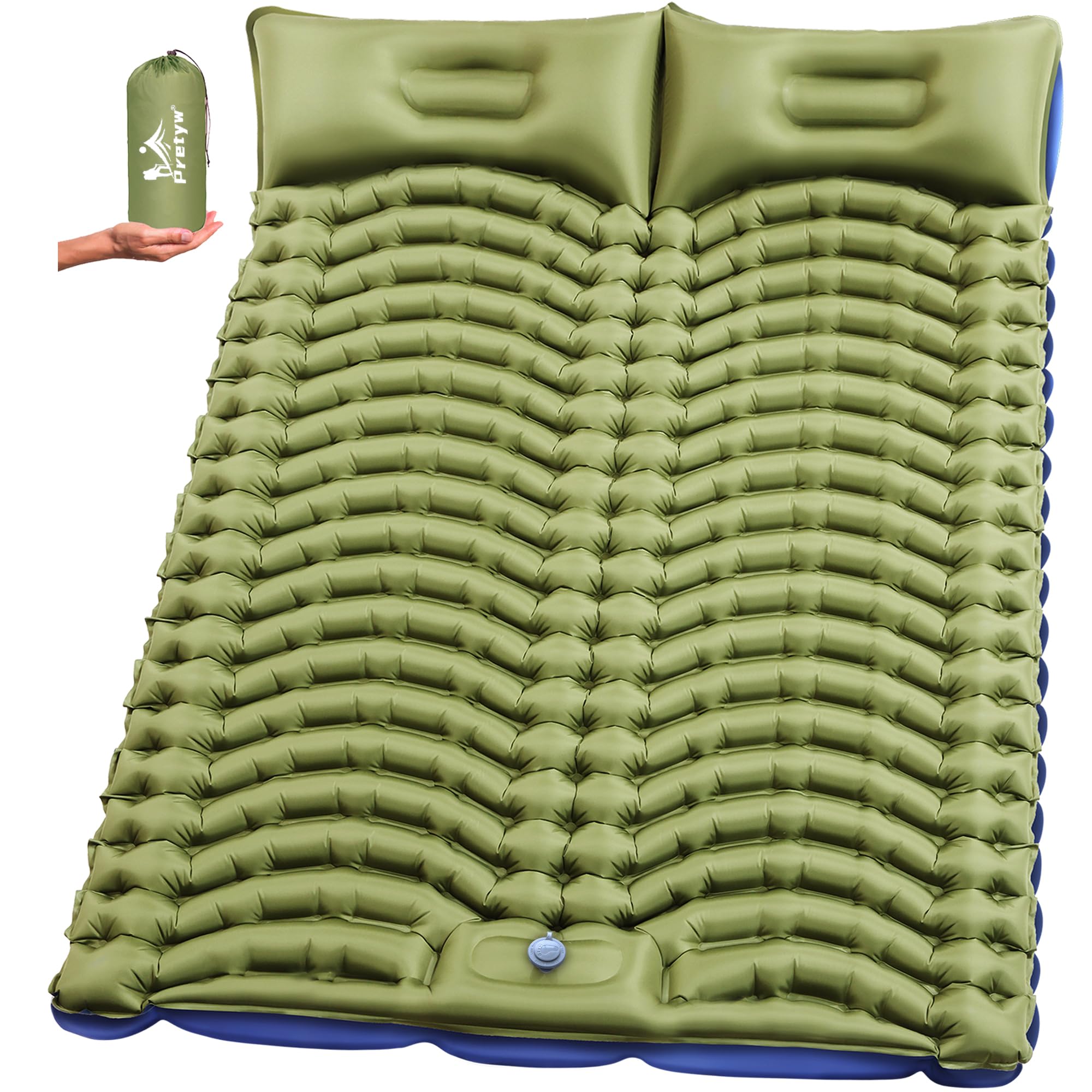
Pretyw Double Sleeping Pad
Key Features
- Weight: 3 lb
- Inflation: Built-in foot pump
- Inflated size: 78 x 54 x 4 in
- Weight capacity: 660 lb
- Price: Midrange
Seventy-eight by fifty-four inches is the argument for the Pretyw, and it is a good one. A single pad that size sleeps two adults with no seam down the middle and no gap to fall into, and it weighs 3 pounds — about what a solo foam mat costs you in weight. For couples in one tent, or one person in the back of a van, we think it is the most sensible shape in this guide.
Four inches of height and a 660-pound capacity mean it does not bottom out under two adults, and the foot pump saves hunting for a pump at bedtime. The surface is ribbed, which helps a little with movement, but you will still feel a partner turn over — that is true of every double air pad, and it is worth accepting before you buy one. It is water-resistant rather than waterproof, so keep it off a wet tent floor.
What it is not is a backpacking pad: 3 pounds and a double footprint is vehicle camping, however small the 10 by 5.9 inch bag looks. Solo trips are better served by the FUN PAC, and if you want foam rather than air, the CYMULA does that job in a size that fits one. Give yourself a few minutes of steady stepping the first time you inflate it — discovering the pump at midnight, in the dark, is nobody’s idea of a good arrival.
Pros
- Sleeps two with no center seam
- 4-inch depth and 660 lb capacity
- Built-in foot pump, packs to 10 x 5.9 in
Cons
- Water-resistant only, not waterproof
- Double footprint rules out backpacking
For two people in one tent we point you to the Pretyw: 78 by 54 inches of 4-inch air that weighs 3 pounds and inflates from a built-in foot pump.
Best for Car Camping Comfort
CYMULA Memory Foam Pad
Key Features
- Cover: Removable, waterproof
- Sizes: Seven sizes, 63 to 80 in
- Dimensions: 72 x 24 x 3 in
- Certification: OEKO-TEX
- Price: Midrange
Anyone who has woken at 3 a.m. on a deflated air pad understands the appeal of memory foam without needing it explained. The CYMULA stacks 3 inches of memory foam over a support layer, tops it with a soft brushed cover and a non-slip waterproof base, and comes in seven sizes from a kid’s mat up to a full.
Comfort is the whole point. The foam takes the shape of a hip or a shoulder instead of bouncing you back, which is exactly where thin air pads lose side sleepers, and there is none of the clammy feel of an air mattress. The cover unzips and washes, the straps and bag are included, and it rolls up as shown — with an asterisk, because 3 inches of foam makes a parcel that wants the trunk floor rather than a corner of it.
As the middle of the foam range it is the one we recommend first: memory-foam comfort for a lot less than the premium pads here, and enough sizes that you can buy the one that fits your tent instead of the one on the shelf. The straps are long enough that you can compress it in stages rather than wrestling it into the bag, which is not something every foam mat gets right.
Pros
- 3-inch memory foam supports side sleepers
- Removable, waterproof cover washes clean
- Seven sizes from kid to full
- Rolls and straps without a pump
Cons
- Bulky when rolled; wants trunk space
- No R-value published
We recommend the CYMULA to anyone who wants bed-like comfort without a pump: 3 inches of memory foam that rolls up, in seven sizes and a washable cover.
Best for Cold Ground
hazli Matrix AirCell Pad
Key Features
- Cover: Removable, waterproof
- Weight: 9 lb
- Dimensions: 72 x 26 x 3 in
- Certification: CertiPUR-US and OEKO-TEX
- Price: Premium
Nine pounds is the first thing to know about the hazli. That is several times the weight of the inflatables here, and it is the price of a foam mattress that behaves like a bed rather than a balloon.
We think it is the pick when the ground is cold and the car is close. Memory foam over a high-density base does not depend on trapped air: it cannot leak, will not go flat, and does not pull heat out of you the way an air pad does. The maker quotes an R-value of 7.5, which we treat as a claim to be proved on a genuinely freezing night, but the construction is on the right side of the argument. The 72 by 26 inch footprint suits one sleeper or a cot, and the waterproof cover zips off and washes.
What you give up is portability. Nine pounds of foam rolls into something the size of a sleeping bag, so it lives in the car and comes out at the campsite. The carry bag is generous enough to swallow a folded blanket alongside the pad. Against that: no pump, no valve, nothing to inflate at midnight, and a surface that stays quiet when you turn over.
Pros
- Dense foam insulates without trapped air
- 3-inch memory foam for side sleepers
- Removable waterproof cover
- Nothing to inflate or leak
Cons
- Nine pounds; vehicle camping only
- Bag handle and buckles are the weak point
We recommend the hazli for cold sleepers who camp out of a vehicle: 3 inches of dense memory foam, a washable cover, and the warmest night in this group.
Best for Cot Sleeping
Teton Outfitter XL Pad
Key Features
- Cover: Removable canvas
- Weight: 6 lb
- Firmness: Medium
- Dimensions: 80 x 30 x 2 in
- Price: Premium
Six pounds of open-cell foam in a canvas shell is a lot of pad, and it is exactly right for a cot. We think the Outfitter XL is the best cot mat in this group: 80 by 30 inches covers an XL cot edge to edge, and the corner loops strap it down so it stays put when you roll over.
On a tent floor it works too, as long as the floor is flat. Two inches of medium foam takes the edge off roots and stones, the canvas top does not crinkle or turn clammy the way an air pad can, and the whole shell slips off for washing — which matters more on a pad that lives on a cot than most people expect.
Morning dew is worth planning around. The canvas picks up a little condensation from the tent and the air, so it wants ten minutes in the sun before it gets rolled and stuffed in the car. Otherwise it is fuss-free: the straps stay attached, the pad rolls evenly, and the cover comes off at the end of the season for a wash.
Pros
- 80 x 30 in covers an XL cot
- Corner loops keep it from sliding
- Removable canvas cover washes
- Open-cell foam adds warmth
Cons
- Six pounds; vehicle camping only
- Not water resistant
We recommend the Teton Outfitter XL to cot sleepers: 80 by 30 inches of foam that turns a sagging cot into a bed and stays put through the night.
Best for Budget Backpacking
WANNTS Ultralight Pad
Key Features
- Weight: 1.6 lb
- Inflation: Built-in foot pump
- Dimensions: 75 x 25 x 3 in
- Weight capacity: 600 lb
- Price: Budget
At the bottom of the inflatable price range, the WANNTS still offers 75 by 25 inches, 3 inches of depth, 1.6 pounds, a built-in foot pump and six repair patches in the bag. On paper there is nothing here that reads as a compromise.
The compromise is air. A pad at this price can be excellent for a season and then start going soft overnight, and when it happens it is usually the valve or a seam rather than the fabric. Our advice with any budget inflatable is to inflate it at home, leave it a full night and only then trust it in a tent. The crinkle is real, too — this is not the pad to share a small tent with a light sleeper.
We think it is the right buy for a first pad, a teenager’s kit or a spare that lives in the car, and the wrong one for a long trip where a failure ends the walk. The FUN PAC is wider, slightly lighter and comes with a pillow for a little more money; if you want something that physically cannot leak, the Aehma foil mat does a different job for about the same.
Pros
- 1.6 lb and packs small
- Built-in foot pump, no extra gear
- Six repair patches included
- 600 lb weight capacity
Cons
- Air retention and seam life are the weak points
We recommend the WANNTS as a first air pad or a spare: 75 by 25 inches, 1.6 pounds and a foot pump, for less than any other inflatable in this guide.
Best for Extra Insulation
Aehma Foam Sleeping Mat

Key Features
- Length: 78.7 in
- Weight: 5.64 oz
- Surface: Aluminum foil, both sides
- Thickness: 0.07 in
- Price: Budget
At 160 grams and 0.07 inches thick, the Aehma is closer to a space blanket with foam inside than to a mattress. It unfolds to 78.7 inches, folds back into its own pack, and takes up about as much room as a paperback.
What it does is stop the ground pulling warmth out of you. Aluminum foil on both faces reflects heat back, which is why it earns its place under an air pad that has no insulation of its own, and why it works as a tent floor layer or draped over a sleeping bag in a cold snap. Foil side up under the pad, foil side down when it is doubling as a ground sheet.
It tears. The foil facing and the sealed edges are the parts that give out, especially where a boot or a cot leg catches them, and no one should expect more than a couple of seasons from a sheet this thin. Fold it rather than stuffing it, and keep it away from stove corners.
We keep one in the car as insurance, because it is an inexpensive way to make a summer air pad usable on a frosty night, and it doubles as a sit mat or a picnic sheet. Just do not buy it as a mattress: 0.07 inches is padding in name only.
Pros
- 160 g and folds into its own pack
- Foil on both faces reflects ground cold
- Works under an air pad or as a ground sheet
- Long 78.7 in length
Cons
- Foil facing and edges tear easily
- Too thin to sleep on directly
We recommend the Aehma as a cheap warmth layer rather than a mattress: 160 grams of foil-backed foam that goes under an air pad or on a cold tent floor.
Best for Kids and Guests
Wakeman Foam Sleeping Pad

Key Features
- Surface: Non-slip, water-resistant
- Material: NBR foam
- Dimensions: 72 x 24 x 0.75 in
- Rolled size: 24 x 9 x 9 in
- Price: Budget
Three quarters of an inch of NBR foam, 72 by 24 inches, a textured non-slip surface and an elastic strap to hold it rolled. It is the plainest thing in this guide, and the price reflects it.
It smells. New NBR foam carries a strong rubbery odor that takes days to fade, and a week in the garage before a trip is not unusual. Air it flat and in the sun first; if it is still noticeable in a closed car after that, use the return window.
The foam is dense and firm rather than plush. For a back sleeper or a child, 0.75 inches is genuinely enough to take the stones out of a tent floor; for a side sleeper’s hip it is not, and a foil mat underneath will not change that. Rolled, it is a 24 by 9 by 9 inch cylinder — fine in a trunk, not fine on a hike.
Where it earns its place is the guest room, the truck bed and the kids’ tent: places where a mat gets used hard, occasionally, and does not need to be precious. Treat it as a mat rather than a mattress and it does its job.
Pros
- Non-slip textured surface
- Elastic strap keeps it rolled
- Wipes clean and resists water
- Cheap enough to buy two
Cons
- Strong rubber odor when new
- 0.75 inches is thin for side sleepers
We recommend the Wakeman as a cheap foam mat for kids, guests and truck beds: 0.75 inches is enough for a back sleeper and not for a side sleeper.
How We Tested the Best Camping Sleeping Pads
We started by pulling together every roll mat that kept surfacing in owner reviews and gear forums, then filtered that list by packed size, weight, thickness, and price until 12 were left — a mix of closed-cell foam, self-inflating, and air pads, from budget to genuinely spendy.
Each one went on real trips over nine months: weekend car camps, a few backpacking overnights, and a wet three-day stretch where everything got packed away damp. We also ran a controlled night in the backyard and, honestly, several on the living room floor, so we could compare them side by side on identical ground.
Inflation and air retention got timed and counted. We noted how many breaths it took to fill each pad, whether the valve hissed or fought us, and how firm the pad still felt the morning after we’d inflated it and left it out overnight — a few had to be topped up, which told us plenty. Then we deflated and rolled each one back into its sack, clocking how long that took and whether it fit without a wrestling match.
Comfort came down to sleeping on them — side, back, and stomach — and noting in the morning whether our hips and shoulders complained. We weighed each pad, checked its packed size against a 40-liter pack, pressed seams after dragging them over gravel and roots, and weighed price against the nights we’d realistically get out of each. Anything a single season can’t confirm, like long-term seam failure or a slow leak, we’ve flagged as worth watching.
How to Choose a Camping Roll Mat
The first decision is not brand or budget: it is whether the mat has to travel on your back, because that one question splits this category in two.
Foam or Air: Decide How the Mat Travels
Start with the trip, not the spec sheet. Foam cannot leak, needs no inflating and holds warmth far better than a pocket of air, but it is heavy and rolls into something the size of a sleeping bag — the Teton is 6 pounds, the hazli 9, and neither belongs on your back for ten miles. An air pad packs to the size of a water bottle and disappears into a daypack, at the cost of depending on a valve and a seam.
If the car does the carrying, buy foam. If your feet do, buy air and treat the valve as the most important part of the purchase.
Thickness, Length and Width: What Your Hips Need
Three inches is the working minimum for a side sleeper. At 0.75 inches the Wakeman is a mat rather than a mattress, and it is the right call only for back sleepers, kids and guests. Length is simpler: 72 inches suits most adults, and 78 to 80 inches is worth having if you are over six feet — the Teton and the FUN PAC both clear that bar.
Width is the number people ignore and then regret. Twenty to 25 inches is standard, 27 to 30 inches is generous, and two extra inches of width change a night more than another half inch of foam does.
Weight and Packed Size: Read the Rolled Dimensions
The adjective on the listing is not a measurement. Compact on a foam mat usually means it fits a car trunk; a rolled 24 by 9 by 9 inch mat is compact next to a mattress and enormous next to a 1.5-pound air pad. Check the packed size against your pack’s sleeping-bag compartment before you order.
Then weigh the trade honestly. Carrying 9 pounds of memory foam two miles to a campsite is a decision you make once. If you will walk further than that, the 1.5 to 1.6 pound inflatables are the only sensible shortlist.
Inflation, Valves and Holding Air
Air pads fail at the valve and the seams, not in the middle of the fabric, and that is what separates a pad that lasts from one that does not. A built-in foot pump saves your breath and your morning; an inflation bag fills a pad in a handful of scoops; mouth inflation works but pushes moisture inside, where it stays.
Whatever you choose, inflate it at home and leave it a full night before the first trip. A pad that is soft by morning is a pad to return, not to pack. Air also contracts in the cold, so expect to top up at night.
Warmth From the Ground
R-values are rarely published on pads at this level, so judge insulation by construction. Foam — open-cell, memory or closed-cell — traps warmth in the material itself. An air pad traps it in a pocket that cools as the night goes on, which is why a foil-backed sheet underneath buys a surprising amount of warmth for very little weight and money. It is the cheapest cold-weather upgrade in this guide.
Frequently Asked Questions
Can you use a camping roll mat on a cot?
Yes, and a foam mat is often the better cot companion because it will not slide or deflate. Match the pad to the cot deck: a standard cot takes something around 72 by 24 inches, while an XL cot wants closer to 80 by 30, which is what the Teton Outfitter is cut for.
Look for corner loops or attached straps — they are what stops the pad shifting when you turn over.
How do you clean a camping roll mat?
Foam pads with a removable cover are the easy ones: unzip, machine-wash the cover and air-dry the foam core, which the CYMULA, hazli and Teton all allow. A fixed foam mat gets wiped with mild soapy water and dried flat, never soaked or machine-washed.
Air pads want a damp cloth and a full dry before storage. Trapped moisture in a rolled pad is how mildew starts.
Can two camping mats be joined into a double?
Some inflatables have buttons along both sides so two pads clip together, and the FUN PAC and WANNTS both do. It works, but you get a small ridge where they meet and each half keeps its own firmness.
If two people sleep together regularly, a purpose-built double such as the Pretyw is more comfortable than two singles lashed together.
Final Verdict
The FUN PAC is the mat we recommend to most people, because it is the one here that does not force a choice: 3 inches of air and 27 inches of width at 1.5 pounds, inflated by foot in under a minute.
If your mat never travels further than the trunk, that changes. The hazli’s foam sleeps warmer and more like a bed, and its extra weight only makes sense when the car is doing the carrying.