This post contains affiliate links. We may earn a small commission when you buy through our links — at no extra cost to you.
There’s a tradeoff baked into every backpacking sleep setup: the lighter your pack, the worse your night. Ounces come out of the pad first, and by 2 a.m. your hip bone has found the one rock under your tent. A good sleeping pad doesn’t erase that deal so much as bend it — you get cushioning where your body actually presses down, a packed size that leaves room for food, and inflation that doesn’t leave you dizzy before bed.
Over the past eight months, my team and I have slept on 12 different pads — minimalist inflatables, foam-and-air hybrids, plush baffled models — and the gaps between them showed up fast. The ones I kept reaching for were easy to live with, not just easy to carry. Weight and packed size matter, but so does whether you can inflate the thing in the dark without passing out, whether it’s still firm on night 30, and whether the price makes sense for how often you’ll actually go. The picks below are the ones I’d carry again.



Best for Cold-Weather Trips
Gear Doctors ApolloAir
Key Features
- Weight: 1.1 lb
- R-value: 5.2
- Inflation: Pump sack
- Packed size: 8.5 x 3 in
- Price: Premium
R-5.2 is the highest warmth rating in this group, and it’s the reason the ApolloAir is the pad we reach for when the forecast has frost in it. That figure is what keeps your shoulders off frozen ground on an October night, and it’s why one pad covers April through November without a foam layer underneath. Around it sits 3.25 inches of thickness, a 72-by-22-inch footprint, and a packed shape of 8.5 inches by 3 inches, narrow enough to slide down the side of a pack instead of owning the middle of it.
The pump sack is the other half of the pitch. It clips onto the valve and you scoop air and roll the top down, a few loads and the pad is firm — no mouth-to-valve work at the end of a long day, no lightheadedness when you’re already spent. It takes a night or two to get the knack of rolling it so it seals, and after that it’s quicker than blowing. The 40D shell is water-resistant rather than delicate, and the valve stayed put through a season of pitching in the dark.
What you give up for the warmth is the foam pad’s invulnerability. An inflatable this light lives or dies on where you put it down, which is why the patch kit stays in the pack rather than in a drawer at home. It’s also the priciest pad in this group by a clear margin, and that’s the honest trade: you’re paying for warmth at a weight the cheaper inflatables here can’t match.
Pros
- Warmest pad here at R-5.2
- Packs to 8.5 by 3 inches
- Pump sack included, no mouth inflation
- 3.25 inches thick over 72 inches
Cons
- Most expensive pad in this group
If you backpack in shoulder seasons or sleep cold, this is the pad we hand people first: the warmest rating here, at a weight you’ll stop noticing by mile two.
Best for No-Puncture Reliability
Therm-a-Rest Z Lite Sol
Key Features
- Size: 72 x 20 x 0.75 in
- Weight: 14 oz
- R-value: 2.6
- Packed size: 20 x 5 x 5.5 in
- Price: Midrange
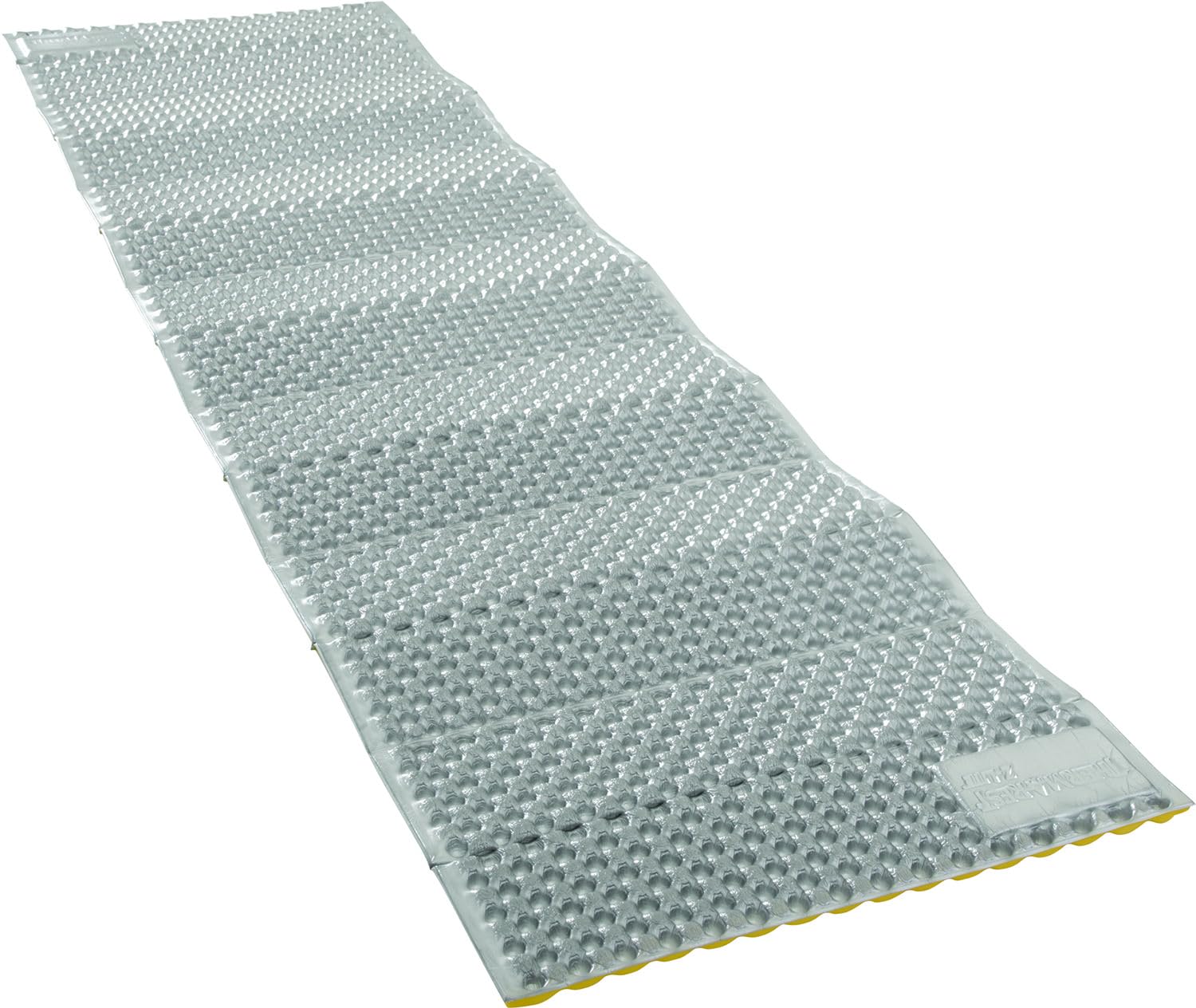
There’s no valve on this pad, and that’s the whole argument for it. Nothing to crack, nothing to leave at home, nothing that softens at 3 a.m. It’s 14 ounces of closed-cell foam with a reflective coating and heat-trapping dimples, rated R-2.6, folding accordion-style into a 20-by-5-by-5.5-inch block. The foam is softer on top and denser underneath, which is the right way round: a little give under a hip, a firm base against stones.
What keeps it in our lineup is that it can’t strand you. On a remote route with no resupply and no signal, we take this rather than an air pad, and in winter it slides under an inflatable as extra ground insulation. It also does more off-duty work than anything else here: a seat at lunch, a kneeler by the stove, a dry barrier under a pack. Light insurance, in a category where insurance usually weighs more.
Pros
- Cannot puncture, leak, or deflate
- 14 ounces with an R-2.6 rating
- Doubles as a seat and a winter base layer
Cons
- Only 20 inches wide
- 0.75 inch is thin for side sleepers
The pad we take when a flat night would wreck the trip: no valve, no patch kit, 14 ounces, and enough warmth for three-season ground.
Best for Ultralight Budget Trips
Sleepingo Ultralight
Key Features
- Fabric: 20D ripstop nylon
- Weight: 14 oz
- Thickness: 2 in
- Inflated size: 73.5 x 21.5 in
- Price: Midrange
At 14 ounces this is the lightest pad in the group that holds air — a few ounces under the ApolloAir, most of a pound under the UL80 — and it still gives you 73.5 inches of length and 21.5 of width. Rolled up it’s about the size of a thin water bottle, which is the sort of thing you notice on a five-day carry when the food bag is already taking up half the pack.
Two inches of air is the honest description of the comfort: enough for a back sleeper to stay asleep, not enough to hide a root from a hip. What we appreciate is how little fuss surrounds it. The 20D ripstop shell is waterproof, the pad goes up fast and deflates faster, and it rolls back into its sack without a wrestling match at dawn.
Treat it as a summer pad. Two inches of air with not much between you and the ground is a warm-weather proposition, and a thin closed-cell layer underneath stretches it well into September for very little weight. It’s also the pad in this group most worth inflating at home and leaving a night before you trust it on a ridge.
As a first pad, a loaner for a friend, or the one you take when every ounce gets counted, this is what we point people toward. It’s a pad you can replace without wincing, and the one most likely to still be in the cupboard when somebody needs to borrow something.
Pros
- 14 ounces, lightest inflatable here
- Packs down to water-bottle size
- 73.5 inches long, room for tall sleepers
Cons
- Two inches is thin for side sleepers
- Air retention varies from pad to pad
Our ultralight inflatable pick: 14 ounces, two inches of air, and a price that leaves room for the rest of your kit.
Best for Side Sleepers
Trekology UL80
Key Features
- Weight: 26.5 oz
- R-value: 1.6–2 (estimated)
- Thickness: 4 in
- Packed size: 7.3 x 4.7 in
- Price: Midrange
Side sleepers need thickness more than they need warmth, and four inches is the most air any pad here puts between a hip and the ground. The UL80 also has raised contoured sides and S-curve channels that cradle you toward the middle, which is the difference between staying on the pad and waking up half off it. At 75.2 by 22.4 inches it fits a tall sleeper, and it still packs to 7.3 by 4.7 inches. For a side or stomach sleeper on a three-season trip, this is the one we hand over first.
The trade is warmth and a bit of breath. An estimated R-value of 1.6 to 2 is a summer and mild-fall figure, so this isn’t the pad for a frosty night without a foam layer underneath. Inflation is by mouth through an enlarged circular valve, and a standard pump fits if you bring one — the blowing is the part that wears thin night after night. At 26.5 ounces it’s nearly double the Sleepingo, which is the price of all that thickness.
Pros
- Four inches of thickness, the most here
- Contoured sides keep you centered
- Packs to 7.3 by 4.7 inches
Cons
- Warm-weather R-value of 1.6 to 2
- Air loss on some pads
If you sleep on your side, start here: four inches of air under your hip, at a price well below the top pick.
Best for Broad Shoulders
FUN PAC Sleeping Pad
Key Features
- Width: 27 in
- Weight: 1.5 lb
- Inflation: Built-in foot pump
- Thickness: 3 in
- Price: Budget
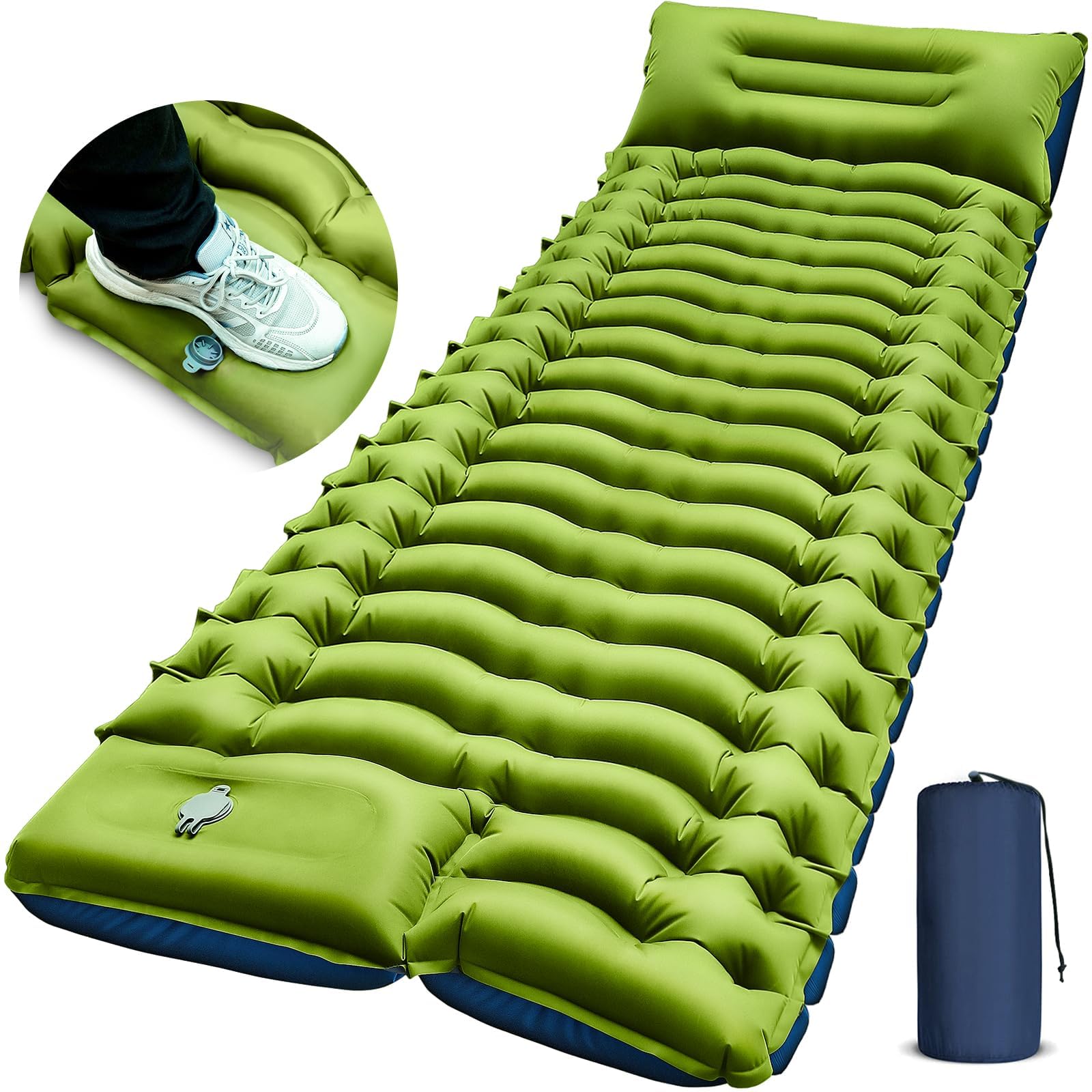
Twenty-seven inches is the number worth noticing. That’s the widest pad in this group — the Z Lite Sol gives you 20, the ApolloAir 22 — and five extra inches of width is the difference between sleeping through the night and waking at 2 a.m. with an elbow on cold nylon. There’s a built-in pillow at the head end too, which saves stuffing a jacket into a stuff sack and finding it flat by morning.
The foot pump is the feature we ended up liking most. You stomp on a chamber at the foot of the pad and it fills in about a minute of lazy work, sitting down if you want, in a tent where there’s no room to swing a pump sack around. The 40D nylon and TPU shell is waterproof, the pad is rated to 400 pounds, and the hexagon air cells give it a firmer feel than the thin two-inch pads here.
At 1.5 pounds it’s heavier than the ultralight picks, though it undercuts the UL80. On a short carry or a basecamp trip that weight disappears; on a long thru-hike you’ll feel it by the fourth day. For a sprawling sleeper who’d otherwise be awake half the night, that’s a fair trade — and two of them button together, which makes this the rare backpacking pad that doubles as a guest bed.
Pros
- 27 inches wide, the widest here
- Built-in foot pump fills it fast
- Built-in pillow and 400 lb capacity
Cons
- Seam leaks rather than puncture leaks
The widest pad here and the easiest to inflate: a foot pump, a built-in pillow, and 27 inches of room for people who sprawl.
Best for Budget First Pad
REDCAMP Foam Pad

Key Features
- Size: 72 x 22 x 0.75 in
- Weight: 1.1 lb
- R-value: 2.1
- Material: Closed-cell foam
- Price: Budget
Foam pads live or die on two things — whether they’re wide enough and whether the surface holds heat — and this one gets both right for the money. It’s 72 by 22 inches, two inches wider than the Z Lite Sol, with a reflective heat-trapping layer and an R-2.1 rating. At 1.1 pounds it folds accordion-style into a block held by elastic straps, and it’s waterproof enough to set down on wet grass without thinking about it.
Where it shines is as a base layer. Under an inflatable in winter it adds warmth and takes the puncture risk that would otherwise end an air pad’s night, and on its own it’s the pad for warm, dry, undemanding ground — the kind of trip where you’re sleeping because you’re tired rather than because the pad is luxurious. The ventilation grooves and textured surface stop it sliding around inside a tent.
This is the pad we’d put in a scout’s kit or a car’s emergency box, and the one to buy if a first trip might also be a last one. It’s also the cheapest way here to add a winter layer under a pad you already own. Just don’t buy it expecting to side-sleep on it and be surprised.
Pros
- R-2.1 with a reflective layer
- 22 inches wide, two more than the Z Lite
- 1.1 pounds and folds with straps
Cons
- Little cushioning under a side sleeper
A closed-cell pad for people who want nothing to go wrong: 0.75 inch of foam, 22 inches wide, and enough warmth for a cool night.
Best for Cheapest Backup Pad
WANNTS Sleeping Pad

Key Features
- Width: 25 in
- Capacity: 680 lb
- Inflation: Built-in foot pump
- Thickness: 3 in
- Price: Budget
There’s a real job for a pad this cheap, and it isn’t a thru-hike. At 25 inches wide and three inches thick it’s a big sleeping surface for the money, with a foot pump built into the head end, a 680-pound capacity, and six repair patches in the bag — the sort of kit that means one puncture doesn’t end a trip. The nylon shell is waterproof, and the hexagon cells keep it from feeling like a balloon under a hip.
In use it’s the pad you hand to a friend who’s never backpacked, or toss in the car for the night you end up sleeping somewhere unexpected. The foot pump is genuinely quick, twenty seconds of stomping and it’s up, which matters when you arrive in the dark. Two of them button together for a wider bed, and at 25 inches it takes a rolling sleeper without dumping them onto the tent floor.
Air is the open question, and it’s the one thing to settle before a trip: inflate it at home, leave it a night, and see what you’ve got. If it holds, it’s the best value in this group by a wide margin. If it doesn’t, you’ve found out in your living room instead of on a ridge, and the return window is still open.
Pros
- Lowest price in this group
- 25 inches wide with a foot pump
- Six repair patches in the bag
Cons
- Can go soft overnight
The cheapest pad in this group, and a sensible one for a spare, a loaner, or a first trip you’re not sure you’ll repeat.
How We Tested Backpacking Sleeping Pads
I started with a list of roughly 40 pads sold for backpacking and cut it down by specs first: packed weight and volume, R-value, valve design, and price. Anything too heavy or bulky for a weekend pack came off, as did pads priced like a piece of furniture rather than a sleeping pad. That left 12 to test, and I spent eight months with them.
The first night with each pad happened indoors, on a hardwood floor, so I could feel exactly where the cushioning gave out. I inflated each one by mouth and again with a pump sack, counting breaths and timing it, and noted whether the valve was a simple twist or a two-stage design that spills air while you wrestle the cap on. Then I deflated and rolled each pad to see if it went back into its stuff sack without a fight, and weighed it on a kitchen scale, sack and all. The real test came on trips: a three-night stretch on rocky ground, a couple of damp weekends, and one cold night where I wanted to know if the pad felt any different near freezing.
Back home, every pad stayed inflated in a spare room for a week and I checked firmness each morning for slow leaks — the failure that quietly ruins a trip. I also set them on gravel and rough ground on purpose, then inspected seams, baffles, and the surface for scuffs, stretching, and separation after repeated inflate-and-pack cycles. For comfort, I slept on my side and my back and paid attention to whether a hip or shoulder bottomed out, and how much noise the pad made every time I shifted.
How to Choose a Backpacking Sleeping Pad
The pad is the piece of gear you’ll have firm opinions about at 2 a.m., and the whole decision comes down to how much weight and money you’ll trade for warmth, width, and comfort.
Weight and packed size decide whether it comes
The gap between a 14-ounce pad and a 26-ounce one is most of a pound, which sounds trivial until the fourth day of a five-day carry. Packed size matters just as much, because it decides where the pad rides. An inflatable that packs to bottle size disappears inside the pack; a folded foam pad is 20 inches long and lives strapped to the outside, which is fine in open country and a snag risk in scrub.
So settle the carry question first. If everything has to go inside the pack, you’re shopping inflatables. If you’re happy with something strapped outside and want zero failure modes, foam is on the table.
R-value tells you more than thickness
R-value measures how well a pad resists heat leaking into the ground. Around 1.6 to 2 is a summer pad; roughly 2.5 gets you three seasons with a decent bag; 5 and up is where frost stops being miserable. The trap is that thickness and warmth are unrelated — a four-inch summer pad can be colder than 0.75 inch of foam with a reflective layer, because it’s trapped air and a reflective surface doing the insulating, not depth.
We match the R-value to the coldest night we actually camp, and add a thin closed-cell layer for the one trip a year that goes colder, rather than buying a second pad for it.
Foam or inflatable: reliability against comfort
Closed-cell foam can’t fail. It won’t leak, it won’t puncture, and it still works after a winter in a shed. Inflatables are far more comfortable per ounce, and when they do go, it’s usually the valve or a seam rather than a dramatic hole in the middle of the mat.
If your trips are remote and a bad night would be serious, take foam, or take both. If you want four inches of air under a hip, take an inflatable, carry the patches, and inflate it at home before a trip rather than at camp.
Width and length decide your tent, not just your sleep
Twenty inches is the traditional width and it’s tight for anyone with broad shoulders; 25 to 27 inches is a different night. It’s also a different tent. A wide pad plus a sleeping bag fills most of a one-person tent’s floor, and pads are widest at the shoulders while tents taper toward the feet.
Measure your tent’s floor at the foot end, not the head end. If you’re over six feet, look at 75 inches and up, because a pad that stops at your calves is cold no matter what its R-value says.
Choose how you’ll inflate it
Mouth inflation is the lightest method and the least pleasant; on a big pad it leaves you lightheaded before your bag is even out of its sack. A pump sack adds very little weight, fills the pad in a few scoops, and has nothing to break. A built-in foot pump is the easiest of the three at the end of a long day, but it adds weight and one more component that can fail.
If you pitch after dark, in a small tent, in cold weather, pay for the pump.
Frequently Asked Questions
Can I use a regular air mattress for backpacking?
Not really. A car-camping air mattress is heavy, packs large, and has no reflective layer, so it moves your body heat straight into the ground and leaves you cold by morning. If it’s what you already own, put a closed-cell foam pad underneath — that adds insulation and takes the puncture risk — but for anything you carry, buy a pad with a published R-value and a packable size.
How do I stop sliding off my pad at night?
Three fixes, in order of effort. Let a little air out so your weight sinks into the baffles, put a closed-cell layer underneath to grip the tent floor, and sweep the floor before you lay anything down — grit is what makes nylon slippery. Pads with contoured or raised sides, like the UL80, hold you toward the middle without any of that.
Do sleeping pads lose air over time, and can they be fixed?
Yes, and the valve is the usual suspect rather than a hole in the middle. Clean and reseat the valve first, then inflate the pad and hold it under water in a bathtub — the bubbles point at the leak. Most inflatables ship with patches, and a pinhole is a ten-minute repair. A seam that keeps reopening is a different problem, and usually means a new pad.
Final Verdict
Most backpackers should buy the Gear Doctors ApolloAir. The 5.2 R-value is the highest here, the packed size disappears into a pack, and the pump sack means you’re not dizzy at bedtime — that combination covers three-season trips with room for a cold snap.
If you want a pad that cannot fail, the Z Lite Sol costs less, folds flat, and will never leave you on the ground. If the budget is the whole decision, the Sleepingo gives you 14 ounces and two inches of air for midrange money.