This post contains affiliate links. We may earn a small commission when you buy through our links — at no extra cost to you.
An inflatable sleeping pad is the one piece of backpacking gear that can make or break a trip, and the worry is always the same: you blow it up, drift off, and wake at 2 a.m. with a hip on cold, hard ground. I’ve had plenty of those nights. What you need is a pad that holds its air, cradles your shoulders and hips, and doesn’t add a pound you’ll feel on the climb.
Over the past eight months we’ve slept on 12 pads — quick overnights, a sodden weekend in a lean-to, and a run of nights pitched on granite — and the differences show up fast. Thickness gets the marketing attention, but the number that matters on cold ground is the R-value; a thick pad with no insulation still drains the heat right out of you. Ease of use separates the good ones too, since a pad that takes four minutes of huffing to inflate gets old by night three. The picks below are the ones we’d carry again.
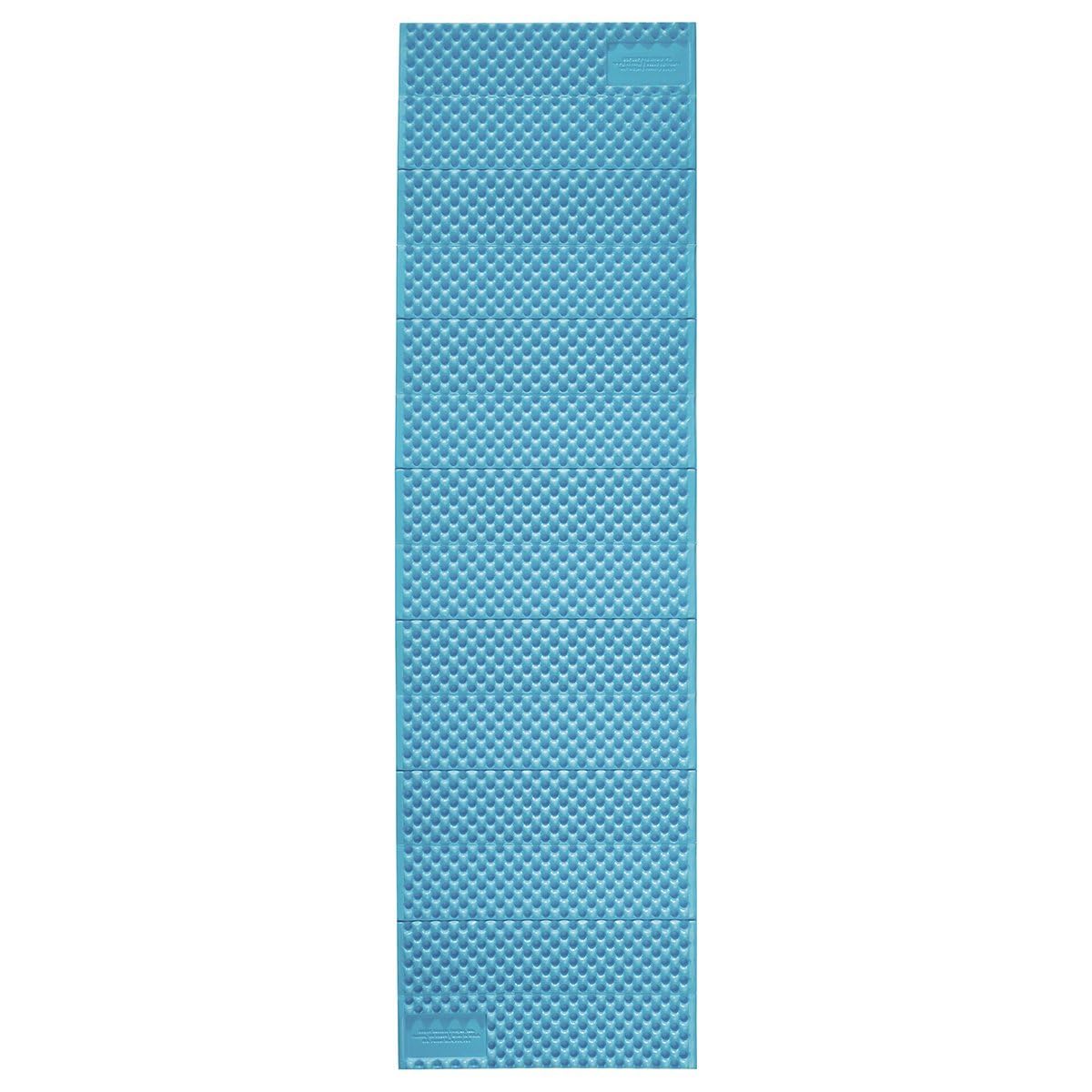


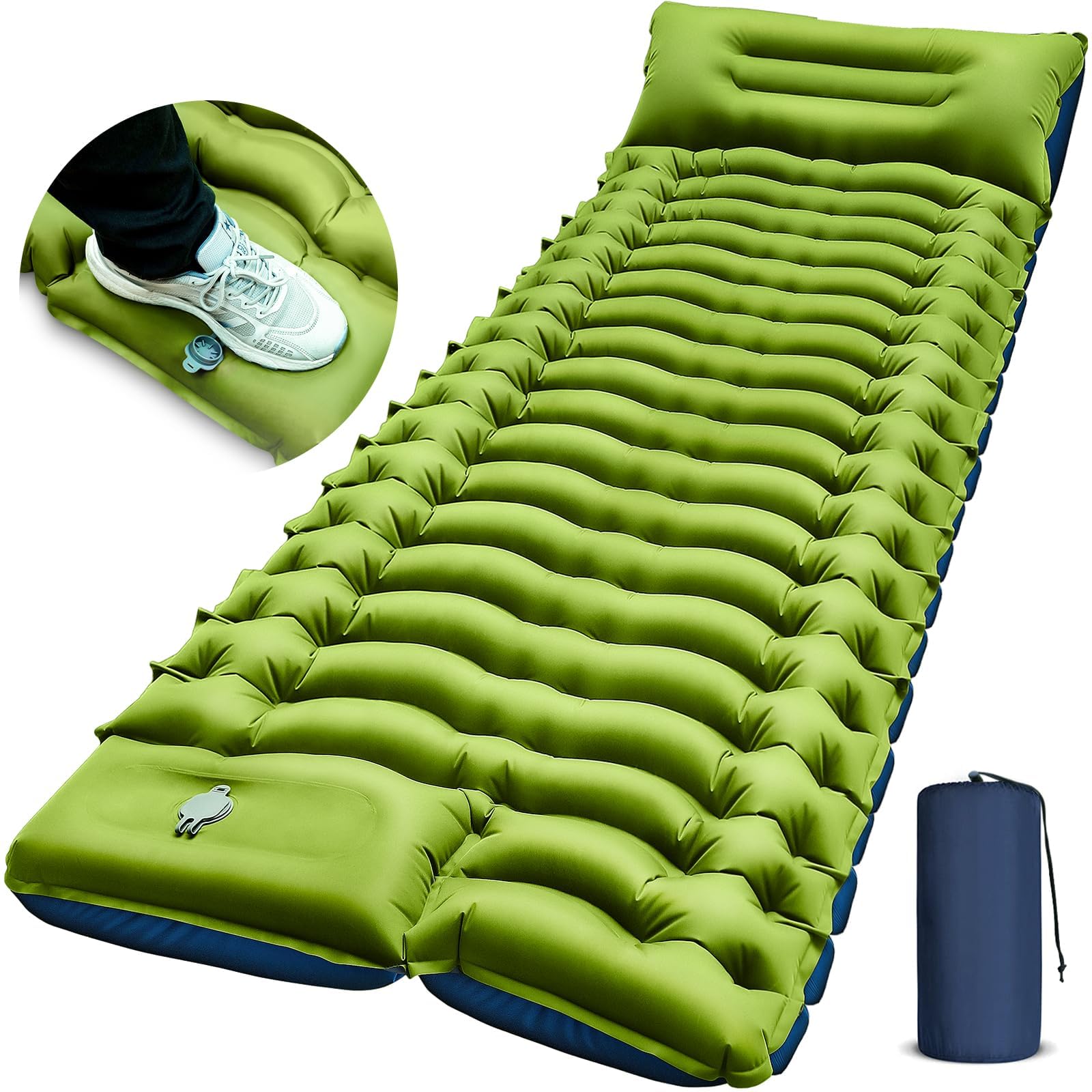

Best for Three-Season Backpacking
Therm-a-Rest Z Lite Sol
Key Features
- Type: Closed-cell foam
- Weight: 14 oz
- R-Value: 2.0
- Dimensions: 72 x 20 x 0.75 in
- Price: Premium
Nothing else on this list is as hard to ruin as a closed-cell foam pad. There’s no valve, no seam, no air to lose — the Z Lite Sol is a slab of foam, and the worst thing that can happen to it is a night that isn’t very plush. At 14 ounces with an R-value of 2.0, it’s the pad we hand to anyone whose trip would be wrecked by a flat mattress at two in the morning.
The design is old and still smart. Dimples trap dead air and a reflective coating bounces radiant heat back at you, which is enough insulation for three-season trips; the foam is softer on top and denser underneath, so it shields your back from rocks and gravel without turning into a brick. It folds accordion-style into a strapped block, which is one motion to open and one to close, and there’s no inflation ritual at the end of a long day.
What it never does is disappear under you. Seventy-two inches long and three-quarters of an inch thick is a firm sleep, and we felt the ground through it on a rocky pitch. Anyone who sleeps on their back and wants a pad that behaves identically on night one and night fifty will be happy; side sleepers should read the next review instead.
The remaining cost is money. It sits at the top of the foam pads here, and what you’re paying for is a brand and a coating rather than more foam. We still think it’s the right default, because that money buys a pad you stop thinking about — which is the entire point of the thing under your sleeping bag.
Pros
- Cannot deflate, so no night-ruining failures
- R-2.0 warmth covers three-season trips
- 14 ounces with no pump or valve to carry
- Folds in one motion, opens in one motion
Cons
- 20 inches wide, tight for broad-shouldered sleepers
- Folded 20-inch block is awkward inside a pack
We recommend the Z Lite Sol as the default three-season pad: 14 ounces, R-2.0, and nothing to puncture or deflate. Buy it if you’d rather sleep a little firm than risk a flat night.
Best for Side Sleepers
TREKOLOGY UL80
Key Features
- Weight: 26.5 oz
- R-Value: 1.6–2 (estimated)
- Thickness: 3.9 in
- Packed size: 7.3 x 4.7 in
- Price: Midrange
Four inches of air is the direct answer to the Z Lite’s one real weakness. The UL80 lifts a hip or a shoulder clear of the ground and holds it there, with raised sides and S-curve channels that discourage you from rolling off the edge in the night — a small thing that matters enormously at three in the morning.
At 750 grams, or 26.5 ounces, it’s the heaviest pad here that we’d still call a backpacking pad, and it packs to roughly 7.3 by 4.7 inches so it disappears into a 40-liter pack. We think that trade is worth it for anyone who sleeps on their side: the air pad solves a problem foam can’t, and the extra weight is the price of a comfortable hip.
Two things to know before you buy. The R-value is an estimated 1.6 to 2, which covers summer and mild fall but not a hard frost. And these pads can start losing pressure after a season or two, so inflate yours at home, leave it overnight and see whether it’s still firm in the morning before you trust it deep in the backcountry. Inflation is by mouth through an oversized valve — a couple of minutes of work, easier if you add a pump sack of your own.
Pros
- Four inches of air cushions hips and shoulders
- Contoured sides help keep you centered
- 750 g and packs to 7.3 x 4.7 inches
- Oversized valve speeds mouth inflation
Cons
- Can start losing air after a season or two
Our pick for side sleepers: four inches of air that keeps a hip off the ground, at 26.5 ounces of carry.
Best for Budget Warm-Weather Trips
Sleepingo Ultralight Mat
Key Features
- Fabric: TPU-coated nylon
- Weight: 14 oz
- Dimensions: 73.5 x 21.5 x 2 in
- Weight capacity: 350 lb
- Price: Midrange
It rolls down to roughly the size of a water bottle and weighs 396 grams, which is the whole pitch: this is the pad you buy when the budget is real and the pack is small. It’s the least expensive inflatable here, and it still gives you 73.5 by 21.5 inches of two-inch air with a 350-pound capacity.
For warm-weather trips that’s plenty. We found the surface comfortable enough for a full night, the valve quick to work, and the roll-up straightforward — it goes back into its sack without a wrestling match, which is more than we can say for some pricier pads. It’s also the pad we’ve handed to friends who want to try backpacking before they commit to gear.
The catch is warmth. There’s no R-value on this pad, and that’s not a rating of zero, it’s an absence of one — treat it as a summer and early-fall mat and don’t build a shoulder-season trip around it. If you camp in the cold, spend more. If you mostly want to get out of the dirt cheaply, this is our budget pick and we’re comfortable saying so.
Pros
- 396 g and packs to water-bottle size
- Comfortable for the money, with 350 lb support
- Quick to inflate and easy to repack
Cons
- No R-value, so warm-weather only
The cheapest way off the ground that still packs to bottle size — a warm-weather pad for budget-minded backpackers.
Best for Wider, Taller Sleepers
FUN PAC Camping Pad
Key Features
- Weight: 1.5 lb
- Inflation: Built-in foot pump
- Dimensions: 78 x 27 x 3 in
- Weight capacity: 400 lb
- Price: Budget
A foot pump built into the head of the pad is the detail we didn’t expect to care about. Thirty to sixty seconds of stomping fills it — no lightheaded mouth inflation after a long day, no separate pump to lose in the tent. We think that’s the right call for anyone who camps in company, because nobody wants to be the person still blowing up a mattress while everyone else is eating.
The size is the other reason it earns a place. Seventy-eight by 27 inches and three inches thick, with a 400-pound capacity and a pillow built into the head end, it’s the widest air pad here and the one we hand to taller or broader sleepers who keep sliding off a 20-inch mat. Buttons down both sides let you pair two into a double for car camping.
It isn’t a summit pad. At 1.5 pounds it outweighs both the foam mats and the ultralight inflatables here, and the pump housing and seams are where a leak would show up first, so pack the patch and don’t overinflate it in the sun. For basecamp trips and family camping, though, it’s a lot of bed for the money.
Pros
- 27 by 78 inches of room for bigger sleepers
- Built-in foot pump, no mouth inflation
- Pillow built in, one less thing to pack
- Side buttons join two pads into a double
Cons
- Leaks can develop around the pump and seams
We point wider and taller sleepers to the FUN PAC: 27 inches across, a foot pump, and a price that leaves room for a sleeping bag.
Best for Budget Foam Pad
REDCAMP Foam Pad
Key Features
- Type: Closed-cell EVA foam
- Weight: 1.1 lb
- R-Value: 2.1
- Dimensions: 72 x 22 x 0.75 in
- Price: Midrange
Twenty-two inches is the number that makes this one interesting. That’s two inches more than the Z Lite Sol, on the same three-quarter-inch foam, for a lot less money — and in a category where width is the difference between sleeping and fidgeting, two inches isn’t a rounding error.
The rest of the specification reads the way a good foam pad should. R-2.1, 1.1 pounds, accordion panels with elastic straps, a waterproof surface, and a stated comfort window from 23 to 95 degrees Fahrenheit that lines up with three-season use. It shrugs off wet ground, and there’s nothing in it to deflate.
We noticed the extra weight more than the specs suggest — 1.1 pounds against 14 ounces is a real difference on the second day of a long carry rather than the first. It’s still light enough to strap to a pack without thinking about it, and the elastic straps make it easy to lash down while it’s still damp.
Where it lands for us: this is the foam pad for someone who wants out of the dirt cheaply and doesn’t want to think about gear again for a few seasons. It’s basic, it’s honest, and it does the one job that matters — putting insulation and a little padding between you and the ground.
Pros
- 22 inches wide, roomier than most foam pads
- R-2.1 warmth at 1.1 pounds
- Folds with elastic straps and tolerates wet ground
Cons
- Firm, thin foam under a hip
- 1.1 lb adds up on long carries
Nearly the top pick’s warmth and width for a lot less money, as long as you accept three-quarter-inch foam and a bit more weight.
Best for Foam with More Give
NEMO Switchback

Key Features
- Foam: Dual-density closed-cell
- Weight: 14.8 oz
- R-Value: 2
- Warranty: Lifetime
- Price: Premium
The Switchback’s hexagons are taller and nest tighter than a classic dimpled pad, and the foam is dual-density — a supple layer on top, a resilient one underneath, with a metallized film bouncing heat back. NEMO’s argument is that taller nodes leave more room for your sleeping bag to stay lofted, and loft is where a bag’s warmth actually lives.
We keep it in also-consider rather than a quick pick because the payoff is a matter of taste. It carries the same R-2.0 and about the same weight as the top pick, so you’re choosing between two foams rather than between two classes of pad. If a dimpled mat feels too hard under you, this is the other door — and the lifetime warranty is genuine reassurance for a pad you’ll drag over rocks.
What it won’t do is become an air pad. It’s still a closed-cell mat: thin, firm, and completely immune to valves and punctures. Buy it if you want foam with a little more give and you’re comfortable paying top-pick money for a difference you can feel but can’t measure.
Pros
- Taller nodes leave room for bag loft
- Dual-density foam adds a softer top layer
- Backed by a lifetime warranty
Cons
- No weight or warmth gain over our top pick
A clever foam pad we keep as an alternative rather than a quick pick: the taller nodes feel different, not automatically better.
Best for Cold-Weather Camping
Sea to Summit Camp Plus SI
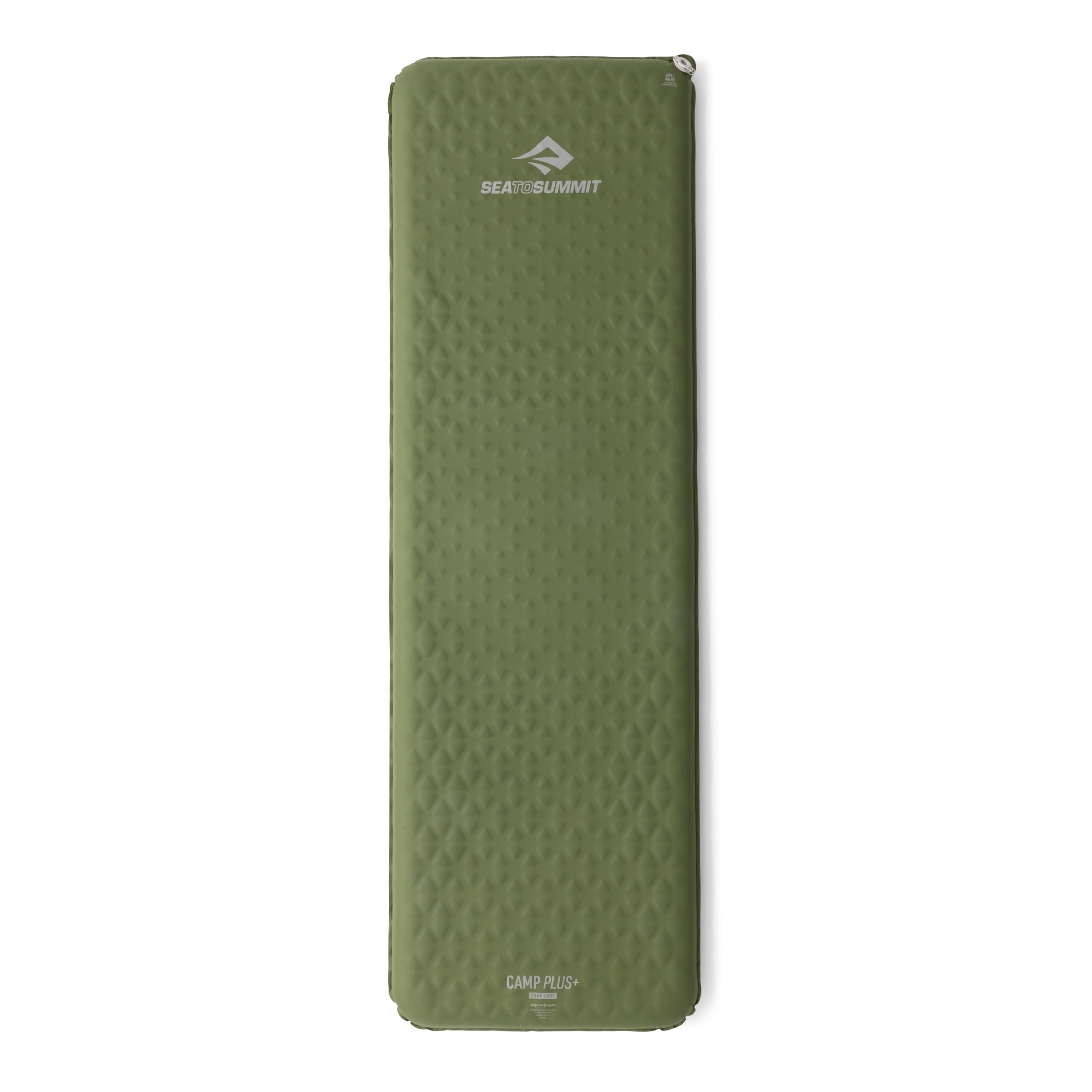
Key Features
- Weight: 3.4 lb
- R-Value: 4.3
- Thickness: 2.6 in
- Dimensions: 78 x 25.2 in
- Price: Premium
R-4.3 is not a typo, and it’s the reason this mat is on the page at all. Everything else here sits between roughly R-1.6 and R-2.1, which is three-season insulation. The Camp Plus SI is a four-season, 2.6-inch self-inflating mat built for ground that is actually frozen.
The construction is old-school in the best way: a cored foam core inside 75D polyester, a reversible valve that lets you fine-tune pressure instead of choosing between rock and marshmallow, plus a stuff sack, a field repair kit and PillowLock patches. At 78 by 25.2 inches a big sleeper fits, and the coring keeps the whole thing to 3.4 pounds — heavy for a backpack, unremarkable for a basecamp.
We think that’s exactly how to buy it: as the pad for cold trips where warmth beats grams, or as the mat you leave in the car for winter overnights. Packed at 13 by 7.5 inches it isn’t disappearing into a 40-liter pack, and self-inflation rarely finishes the job on its own — give it a day inflated at home, then top it up with a few breaths at camp.
Pros
- R-4.3 insulation for snow and frozen ground
- 2.6 inches of self-inflating foam support
- Field repair kit and lifetime warranty included
- 25.2-inch width fits bigger sleepers
Cons
- 3.4 lb is heavy for long carries
The warmest pad here by a wide margin, and we like it for basecamps rather than long carries at 3.4 pounds.
Best for Winter Insulation Layer
Aehma Foam Mat

Key Features
- Weight: 5.64 oz
- Material: Aluminum foil over EPE foam
- Thickness: 0.07 in
- Dimensions: 78.7 x 59 in
- Price: Budget
A hundred and sixty grams. That’s a foil-and-foam sheet rather than a mattress, and once you accept that, it earns a place in a cold-weather pack. It measures 78.7 by 59 inches of reflective material — wide enough to line a tent floor or to fold double under a single pad.
We used it the way it’s meant to be used: underneath a real pad on cold ground, as a reflective layer between the sleeper and whatever the ground is doing. It also makes a decent sit sheet on wet logs and a dry place to kneel while you cook, which is more than most sleeping gear manages on a rest day.
Width is the genuinely useful part. Fifty-nine inches means it runs edge to edge across a two-person tent or folds in half for a solo pad, and it packs down into the included carry bag small enough to live in a lid pocket. For a winter trip, that’s a lot of warmth insurance for very little space.
So treat it as a system component, not a purchase that solves sleeping. It adds a reflective layer to a pad you already own, it doesn’t add cushioning, and the price reflects that. That’s the job we give it, and for cold sleepers on a budget it’s the cheapest upgrade on this page.
Pros
- 160 g adds a reflective layer under any pad
- 78.7 by 59 inches covers a tent floor
- Cheap warmth insurance for cold sleepers
Cons
- 0.07 inch thick, so no cushioning at all
- Foil edges tear with rough handling
A 160-gram winter layer that goes under your pad — buy it as insurance, not as the mattress itself.
How We Tested a Dozen Backpacking Sleeping Pads
We started with everything a three-season backpacker might realistically carry — inflatable pads, a couple of self-inflating holdouts, and a few closed-cell foam options — then filtered by packed weight, R-value, price, and packed size until 12 were left.
Each of those 12 went on at least four overnights across eight months: tent floors, a board deck in a lean-to during a rainy stretch, and one memorably lumpy night on a granite slab. Two of us slept on every single pad so the comparisons stayed honest, rotating between side-, back-, and stomach-sleeping and paying attention to where a hip or shoulder bottomed out. We also noticed which baffles let us slide toward the edge on a slight slope and which held us in place.
Inflation got a stopwatch. We timed each pad from stuff sack to fully firm, watched whether the valve stayed open under a lungful of air or tried to close itself, and counted how many attempts it took to wrestle the thing back into its sack in the morning. Every pad then sat inflated and untouched for a week so we could check whether it had gone soft, and each one rode strapped to a pack for a full day of hiking to see how much room and weight it really cost.
Durability and value were the slow verdicts. Pad fabric met granite, roots, and shelter floors for months, and valves got cycled far more than any single trip would demand. When we tallied it up, the question was simple: did this pad earn its place in the pack, or would a cheaper, slightly heavier one have done the job just as well?
How to Choose a Backpacking Sleeping Pad
The first question isn’t foam or air — it’s how much a ruined night would cost you, because that decides how much reliability you’re willing to pay for in weight and money.
Foam or air: the trade you’re actually making
A closed-cell foam pad has no valve, no seam and no air to lose, so it cannot fail in the night. An inflatable sleeps better and packs smaller, and asks you to trust a valve. We reach for foam when the trip is long and a flat pad would cost a day, and for air when comfort is the thing that gets us out the door in the first place.
The trap is reading thickness as support. A four-inch pad inflated soft bottoms out under a hip much like a two-inch one — thickness tells you how much air is in there, not how firm it will be. Inflate any air pad at home, lie on your side, and see where your hip ends up before you commit.
Match the R-value to the season you actually camp
R-value measures resistance to heat loss through the pad. For three-season backpacking the practical floor is around 2.0, which is where the Therm-a-Rest Z Lite Sol and the NEMO Switchback sit. Snow and hard frost want 4 and up; in this group that means the Sea to Summit Camp Plus SI.
Two traps here. An estimated R-value — the TREKOLOGY’s 1.6 to 2 is labelled as an estimate — is the maker’s arithmetic rather than a lab result, so treat it as a summer-to-early-fall figure. And a pad with no R-value at all hasn’t scored zero; nobody published a number, so plan warm weather around it rather than assuming it will stretch into October.
Weight, packed size, and where the pad rides
There are three weight classes in this group: about 14 ounces for the Z Lite Sol and the Sleepingo, the mid-twenties for the TREKOLOGY and the FUN PAC, and 3.4 pounds for the Sea to Summit. Every extra ounce buys comfort or warmth, and almost nothing else.
‘Compact’ means it fits a pack, not that it fits yours. A folded foam pad is 20 inches long and usually straps outside, while an inflatable the size of a bottle vanishes inside. Between two pads of similar weight, take the one whose packed shape suits the pack you actually own — that decision saves more morning friction than an ounce does.
Width and length decide how you sleep
Twenty inches is the traditional width, and it is narrow. If you’re broad-shouldered or you roll in the night, 22 to 27 inches is worth a few ounces; the REDCAMP at 22 and the FUN PAC at 27 are the roomy options here. Length matters too: 78 inches beats 72 for anyone tall, and it’s the difference between your feet on foam and your feet on the tent floor.
Valves, pumps and inflation
Mouth inflation is the lightest system and the one you’ll actually do at the end of a long day. A built-in foot pump, as on the FUN PAC, saves your lungs and adds a housing that can leak. A self-inflating foam core, as on the Sea to Summit, opens and does most of the work for you. We care less about which system than about the valve: a big, serviceable valve you can open, close and rinse beats a clever inflator every time.
Frequently Asked Questions
Do you really need a sleeping pad for backpacking?
Yes. The ground pulls heat out of you all night, and a pad does two separate jobs: it insulates you from cold ground and it cushions the pressure points that keep waking you up. A closed-cell foam pad costs less than the inflatables here and beats a blanket by a wide margin, so start there if the budget is tight.
How do I find a leak in an inflatable sleeping pad?
Inflate it fully, close the valve and listen along the seams. Then submerge it section by section in a bathtub and watch for bubbles, marking the spot with a pen while it’s wet. Check the valve first — one that isn’t fully seated mimics a pinhole leak. Most pads ship with a patch kit, and a patch on a clean, dry surface usually holds.
Can I put a foam pad under an air pad?
Yes, and it’s the standard cold-weather trick. Run the closed-cell pad underneath so it adds insulation and shields the air pad from punctures, and keep the inflatable on top with its valve reachable. A reflective sheet like the Aehma Foam Mat is the lightest version of the same idea, at 160 grams for a full-length layer.
Final Verdict
If you want one pad and no agonizing, buy the Therm-a-Rest Z Lite Sol. It weighs 14 ounces, it’s rated R-2.0, and it cannot go flat — the three things that decide most three-season trips.
Change the requirement and the answer changes. Side sleepers should take the TREKOLOGY UL80 and its four inches of air, and anyone sleeping on snow should pay for the R-4.3 of the Sea to Summit Camp Plus SI. Everyone else can stop reading and go pack.