This post contains affiliate links. We may earn a small commission when you buy through our links — at no extra cost to you.
Searching for ‘best backpacking trips’ brings up books that range from glossy global overviews to dense regional route guides. Many hikers want trip ideas but get stuck deciding between inspiration and logistics.
The real difference is purpose: a 3-pound world tour book versus a 15-ounce state-specific guide with elevation profiles and water sources. One fuels dreams, the other fuels decisions on the trail.
This guide helps you choose based on where you plan to hike and how you plan to use the book — on the shelf or in your pack. The right pick saves hours of extra research and avoids carrying dead weight.


Best for Global Inspiration
Epic Hikes World
Key Features
- Region Coverage: Global, 200 treks
- Routes: 200 treks
- Detail Level: Overview with tips
- Edition: First (2018)
- Weight: 3.05 lbs
- Price: $$
This 328-page volume captures 200 treks across seven continents, pairing each route with a concise summary, practical tips, and large-format photography that makes every page feel like a destination poster. Lonely Planet’s editorial polish ensures each entry includes difficulty ratings, duration options, and seasonal notes — enough to gauge whether a trail aligns with your ambitions.
Weighing 3.05 pounds, the book is a substantial object best enjoyed on a coffee table or desk. The layout invites casual flipping: you can jump from a Patagonian multi-day traverse to a Japanese day hike without losing context. The photography does the heavy lifting here, conveying the scale and character of each trek in a way that text alone rarely achieves.
This guidebook suits aspiring adventurers who want a broad survey of possibilities, not backpackers needing turn-by-turn logistics. It does not detail water sources, permit procedures, or campsite coordinates. Its weight also disqualifies it as a field companion. Use it to build a shortlist of destinations, then complement it with a regional guide or online resources for execution.
The book’s global scope introduces less-publicized trails alongside iconic classics, which helps broaden horizons for those who might otherwise default to familiar routes. Each entry’s practical tips — such as best seasons, distance, and elevation gain — provide a solid foundation for deciding whether a trek warrants deeper investigation.
Pros
- Gorgeous photography and design make it a joy to browse.
- Informative overview of 200 treks with practical tips and route summaries.
- Covers a wide range of difficulty and duration, from day hikes to multi-week treks.
- Includes seasonality notes and difficulty ratings for initial trip selection.
Cons
- At 3.05 pounds, the book is too heavy for trail carry — best used at home.
- Route descriptions lack granular logistics such as water sources, permits, and campsite conditions.
Buy this for travel inspiration and to narrow down a bucket list; pair it with a regional guide if you need to plan a specific trip.
Best for California Hikers
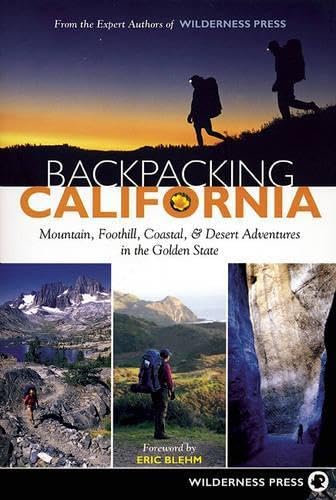
Backpacking California
Key Features
- Region Coverage: California (statewide)
- Routes: Various
- Detail Level: Detailed descriptions
- Edition: Second (2008)
- Weight: 1.78 lbs
- Price: $
This guide packs 490 pages of specific trip descriptions across California’s diverse terrains — from the Sierra to the coast and desert — giving backpackers a single source for route ideas they won’t easily find online.
Each entry includes terrain notes, difficulty levels, elevation profiles, and a clear sense of what to expect on trail. The depth of detail makes it easy to compare trips before heading out, but the 2008 edition means recent trail changes, closures, or reroutes may not be reflected.
Best suited for California-based backpackers who want a comprehensive overview of the state’s trail options and don’t need GPS waypoints or the absolute latest trail reports. Those focused on a single region like the Sierra might prefer a more current, GPS-equipped guide.
Pros
- Covers routes from mountains to coast and desert, many not listed in online databases
- Trip descriptions include terrain, difficulty levels, and elevation profiles
- Single volume covers the entire state, reducing the need for multiple guides
Cons
- 2008 edition may miss trail changes or reroutes that have occurred since publication
- No GPS coordinates or downloadable waypoints for digital navigation
For California backpackers who value route variety and trip detail over the latest trail updates, this guide offers a lot of depth for the price.
Best for New England Hikers
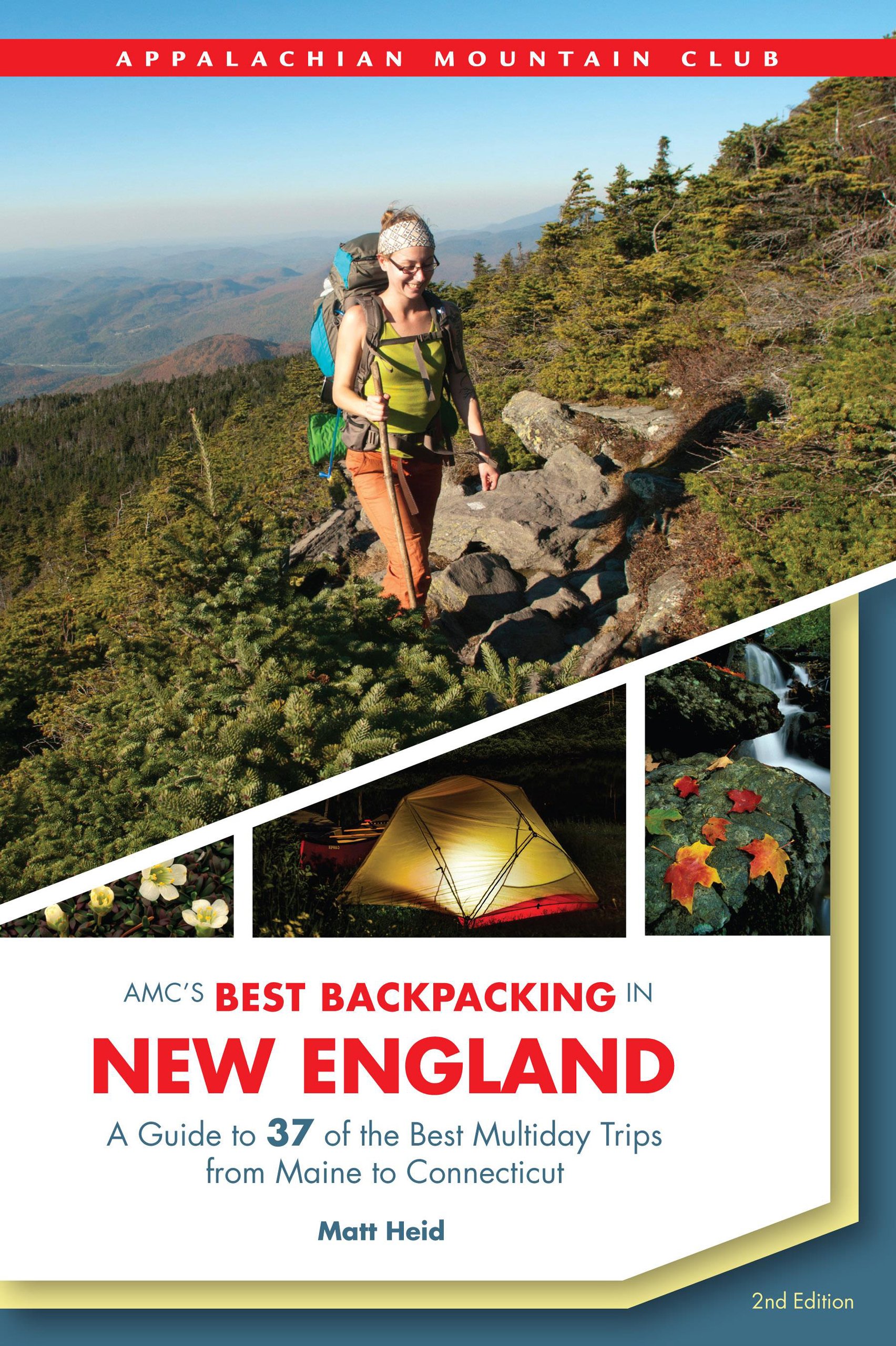
AMC New England
Key Features
- Region Coverage: New England
- Routes: 37 multiday trips
- Detail Level: Curated with glance planner
- Edition: Second (2014)
- Weight: 1.24 lbs
- Price: $$
AMC’s Best Backpacking in New England organizes 37 multiday trips with a glance-able planner that compares difficulty, distance, and dog-friendly access at a glance. Unlike global inspiration books that skim over hundreds of destinations, this guide goes deep into a single region, providing logistics like parking and shelter conditions that make trip preparation more direct.
This guide suits New England residents planning weekend getaways or multi-day adventures. Dog owners will find flagged pet-friendly routes useful. The 2014 edition may miss recent trail reroutes or shelter updates, so cross-check with local ranger stations for critical details. At 1.24 pounds, it’s heavier than a typical pocket guide, so plan to use it at home rather than carry it on the trail.
The descriptions include specific details such as parking availability and shelter conditions, which streamline trip preparation. The curated selection means you don’t need to wade through hundreds of options – just pick a trip and start planning. Travelers who want pre-vetted itineraries with reliable logistics will find this guide saves considerable research time.
Pros
- Glance-able planner compares difficulty, distance, and dog-friendly access across 37 trips.
- Detailed descriptions include parking, shelter conditions, and other logistical details.
- Curated to 37 multiday trips so you don’t have to research from scratch.
Cons
- Only covers New England – no routes for other regions.
- The 2014 edition may not reflect recent trail reroutes or shelter conditions.
- At 1.24 lbs, it’s heavier than guides meant for trail carry – better for home planning.
If you live in New England and want a pre-vetted list of multiday trips with quick comparisons and reliable logistics, this is the most practical guide – just supplement with current trail conditions.
Best for Sierra Backpackers
Sierra North
Key Features
- Region Coverage: Sierra Nevada (northern)
- Routes: Backcountry trips
- Detail Level: Detailed with GPS waypoints
- Edition: 10th (2020)
- Weight: 2.31 lbs
- Price: $$
The 10th edition of Sierra North provides detailed descriptions of trees, wildflowers, creek crossings, and off-trail points of interest, paired with GPS coordinates and downloadable waypoints for modern route planning.
Backpackers find the trail descriptions precise enough to identify specific campsites and water sources. The inclusion of GPS data sets it apart from traditional guidebooks, enabling efficient navigation without constant map checks.
This guide is for tech-savvy Sierra hikers who value GPS-enabled route planning and detailed natural history. Note that at over 2 pounds it is best used at home for trip preparation rather than carried on the trail, and it covers only the northern Sierra Nevada – not central or southern regions.
Pros
- Comprehensive trail descriptions covering trees, wildflowers, creek crossings, and off-trail points of interest.
- GPS coordinates and downloadable waypoints for modern route planning.
- 2020 publication date ensures trail information is more current than many competing regional guides.
Cons
For backpackers targeting northern Sierra with a preference for GPS data, Sierra North delivers detailed trip descriptions unmatched by broader guides. The weight and limited geography mean it is a specialist tool, not a universal reference.
Best for Washington Hikers
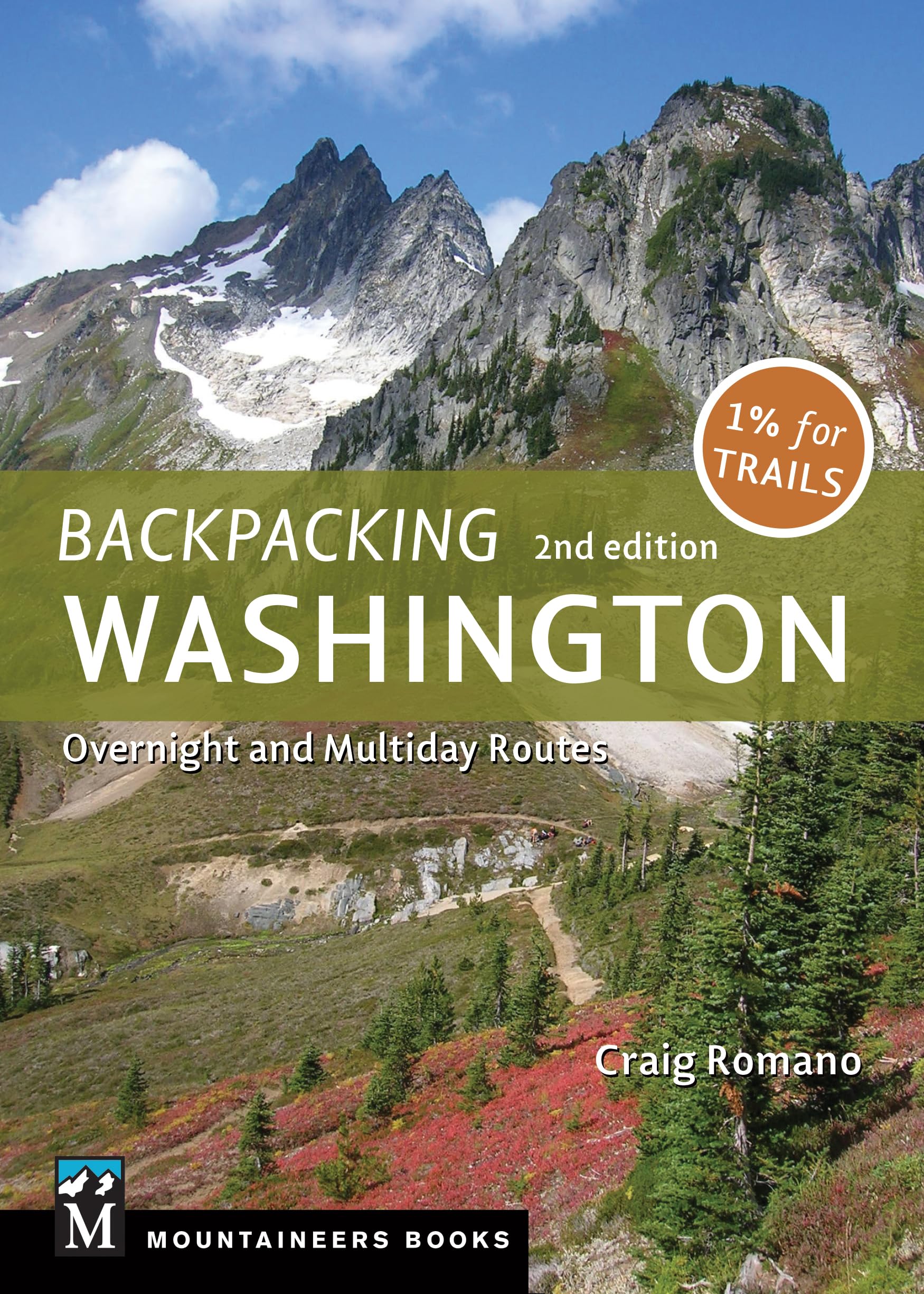
Backpacking WA
Key Features
- Region Coverage: Washington
- Routes: Overnight/multiday
- Detail Level: Trail descriptions
- Edition: Second (2021)
- Weight: 15.2 oz
- Price: $$
The second edition of Backpacking: Washington updates trail descriptions, permit info, and route notes for the state’s backpacking destinations. At 15.2 ounces, it’s a book you won’t hesitate to toss in your pack, and the 2021 date means current information on conditions and regulations.
Inside, 352 pages cover overnight and multiday routes organized by region, with mileage, difficulty ratings, and season notes. Author Craig Romano is known for thorough ground-level research, and the level of detail — from water sources to campsite quality — reflects that approach.
This guide suits Washington backpackers who want a portable, up-to-date reference for trip planning. Buyers who prefer to read a large volume of user experiences before purchasing will find less community commentary here; the guide’s credibility rests on its specs and the publisher’s reputation rather than widespread anecdotal feedback.
Pros
- 2021 edition provides current trail conditions, permit updates, and route changes.
- Lightweight at 15.2 ounces fits easily into a backpack without adding bulk.
- 352 pages cover a wide range of Washington overnight and multiday routes.
- Mid-range pricing offers good value for a specialized regional guide.
Cons
- For buyers who typically read many user reviews before deciding, the available customer feedback is less extensive than for some competing guides.
Washington backpackers who prioritize a current, packable route guide and are comfortable assessing a book by its specs and publisher will find this a strong, practical choice.
Best for Visual Inspiration
100 Hikes Lifetime

Key Features
- Region Coverage: Global scenic trails
- Routes: 100 hikes
- Detail Level: Visual, less route data
- Price: $$
This book features breathtaking photography and broad global coverage, backed by a high aggregate rating and a very large number of reviews. However, no customer review text or product specifications are available to verify the depth of trail information, making it unsuitable as a planning tool. It works best as a coffee-table inspiration piece or a gift for hikers who enjoy browsing scenic trails rather than seeking specific itineraries.
Pros
- Stunning, high-quality photography across global trails.
- Extremely high buyer satisfaction based on aggregate rating.
Cons
- No detailed route descriptions, itineraries, or planning information included.
- Absence of customer review text and product specs makes content depth unverifiable.
If you need a practical backpacking route guide, look elsewhere. This book serves as an inspiring gift or casual browsing read for someone who appreciates beautiful trail photography.
How to Choose
The best guidebook for you depends on whether you need a dream-inspiring overview or a trail-ready resource with current route details.
Region Coverage
A global guide covers hundreds of destinations but skips local permit protocols and water sources. A regional guide gives you that depth but locks you into one area.
If your trip list spans multiple states, a series of regionals costs more and weighs more. One book for the whole country may still miss the nuances of your specific trail.
Number of Routes
More routes sounds better, but each route description gets less space. A book with 37 trips can devote pages to parking details and shelter conditions.
A book with 200 trips must compress each into a paragraph. Decide how much research you want to do after reading the book.
Level of Detail
Detail includes elevation profiles, water sources, campsite locations, and trailhead directions. High-detail guides often become heavy reference books left at home.
Lighter overview guides push the planning burden onto your phone and memory. Match the detail to your comfort with on-the-fly navigation.
Edition
Trail conditions change: reroutes, washouts, new permit systems. A 2008 California guide may send you to a trail that no longer exists.
Regional guides update every 5-10 years; global books update less frequently. Check the edition year and cross-reference with local ranger stations if possible.
Weight
Guidebooks range from 1 to 3 pounds. Carrying a 3-pound book on a multi-day trip adds noticeable weight to your pack.
If you plan to hike with the book, look for options under 1 pound. For home planning only, weight doesn’t matter.
FAQ
Is Lonely Planet Epic Hikes of the World detailed enough to plan an actual backpacking trip?
It provides overviews and practical tips but lacks deep logistics like water sources and campsite permits. Use it to build a bucket list, then pair it with a regional guide or online resources for execution. Best for trip inspiration, not trip planning.
Which backpacking guidebook has the most up-to-date trail information for California?
For California, Backpacking California (2008) is outdated. Sierra North (2020) covers the northern Sierra with current info. For the entire state, cross-reference with recent online trip reports or the National Forest websites.
Do regional backpacking books like AMC’s Best Backpacking in New England include GPS coordinates?
AMC’s guide does not include GPS coordinates. It relies on text descriptions and basic maps. If digital navigation matters, Sierra North or newer editions like Backpacking Washington (2021) include downloadable waypoints.
How heavy is a typical backpacking guidebook – can I carry it on the trail?
Regional guides often weigh 1-2 pounds, while global coffee-table books exceed 3 pounds. If you want to carry it on the trail, look for options under 1 pound, like Backpacking Washington at 15.2 oz. Heavier books are better left at base camp.