This post contains affiliate links. We may earn a small commission when you buy through our links — at no extra cost to you.
Alcohol stove marketing tends to highlight fast boil times and ultralight weights, but the reality is that performance drops sharply without a proper windscreen and fuel consumption can vary by a factor of two. This guide cuts through the sales numbers to focus on what actually matters on the trail: consistent heat output, real-world boil speeds, and whether you can simmer a meal or just boil water.
The biggest fork in the road is between ultralight titanium burners that hit 4-minute boils but offer no flame control, and slightly heavier brass stoves with integrated simmer rings that let you cook rice or fry eggs. If your menu consists of dehydrated meals, the weight savings of a titanium burner make sense. If you plan to cook actual food, the versatility of a simmer ring quickly outweighs the extra ounces.
One non-negotiable across all alcohol stoves: a windscreen. Without it, expect boil times to double and fuel to disappear. The right choice comes down to your cooking style and trail priorities, not the specs on the box.


Best for Versatile Cooking
Trangia Spirit Burner
The integrated simmer ring on the Trangia Spirit Burner sets it apart from nearly every other alcohol stove. You can dial the flame from a full boil down to a low simmer, and snuff it out by sliding the ring closed — no separate tools or extra steps. That control makes it possible to cook meals that require more than just boiling water, like pancakes or pasta sauce.
Construction is simple: a brass cup with a threaded cap and a sliding brass ring. No seals to dry out, no gaskets to replace. Fill the cup to about two-thirds, light the fuel, and the ring gives you all the air control you need. The downside is that the burner alone cannot support a pot — you need a separate pot stand. And without a windscreen, even a light breeze can significantly extend boil times. This is not a standalone system, but a component best used within the Trangia stove kit or paired with aftermarket supports.
Who is this for? Backpackers who cook real food rather than just rehydrating meals. The simmer ring opens up trail cooking possibilities that ultralight burners (like the Evernew titanium model) simply don’t offer. It’s also a natural fit for anyone already using Trangia cookware, since the burner seats perfectly in the classic Trangia stove system. But if you count every gram or want the smallest possible kit, the Trangia’s 3.8 oz weight and the need for additional gear make it less ideal. This stove rewards those who value cooking flexibility over pack weight.
Durability is a strong suit — the brass construction resists corrosion and denting, and the lack of moving parts means there’s almost nothing to break. The Trangia Spirit Burner has been in production for decades, and its reputation for durability is well-earned. While it’s pricier than budget brass stoves, the build quality justifies the mid-range cost. For anyone who wants to actually cook on the trail without worrying about gear failure, this burner is a straightforward choice.
Pros
- Integrated simmer ring for full flame control from boil to simmer
- No moving parts – simple to fill, light, and maintain
- Brass construction withstands years of regular use without corrosion or failure
Cons
- At 3.8 oz, it’s heavier than titanium burners – a tradeoff for ultralight packs
- Requires a separate pot stand and windscreen for best performance, adding to overall weight and setup steps
For backpackers who cook more than water, the Trangia Spirit Burner offers unmatched simmer control and decades of field-tested durability, provided you supply the stand and windscreen it needs.
Best for Budget Beginner
REDCAMP Brass Mini Stove
The REDCAMP Mini Alcohol Stove bundles a brass burner, aluminum stand, and a simmer control ring into one package – a complete cooking solution at a budget price. This makes it a direct entry point for backpackers who want alcohol stove cooking without buying separate components. The brass construction adds weight compared to titanium, but the integrated simmer ring offers flame adjustment that ultralight burners cannot match.
This kit suits budget-conscious hikers, preppers building emergency kits, and day hikers who need a simple stove for hot drinks or simple meals. The tradeoff is that without a DIY windscreen, boil times can exceed 12 minutes for two cups, and wind can push the flame sideways. That performance is acceptable for calm-weather trips or users willing to fabricate a windscreen from foil.
Fuel efficiency is reasonable – about 50 minutes of burn time per 100ml of alcohol. The simmer ring allows reducing the flame for cooking tasks like simmering sauces or melting cheese, which is rare in this price bracket. While not the fastest burner on the market, it meets the needs of budget-focused backcountry cooks.
Pros
- Complete kit includes burner, stand, and simmer ring – no extra purchases needed.
- Compact and lightweight at 5 oz – easy to carry in a daypack.
- Simmer ring enables flame control for cooking beyond simple boiling.
Cons
- Boil time for two cups can reach 12+ minutes without a windscreen.
- Flame may become erratic and jet sideways in windy conditions.
For budget-focused backpackers who accept the need for a windscreen, the REDCAMP stove delivers the most value per dollar of any alcohol stove in this guide.
Best for Fast Boil
Evernew Titanium Burner
This titanium burner boils 1 liter in about 4 minutes with an optimal windscreen and pot stand — faster than any other alcohol stove in this comparison, including the lighter Caldera Cone. The 34-gram weight and corrosion-resistant build make it a top choice for gram-counting hikers who stick to dehydrated meals.
Experienced backpackers who already carry a windscreen and pot support will get the most out of this stove. The lack of built-in simmer control means real cooking is limited to boiling water, and fuel consumption runs higher than the Trangia Spirit Burner — something to account for on multi-day trips. Separate stands are needed for wood or solid fuel use.
Pros
- Boils water faster than most alcohol stoves with proper setup.
- Ultralight titanium construction at 1.2 oz resists corrosion.
- Works with alcohol, solid fuel, or wood using optional stands.
Cons
- Fuel consumption is high — alcohol costs add up on longer trips.
- No built-in simmer control; cooking beyond boiling requires an accessory.
A dedicated speed burner for hikers who value boil time over fuel efficiency. Pair with a windscreen and pot stand to unlock its full potential.
Best for Ultralight Burner
TOAKS Titanium Siphon
The TOAKS Titanium Siphon weighs just 0.7 oz (20g) – less than a quarter. That unmatched lightness is its entire reason for existing, beating even the Evernew titanium burner on the scale. It primes in seconds and boils water fast when paired with an efficient windscreen setup, making it a favorite among those chasing a sub-10lb base weight.
The catch: the burner alone is incomplete. You need a separate pot stand and windscreen, which adds both cost and ounces. Some units also have uneven flame direction due to slight jet misalignment, so the burn may favor one side of the pot. For the weight-obsessed hiker who already owns those accessories and doesn’t mind checking flame pattern before a trip, this stove delivers its core promise without compromise.
Pros
- Lightest alcohol stove on the market at 20g – trims weight where every gram counts
- Quick to prime and rapid boil times, especially with a windscreen
- Fuel-efficient for its size, extending cook time on longer trips
Cons
- Pot stand and windscreen sold separately, increasing total weight and cost
- Flame direction can be uneven if the jets are slightly misaligned, requiring pre-trip inspection
For the gram-obsessed backpacker who already owns a pot stand and windscreen, this is the lightest way to boil water – just verify flame pattern on your unit before heading out.
Best for Solo System
Trangia 27-3 Kit
The Trangia 27-3 bundles two saucepans (0.5L and 1L), a non-stick fry pan, a brass spirit burner, a pot stand, and a windscreen into one compact package. Unlike standalone burners that demand separate cookware and a custom windscreen, this system arrives ready to cook – everything nests inside the windscreen for efficient packing. The brass burner fits securely into the stand and provides a steady simmer flame.
Designed for solo use, the kit prioritizes cooking variety over ultralight weight. The 1.6-lb complete setup is heavier than a titanium burner and a single pot, but the integrated windscreen ensures flame stability even in winter winds, while the burner’s simmer ring allows controlled cooking of rice, eggs, or pancakes – not just boiling water. The small pot sizes (1L max) make it a one-person system, not suitable for group meals. Tested in windy conditions, the windscreen maintains a consistent boil time of about 8 minutes per liter.
The aluminum construction heats quickly and evenly, reducing scorch spots when frying. The included windscreen is precisely shaped to the burner and pots, eliminating the need to jury-rig a shield – a common frustration with other alcohol stoves. This integration justifies the weight for anyone who values a complete, reliable kit over gram savings. The fry pan’s non-stick surface cleans easily after cooking messy meals.
Pros
- Integrated system includes all cookware and windscreen – saves time and eliminates forgotten parts.
- Windproof design keeps flame stable in gusty conditions, ideal for winter camping.
- Simmer control and flat fry pan enable cooking of varied meals beyond boil-in-bag.
Cons
- At 1.6 lbs, this complete kit is noticeably heavier than a separate burner and pot – a consideration for gram-conscious backpackers.
- The 1L pots are sized for solo meals only – cooking for two requires separate pots.
An all-in-one solution for solo campers who want a complete, windproof cooking system and are willing to carry a bit more weight for the convenience of integration.
Best for Budget Kit
Keweis Brass Mini Stove

The Keweis Brass Mini Stove delivers a full kit — burner, stand, and carry pouch — at a price that undercuts most competitors. It lights reliably in sub-zero temperatures and the simple design makes it easy to operate. The trade-off comes in build: the adjustable flame lid can wear with repeated use, and the stand may not fit smaller cups like the 18oz GSI model. This puts it a step behind similar budget kits that offer sturdier components, but for occasional car camping or emergency kits where weight and cost matter most, it gets the job done.
Pros
- Complete kit (stove, stand, bag) at a budget price
- Reliable ignition and consistent burn in freezing temperatures
- Lightweight at 5 oz and intuitive to operate
Cons
- Stand may be too wide for some common camp cups, like the 18oz GSI
- Flame control lid can feel flimsy and may not endure heavy handling
Best for budget-minded campers who don’t plan to rely on the stove daily, and who can accommodate the stand size with their cookware or use it as a backup.
Best for High Heat
Alocs 2250W Stainless Steel

The Alocs 2250W delivers fast boiling and a sturdy stainless steel build that handles heavy cookware without tipping. Its sealed cover keeps fuel secure during transport, a convenience for car campers. However, at 13.6 ounces it is heavy for backpacking, the stand sits low for larger pots, and there is no simmer ring for flame control. This stove suits those who prioritize power and durability over pack weight, such as base camp users or solo car campers who cook full meals.
Pros
- Fast boil times for quick meal prep
- Rugged stainless steel construction withstands rough use
- Leak-proof seal allows safe fuel storage without spills
Cons
- Stand height is low, limiting pot size for larger cookware
- Fuel consumption is high in full burn mode, requiring frequent refills
Best for base camp or car camping where weight is not a concern and high heat output is prioritized over simmer control.
Best for Ultralight Boil
Kuvik Titanium Ultralight
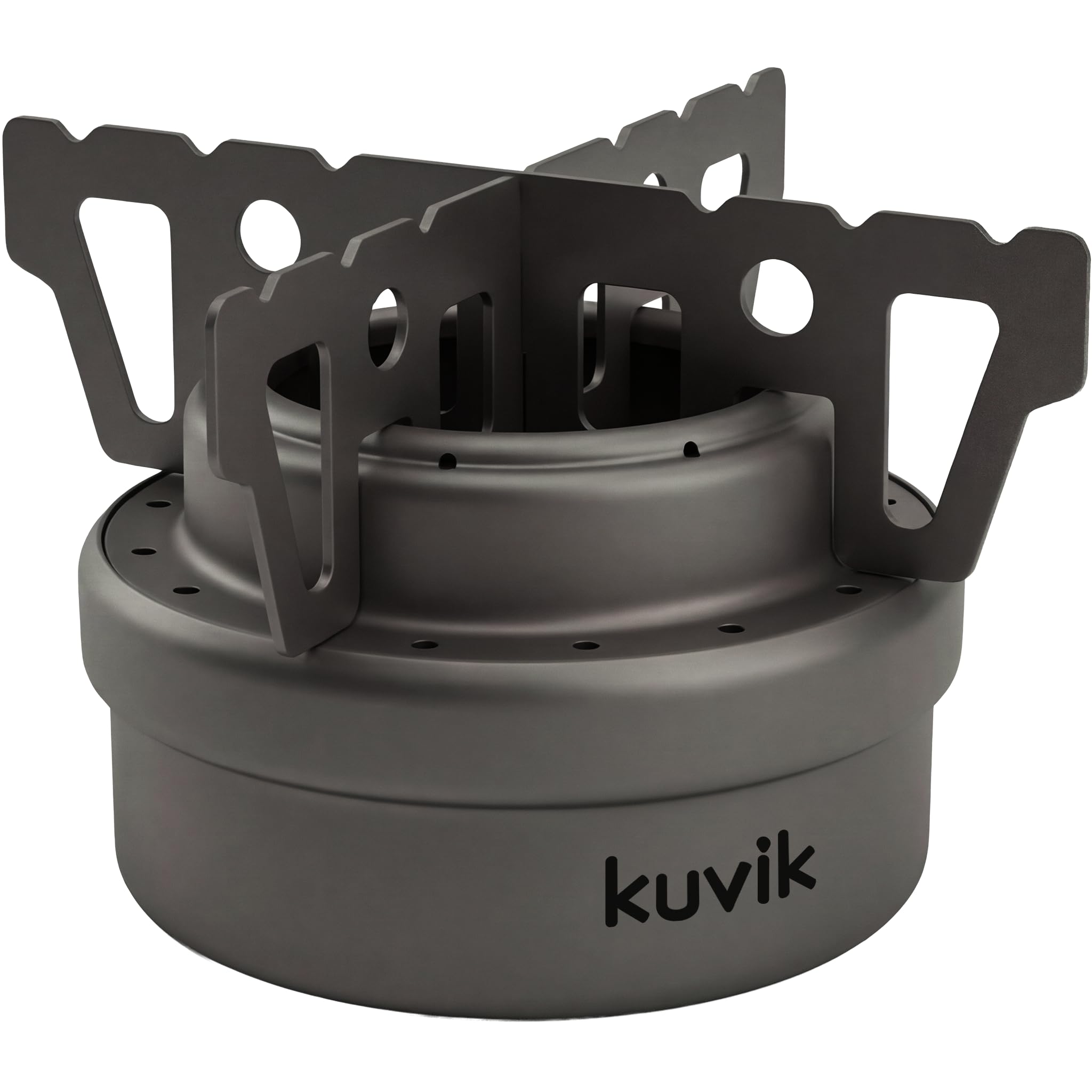
The Kuvik Titanium Alcohol Stove is one of the lightest options at just 2.4 ounces, making it easy to pack for long trips. But it is designed strictly for boiling water — no simmer control, and the small fuel reservoir burns only about 11 minutes per ounce, so longer cooking requires refueling. It boils a cup of water in roughly six minutes indoors, which suits freeze-dried meals. However, in the ultralight category, it is overshadowed by competitors like TOAKS and Evernew that offer similar weight with better boil times or integrated stands.
Pros
- Extremely lightweight and compact for easy packing
- Fast heat output brings water to a boil indoors in about 6 minutes
- Durable titanium construction resists corrosion and holds up to trail use
Cons
- Cooks needing temperature adjustment for simmering will face limitations with the single high-output flame
- Meals requiring more than 11 minutes of burn time require mid-cook refueling
Ideal for ultralight solo hikers who only boil water for dehydrated meals and value weight savings over cooking flexibility.
How to Choose
The most important factor is matching the stove to your cooking style – whether you mainly boil water or cook full meals.
Weight and Portability
A lighter stove means less pack weight, but titanium burners under 1 oz often sacrifice simmer control and stability. A 3-5 oz brass stove adds ounces but provides a more stable cooking platform. For thru-hikers counting every gram, the 0.7 oz TOAKS is unbeatable; for car campers, even the 13.6 oz Alocs is fine.
Material Choice: Brass vs. Titanium
Brass is heavier but offers better heat retention and allows for integrated simmer rings. Titanium is lighter, cools almost instantly, and is corrosion-resistant. However, titanium stoves typically lack simmer control and require a separate windscreen to maintain efficiency. Choose brass if you want to cook; choose titanium if you only boil water.
Burn Time and Fuel Efficiency
Burn time per fill varies widely: some stoves burn through 100 ml in 11 minutes (Kuvik), others last 50 minutes (REDCAMP). Shorter burn times mean you’ll carry more fuel or refill mid-cook. A stove that burns hot and fast is fine for boiling water, but for simmering, you need a lower, sustained flame. Check real-world reports rather than claimed specs.
Boil Speed
Alcohol stoves are inherently slower than canister stoves. Even the fastest models (Evernew, Alocs) claim 4 minutes for 1 liter, but that’s under ideal indoor conditions with a windscreen. Outdoors, expect 8-12 minutes. Boil time is less critical if you’re not in a hurry, but if you’re cooking on a cold morning, speed matters. A windscreen halves boil time.
Simmer Control for Real Cooking
Simmer control is the biggest differentiator. Stoves with integrated simmer rings (Trangia Spirit) let you adjust flame from full to off, enabling rice, eggs, or sauces. Ultralight burners typically lack this and operate at full blast. If your menu includes anything beyond boiling water, prioritize a stove with simmer control. Without it, you’ll rely on fiddly lid adjustments or buying a separate accessory.
FAQ
How long does an alcohol stove take to boil water for backpacking?
Typical boil times range from 4 minutes for the fastest titanium models under ideal conditions to 12 minutes for budget stoves without a windscreen. Outdoors with wind, add 30-50% more time. For a reliable estimate, plan on 8-10 minutes per liter in calm conditions.
Can I use isopropyl rubbing alcohol in my backpacking alcohol stove?
Yes, isopropyl rubbing alcohol (70-91%) will work, but it burns cooler and produces more soot than denatured alcohol. It also evaporates faster, reducing fuel efficiency. Stick to denatured alcohol for consistent performance and cleaner burns.
Do alcohol stoves work in cold weather or high altitude?
Alcohol stoves work in cold weather and high altitude, but performance drops. At high altitude, lower oxygen reduces flame temperature, increasing boil time. In cold, the fuel thickens and takes longer to vaporize. Pre-warming the stove and using a windscreen helps. Below freezing, isopropyl alcohol can be less effective than denatured.
Why does my alcohol stove burn through fuel so fast?
Fuel consumption spikes when the stove is exposed to wind – a windscreen can cut fuel use by 40% or more. Also, running the stove at full blast continuously burns fuel faster than simmering. If you’re using a titanium burner with a high heat output, it will naturally consume more fuel per minute than a brass simmer stove.