This post contains affiliate links. We may earn a small commission when you buy through our links — at no extra cost to you.
Warmth and weight pull in opposite directions in a sleeping bag. The one that keeps you comfortable below freezing costs more, weighs more, and eats half your pack — which is why the mummy shape stuck around: a tapered cut, a snug hood, and a draft collar behind the zipper leave less dead space for your own body heat to warm. What a good one fixes is the 3 a.m. wake-up, curled up and cold.
The catch is that the shape only helps if it fits. I’m a side sleeper, so I’ve spent plenty of nights in bags too narrow at the hips or long enough that my feet never reached the bottom. Over the past eight months we’ve slept in 12 mummy bags — in tents, in the back of a car, and on a few cold nights in my backyard — and the good ones share an honest temperature rating, a zipper that doesn’t snag in the dark, and enough room to bend a knee. And remember the tag number is a limit, not a promise — if you sleep cold, buy warmer.



Best for Three-Season Camping
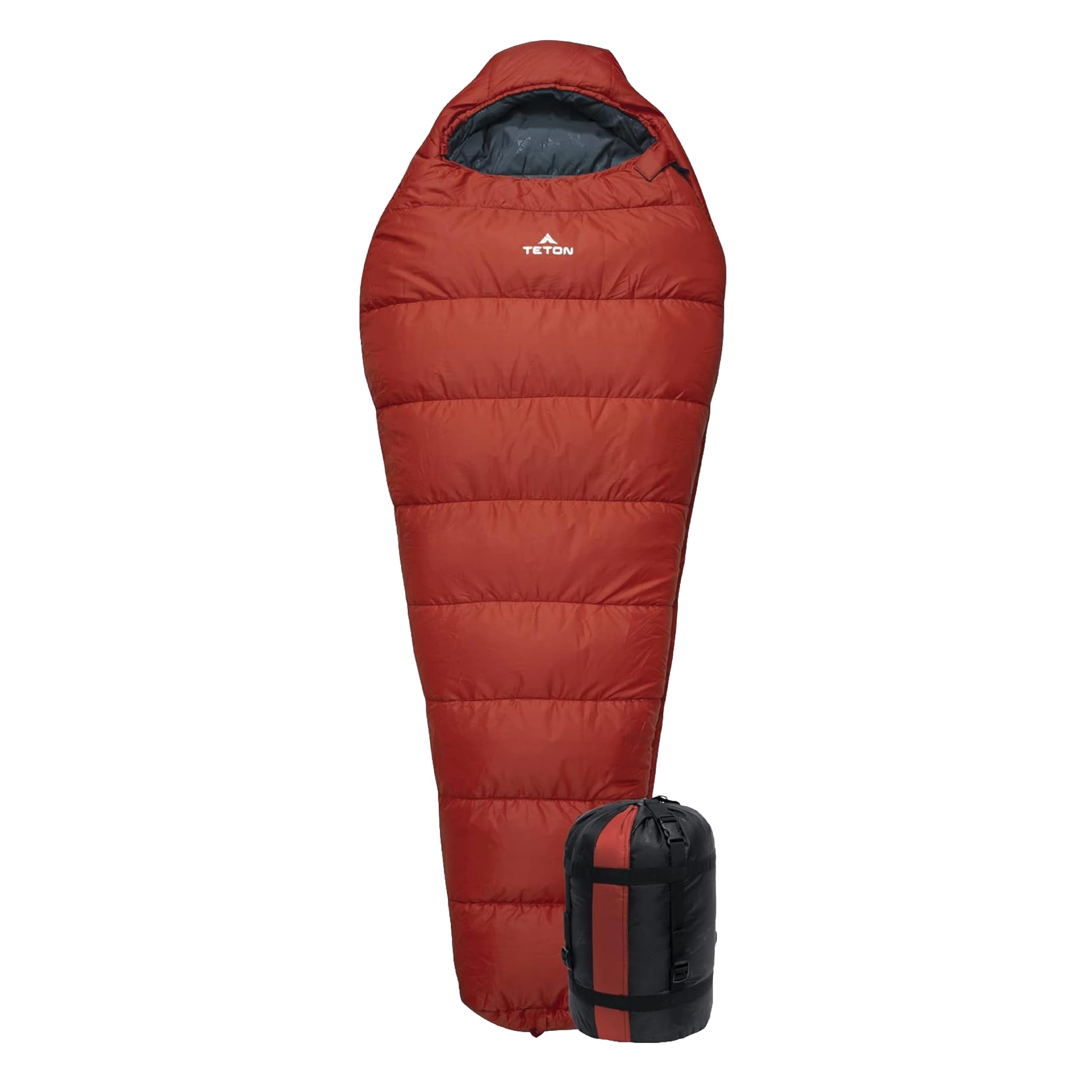
Teton LEEF 20F
Key Features
- Fill: Synthetic microfiber
- Weight: 3.5 lb
- Max user height: 87 in
- Temperature rating: 20°F
- Price: Midrange
This is the bag that goes in the truck when we don’t know what the weather will do. The LEEF carries a 20°F rating without pretending to be a featherweight: 3.5 pounds, a microfiber fill that lofts back up after a week in a compression sack, and a cut with enough room to roll onto a side. It doesn’t win any single category here — the Kelty is lighter, the ZOOOBELIVES is warmer at the bottom end — but nothing about it asks you to make an excuse, and that’s why it’s the one we recommend first.
Length is the quiet advantage. Teton rates the bag for sleepers up to 87 inches, the longest claim in this group, and the footbox is roomy rather than tapered to a point, so a tall sleeper isn’t folding up to fit. The catch is that the listed width is the narrowest here, so if you sleep on your back with your arms out, try one before you commit or look at the Amazon Basics instead.
The details that matter after the tenth night are the boring ones: a shell that doesn’t feel papery, a hood that cinches to a small opening without collapsing onto your face, and a zip that runs without catching. Teton’s lifetime warranty covers defects in materials and workmanship and explicitly excludes zipper wear, which tells you where the company expects trouble — so feed the zip carefully around the shoulder curve and it should outlast the bag.
Weight is the trade. Teton sells this as an ultralight bag and at 3.5 pounds it isn’t one; the compression sack takes two goes to swallow it and the whole package is bulkier in a pack than the number suggests. What those ounces buy is a bag that doesn’t need babying and fits sleepers the smaller bags leave out. For something that spends more nights in a tent than on a gear shelf, that’s the right swap.
Pros
- 20°F warmth that holds on cold nights
- Longest fit claim here, with a roomy footbox
- Lifetime warranty on materials and workmanship
- 3.5 pounds carries without weighing you down
Cons
- Heavier than the ultralight label suggests
We recommend the LEEF to anyone who wants one bag for spring through fall: warm at 20°F, long enough for tall sleepers, and free of the zipper trouble that dogs cheaper mummy bags.
Best for Backpacking Trips
Kelty Cosmic 20
Key Features
- Fill: 550 fill power down
- Weight: 2.6 lb
- Dimensions: 78 x 30 in
- Temperature rating: 20°F
- Price: Premium
Two point six pounds is the whole argument. The Cosmic 20 is the lightest bag in this group, and it gets there with 550 fill power down rather than a synthetic fill, so it doesn’t only weigh less on the scale — it compresses to a lump you can push into the bottom of a pack and forget about. If you’ve been hauling a three-and-a-half-pound synthetic bag up hills, this is the upgrade you feel on the first climb.
What you pay for that is fit, and then money. At 78 inches long with a 72-inch maximum height recommendation, it’s the shortest bag here, and the mummy taper is close through the shoulders — comfortable for a back sleeper, less so if you’re broad or you turn over a lot. It also sits at the top of this group on price. We think that’s justified for anyone carrying the bag more than a few miles a season, and hard to justify for a car camper who mostly sleeps twenty feet from a tailgate.
The materials are why it should last. A recycled 20D nylon shell and 50D polyester lining with a PFAS-free DWR, RDS-certified down you can trace to a batch, and a limited lifetime warranty. Down is the wrong choice if the bag will get soaked and stay soaked, since wet down stops lofting until it’s dried properly, but for dry cold and long walks nothing here packs smaller or carries better.
Pros
- Lightest bag in this group at 2.6 pounds
- Down fill packs smaller than any synthetic here
- Traceable RDS down and recycled shell fabrics
Cons
- Shortest and closest fit in this group
Backpackers should start here: the Cosmic 20 is the lightest bag in this guide, down-filled, and the one that vanishes into a pack. Be honest about your shoulders before you buy.
Best for Winter Camping
ZOOOBELIVES Alplive 10°F
Key Features
- Fill: 35 oz of 550+ fill power down
- Weight: 3.9 lb
- Packed size: 10 x 7 x 15 in
- Temperature rating: 10°F
- Price: Midrange
Ten degrees is a serious claim for any sleeping bag, and the Alplive backs it with 35 ounces of 550-plus fill power down, an insulated draft tube behind the zipper, and a draft collar at the neck. That’s winter-camping insulation, and it is the lowest temperature rating in this group by a comfortable margin.
Down this lofty is also why it packs to roughly ten by seven by fifteen inches — small enough for a weekend pack, which isn’t true of most bags that will take you below freezing. The shell is a 20D ripstop nylon, light enough to save weight and dense enough to keep the fill where it belongs.
The zipper is where a winter bag usually gives itself away, and this one gets a YKK anti-snag zip with separate hood and neck drawcords, so you can seal up without unzipping to adjust. We also like the roomier mummy cut: there’s space to wear a puffy layer inside, which is how most people actually sleep at ten degrees. It’s snugger around the feet than the shoulders, so if your feet are wide, plan for that.
At 3.9 pounds it’s the heaviest bag here apart from the Amazon Basics, and that’s the honest trade — the warmth is real and you carry it on your back. For late-season hunting, winter car camping or a cabin with a broken heater, it’s the bag in this guide we trust most. For a summer backpacking trip, it’s half a bag too much.
Pros
- 10°F rating with 35 ounces of down
- Draft collar and insulated zipper tube
- Packs small for a winter bag
- YKK anti-snag zipper with separate drawcords
Cons
- 3.9 pounds is a lot to carry far
- Snug through the footbox
If you sleep out below freezing, this is the bag: ten-degree down warmth, a draft collar that seals, and a zipper that behaves. It’s heavy for summer, and that’s fine.
Best for Tall Sleepers
Bessport Mummy Bag
Key Features
- Shell: 210T ripstop polyester
- Weight: 3.5 lb
- Dimensions: 90.5 x 31.4 in
- Max user height: 6 ft 6 in
- Price: Budget
Ninety and a half inches is an odd thing to lead with, but it’s the reason to buy this bag. The Bessport is the longest mummy here and one of the widest at 31.4 inches, and the listing sizes it for campers from about six-one to six-six — the range where most of the bags on this page stop fitting.
That length and width are why it works for bigger sleepers. There’s room to bend your knees and roll onto a side, and the 210T ripstop shell has some body to it rather than clinging. The trade is pack size: at 3.5 pounds with a polyester fill, this is a bag that fills a compartment, not one that disappears into a daypack.
Warmth is the part to read carefully. The listing sells a 15-to-45-degree range with "extreme" attached, which means the bottom of that range is a survival figure, not a comfort one; plan on comfortable nights in the forties and low fifties and you’ll sleep warm. Inside that envelope the quilted construction and insulated footbox do their job, and the price sits at the low end of this group, which is where the roominess comes from.
Pros
- Long enough for a 6-foot-6 sleeper
- Wide, roomy cut for side sleepers
- Ripstop shell handles wind and damp
- Big bag at the low end of the price range
Cons
- Bulky for backpacking despite the hiking pitch
Tall and broad sleepers get the most bag for the least money here: 90 inches of length, a 31-inch shoulder, and warmth that’s honest in the forties. It’s a car camper.
Best for Spring and Fall
1TG Tactical 36°F
Key Features
- Weight: 3.5 lb
- Dimensions: 85 x 33 in
- Limit rating: 25°F
- Comfort rating: 36°F
- Price: Midrange
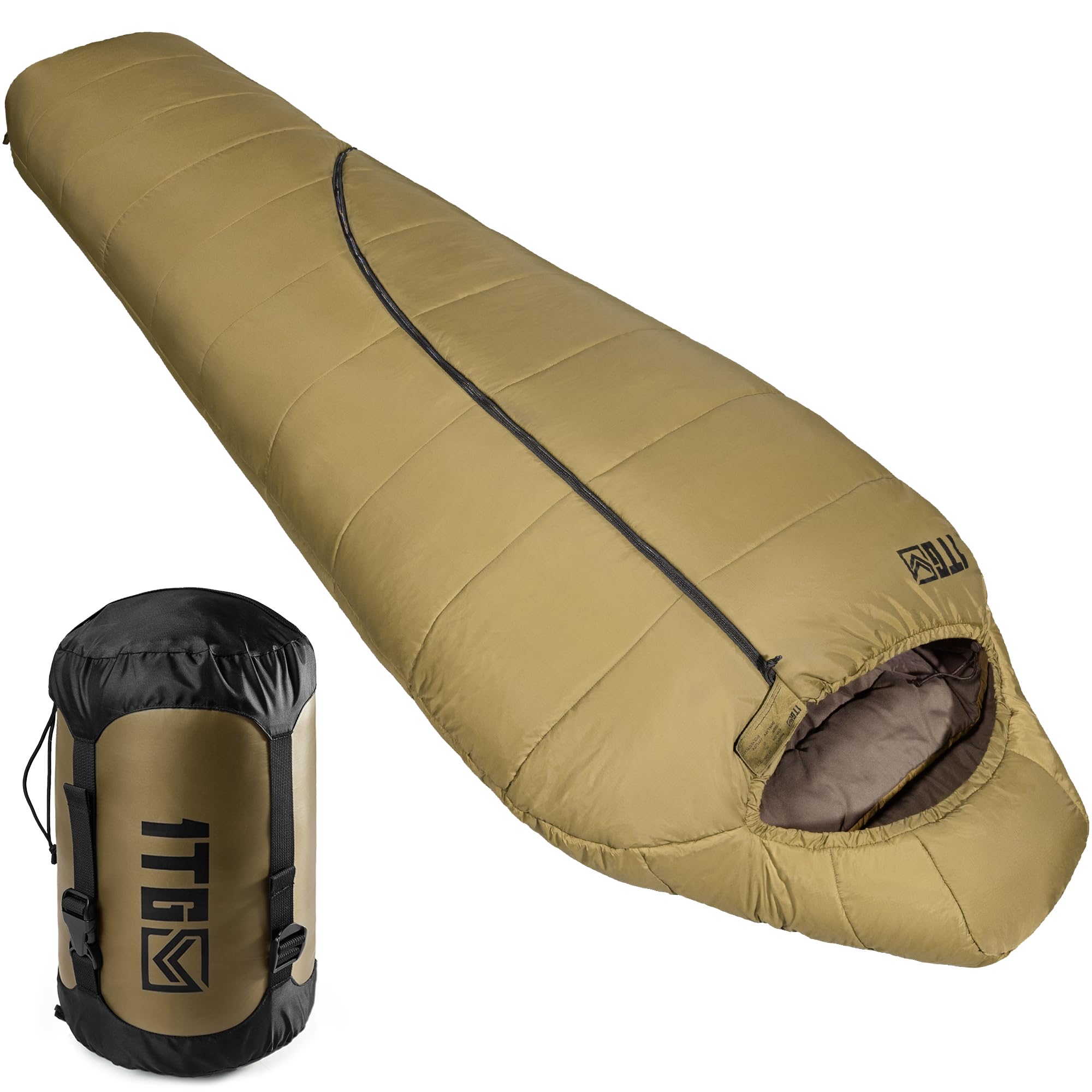
36°F comfort, 25°F limit, rated to ISO 23537-1:2022 — those two numbers are the most useful thing on this page, because they tell you what the bag actually is. Most bags here hand you a single figure and leave you guessing whether it means the temperature you’ll sleep at or the one you’ll survive. We appreciate the honesty; it turns planning a trip into reading rather than hoping.
What it is, then, is a spring-and-fall bag. Comfortable around 40 degrees, workable near freezing with a decent pad and a base layer, and out of its depth in real winter. The 40D nylon shell and 250 g/m² hollow-fiber fill suit that middle ground, and at 3.5 pounds it carries without being a backpacking specialist’s bag.
The fit is the catch. This is a bag you wear rather than stretch out in, and broad-shouldered sleepers will feel the taper: 85 by 33 inches with a 13-by-11-inch footbox is a genuine mummy, not a rectangle with a hood, and the listing is upfront about wanting a close fit. The payoff is less dead air to heat, which is why 250 g/m² of fill goes as far as it does. If you need room, the Bessport is the alternative.
Pros
- ISO-rated comfort and limit figures
- 40D nylon shell and hollow-fiber fill
- Carries easily at 3.5 pounds
Cons
- Warranty is a contact line, not a stated term
Best for anyone planning around real numbers: an ISO-rated 36-degree comfort bag that carries easily and doesn’t overstate itself. Broad shoulders should look elsewhere.
Best for Budget Car Camping
Wakeman Outdoors 25°F
Key Features
- Shell: Waterproof 210T polyester
- Weight: 3 lb
- Dimensions: 83 x 28 in
- Temperature rating: 25°F
- Price: Budget
This is the cheapest bag in the guide, and it doesn’t feel like a con. The Wakeman gives you a hooded mummy with a drawstring, a 210T polyester shell rated waterproof and windproof, and a 25°F rating, and it weighs three pounds — lighter than several bags here that cost more.
What you give up is loft. The fill is a polyester-and-cotton blend, and the bag is thin; the 25-degree figure is the edge of what it will do on a good pad with layers on, not a number to plan a January night around. For summer and early fall that thinness is the point — it rolls up small, it travels easily, and it’s the bag you keep in the car for the night that ends somewhere unexpected.
The hardware is budget hardware. The zipper is the part to be gentle with, the shell rustles, and the 30-day warranty tells you what the maker expects. None of that matters much for a first bag, a spare, or a summer of car camping; all of it matters if you’re out every month. Buy it for what it is and it’s the best value in this guide.
Pros
- Lowest price in this guide
- Three pounds and rolls up small
- Waterproof shell and a cinching hood
Cons
- Thin fill limits it to mild nights
A genuinely useful first bag or spare: three pounds, a hood, a waterproof shell, and the lowest price here. Don’t expect it to be a three-season bag.
Best for Summer Nights
1TG Tactical 43°F

Key Features
- Weight: 2.9 lb
- Dimensions: 85 x 33 in
- Limit rating: 34°F
- Comfort rating: 43°F
- Price: Budget
The 43-degree bag answers a question the others ignore: what do you do when you’re too warm? A zippered footbox opens to dump heat without unzipping the whole bag, and the hood and draft collar still cinch down when the temperature drops at three in the morning.
At 2.9 pounds it’s the second lightest bag here, and 85 by 33 inches makes it wider through the shoulders than the Kelty — a combination that suits hikers who sleep hot and don’t want to carry insulation they’ll never use.
The rating is honest and ISO-rated: 43°F comfort, 34°F limit. That makes this a summer and warm-weather bag, full stop — take it into the shoulder season and the numbers won’t bend for you. What it does, it does well: the 40D nylon shell handles a damp morning, and the included compression sack gets it down beside a sleeping pad rather than on top of everything else.
We see it as the second bag in a household: light enough to carry, wide enough to be comfortable, and cheap enough that it doesn’t have to be the only one. Two things to accept — the warmth ceiling, and a warranty that’s a contact line rather than a term, so buy from a seller with an easy return window.
Pros
- Zippered footbox vents heat
- 2.9 pounds and 33 inches wide
- ISO-rated 43°F comfort, 34°F limit
Cons
- Warm-weather only, by its own rating
- Vague warranty terms
Summer nights and hot sleepers, this is our bag: 2.9 pounds, a venting footbox, and a rating that doesn’t pretend otherwise.
Best for Car Camping
Amazon Basics 20°F

Key Features
- Weight: 4.4 lb
- Dimensions: 82 x 33 in
- Max user height: 6 ft
- Temperature rating: 20°F
- Price: Budget
Four and a half pounds, near enough — 2 kilograms on the listing. That single figure sorts this bag: at 82 by 33 inches with a brushed tricot liner, it’s a roomy, soft car-camping bag that happens to carry a 20-degree rating, and it’s the heaviest thing in this guide.
Roomy is the appeal. Thirty-three inches across makes it one of the widest bags here, which matters if you sleep on a side or pull a knee up in the night, and the liner feels like bedding rather than plastic. The trade is bulk: it takes a compression sack and a firm hand to get down small, and a 20-degree bag that weighs this much is telling you it’s built for comfort rather than distance.
Warmth is where it over-delivers. The drawstring hood seals down properly, the shell blocks wind, and the rating holds on frosty nights rather than collapsing at the first cold snap. The zipper is the usual budget risk — keep the fabric clear of the teeth and don’t force it around the shoulder curve.
For a van, a guest room, a teenager’s first trip or a car kit that lives in the trunk, this is the sensible buy here, and it sits at the bottom of the price range. If the bag has to travel on your back, the 1TG Tactical 43°F weighs less, costs less, and won’t wear you out on the walk in.
Pros
- 33-inch width and a soft brushed liner
- Holds warmth on frosty nights
- Low price for the size
Cons
- At 4.4 pounds, too heavy to carry far
- Bulky to pack down small
Buy this for the trunk, the van or the guest room: wide, soft and genuinely warm. It’s the wrong bag to carry any distance.
How We Slept Our Way Through 12 Mummy Bags
We started with spec sheets and a stack of customer reviews, narrowing the field by fill type, temperature rating, packed size, and price, then cut anything with a cut too narrow for a broad-shouldered sleeper or a zipper reviewers kept calling flimsy. That left 12 bags, from stripped-down summer weights to cold-weather models with serious loft. We bought several of them ourselves so the cheaper end of the range got a fair shake.
Testing ran eight months and roughly 40 nights, spread across shoulder-season camping trips, one memorably damp weekend, and a rotating cast of backyard sleep-outs where I could bail at 5 a.m. if a bag failed. Every bag got weighed on a kitchen scale, stuffed into its own sack, and stacked next to a one-liter bottle to compare packed volume. We zipped each one shut one-handed in the dark while wearing gloves to see whether the fabric caught, measured shoulder and hip girth with a tape, and had our tallest tester lie in every bag to check whether his feet pressed against the footbox.
On cold nights everyone slept in the same baselayer on the same pad, and we logged where the chill showed up first — usually shoulders and hips — and whether the hood cinched snug without swallowing the face. After each trip we checked seams, shell fabric, and loft, and after repeated stuffing we noted which bags stopped puffing back up. Price factored in at the end: we asked whether each bag’s warmth, weight, and durability justified what it cost.
How to Choose a Mummy Sleeping Bag
The number printed on the stuff sack is a starting point, not a promise; what separates a good mummy bag from a bad one is how honestly its rating is stated, how it fits your body, and whether the zipper survives the season.
Read the rating before anything else
Sleeping bags carry up to three numbers and sellers rarely tell you which is which. Comfort is the temperature a cold sleeper can rest at. The limit assumes you’re warm and fed. The extreme rating is a survival figure nobody should plan a night around. A bag advertised as "15 to 45 degrees" is telling you the low end is the edge, not the middle.
Our rule is to pick a bag whose comfort rating sits at or below the coldest night you expect, then add layers for anything unexpected. The 1TG bags here publish both a comfort and a limit figure, which is why we can tell you precisely what they are for and equally precisely what they are not.
Down or synthetic, and what the weight buys
Down packs smaller and keeps its loft for years; synthetic fill costs less and holds warmth better once it is damp. The difference shows up in your pack. The Kelty’s 550-fill down makes a 20-degree bag that weighs 2.6 pounds, while synthetic bags with the same rating here run from three pounds to four and a half.
If the bag rides on your back for miles, we think down is worth paying for. If it lives in a car, a boat or a cabin, synthetic is the forgiving choice, and the money you save buys a better pad.
Fit is length and shoulders, not just height
Mummy bags taper to reduce the dead air you have to heat, and the taper is where fit goes wrong. A 30-inch shoulder measurement and a 33-inch one feel completely different after six hours, especially if you turn over in the night.
Check the length rating against your height with room for a hat and a liner, then check width against your shoulders plus whatever you wear to bed. Broad or tall sleepers should start with the Bessport or the Amazon Basics; the Kelty is the closest cut in this group.
The zipper is the part that fails
Ask anyone who has owned a cheap bag what broke first. A coil that snags and jumps its track ruins a night faster than cold does, and a zip that separates at 2 a.m. is not fixable in a tent.
Look for a draft tube behind the zipper, a two-way pull so you can vent from the foot, and fabric stiff enough not to feed into the teeth. Pack by stuffing rather than rolling, and buy somewhere with an easy return window: most bags that fail do it in the first few nights.
Frequently Asked Questions
Do I need a sleeping pad under a mummy bag?
Yes. A sleeping bag insulates above you and almost nothing below, so the ground pulls heat straight out of the fill you’re lying on. With an insulated pad underneath, any bag here sleeps close to its rating; without one, a 20-degree bag behaves like a summer bag.
If the budget is tight, buy the pad before you spend up on the bag.
Should I store my sleeping bag in its stuff sack?
No. Compression is for travel only. Stored compressed, both down and synthetic fills lose loft and stop trapping warmth, and the loss is gradual enough that people blame the bag for being old.
Keep it loose in a cotton or mesh storage sack, or hang it by the loops at the foot, and air it out after every trip before it goes back into storage.
How do I wash a mummy sleeping bag?
Use a front-loading machine or a bathtub, a down-specific cleaner for a down bag and a gentle detergent for synthetic, and skip fabric softener entirely.
Dry on low heat with a couple of clean dryer balls and keep going until the bag is completely dry, because damp down clumps and stays clumped. Once a season is plenty; spot-clean the hood and collar in between.
Final Verdict
Our pick is the Teton LEEF. It’s the bag we hand someone who wants one sleeping bag from April through October: a 20-degree rating that holds, a 3.5-pound carry, room for tall sleepers, and no sign of the zipper trouble that follows cheaper mummy bags around.
Two requirements change the answer. If the bag rides on your back for miles, the Kelty Cosmic 20 earns its premium with down that packs to almost nothing. If you sleep out below freezing, the ZOOOBELIVES brings ten-degree down and a draft collar that seals. Every other bag here is a compromise on one of those three.