This post contains affiliate links. We may earn a small commission when you buy through our links — at no extra cost to you.
A hydration pack should be the least interesting piece of gear you carry. If you notice it, something’s wrong: the bladder sloshes, the straps dig in, or your shell and snacks jam against your spine. I’ve had packs that turned a mellow trail into a nuisance and packs I forgot about until I needed a drink. Over the past six months, we tested 12 hydration packs on day hikes, trail runs, and bike rides, watching for leaks, fit, and how each carried a full load.
The biggest mistake first-time buyers make is sizing up: more storage capacity looks practical until you fill it, and then you’re carrying weight you don’t need. We packed each one with a full bladder, a rain layer, snacks, and a phone, then noted whether it felt balanced or dragged on our shoulders. Value mattered too—not the cheapest option, but the one whose pockets, straps, and durability justified the money. The right pack makes water and gear feel like an afterthought; the ones below did.


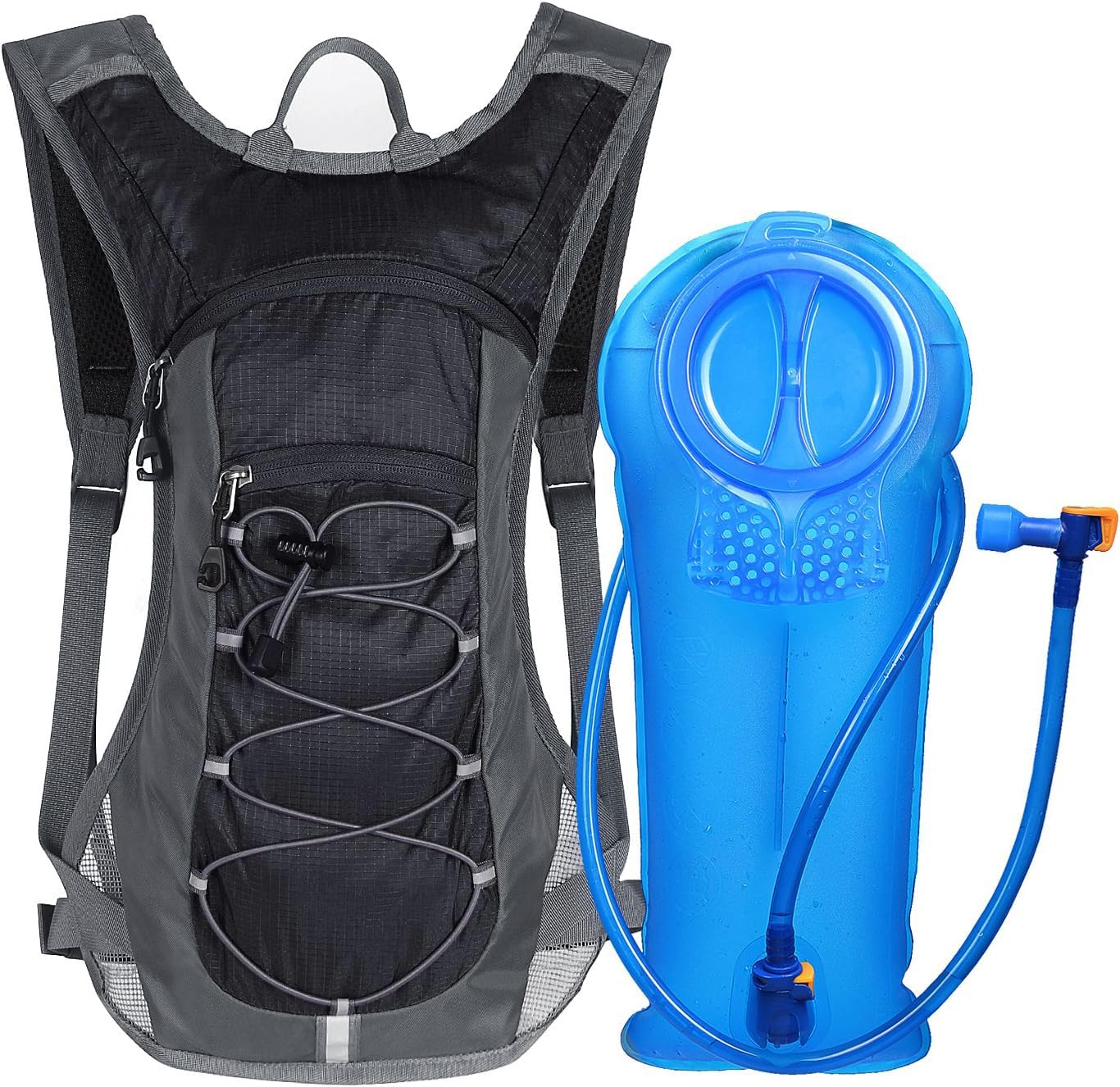

Best for Day Hikes
N NEVO RHINO 18L
Key Features
- Bladder: 3 liters
- Pack volume: 18 liters
- Listed weight: 1.74 lb
- Bladder pocket: Insulated
- Price: Midrange
An insulated sleeve around the bladder is the detail that earns this pack its place at the top. Fill the 3-liter reservoir cold, drop in ice if you have it, and the water is still worth drinking at the top of a long climb. That sounds minor until you’ve spent an afternoon rationing lukewarm water and stopped drinking altogether.
Eighteen liters of pack space around those three liters of water is the combination we want for a day out. A shell, lunch, a first-aid kit, and a phone all disappear inside, and the listed 0.79 kg rides on the hips rather than pulling at the shoulders. Storage is organized rather than fussy — a main compartment, a mesh side pocket, and a waist slip pocket that takes a phone or a bar. The harness cinches down far enough for a short torso without leaving slack flapping on a taller one.
The drinking side is sorted too. The hose runs up over the shoulder through a dedicated loop, the high-flow bite valve moves water fast enough to drink while you’re walking, and the bladder pulls out through the top so you can refill without unpacking the rest of the bag. Seating the full bladder back into the insulated sleeve takes a second longer than an open pocket would, which is a fair trade for cold water at noon.
If your hikes run short, or you want the same layout in a much lighter package, the 12-liter version below is the obvious alternative. For anything from a half day to a full one with layers, this is the pack we hand people first.
Pros
- Insulated bladder pocket holds the cold
- 18L of organized space for a full day
- Even weight distribution at 0.79 kg
- Hose routes through the straps for hands-free drinking
Cons
- Base seam can rupture; bite valve is the fragile part
This is the pack we recommend for day hikes: 18 liters of organized space around an insulated 3-liter bladder that keeps water cold and your hands free.
Best for Runs and Fast Days
N NEVO RHINO 12L
Key Features
- Bladder: 2 liters
- Pack volume: 12 liters
- Listed weight: 8.5 oz
- Shoulder strap range: 19–34 in
- Price: Budget
Vest-style straps with a pouch on each side are what make this pack feel built for running rather than for walking with a small bag. The shoulder straps adjust from 19 to 34 inches and the chest strap slides up and down, so the load sits high and flat against your back instead of swinging out on a descent. On a long day it stayed put without rubbing at the neck or shoulders, which is the thing we check first on any vest.
The listed weight is 8.5 ounces, light enough that a full bladder is the heaviest thing you’re carrying. Twelve liters swallows a shell, snacks, and a phone with room left for a small camera, and the deep mesh front pockets take a bar or a glove without unzipping anything. That’s the balance we want in a fast pack: reachable food, buried layers.
The bladder is a 2-liter BPA-free PEVA reservoir with a hose clamp and a bite valve that moves water quickly. Rinse it a couple of times before the first real hike — new bladders can push a plastic taste into the first liter, and a warm water and baking soda soak clears it faster than plain rinsing.
The harness also adjusts down far enough for a teenager or a small-framed adult, which is rarer in this category than it should be. Wear it high and tight for anything with impact in it, and it behaves like a vest rather than a backpack.
Pros
- Vest-style harness stays put on runs
- 8.5-ounce listed weight
- 12L of storage with deep mesh pockets
- Adjusts to a wide range of torsos
Cons
- Two-liter bladder caps long, hot days
Our pick for running and fast hikes: a vest-style harness that doesn’t move, an 8.5-ounce carry, and just enough storage for a half day.
Best for Rainy Trails
Teton Oasis Trailrunner 18L
Key Features
- Bladder: 2 liters
- Pockets: 6
- Rain cover: Sewn-in
- Pack volume: 18 liters
- Listed weight: 2 lb
- Price: Premium
A rain cover sewn into the bottom of the pack is why this one stays in our rotation for mountain weather. It deploys in seconds and it can’t be left behind, which is more than we can say for the loose covers that end up on a kitchen table. Weather-guarded zippers and a bungee cord for a shell or a helmet finish the job.
Eighteen liters, six pockets, and a 2-liter bladder make this a genuine daypack rather than a hydration sleeve with ambitions. The butterfly opening lays the bag flat so you can see everything at once instead of digging, and the insulated bladder pocket keeps water cold through a warm afternoon. The 2-pound listed weight is the price of all that structure.
At the premium end of this list, this is the pack we hand someone heading out in October rain: the cover, the pockets, and a carry that stays comfortable over five or six hours. The harness is the catch. It runs large, and on a smaller frame the shoulder straps sit wide of the collarbone, so check the torso fit before you commit to a long trip with it.
The bladder itself is easy to live with. A wide 2-inch opening takes ice and a bottle brush, the sip tube resists kinking, and the push-lock bite valve shuts off positively rather than dribbling into the pack.
Pros
- Sewn-in rain cover can’t be left behind
- Six pockets and a bungee for layers
- Insulated bladder pocket holds cold
- Wide 2-inch bladder opening for ice and cleaning
Cons
- Waist strap is the weak point under load
For wet weather and full days, we take this one: a sewn-in rain cover, six pockets, and a comfortable carry that justifies the premium.
Best for Tight Budgets
Unigear Hydration Pack 2L
Key Features
- Bladder: 2 liters
- Chest fit: 27–50 in
- Listed weight: 1.01 lb
- Pack dimensions: 16.5 x 8 x 6 in
- Price: Budget
A listed 0.46 kg with the 2-liter bladder counted in is the figure that makes this pack worth a look. That’s lighter than several packs in this group weigh before you put a drop of water in them, and it’s the reason this one ends up on short trips where a bigger pack feels like overkill.
At the cheapest end of this list it does the one job that matters: a 2-liter BPA-free bladder, a hose that reaches over the shoulder, and a harness that adjusts from a 27-inch chest up to a 50-inch one. That range is unusually generous for the money and makes this an easy pack to hand to a teenager or a visiting friend.
Storage is where the budget shows. A small front pocket takes keys, a phone, and a bar or two, and that’s the whole story — no room for a shell, no room for lunch. For a two-hour ride or a summer day hike that’s the right amount of pack; for anything longer you’re carrying a second bag or going without.
The details that matter are there, though: a screw cap wide enough for ice, splash-resistant nylon that shrugs off drizzle, and a bite valve that flows well enough to drink without stopping. It’s a simple pack done properly rather than a feature list done cheaply.
Pros
- Lightest all-in carry here at 0.46 kg
- Fits chests from 27 to 50 inches
- Ice-friendly screw cap on the bladder
- Least expensive pack in this set
Cons
- Hose fitting is where leaks start
For a first pack or a spare to keep in the car, this is the budget pick we point people to: light, widely adjustable, and cheap enough to buy two.
Best for Bike Rides
CamelBak Hydrobak
Key Features
- Warranty: Lifetime
- Reservoir: 50 fl oz
- Back panel: Air mesh
- Listed weight: 13.1 oz
- Price: Premium
Fifty ounces is the smallest reservoir here, and that’s the whole point: this is a pack for a two-hour ride, not a day on the trail. The Crux bladder’s ergonomic handle makes a tap refill quick, and at a listed 0.37 kg the pack all but disappears on a climb. If you’ve been hauling a daypack on club rides, this is the correction.
The air mesh back panel and ventilated harness are what we appreciate most once the temperature climbs. The pack sits flat against the back and lets air move where a heavier bag would soak your jersey, and the sternum strap keeps it there when you’re out of the saddle.
Storage is one zippered pocket for keys, a tool, and a bar, which is deliberate rather than stingy. Anything more and you’d be carrying a daypack’s worth of temptation on a ride that doesn’t need it.
What the premium buys is the reservoir and the backing: CamelBak covers the pack for life, and the Crux valve and hose are the benchmark the cheaper bladders in this group are chasing. Ride twice a week and it’s easy to justify; hike more than you ride and the 18-liter N NEVO RHINO above carries water, lunch, and a rain shell for less.
Pros
- Crux reservoir with an easy-fill handle
- 0.37 kg, barely noticeable on a ride
- Air mesh back panel vents heat
- Lifetime warranty
Cons
- 50-ounce reservoir is the smallest here
- One zippered pocket, no room for layers
Our pick for road and trail rides: a featherweight pack with the best reservoir here and a lifetime warranty behind it.
Best for Rugged Day Use
MARCHWAY Tactical Hydration Pack

Key Features
- Fabric: 1000D nylon
- Bladder: 3 liters
- Listed weight: 2 lb
- Attachment system: MOLLE
- Price: Midrange
Two pounds empty buys 1000D water-repellent nylon, military-grade webbing, and a grid of MOLLE attachment points. This is the pack here built to be dragged through brush, not the lightest thing you can strap on, and the 19.7-inch profile rides close to your back once the sternum, waist, and shoulder straps are cinched.
The main compartment holds the 3-liter TPU bladder in a dedicated sleeve so it doesn’t slosh while you walk, and the two remaining pockets swallow a layer, snacks, and a small tool kit. Hikers chasing a fast-and-light setup will find it overbuilt. Anyone hauling a spotting scope, a first-aid kit, or a day’s gear for two people will find the room useful.
Where we land is that this is a specialist pack, and a good one. The fabric and hardware are the value here — you’re paying for nylon and webbing rather than for a fancy bladder — and the MOLLE panel means you can bolt on a pouch for a radio, a camera, or a knife without buying another bag.
It isn’t a running pack. At two pounds empty it bounces when you jog, and no amount of strap tightening fixes that, so treat it as a hiking, hunting, and range-day bag. For that job the capacity and the toughness are exactly right.
Pros
- 1000D nylon and MOLLE webbing
- 3-liter bladder in a dedicated sleeve
- Plenty of room for a full day’s gear
- Strong value for the fabric and hardware
Cons
- Bladder seal and top fill can leak
- Strap anchor is the durability question
For hunters and anyone who wants a rugged 3-liter pack with MOLLE real estate, this is the value pick — just keep it off the running trail.
How We Tested These Hydration Packs
We started by researching the hydration packs that show up repeatedly in hiker forums and reviews, then narrowed the field by bladder capacity, harness adjustability, pocket layout, and materials. We cut anything with a bladder that was hard to fill or a harness that only fit one torso length. That left 12 packs, which we tested over six months.
Testing happened where these packs actually live: dusty day hikes, after-work trail runs, and long weekend bike rides. We loaded each pack with a full bladder and a realistic day kit—rain shell, snacks, phone, keys, and a small first-aid pouch—then wore them for hours at a time. To check storage capacity and size, we packed the same kit into every pack and noted what fit easily, what required stuffing, and what shifted around. We adjusted shoulder and sternum straps for testers of different heights, then ran downhill and over rough ground to see if the pack bounced or pulled at the neck.
For leakage, we filled each bladder, sealed it, laid the pack on its side, and squeezed; later we checked hose connections and bite valves after repeated use. We weighed every pack empty and with a full bladder, then paid attention to shoulder fatigue on longer outings. Durability got tested by scuffing packs against rocks, overstuffing pockets, and working zippers with cold hands. At the end, we compared what each pack offered for the money—pockets that were actually usable, straps that stayed put, and materials that held up—because a good hydration pack should be boring in the best way.
How to Choose a Hydration Pack
Buy the pack you forget you’re wearing: start with how much water you actually drink, then let the harness decide the rest.
Size the reservoir to the day you actually go out for
A full three-liter bladder adds about three kilograms to your back, which is a lot to haul if you’ll drink a liter. Two liters covers most half-day hikes and rides; three liters earns its weight on exposed, all-day routes where refills are far apart. Be honest about which of those you are, because the pack you take on a two-hour loop is the one that actually gets used.
Keep the two liter figures separate in your head. An 18-liter pack with a 3-liter bladder gives you roughly 15 liters for gear, and that’s the number that decides whether your shell, lunch, and first-aid kit fit.
Fit and bounce matter more than pocket count
A pack that shifts on your shoulders ruins a day faster than one with fewer pockets. Look for a sternum strap you can slide up and down, a waist belt that puts weight on the hips, and shoulder straps with real adjustment range — the Unigear’s 27-to-50-inch chest fit and the N NEVO RHINO 12L’s 19-to-34-inch shoulder straps show how wide that spread can be.
If you have a smaller frame, try the pack on loaded where you can. Several packs in this group run wide across the shoulders, and the Teton is the one where that showed up most in our fitting.
Check the leak points before your first trip
Nearly every hydration-pack failure we’ve seen starts in one of three places: the hose connection where it meets the bladder, the bite valve, and the fill cap. Fill the bladder, cap it, and hold it upside down over a sink for a minute before you trust it in a pack with a phone in it.
A cap that cross-threads will dribble down your back all day, and a bite valve that doesn’t seat will empty a liter into your gear. Two minutes at the kitchen sink is the cheapest insurance in this category.
Water weight changes what the rest of the pack has to do
Three liters is the heaviest thing most day hikers carry, and it sits flat against your back, so padding and a waist belt do more for comfort than another pocket ever will. If you hike in heat, an insulated bladder compartment is worth paying for; if you hike in wet country, a sewn-in rain cover saves you from packing one.
Beyond that, storage is preference. Twelve liters covers a half day, 18 liters covers a full one with layers, and anything past that is a pack you’ll fill because the space is there.
Frequently Asked Questions
Can I use my own bladder in these packs?
Usually yes — the reservoir sleeve is a pouch, not a proprietary fitting. Check two things before you commit: the sleeve height against your bladder’s height, and whether the hose port lines up with the shoulder you drink from. A 3-liter bladder stuffed into a sleeve built for a 2-liter will bulge; a small bladder in an 18-liter sleeve will slump to the bottom unless there’s a hang loop or clip to hold it up.
How do I get the plastic taste out of a new bladder?
Fill it with warm water and a tablespoon of baking soda, let it sit overnight, then rinse twice and dry it with the cap off. The taste usually fades after two or three fills. If it’s still there after a week, the hose is the likely culprit — pull it off the bladder and rinse it separately with the same solution.
How much water should I carry per hour of hiking?
Plan on roughly half a liter an hour for moderate hiking in mild weather, and closer to a liter an hour in heat or on sustained climbs. That puts a 2-liter bladder at three to four hours and a 3-liter bladder at five to six. If your usual outing is shorter than that, the smaller reservoir is the better buy — you’ll carry less and drink the same.
Are hydration packs allowed at festivals and theme parks?
Increasingly not in their standard form. Many venues require clear bags or a single compartment under a set size, and a MOLLE-covered 3-liter pack gets turned away at the gate. Read the bag policy before you buy rather than after. If festivals are the main use, shop for a clear or single-pocket pack and treat the trail pack as a separate purchase.
Final Verdict
For most hikers the N NEVO RHINO 18L is the pack to buy: 18 liters of organized space around an insulated 3-liter bladder, light enough to forget on the climb and comfortable enough to keep on all day. It’s the one we hand people first, and the one we keep coming back to.
If your days are short and fast, the 12-liter version carries the same thinking for a fraction of the weight. If you ride more than you hike, the CamelBak Hydrobak’s Crux reservoir and lifetime warranty justify the premium — just don’t expect it to hold your lunch.