This post contains affiliate links. We may earn a small commission when you buy through our links — at no extra cost to you.
A family hike rarely falls apart over the view. It falls apart because someone’s shoes are rubbing, skidding on wet rock, or squelching a mile from the car — and kids don’t push through discomfort the way adults do. They just stop. A good pair of hiking shoes for kids solves three problems at once: grip that holds on loose dirt and wet stone, cushioning that doesn’t turn into a hot spot by mile two, and a build sturdy enough to survive being kicked off at the trailhead every single weekend.
The catch is growth. Most kids burn through a size in a season, so you’re always weighing durability against the odds they’ll outgrow the things first. My team and I have spent the last six months putting a dozen pairs through school runs, creek crossings, and muddy spring trails, and the gaps in traction, comfort, and sturdiness showed up fast. One tip before you shop: buy a thumb’s width at the toe, not a size up — sloppy shoes cause the blisters you’re trying to prevent. The picks below are the pairs that earned their place.


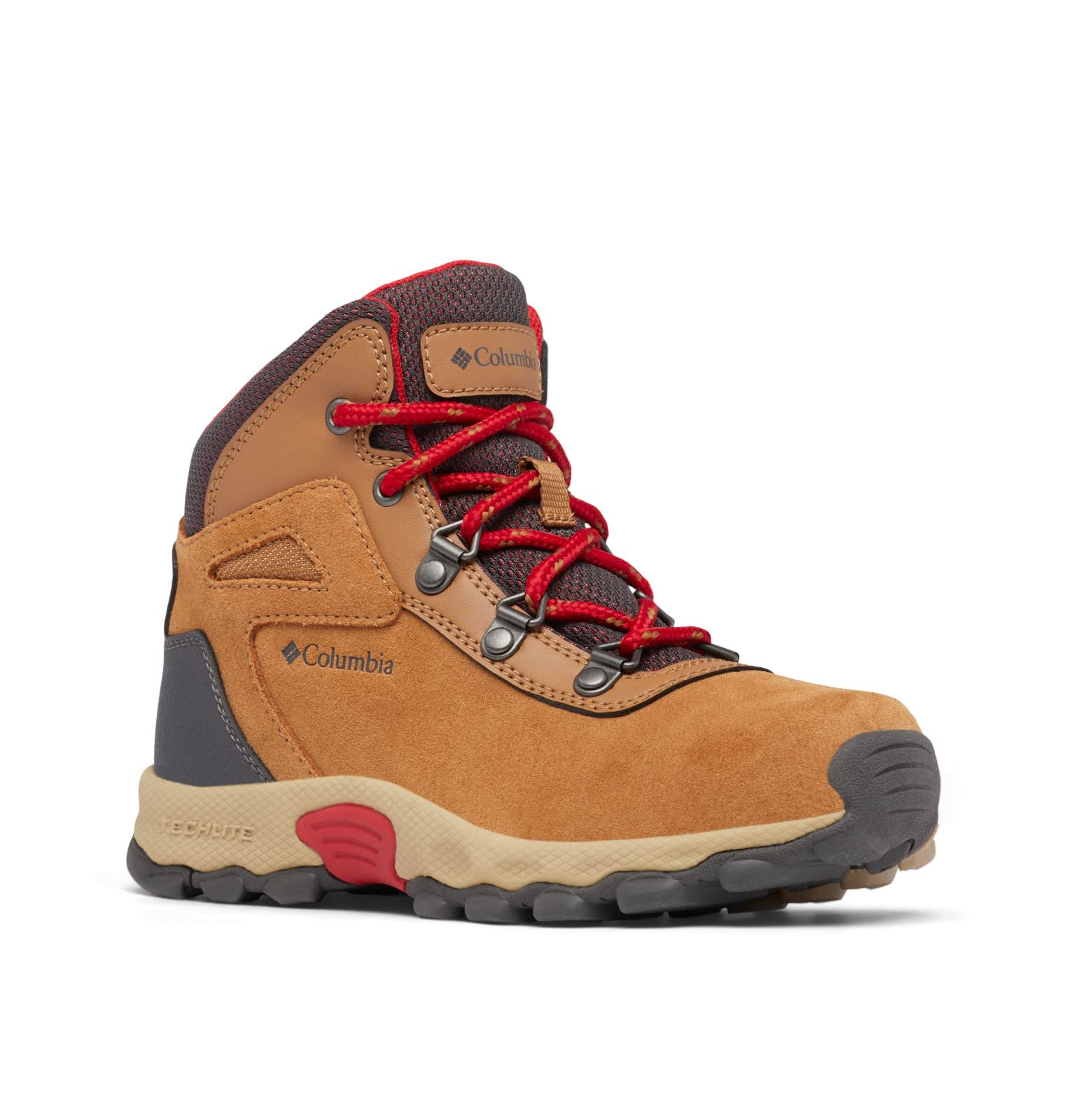

Best for Everyday Trail Hikes
Merrell Trail Chaser
Key Features
- Type: Hiking shoe
- Closure: Lace-up
- Ankle height: Low-cut
- Price: Midrange
The Trail Chaser is the pair we point most families to first because it handles the average kid hike without turning into a heavy boot. It is a low-cut trail shoe, so it flexes with a child’s stride and works for the walk to school as well as the dirt path on Saturday. The grip is the part we trust most: on packed dirt, loose gravel, and the slick roots that show up after rain, it has enough bite to keep a running kid upright. It is also comfortable enough that kids do not spend the first mile complaining about their feet.
The fit is the first thing to check. Try them with the socks your child will actually hike in, and leave a thumb’s width at the toe. If your child has wide feet, the KEEN Targhee 4 is the better place to start. The low-cut shape also makes these easier to wear all day than a mid boot, which is why they suit families who want one pair for trails and ordinary weekends.
Longevity is the trade-off. The uppers and soles can last through a growth spurt, but the laces and elastic are the weak points, and they can fail before the rest of the shoe does. We treat them as replaceable parts and check them before a long trip. That is a small maintenance job, not a reason to skip a shoe that otherwise gets the trail basics right. It earns our top recommendation because it is the easiest choice for most families: low-cut, grippy, comfortable, and versatile enough to wear beyond the trailhead.
Pros
- Reliable grip on dirt and wet roots
- Comfortable low-cut shape for all-day wear
- Versatile for school and trails
Cons
- Narrow fit can pinch wider feet
We recommend the Trail Chaser as the default kids’ hiking shoe for most families: it is grippy, comfortable, and versatile enough for the trail and the school run.
Best for Wet-Weather Hikes
Columbia Peakfreak Rush Mid
Key Features
- Type: Hiking boot
- Ankle height: Mid
- Water resistance: Waterproof
- Price: Midrange
When the forecast is wrong and the trail turns muddy, the Peakfreak Rush Mid is the boot we reach for. It is a mid-height waterproof boot, and that combination is the reason it earns its place: it gives a kid more protection than a low-cut shoe without the clunky feel of a full leather hiker. We like it for wet day hikes, camp mornings, and the kind of trail that has more puddles than views.
The waterproof build is the headline. It kept feet dry in rain and while stomping through puddles, which is exactly what a parent wants on a wet-weather hike. The mid cut adds a little ankle coverage, and the boot is comfortable enough for a full day without a break-in ritual. The fit is close to standard, though thicker socks can make it snug. If your child is between sizes, use the sock thickness you plan to hike in as your guide.
This is not the boot for every trip. On hot, dry trails, a waterproof boot can feel like more shoe than a child needs, and the low-cut Trail Chaser is the lighter-feeling choice. The Peakfreak earns its place when the weather is the deciding factor. It is the pick we choose when the trail is likely to be wet, muddy, or cold, and it gives parents one less thing to worry about.
Pros
- Kept feet dry in rain and puddles
- Mid-cut support without a clunky feel
- Comfortable for full-day wear
Cons
We choose the Peakfreak Rush Mid when wet weather is the deciding factor, because it keeps feet dry without making a kid feel like they are wearing a brick.
Best for Rocky, Wet Trails
Merrell Moab 2 Mid Waterproof
Key Features
- Type: Hiking boot
- Ankle height: Mid
- Water resistance: Waterproof
- Price: Midrange
On rocky ground, ankle coverage changes a kid’s confidence. The Moab 2 Mid is the boot we choose when the trail is rough enough that support matters more than saving weight. It sits higher than a trail shoe, adds a waterproof layer, and gives a child a steadier platform on roots, scree, and wet rocks. On a rough day hike, that extra structure is the difference between a confident kid and a cautious one.
The grip and support are the reasons it works. It handles uneven ground without feeling tippy, and the waterproof upper keeps feet dry in damp conditions. The boot is comfortable out of the box, which matters for kids who do not want to spend a weekend breaking in footwear. We also like that it works for fishing trips and camp chores, not just dedicated hikes.
The fit is the catch. Try it with the socks your child will wear and check the toe box before committing. It is also more boot than a child needs for a flat, dry path, where the Trail Chaser is the easier choice. For rough, wet ground, the extra coverage is worth it. This is the support pick in the group, and it earns that role without feeling like a miniature mountaineering boot.
Pros
- Waterproof upper for damp trails
- Ankle coverage on rough ground
- Grippy sole on uneven terrain
Cons
- Sizing can run small
We recommend the Moab 2 Mid for rocky, damp trails where ankle coverage and waterproofing matter more than saving weight.
Best for Fast Trail Miles
Salomon Speedcross J
Key Features
- Type: Trail running shoe
- Ankle height: Low-cut
- Listed weight: 15.7 oz
- Price: Midrange
Some kids walk a trail; others attack it. The Speedcross J is for the second kind. It is a low-cut trail running shoe with a grip-first personality, and on mixed terrain it is the most traction-focused pick here. If your child is the one running the downhill while everyone else picks their way through the rocks, this is the pair that keeps up.
The tread is the star. It bites into dirt and loose ground and gives a confident kid more margin on steep bits. The shoe is light enough to feel fast, and it works for trail running as well as hiking, which makes it a good choice for a kid who does both. We found the fit is the deciding issue, so try it before a long hike and check the width with the socks you plan to use.
The Speedcross is at its best on a child who wants to move quickly over mixed ground. For everyone else, the Trail Chaser is the more forgiving all-rounder, and the Moab 2 Mid is the better choice when the trail gets rough enough to want ankle coverage. It is a specialist, not the default, and that is exactly why it earns a place in this group.
Pros
- Excellent traction on mixed terrain
- Light enough for fast trail running
- Works for hiking and trail running
Cons
- Runs narrow and small
We suggest the Speedcross J for the confident kid who runs descents and wants the best traction here, provided the narrow fit suits their feet.
Best for Light Day Hikes
Columbia Newton Ridge
Key Features
- Type: Hiking boot
- Closure: Lace-up with tie slider
- Water resistance: Water-resistant
- Price: Midrange
A hiking boot does not have to feel like a brick. The Newton Ridge is the lightweight boot we hand to kids who want boot protection without a clunky stride. It is water-resistant, comfortable from the first wear, and sturdy enough for day hikes and the walk to school. For a family that wants one pair to do a bit of everything, that combination is appealing.
The boot is easy to live with. It is light on the foot, the sole has enough grip for packed dirt and wet leaves, and the upper shrugs off mud without looking wrecked. It kept feet dry in heavy rain, which is more than we expect from a water-resistant boot. The fit is generally true, and the lacing is easy to tighten.
The trade-off is that it is water-resistant rather than fully waterproof. For a muddy walk or a rainy school run, that is fine. For a hike that involves stream crossings or deep puddles, the Peakfreak Rush Mid or the Moab 2 Mid is the safer choice. The Newton Ridge earns its spot as the lightweight all-rounder: it is the boot we choose when the day is more walk than expedition.
Pros
- Lightweight boot feel
- Water-resistant enough for heavy rain
- Comfortable from the first wear
Cons
- Snug opening can be hard to pull on
We like the Newton Ridge as the lightweight all-rounder for families who want a boot for easy hikes, wet grass, and the walk to school.
Best for Budget Camp Trips
Mishansha Kids Hiking Boots
Key Features
- Type: Hiking boot
- Listed item weight: 10.6 oz
- Package dimensions: 5.91 x 3.94 x 3.94 inches
- Price: Budget
Budget hiking boots usually ask you to accept a flimsy sole or a stiff upper. The Mishansha boots avoid both, which is why they earn the budget spot. They have a cushioned footbed, a grippy sole, and a design that kids can put on without a fight. On a light trail, they feel like more shoe than the price suggests. That is the appeal for a family that wants a hiking boot for occasional outings, camp, or a child who is about to grow out of another size.
Comfort is the strongest part. The inside is soft, the toe box has enough room for thick socks, and the boot stays comfortable on short hikes. The traction is good on rocky paths and packed dirt, and the easy on-and-off matters when you are standing at a trailhead with impatient kids. We like them best for camp and easy trails, where their light-duty build is not asked to do more than it should.
The Mishansha is not the boot we choose for a big mountain day; that is where the Trail Chaser and Peakfreak earn their higher price. For a child who needs a comfortable, grippy boot for short adventures, it does the job. It is the budget pick with a clear role, and that role is light-duty hiking.
Pros
- Comfortable, soft interior for short hikes
- Good traction on rocky paths
- Easy for kids to put on and off
Cons
- Water resistance is unreliable on wet ground
- Durability is uneven on rough ground
We point budget-minded families to the Mishansha for light, dry hikes and camp, where comfort and easy on-off matter more than long-term toughness.
Best for Wide Feet
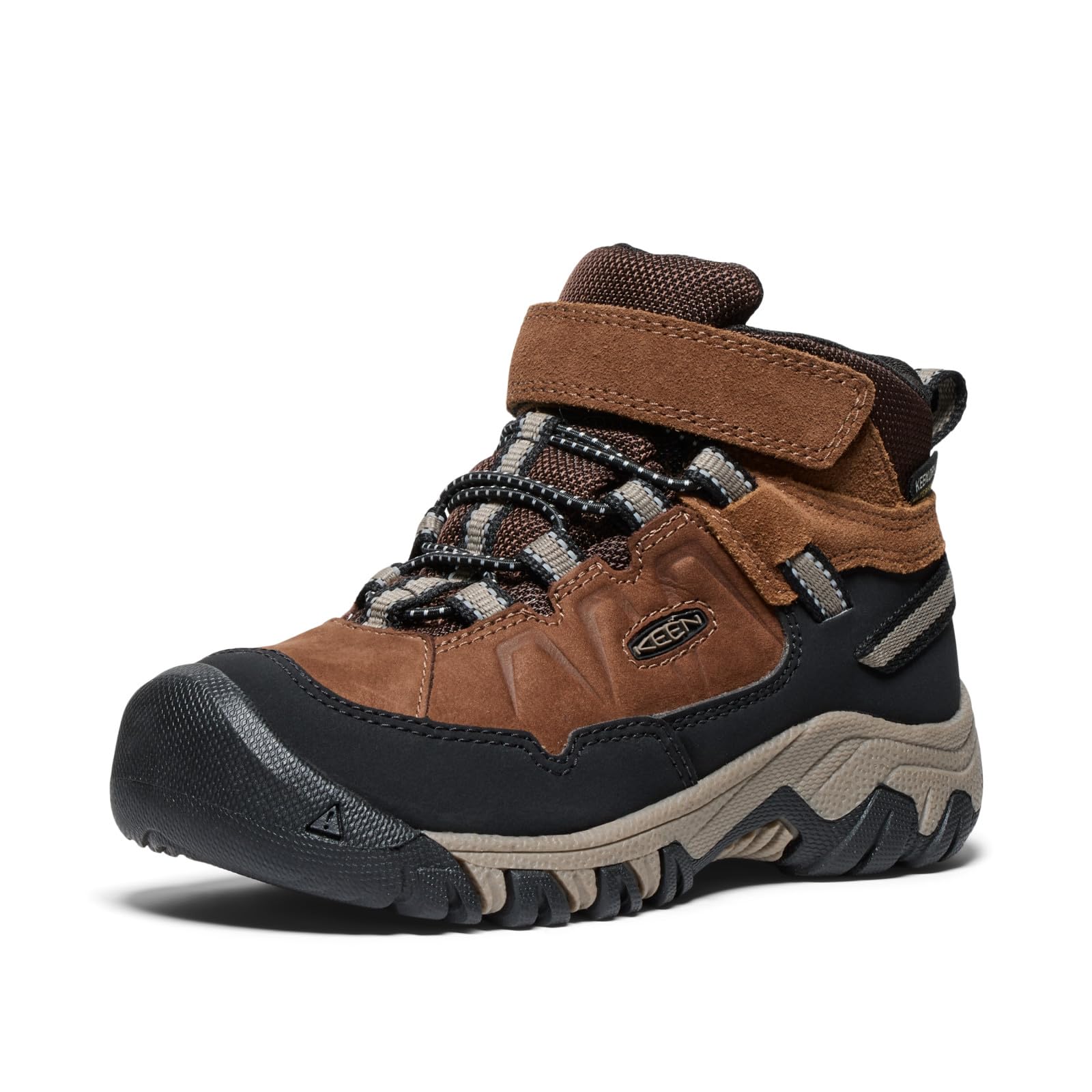
KEEN Targhee 4 Mid
Key Features
- Type: Hiking boot
- Closure: Bungee lacing
- Ankle height: Mid
- Water resistance: Waterproof
- Price: Premium
If your child has wide feet and most hiking shoes pinch across the toes, the Targhee 4 is the pair to try first. It has a roomier toe box than the low-cut shoes here, a waterproof mid boot build, and a bungee lacing system that lets kids tighten the fit without tying knots. For a wide-footed kid who wants to hike, that is a useful combination.
We like the bungee closure for independence: it is quick to loosen at the trailhead and quick to tighten when the boot starts to feel loose. The boot is warm and waterproof enough for cold, wet days, and the build feels sturdy. Try it on with the socks you plan to use, because the fit is the thing that decides whether this boot works for your child. It is also a more structured boot than the Trail Chaser, which is the trade-off for the extra coverage.
The Targhee 4 is not the pick for a kid who wants a light, flexible shoe for fast summer hikes; the Trail Chaser is better there. But for a wide-footed child who needs warmth, waterproofing, and a secure closure, it fills a gap the other picks do not. We keep it as a specialist pick rather than the default, and that is the right role for it.
Pros
- Roomy toe box for wide feet
- Quick bungee closure kids can manage
- Warm, waterproof build for cold wet days
Cons
- Runs large for some kids
We keep the Targhee 4 as the specialist pick for wide-footed kids who need a warm, waterproof boot and a closure they can manage alone.
Best for Dry, Easy Trails
R CORD Kids Hiking Boots

Key Features
- Type: Hiking boot
- Closure: Lace-up
- Outsole: TPR traction outsole
- Price: Budget
The R CORD boots are a budget option with a surprisingly comfortable fit and good ankle support for dry trails. They have a lace-up closure, a TPR traction outsole, and enough padding to keep a kid comfortable on an easy hike. For the price, they look and feel more substantial than you might expect.
We like the ankle coverage and the secure feel on packed dirt and roots. The fit is generous without feeling sloppy, and the boot is easy to lace up and adjust. On a dry trail, it does the basic job. The problem is the waterproof claim: these boots do not keep feet dry in sustained rain or puddles. Treat them as dry-weather footwear.
For a child who hikes often or attacks rocky ground, the Trail Chaser or Moab 2 Mid is the more dependable spend. The R CORD makes sense as a backup pair, a camp boot, or a first hiking boot for a kid who is still growing fast. It is a budget pick with a clear ceiling, and we keep it for dry, easy days.
Pros
- Good ankle support for dry trails
- Comfortable fit with easy lacing
- TPR outsole grips packed dirt
Cons
- Durability can be inconsistent
We see the R CORD as a dry-weather budget boot with good ankle support, not a wet-trail boot despite the waterproof claim.
How We Tested 12 Pairs of Kids’ Hiking Shoes
We started with a shortlist of roughly 30 styles pulled from spec sheets, retailer reviews, and the shoes our own kids’ friends actually wear, then cut anything with a flimsy sneaker-style outsole, a stiff unlined collar, or no protective toe cap. From there we narrowed to 12 pairs spanning price points, closure types, and both waterproof and breathable builds, so the final group covered the real choices a shopper faces.
Testing ran six months, from a wet spring into summer. Each pair went on weekday school runs and playground afternoons, weekend day hikes of two to four miles, and at least one deliberately soaked walk through wet grass and shallow creek water. On day one we measured a thumb’s width at the toe and re-checked the fit at two months and again at four as feet grew. We timed how long each kid took to get the shoes on and off unaided, and logged every hot-spot complaint along with the mile it showed up on.
On trail we watched how the tread behaved on wet granite slabs and loose scree, and inspected toe caps, seams, and heel counters after 40-plus miles for peeling or separation. After the soak test we checked socks for damp patches and compared each shoe’s weight wet versus dry to see how much water the upper carried. Because kids vote with their feet, we also let them choose which pair to wear on school mornings — the ones they reached for were almost always the comfortable ones. Finally, we weighed cost against condition at the end of testing, since most kids outgrow a pair before they wear it out; the best value wasn’t the cheapest shoe, but the one still intact when the fit ran out.
How to Choose Kids’ Hiking Shoes
The right pair is the one that stays on, grips the ground, and leaves room for toes, not simply the smallest version of an adult shoe.
Fit First, Then Growth Room
Fit is the decision that matters most, and it is not the same as buying big. A child should have about a thumb’s width between the longest toe and the front of the shoe, with the heel locked in and no sliding when they walk. If the heel lifts, the shoe is either too long or the closure is not snug enough. Try shoes with the socks your child will hike in, and check the width across the ball of the foot. A wide-footed child may do better in the KEEN Targhee 4; a narrow-footed one can look at the Speedcross J. Growth room is useful, but not so much that a child has to grip with their toes to keep the shoe on.
Low-Cut Shoe or Mid Boot?
Most kids do not need a full boot for a flat, dry trail. A low-cut shoe is lighter, flexes more naturally, and is easier to wear all day. A mid boot adds ankle coverage and protection from rocks, mud, and wet grass, which helps on rougher ground or in cold weather. We choose the Trail Chaser for easy-to-moderate trails and the Moab 2 Mid or Peakfreak Rush Mid when the terrain is rocky or wet. The trade-off is weight and stiffness: a boot can feel like more shoe than a child needs on a summer walk. Match the height to the trail, not to the look.
Traction for the Ground You Actually Hike
Traction is about the rubber and the lug pattern, not just whether the sole looks aggressive. Deep, spaced lugs clear mud and bite into loose dirt; a softer compound helps on wet rock but wears faster on pavement. If your child runs descents, choose grip first. The Salomon Speedcross J is the traction specialist in this group, while the R CORD TPR outsole is fine for light dry trails. A shoe with good grip but a poor fit will still be a bad hiking shoe, so use traction as a tiebreaker after fit and support.
Waterproofing and Drying
A waterproof boot is useful in rain, mud, and cold weather, but it is not automatically the better choice. Waterproof membranes add warmth and can make a shoe feel clammy on a hot, dry hike. Water-resistant boots handle light rain and damp grass but will wet through in puddles or streams. We reach for the Peakfreak Rush Mid or Moab 2 Mid when the forecast is wet, and a low-cut shoe when the weather is dry. Whatever you choose, plan on drying: remove the insoles, loosen the laces, and air the boots away from direct heat.
Closures Kids Can Manage
Laces are adjustable and secure, but they are also the part most likely to come untied or wear out. Bungee systems and lace-locks are quicker for young kids and easier to tighten with gloves, though they offer less fine-tuning. The KEEN Targhee 4 uses bungee lacing that a child can manage; the Newton Ridge has a tie slider that is easy to snug up. Whichever closure you choose, check it before a hike and tuck loose laces away so they do not catch on roots. For a child who cannot yet tie laces, a quick-pull system is worth prioritizing.
Frequently Asked Questions
Are hand-me-down hiking shoes okay for kids?
Sometimes, but check the sole and midsole before the size. A hand-me-down with worn lugs, a collapsed heel, or a sole that feels hard has lost the cushioning and grip that make a hiking shoe useful. If the upper is sound and the tread still has definition, it can work for easy trails. Use it as a backup, not for a long or rocky hike.
When is it time to replace kids’ hiking shoes?
Replace when the shoe is outgrown, the heel counter collapses, the toe bumper peels away, or the outsole lugs are worn smooth. A broken lace is cheap to fix; a torn seam or a sole separating from the upper is not. If your child feels rocks through the forefoot or slips on ground that used to be easy, the shoe has lost its useful life.
What socks should kids wear with hiking shoes?
Choose a wool or synthetic hiking sock that fits without bunching, and avoid thick cotton socks that hold moisture. The sock should be smooth under the toes and heel, with no seam rubbing. If your child wears thick socks, fit the shoe with those socks on; a shoe that is snug with thin socks may pinch on the trail.
Final Verdict
For most families, the Merrell Trail Chaser is the pair we recommend first. It is light enough for everyday wear, grippy enough for real trails, and comfortable enough that kids stop thinking about their feet. If the forecast is wet or the trail is rocky, the Columbia Peakfreak Rush Mid is the better boot, and the Mishansha is the budget choice for dry, easy days. Start with fit, then let the weather and terrain pick the rest.