This post contains affiliate links. We may earn a small commission when you buy through our links — at no extra cost to you.
A creek crossing is rarely the problem. It’s the four miles after it — soaked socks, pruning feet, and every downhill step reminding you that "waterproof" on the box didn’t mean much on the trail. Wet feet cause blisters, cut a hike short, and turn good shoes into closet clutter. The shoe you want keeps water out, breathes well enough that your own sweat doesn’t undo the work, and fits closely enough that you forget about it by mile three.
I’ve owned shoes that shrugged off a puddle then surrendered twenty minutes into real rain, and a pair that stayed bone dry while cooking my feet on every climb. Over eight months, my team and I hiked, splashed, and slogged through 12 pairs of waterproof women’s hikers; the survivors earned it on fit and comfort as much as on the membrane. One thing worth knowing: a waterproof liner cuts airflow, so the driest shoe is usually the best-vented one, with minimal seaming across the toe box. The picks below sort by terrain and foot shape, and several clean up well enough for the drive home.


Best for All-Around Wet-Weather Hiking
Merrell Moab 3 Mid Waterproof
Key Features
- Style: Mid hiking boot
- Waterproofing: Waterproof
- Width options: Wide available
- Dimensions and weight: 15 x 10 x 5 inches; 1.5 pounds
- Price: Midrange
The Moab 3 Mid is the boot we point first-time buyers toward, and it isn’t because the specification list is exciting, because there barely is one. It’s because nothing about owning it needs planning. The collar sits above the ankle bone instead of grinding on it, the toe box leaves room for a proper wool sock, and the support underfoot is the most convincing in this set. Take it on a long first hike with a pack on and it still feels reasonable at the end, which we can’t say for every boot here.
Waterproofing gets our closest attention, since it’s the reason you’re shopping. Rain, wet grass and mud stay outside and the lining does what the label claims through an ordinary wet day on trail. What no boot in this group manages is keeping a stream out once the water is over the collar, so plan crossings around the boot rather than trusting it. The trade for dry feet is warmth: these run hot on a summer climb compared with a mesh shoe.
Price sits in the middle of this group, comfortably under the KEEN Targhee and well above the budget boots, which is roughly where the performance lands too. Between this and the Columbia Newton Ridge, the difference is shape rather than quality. The Moab suits an average to slightly wide foot in a standard sock; the Newton Ridge is the one to take if you need a wide width or extra room across the toes.
Pros
- Comfortable from the first hike, no break-in
- Ankle and arch support that lasts all day
- Holds up to regular use
- Good value at a midrange price
Cons
- Water protection weakens in sustained soaking
- Fit splits between true-to-size and roomy
For most women hiking wet trails, we point to the Moab 3 Mid: real ankle support, an easy first wear, and no doubts about how it holds up.
Best for Wide Feet
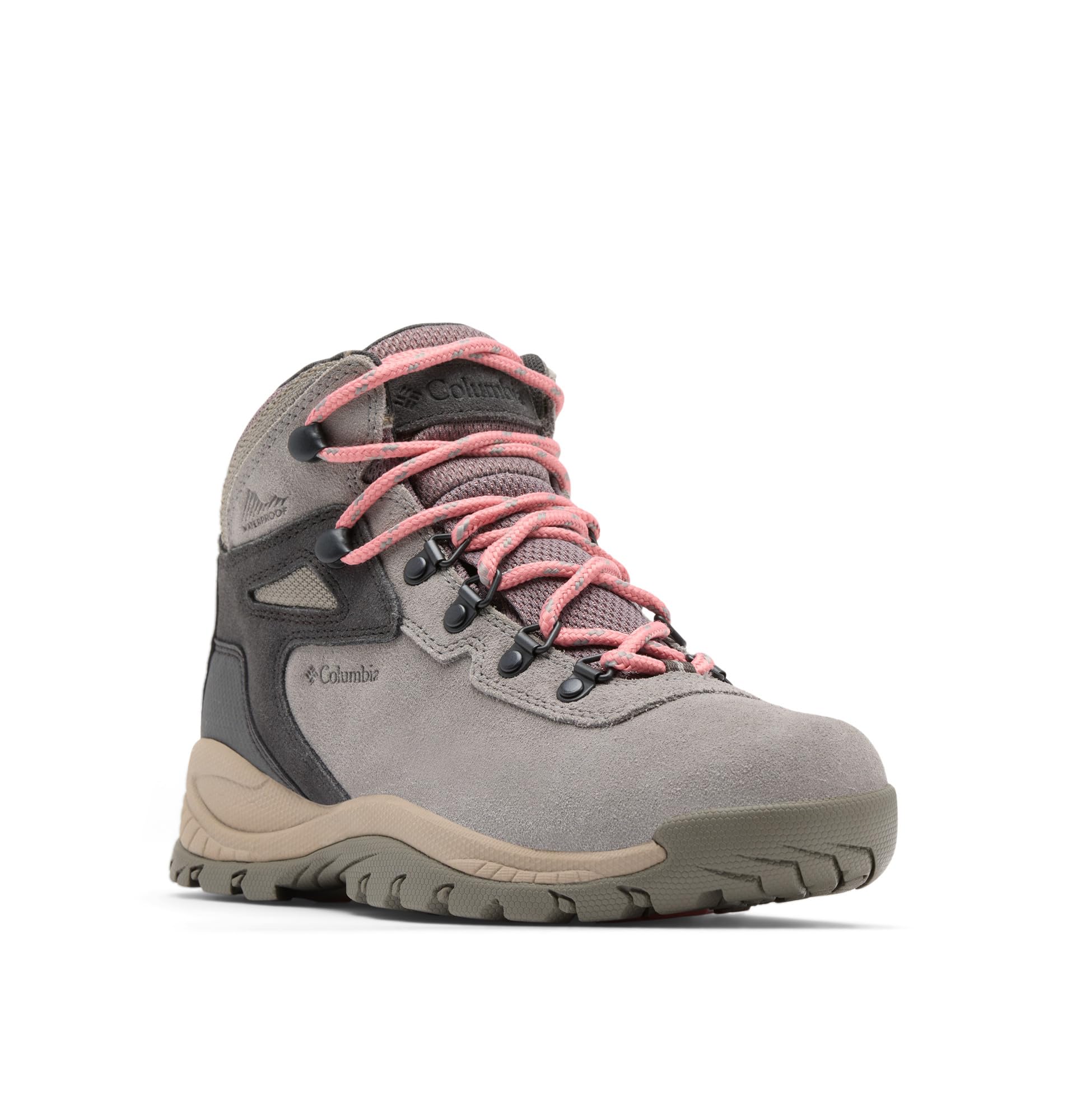
Columbia Newton Ridge Plus Amped
Key Features
- Style: Mid hiking boot
- Waterproofing: Waterproof
- Width options: Wide available
- Product dimensions: 10 x 15 x 6 inches
- Price: Midrange
Wide feet are why this boot made the list. It comes in wide sizes, the toe box is generous enough that a bunion or a bulky orthotic isn’t automatically a dealbreaker, and there’s space left for a thick wool sock without the boot feeling like it’s swallowing your foot. In a category where fit is the thing that goes wrong most often, that’s a real edge.
Ankle support is the second reason we keep coming back to it. The collar is firm without behaving like a cast: it holds the heel down on side-hill traverses and stays comfortable over a full day. Water resistance is among the more dependable in this set, with feet staying dry through snow, mud and long wet walks, and it’s a boot that looks good enough for a town day, pink laces and all.
What you accept for that is a break-in period at the collar, where it can rub before it softens. Thick socks are the first thing to try. Beyond that, the decision is simple: if your feet are average width and you don’t need the extra room, the Moab is the more comfortable boot; if they run wide, this is the one to order.
Pros
- Wide sizes with a genuinely roomy toe box
- Supportive ankle without excess bulk
- Sheds rain, snow and mud
- Looks good enough for everyday wear
Cons
- Ankle collar can rub before it breaks in
If your feet run wide, or you need room for an orthotic or a bunion, this is the boot we hand you first.
Best for Weekend Hikers
NORTIV 8 Waterproof Hiking Boots
Key Features
- Style: Lace-up hiking boot
- Waterproofing: Waterproof
- Ankle coverage: Mid-cut
- Price: Budget
A waterproof boot with honest ankle support at a budget price is the whole pitch, and it’s why we suggest this pair to people who hike a few weekends a year rather than every week. The padding around the ankle is structural rather than decorative, the break-in is short enough that a new pair can go straight onto a trip, and the cushioning holds up over a full day of walking. For the money, that’s a serious amount of boot.
The compromises live in the details. Laces work loose on the trail, which a double knot fixes, and the boot carries more bulk than the low shoes here, something you notice on a fast, long day. Where it does better than its price suggests is longevity: uppers and soles hold up over repeated weekend use, and the waterproofing keeps working through wet grass and puddles instead of giving up after a season. If your feet are on the slim side, plan on thicker socks or a different boot.
Pros
- Supportive ankle at a budget price
- Comfortable for full days of walking
- Waterproof through puddles and wet grass
Cons
- Runs narrow for some feet
- Heel can lift on steep ground
We recommend this one to weekend hikers: it brings genuine ankle support and dependable waterproofing at a budget price.
Best for Rocky, Uneven Trails
KEEN Targhee 3 Low Waterproof

Key Features
- Style: Low hiking shoe
- Waterproofing: Waterproof
- Package dimensions: 12.6 x 7.75 x 4.5 inches; 3 pounds
- Price: Premium
Rough, rocky ground is where the Targhee 3 Low makes its case. There’s real structure under the arch, the sides hold your foot steady on uneven steps, and the low cut keeps your ankle free on the flat stretches in between. It’s the shoe in this group we reach for when a trail is more talus than mud, and the waterproofing holds well enough that a stream crossing isn’t an automatic soaked-foot event.
Fit is generous, and that cuts both ways. The shoe runs wide and large, roomy enough that some feet swim in their usual size, and the toe box has enough space that toe rub turns up for plenty of people. If you’re between sizes, go down half rather than up, and don’t buy it hoping a thick sock will take up the slack.
The premium price is the other half of the decision. You’re paying for structure underfoot and a shape that suits wide feet, and for hikers who spend most of their miles on rocky ground that’s a fair trade. For gentler trails, or if you want one pair that lasts, the Moab covers the same ground for less and asks less of you.
Pros
- Strong arch support on rough trails
- Keeps feet dry in streams and wet grass
- Built for irregular, rocky ground
Cons
- Toe bumper and sole can separate with wear
We rate it highly on rocky, uneven ground, with one reservation: the toe bumper and sole are what wear out first.
Best for Cold-Weather Walks
ANJOUFEMME Outdoor Hiking Boots

Key Features
- Style: Ankle boot
- Waterproofing: Waterproof
- Cold-weather design: Snow and winter
- Price: Budget
These are the boots to reach for when the forecast is grim and the walk is short. They’re warm, genuinely warm, the kind of boot that suits a winter farmer’s market or a cold-weather dog walk, and there’s enough room inside for two pairs of socks without your toes going numb. The cushioning is soft from the first wear and the ankle needs no breaking in, which is more than a lot of budget boots manage.
Waterproofing holds through wet grass, slush and shallow puddles, and the warmth doesn’t turn them into a sauna on a short walk. What they won’t do is last like the boots above them on this page: think a couple of seasons of regular use rather than a decade, and treat any sign of the sole lifting as the beginning of the end. For cold-weather walking and easy trails, we think that’s a fair trade at the price; for anything you want to still own in five years, spend more.
Pros
- Warm enough for cold-weather walks
- Roomy inside for thick socks
- Comfortable from the first wear
Cons
- Sole bonding can fail with use
A warm, roomy boot for cold-weather walks; we think it’s a fair buy at a budget price, provided you’re not counting on years of use.
Best for Light Day Hikes
CC-Los Waterproof Hiking Shoes

Key Features
- Style: Low hiking shoe
- Waterproofing: Waterproof
- Ankle coverage: Low-cut
- Price: Budget
This is a shoe rather than a boot, and that’s most of the appeal. It pulls on without a fight, sits low enough that your ankle moves freely, and takes up so little room in a bag that it earns a place on a trip where boots would be a luxury. Grip is the standout: the outsole holds on wet rock and steep, slippery trail, which is the first thing we noticed about it.
Sizing runs short for some feet, so if you’re between sizes, go up; the shoe then takes a thick sock without slopping around. Comfort is sorted from the first wear, with no hot spots to walk through, and the uppers wipe clean in a minute at the end of the day. For a light day hike or a week of sightseeing in uncertain weather, it’s an easy shoe to like.
Water is the catch. Wet grass and a passing shower are fine, but sustained rain or a long wet walk can soak through, and the low cut leaves you nothing to fall back on when that happens. We rate it as a travel and easy-trail shoe with a waterproof head start; if staying dry is the whole point of the purchase, the Moab or the Newton Ridge does that job properly.
Pros
- Light and low-bulk for travel
- Grip holds on slippery rock
- Easy to pull on and wipe clean
Cons
- Water protection gives out in prolonged wet
- Sizing runs short for some feet
Our pick for travel and easy day hikes: light, grippy and easy to pull on, though it isn’t the shoe for a soaking.
How We Tested Waterproof Hiking Shoes for Women
We built the shortlist from spec sheets rather than marketing copy. A named membrane or a laminated liner counted; a spray-on coating that only claimed water resistance did not. We checked lug depth and outsole rubber, weighed every shoe in a women’s size 8, and dropped anything over roughly a pound per shoe that wasn’t clearly built for wet weather. We also spread the list across budget and premium prices and across width options, because fit was the thing we suspected would decide the whole category.
Testing ran eight months, late spring into a wet fall. The 12 pairs went on muddy singletrack the morning after rain, on rocky scrambles where the toe box took the hits, through a week of cold drizzle, and on a lot of ordinary dog walks and errands where looks mattered. Water resistance got the least forgiving test we could devise: standing in a creek for two full minutes, walking a mile, then checking socks, plus a five-minute run under a faucet aimed at the seam where the tongue meets the upper.
Comfort and fit we logged on 12-mile days and short ones alike, noting heel slip on descents, pressure at the pinky toe, and whether anyone reached to take the shoes off at the trailhead. For durability we checked lug wear and midsole creasing at 50 miles and again at 100, and watched whether the liner cracked at the flex point. Each pair was weighed dry and again after a wet hike to see how much water the upper held, and we timed how long they took to dry overnight. Value came last, measured in cost per mile rather than cost per box.
How to Choose Women’s Waterproof Hiking Shoes
Waterproofing is the easy part to shop for and the hardest to judge from a product page, while fit is what actually decides whether a pair survives a wet trail.
What the waterproof label actually covers
Every pick here is sold as waterproof, and all of them keep feet dry through wet grass, mud and shallow puddles. The limit is the collar rather than the membrane: water that comes over the top gets in, and no lining prevents that. Read the claim as protection from weather and the ground underfoot, not as permission to wade.
That makes the question a route question. If your hikes regularly involve water above ankle height, plan for wet feet on the crossing and carry dry socks for the far side. If they mostly involve rain, long wet grass and mud, any boot here will do the job it promises.
Fit and width come before anything else
Fit is the least consistent thing in this category, and a boot that pinches at mile three isn’t rescued by a better outsole. Try boots on late in the day, in the sock you’ll hike in, and leave a thumb’s width of clearance in front of your toes.
Wide feet, bunions and orthotics are worth shopping around for. The Columbia Newton Ridge and the Merrell Moab both come in wide sizes, and the Newton Ridge has the roomier toe box of the two. If you’re between sizes, order both and send one back; that costs less than a trip cut short by blisters.
Boot or low shoe?
This is about load and ground. A mid boot stabilises the ankle on roots, scree and side-hill traverses and pairs better with a heavy pack. A low shoe frees the ankle, feels cooler and packs down for travel.
The KEEN Targhee 3 Low is our middle ground: it gives up the collar but keeps a firm platform underfoot for rocky ground. If most of your walking is on rough, tilted terrain with weight on your back, take the boot and accept the extra bulk.
Weight, durability and what you pay for
Budget boots tend to be bulkier and less predictable in the details, with lacing that won’t hold a narrow heel or sizing that surprises you. Premium pairs charge for structure underfoot and a more supportive fit. Neither spend guarantees years of service.
Check two places when a pair arrives and again after a wet season: the toe flex point, where the upper creases, and the bond between sole and upper. Those go first in this category, and once either fails the boot stops being waterproof long before the tread wears out.
Frequently Asked Questions
Do waterproof hiking shoes make your feet sweat?
More than mesh shoes do, yes. The lining that keeps water out also holds warmth and moisture in, and a mid boot runs hotter than a low shoe for the same reason. Thin wool socks move sweat away far better than cotton.
If most of your hiking is dry and warm, a breathable non-waterproof shoe is the more comfortable choice; keep the waterproof pair for wet seasons, cold mornings and trips where the forecast is uncertain.
Can I wear these hiking shoes on pavement and around town?
Yes, and plenty of people do, especially with the low shoes here. Lugged outsoles wear down faster on asphalt than on dirt, so a boot used mostly for city walking will lose grip sooner than one used mostly on trail.
If travel is the main use, choose a low shoe rather than a mid boot: it packs smaller, feels cooler on long days of sightseeing, and still handles a wet cobblestone street.
How long should a pair of waterproof hiking shoes last?
Mileage and terrain matter more than age. The toe flex point and the bond between sole and upper fail first, so check both after a wet hike: a sole lifting at the heel or a toe bumper peeling away is your signal to replace.
Once the lining is compromised the shoe stops being waterproof long before the tread wears smooth. Rinse mud off the uppers, air-dry them away from direct heat, and never store them damp.
Final Verdict
Most women hiking wet trails should buy the Merrell Moab 3 Mid Waterproof. It’s the pick with the fewest compromises: real ankle support, a first hike that doesn’t punish you, and waterproofing that holds through mud, wet grass and rain.
Change one requirement and the answer changes. Wide feet, a bunion or an orthotic make the Columbia Newton Ridge Plus the better buy, with just as much ankle support and more room across the toes. If you hike a handful of weekends a year, the NORTIV 8 boot covers the same ground for a budget price.