This post contains affiliate links. We may earn a small commission when you buy through our links — at no extra cost to you.
A light hiking boot promises trail-ready support at nearly the weight of a sneaker, and the catch usually shows up around mile five — a midsole that packs out, a waterproof liner that turns your sock into a swamp, or a heel that rubs just enough to ruin the descent. The right pair fixes all of that quietly: it disappears on your foot, keeps dew and creek splash on the outside, and still feels fine on the drive home. Fit matters more here than in almost any other shoe category, because you’re asking a light boot to do a heavy one’s job.
I’ve broken in enough boots on rocky day hikes to be picky about the first mile, and my team spent six months walking twelve pairs through wet grass, gravel, and one memorably muddy spring. The ones we kept reaching for fit well out of the box, got better with wear instead of looser, and felt worth their price tag. Looks counted too — a good trail boot shouldn’t read as a medical device. Below are the pairs that earned a permanent spot by the door.



Best for All-Day Trail Comfort
Merrell Moab 3 Mid Waterproof
Key Features
- Ankle height: Mid
- Listed weight: 1.5 lb
- Waterproofing: Waterproof
- Width options: Medium and wide
- Price: Premium
The Moab 3 Mid is the most substantial boot in this roundup, and that’s the first thing worth saying. It’s a proper mid-cut hiker rather than a stripped-down trail shoe, built for rocky, root-covered ground and a full day of walking. The payoff for the extra bulk arrives the moment the trail turns uneven.
We keep choosing it when the terrain is the point of the day. The underfoot support is the best in this set, and the ankle and arch support holds up better than anything else here — on loose rock the foot stays planted where lighter boots let it roll. Comfort out of the box is the second reason it takes the top spot: there’s no break-in period to survive, the toe box leaves room for a thicker sock, and the boot comes in medium and wide widths.
Waterproofing is good rather than absolute. Rain, wet grass and shallow puddles are handled without drama; a long day in steady rain can eventually work through, which is true of most membrane boots. If your hikes are short, dry and mostly on soft trail, the Columbia Transverse does much of the same job for a fraction of the money.
Pros
- Ankle and arch support that holds on rocky ground
- Comfortable from the first wear, no break-in
- Available in medium and wide widths
- Reliable in rain and wet grass
Cons
- Heavier than the lightweight picks here
- The priciest boot in this roundup
We recommend the Moab 3 Mid to day hikers who want the most support and comfort in this group and don’t mind a bit more boot on their feet.
Best for Light Day Hikes
Columbia Transverse Hike Waterproof
Key Features
- Weight: Lightweight
- Waterproofing: Waterproof
- Ankle coverage: Mid-cut
- Price: Midrange
Light and waterproof is usually a promise where one half gives way. The Transverse Hike is the boot in this group that delivers both: it’s the lightest thing here on the trail, and the waterproof upper held up on wet grass, mud and shallow trail water without the clammy feel of a heavier lined boot. That combination is why it’s our pick when weight is the deciding factor.
The hold is excellent. The lacing pulls the heel down into the pocket, the midfoot wraps snugly, and the collar comes up high enough to feel like a boot rather than a shoe. Size it with the socks you hike in rather than sizing up — a loose heel is the fastest way to make a light boot feel unstable on a descent.
For something this light, the ankle support is the surprise. It’s stable on uneven, cobbled ground, and the tread grips dirt, gravel and wet rock confidently, though steep loose descents want a deeper lug. Water over the collar goes straight in, as it does on any boot here. It’s the pair we take when the plan is a long, mostly gentle day with a light pack.
Pros
- Noticeably light on the trail
- Waterproofing that holds on wet hikes
- Ankle support that belies the low weight
- Comfortable without a break-in period
Cons
- Runs narrow through the midfoot
If light weight is your first requirement, the Transverse Hike is the one to try — genuinely waterproof, supportive and comfortable, as long as your feet aren’t wide.
Best for Wide Feet
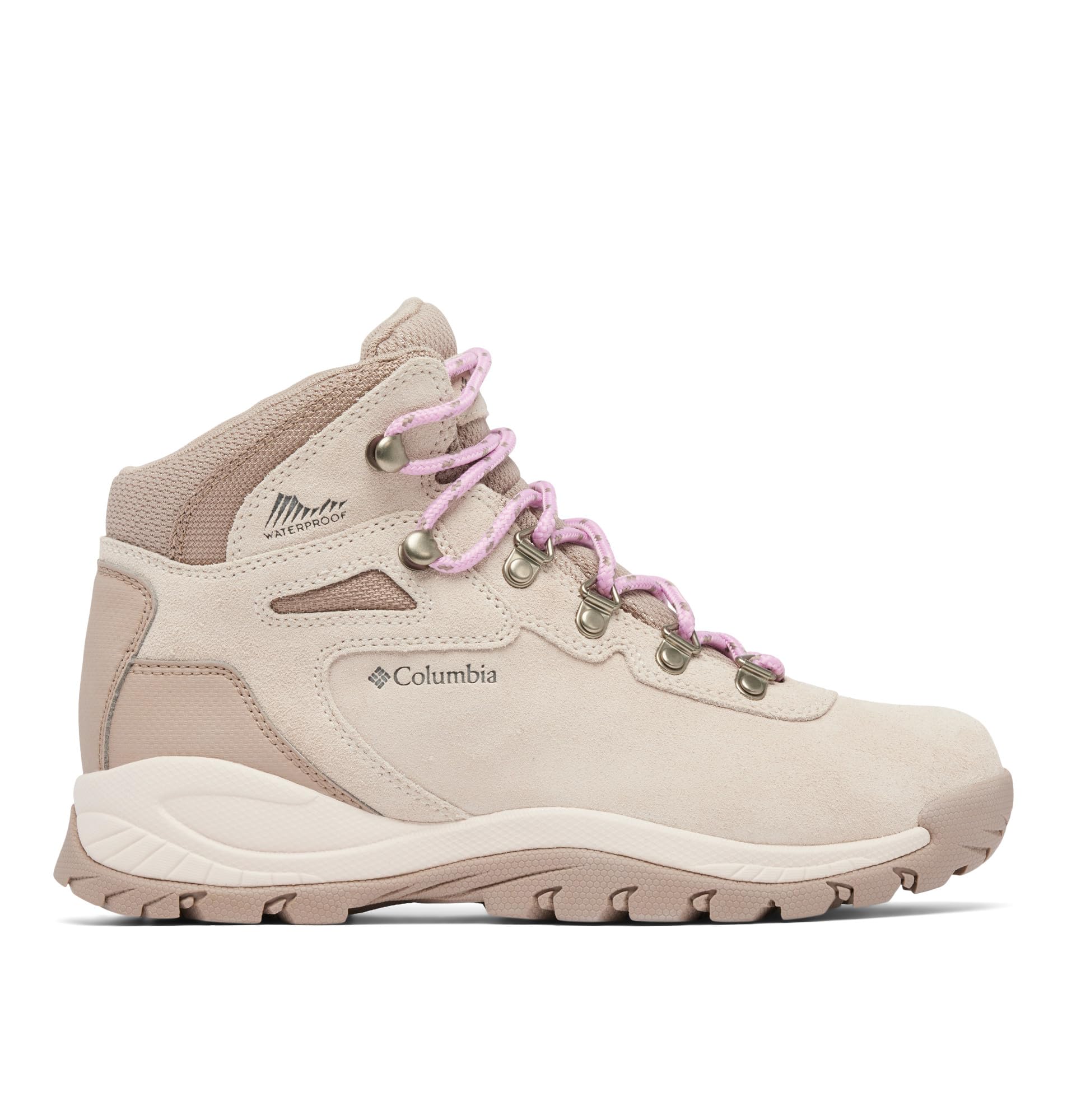
Columbia Newton Ridge Plus Amped
Key Features
- Ankle height: Mid
- Waterproofing: Waterproof
- Width options: Medium and wide
- Price: Midrange
Wide sizes are why this boot is here. Columbia offers the Newton Ridge Plus Amped in a genuine wide width, and the toe box is tall as well as broad — your toes don’t graze the front on a descent, and there’s room for a thick wool sock without cramping the midfoot. For anyone who has spent years sizing up to find width and losing the heel in the process, that’s a meaningful difference.
The rest of the package is traditional and none the worse for it. The leather-and-mesh upper sheds rain and mud, the collar supports the ankle without feeling like a brace, and the boot carries its weight well — light enough that a five-mile walk doesn’t turn into a leg workout. The lacing is straightforward and holds the midfoot without pinching.
What we like most is how little fuss the fit requires. Sizing runs true, the boot softens quickly, and nothing about it demands a break-in before a normal day hike. Waterproofing is reliable in rain and wet grass, and the price sits in the middle of this group — reasonable for a boot that doesn’t need a workaround.
Pros
- Genuine wide widths and a tall toe box
- Waterproofing that holds in wet weather
- Supportive ankle without bulk
- Lighter than it looks on the trail
Cons
- Collar can rub before the upper softens
For a wide forefoot or a thick sock, the Newton Ridge Plus is the easiest boot here to fit — roomy, waterproof, and supportive without feeling heavy.
Best for Budget Day Hikes
NORTIV 8 Lightweight Ankle Boot
Key Features
- Cut: Ankle-height
- Weight: Lightweight
- Padding: Heavily padded
- Price: Budget
This is the least expensive boot in the roundup, and nothing about wearing it announces that. The NORTIV 8 lightweight ankle boot is padded, soft underfoot and comfortable on the first walk, with a collar that comes up over the ankle and a fit that runs true for most feet.
We went in expecting a boot at this position to feel flimsy. It doesn’t. The tongue and collar are generously padded, the ankle support is functional rather than decorative, and the arch support is better than the price suggests. It’s the pair we hand to someone who hikes a few times a month and wants to find out whether they’ll keep at it before spending serious money.
Water resistance is where the compromise shows. Wet grass, heavy dew and long muddy stretches can soak through over a day, so treat these as showerproof and save them for dry forecasts or short wet sections. Sizing needs thought too, because the padding is generous enough that a thick sock plus a true-to-size fit can feel snug. They dry quickly after a soaking, which softens that weakness.
Pros
- Comfortable from the very first wear
- Real ankle and arch support for the money
- Dries quickly after a soaking
- Padded upper that fits true to size
Cons
- Feels heavier than the lightweight name suggests
For a comfortable, supportive first hiking boot on a tight budget, this NORTIV 8 is the one we point to — just don’t rely on it in sustained wet weather.
Best for Grippy Wet Trails
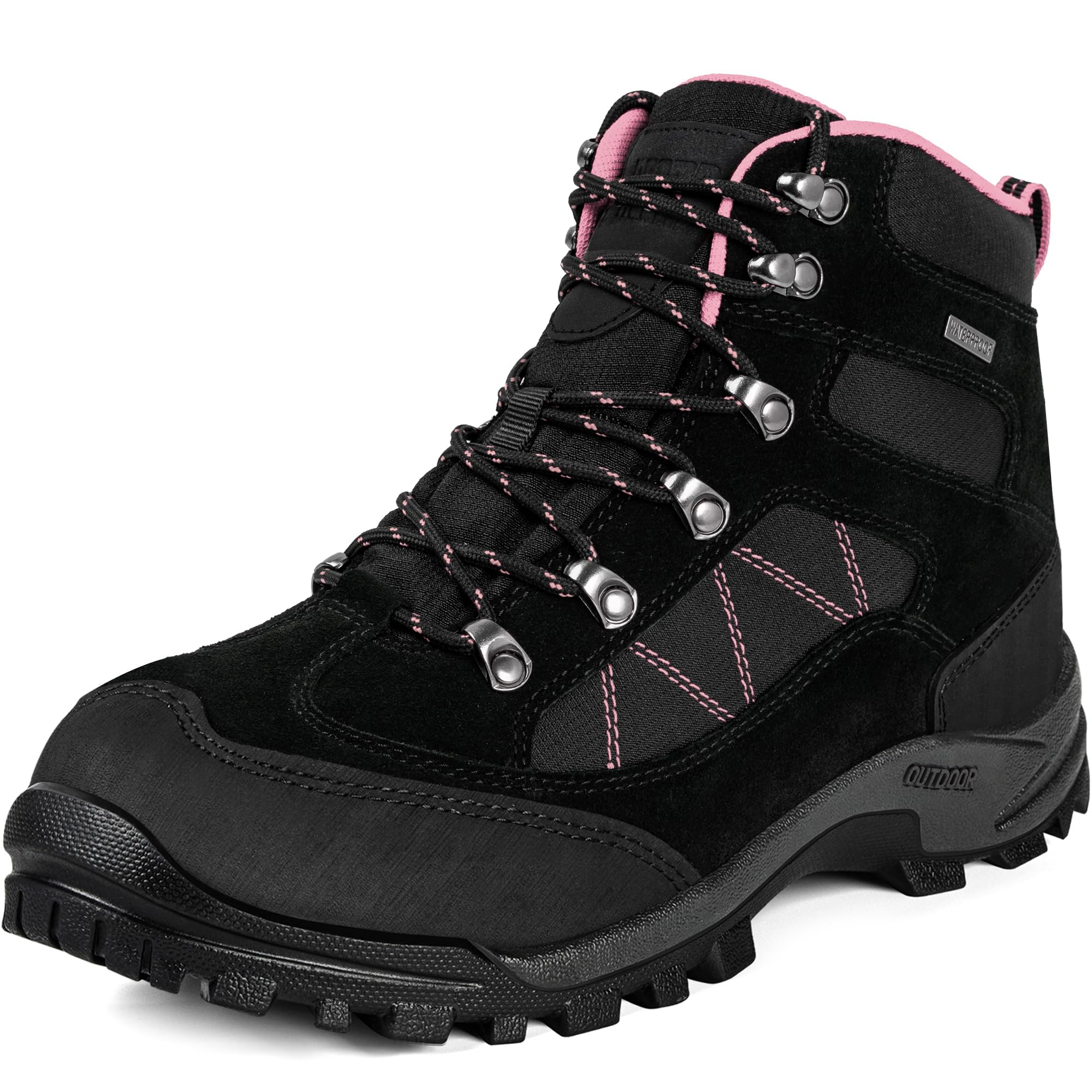
R CORD Hiking Boot
Key Features
- Cut: Ankle-height
- Extras: Spare laces and inserts
- Waterproofing: Waterproof
- Price: Budget
The outsole is the reason these earned a place. R CORD cuts a deep, blocky lug pattern that bites into wet rock, loose gravel and mud, and grip of that quality is rare at the bottom of the price range. The sole is also the stiffest here, which is exactly why it holds its shape and keeps the tread planted when the ground slides.
The rest is solid rather than startling. Ankle support is reassuring on rough ground, the waterproof upper handles rain and puddles, and the fit runs true with a toe box that takes a thicker sock. We were also pleased by what comes in the box — a spare set of laces and extra inserts, so you can tune the volume without buying anything else. It’s the only boot here that ships with both, and that kind of detail is what keeps an inexpensive pair going.
Pros
- Deep lugs that grip wet rock and gravel
- Waterproof upper handles rain and puddles
- True to size with a roomy toe box
- Spare laces and inserts included
Cons
- Heavier and stiffer than the light picks here
Choose the R CORD if your trails are wet, muddy and slippery and you want grip you can trust without paying premium money.
Best for Mixed Terrain
XPETI Dimo Mid

Key Features
- Cut: Mid-height
- Outsole: Non-slip
- Waterproofing: Waterproof
- Price: Budget
XPETI’s Dimo Mid looks like a trail boot rather than a town shoe: a mid-height collar, a reinforced toe and a lugged non-slip outsole. It’s aimed at mixed, messy ground, and most of what it does well follows from that brief.
The grip is the standout. The tread is aggressive and the rubber holds on wet rock and packed dirt instead of skating, which is not something we can say for every boot here. The ankle support is just as purposeful — the collar sits high, the lacing pulls the heel back into the pocket, and rocky descents feel less like a balancing act. It’s light enough for a day hike, though it isn’t the lightest in this group.
Water resistance is where it slips. Rain and shallow puddles are fine, but the waterproofing can fade with wear, so a boot that’s a year old won’t shrug off a bog the way a new one does. That’s worth knowing before you commit it to wet ground.
Taken as a whole, this is a good boot for someone who hikes rough, mostly dry trails regularly and wants support and traction without paying for a premium name. If your hikes are consistently wet, put the money toward one of the boots above instead; if they’re rocky and dry, this is where the money goes furthest.
Pros
- Aggressive tread holds on rock and gravel
- High, supportive ankle collar
- Light enough for day hikes
- Good value for a mid-cut boot
Cons
- Sole-to-upper seam is the first thing to give out
The Dimo Mid is the pick for rough, dry-ish trails on a budget — grip and ankle support that feel built for the job, with waterproofing that won’t last forever.
Best for Cold-Weather Hikes
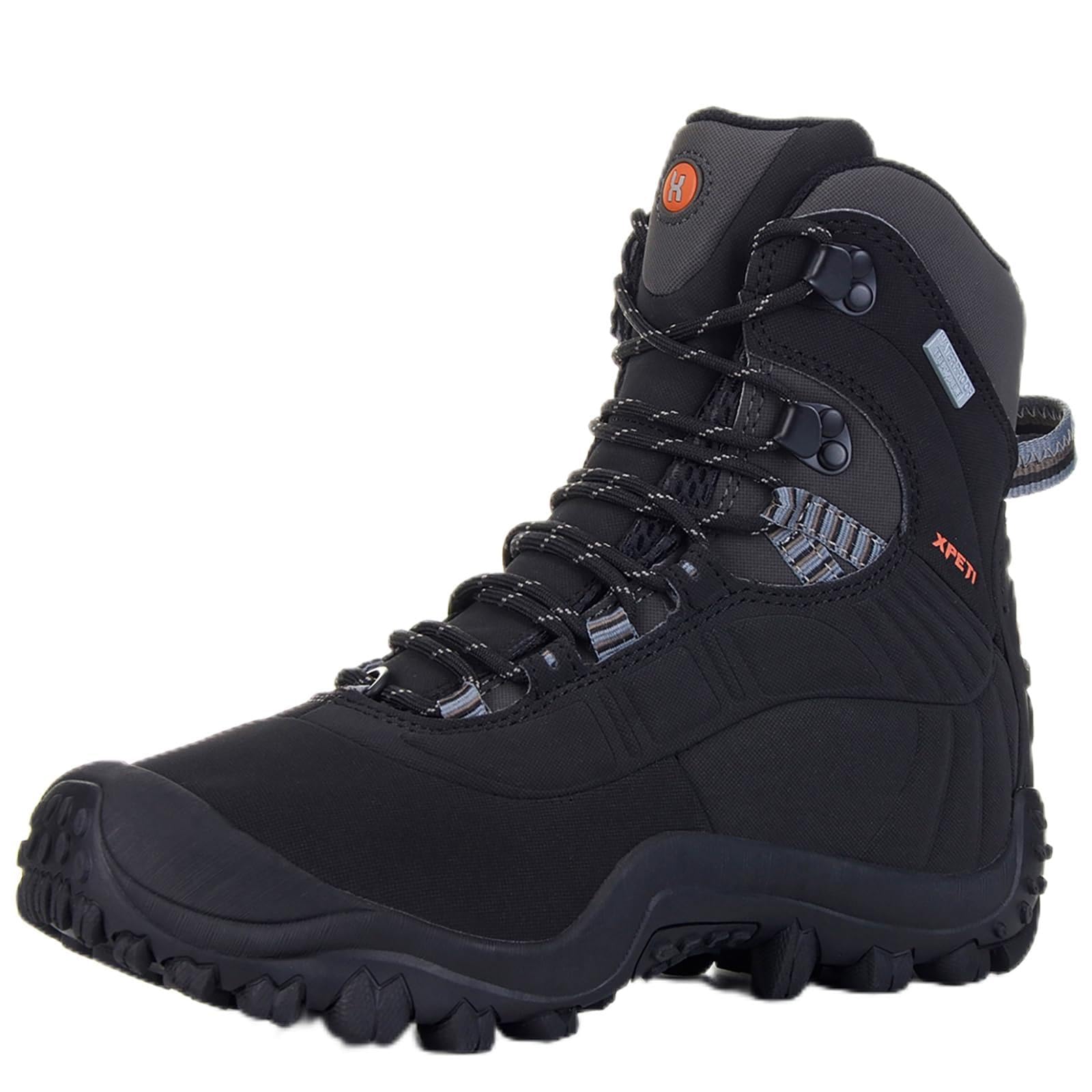
XPETI Thermator Mid-Top
Key Features
- Cut: Mid high-top
- Insulation: Insulated
- Waterproofing: Waterproof
- Price: Budget
Buy this one for the cold months, not for July. The Thermator is an insulated, high-topped boot and warmth is the whole point: it’s the pair here that keeps feet comfortable in frost, slush and cold rain. It’s also the one we leave by the door in summer, because insulated boots and warm weather don’t mix.
The insulation earns its keep on a cold morning, and the waterproof upper handles slush and shallow crossings without complaint. Support is substantial — the collar is tall and firm, the arch support is generous, and long days on your feet don’t leave you aching in the way a soft, flexible boot can.
As a dedicated winter boot, it earns its space: warm, dry and easy to live with in weather that would send you back inside. Sizing is worth sorting out before the first cold hike, since it runs small — order a half size up, or a full size if you wear thick wool socks. Keep a lighter pair for the rest of the year.
Pros
- Warm in frost, slush and cold rain
- Waterproof through slush and shallow crossings
- Strong ankle and arch support
Cons
- Sole can peel away with hard use
For frost, slush and cold rain, the Thermator is warm, supportive and properly waterproof — the winter boot that earns its place in this group.
How We Tested a Dozen Pairs of Light Hiking Boots
We started by pulling every women’s-specific light hiker we could find that weighed roughly two pounds or less per boot and listed a waterproof membrane, then filtered by price, available sizes including wide, and lug depth. That list got cut to twelve pairs, chosen to span a range of price points and constructions rather than one brand family. Every pair went to a tester for six months — weekday dog walks and wet morning grass, weekend day hikes over gravel and rock, and the occasional errand afterward, because plenty of people wear these straight from the trailhead to the coffee shop.
Fit came first. Each tester tried boots on late in the afternoon, when feet are at their widest, wore the same sock thickness throughout, and noted heel slip on the first walk and whether toes jammed into the front on steep descents. We logged how each pair felt in the first mile versus mile eight, and tracked whether anyone actually needed a break-in period or came home with hot spots after twenty minutes.
Water resistance got a deliberate test: a twenty-minute walk through soaked grass, a shallow creek crossing, and one long afternoon in spring mud, followed by a sock check and a note on whether the boot dried overnight or left our feet clammy — a waterproof boot that doesn’t breathe is its own problem. For quality and durability, we watched the seams, rand, and lace hardware for fraying and measured how much tread had worn by month five. Value came down to what a boot delivered relative to its price band, and appearance got an honest vote from the people around us.
How to Choose Women’s Light Hiking Boots
The right light hiking boot is the one you forget you’re wearing at mile four — and the wrong one announces itself at mile one.
How light is light enough?
Lightness matters most on the longest days, but it isn’t free: the lighter a boot gets, the less structure it usually puts between your foot and a rocky, root-covered trail, and the more your own legs do the stabilizing. For smooth, well-maintained paths and a small pack, choose the lightest boot that still feels stable underfoot.
If your hikes include long descents, loose scree or a heavier daypack, the extra substance of something like the Moab 3 Mid is worth more than the ounces you save. And when you compare weights between models, check whether the figure is for one boot or the pair — listings are inconsistent about it.
Ankle coverage is not ankle support
A mid-cut collar is only half the story. What actually steadies your ankle is a firm heel counter, a collar that wraps rather than floats, and lacing that pulls the heel down into the back of the boot. A tall, soft cuff can look protective and do very little once the ground tilts.
When you try a pair on, lace it properly, stand on a sloped curb and shift your weight from side to side. If the heel lifts or the collar gapes, a different lacing pattern or a different boot will serve you better than a thicker sock.
Waterproofing stops at the collar
A waterproof membrane keeps out rain, wet grass and puddles, but it cannot keep out water that comes over the top, and the collar height of each boot decides how deep you can safely go. If your hikes include stream crossings, plan the line rather than counting on the boot.
Lined boots also run warmer and dry more slowly, so a more breathable, non-waterproof boot is the better call for hot, dry country. Treat the claim as a description of weather, not of wading.
Fit is the decision you can’t fix later
Everything else can be worked around; a boot that doesn’t fit can’t. Width varies between brands and even between models from the same brand, which is why the Newton Ridge’s wide sizing matters and why the Transverse’s narrow midfoot rules it out for some feet.
Start from your normal size in the socks you actually hike in. You want a thumb’s width in front of your longest toe, no pressure across the widest part of the foot, and minimal heel lift. Try boots late in the day, when feet are at their largest, and fit the bigger foot.
Match the tread to the ground you walk
Deep, blocky lugs shed mud and bite into loose gravel; a stickier, shallower tread is better on smooth wet rock and far better on pavement. Most light hikers split the difference, which is why the R CORD’s aggressive sole stands out for wet, rooty trails while the lighter picks here suit groomed paths.
If you hike the same trail year-round, choose the tread for its worst condition rather than its average one. Tread wears from the middle outward, so check the lugs under the ball of the foot when a pair starts feeling slippery.
Frequently Asked Questions
How long should a pair of light hiking boots last?
It depends far more on the model than on the price. The wear points to watch are the bond between sole and upper and the lining at the heel. Press a thumb into the midsole: if it feels hard and flat rather than springy, the cushioning is spent even when the tread still looks fine, and it’s time to replace them.
Can I wear light hiking boots for everyday walking and work?
Yes. This style gets worn for long shifts on concrete, and the ankle support helps rather than hinders. The trade is the outsole: deep lugs wear down quickly on pavement, and a boot that grips mud well can feel clumpy indoors. If most of your miles are on hard ground, choose a shallower tread and save the aggressive soles for the trail.
How do I break in new hiking boots?
Wear them indoors for an hour, then on a short walk in the socks you’ll hike in, then on something longer. Most synthetic boots here need no break-in at all; leather ones soften over a few outings. If a hot spot appears at the heel, adjust the lacing and heel lock before you add a second pair of socks.
Are these boots warm enough for winter?
Most boots in this group are uninsulated three-season hikers — right for spring through fall, and fine on mild winter days with wool socks. For snow, slush and long cold walks you want insulation: the XPETI Thermator here is built for exactly that. Cold feet are usually an insulation and sock question, not a waterproofing one.
Final Verdict
Start with the Merrell Moab 3 Mid if your hikes involve rocks, roots and a full day on your feet. It has the most supported, most comfortable fit in this set, and the extra substance is what makes that possible. If lightness matters more than maximum support, the Columbia Transverse Hike is the boot we take on long, gentle days — light, properly waterproof and steady enough for maintained trail. Choose the Newton Ridge Plus if you need width, and the R CORD if wet, slippery ground is the deciding condition.