This post contains affiliate links. We may earn a small commission when you buy through our links — at no extra cost to you.
Ankle support for hiking is a tug-of-war: the braces that hold most firmly are usually the ones that won’t slide into a boot or make it through a climb without bunching under your sock. I’ve rolled an ankle on a rocky descent before — the kind where every step for the next mile becomes a small negotiation — so I know what a brace is actually being asked to do. It has to steady the joint without numbing your foot’s sense of the ground, and it has to stay exactly where you put it through hours of heel strike and side-hill traversing. That’s the whole job, and surprisingly few get it right.
Fit is where most of these live or die, and it’s the thing first-time buyers get wrong: a support sized off your shoe rather than your ankle will either cut circulation or slide down by mile two, so measure your ankle and calf and check the chart before anything else. Over seven months, my team and I hiked in 11 different supports on gravel paths, loose-rock descents, and long steady climbs, and the gaps in comfort, support, and durability showed up fast. A handful earned a permanent spot in my pack — those are the ones below, grouped by what they’re actually good at.



Best for Trail-Ready Stability
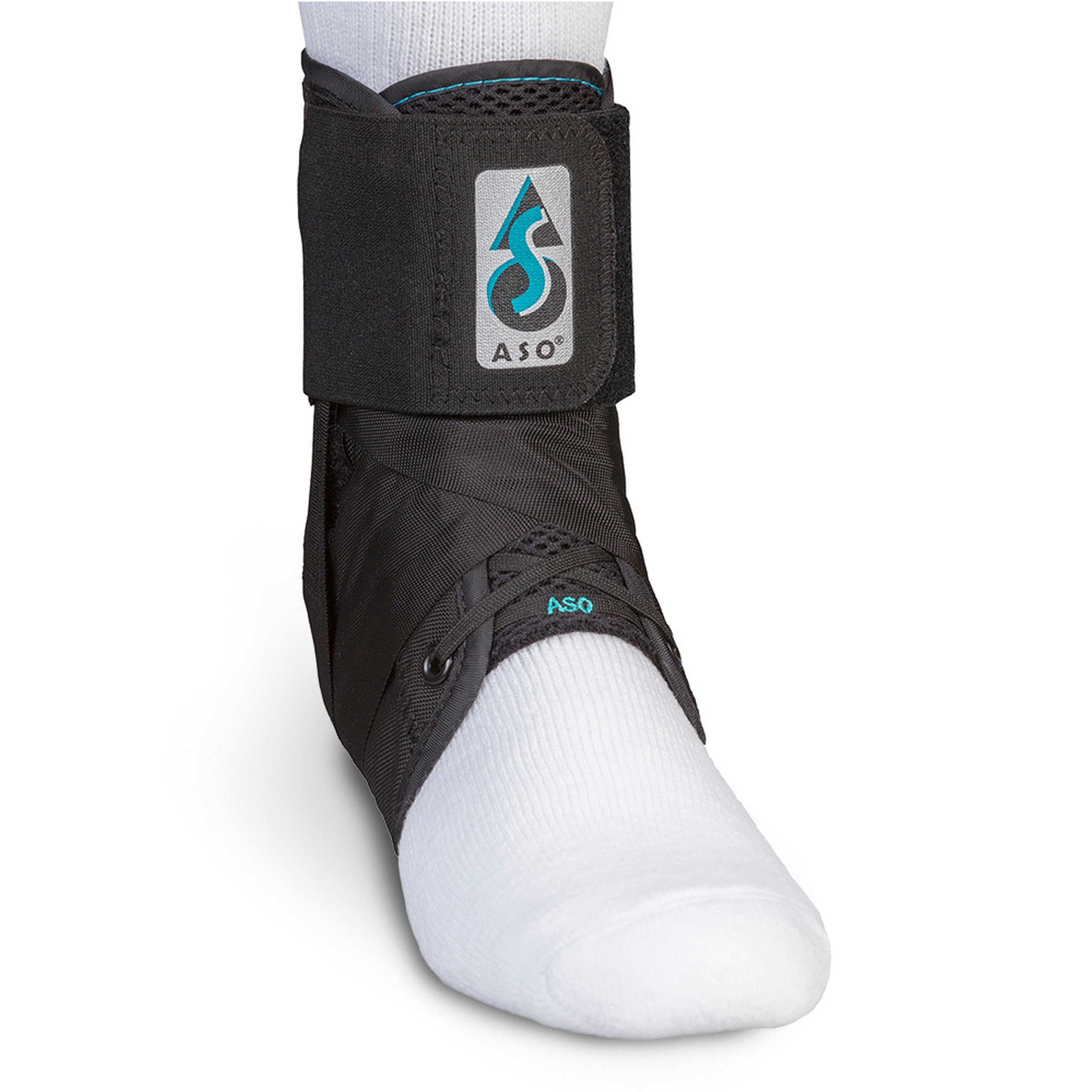
Med Spec ASO Ankle Stabilizer
Key Features
- Size: Medium
- Weight: 5.96 oz
- Shoe fit: Fits most shoes
- Stabilization: Lace-up figure-8
- Price: Midrange
The ASO earns the top spot because of how it applies support, not just how much padding it carries. The lace-up shell closes around the ankle, and the figure-8 straps pull across the joint to resist the side-to-side roll that uneven ground invites. That is a more purposeful hold than a sleeve or a simple wrap, yet the brace is low-profile enough to fit inside most hiking shoes. At 169 g, it is not the lightest thing in a pack, but it disappears once the boot is on.
The CoolFlex tongue and padding are what make that hold wearable for hours. We found the laces can be snugged firmly without digging into the front of the ankle, and the brace allows a normal stride rather than a stiff-legged walk. It is bilateral, so one brace can move between feet, and the nylon shell is machine washable, which matters after a sweaty climb. The six-month limited warranty is a reasonable backstop for a brace that sees regular use.
Support like this asks for a deliberate setup. Threading the laces and setting the figure-8 tension takes longer than pulling on a sleeve, and it is not something you adjust casually with a boot already laced. We accept that because the payoff is a secure, taped-feeling ankle on descents and side slopes. Hikers who want to tighten support mid-climb without stopping should look at the quick-lace WHCOOL instead.
Pros
- Figure-8 lacing resists side-to-side roll
- Fits inside most hiking shoes
- Machine-washable nylon shell
- Padded tongue prevents lace pressure
Cons
- Sizing can run large for some feet
We make the ASO our default hiking pick because its figure-8 lace-up hold is serious support that still fits inside a boot.
Best for Maximum Roll Control
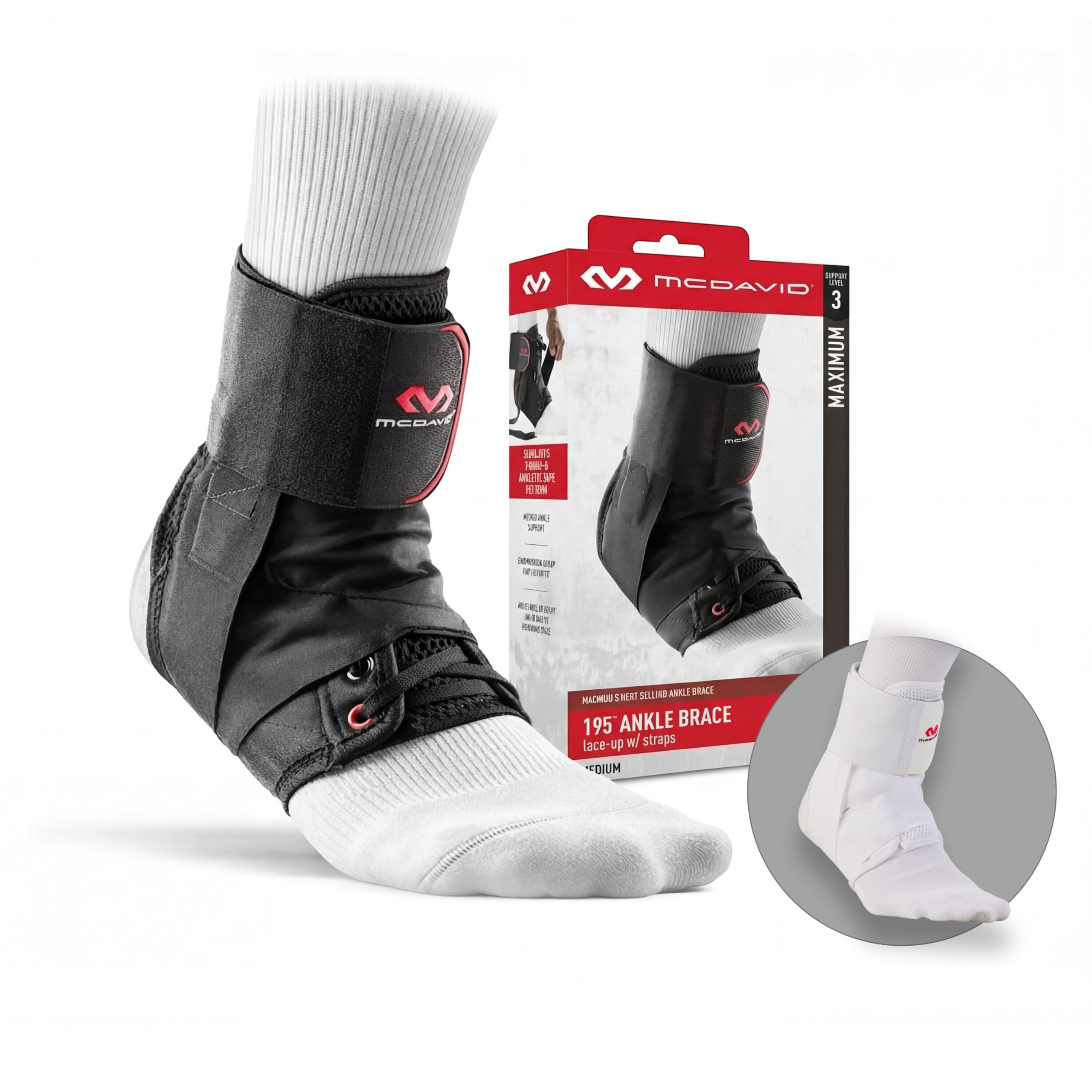
McDavid Lace-Up Ankle Brace
Key Features
- Size: Medium
- Closure: Lace-up
- Shoe fit: Low-profile
- Stabilization: Rigid side stabilizers
- Price: Premium
McDavid makes a different bargain from our top pick: it adds rigid side stabilizers to the figure-8 lacing, so the brace feels less like a snug wrap and more like a guard against rolling. That extra structure is why we reach for it on loose descents, side-sloped trails, and any day when the ankle has something to prove. It costs more than the ASO and takes more effort to settle, but the firmness is the point.
We rate its lateral stability near the top of this set. The side pieces sit against the ankle and give a hard stop before the joint rolls far, while the lacing lets you tune the shell around the foot. It still fits inside a low-profile hiking shoe, though a tight boot may need its laces loosened a turn. If you have sprained an ankle before and want to feel that protection on every step, this is the brace.
Comfort is decent for a brace with this much structure, provided the lacing is tensioned evenly. It works best with a thin sock and a boot that already has some volume, and it rewards a patient setup rather than a rushed one. For long, steady climbs the McDavid is more support than some hikers need, but on rough ground that extra structure is exactly what earns it a place.
Pros
- Rigid side stabilizers check ankle roll
- Figure-8 lacing tunes the fit
- Low-profile enough for many shoes
- Strong lateral stability on rough ground
Cons
- Sizing runs close for swollen ankles
- Top edge can press if over-tightened
Choose the McDavid when you want the firmest lateral check in this group and can accept a slower, fussier fit under a boot.
Best for Boot-Friendly Support
ACE Deluxe Ankle Stabilizer
Key Features
- Weight: 3.6 oz
- Material: Breathable fabric
- Adjustability: Custom compression
- Stabilization: Reinforced side stabilizers
- Price: Budget
The ACE Deluxe is the least intimidating brace here: an adjustable stabilizer with reinforced side pieces rather than a full lace-up shell. It wraps on quickly, snugges down with its straps, and stays low enough to wear under a mid-height hiking boot. We like it for milder instability and for days when a lace-up feels like more hardware than the ankle needs.
What makes it useful on the trail is the adjustability. You can add compression before a rough section and ease it off on a long climb without taking the brace apart. The side stabilizers give a clear check against sideways movement, and the breathable material is less sweaty than the heavier braces in this group. It is not, however, a rigid roll-stopper; on very uneven ground it offers guidance rather than a hard stop.
We recommend the ACE as a boot-friendly middle ground and a good spare for a pack. Its weakness is precision: the fit is broad, and the brace can shift if it is not snugged firmly around the heel. For a chronically weak ankle or a heavily loaded pack on rough ground, step up to a lace-up; for light support and quick adjustments, the ACE is easy to live with.
Pros
- Adjustable compression without laces
- Low-profile enough for hiking boots
- Breathable material reduces heat
- Quick to loosen at rest stops
Cons
- Less rigid than a lace-up brace
- Fit is broad for smaller ankles
We keep the ACE on the short list for hikers who want adjustable side support in a low-profile package without a lace-up ritual.
Best for Budget Trail Wrap
Bodyprox Ankle Support Brace
Key Features
- Design: Open heel
- Closure: Hook-and-loop
- Material: Neoprene blend
- Fit range: 7.8–11 in arch circumference
- Price: Budget
Bodyprox is the brace we choose when the ankle needs a little help rather than a lockdown. The neoprene wrap adds warmth and compression, the open heel leaves the back of the foot free, and the hook-and-loop closure is easy to loosen at a rest stop. It is the least expensive style here, and for mild swelling or a tired ankle that is often enough.
The open-heel shape is the practical detail for hiking footwear: it reduces bulk inside the boot and lets the heel sit where the boot expects it. The wrap is adjustable enough to go over a hiking sock, though the one-size range depends on arch circumference, and a very large or very small foot may fall outside it. Support is the bigger limitation. It stabilizes less than the lace-up braces and is not the one for a joint that rolls easily on rough ground.
Pros
- Open heel reduces boot bulk
- Adjustable wrap is easy to loosen
- Low-cost option for mild support
- Simple to put on and adjust
Cons
- Neoprene can feel warm on climbs
- Strap durability may weaken over time
If you want light compression and a wrap you can adjust on the trail, we think the Bodyprox is the budget pick to beat.
Best for Quick On/off
WHCOOL Slim-Fit Ankle Brace
Key Features
- Size: L (13–14 in ankle)
- Closure: Quick lace-up
- Material: Nylon
- Stabilization: Figure-8 strapping
- Price: Midrange
The WHCOOL’s quick-lace closure is the detail that separates it from the traditional lace-ups here. Instead of threading and tying, you pull the straps, press them down, and you are done; that is a genuine advantage when you are already in a boot and want more support before a steep pitch. The figure-8 strapping gives it a more structured feel than a sleeve, and the shell is thin enough to wear inside most hiking shoes.
We recommend it for hikers who value quick changes over maximum stiffness. It gives a secure wrap around the ankle and is easy to tighten in small steps as swelling changes, which is the kind of adjustment that matters over a long day. The hold is not as rigid as the McDavid’s side-stay design, but it is a clear step up from a compression sleeve and much faster to live with than laces.
Two checks matter before you buy. The sizing runs on ankle circumference, and the large is not a universal fit; measure, and size up for a wide foot or swelling. The brace also adds some material over the instep, so a very snug boot may need its laces loosened. On the positive side, the thin air-fabric lining stays comfortable under a sock, and the quick closure holds its tension through a day of walking.
Pros
- Quick-lace closure is fast to tighten
- Figure-8 strapping adds structure
- Thin shell fits inside many shoes
- Easy to adjust as swelling changes
Cons
- Durability may be uneven with hard use
We recommend the WHCOOL for hikers who hate lacing a brace and want quick, adjustable support that still feels stable under a boot.
Best for Sleeve Plus Strap
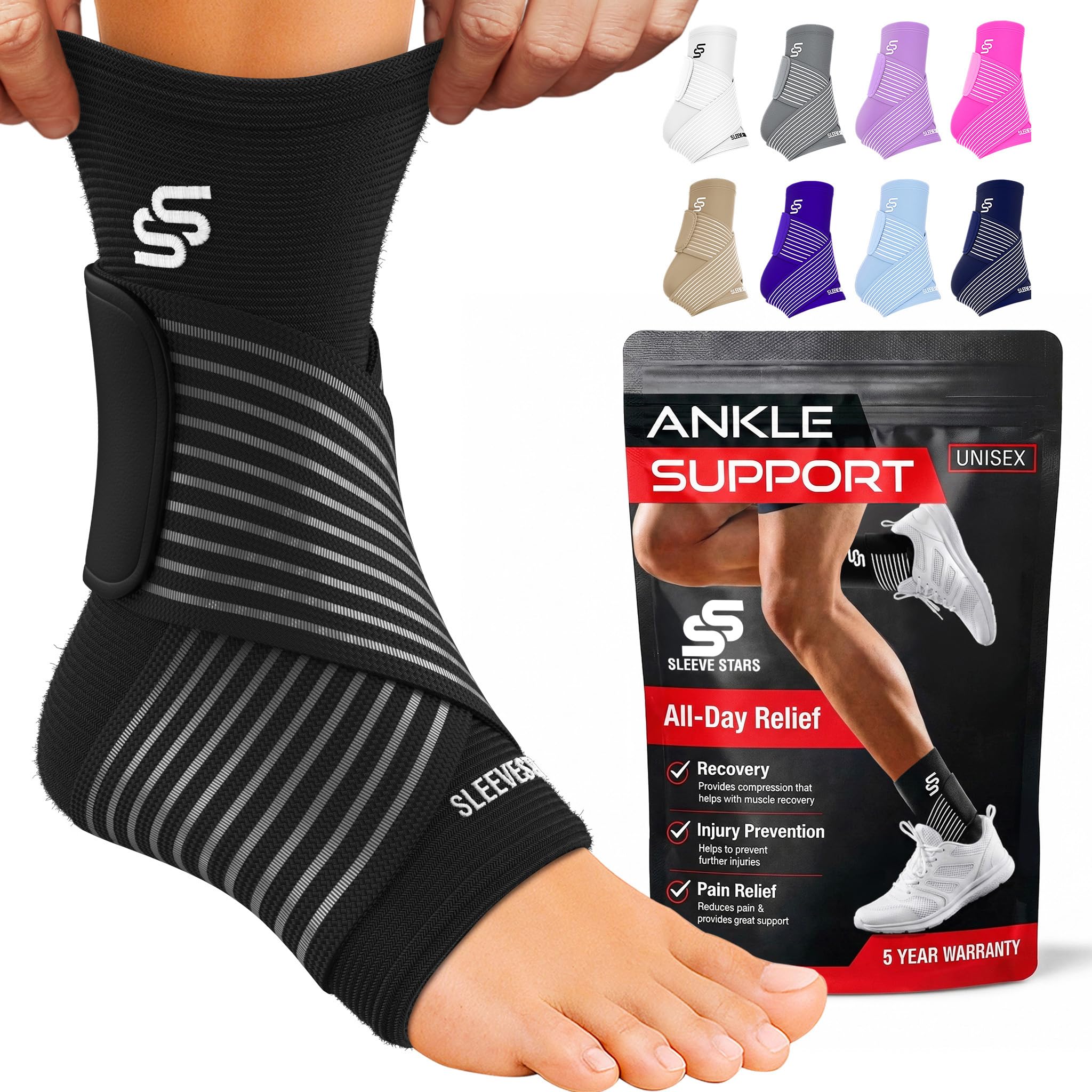
Sleeve Stars Ankle Brace
Key Features
- Size: M (10–12 in)
- Design: Sleeve with strap
- Material: Breathable knit
- Compression: Adjustable
- Price: Midrange
Sleeve Stars is not a lace-up brace, and it does not pretend to be. It is a knit sleeve with a separate adjustable strap, so it gives all-around compression first and a focused cinch second. That combination makes it more useful than a plain compression sock on a trail where the ankle is tired but not badly unstable.
The sleeve is easy to pull on under a sock, and the strap can be adjusted without taking the whole thing off. We found the compression even rather than sharply localized, which is what we want on a long day when swelling comes and goes. The open heel and toe leave the foot free, and the breathable fabric does not feel clammy inside a boot.
The limits are real. The knit gives compression rather than the hard check of a lace-up, and sizing is less forgiving than it looks; the sleeve runs small for some feet, so measure the ankle and calf rather than ordering by shoe size.
For mild instability, recovery days, or wearing around camp after the boot comes off, this is the sleeve we reach for. It adds useful compression and a little extra control without the fuss of laces, and the separate strap is what lets it handle more than a plain sock. Keep it for the days when comfort matters more than lockdown.
Pros
- Sleeve plus strap adds focused support
- Breathable knit is comfortable under socks
- Easy to pull on and adjust
- Useful for mild instability and recovery
Cons
- Heel fabric can wear through with use
The Sleeve Stars is our pick when you want sleeve comfort with a strap you can cinch for more support on uneven ground.
Best for Low-Profile Pair
Crucial Compression Ankle Sleeves
Key Features
- Pack: Pair
- Size: Large
- Design: Open-toe sleeve
- Material: Nylon/spandex
- Price: Budget
Crucial Compression’s main advantage is simple: you get two sleeves, not one. That makes the pair useful for keeping one on each ankle, rotating them between wash days, or stashing a spare in a pack. The sleeves are thin, open-toed, and designed to sit under socks and shoes, so they add compression without much bulk in a hiking boot.
The fabric is soft and breathable, and the compression is gentle enough for all-day wear. We like them for swelling, tired ankles, and recovery walks where a lace-up brace feels like too much hardware. They work best under a sock that holds them in place; on a bare foot, the fit is more likely to shift.
We recommend the pair to hikers who want low-level support and the convenience of two sleeves rather than maximum roll control. It is the pair we pack for recovery days, long drives, or easy walks where a lace-up feels like overkill. The trade-off is that it does not brace the ankle against a hard roll; treat it as compression with a little security, not as rough-terrain protection.
Pros
- Two sleeves in every pack
- Thin enough to wear under socks
- Soft breathable knit for all-day wear
- Useful for swelling and recovery days
Cons
- Sleeves run snug for larger feet
For a low-profile pair you can wear on both ankles or rotate, we like Crucial Compression’s soft, breathable fit.
Best for Mild Compression
INDEEMAX Copper Ankle Sleeves

Key Features
- Pack: 2 sleeves + 2 straps
- Size: Large
- Material: Copper-infused nylon
- Compression: Adjustable straps
- Price: Budget
The INDEEMAX pair reads as a brace thanks to the two adjustable straps, but the core is a compression sleeve. The copper-infused knit wraps the ankle and foot, while the straps add compression where you want it. That design is comfortable and easy to layer, and it sets the right expectation: this is support for mild instability, not a rigid roll-stopper.
The two-pack is the appeal. You get a sleeve for each foot plus separate straps, so you can keep one set in the car or rotate while the other dries. The fabric is thin enough to wear under a sock, and the straps add a useful bit of localized compression over the arch and ankle. For the money, it is a practical way to keep compression on both feet.
The fit is the part to watch. Measure the ankle and calf rather than relying on shoe size, and leave enough room for swelling. The top edge should sit smoothly rather than biting in, and the straps need to lie flat so they do not twist under a sock. A pair that fits well is comfortable enough to forget; a tight one will make a long day feel longer.
We rate the INDEEMAX as a budget pair for mild support and swelling, not as a hiking brace for rough, off-camber ground. If you want a low-cost way to keep compression on both ankles during recovery, travel, or easy walks, it earns a place. For a known weak ankle or a loaded pack on rocky terrain, put the support budget into the Med Spec instead.
Pros
- Two sleeves plus two straps
- Thin copper-infused knit
- Adjustable straps add compression
- Low-cost option for mild support
Cons
- Sizing runs small for some feet
- Knit can fray where straps rub
We rate the INDEEMAX as a low-cost two-pack for mild support and swelling, not as a replacement for a lace-up on rough ground.
How We Tested the Best Ankle Supports for Hiking
We started with a list of roughly 40 supports sold at major retailers, then cut anything too bulky to sit inside a mid-height hiking boot, anything sized only by shoe size, and anything that had gone out of stock or been discontinued. That left 11, which we bought at retail rather than accepting samples. Testing ran seven months, from early spring through a hot summer, on local trails that ranged from smooth gravel paths to rooty side-hill traversals and long rocky descents.
Fit came first. We measured each tester’s ankle and calf circumference and compared those numbers against every size chart, noting where a brand’s sizing ran small or left an awkward gap between sizes. We timed how long each support took to put on with one boot already laced, whether it worked better over or under a sock, and how easily a strap could be tightened mid-trail without sitting down.
To judge support, we walked side-hill traversals and stood on one foot on an unstable surface to feel how much lateral roll each one resisted, then took the loosest trails we could find to see whether the bracing survived an hour of heel strike. One tester with a chronically unstable ankle wore every option on the same six-mile descent and noted how confident the footing felt and whether pain arrived before the halfway point.
Comfort came down to small things: bunching under the sock, hot spots at the strap anchors, and whether the fabric turned swampy on a climb. For durability, we washed each support on its label instructions every few weeks and checked seams, elastic, and hook-and-loop for fraying, stretch, and lost grip. By month four the quality gap was obvious — the ones with stitched edges and firm straps still held their shape, while the cheap ones had gone soft.
How to Choose Ankle Support for Hiking
For hiking, the right ankle support is the one you can tighten enough for rough ground without crowding the boot or cutting off circulation.
Match the Brace to the Terrain
A sleeve is for compression and mild reassurance; a wrap adds adjustable pressure; a lace-up brace with figure-8 straps or side stays is what resists a real roll. If your hikes involve roots, scree, or a previously sprained ankle, start with a stabilizing brace. The Med Spec ASO and McDavid are the two lace-ups here that make that job their priority, while the Bodyprox and Crucial sleeves suit easier ground and recovery days.
Check Boot Volume Before You Commit
Ankle support only works if the boot still closes comfortably. A lace-up brace adds material over the instep and around the heel; a wrap with an open heel creates less bulk there but can still crowd a narrow boot. Put the brace on with the sock you hike in, then try the boot. If the tongue presses or the heel lifts, try a lower-profile design rather than overtightening the laces.
Measure the Ankle, Not the Shoe
Brace sizing is often based on ankle or arch circumference, and shoe size is a poor substitute. Measure the bare ankle at the point the brace will sit, and measure again if swelling is part of the picture. When you are between sizes, go up: a brace that is too small can restrict circulation and make a long descent miserable. The Sleeve Stars and INDEEMAX sleeves are the clearest examples here of designs that run small for some feet.
Balance Support With Sweat and Upkeep
More structure usually means more material, and more material means more heat. Breathable knits and air-mesh panels help, but so does choosing the lightest design that matches your terrain. Check the care instructions before a multi-day trip: the Med Spec ASO is machine washable, while several sleeves and lace-ups here are hand wash only. A brace that stays damp in a pack is unpleasant on day two; air it out and carry a spare liner if you can.
Frequently Asked Questions
How tight should an ankle brace be for hiking?
Snug enough that the brace does not slide, but not so tight that your toes go numb or the skin turns pale. Put it on, flex the ankle, and tighten one more notch if needed; then check again after ten minutes of climbing. If you feel pins and needles, loosen it before you keep walking.
Should I wear ankle support on both ankles?
Only if both ankles are unstable or you are managing swelling on both sides. Otherwise one brace on the weaker ankle is lighter, cooler, and easier to fit inside a boot. If you use a pair, mark left and right and let each one dry fully between hikes.
Can I wear a liner sock under an ankle brace?
Yes. A thin, smooth liner reduces rubbing, and your thicker hiking sock goes over the brace. Lace-up designs are easiest to layer this way; sleeves can bunch if the liner wrinkles. Smooth the liner at the heel and instep before you tighten the boot.
Final Verdict
For most hikers, the Med Spec ASO is the ankle support we recommend first. Its figure-8 lace-up hold is the most useful balance of real stability, boot-friendly bulk, and all-day comfort in this group, and it is the one we trust when the trail turns rough. If you want a firmer, stiffer check against rolling, choose the McDavid; if you want to pull something on quickly at a trailhead, the WHCOOL is the easier habit.