This post contains affiliate links. We may earn a small commission when you buy through our links — at no extra cost to you.
Plantar fasciitis has a way of announcing itself around mile two, right when the trail tips upward and your heel starts sending sharp reminders with every step. A hiking boot can’t cure it, but the wrong pair will make it worse. I’ve dealt with that morning heel stab myself, so I stopped judging boots by how they looked on the shelf and started noticing arch support, heel cushioning, and whether the fit held my foot steady on uneven ground. The right pair won’t cure the condition, but it can ease the sting on rocky descents, support your arch through long miles, and make the hike feel less like a negotiation.
Over eight months, our team tested 12 pairs on local trails, wet gravel, and a few rocky climbs, watching comfort, fit, and how each boot handled water and wear. Sizing ran all over the map, so we tried each pair with medium and thick socks and noted which looked decent enough for a post-hike burger. The best earned their place by the door—and a couple of pricey pairs didn’t.



Best for All-Day Support
Merrell Moab 3 Mid
Key Features
- Cut: Mid height
- Department: Women’s
- Listed weight: 1.5 lb
- Waterproofing: Waterproof
- Price: Premium
Of every boot we laced up for this guide, the Moab is the one we trust to hold an arch steady through a long day. The case starts underfoot: a midsole with real structure beneath the arch, a heel counter that keeps the back of your foot still on descents, and a mid cut that wraps the ankle without pressing on the ankle bone. On rocky, rooty ground it is the least dramatic boot here, and that is the compliment.
Fit is where it earns its keep if you wear an orthotic. In a wide width there is room for a prescription footbed without crowding your toes, and still space for a wool sock on a cold morning. The toe box is generous enough for your toes to spread on push-off, and the collar sits high enough that it feels like a boot rather than a shoe with ambitions.
Water beads off the upper in rain and shallow puddles instead of soaking in, though this is a water-resistant boot and not a wading one; stand in a cold stream and you will know about it. The build backs that up, with no peeling at the toe bumper, no stitching opening at the flex point, and a sole that still has its edges after repeated use.
What you are paying for is the part a product photo never shows: the shank under the arch and the heel hold that stops your foot sliding forward when the trail drops away. Those details decide whether a boot disappears under you or announces every step.
Pros
- Arch and ankle support that holds on descents
- Wide width takes a prescription footbed
- Sole and stitching hold up to repeated use
Cons
- Highest price in this group
- Listed in women’s sizes only
For a sore arch, this is the women’s boot we recommend first: the most convincing support in this group, with a wide width that takes a prescription orthotic.
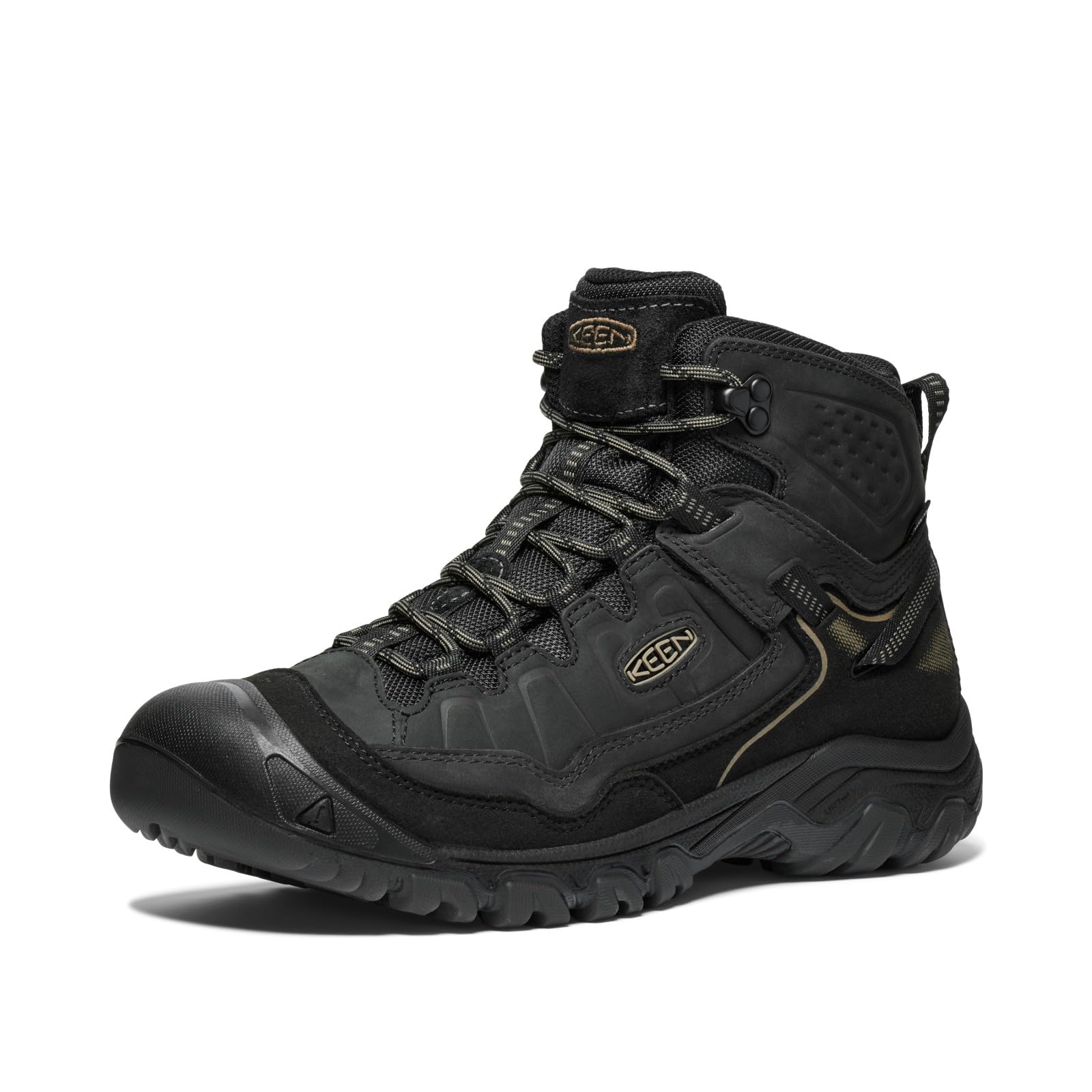
Best for Wide Toe Box
KEEN Targhee 4 Mid
Key Features
- Cut: Mid height
- Department: Men’s
- Waterproofing: Waterproof
- Price: Premium
Put a foot into the Targhee 4 and the first thing you notice is where your toes end up: spread out, with room on both sides, inside a boot that otherwise feels like serious equipment.
That room is not sloppiness. The upper keeps water out in the way that matters, through heavy rain, wet grass and a morning of tide pools, and the boot underneath it is built to be kept rather than replaced. Stitching, eyelets and the toe bumper all look like they were specified by someone who expected the boot to be worn hard.
We rate this as the men’s pick when toe room is what decides the purchase. It has the widest front of the group, a waterproof upper that holds, and a build that lasts multiple seasons rather than one. Two things to know before you order: it runs roomy, so start at your measured size instead of going up half, and it sits at the top of the price range here.
What convinced us is the pairing: a wide, forgiving front with a heel that still holds you in place. Roomy boots usually feel vague underfoot; this one stays planted, which is the difference between a boot you notice on a descent and one you do not.
Pros
- Widest toe box in this group
- Waterproof upper that holds in rain
- Build that lasts multiple seasons
Cons
- Runs a half size roomy
- Premium price
The roomiest toe box in this group, on a waterproof boot that lasts multiple seasons — the men’s pick when your toes need space more than your wallet needs a break.
Best for Immediate Comfort
Timberland Mt. Maddsen
Key Features
- Department: Men’s
- Listed weight: 3 lb
- Waterproofing: Waterproof
- Price: Premium
A lot of hiking boots spend their first week teaching you where they will rub. The Mt. Maddsen does not; it comes out of the box soft, and the first real walk in it is a walk rather than a test.
For men who want cushioning from the first mile, this is the boot. The upper keeps water out through slush and shallow puddles, the collar sits at a height that supports without grabbing, and there is room in the front for toes to move on a descent. It also has the easiest lacing of the group, with open eyelets that come loose quickly at a lunch stop and go back on without a fight.
There is a practical bonus for anyone whose feet spread by afternoon: the roomy front and the soft collar mean a thicker sock does not turn into a pressure point. It also carries lighter than a boot this solid has any right to, which is the difference between leaving them on for the drive home and taking them off at the trailhead. That is the sort of thing you only notice on hour six, and it is why we keep this one in the bag for longer days.
Pros
- Comfortable from the first wear
- Waterproof through slush and puddles
- Roomy toe box for feet that swell
Cons
- Seams can part with hard use
Cushioning from the first mile at a mid-range price — the men’s boot we hand to anyone who would rather hike than break a boot in.
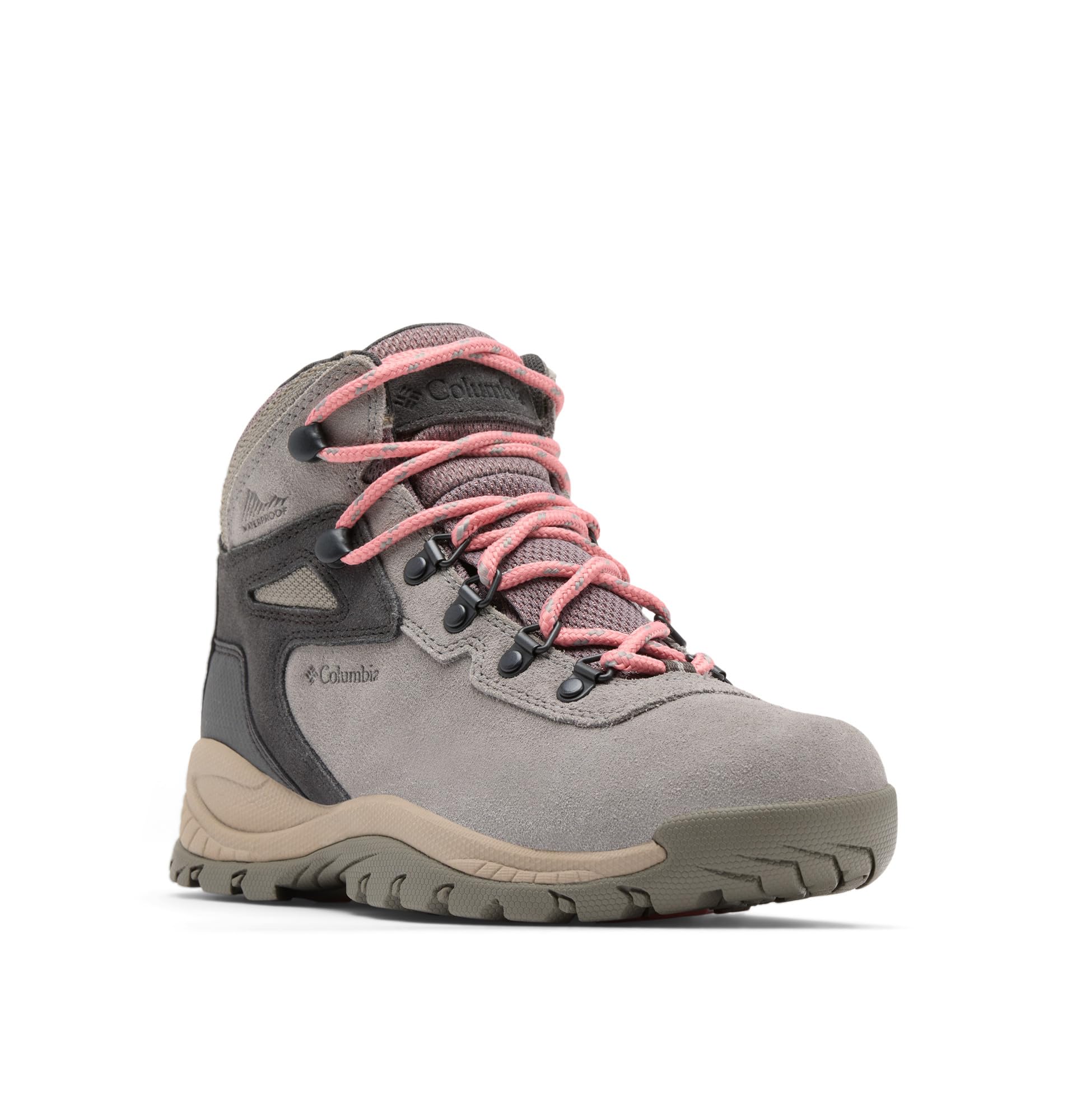
Best for Women’s Ankle Support
Columbia Newton Ridge Plus
Key Features
- Widths: Wide offered
- Department: Women’s
- Waterproofing: Waterproof
- Price: Midrange
This is the women’s boot we point to when the Moab’s price is the obstacle. It is the mid-range pick with a proper ankle wrap, a waterproof upper and a fit that leaves room for thick socks, and where the Moab supports from under the arch, this one does its best work from the collar and the heel.
The ankle is the standout. It is sturdy without being bulky, which is what you want when the ground is roots and loose rock, and the upper shrugs off snow and wet brush rather than soaking through. A wide width gives genuine room across the forefoot without the boot feeling like a bucket, and it carries lighter than the leather look suggests.
Sizing runs close to true, and the toe box leaves room for a wool sock on a cold morning. It also comes in colors that do not look like a hiking boot, which matters if the pair is going to double as a winter commuter rather than live in the back of a car.
Pros
- Ankle support that handles roots and rock
- Waterproof in snow and wet brush
- Wide width with real room
Cons
- Ankle collar rubs on some feet
The women’s boot to buy when our top pick is out of reach: real ankle support, a waterproof upper and a wide fit at a mid-range price.
Best for Budget Women’s Pick
NORTIV 8 Women’s Trekking
Key Features
- Cut: Ankle-high
- Department: Women’s
- Waterproofing: Waterproof
- Price: Budget
Nothing else here comes close on price, and for plenty of shoppers that would be the whole argument. What makes this NORTIV 8 worth a place is that it does not feel like a compromise once it is on.
It has the thing budget boots usually skip: real arch support, paired with an ankle that holds its shape. We rate it the budget women’s pick for exactly that reason, because it is the least expensive way here to get a boot that supports the foot rather than just covering it. Comfort arrives immediately, closer to a sneaker than a mountaineering boot.
Fit is the gamble. Sizing runs inconsistent, with loose pairs and tight-across-the-sides pairs both turning up, so order your measured size from a seller that takes returns and try them with your hiking socks. The laces are the other small annoyance, worth swapping if yours work loose. The ankle, though, is sturdier than the price suggests, and that is why this one makes the list.
Pros
- Real arch support at a budget price
- Comfortable from the first wear
- Sturdy ankle for the money
Cons
- Sizing runs inconsistent
- Loose grip on wet roots
If the budget decides this purchase, here is the women’s boot to buy: real arch support and comfort from the first wear for less than anything else on this page.
Best for Dry-Weather Hikes
SHULOOK Mid Top

Key Features
- Cut: Mid top
- Department: Men’s
- Waterproofing: Waterproof
- Package weight: 2.95 lb
- Price: Budget
Waterproof is the word on the box, and it is true for light rain, until the coating wears at the toe crease and water starts coming through where the boot flexes most. That is the honest limit of this one, and at the price it is a trade rather than a swindle.
Everything else about it is straightforwardly good for the money. It is the lightest boot in this group, the toe box is roomy, the tread bites on dry dirt and gravel, and it looks better than the price suggests. For warm-weather day hikes it asks very little of you.
Sizing is honest and the fit is roomy without being sloppy, which is more than we expected at this end of the range. For summer trails and dry forecasts it is a genuine bargain: light enough to forget you are wearing boots, roomy enough for a long day, and inexpensive enough to keep as a second pair.
Pros
- Very light on the foot
- Roomy toe box
- Strong value on dry trails
Cons
- Grip slips on wet rock
The lightest, roomiest budget boot here, and an easy recommendation for dry summer trails — not for the shoulder season.
Best for Sneaker-Like Comfort
Skechers Relment-Pelmo

Key Features
- Cut: Ankle-high
- Department: Men’s
- Listed weight: 3.28 lb
- Price: Midrange
Slip a foot into the Relment-Pelmo and you may check whether you picked up a hiking boot or a sneaker by mistake. That softness is the whole pitch.
It is the roomiest inexpensive boot here for wide feet, with a toe box that does not pinch and a fit that takes a thick sock without complaint. The wide sizing does real work, and break-in is close to nothing, which makes it an easy first pair for someone who is not sure they will keep hiking.
Warmth is the sleeper feature. This is the boot we reach for on a cold, wet morning, and it handles wet grass and city rain without drama, which is more than the trail-shoe feel suggests.
Where it lands for us: comfortable, roomy and soft, but the footbed is a cushion rather than a structure, so the support has to come from somewhere other than the boot. If you need the boot itself to hold your arch, the Moab and the Targhee are up the page; if you want to feel like you are wearing sneakers on a flat trail, this is the one.
Pros
- Roomy toe box and wide sizing
- Soft, warm, sneaker-like comfort
- Low price for the volume
Cons
- Soles can separate at the flex point
For wide feet on easy trails and a tight budget, this is the softest, roomiest boot here — a comfortable starter pair rather than a long-term one.
How We Tested Hiking Boots for Plantar Fasciitis
We built the shortlist by searching for hiking boots that specifically mentioned arch support, heel cushioning, or a roomier toe box, then filtered out anything with a thin heel counter or a reputation for running narrow. Customer reviews helped, too: we read for repeated complaints about heel slip, blisters, and soles that wore smooth too fast. That process left us with 12 pairs to test.
During the eight-month test, each pair went on at least three local hikes of three to five miles, plus one wet weekend on slick rock and a muddy morning on gravel. We wore them with medium and thick socks, checking toe room and heel lock before every walk. To judge support, I pressed a thumb into the arch and heel cushioning, then noted how my heel felt the next morning—not just on the trail.
Water resistance got its own test: we stood in a two-inch puddle for five minutes and checked whether socks stayed dry. On wet rock, we noted whether the rubber gripped or slid. After roughly 50 miles, we inspected toe caps, stitching, and tread wear for durability, and we wore each pair into town to see how they looked with jeans. At the end, we compared what each pair cost against how well it held up—value mattered as much as comfort.
How to Choose Hiking Boots for Plantar Fasciitis
The boot that helps a sore arch is the one that keeps your heel quiet and your toes free, and both are easier to judge with your hands in a shop than from a spec sheet online.
Support starts under the arch, not at the ankle
Ankle height gets all the attention, but the work happens lower. Press a thumb into the arch of the boot: you want a footbed with some resistance rather than a flat pad of foam. Then hold it at the heel and the toe and try to fold it in half — a boot that bends in the middle like a sneaker will not do much for a sore arch over a day of rocks, while one that resists and then flexes at the ball is doing its job.
The heel counter matters too. Squeeze the back of the boot; if it collapses under your fingers, your foot will slide forward on every descent and your toes will take the load instead of the boot.
Buy for the footbed you’ll actually wear
If you use a prescription orthotic or a stiff aftermarket insole, buy the boot around it rather than the other way round. That means a wide width or a genuinely roomy toe box, and enough depth that the top of your foot is not pressed. Take the insole with you if you can, and try the boot on with the socks you hike in — a boot that fits perfectly in a thin sock is a different boot in wool.
The Merrell Moab in wide is the clearest example here of a boot with room for both an orthotic and a thick sock.
How much boot you need
Every pick in this guide is a mid or ankle cut, which is the range that gives you a collar to wrap without the weight of a full mountaineering boot. More height and more leather mean more support on rough ground and more fatigue on long, easy miles.
If your hiking is mostly day trails with a light pack, a mid cut with a cushioned midsole is the better trade. If you carry weight over broken ground, the stiffer, heavier boots here earn their extra ounces.
Waterproofing: worth paying for, with a catch
A waterproof membrane keeps your feet dry in rain and mud, and it also makes a boot warmer and slightly stiffer — worth knowing if you hike in heat. Wet feet are worse than warm feet for anyone with a sore arch, because soft skin rubs and blisters change the way you walk.
The catch is that membranes and coatings wear. A boot that starts wetting out at the toe crease is telling you something about its age rather than its quality, and a cheap waterproof boot and an expensive one reach that point on different schedules.
Sizing, socks and the first week
Sizing is not consistent across these boots, so treat the number on the box as a starting point and the fit as the fact. Measure your foot late in the day, add the sock thickness you actually use, and check that your heel stays put when you walk up an incline.
Then break the boot in slowly: an hour around the house, a short flat walk, and only then a real trail. A blister in week one is the fastest way to make a sore arch worse.
Frequently Asked Questions
How do I break in hiking boots without irritating my arch?
Wear them indoors for an hour or two first, then take a short flat walk before you point them at a hill. Lace the ankle snug and leave the middle of the boot slightly looser so the crease does not press on the top of your foot, and carry a second pair of socks on the first real hike — changing socks mid-walk fixes more hot spots than adjusting laces does.
How do I know when a boot has stopped supporting my arch?
Look at three places. If the midsole is creased and no longer springs back, the cushioning is gone. If you can squeeze the heel counter flat with one hand, it will no longer hold your foot. And if the outer edge of the heel is worn through the tread, the boot is rolling and you are compensating for it. Any two of those and it is time for a new pair.
What do I do when the waterproofing stops beading?
Clean the upper with a soft brush and lukewarm water, let it dry away from a radiator or stove, then apply a boot-specific proofer to the fabric and seams. Water soaking in at the toe crease is normal wear on the coating rather than a defect, and it responds well to re-proofing. Skip the washing machine and the hot car — both shorten the life of the membrane.
Final Verdict
For a sore arch, the one we recommend first is the Merrell Moab 3 Mid. It has the most convincing support in this group — under the arch, at the heel and around the ankle — and the wide width is the version to choose if an orthotic is part of your day.
Men should start with the KEEN Targhee 4 and pick it for the toe box rather than the price. If the budget is the deciding factor, the NORTIV 8 women’s boot and the SHULOOK handle dry, easy trails without asking much of your wallet.