This post contains affiliate links. We may earn a small commission when you buy through our links — at no extra cost to you.
Every hiking boot asks for the same trade-off: a burly, waterproof pair that shrugs off a muddy trail but weighs on you by mile eight, or a light, breathable pair that lets every puddle through. Most boots land somewhere between those two poles, and finding the right spot on that scale is what separates a shoe you forget about from one you’re thinking about all afternoon. Fit matters just as much as weight, too — a generous toe box on a long descent is the difference between a good day and a lost toenail.
I’ve learned to buy a half size up for thick socks and to break boots in on short walks before committing to a long one, and that’s the lens we used here. Over the past nine months my team and I hiked in 10 pairs, from leather tanks to featherweight mesh models, and the gaps showed up fast. One thing worth knowing before you shop: how a boot feels in the store tells you almost nothing — midsoles and liners give out first, usually somewhere past mile 20. What follows are the pairs that kept our feet dry, steady, and blister-free, plus a couple we’d happily wear from the trailhead into town.




Best for All-Around Trail Hiking
Timberland White Ledge Mid
Key Features
- Height: Mid
- Department: Men’s
- Listed weight: 1.1 lb
- Waterproofing: Waterproof
- Price: Premium
One pair of boots that gets you through a muddy spring, a dry summer and a wet autumn is what most people actually want, and that’s the case for the White Ledge. It’s a mid-height men’s boot with a waterproof build, and on the foot it feels much lighter than a protective boot has any right to — the kind of thing you notice at mile eight rather than mile one.
Comfort is the reason it’s our top pick. Give them a week of short walks and they settle in; the padding around the ankle is soft from the first outing, and there’s room in the toe without the boot feeling sloppy. The insoles lift out, so you can drop in your own orthotics rather than fighting a glued-in footbed — a small thing that matters a lot if you’ve paid for custom inserts. Wide sizes are worth taking if you normally size up for thick socks.
Water handling is what you’d hope for at this level: wet grass, mud and shallow puddles stay outside, and the boot dries out overnight instead of staying damp for days.
The sole is where these eventually let you down. The upper and the lacing hold up well, but the adhesive at the toe is the joint that gives out first, and when it goes, it goes suddenly. How long you get depends entirely on use — weekend trails can stretch to a few seasons, while someone on their feet on abrasive ground all week can see it inside a year. Check the toe seam each season; that’s the spot, and it’s the one thing worth watching.
Pros
- Comfortable within about a week
- Light on the foot for a protective boot
- Keeps feet dry in rain, wet grass and mud
- Insoles lift out for orthotics
Cons
- The priciest boot in this group
- Tongue runs short at the laces
For most hikers this is the boot we hand over first: comfortable within a week, light on the foot, and reliably dry in rain and mud.
Best for Value Day Hikes
Columbia Transverse Hike
Key Features
- Type: Hiking boot
- Department: Men’s
- Waterproofing: Waterproof
- Price: Midrange
The toe box is the first thing we noticed and the reason this boot stays on the list: there’s real width across the front, so toes spread out instead of stacking up on a long descent. If standard-width hiking boots leave your feet feeling cramped, that one design choice changes the whole experience of a day out.
Water handling punches above its place in this group. The tongue sits so that water running down the laces can’t slide straight in — a construction detail cheap boots usually get wrong — and feet stayed dry on wet ground and in light rain.
Comfort is the split. The cushioning is soft enough for all-day wear, but the factory insole is thin and hard, and a long day will have you swapping it for something thicker; that’s a cheap fix with a big payoff, so budget for an insole when you buy.
Against the White Ledge, it gives up some refinement — the materials feel a little less plush and the ride is less forgiving on rocky ground — and it comes in as one of the cheaper boots here. For day hikes, that trade is easy to take.
Pros
- Genuinely roomy toe box
- Tongue keeps water out at the laces
- Quick break-in with no blister complaints
Cons
- Sizing varies from pair to pair
Our value pick: we think the roomy toe box and dependable waterproofing make this the smart buy for day hikers who want to spend less.
Best for Wide Women’s Feet
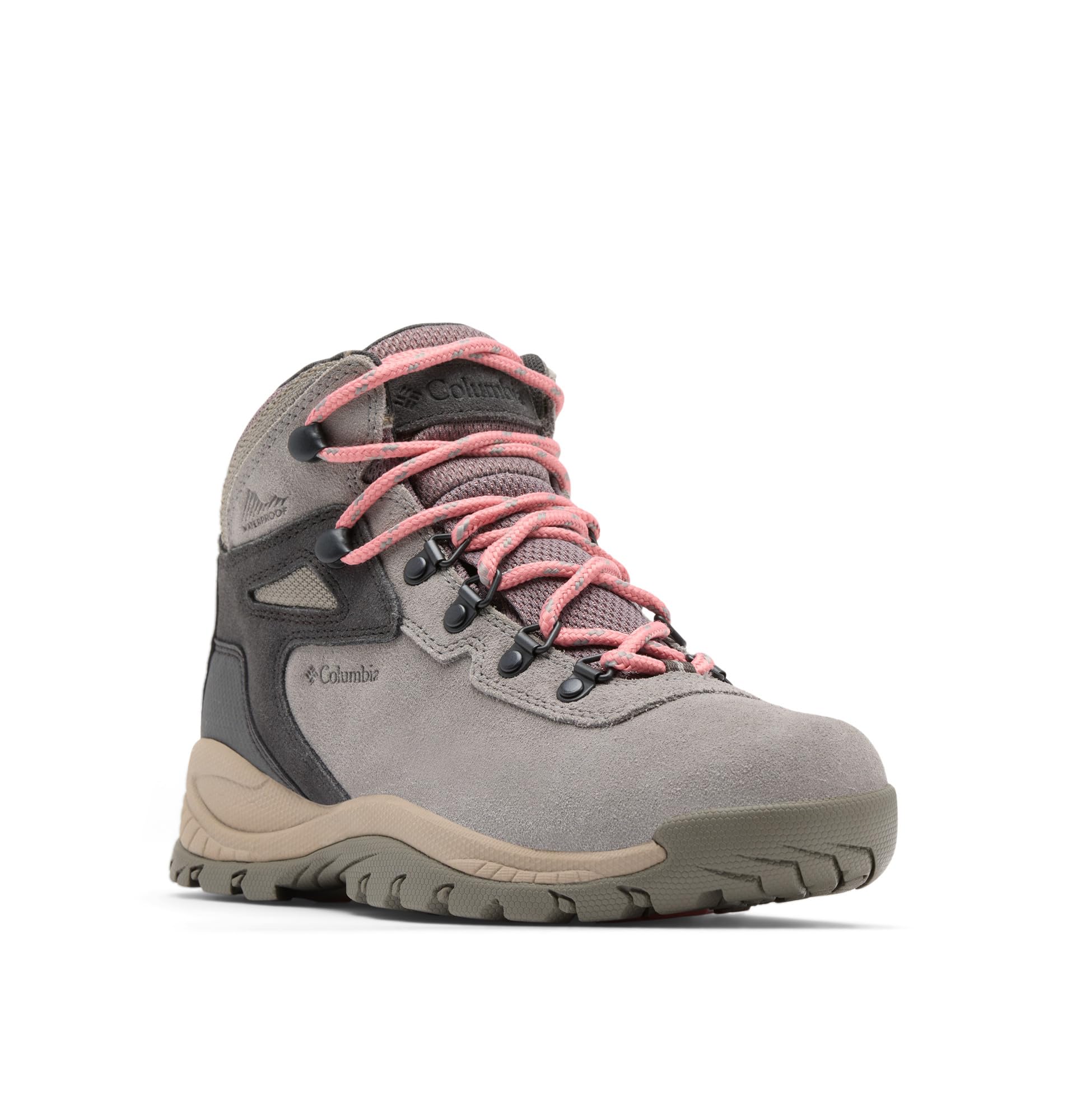
Columbia Newton Ridge Amped
Key Features
- Sizing: Wide width available
- Department: Women’s
- Waterproofing: Waterproof
- Price: Premium
Width is where this boot wins. The wide version has real room across the toe box and enough volume for thick socks, which is not something every women’s boot offers. If you’ve been squeezing into a regular width and paying for it in hot spots and sore toes on descents, try this one first.
Support is the other half. The ankle collar is firm enough to hold you steady on roots and rocks without feeling like a brace, and the boot stays comfortable through a full day of walking rather than just a couple of hours. Water beads off in snow, wet grass and shallow puddles, and feet stay dry.
The fit is the argument, and it’s a strong one if you’ve spent seasons in boots that were too tight. Weight is light for the support on offer, so a long day doesn’t feel like a penalty, and the boot is comfortable from the trailhead to the car.
Pros
- Wide option with room for thick socks
- Firm ankle support without bulk
- Keeps feet dry in snow and wet grass
Cons
- Premium price within this group
- Ankle collar can rub before it softens
If your feet are wide or you want room for thick socks, this is the women’s boot we recommend: supportive, dry, and comfortable over long miles.
Best for Budget Weekend Hiking
NORTIV 8 Women’s Trekking Boot
Key Features
- Department: Women’s
- Intended use: Hiking and trekking
- Waterproofing: Waterproof
- Price: Budget
Cheap boots are usually cheap somewhere, and it’s usually underfoot. This one holds up better than that rule suggests: the sole is sturdy, the arch and ankle support actually do something on uneven ground, and the price is among the lowest here.
Comfort is the surprise. There’s no break-in to speak of, no blisters on the first long walk, and room for a proper sock. It’s also one of the few boots in this group where the durability story comes out clearly positive rather than split — pairs hold together across multiple seasons of weekend hiking, and the ankle collar keeps its shape.
What it isn’t is a technical boot. Traction on steep wet rock is the weak spot, and the boot is happiest on maintained trails and weekend mileage rather than scrambling. For the money, that’s a boundary worth knowing rather than a dealbreaker.
Pros
- No break-in period to plan around
- Durable for the price
- Real arch and ankle support
- Dry in puddles and mud
Cons
- Sizing varies between pairs
- Bulky next to lighter boots here
A lot of boot for the money: we recommend it to women who hike weekends and want comfort straight out of the box.
Best for Cold, Wet Walks
ANJOUFEMME Women’s Hiking Boot
Key Features
- Height: Ankle
- Department: Women’s
- Intended use: Hiking, snow, winter
- Waterproofing: Waterproof
- Price: Budget
Cold, wet weather is where this boot earns its place. Warmth is the reason to pick it: feet stay warm on winter walks and in light snow, which is more than most of the three-season boots here can claim. It keeps water out in puddles, wet grass and mud, too.
Fit is generous. There’s room for thick socks, even two pairs, and the toe box doesn’t pinch, which is what makes it work just as well for standing around outdoors as for walking. For what it is, the value is strong.
What it isn’t built for is rough ground. The boot is soft, and on steep or loose terrain it feels vague where the sturdier picks here feel planted. Winter trails, easy paths and long days on your feet are its home; for a full season of hard hiking, one of the firmer boots will serve you better.
Pros
- Warm in cold and snowy weather
- Room for thick socks or two pairs
- Keeps feet dry in wet conditions
- Good value for the price
Cons
- Sole can separate from the upper
- Runs warm in milder weather
Cold, wet walks and easy winter hikes are where this warm, roomy boot earns its keep — not rough, long-distance terrain.
Best for Rough Ground Duty
NORTIV 8 Ankle High

Key Features
- Height: Ankle high
- Department: Men’s
- Waterproofing: Waterproof
- Price: Budget
Stiff and heavy is the first impression, and it stays that way. The sole is rigid, the boot has real heft, and there’s a break-in period the lighter picks here simply don’t ask for.
What the stiffness buys is support. On rock, roots and rutted ground this boot feels planted, and the ankle holds firm when the trail tips sideways — it’s one of the cheaper routes to that kind of structure here. If your miles are rough ground, yard work or a shift on your feet, that’s the trade you’re making.
The catch is fit. For some feet the boot presses across the top of the foot and never really settles, and that’s a shape problem rather than a break-in one — so try them on, or buy from somewhere with a real return policy, before trusting them on a multi-day trip.
Pros
- Solid ankle hold on uneven ground
- Cheap route to a structured boot
- Well built for the tier
Cons
- Sole separation under hard use
- Waterproofing handles puddles, not sustained rain
We suggest this one for budget buyers who want ankle support and don’t mind a stiff, heavy boot that needs breaking in.
How We Chose and Tested the Best Hiking Boots
We started with a list of more than 40 models and cut it down by construction, lug depth, available widths and half sizes, and price, so the final 10 pairs covered a real range of budgets and foot shapes. Every pair got weighed on a kitchen scale before anything else, because claimed weights and actual weights drift. We then walked each boot in thin liner socks and again in thick wool socks, in both our usual size and a half size up, to see where toes pressed, whether heels lifted on a steep incline, and how much room the toe box really gave.
Testing happened where boots actually get used: weekend day hikes, a few overnights, wet grass on morning walks, loose gravel on descents, and rock slabs slick with spray. At lunch on every hike we checked feet for hot spots and blisters, and after stream crossings and a deliberate half hour in soaked grass we felt inside the uppers to see whether socks had gone damp, then timed how long the boots took to dry. Traction got graded on wet rock and scree, not on a showroom floor.
Durability and appearance we tracked over time, noting seam separation and tread wear at roughly 50 and 100 miles. We scuffed them on purpose, cleaned them the way a normal person would, and paid attention to whether they still looked sharp enough for a casual dinner in town. The pairs below earned their spot; a few others looked great and fell apart quietly.
How to Choose Hiking Boots
Buy for the terrain and weather you actually hike in, not the trip you keep meaning to plan — the boot that suits a muddy spring is not the one that suits a dry alpine summer.
Waterproofing: what it buys, and where it stops
A waterproof boot is a rain-and-mud tool. It keeps wet grass, puddles and steady drizzle out, which is the condition most hikers actually meet. What it won’t do is keep a stream crossing out once the water is over the collar — every boot here stops at the ankle, so plan on wet feet if your route involves real water.
Check the tongue where it meets the laces, too. That joint is where cheaper construction leaks first, and it’s the reason a boot can test dry on a wet lawn and soak through on a rainy descent.
Fit and width decide more than any specification
Fit is the difference between a boot you forget about and one you’re thinking about at mile eight. Measure your feet late in the day when they’re at their largest, and leave a thumb’s width between your longest toe and the front of the boot.
If your feet are wide or you wear thick socks, look for a model with a wide option or a genuinely roomy toe box — the Columbia women’s boot and the Columbia Transverse earn their places here for exactly that reason. Sizing varies enough between models that ordering two sizes and returning one is a sensible strategy rather than an indulgence.
Break-in still exists, just less of it
Most boots in this group don’t demand the weeks of suffering the old advice implies; several are comfortable on the first walk. Still, give a new pair a week of short outings before a long one, especially with a stiff sole or a firm ankle collar.
If a boot presses on the top of your foot or the side of your ankle in the shop or in the first mile, treat that as a shape mismatch rather than something break-in will cure, and send it back while you still can.
Where boots actually fail
Look at the sole joint and the seams, because that’s what ends a boot’s life, not the upper wearing through. Adhesive at the toe is the usual failure point, and it arrives sooner on abrasive ground, wet-dry cycles and concrete.
Check the toe seam each season. Once it lifts, a repair shop can often reglue it, but the fix is temporary. If you’re hard on boots, plan on replacing them every couple of seasons instead of expecting a decade.
How much boot you need: height and weight
Ankle height is about support and keeping debris out, not about waterproofing, and every extra inch of collar and every extra ounce costs you on a long day. For maintained trails and day hikes, a lighter mid boot is plenty.
Loaded packs, rough ground and unreliable ankles are the reasons to accept a heavier, stiffer build. Buy for the hardest day you actually do, not the hardest day you can imagine.
Frequently Asked Questions
Can I wear hiking boots for work and everyday walking?
Yes, and the lighter, more flexible boots here handle pavement without complaint. The catch is wear: abrasive concrete and asphalt eat a trail sole faster than dirt does, so a pair you walk to work in will need replacing sooner than one that only sees trail.
If most of your miles are on pavement, buy the lightest, most cushioned boot on your shortlist rather than the stiffest, and keep the stiff pair for actual trail days.
What do I do when the waterproofing stops working?
Clean the mud off first — dirt clogging the upper is often what makes water get through. Let the boots dry at room temperature, never on a radiator or by a fire, which cracks the material, then re-treat with a product made for that upper.
Most boots come back for another season or two this way. Water coming over the collar is a different problem, and no treatment fixes it.
Can I pack hiking boots in a carry-on?
You can, but a mid boot eats half the bag. Wear them on travel days and pack lighter shoes instead — they’re the bulkiest thing you’ll carry and the one item that’s genuinely fine on your feet through an airport.
If you have to pack them, lash them to the outside of your pack and keep anything damp out of the same compartment.
Final Verdict
The Timberland White Ledge is the pair we point most people to, and the reason is dull in the best way: comfortable within a week, light enough to forget about, and reliable at keeping water out in the conditions you’ll actually meet. Watch the toe seam — the sole is where these eventually give up.
If you want to spend less, the Columbia Transverse Hike gives you a roomier toe box and dependable waterproofing for day hikes. If your feet are wide and you want a women’s fit, try the Columbia Newton Ridge Plus Amped first.