This post contains affiliate links. We may earn a small commission when you buy through our links — at no extra cost to you.
There’s a special misery that comes from stepping into a puddle and feeling cold water seep through your boot. The right pair of rain boots solves that—and a lot more. They keep your feet dry on commutes, comfortable on long dog walks, and presentable enough for the office or a casual dinner. But the wrong pair can leave you with blisters, sweaty feet, or a leaky seam by the second storm.
I’ve tested plenty of rain boots over the years, and my team and I just spent six months wearing 14 pairs through muddy park paths, wet commutes, and surprise downpours. We paid close attention to water resistance, comfort, fit, and sizing—plus how they looked with real outfits and how well they held up. One thing I’ve learned: a rain boot’s first wear tells you very little; you need a few good storms to know if the seams will hold and the sole will stay comfortable. The ones that made our list passed every test—you’ll find them below.
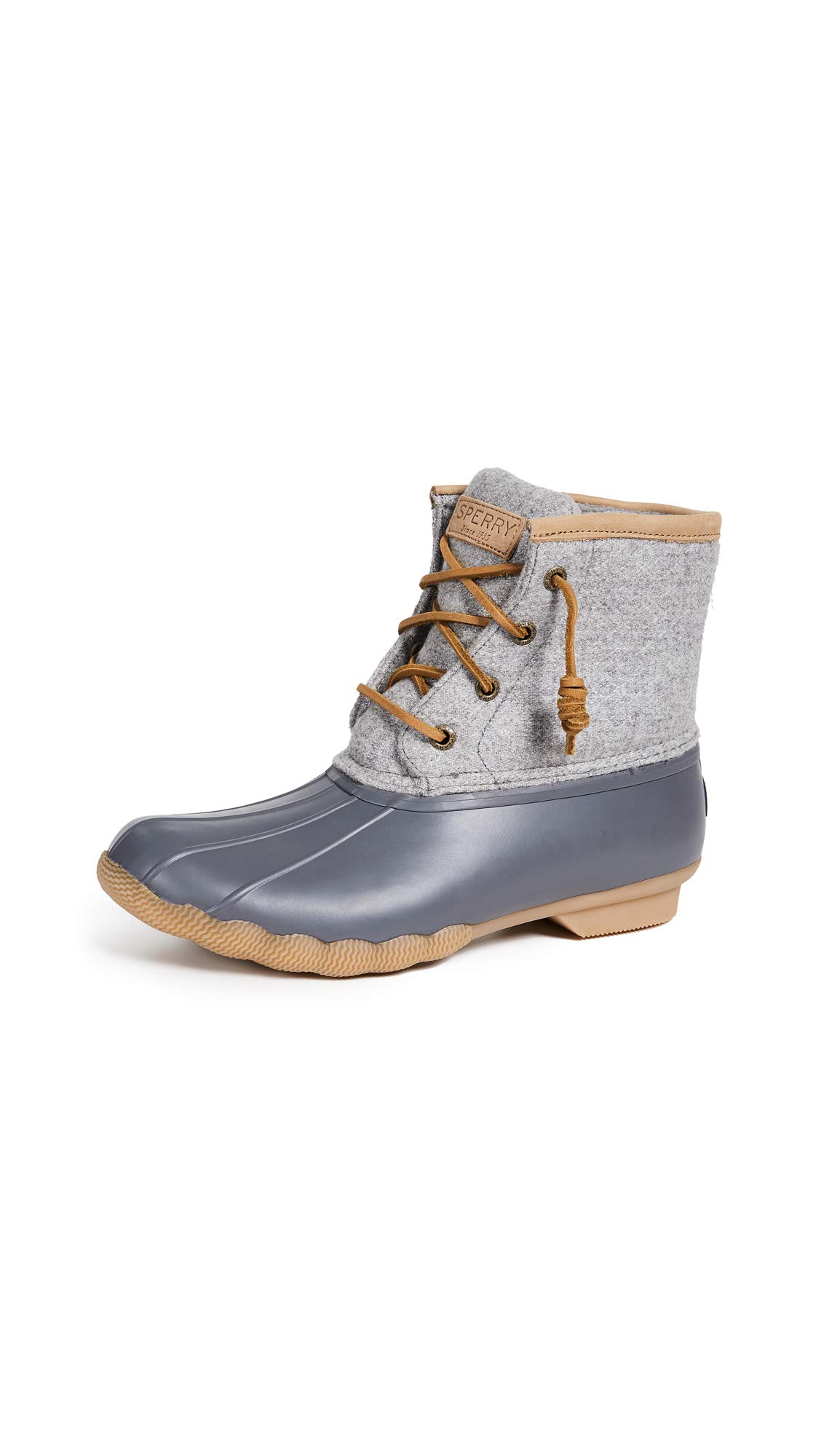


Best for Everyday Wet Weather
Sperry Saltwater
Key Features
- Fit: Runs about half a size large
- Lining: Fleece
- Waterproofing: Waterproof
- Price: Midrange
A long day on our feet is what settled this one. The Saltwater stayed comfortable for hours of walking — light, flexible, nothing rubbing at the heel — and that combination is rarer in a rain boot than the category’s marketing suggests. It is listed as a waterproof seasonal boot, and wet grass, slush and shallow puddles stayed outside.
Cold, damp weather is where it pulls ahead of the plain rubber boots here. The fleece lining takes the sting out of a raw morning, and there is room inside for wool socks, which is the difference between a boot you wear through a wet winter and one you wear for a wet week. It also looks tidy enough for a city commute, so you are not clomping into the office in something that reads as garden gear.
Sizing is the thing to get right. These run about half a size large and the fit is on the wide side, so if you are between sizes, or plan to wear them over tights rather than thick socks, order down. Ours needed that adjustment before they stopped feeling like someone else’s boots.
Set beside the Asgard Chelsea further down, this is the softer, more padded boot — the one you can walk a few miles in without thinking about your feet. That is the trade we made, and it is why these sit by the door rather than in the closet.
Pros
- Comfortable for hours of walking
- Fleece lining handles cold, wet mornings
- Keeps feet dry in rain, slush and puddles
- Smart enough for a commute
Cons
- Scuffs show on the rubber early
If you want one pair for a wet commute, a cold drizzle and a long walk without complaint, this is the boot we point you to — order half a size down.
Best for City Errands
Asgard Ankle Chelsea
Key Features
- Fit: Roomy enough for thick socks
- Style: Ankle Chelsea
- Waterproofing: Waterproof
- Price: Budget
What the price tier buys is the whole argument here. This is a waterproof ankle boot that happens to look like a Chelsea: it wipes clean, pulls on without hands and shrugs off a wet walk to the shops. That is a lot of boot for the money, and it is why we keep recommending it to people who want rain boots and nothing more complicated.
The upper gives more than stiff rubber does, which is why it works on a wide foot without turning sloppy once it is on. It holds the foot rather than letting it slide around inside, and there is space for a thick sock in January without the boot feeling like it is swallowing your ankle.
The wide opening is the detail to know about. It makes the boot easy to pull on and easy to tuck jeans into, but rain running down a bare leg or slick leggings can find its way inside. Wear trousers over the shaft in a proper downpour and it stops mattering — otherwise there is very little to argue with here.
Pros
- Genuinely waterproof for short wet trips
- Room for thick socks and wide feet
- Slips on and off without hands
- Looks good enough to wear out
Cons
- Lining can bunch at the heel over time
Our budget pick: a waterproof Chelsea that slips on in a second and suits a wide foot — best for errands, school runs and short wet walks.
Best for Slick, Muddy Ground
XTRATUF Ankle Deck Boot
Key Features
- Fit: Generous; size down
- Sole: Non-slip
- Style: Ankle deck boot
- Water resistance: Waterproof
- Price: Premium
The deck-boot shape explains most of it: a low, wide slip-on with a flat, patterned sole, built to be hosed off rather than polished. It is the least precious boot here and the one that looks most at home beside a hose or a bucket.
Grip is why it earns a place. The sole held on wet paving, a slimy garden path and slick boards, which is more than we can say for the smooth-soled pairs in this group — and it is the sort of thing you only notice on the day it matters. If your rain arrives with mud, algae or a boat attached, start here.
Underfoot support is modest, so if you are standing all day, drop in a thin insole; that single change turns them into an eight-hour boot. Sizing runs generous, so go down a size, and the low shaft means a deep puddle will find your socks — that is the trade for all that convenience.
Pros
- Sure-footed on wet, slick surfaces
- Easy to slip on and off
- Keeps feet dry in rain and boat use
- Hoses clean after mud and yard work
Cons
- Premium price for a low-cut boot
We keep these for wet, slippery ground: a low deck boot with the surest footing in this group, at the top of the price range.
Best for Deep Puddles, Mud
HISEA Mid Calf Rain Boot
Key Features
- Fit: Snug through calf and toe box
- Shaft height: Mid-calf
- Water resistance: Waterproof
- Price: Budget
Depth is the whole argument. A mid-calf shaft keeps splash, mud and the first few inches of a puddle away from your socks in a way no ankle boot manages, and these rinse clean under a tap in seconds. For a wet yard, a vegetable bed or a dog walk across a field, that is the difference between plotting a route and just walking.
They are also easy to get on and off, with an opening wide enough to tuck trousers into without a fight. That sounds like a small thing until you are in and out of the house ten times on a wet Saturday, and it is the reason these stay by the door rather than at the back of the shed.
The fit is where to be careful. The calf and toe box run snug, so if you are between sizes or have a wide foot, go up — the same snugness is why they stay put in deep mud instead of being pulled off by it.
Pros
- Mid-calf coverage for mud and splash
- Rinses clean after yard work
- Wide opening takes trousers easily
- Very little money for the coverage
Cons
- Snug through the calf and toe box
- Insole wears through with daily use
For mud and puddles deeper than your ankle, we pull these on: a hose-off mid-calf boot that asks little of the budget.
Best for Quick Trips Out
Hunter Play Short
Key Features
- Style: Short rain boot
- Sizing: Whole sizes only
- Waterproofing: Waterproof
- Price: Premium
The shaft stops at the ankle, and that is the point rather than a compromise. A short boot is what you reach for when you are dashing to the car, taking the bins out or walking the last block to the office — nothing to fight with and nothing to tuck.
What we appreciated most is how little ceremony there is: step in, step out, no hands, no leaning against the wall. It is also the best-looking boot in this group, in the plain-wellington way — clean lines, a matte finish and nothing shouting for attention. Worn with jeans or a skirt, it reads as a choice rather than a chore.
Treat the short shaft as a limit rather than a flaw: a deep puddle comes over the top, and in heavy rain your trousers go over the boot rather than into it. Everything else feels properly made — thick shell, flat stable sole, a finish that has stayed clean.
Pros
- Hands-free on and off
- Best-looking boot in this group
- Keeps feet dry on wet days
- Comfortable without breaking in
Cons
- Premium price for a short boot
- Whole sizes only, so fit is a compromise
A short Hunter that goes on and off hands-free and looks the part — worth it if you want the brand and do not need the height.
Best for Cold Rain
Chooka Delridge Chelsea

Key Features
- Style: Ankle Chelsea
- Lining: Faux fur
- Waterproofing: Waterproof
- Price: Budget
Faux fur up the ankle changes what a rain boot is for. On a raw morning these are the pair that does not make you wince, and the warmth stretches the useful season well into winter — we wore ours through the sort of wet cold that makes unlined rubber feel like a punishment.
The hands-free entry is the second thing we liked. The top is wide and the tabs are generous, so they go on standing up and come off with a heel. Long days are realistic, too: the lining is soft against the ankle and nothing pinches on a walk across town.
Where we place them is a winter boot that tolerates rain rather than a rain boot that tolerates cold — errands, the dog, the commute on a foul morning, not wading. That is a narrower job than most boots here take on, and in a cold climate it is the job that matters.
Pros
- Warm in cold, wet weather
- Slips on and off without hands
- Comfortable for a long day on foot
- Lots of boot for the lowest price tier
Cons
- Lining is too warm for muggy rain
- Runs small for some foot shapes
The warmest boot for the money here: a plush-lined Chelsea that slips on hands-free, as long as you save it for cold, drizzly days.
Best for Colorful Yard Work
Fubotao Mid Calf Rain Boot

Key Features
- Sole: Anti-slip
- Style: Mid-calf rain boot
- Water resistance: Waterproof
- Price: Budget
Yellow, pink, red — these are the boots you buy because a wet week is depressing and a bright boot is not. The finish is matte rather than shiny and the buckles at the side give them some shape, so they read as cheerful rather than as a novelty.
What surprised us is how flexible they are. The sole bends with your foot instead of clomping, and they are light enough to wear for a couple of hours without thinking about them. They also come off without sitting down, which matters more than it sounds when you are in and out of a muddy garden.
Think of them as a garden and doorstep boot rather than a walking boot: an hour of weeding, a wet trip to the bin, hosing down the car. That is a modest job description, and they do it with more charm than anything else here.
Pros
- Bright, cheerful colours
- Flexible sole that bends with your foot
- Slips off without sitting down
- Waterproof for splash and wet ground
Cons
- No arch support or cushioned footbed
- Calf runs narrow for wider legs
The fun pair: bright, light and easy to kick off, which is why they live by the back door for wet yard work and grey days.
How We Tested the Best Rain Boots for Women
To build our shortlist, we started with the most popular and highest-rated rain boots for women from brands we trust, then filtered by price, available sizes, and height so we had a mix of ankle and knee-high styles. We also made sure to include options for wide calves and narrow feet. That left us with 14 pairs, which we tested over six months.
We wore each pair through real rainy days: walking the dog on muddy park paths, commuting on wet sidewalks and damp train platforms, and running errands in everything from a light drizzle to a downpour. We also stood in a few inches of water for five minutes, then walked through soaked grass, and checked our socks afterward for any damp spots. Comfort was judged on full days of wear—we noted where boots rubbed, whether the arch support held up after hours on our feet, and how easy they were to pull on and off.
Fit and size got their own attention: we tried each pair with thick wool socks and thin liner socks, measured calf width against our own legs, and compared the brand’s sizing chart to how the boots actually felt. Warmth was tested on chilly 40-degree mornings and in warmer showers, noting whether feet stayed cozy without overheating indoors. We also checked how stiff the soles were out of the box and whether they loosened up after a week.
Durability came down to months of use—we looked for cracked rubber, worn treads, and seams that started to separate. Appearance mattered too: we wore them with jeans, leggings, and dresses to see which pairs looked intentional rather than clunky. Finally, we weighed each pair’s price against its construction and comfort to judge value. The boots that scored highest kept our feet dry, felt good mile after mile, and looked good enough to wear beyond a muddy trail.
How to Choose Women’s Rain Boots
Start with the water you actually walk through, then work back to height, fit and lining — the boot that gets you to the office dry is not the one that survives a muddy yard.
Match the shaft to the water
An ankle or short boot handles pavement, splash and wet grass; a mid-calf boot is what you want for mud, puddles and yard work. Height has a trap built in: a shaft only helps up to its own top, so a mid-calf boot fills from above in a puddle past your calf, and that is usually the moment someone decides rain boots do not work. Match the boot to the deepest water you routinely walk through, not the deepest you can imagine.
Get the fit right, including the calf
Fit is the most divided subject in this category, and most of it comes down to two things: boots that run large, and calves that do not match the shaft. Decide the sock first — thin for summer showers, wool for winter — then size around it. Half sizes are scarce, and the Hunter Play comes in whole sizes only, so a between-sizes buyer has to choose.
If you have a wide calf, measure the widest part before ordering and favour a boot with a generous opening or a pull tab at the back. A boot you have to wrestle on stays in the closet, however waterproof it is.
Soles: pavement, mud and slick docks
A smooth rubber sole is fine on wet pavement and poor on a wet dock. If your rain comes with mud, algae or boat decks, look for a flat, patterned sole with real grip; that is exactly what the deck-boot shape is for. Cushioning is the other half of the decision. A flexible sole is pleasant for a short walk, but if you are on your feet for miles, a thin insole added to a cheap boot often does more than paying extra for padding.
Lined or unlined
A fleece or faux-fur lining turns a cold, wet morning into a comfortable one, and both lined boots in this group earn their place in winter. The cost is range: a warm boot in mild, muggy rain becomes a sweatbox, and sweaty feet inside rubber turn cold the moment you stop moving. If your rain is mostly warm, buy unlined and let your socks do the insulating — wool stays warm when damp, cotton does not.
Frequently Asked Questions
Are rain boots safe to drive in?
Thick soles and stiff shafts dull the feel of the pedals, so a tall boot is the wrong thing to wear behind the wheel for long. Drive in normal shoes and change at the other end, or keep a low, flexible pair for short trips — the Fubotao’s sole bends enough to work the pedals properly.
How do I stop rubber boots from smelling?
Rinse the inside with cool water, dry them upside down and out of direct sun, and never put them away damp. Wear wool or synthetic socks rather than cotton, which holds sweat against the skin. A spoonful of baking soda left in each boot overnight handles the rest.
Can I wear rain boots for hiking?
On a flat, wet towpath or a short muddy trail, yes. On anything rocky or steep, no — rain boots have no ankle support, and their soles are shaped for pavement and wet decks rather than loose ground. If the route climbs, carry light shoes and change.
Final Verdict
Buy the Sperry Saltwater if you want one pair that covers a wet commute, a cold drizzle and a long walk — it is the most comfortable boot in this group, and the fleece lining earns its keep from autumn into early spring. If the budget is the binding constraint, the Asgard Chelsea does the same job for short trips for a great deal less.
Need height for mud? HISEA. Need grip on a wet dock or a slimy path? XTRATUF. If you only ever dash to the car, the short Hunter Play will do it with less boot to argue with.