This post contains affiliate links. We may earn a small commission when you buy through our links — at no extra cost to you.
A hiking boot can feel wonderful on a carpeted shop floor and turn on you at mile six, when the trail tilts uphill and your heel starts to lift. I’ve spent a hike doing arithmetic on how far back to the car while every step announced a new hot spot, and I’d rather not repeat it. What you want is a boot that stays comfortable, keeps water out, and has enough underfoot to handle rock without feeling like a cast.
Over six months my team and I hiked, scrambled, and walked the dog in twelve pairs of women’s boots, from light trail shoes to stiff leather mountaineers. Differences showed up fast, mostly in fit and arch support, where a half size or a flatter last changes everything. Here’s what first-timers get wrong: boots break in around the volume of your foot but never get longer, so size for your longest toe, not for extra socks. We watched price too, since a boot that costs twice as much isn’t twice the boot. The picks below are the ones we kept reaching for.



Best for All-Round Hiking
Merrell Moab 3 Mid Waterproof
Key Features
- Cut: Mid
- Listed weight: 1.5 lb
- Waterproofing: Waterproof
- Price: Premium
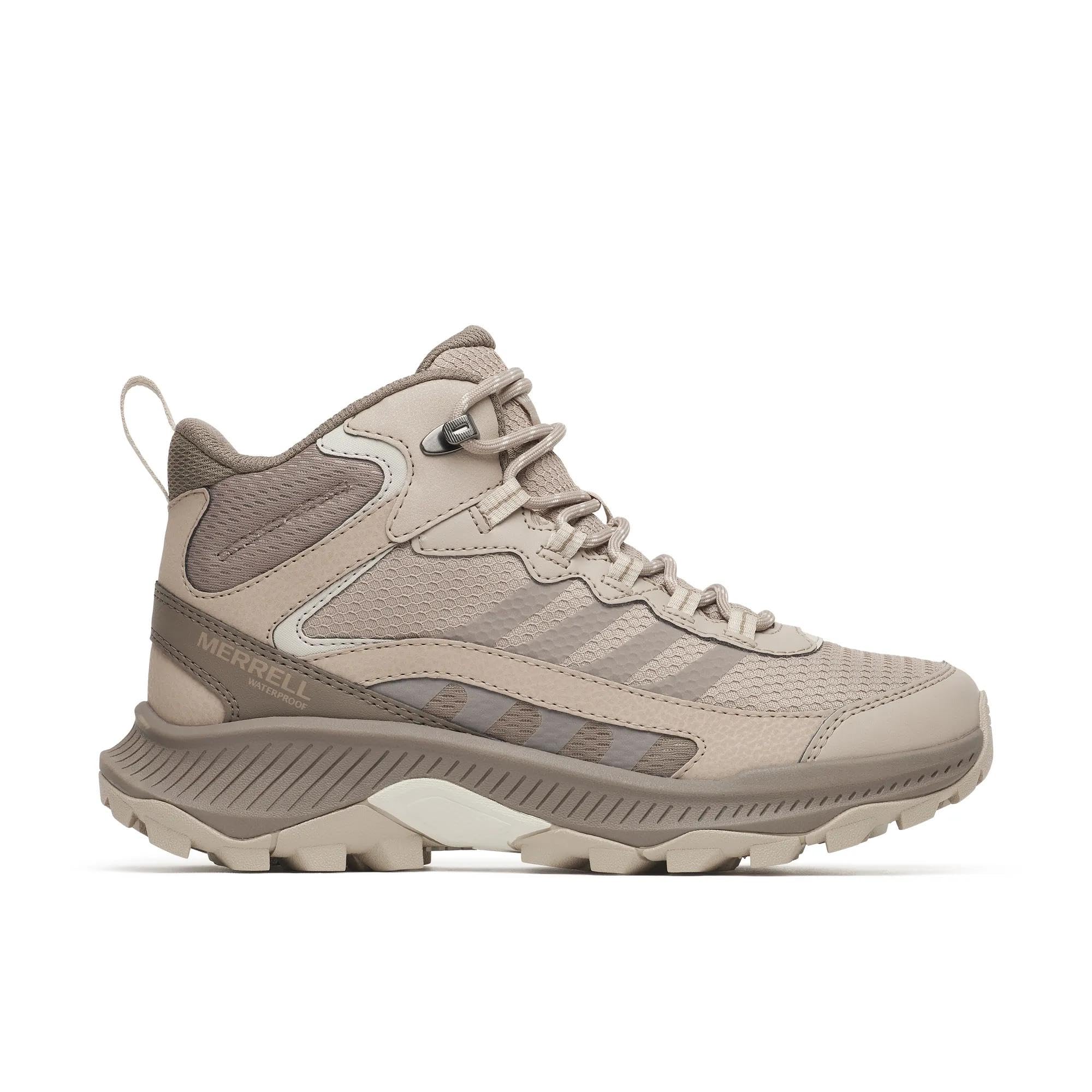
Every boot in this guide gets measured against the Moab 3, which says a lot about a mid-cut waterproof boot that never tries to be the lightest, the cheapest or the most technical thing on the shelf. The listing puts it at 1.5 pounds a boot, light enough that the ankle height does not turn a climb into a chore.
What earns it the top spot is how few compromises it asks for. It is comfortable on the first walk rather than after a month of breaking in, the ankle and arch support is the best-liked part of the boot, and the collar is shaped so it does not press on the bone below your ankle — the detail that decides whether a mid boot gets worn or left by the door. Waterproofing holds through snow, wet grass and shallow crossings, and the package survives regular use without the early failures that show up further down this list.
The flip side of all that competence is that the Moab 3 has no party trick. It is not the roomiest boot here for a wide forefoot, it is not the lightest, and it is not the one you buy because it looks good with jeans. What it is, is the boot we recommend to the friend who wants to hike once a month and never think about footwear again — and honestly, that describes most of us.
Pros
- Comfortable from the first walk, no break-in
- Ankle and arch support that does not rub
- Waterproof mid cut at 1.5 lb listed
- Holds up to regular use
Cons
- Some feet need a half size up
Buy it for the first walk, not the fiftieth: a waterproof mid that is comfortable from day one, supportive on real trails, and easy to live with.
Best for Value Waterproof
Columbia Newton Ridge Plus
Key Features
- Widths: Wide available
- Toe box: Roomy
- Waterproofing: Waterproof
- Price: Midrange
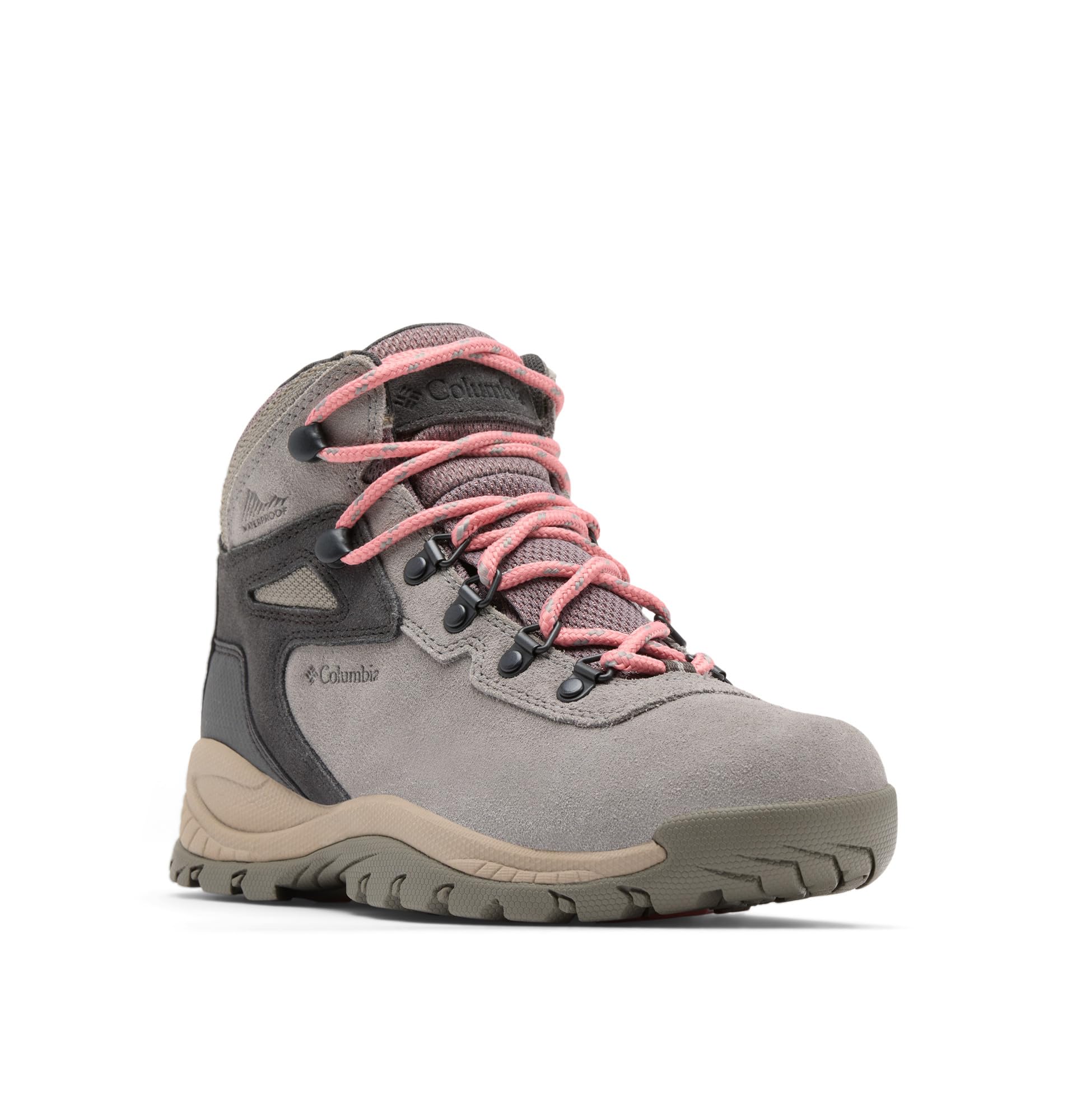
The Newton Ridge Plus is the value play in this guide, and it is good enough that the saving does not feel like a compromise. You get a waterproof ankle-height boot with wide sizing and a genuinely roomy toe box, and you pay noticeably less than the two Merrells here.
The ankle support is the part that impresses. It is stiff enough to hold you steady on roots and rock without the cast-like feel of a heavy leather boot, and there is no long break-in — these are boots you can take on a trip the week you buy them. The finish helps too: this is the best-looking pick in the group, with two-tone panels and laces that come in something other than black, and it does not look out of place in town.
One thing to check before you commit is the collar. It sits high and padded, and it can rub above the ankle bone before it softens. Wear them indoors for an evening with your hiking socks on, and if the rub does not settle, send them back rather than hoping a trip will cure it. Get past that and the boot does everything a weekend hiker needs, including a wide fit that is actually wide.
Pros
- Waterproof through snow, wet grass and mud
- Wide widths with a roomy toe box
- Ankle support without a heavy, stiff feel
- Looks good enough to wear into town
Cons
- Collar can rub on some ankles
Wide sizing, a roomy toe box and real waterproofing for a lot less than the top pick — try the collar indoors first, then take them anywhere wet.
Best for First Boots
NORTIV 8 Waterproof Trekking Boot
Key Features
- Closure: Lace-up
- Category: Hiking boots
- Waterproofing: Waterproof
- Price: Budget
A waterproof hiking boot at the bottom of the price range usually asks you to accept something — a sole that flexes like cardboard, a collar that folds, a fit that only works with one sock thickness. This one mostly does not.
Comfort is the surprise. There is no break-in to speak of, no blisters on the first long walk, and the arch and ankle support is better than the price has any right to buy: it holds up on uneven ground and steadies you when the trail turns to roots. Water resistance holds through puddles and wet grass.
Where it earns its place is as a first pair or a spare pair. If you hike a few times a season, or you want boots in the car for muddy weekends without spending much on them, this is the one we point to — the fundamentals are all there and the money goes into the boot rather than the logo. Just do not expect the sole to feel as planted as a premium boot on wet rock.
Sizing is the real caveat. The same boot gets called true to size and too big by different feet, and the sides can pinch on a wider forefoot, so buy from somewhere with easy returns and try them on in the socks you hike in. Grip splits the same way: confident on wet rock one day, a slipping heel on a loose descent the next. For trail-centre paths, gravel and muddy fields, none of that will bother you.
Pros
- Waterproof and comfortable straight out of the box
- Supportive through the arch and ankle
- The least expensive waterproof boot here
Cons
- Sizing is inconsistent between feet
- Grip can slip on wet descents
The best-value boot here: waterproof, comfortable with no break-in, and supportive enough for real trails. Buy it as a first pair and expect budget-sole grip.
Best for Fast Day Hikes
Merrell Speed Strike 2 Mid
Key Features
- Cut: Mid
- Listed weight: 2 lb
- Waterproofing: Waterproof
- Price: Premium
For the hike you squeeze in after work — three miles, some elevation, back before dark — a stiff leather boot is more shoe than the job needs. The Speed Strike 2 Mid is built for exactly that: ankle height, a soft landing underfoot, and a weight that does not announce itself on the climb. It is the closest thing here to a trail runner with a collar.
The collar is high enough to keep gravel out and give you something to lean against on a sidehill, and it manages that without the stiffness that makes a new boot feel like a cast. Waterproofing handles wet grass and shallow puddles. It is true to size as well, which is not something every boot on this page can claim.
What it is not is a load carrier. Under a heavy pack on a long descent you want more boot than this; the Speed Strike is happiest with a daypack and a plan measured in hours. It is also the newest design in this guide, so if you want a boot with a long record of hard use behind it, that is the Moab 3. If you want the pair that makes a short hike feel easy, this is it.
Pros
- Light and cushioned for fast day hikes
- Ankle coverage without stiffness
- True to size out of the box
Cons
- Traps heat on warm climbs
A light, cushioned mid boot for fast day hikes and travel — buy it if your hikes are measured in hours, not days, and you want ankle coverage without stiffness.
Best for Wide Feet
KEEN Targhee III Mid
Key Features
- Cut: Mid height
- Toe box: Wide
- Waterproofing: Waterproof
- Price: Premium
If the reason your boots hurt is that something is squeezing your toes, start here. The Targhee III has the roomiest front end in this group, with a wide toe box and enough height over the toes that a broad forefoot does not feel like it is being managed.
Room is the reason to buy it, and the rest of the boot backs that up. Arch support is genuinely good, the ankle steadies on loose rock and uneven ground, and the fit runs generous — so if you are between sizes, take the smaller one. If you have a narrow foot, this is the wrong boot on this page.
Then there is how long they last, which is where we hesitate. The toe flex point and the seams are where these can come apart, and it can happen within a couple of years of regular use. Not every pair, but it is a real risk, and it is why we rank this one below boots with a longer record — worth it if nothing else fits your feet, less so if you are simply shopping for a deal.
Pros
- Roomiest toe box in this group
- Strong arch support and ankle stability
Cons
- Toe and seams can come apart early
- Runs wide, so narrow feet will swim
The wide-foot answer: a roomy toe box and strong arch support, with durability as the trade-off. Buy it if fit has been the problem.
Best for Light Day Hikes
NORTIV 8 Lightweight Ankle Boot

Key Features
- Cut: Ankle
- Weight: Lightweight
- Category: Backpacking boots
- Price: Budget
This is not a mountain boot and it does not pretend to be. It is an ankle-height lightweight hiking boot for the trails most people actually walk — gravel paths, park loops, a muddy mile with the dog — and it costs less than anything else in this guide.
Comfort is the whole pitch and it delivers: soft straight out of the box, no blisters, roomy over the toes, and quick to dry once they are wet. Support through the ankle is better than the cut suggests, and the sole grips well enough on rock, wood and mud for the kind of walking these are for.
Water is the weak point. Resistance is inconsistent, so wet grass and shallow puddles are fine on some days and soak through on others. If your trails are wet most of the year, put the money toward one of the waterproof picks instead. Ankle height also means less protection than a full mid boot when the ground turns rough.
As a first pair, a travel pair, or the boots that live by the back door, they make far more sense than the price suggests. What we keep coming back to is how little they ask: no break-in, no weight on your feet, no worry about scuffing them on a wall. That is worth something on a Tuesday evening when you want a walk, not a project.
Pros
- Comfortable with no break-in at all
- Dries fast after a soaking
- Cheapest boot in this guide
Cons
- Water resistance is inconsistent
- Less protection than a full mid boot
The cheapest boot here and the easiest to live with: light, roomy and comfortable from the box. Buy it for local dry trails, not for wet weather.
Best for Barn and Trail
ARIAT Terrain Hiking Boot

Key Features
- Use: Hiking and riding
- Upper: Leather
- Closure: Lace-up
- Price: Midrange
There is a particular kind of day where you do chores, drive somewhere, walk a few miles of trail, then stand around in the same boots. The Terrain is built for it: a leather lace-up with an easy flex and enough grip for a groomed path or a muddy field.
What it does well is support without stiffness. The arch support is the standout — it steadies the ankle on rough ground and holds up through a long day on your feet — and the leather has enough give that it skips the weeks of breaking in a hiking boot usually asks for. The construction is the reason to pay for it: proper leather, solid lace hardware, and a boot that looks better scuffed than new.
It earns a place here as the crossover, not as the mountain boot. On a rocky, wet, all-day hike you want a waterproof membrane and a stiffer sole; the Terrain gives you leather, a flexible footbed and a tread that is happier on dirt than on wet slab. If your hiking is really walking — and for a lot of people it is — that is a fair trade for a boot you can also ride in.
Pros
- Comfortable leather that skips a long break-in
- Excellent arch and ankle support
- One boot for chores, riding and easy trails
- Quality leather and hardware
Cons
- Better on dry trails than wet rock
A leather crossover that handles chores, easy trails and the drive home — buy it if you want one boot for a day outdoors, not a technical hiking boot.
Best for Cold-Weather Walks
ANJOUFEMME Winter Hiking Boot

Key Features
- Cut: Ankle
- Lining: Fur lined
- Waterproofing: Waterproof
- Price: Budget
A February walk on frozen ground is a different problem from a June hike, and this is the boot for the first one. Fur-lined, waterproof and ankle-high, with enough padding that a cold morning feels like less of an event.
Warmth is what it sells and warmth is what it delivers: feet come back warm and dry from snow, slush and rain, and a shallow puddle does not get through. If your winter walks currently end with numb toes two miles in, this fixes that for less than almost anything else here.
It is a cold-weather boot, so do not ask it for July. The lining and the waterproof layer hold heat, and a hot climb will have you wishing for mesh. The sole is on the stiff side too, which is fine on pavement and packed snow and less comfortable on a long rocky descent.
The real friction is getting them on. The collar is tight, the padding grabs your heel, and the fix is to loosen every lace right down to the ankle before you pull. Twice a day that is a chore, and a genuine problem if your hands or your back make a fight with a boot expensive. Buy them for warmth and short winter miles, not for anything technical.
Pros
- Warm and dry in snow, slush and rain
- Comfortable for long days on your feet
Cons
- Hard to pull on over the heel
- Stiff sole on rocky ground
The warm one: a lined waterproof boot for frozen mornings and short winter miles. Buy it for cold-weather walking, not for summer or technical ground.
How We Tested a Dozen Pairs of Women’s Hiking Boots
We started by gathering every women’s hiking boot we could find that was built on a women’s-specific last, then narrowed by weight, lug depth, waterproofing, and return policy until twelve were worth putting on our feet. Price was a filter, not the goal — budget pairs sat alongside boots that cost as much as a plane ticket, and each was judged against what it charged.
Testing ran six months, from late-winter mud through summer scree. Before any trail, every pair got two hours on pavement, grass, and a steep gravel incline so we could feel where a heel lifted, where a toe jammed on the descent, and how the arch felt after an hour. On trail we noted whether traction held on wet rock, whether a boot was stiff enough to edge across talus or so stiff it slapped, and how much grit worked in through the collar.
Water resistance got checked the unglamorous way: standing in a shallow creek, then a hose over the toe box for a minute while we watched for dark patches spreading. After each hike we dried them, looked at scuffing, seam wear, and how well they cleaned up, then re-checked arch support on tired feet the next morning. Twice a month we laced up cold, stiff-fingered, to see how easily the laces ran and whether hooks and pull tabs still worked. Most of these boots are still in rotation.
How to Choose Women’s Hiking Boots
Fit beats features every time: a boot that holds your heel and leaves room for your toes will out-hike a more expensive one that does neither.
Waterproofing Only Goes So Far
A waterproof boot keeps water out until it reaches the top of the collar, and then it stops. That is the whole trick, and it is why a boot that shrugs off wet grass can soak you at a creek crossing. If your trails mean fords, standing water or deep mud, waterproofing buys you less than the label suggests.
The trade is breathability. A membrane traps sweat on a hot climb, so for summer walking in dry country a non-waterproof boot is often the kinder choice. Buy waterproof for cool, wet, three-season conditions and accept that your feet will run warmer.
Cut Height Is Not the Same as Support
A taller boot does not automatically protect your ankle. Support comes from how the collar wraps, how firmly the heel is held, and how much structure sits under the arch. A floppy high boot is worse than a well-built mid. Height earns its keep on uneven ground with a load, and in keeping gravel and water out.
Test it unlaced: walk a few steps and watch your heel. If it lifts more than a little, no lacing pattern will fix the fit. Day hikes with a light pack suit a mid-cut boot like the Speed Strike 2; multi-day loads want something stiffer.
Fit and Width Decide Everything
Boots do not fit like sneakers. You want roughly a thumb’s width between your longest toe and the front of the boot, a heel that stays put when you walk up a ramp, and enough width that your forefoot is not pressing against the sides. Sizing swings between models, so treat your normal size as a starting point rather than an answer.
Shop late in the day, when feet are at their largest, and try boots on in the socks you hike in. A thick sock can eat half a size. If your forefoot is broad or you have a bunion, start with the boots built around a wide toe box rather than sizing up in a narrow one.
Weight, Cushioning and Grip
An ounce on your foot costs more than an ounce on your back, so a light boot is a genuine pleasure on a long day. Lightness has to come from somewhere, though: thinner soles and less structure. That is why the lightest boots here are day-hike boots and the heavier ones are the load carriers.
Grip is the one thing you cannot fix later. Look for defined lugs and a heel brake for descents, and judge them on wet rock and wet roots rather than dry gravel. A budget boot with a good outsole beats a premium boot with a worn one.
Frequently Asked Questions
How much walking should I do in new boots before a big hike?
Most synthetic and fabric boots need very little: an evening around the house, then a short local walk of half an hour, then a longer one. Leather takes more patience and rewards it — two or three shorter walks over a week or so before you commit to a full day.
If you feel a hot spot in the first twenty minutes, fix the cause. Change sock thickness, re-lace the lower section, or accept that the size is wrong and return them. Walking through it is how blisters become a trip story.
Can I put my own insoles in hiking boots?
Yes, provided the stock footbed lifts out. Check that before you commit, because a glued-in insole rules it out.
Take the original out, drop yours in, and re-check the two things that matter: room over your toes and no pressure under the arch. A bulky orthotic eats volume, so if the boot felt snug to begin with, go up half a size or order the wide version.
Do leather hiking boots need a waterproofing treatment?
Full-grain leather benefits from wax or a conditioner at the start of each season: it keeps the leather supple and restores the water resistance that scuffs and dust wear away. Do not wax suede or mesh panels — it darkens suede and clogs the mesh.
Boots with a built-in membrane do not need anything on the outside to keep water out, though cleaning them now and then keeps the upper from cracking where it flexes.
Final Verdict
Buy the Merrell Moab 3 Mid. It does the most jobs well — waterproof, supportive without being stiff, and comfortable from the first walk — and no other boot here beats that combination for a woman who wants one pair for a normal hiking year.
Change the pick only when a specific need does. The Columbia Newton Ridge Plus brings the same waterproofing with a roomier, wider fit for noticeably less money. The KEEN Targhee III is the answer if a squeezing toe box is what has been failing you, as long as you go in knowing the toe and seams are where it may give out first.