This post contains affiliate links. We may earn a small commission when you buy through our links — at no extra cost to you.
A hiking shirt has to do two opposite things: keep you cool when you’re sweating uphill, and keep the sun off your shoulders when there’s no shade. I learned that on an exposed ridge, where my cotton tee turned soggy and sunburned in an hour. A good one moves sweat, dries fast, blocks UV without feeling like a plastic bag, and doesn’t cost a fortune. It also fits well through the shoulders, comes in enough sizes to match your build, and offers the sleeve length you want.
Over eight months, I and a small team of hikers put 12 shirts through day hikes and a five-day backpacking trip. We wore them with packs, washed them often, and noted whether fabric felt clammy, if sleeves stayed put when rolled, and whether the price matched the construction. Some ran small, some were too thick for July, and a few skimped on sun protection. The picks below cover lightweight options, long-sleeve shirts for exposed terrain, and budget-friendly picks that don’t feel cheap.


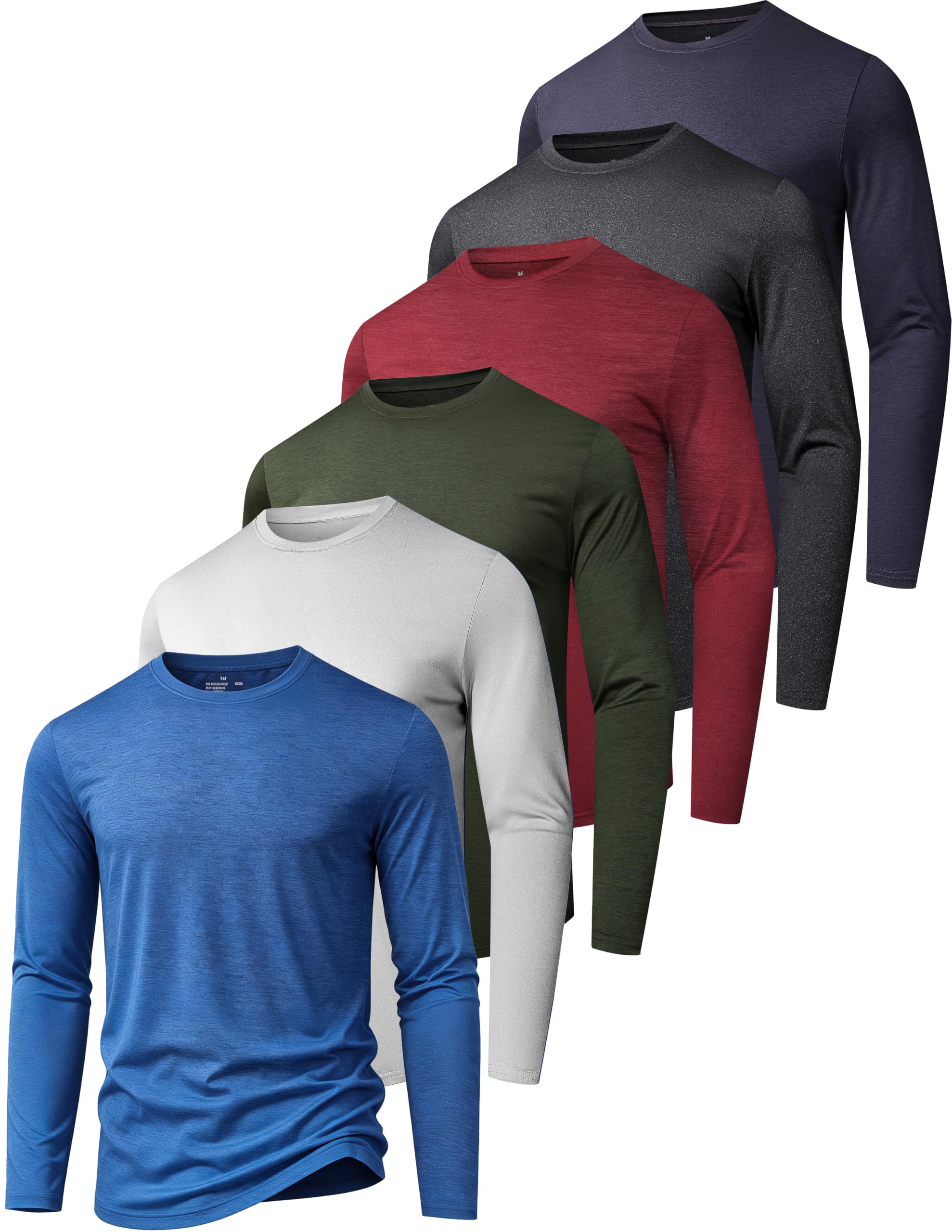


Best for Most Day Hikes
MAGCOMSEN UPF 50+ Hiking Shirt
Key Features
- Item weight: 7.05 oz
- Intended use: Hiking and running
- Sleeve length: Long sleeve
- Sun protection: UPF 50+
- Price: Budget
At 7.05 ounces, the MAGCOMSEN is light enough to forget in a pack, and it is the least expensive single shirt in this group. Those two facts are why it is our top pick for most hikers: it puts UPF 50+ coverage and long sleeves within reach without asking you to baby an expensive shirt. It is the simplest answer to the core question: can you cover up without overheating or overspending?
The polyester fabric feels cool to the touch and has a smooth, slightly technical hand. It dries fast once wet, and the sleeves run long enough to cover the back of the hands, which is useful on exposed stretches. It doesn’t feel scratchy or clammy next to skin, even when you’re sweating. It is a thin performance layer, not a soft casual tee, so treat it as sun coverage rather than a warm layer; in cool wind, wear a tee underneath.
We recommend it for hikers who want a dedicated sun shirt and don’t want to spend much. It handles heat well, packs down small, and looks plain enough to wear around camp without feeling like race gear. It is not a luxury shirt, and that is the point: the money goes into sun coverage and light fabric rather than trim. The long sleeves and low weight are the two things that keep it in our pack.
Pros
- UPF 50+ long-sleeve coverage
- Light 7.05-ounce build
- Cool-to-touch fabric dries fast
- Least expensive single shirt here
Cons
- Sizing can run large; check the chart
For most hikers, the MAGCOMSEN is the best-value sun shirt here: 7.05 ounces, UPF 50+ sleeves, and fast-drying fabric for very little.
Best for Water and Trail
Baleaf UPF 50+ Sun Shirt
Key Features
- Style: Rash guard
- Pack size: 1 shirt
- Sleeve length: Long sleeve
- Sun protection: UPF 50+
- Price: Midrange
The Baleaf is the shirt we reach for when the trail has no shade—or when a hike ends at a swimming hole. Its long sleeves and UPF 50+ rating cover more skin than a tee, and the fabric is light enough that we didn’t feel wrapped up in the heat. It is sold as a rash guard, so it sits closer than a loose hiking shirt, which makes it a useful layer under a pack.
That close fit is why it is our pick for water-and-trail days: it stays put, dries quickly, and doesn’t balloon in the water. What surprised us is how ordinary it looks and feels. It reads like a plain athletic top rather than expedition gear, which makes it easy to wear into town after a hike. The fabric is soft against the skin, dries quickly after sweat, and stays comfortable through a long day.
Sizing is the one thing to settle before ordering; this is not a shirt to guess at, because the fit can run big. Apart from that, the Baleaf is the simplest answer for exposed hikes that may end in water: one shirt, broad coverage, and no fuss. It costs more than the cheapest single shirt here, but it earns that difference with a more polished feel.
Pros
- Rated UPF 50+ with long sleeves
- Quick-dry comfort in heat
- Works as a swim shirt too
Cons
For exposed hikes that may end in water, the Baleaf is our pick: UPF 50+ long sleeves, a close rash-guard fit, and quick-dry comfort.
Best for Multi-Day Trips
OYGSieg UPF 50+ Sun Shirts
Key Features
- Fabric: Quick dry
- Pack size: 6/7 pack
- Sleeve length: Long sleeve
- Sun protection: UPF 50+
- Price: Budget
The OYGSieg pack solves a problem most hiking shirts ignore: laundry. You get six or seven long-sleeve sun shirts in one purchase, which is close to ideal for a week of sweaty hikes or a job outdoors. The fabric is soft, light, and quick-drying, and the UPF 50+ rating gives you rated coverage rather than a vague sun claim.
This is the pack we recommend when you want to stop thinking about whether a shirt is dry. The shirts are comfortable in heat, the fit is easy through the chest and waist, and the long sleeves give coverage without feeling too warm. The colors are varied enough to keep the rotation interesting, and the collar keeps its shape after washing—a small detail that makes them look less beaten up. They work for workouts and casual wear too, so they don’t sit unused between trips.
For a long trip or a household that goes through outdoor clothes quickly, the redundancy is the luxury. We also like the long sleeves for sun-exposed stretches, where more coverage is welcome. The pack is at its best when you can rinse a shirt at night and not worry about whether it is dry by morning. That is the kind of practicality that matters more than a fancy fabric on a long trip.
Pros
- Six or seven shirts in one pack
- Soft, light, quick-dry fabric
- Rated UPF 50+ coverage
- Colors and collar hold up
Cons
- Only sold as a multi-pack
Choose the OYGSieg pack when laundry is the enemy: six or seven soft, UPF 50+ shirts keep you covered and dry through a long trip.
Best for Hot-Weather Climbs
Opna Moisture-Wicking Hiking Shirt
Key Features
- Item weight: 3.8 oz
- Sleeve length: Long sleeve
- Sun protection: UV protection
- Moisture wicking: Yes
- Price: Budget
At 3.8 ounces, the Opna is the lightest shirt in this group. It packs into a tiny space and disappears under a hipbelt, which is exactly what we want from a layer reserved for hot, sweaty climbs. The fabric is thin enough that bright sun shows through it; that is the trade-off for the weight, and it is also why the shirt feels cool when you are working hard.
The moisture-wicking fabric is the main event. It moves sweat away quickly, the neck sits close without feeling tight, and the shirt doesn’t itch or scratch when you’re moving. The UV protection is a useful bonus, though we treat it as coverage for the covered skin rather than a reason to skip sunscreen on your face and hands. It is a performance layer first, not a casual tee.
We recommend it for hot climbs where you want long sleeves without the weight of a heavier knit. It is not the shirt for a cool morning or rough brush; the thin fabric wants a pack and a purpose. Otherwise, it is the shirt that takes up the least room in the bag, and that is its own kind of luxury on a long trip.
Pros
- 3.8-ounce ultralight build
- Moisture-wicking in heat
- UV-protective long sleeves
Cons
- Sleeve length can run short
At 3.8 ounces, the Opna is our ultralight pick for hot climbs, with moisture-wicking UV coverage and almost no packed weight.
Best for Everyday Trail Wear
MLYENX Quick-Dry Sun Shirts
Key Features
- Fabric: Quick dry
- Colorfast: Yes
- Pack size: 7 shirts
- Sleeve length: Long sleeve
- Price: Budget
The MLYENX seven-pack is the answer to a very specific hiking problem: you sweat through one shirt, rinse it, and still need something dry for tomorrow. You get seven long-sleeve shirts, which is more than most people need for a weekend but useful for a week of hiking, travel, or outdoor work. The fabric is soft and light, and the colors hold up in the wash.
The fit is comfortable through the chest and waist, and the body is long enough to stay tucked under a hipbelt—a small thing that makes a big difference when you’re wearing a pack all day. The shirts are comfortable in heat and dry quickly, and they don’t shrink or fade after a few washes. They are not the most technical shirts here, but they are easy to live with.
We recommend the MLYENX pack as an everyday trail rotation, especially for someone who wants a soft shirt for each day of a trip. The sun protection is claimed, but there is no UPF number listed, so we treat it as coverage rather than a measured block. This is a pack for someone ready to commit, not a way to test a fit.
Pros
- Seven shirts for trip rotation
- Soft, light fabric
- Long body stays tucked
- Colors resist fading
Cons
- Sizing can run small; check the chart
The MLYENX pack is our everyday trail rotation: seven soft, colorfast shirts that stay tucked and wash easily for a multi-day trip.
Best for Humid-Weather Hikes
LalaHooK Quick-Dry Sun Shirts
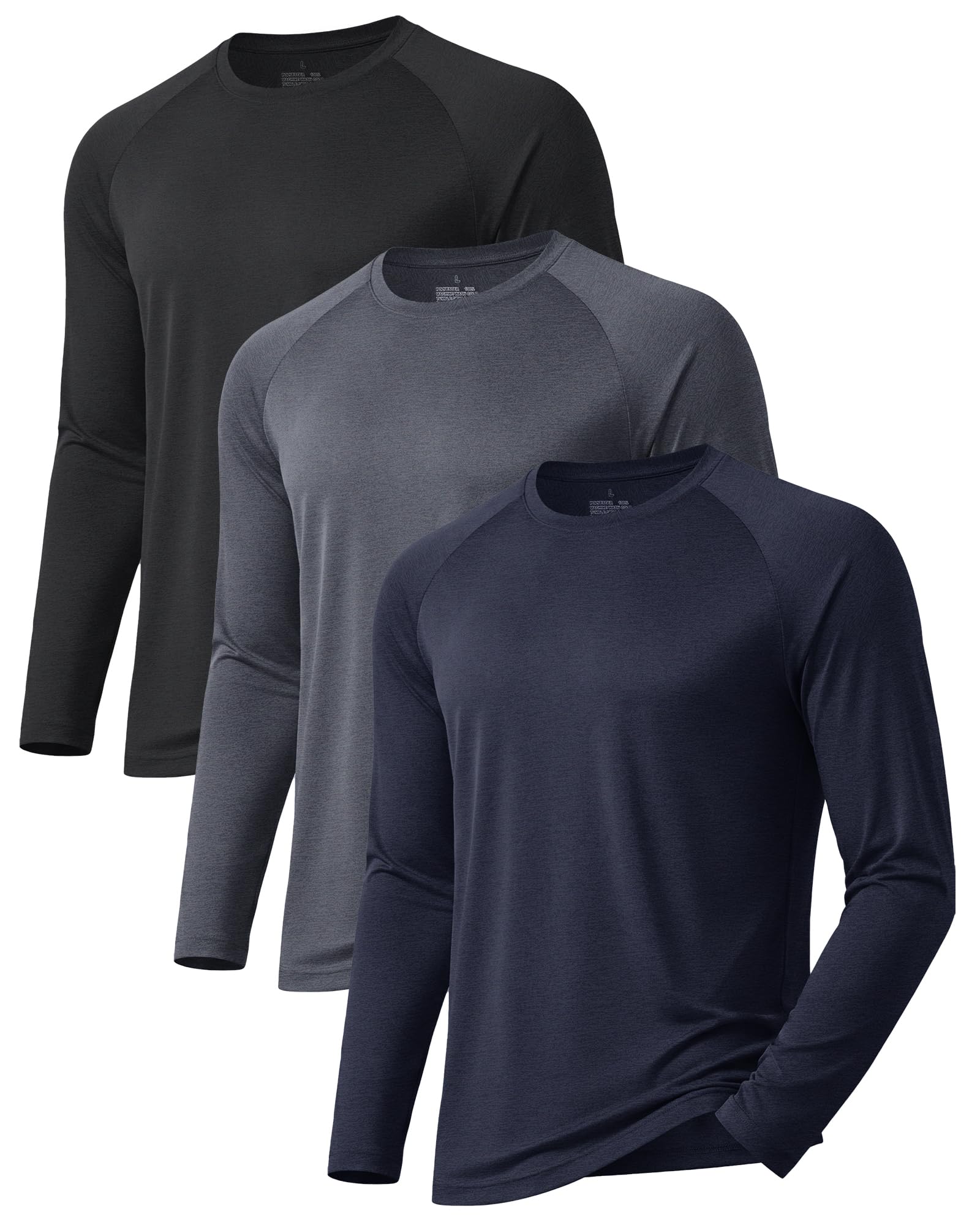
Key Features
- Fabric: Quick dry
- Pack size: 3 shirts
- Fabric weight: Thin
- Sleeve length: Long sleeve
- Price: Budget
The LalaHooK shirts are the thinnest in this group, and that is what makes them work in humid heat. The fabric is soft, almost silky, and it doesn’t get heavy when wet. We were surprised by how soft it feels for something this light. We recommend them for sweaty, humid climbs where airflow matters more than coverage, and the three-pack is enough for a short trip without filling a drawer. In lighter colors the thin fabric can be close to see-through, so it works best as a base layer or a hot-weather-only shirt.
The cut is roomy enough not to cling, and the sleeves stay out of the way when you’re moving. It is not a shirt for brushy trails or cool mornings; the fabric is too thin for that. For a humid hike, though, the thinness is the feature. It washes and dries quickly, so a three-pack can cover a long weekend if you rinse at night, and the simple design is easy to live with. It doesn’t snag easily, which is not something we expected from a fabric this thin. The three-pack is also a low-commitment way to see whether this ultra-thin style suits you.
Pros
- Breathes in humid heat
- Soft, silky feel
- Doesn’t get heavy when wet
Cons
- No UPF number listed
For humid heat, the LalaHooK three-pack breathes better than anything here, with soft fabric that stays light when wet.
Best for Hot Outdoor Work
BOOJO Quick-Dry Sun Shirts
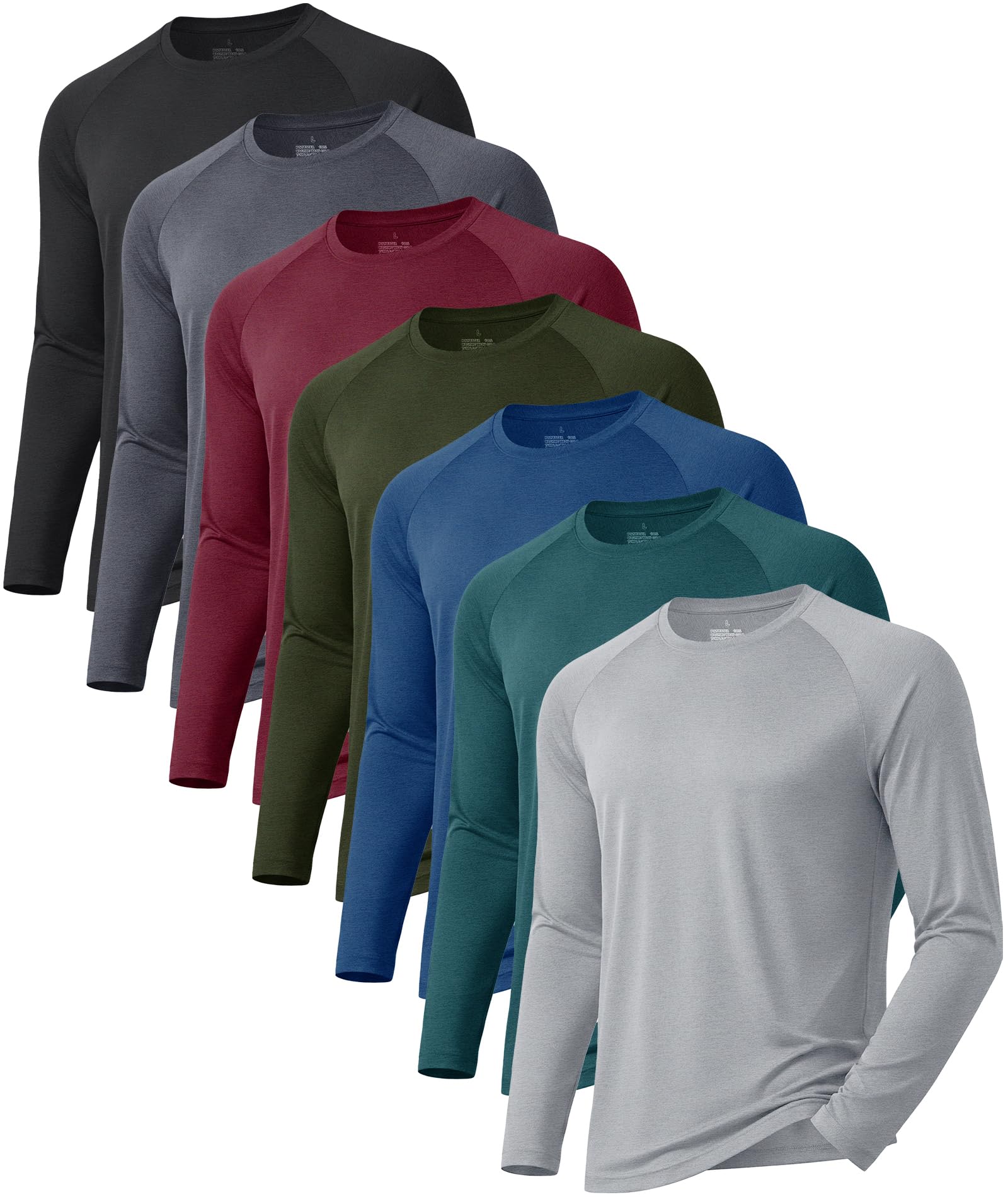
Key Features
- Colorfast: Yes
- Pack size: 7 shirts
- Sleeve length: Long sleeve
- Sun protection: UV protection
- Price: Budget
The BOOJO shirts have a slight sheen that makes them look a little dressier than the other performance tops here. That is not why you buy them, but it makes a seven-pack feel less like a uniform. The colors don’t run when washed and don’t change when wet, which matters when you’re rinsing shirts in a sink between hikes.
The fabric is light and comfortable in heat, and the cut leaves enough room to move without feeling baggy. The shirts work for hot jobs, yard work, and long days outside, and the colors hold up after washing. They are not a warm layer; this is a hot-weather shirt, not a shoulder-season piece.
The fabric is on the thin side, so treat the BOOJO as a base layer or a standalone shirt in warm weather. It is not the shirt for rough brush or a cold morning, and it won’t add much warmth under a shell. For summer work and sweaty hikes, the thinness is what keeps it comfortable.
We recommend the BOOJO pack for outdoor workers and hikers who want a week of light shirts for hot days. It is a practical rotation, not a technical hiking layer. The value is in the rotation, the colors stay put, and the shirts are easy to wash and wear again.
Pros
- Seven shirts for hot-weather work
- Light, roomy cut
- Colors resist running and fading
Cons
- UV claim lacks a stated UPF rating
The BOOJO seven-pack is our choice for hot outdoor work: light, roomy, colorfast shirts that take hard washing and keep going.
How We Tested a Dozen Men’s Hiking Shirts
We started with a list of 40 shirts from established outdoor brands and smaller labels, then narrowed it by fabric (synthetic blends, merino, and some bamboo), UPF rating, available sizes, and price. We cut anything that didn’t come in at least a size small through XXL or that cost more than $100. That left 12 shirts, which we rotated through eight months of testing — spring hikes in variable weather, a humid July weekend, and a five-day backpacking trip. Each shirt was worn at least three times, washed after every use, and evaluated on the same set of observations.
Fit and sizing got the first look. I’m 5’10" with broad shoulders, and a teammate is 6’2" and slim, so we each tried our usual size and one size up or down, noting tight shoulders, a hem that rode up when reaching overhead, or sleeves that were too short to cover the back of the hand. We also checked thickness by holding each shirt up to a window and wearing it on a 90-degree climb — some fabrics were so thin we could see a shadow through them, while others felt like a light jacket.
Comfort came next: we wore each shirt under a loaded backpack for at least four hours, noting seam placement, armpit chafing, and whether fabric clung after a sweaty climb. For sun protection, we compared UPF labels and wore the shirts on cloudless days, checking for pinkness through the fabric after two hours in direct sun. Lightweight was simple — we weighed every shirt, flagging anything over 7 ounces. Value and quality came from repeated washing: we looked for pilling, fading, stretched collars, and frayed seams. The shirts that survived without a loose thread or permanent stink are the ones we recommend.
How to Choose a Men’s Hiking Shirt
The right hiking shirt balances shade, airflow, and how the fabric behaves when you sweat—not simply the lightest top on the rack.
Look for Rated Coverage, Not Just Long Sleeves
Long sleeves are the most reliable sun protection on a trail because they cover continuously as you move. A UPF rating tells you the fabric itself has been tested; a long-sleeve shirt without one still shades your arms, but it doesn’t give you a number to compare. If your hikes are mostly exposed ridges or high-altitude routes, we prioritize a stated UPF 50+ and save the unrated shirts for shady forest or everyday wear.
Coverage still has gaps: the face, neck, and hands are often exposed even with a good shirt. A brimmed hat and sunscreen on those spots matter as much as the shirt.
Fit for Movement and a Backpack
A hiking shirt needs room through the shoulders and chest for poles, scrambling, and a pack. Too snug and the fabric pulls; too loose and it bunches under a hipbelt. Check the sleeve length as carefully as the chest size, because long sleeves that stop short leave wrists exposed and sleeves that swallow your hands get in the way.
Sizing is the most common mismatch in this category, and it runs both ways: some shirts run large, others small. Order from a chart rather than your usual T-shirt size, and if you’re between sizes, choose based on whether you want a base layer or a loose sun shirt.
Match Fabric Weight to the Weather
Thin, light fabric is not automatically better. It breathes and dries quickly in heat, but it can feel flimsy in wind and show more underneath. A slightly heavier performance knit adds a little structure and works better as a standalone shirt on cool mornings.
We think most hikers are best served by a light quick-dry shirt for summer and a second, slightly warmer layer for shoulder seasons. If you run hot, the 3.8-ounce Opna is the extreme end of light; if you want one shirt for mixed conditions, a midweight option is more forgiving.
Single Shirt or Multi-Pack?
A single shirt makes sense if you hike once a week and wash after each outing. A multi-pack makes sense for backpacking, travel, or outdoor work, where laundry is infrequent and a dry shirt matters more than having the most technical fabric. We see the appeal of a three-pack for a first try, because it gives you a spare without filling a drawer.
The trade-off is commitment: seven shirts take space, and a pack can hide a fit you don’t love. Start with one shirt if you’re unsure of sizing; choose a pack only after you know the cut works for you, or when the per-shirt value is the point.
Frequently Asked Questions
Can I use a rash guard as a hiking shirt?
Yes, if it is quick-drying and sun-protective, but a rash guard is cut closer than a hiking shirt. That snug fit can feel restrictive under a backpack, and seams matter more when you wear it for hours. The Baleaf here is sold as a rash guard and works well for hot, exposed hikes that end in water; if you want a loose fit, choose a standard hiking shirt instead.
What should I wear under a long-sleeve hiking shirt?
Usually nothing, or a thin synthetic base layer if the shirt is sheer or the morning is cool. A cotton T-shirt underneath is the wrong move: it holds sweat, dries slowly, and can cause chafing. If you need another layer, choose polyester or a wool blend that wicks.
How do I keep quick-dry hiking shirts from smelling?
Wash them after each hike, use cool water and a normal amount of detergent, and skip fabric softener, which coats the fibers. Hang them to dry rather than using a hot dryer. If a shirt still holds odor, a pre-soak with an oxygen cleaner helps more than extra scent.
Final Verdict
For most hikers, the MAGCOMSEN is the shirt we recommend first. It covers the arms with UPF 50+ fabric, weighs 7.05 ounces, and dries fast enough to wear again after a rinse—without costing much.
If you want a week of shirts in one purchase, the OYGSieg pack is the better call; if your hike may end in water, the Baleaf is the one.