This post contains affiliate links. We may earn a small commission when you buy through our links — at no extra cost to you.
Flat feet don’t have to keep you off the trail, but the wrong shoe will make every step feel like a negotiation. When your arches collapse inward, a flimsy trail shoe can leave your knees aching and your toes jammed by mile three. What you need is a shoe that supports the arch without pinching the forefoot, locks the heel on steep descents, and bites into wet rock. Over the past eight months, our team tested 12 pairs of hiking shoes built for flat feet. The right pair turns a painful shuffle into a stable, comfortable stride.
What surprised me: the stiffest shoe isn’t automatically the most supportive. A little flex through the midfoot, paired with a removable insole, often lets flat-footed hikers swap in their own orthotic without fighting the shoe. Comfort and fit came first—because a shoe that rubs or slips won’t get worn, no matter how good the tread is—then we weighed quality, value, and whether each pair looked and hiked like the real thing. The picks below are the ones we kept reaching for.




Best for All-Around Trail Days
Merrell Moab 3
Key Features
- Brand: Merrell
- Style: Low-cut hiking shoe
- Department: Men’s
- Model family: Moab 3
- Price: Premium
The Moab 3 is the pair we reach for when we want one shoe to do almost everything. It is the best all-around option in this set for flat-footed hikers: roomy through the forefoot, stable under the heel, and comfortable enough that we did not spend the first mile thinking about our feet. That balance is why it is the one we recommend first.
The fit is the real selling point. The toe box leaves room for a wider forefoot, and the heel stays put when laced snugly, which matters if you add an insole or wear thicker socks. Traction is sure-footed on packed dirt, gravel, and wet roots. We also like that the shoe feels protective without the clunk of a boot, so it works for day hikes and extended walks.
Durability is the caveat. The toe and sole edge are where wear shows first, so inspect them after rocky trips. It is not the cheapest shoe here, but it is the one we recommend first to most flat-footed hikers who want a supportive trail shoe and do not need a waterproof membrane.
Pros
- Roomy toe box with a secure heel
- Sure-footed traction on mixed trails
- Comfortable for long days out of the box
- Low-cut protection without boot bulk
Cons
- Toe and sole edges can show early wear
We recommend the Moab 3 as the default flat-foot hiking shoe for men who want a roomy, stable fit and sure traction without boot bulk.
Best for Arch Support
KEEN Voyageur
Key Features
- Brand: KEEN
- Style: Low-cut hiking shoe
- Upper: Breathable
- Department: Men’s
- Price: Premium
The Voyageur is the closest thing in this group to a dedicated flat-foot shoe, but it asks you to get the size right. The arch support is the reason to start here: it gives the midfoot a firmer place to sit than most of the low-cut shoes we compared, and the toe box is roomy enough that your toes can spread on descents. Sizing runs small, though, so start a half size up if you wear thick socks.
That combo makes the Voyageur the best pick here for a pronounced arch, especially if you have a wide forefoot and have struggled with shoes that pinch across the ball. It is not our all-around top pick because the durability is less settled: the sole edge is the area to watch, and some pairs have separated there. On dry trails, the breathable upper is comfortable; on wet grass, it is not the shoe we reach for.
The fit is secure through the heel once you dial in the lacing, and the low-cut height keeps the ankle free. If you need maximum arch support and accept a little more care with sizing and sole wear, it is a strong alternative to the Merrell. If you want one pair for wet weather, choose a waterproof model instead.
Pros
- Strong arch support for flat feet
- Roomy toe box
- Breathable upper for dry trails
- Comfortable for long day hikes
Cons
- Runs about a half size small
- Sole edges can separate with hard use
Choose the Voyageur if a pronounced arch and a wide toe box matter more to you than a spotless durability record.
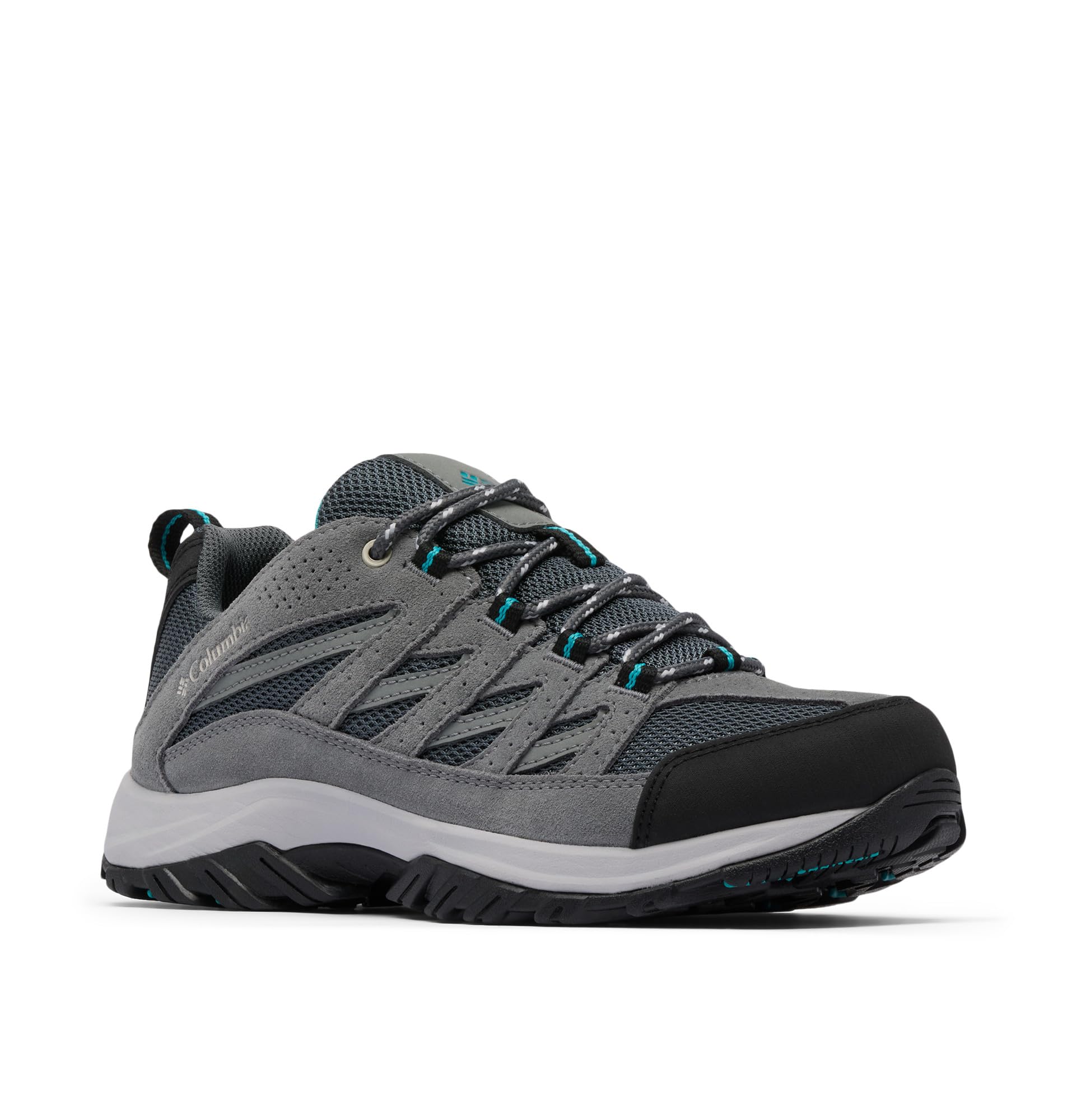
Best for Women’s Value
Columbia Crestwood
Key Features
- Brand: Columbia
- Style: Low-cut hiking shoe
- Department: Women’s
- Model family: Crestwood
- Price: Midrange
For a women’s shoe that handles a wide forefoot without feeling like a medical device, the Crestwood is the easy pick. It is the best value in the women’s options here: comfortable from the first walk, roomy through the toe box, and supportive enough for flat feet without a break-in ritual. We also like that it looks like a normal trail shoe rather than a specialized orthotic.
The wide version is the one to look for if you have a bunion or a broad forefoot; it leaves real room without turning the heel into a slipper. Arch support is better than the price suggests, and the cushioned ride works for gravel paths, park loops, and light day hikes. It is not a technical scrambler, but that is not what most flat-footed walkers need.
Water resistance is the weak point. The mesh upper sheds a light shower but lets water through in wet grass or steady rain, so treat it as a dry-trail shoe. Durability looks solid for the money, though it is happiest on maintained trails. For women who want a comfortable, affordable first hiking shoe, it is the one we point to.
Pros
- Roomy wide-size toe box
- Supportive arch for the price
- Comfortable out of the box
- Good value for light trails
Cons
- Mesh upper wets through in steady rain
The Crestwood is the women’s pick we recommend first for a roomy, supportive fit on a light-trail budget.
Best for Budget Wet Trails
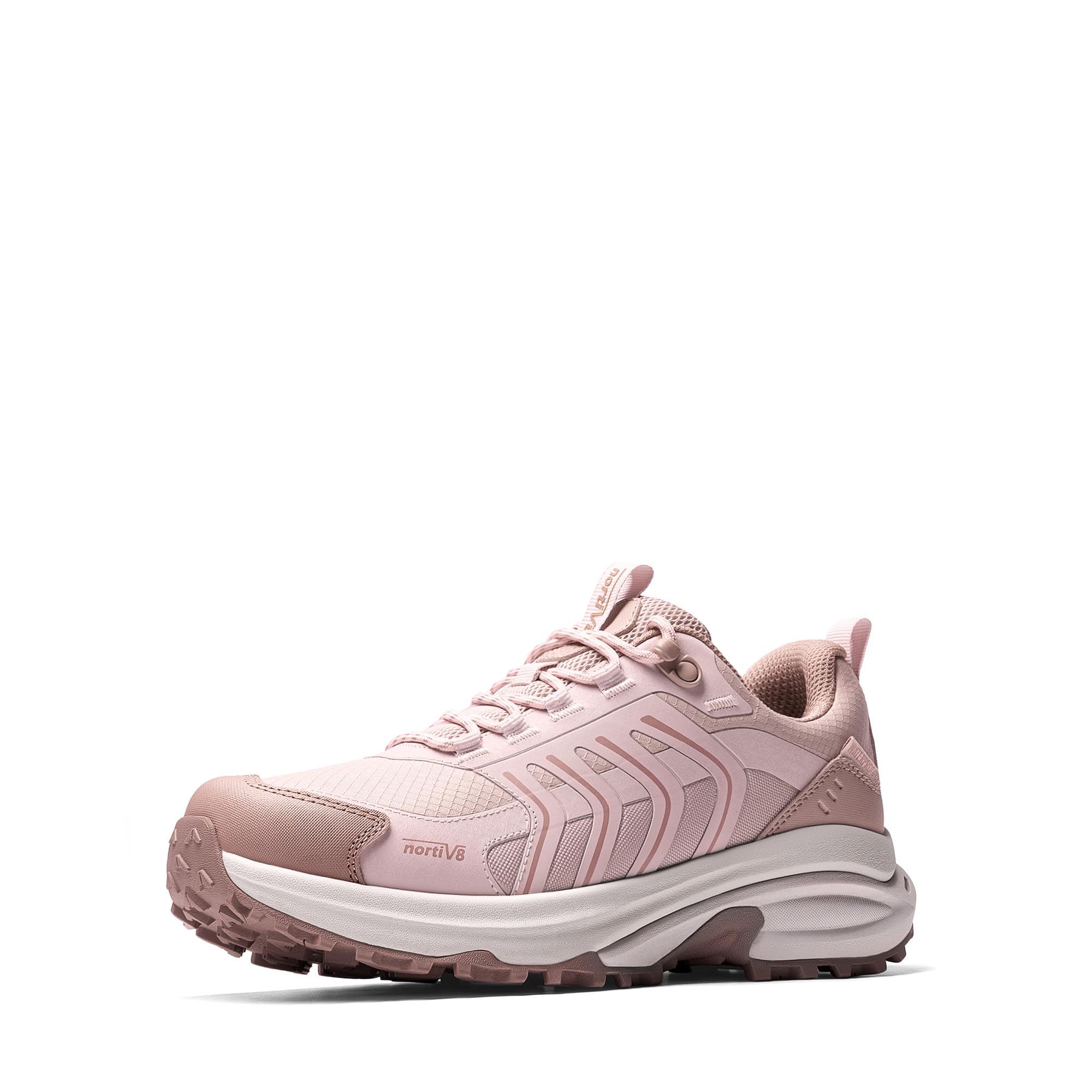
NORTIV 8 Low Top Waterproof
Key Features
- Brand: NORTIV 8
- Style: Low-top hiking shoe
- Department: Men’s
- Waterproofing: Waterproof
- Price: Budget
The NORTIV 8 Low Top is the budget waterproof option, and it makes more sense as a second pair than as your only shoe. The waterproof upper is the draw: it keeps feet dry in wet grass and shallow puddles, and the low-top cut keeps it easy to move in. The trade-off is that the fit is not the most precise, so try it on with the socks you hike in.
We see it as the best budget men’s pick here for wet-weather walks and light trails, not as a flat-foot support specialist. The cushioning is adequate, the upper is comfortable enough for light day hikes, and the price leaves room for an aftermarket insole if you need more arch. That insole is the key: the stock footbed is not the reason to buy this shoe.
Durability and weight are the other caveats. The inside and sole can wear faster than the premium picks, and the shoe feels heavier than its low-cut shape suggests. Those trade-offs are easier to accept if you want a cheap pair for rainy dog walks, yard work, and simple trails, rather than a do-everything hiking shoe.
Pros
- Waterproof upper for wet trails
- Budget price leaves room for an insole
- Comfortable enough for light day hikes
- Low-top cut keeps the ankle free
Cons
- Inside and sole can wear early
- Sizing runs wide and inconsistent
Buy the NORTIV 8 Low Top as a cheap waterproof second pair, and plan on adding an insole if you need more arch.
Best for Wide Feet
FitVille Outdoor Hiking
Key Features
- Brand: FitVille
- Traction: High traction
- Department: Men’s
- Water resistance: Water-resistant
- Price: Budget
A wide toe box is the first thing we check for flat feet, and the FitVille Outdoor Hiking has one of the roomiest in this group. It is the best wide-fit value here: the forefoot opens up without the sloppy heel that often comes with a wide shoe, and the arch support gives the midfoot something to push against. For broad, flat feet, that combination is rare at this end of the market.
The shoe is also more capable than its price suggests. The water-resistant upper handles damp trails, the high-traction outsole grips loose gravel and packed dirt, and the lacing lets you snug the midfoot without crushing the toes. We do not call it a technical scrambling shoe, but it is a sensible choice for easy to moderate hikes and long walks.
The caveats are weight and long-term wear. It can feel heavy on steep climbs, and the sole is the part to keep an eye on after rocky trips. If you need a wide, supportive shoe for gentle trails and do not want to spend premium money, it is the one we point to.
Pros
- Roomy wide toe box
- Arch support holds the heel
- Water-resistant upper
- High-traction outsole at a budget price
Cons
- Can feel heavy on long climbs
The FitVille Outdoor Hiking is the wide-fit value pick for flat-footed hikers who need room across the forefoot and a supportive arch.
Best for Women’s Wet Trails
NORTIV 8 Women’s Waterproof
Key Features
- Brand: NORTIV 8
- Weight: Lightweight
- Department: Women’s
- Waterproofing: Waterproof
- Price: Midrange
If you hike in wet grass and want a women’s shoe with real arch support, the NORTIV 8 Women’s Waterproof is the one we point to. The waterproof upper is the headline, but the arch support is what makes it useful for flat feet: the midfoot feels supported rather than flat and mushy, and the lightweight build keeps the shoe from dragging on longer walks.
It is the best women’s waterproof value in this set. Traction is secure on wet roots and packed dirt, and the cushioning is comfortable without feeling disconnected from the trail. The fit is the thing to check: it can feel narrow through the forefoot, so try it with the socks you hike in and do not assume your usual size will be roomy enough.
Durability looks promising, though the upper and sole are not as bombproof as the premium picks. The laces and heel area are worth watching if you wear the shoe daily. For a women’s hiker that handles damp trails, light rain, and everyday walks without a premium price, it is an easy recommendation.
Pros
- Waterproof upper for wet trails
- Good arch support for flat feet
- Lightweight build for longer walks
- Secure traction on wet ground
Cons
- Can feel narrow through the forefoot
For wet-weather walks, the NORTIV 8 Women’s Waterproof pairs real arch support with a lightweight, water-ready build.
Best for Women’s Light Hikes
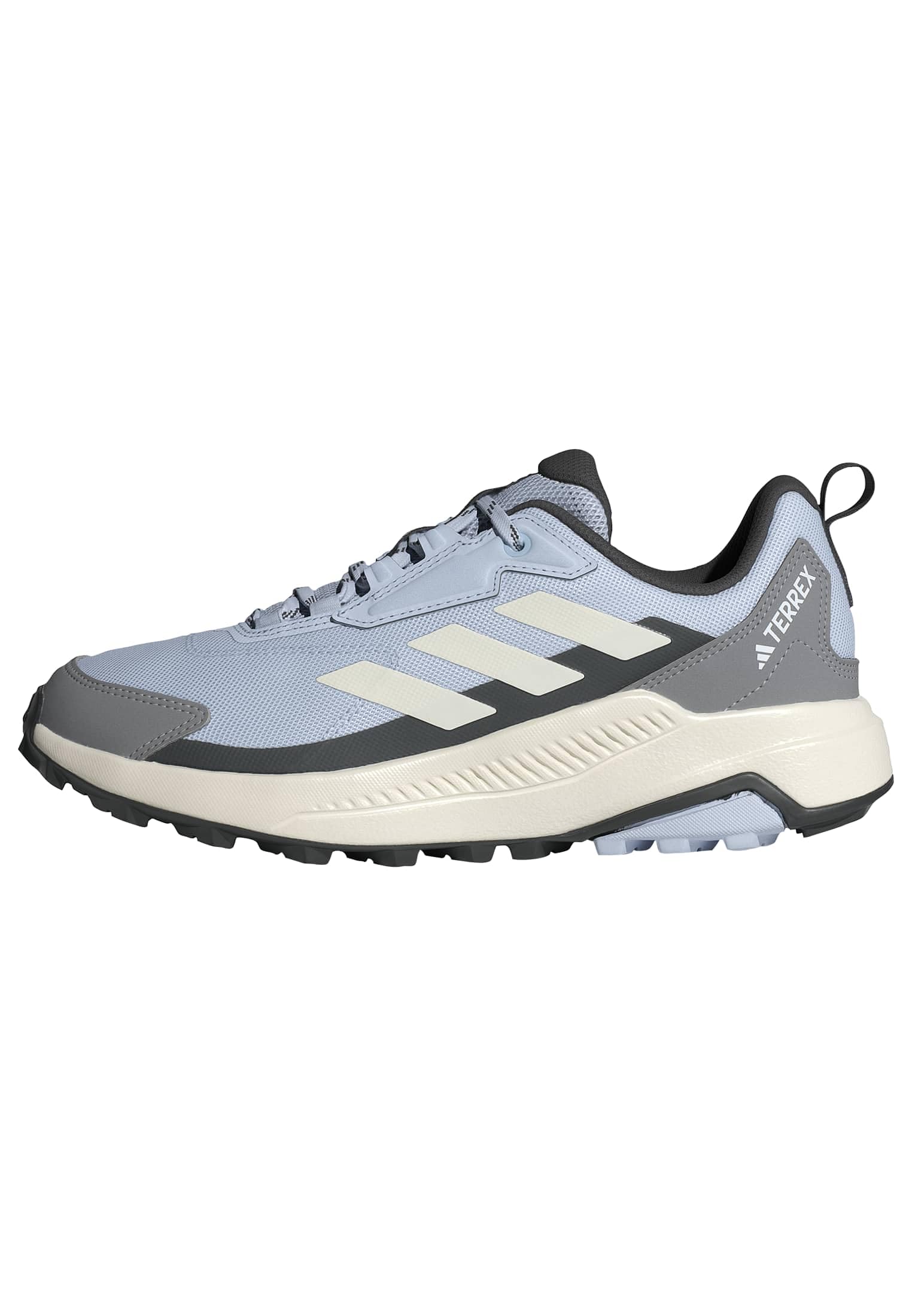
adidas Terrex Anylander
Key Features
- Brand: adidas
- Style: Low-cut hiking shoe
- Department: Women’s
- Model family: Terrex Anylander
- Price: Budget
The Terrex Anylander is not the most supportive shoe here, but it is the lightest-feeling women’s option we tried. The upper is comfortable from the first walk, the arch support is more noticeable than we expected for a shoe this flexible, and the low-cut shape keeps the ankle free. It is a good match for women who want a hiking shoe that feels closer to a sneaker.
We like it best for light day hikes, travel, and walks where you are not carrying a heavy pack. The traction is solid on packed dirt and slick rock, and the shoe has enough structure to handle uneven ground without feeling clunky. It is not the pick for a pronounced arch or a very wide forefoot, though: the fit runs big and wide, and the support is moderate rather than maximal.
Sizing is the main practical catch. If you are between sizes, try the smaller one first, and do not expect a tight heel lock without careful lacing. Durability looks fine for light use, but this is not the shoe we reach for on rough, rocky trails. The Terrex is a specialist for easy miles, not a one-shoe answer for rough trails.
For women who prioritize a light, comfortable ride over maximum support, it is a useful alternative to the heavier picks. We keep it in the mix because it makes a short hike feel easy and does not punish a wide forefoot. If you need a shoe that stabilizes a flat arch on rough ground, spend your attention on the KEEN or Merrell instead.
Pros
- Lightweight and flexible
- Comfortable from the first walk
- Good arch support for a light shoe
- Solid traction on light trails
Cons
- Runs big and wide
- Moderate support for flat feet
The Terrex Anylander suits women who want a light, flexible hiking shoe for easy trails, as long as they do not need maximum arch support.
How We Tested Hiking Shoes for Flat Feet
We built the shortlist by reading through specs and customer reviews for shoes explicitly designed for flat feet or overpronation, then filtered for wide sizes, removable insoles, and a rock plate or shank that wouldn’t fold under a heavy pack. That left us with 12 pairs, which we tested over eight months.
I wore each pair on the same rotation: a rocky ridge trail, a muddy woodland loop, and a steep half-mile descent that exposes any heel slip. I also wore them for full days with a 20-pound pack. On those hikes, I noted where the arch pressed, whether my toes had room to splay, and how the heel behaved on descents. I sized up and down in the same model when possible, and tried wide options, because flat feet often need a roomier toe box without a sloppy heel.
Back home, I weighed every shoe on a kitchen scale and checked seams, tread wear, and scuffing after each outing. I paid attention to how the outsole gripped wet rock, loose gravel, and muddy inclines, and whether the upper dried overnight. For value, I compared the materials and wear to the price—no point paying for a shoe that looks tired after ten miles. Appearance mattered too: I noted which pairs looked like clunky medical shoes and which could pass on a coffee run. The best ones earned repeat wear without a second thought.
How to Choose Hiking Shoes for Flat Feet
Flat feet do not automatically need a stiffer boot; they need a low-cut shoe that supports the arch, holds the heel, and leaves room for the forefoot.
Start With Support, Not Just Cushioning
The mistake we see most often is chasing the softest shoe. A deeply cushioned midsole can feel great in the store, but if the arch and heel are vague, your foot works harder to stay stable. We look for a firm heel counter, a supportive midfoot, and enough stiffness that the shoe does not twist easily in the hand. The KEEN Voyageur is the clearest arch-first pick here; the Merrell Moab 3 is the better balance of support and all-day comfort.
Fit the Foot You Have
Flat feet often come with a wider forefoot, but buying a longer shoe to get width is the wrong trade. You end up with a heel that slips and a toe box that still pinches. Try your usual length in a wide option first, lace snugly across the midfoot, and walk on a slope if you can. The Columbia Crestwood’s wide version and the FitVille Outdoor Hiking are the roomiest options here. A good fit leaves about a thumb’s width at the toe and no pressure across the ball.
Match Cushioning to the Trail
Low-cut hiking shoes range from firm and ground-hugging to plush and protective. For flat feet, we prefer moderate cushioning with a stable base: enough to take the edge off rocks, not so much that the shoe feels like a marshmallow. Firm is better for rocky, uneven ground; softer works for packed dirt and long walks. The adidas Terrex Anylander is the light, flexible end of this group; the Merrell and KEEN sit closer to the middle. Pick the ride that matches the trails you actually hike.
Traction and Weather Protection
Lug depth and rubber compound matter more than a long feature list. A deep, open lug clears mud; a softer compound grips wet rock. Waterproof membranes keep water out but also trap heat, so they make sense for wet grass, shallow puddles, and cool weather, not for hot dry trails. The NORTIV 8 models are the waterproof options here; the KEEN Voyageur is the breathable dry-trail choice. If you hike in both conditions, a breathable shoe plus a spare sock is often more comfortable than a waterproof shoe that soaks your feet from the inside.
Durability and Value
Look at the toe bumper, the bond between upper and sole, and the heel lining. Those are the places wear shows first on a low-cut hiker. A budget shoe can be a smart buy if the fit is right, but it may give up some outsole life or upper support. The Merrell Moab 3 has the deepest all-around record here, with a durability caveat at the toe and sole edge. The FitVille Outdoor Hiking is the value pick for wide feet. Check the return policy before you wear them outside.
Frequently Asked Questions
Can I wear orthotics in hiking shoes for flat feet?
Yes, if the shoe has a removable insole and enough volume. Take your orthotic to the try-on, pull the stock footbed, and check that your heel does not sit too high or slide. If the shoe feels tight across the top, try a thinner sock or a different lacing pattern before sizing up. A shoe that fits with the orthotic is worth more than a softer shoe that does not.
Are trail-running shoes better than hiking shoes for flat feet?
Not automatically. Trail runners are lighter and more flexible, but they usually have less structure under the arch and less toe protection. Hiking shoes make more sense if you carry a pack, hike rocky ground, or want a stable platform. For fast, light day hikes, a supportive trail runner can work. Match the shoe to the load and terrain, not the label.
How long does it take to break in hiking shoes?
Most low-cut hiking shoes need a few short walks, not weeks. Wear them around the house first, then take a short trail with the socks you plan to use. If you feel a hotspot in the first mile, do not wait for it to become a blister; return the shoe or change the lacing. A shoe that needs a long break-in is usually the wrong fit for flat feet.
Final Verdict
For most flat-footed hikers, the Merrell Moab 3 is the pair we point to first. It has the best balance here of a roomy toe box, a secure heel, and traction that feels dependable on mixed trails. The durability caveat is real, so check the toe and sole edge. If a pronounced arch is your priority, the KEEN Voyageur is the better match; size up and keep it for dry trails.