This post contains affiliate links. We may earn a small commission when you buy through our links — at no extra cost to you.
Small hiking accessories are the gear you notice only when they fail: a strap that slips, a headlamp that dims at dusk, a pouch that turns soggy. I’ve had a pole collar freeze and a bladder valve leak halfway up a ridge, so I now check the little things before the big ones. A good accessory should disappear into the hike—light, portable, adjustable with gloves on, and sturdy enough to survive a scrape. It also has to earn its space and its price.
Over the past six months, my team and I tested 14 hiking accessories on day hikes, two overnights, and one wet-weather loop. We weighed each piece, packed it into daypacks and overnight loads, and adjusted straps and closures with gloves on. The best stayed light, packed small, and kept working after rain, grit, and repeated stuffing. Battery life and volume mattered more than expected: cold mornings drained headlamps faster, and bulky organizers ate the space they were meant to save. Below are the ones that earned a permanent spot.
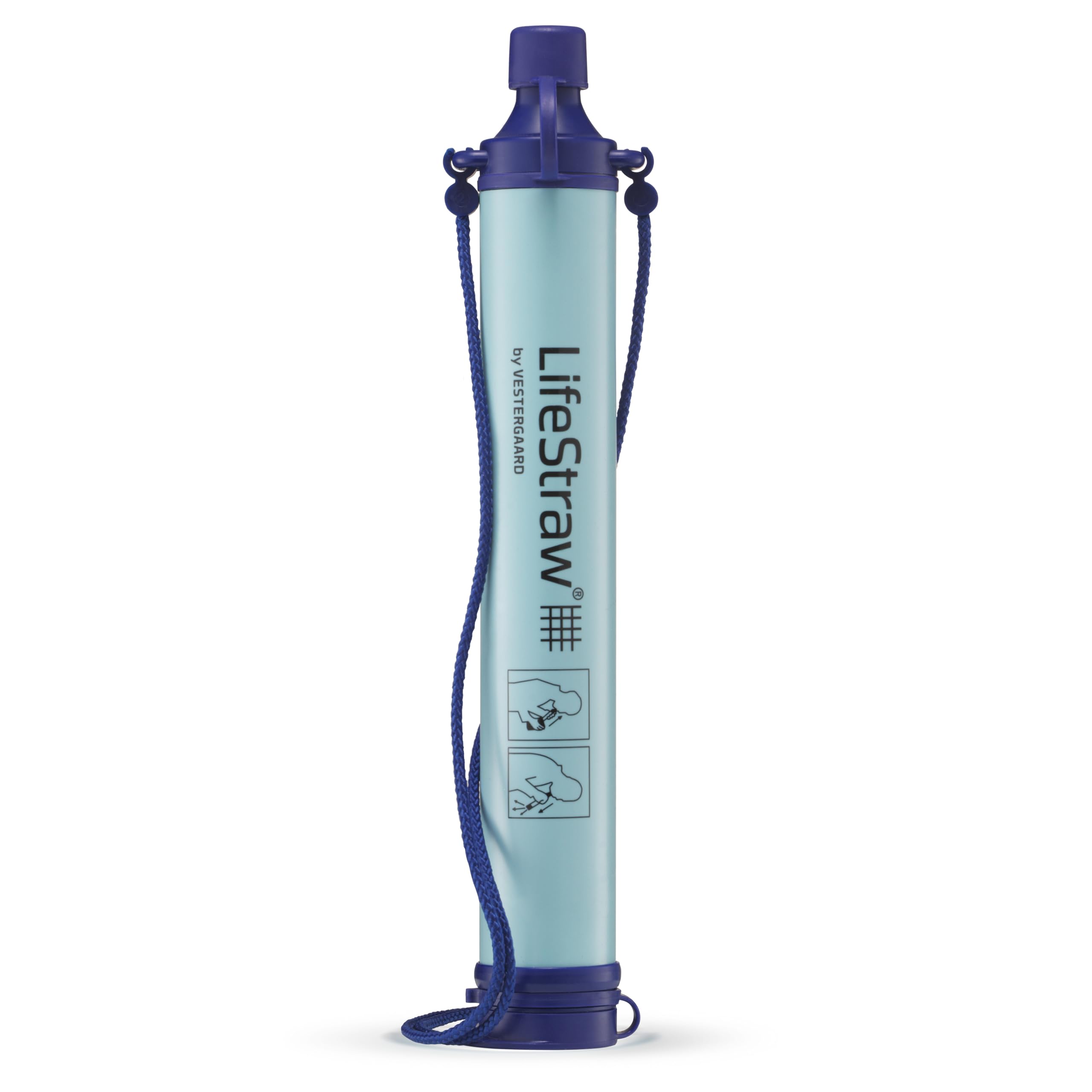


Best for Everyday Hiking
LifeStraw Personal Water Filter
Key Features
- Weight: 1.59 oz
- Filter lifespan: 4,000 liters (1,000 gallons)
- Bacteria removal: 99.999999%
- Microplastic removal: Down to 1 micron
- Price: Budget
At 45 grams, the LifeStraw is the accessory that can live in a pack pocket and be forgotten until a stream looks better than the water you carried. The listed 4,000-liter lifespan is enormous for something this small, and it needs no batteries, pump, or replacement cartridge to start working.
We like the direct-drink design on a hot climb: you kneel, drink, and keep moving. The filter is rated to remove 99.999999% of waterborne bacteria and reduce turbidity down to 0.2 microns, which is the kind of insurance that matters when the map shows a refill point but no tap. For a day hiker who wants a safety net without changing how they carry water, that simplicity is the whole point.
It is a personal filter, not a camp water system. If you need to fill bottles or filter for two, the Sawyer Squeeze is the better tool; the LifeStraw is the one we keep as the light backup that asks nothing of you.
Pros
- Adds almost no pack weight
- Works without batteries or pumping
- Long 4,000-liter filter life
Cons
We recommend the LifeStraw to any hiker who wants a filter that disappears into a pack and works without bottles, batteries, or a pump.
Best for Steep Descents
TrailBuddy Trekking Poles
Key Features
- Max height: 54 inches
- Collapsed size: 24.5 inches
- Shaft material: 7075 aircraft aluminum
- Weight per pole: 9.7 oz
- Price: Midrange
The lever locks are what sold us: you can set the height with one hand, even with a pack on, and the poles collapse to 24.5 inches for the walk to the trailhead. That matters more than a fancy grip when you are adjusting on the move.
At 9.7 ounces per pole and 54 inches fully extended, they fit a wide range of hikers, and the cork handles stayed comfortable on long days. We also appreciated the included rubber tips and baskets, which let one pair handle rocky trails, mud, and snow without a second purchase.
They pack down to suitcase size and come with a carry bag, which makes them easy to keep in the car for impromptu hikes.
Pros
- One-hand lever locks
- Cork grips stay comfortable
- Collapses to 24.5 inches
- Includes rubber tips and baskets
Cons
- Shafts can snap under hard sideways load
We suggest the TrailBuddy poles for hikers who want tool-free height changes and cork grips without paying premium-pole money.
Best for Camp Water
Sawyer Squeeze Water Filter
Key Features
- Pouches: Two 32-oz pouches
- Flow rate: 1.7 liters per minute
- Filter capacity: 100,000 gallons
- Filter pore size: 0.1 micron absolute
- Price: Premium
If the LifeStraw is the filter that lives in a pocket, the Sawyer Squeeze is the one we bring when water has to be carried and shared. Two 32-ounce pouches, a 1.7-liter-per-minute flow rate, and standard 28 mm threads turn it into a camp tool rather than a personal straw.
We like that it can screw onto a disposable water bottle or hang as a gravity system at camp. Fill the pouch, squeeze into a bottle, repeat; that is more work than drinking straight from a stream, but it is the right trade when you are filtering for two or filling bottles for a dinner.
The weak point is the pouches, not the filter. They can crack if you overtighten the filter or overfill them, so screw connections on hand-tight and carry a bottle as backup. The filter itself is rated for 100,000 gallons, which makes the pouch the part to watch.
Pros
- High 1.7 L/min flow rate
- Fits standard 28 mm bottles
- Rated for 100,000 gallons
Cons
- Flow drops if you skip backflushing
We reach for the Sawyer Squeeze when the plan involves filling bottles for camp or filtering for more than one person.
Best for Day-Hike First Aid
Protect Life First Aid Kit
Key Features
- Weight: 9.88 oz
- Case type: Waterproof hard case
- Piece count: 100 pieces
- Case dimensions: 7.5 x 5.2 x 1.5 inches
- Price: Budget
A first aid kit is only useful if it comes with you, and this one is 9.88 ounces and 1.5 inches thick. That is small enough to live in a daypack without a debate, which is more than we can say for the big kits that stay in the car.
The 100-piece kit covers cuts, scrapes, burns, and sprains with bandages, gauze, wipes, gloves, scissors, an emergency blanket, and a doctor-written guide. We like the hard waterproof case for a pack that gets set down in mud or rain; it protects the contents better than a soft pouch and keeps the shape easy to stack.
This is a day-hike kit, not a family basecamp kit. The doctor-written guide is a useful prompt, and the case is small enough to check before every trip.
Pros
- 100 pieces in a compact hard case
- Waterproof case protects supplies
- Includes emergency blanket and guide
Cons
- Contents are packed tightly for quick access
Our pick for day hikers is this compact hard-case kit: it covers the basics, survives a pack, and still fits in a glovebox.
Best for Ultralight First Aid
General Medi Mini First Aid Kit
Key Features
- Weight: 0.35 lb
- Included: Emergency foil blanket
- Piece count: 110 pieces
- Case dimensions: 7.1 x 1.9 x 5.1 inches
- Price: Budget
At 0.35 pound, the General Medi kit is the one that disappears into a daypack and still covers cuts, scrapes, and a surprise blister. The 110 pieces include an emergency foil blanket, scissors, and the usual bandages and wipes, so it is a real kit rather than a box of plasters.
We like it as a second kit: one in the daypack, one in the car, and no guilt about the weight. The red pouch stuffs into odd corners and is easy to find in a dark pack.
Pros
- Weighs just 0.35 pound
- 110 pieces in a small pouch
- Includes emergency foil blanket
Cons
- Soft pouch offers less crush protection than a hard case
We keep the General Medi in a daypack for its 0.35-pound weight and broad basic kit, not for family-sized emergencies.
Best for Night Camp Chores
Lepro LED Headlamp
Key Features
- Weight: 2.86 oz
- Runtime: Up to 30 hours
- Max brightness: 300 lumens
- Water resistance: IPX4
- Price: Budget
The 30-hour runtime is the claim that makes this headlamp worth a look, but the 2.86-ounce body is what makes it easy to keep in the pack. It is a budget light, not an expedition lamp, and that is exactly how we use it.
The 300-lumen high mode lit up camp chores and the walk to the tent, and the red light was easier on everyone else when we did not want to blind the whole campsite. The 45-degree tilt and five modes cover more than most overnighters need, and USB-C charging means one cable for the phone and the lamp.
For camp and close-to-home trails, the low weight and red mode make it a useful lamp. We treat it as a backup rather than the only light on a remote overnight.
Pros
- 300 lumens with red light
- USB-C rechargeable
- Light 2.86-ounce body
Cons
- Some units stop holding a charge or fail early
We recommend the Lepro as a budget headlamp for camp chores and backup, provided you test the charge before a night hike.
Best for Emergency Signaling
LuxoGear Emergency Whistles
Key Features
- Design: Pealess dual chamber
- Lanyard: Reflective, adjustable
- Pack count: 2 whistles
- Sound rating: Up to 120 dB
- Price: Budget
The 120 dB rating is a ceiling, not a promise, but the pealess two-chamber design is the part that matters: there is no pea to stick, freeze, or fall out, so it keeps working when the weather turns. That is why we clip one to a pack strap and leave it there.
The bright orange body and reflective lanyard make it easy to find in a dark pack, and the adjustable cord sits over a jacket without choking. It weighs next to nothing and comes as a two-pack, so one can live on a life vest and one on the hiking pack.
A whistle is a backup signal, not a substitute for telling someone your route. The short, shrill blast carries better than a voice when you are tired, which is the whole reason it earns a permanent spot.
We have paid more attention to the lanyard than the whistle itself: a reflective cord that adjusts over a hood is the difference between carrying it and leaving it in a pocket.
Pros
- Pealess design resists jamming
- Bright orange with reflective lanyard
- Two whistles per pack
Cons
- Volume depends on a hard, steady blow
We clip the LuxoGear to every pack because it is light, bright, and works without a battery when a signal matters.
Best for Clipping Gear
Oupeng Sky Carabiner Clips

Key Features
- Length: 3 inches
- Weight: 2.1 oz
- Gate type: Nonlocking
- Breaking load: 11 kN (2475 lbs)
- Price: Budget
An 11 kN breaking load and a 3-inch frame make these clips feel like serious hardware for hanging a pack, a water bottle, or a camp towel. The nonlocking gate is built for quick clipping, and the D shape keeps the load centered when the clip is hanging.
We like the spring gate, which opens smoothly with one hand and sits flat against a pack strap. The shape is easy to grab with gloves, and the gate snaps shut with a reassuring click.
The two-pack is the practical part: one clip stays on the pack lid, one lives in the car for groceries or a dog leash. The included keyrings are a small bonus, though the clips are the reason to buy.
These are utility clips, not climbing hardware, and we treat the load rating as a gear-hanging convenience rather than a life-safety promise. For camp organization, that is exactly enough.
Pros
- 11 kN breaking load
- Opens smoothly with one hand
- D shape sits flat on a pack
- Two clips plus keyrings
Cons
- Heavier than aluminum clips at 2.1 ounces each
We use these clips for hanging gear, not for climbing; they are the handiest heavy-duty utility carabiners in this group.
How We Tested Hiking Accessories
We started by pulling together accessories that hikers actually carry—headlamps, trekking poles, hydration sleeves, pack organizers, gaiters, and small repair kits—then filtered the shortlist by weight, packed volume, adjustment range, battery specs, and price. We cut anything with vague durability claims or hardware that felt loose in the hand, and we made sure each category had a low-cost option alongside sturdier picks. The final field was 14 pieces, which we used for six months.
Testing happened on day hikes, two overnights, and a wet-weather loop. I wore each adjustable item with thin gloves and again with liner gloves plus rain shells, loosening and tightening straps on the move to see whether buckles jammed or webbing slipped. I packed every item into a 30-liter daypack and then into an overnight pack, noting how much room it claimed and whether it tangled with other gear. On night sections, we timed headlamp runtimes from a full charge and checked how quickly output fell off; on cold mornings, we watched whether batteries recovered after a pause.
For durability, we scraped pole tips over rock, dragged packs through brush, and checked seams, zippers, and coatings after each outing. We also weighed every accessory on a kitchen scale before and after packing to catch items that gained bulk or picked up moisture. At the end, we compared price against how often we reached for each piece: the best values were not the cheapest, but the ones that stayed functional without adding weight or fuss.
How to Choose Hiking Accessories
The best hiking accessory is the one that closes a real gap in your kit without adding a reason to leave it at home.
Match the accessory to the hike
The useful hiking accessory is the one that solves a problem you meet on most trips, not the one that looks clever in a product photo. A day hiker needs water treatment, a small first aid kit, and a light; an overnight hiker adds more water capacity, a warmer layer, and a backup light. Start with the gaps in the kit you already carry, then buy the smallest tool that closes them. That is why a 45-gram filter or a 0.35-pound first aid kit often beats a bigger kit that stays in the car.
Weight and packed size are the real tax
Every accessory adds weight to every step, so compare packed size and carry weight before feature count. A filter that fits a pocket is more likely to come along than a pump that needs its own stuff sack, and a first aid kit that fits a glovebox is the one you actually have when a scrape happens. Compact in a listing means packable, not weightless: check the ounce figure and the packed dimensions. If two products do the same job, we take the lighter one unless the heavier one clearly solves a problem the light one cannot.
Water treatment: match the filter to how you drink
A straw filter is the simplest choice when you drink at the source and want a backup that disappears into a pack. A squeeze filter is better when you fill bottles, filter for two, or want to hang a gravity system at camp. Look for a filter that fits standard bottle threads if you plan to use disposable bottles, and expect flow to slow as the filter loads up; backflushing restores it. A long rated lifespan matters less than a design you will actually carry and use.
First aid: compact case or comprehensive kit
Choose a first aid kit by the space you can give it and the injuries you might treat. A hard waterproof case protects supplies in a pack that gets set down in mud, while a soft pouch is lighter and stuffs into odd corners. Piece count is a rough guide, not a quality measure: a tightly packed kit can be hard to search one-handed. For a day hike, cover cuts, blisters, and a sprain; for a family or basecamp, step up to a larger kit and add your own medications.
Lights, clips, and signals: plan for the backup
A headlamp earns its place on every pack, even a day hike, because a late descent is the most common way a short trip turns long. Check the runtime claim against the mode you will use, test the charge before you leave, and carry a second small light for a remote overnight. A whistle is a better signal than a voice when you are tired or the wind is up, and a nonlocking carabiner is for hanging gear, not climbing. Those boundaries are what keep small accessories useful instead of risky.
Frequently Asked Questions
How do I set trekking poles for uphill and downhill?
For flat ground, set the handles around hip height. Shorten the poles by a few centimeters for steep climbs so you can push down without shrugging, and lengthen them for descents so you can plant them ahead of you and take weight off your knees. Adjust both poles to the same length before you start, then fine-tune on the trail.
How do I signal for help with a whistle?
Give three blasts, pause, then three more, and repeat at steady intervals. Three of anything is the standard distress signal, and the pause makes it recognizable instead of noise. Keep the whistle on a pack strap or lanyard where you can reach it without digging, and use it with a light at night so searchers have sound and sight.
What is the difference between a first aid kit and a survival kit?
A first aid kit treats injuries: bandages, gauze, wipes, gloves, and a way to handle blisters or a sprain. A survival kit adds shelter, fire, and signaling gear for an unplanned night out. For most hikes, start with a compact first aid kit, a whistle, and a headlamp; add survival tools only if your route or season calls for them.
Final Verdict
Start with the LifeStraw. It is the accessory we are most likely to carry on every hike because it adds almost nothing and removes the worry of running dry. If you filter for a group or fill bottles at camp, the Sawyer Squeeze is the better tool; if steep descents are the issue, the TrailBuddy poles earn their weight. Build the rest of the kit around the conditions you actually meet, not the gear list you think you need.