This post contains affiliate links. We may earn a small commission when you buy through our links — at no extra cost to you.
A monocular does one simple thing: it sends all the light from a single objective lens into one eye, so you get most of the reach of binoculars at half the glass and half the weight. For wildlife watching, that trade is the whole point — one free hand for a field guide, a thermos, or a leash — but it also means every optical shortcut shows up fast. A dim or mushy image through one eye is far harder to forgive than the same view through two.
I birded with binoculars around my neck for years before I pocketed a small monocular for a foggy morning at a local wetland and stopped hauling the big pair on short walks. Over the past seven months, my team and I have carried 11 monoculars through dawn feeder watches, marsh hikes, and a lot of standing still. The ones worth your money all share bright glass and a focus wheel you can turn with the tip of one finger, and those two things separate the picks below more than magnification ever does.
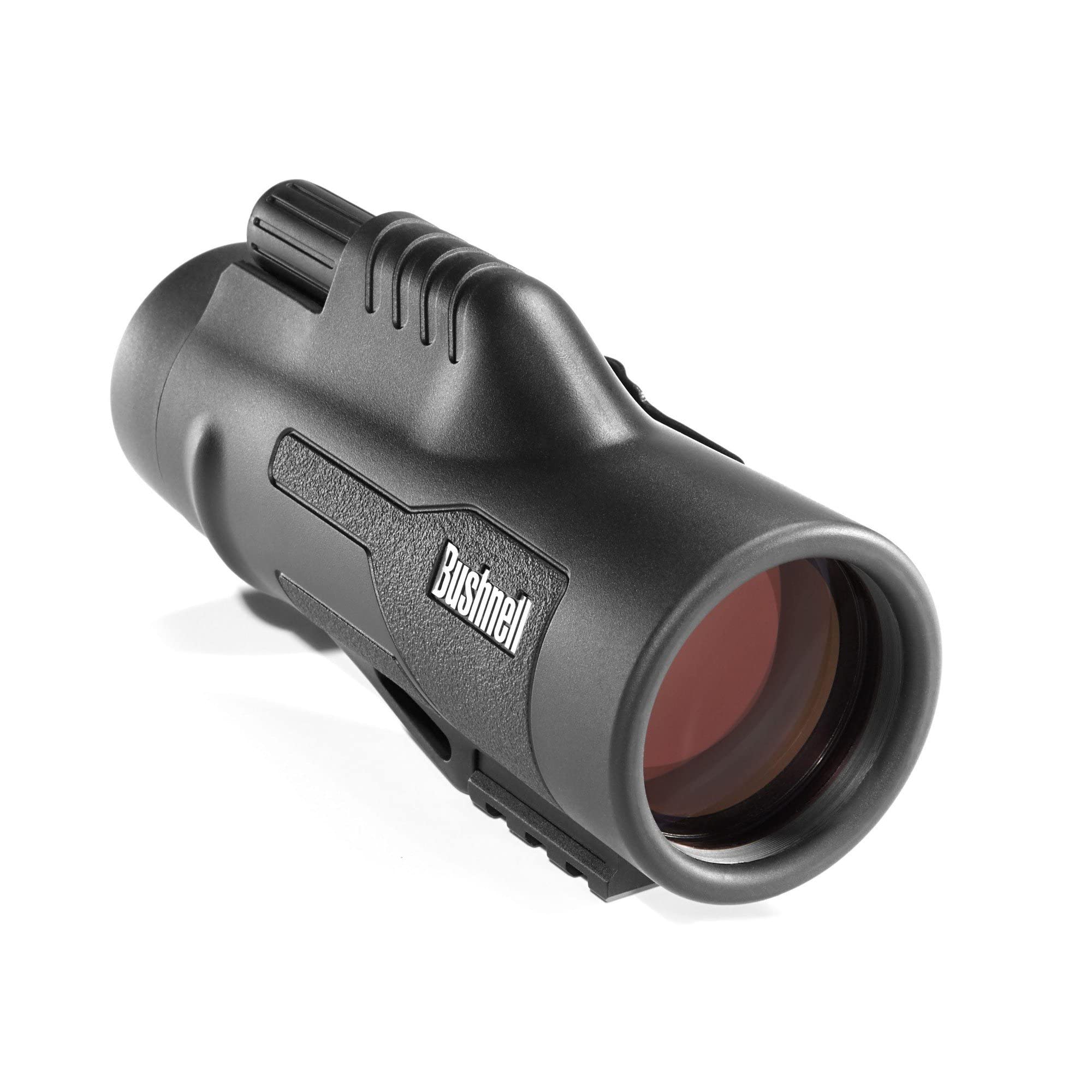

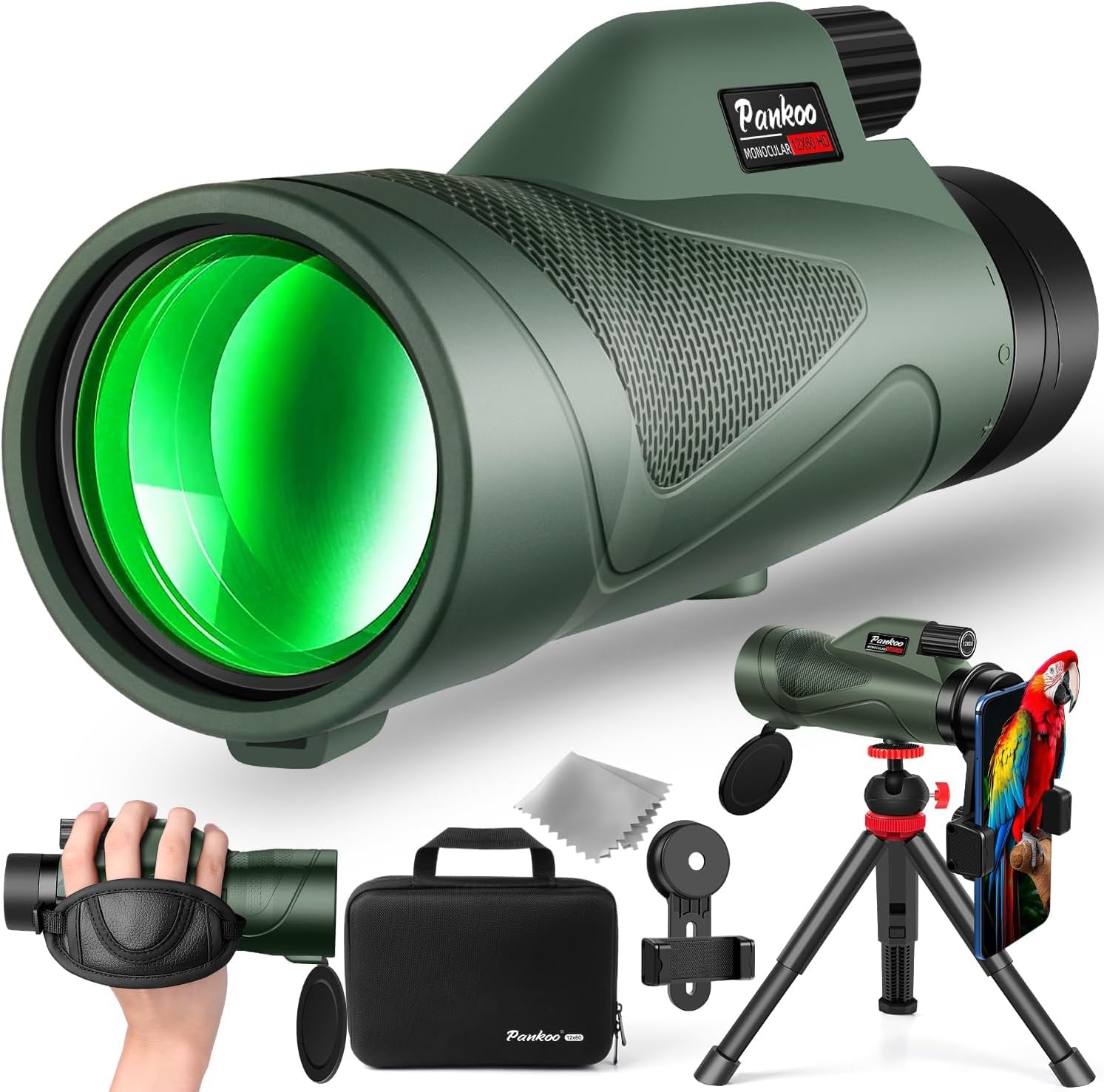


Best for Overall Wildlife Viewing
Bushnell Legend 10×42
Key Features
- Weight: 13.2 oz
- Field of view: 340 feet
- Magnification: 10x
- Objective lens: 42 mm
- Price: Premium
Dusk is when most of the good wildlife watching happens, and it is where the Legend separates itself from everything else in this group. A 42 mm objective behind ED Prime glass and Bushnell’s Ultra Wide Band coating keeps color and detail intact as the light drops, so the last half hour before dark is still worth being outside for. It helps that all of this arrives at 10x rather than 12x: enough reach for a bird across a field, little enough shake to stay on it.
What settles it for us is the field of view. At 340 feet at 1,000 yards it is among the widest here, and that is the figure that decides whether you see the bird at all — you catch the movement in the wide view, then the detail fills in. The focus knob racks from a branch 20 yards out to a deer at 300 without hunting, and the twist-up eyecup gives glasses wearers the full field instead of a keyhole. This is the one we take when the walk is the point and the watching is the reward.
The Legend is not the shape you want if the monocular has to disappear into a shirt pocket; the 10x25s below do that better. Nor is it the pick if you are not yet sure how often you will get out, since the FEEMIC covers a lot of the same ground for far less. There is a tripod thread underneath if you ever want it steadier, though at 10x we never bothered with one.
Pros
- Widest views in this group at 340 feet
- ED glass holds color and brightness at dusk
- Precise one-hand focus
- Rubber-armored and O-ring sealed for wet weather
Cons
- The priciest monocular in this group
- Bulkier than the pocket 10x25s
For wildlife watching specifically, this is the one to buy: one of the widest, brightest views in our group makes birds easy to find and hold, and nothing else here matches it at dusk.
Best for Budget All-Rounder
FEEMIC 8×42
Key Features
- Weight: 10.1 oz
- Exit pupil: 5.25 millimeters
- Magnification: 8x
- Objective lens: 42 mm
- Price: Budget
Eight power looks like the modest choice on paper. In practice it is why this is the monocular we reach for most often: at 8x the shake that creeps into higher-power views simply is not there, so you can watch a wren work through a hedge instead of chasing it from branch to branch. The 42 mm objective and 5.25 mm exit pupil give it the largest light beam in this group, which is what keeps the image usable as the light goes, and 285 g does not drag on a lanyard all afternoon.
The kit is more complete than we expected at this level — a shoulder-strap case, caps for both ends, a hand strap and a cleaning cloth — and the 5.7-inch body drops into a jacket pocket. Two things to know before you order: the focus is average rather than crisp, and the case is a tight squeeze to get back into. Everything else, from the twist-up eyecups to the nitrogen-filled body, punches above what it costs.
Pros
- Steady 8x view that is easy to follow birds with
- Largest exit pupil here at 5.25 mm
- 285 g and 5.7 inches — jacket-pocket size
- Case, caps, straps and cloth included
Cons
- No stated warranty
The first monocular we hand to a new wildlife watcher: 8x is genuinely easier to hold steady, the view stays bright at dusk, and the price leaves room in the budget for boots.
Best for Open-Ground Viewing
Pankoo 12×60
Key Features
- Weight: 14 oz
- Field of view: 6.5 degrees
- Magnification: 12x
- Objective lens: 60 mm
- Price: Midrange
Twelve power usually means a monocular you cannot hold still and a tripod you left at home. This one ships with the tripod — a small adjustable stand — plus a phone holder, a case and a hand strap, which is why we treat it as a kit rather than just an optic.
The view holds up its end of the bargain. A 60 mm objective with a 21 mm BAK-4 prism and a 6.5-degree field — 325 feet at 1,000 yards, generous for 12x — gives you detail at distance that an 8x cannot: the barring on a hawk’s tail rather than a hawk-shaped smudge. At 14 ounces it is light for its size, and short freehand looks work without the stand.
Where it earns its place is open ground — a marsh, a field edge, a shoreline — with birds far out and the light flat. That is also the honest limit: 12x narrows what you see, so warblers in canopy cost you more time finding than watching. Clip the phone on, set it on the little tripod, and you get record shots of things you otherwise only describe.
Pros
- 12×60 pulls in detail at long range
- 325-foot field is wide for 12x
- Tripod, phone holder, case and strap included
- Light for its size at 14 ounces
Cons
- Bundled tripod is light-duty
The best kit here for distance: 12×60 detail, a tripod to steady it and a phone holder for proof, without paying much for any of it.
Best for Pocket Carry
Vortex Solo 10×25
Key Features
- Weight: 5.6 oz
- Warranty: Unlimited lifetime
- Magnification: 10x
- Objective lens: 25 mm
- Price: Midrange
Vortex’s unlimited, unconditional, fully transferable lifetime warranty is the reason we are comfortable telling you to treat this one badly. Repair or replacement for as long as you own it, no receipt to keep — that is the kind of backup that makes a 5.6-ounce pocket optic worth carrying rather than protecting. It measures 4.4 inches, so it drops into a jacket pocket or a belt pouch and stops being something you have to remember.
It is a 10×25, and the 25 mm objective is exactly what buys the weight and size. In good light the fully multi-coated view is crisp and the adjustable eyecup works with glasses; the body is rubber armored and nitrogen purged with O-ring seals, so rain is not a problem. A lanyard and a soft case come in the box, and both are the sort you keep using.
Where it gives ground is the hour that matters most: a 25 mm objective cannot match a 42 mm when the light goes, so if most of your watching happens at the ends of the day, one of the bigger picks will show you more. For daylight walks, travel and the pocket you actually check before leaving, it is the one that comes along.
Pros
- 5.6 ounces and 4.4 inches — true pocket size
- Unlimited, unconditional lifetime warranty
- Waterproof, fogproof and rubber armored
- Crisp, fully multi-coated view in good light
Cons
- Stiff focus ring out of the box
The monocular that actually comes with you: 5.6 ounces, sealed, and backed by a lifetime warranty, with the low-light trade-off a 25 mm pocket optic makes.
Best for Tripod Sessions
Gosky 12×55
Key Features
- Weight: 1.54 lb
- Exit pupil: 4.58 millimeters
- Magnification: 12x
- Objective lens: 55 mm
- Price: Midrange
At 0.7 kg this is the heaviest optic in the group, and the weight is doing real work: a 55 mm objective and an 18 mm BAK-4 prism with a 4.58 mm exit pupil, the second-largest light beam here after the 8×42.
Set it on the included tripod and the payoff is obvious. The image is bright and crisp, the one-hand focus wheel runs smoothly and sits on top of the body where your finger falls, and IPX7 sealing with nitrogen purging means a wet morning does not end the session. The lens caps are tethered to the body, which sounds like a small thing until you have dropped one in heather.
The kit is generous — tripod, smartphone mount, case, hand strap, cleaning cloth and caps for both ends — and a limited lifetime warranty covers it.
Our read is that this is a tripod optic first and a hand-held one second, and it is excellent at that job: glassing a heronry, working a shoreline, or sitting on a seawall in the rain. If you walk miles and glass on the move, the Bushnell or the Vortex will serve you better; if you stop, sit and watch, the extra light is worth carrying back to the car.
Pros
- Big 55 mm objective and 4.58 mm exit pupil
- IPX7 sealed and nitrogen purged
- Tripod, phone mount and case included
- Smooth one-hand focus wheel
Cons
- Phone adapter takes patience to line up
The tripod-first pick: a bright 12×55 that stays rock steady on its included stand and shrugs off rain, as long as you are not carrying it all day.
Best for Glovebox Backup
Celestron Nature 10×25

Key Features
- Weight: 6 oz
- Field of view: 5.8 degrees
- Magnification: 10x
- Objective lens: 25 mm
- Price: Midrange
For daylight glassing from a porch, a car window or a lunch stop on the trail, the Nature does almost everything right: 170 g, four inches long, multi-coated BaK-4 optics and a 5.8-degree field wide enough to find a bird before it moves. It fits a glovebox or a chest pocket, and the rubber-armored body has grippy contours that stay put in wet hands.
Add full waterproof, fogproof sealing and a limited lifetime warranty and this is a sensible way to spend less than the Vortex while still carrying something sealed and pocketable. That is the case for it: not the best pocket monocular here, but the value one, and the one we leave in the car without a second thought.
What it is not is a low-light optic. A 25 mm objective runs out of light well before dusk does, so plan it around daylight and leave the last hour to a 42 mm. For everything between breakfast and late afternoon, it earns its place in a pocket.
Pros
- 170 g and four inches — genuinely pocketable
- Clear multi-coated view in daylight
- Waterproof, fogproof and rubber armored
- Limited lifetime warranty
Cons
- Focus ring is stiff out of the box
The sensible daylight pocket pick: 170 g, fully sealed, warranted for life, and clear enough to identify whatever turns up at the treeline.
Best for Cheapest High Power
Pankoo 16×52

Key Features
- Exit pupil: 3.25 millimeters
- Magnification: 16x
- Objective lens: 52 mm
- Optical tube length: 6.7 inches
- Price: Budget
Sixteen power is the number that sells this one, and it is also the number to be skeptical about. On paper, 16×52 gets you closer than anything else here for the least money. In the hand, 16x magnifies every tremor, so a clear view of a bird 100 yards out wants a rest — a fence post, a tree trunk, the roof of a car.
In good light the view is better than the price suggests. The BAK-4 prism and multi-coated optics do their job, the body is nitrogen filled and sealed against water and fog, and it packs small enough to live in a daypack without a second thought. On a feeder, a target or a distant ridge, it works.
Where we land is that this is the glovebox spare and the first optic for a kid who is just getting interested: inexpensive enough to hand over without wincing, sealed enough to survive a dropped pack. For following warblers through a hedge, the 8x FEEMIC will show you more birds — but it will not get you the reach, and sometimes reach is the whole reason you are carrying one.
Pros
- The most magnification here for the least money
- BAK-4 optics look good in daylight
- Nitrogen-filled and weather sealed
- Small and light enough to leave in a pack
Cons
- Focus is finicky and can soften the image
The cheapest way into high magnification: a fine glovebox spare or first optic, as long as you have something to rest it on when the bird is far.
How We Tested the Best Monoculars for Wildlife Watching
We started by pulling together the models that keep showing up in birding forums and retailer reviews, then filtered by objective lens size, magnification, eye relief, weight, and whether the housing was nitrogen-purged and fog-proof. We deliberately spread the budget from entry-level glass to a couple of splurges so we could judge value honestly, and we read through owner complaints, most of which centered on stiff or mushy focus wheels, before choosing 11 to test.
Every monocular went to a backyard feeder tray at first light, where we tried to resolve individual feather barbs on chickadees and count the barring on a downy woodpecker’s back at roughly 25 feet. We also glassed backlit branches to check for purple or green fringing along the edges and stayed out past sunset to see how long each one held a usable image. Quality showed up in the housing as much as the glass — we noted loose eyecups, gritty threads, and anything that rattled.
For focusing, we timed the rack from a butterfly three feet away up to a hawk circling overhead, then repeated it wearing gloves and with one hand while holding a leash. We tried each wheel with glasses on and off, checked that the diopter stayed put after a day in a jacket pocket, and graded whether fine focus arrived in small increments or jumped past the sweet spot. Ease of use came down to whether we could find a sharp image fast, before the bird moved.
Portability got measured, literally: we weighed each one, wore it on a strap over a three-mile hike, and shoved it into a rain shell pocket to see what fogged when we stepped out of a warm car into cold air. Functionality meant testing the close-focus limit on dragonflies, checking tripod threads, and seeing whether a lens cap stayed attached. Value, in the end, was simply how much of that performance survived at the lower price points.
How to Choose a Monocular for Wildlife Watching
The number on the box tells you the least about whether you will see the bird; steadiness, field of view and light gathering decide that, and they pull against each other.
Pick a magnification you can hold still
Eight and ten power are the sensible range for wildlife. At 8x the image sits still enough to follow a bird through branches and the view stays bright; 10x gives more reach across open ground at the cost of some shake. Past 12x you are really shopping for a tripod — the 16x Pankoo can show you a distant ridge, but not while you are standing and holding it.
If you watch from a fixed spot with a rest, high power is fine. If you walk and glass, stay at or below 10x and let the glass do less work than your hands.
Match the objective lens to the hour you watch
Divide the objective by the magnification and you get the exit pupil, the light beam that reaches your eye. A 10×25 pocket optic gives 2.5 mm; an 8×42 gives 5.25 mm. That is the difference between a view that fades at dusk and one that holds, and dawn and dusk are when wildlife moves.
So if you go out at first and last light, a 42 mm objective buys more than extra magnification does. The cost is size and weight: a 25 mm optic fits a shirt pocket, a 42 mm does not.
Field of view decides how fast you find the bird
Wide is easier. The Bushnell’s 340 feet at 1,000 yards and the Pankoo 12×60’s 325 feet are generous; pocket 10x25s are narrower still. A narrow view means scanning, refinding, and losing the bird when it hops.
For warblers in canopy and flocking birds, take the wider view and give up some magnification. For a bird parked on a far shoreline, reverse it.
Focus ring and eyecup: the parts you touch
Focus is where cheap monoculars give themselves away. A ring that is stiff or gritty makes one-handed tracking impossible, and one that drifts loses the bird between looks. Twist-up eyecups matter if you wear glasses: twist them down and you get the full field instead of a tunnel.
The trap is judging this with warm hands indoors. A ring that is merely firm in a shop can be genuinely hard work on a cold morning, so test it one-handed before you commit.
Sealing, weight and what comes in the box
Waterproofing and nitrogen purging matter more than they sound: a sealed, fogproof body is what lets you bring the optic from a cold trail into a warm car without the lenses misting. Rubber armor is worth having for the way these things get treated.
Weight is a real decision — 5.6 ounces disappears, 0.7 kg does not — so match it to how you carry it. Bundled tripods and phone adapters are usually light-duty; treat them as a bonus, not the reason to buy.
Frequently Asked Questions
Is a monocular as good as binoculars for bird watching?
Not quite, and that is the honest answer. Binoculars give you two-eyed depth perception and a more relaxed view over long sessions, which is why dedicated birders still carry them. A monocular halves the weight and bulk and frees a hand, so it is the better tool for hiking, travel and a jacket pocket.
If you watch for hours from one spot, take binoculars. If you carry the optic more than you use it, a monocular earns its place.
Can I use a monocular for night viewing?
Only as a light-gathering tool, not as a night-vision device. None of these amplify light the way a night-vision monocular does, so after dark you are limited to the moon, the stars and anything lit by a lamp — and a 42 mm objective does that well.
For genuinely dark wildlife, you need thermal or night vision, which is a different purchase entirely.
How do I keep a monocular from fogging up?
Let it acclimatise. Leave it in its case for ten or fifteen minutes when you move between a warm car and cold air so the glass changes temperature slowly. Keep your breath away from the eyepiece and, in cold weather, carry it inside your jacket rather than swinging from a lanyard.
Nitrogen purging keeps fog out of the inside of the body; it does nothing for the outer lens surface, which is the part you have to manage.
Final Verdict
The Bushnell Legend 10×42 is the monocular we point most people toward for wildlife: a wide, bright, color-true view that holds up at first and last light in a body you can carry all day. If that price is more than you want to commit, the FEEMIC 8×42 gives you the steadiest, brightest view here for a fraction of it, and the Vortex Solo is the one that lives in a jacket pocket.
Pick by the hour you watch and how far you walk: dawn and dusk belong to the 42 mm objectives, long walks to the 10x25s, and a fixed seat in the rain to the Gosky on its tripod.