This post contains affiliate links. We may earn a small commission when you buy through our links — at no extra cost to you.
Dinner at camp almost always runs past sunset, and the last twenty minutes of it — plating food, hunting for a dropped spork, trying not to kick the stove — is exactly when a headlamp earns its keep. The catch is that brightness, weight, and battery life pull against each other: the lamp that turns night into day is usually the one that feels like a brick on your forehead and quits by midnight. What you actually want is a light you strap on and forget about, so your hands stay free and your attention stays on the trail or the stove.
I’ve owned headlamps that flickered out mid-descent and one that was so front-heavy it slid down my face on every climb, so I’m picky. Over four months, my team and I ran 14 headlamps through real camping trips, night hikes, and after-dark chores, and the differences were not subtle. One thing nobody tells a first-time buyer: the big lumen number on the box is usually a burst mode that steps down within a minute or two, so pay attention to sustained output instead. The picks below were chosen for hands-free reliability first and everything else second.
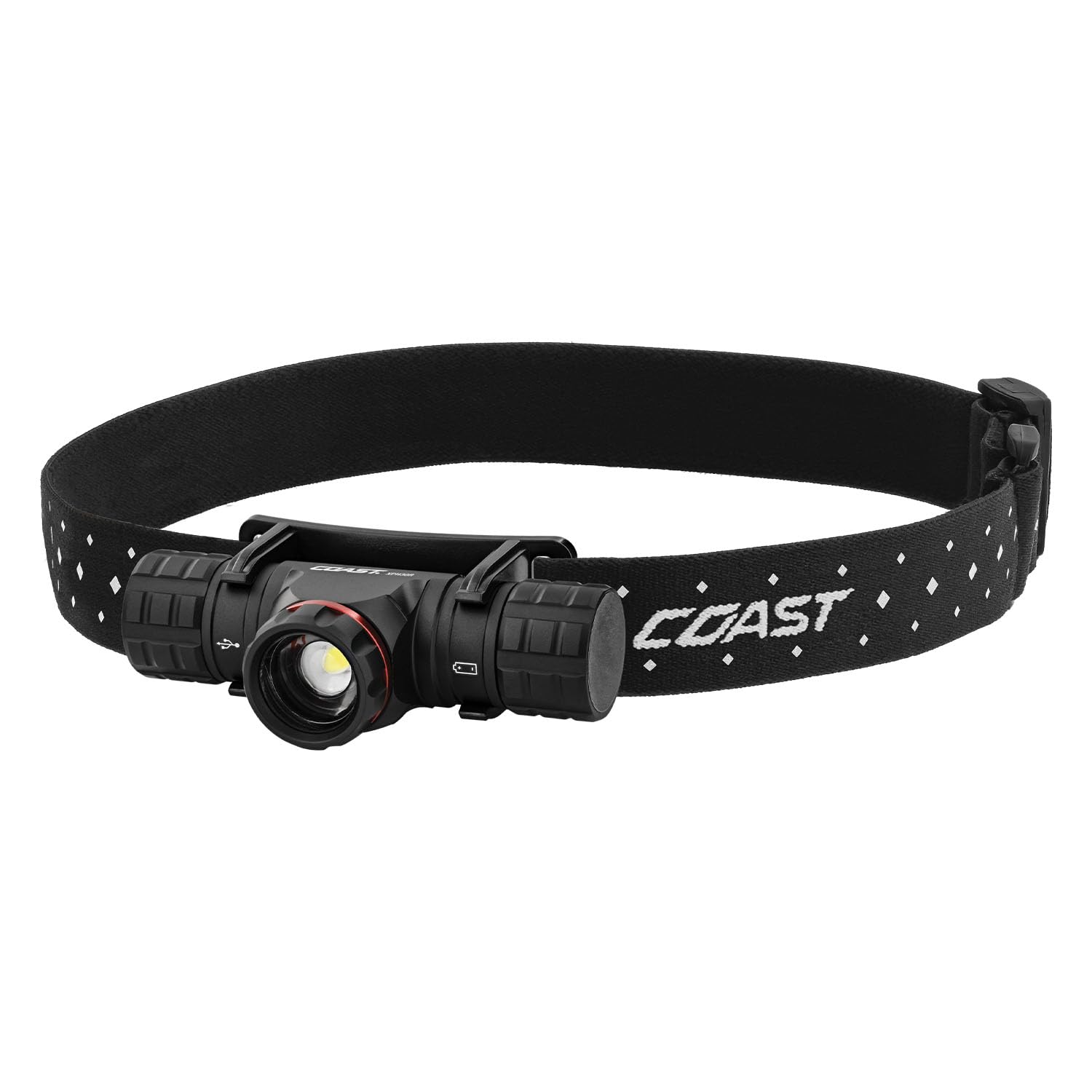


Best for Camp and Trail
Coast XPH30R
Key Features
- Runtime: 28 hours on low
- Charging: USB-C
- Max output: 1200 lumens
- Water resistance: IP54
- Price: Premium
Twist the bezel and the beam tightens from a wash wide enough to cover a picnic table into a spot that reaches the next trail marker, with no dark hole in the middle. That one control is why we keep picking it up: most lamps in this guide make you choose flood or spot at the till, and the ones that offer both make you cycle through a menu to switch. At 1200 lumens on turbo, 500 on high and 46 on low, the Coast covers everything from lighting a stove to finding a dropped bootlace. It is the most expensive lamp here, and we think it earns the money.
The light also comes off the strap. Pull the body out of its bracket and the magnetic base holds to a truck hood, a steel table leg, or the inside of a camper shell, so a headlamp becomes a work light you can aim without wearing it. Behind that usefulness: 6.75 hours on high, 10 on medium and 28 on low, USB-C charging, an aluminum body rated IP54 with a one-meter drop rating, and a lifetime warranty. The plastic lamps here feel like accessories; this one feels like a tool.
Weight is the trade. The Coast sits heavier on your forehead than the plastic two-packs, and on a long climb we noticed it. Standing at a stove or crouched over a pack, we didn’t. If you’re counting grams for a thru-hike, the lighter picks below serve you better.
What we tell friends: buy this if you camp often enough that a headlamp has a permanent place in your kit. If it comes out twice a year, the Energizer pair does the job for a fraction of the money.
Pros
- Beam twists from flood to spot with no hot spots
- 28 hours on low, 6.75 on high
- Body detaches and sticks to metal
- Lifetime warranty on an aluminum housing
Cons
- Heavier on the head than the plastic picks
- The priciest lamp in this guide
The camping headlamp we buy with our own money: a shapeable beam, 28 hours on low, and a body that comes off the strap to light a stove.
Best for Weekend without Charging
Energizer Vision HD+ 2-Pack
Key Features
- Dimming: 10% to 100%
- Runtime: 35 hours
- Batteries: 6 AAA included
- Max output: 260 lumens
- Price: Budget
Two headlamps, six AAA batteries and no charging cable: the Energizer pair is ready the moment the box opens. For a camping bin that gets packed in a hurry, that counts for more than it sounds — nothing to top up the night before, nothing to leave behind on the charger.
The dimmer is what lifts it above other budget lamps. Instead of three fixed steps, you hold the button and the white light slides between 100% and 10%, so you can set it just bright enough to read a paperback without lighting up the whole tent. At full power it puts out 260 lumens and reaches about 80 meters, which is fine for the path to the washroom and modest for a real night hike.
The quoted 35 hours is not at full brightness, and the included alkalines are a starting supply rather than a season’s worth, so pack spares for a long trip. IPX4 and a one-meter impact rating cover rain and a tumble off the picnic table. Two lamps for about the price of one of the cheaper rechargeables is the whole argument: one on your head, one in the glovebox, no cable to lose.
Pros
- Batteries included, nothing to charge
- Dimmer sweeps from 100% down to 10%
- Two lamps for the price of one
Cons
- Alkalines are an ongoing cost
- 260 lumens is modest for night hiking
For a family or a truck kit, this is the pair we hand out: batteries in the box, a dimmer that goes down to a whisper, and no charging to remember.
Best for Tent and Chores
Lepro Rechargeable 2-Pack
Key Features
- Runtime: 30 hours
- Charging: USB
- Red light: Steady and flashing
- Max output: 150 lumens
- Price: Budget
At 150 lumens the Lepro pair is the dimmest thing in this guide, and that is the point. It handles zipping a tent, finding the stove valve and walking a familiar path to the washroom; it does not pick out a rocky descent at any speed. If your headlamp mostly lights things within arm’s reach, you won’t miss the output.
Two lamps and one cable is the other reason we like it: charge one while the other rides in a pocket, and you never start an evening with two dead lights. The red mode is a real one, steady and flashing, and USB charging ends the battery runs entirely. Treat the quoted 30 hours as a low-setting figure rather than something you’ll get on the bright setting.
The savings show up in materials and in the warranty, which runs a year. For a tent-and-chores light that lives in the camping bin and comes out on summer weekends, that is a fair trade for the money. For the lamp you depend on every weekend, spend more.
Pros
- One charges while the other is in use
- Red light, steady and flashing
- USB charging ends battery buying
Cons
- Campsite brightness only, not trail brightness
- Charging faults are the weak point over time
A cheap pair for camp chores and tent duty: dim enough to keep your night vision intact and bright enough for the path to the washroom.
Best for Families and Groups
EverBrite 5-Pack
Key Features
- Pack: 5 headlamps
- Runtime: 10 hours
- Batteries: 15 AAA included
- Max output: 300 lumens
- Price: Budget
Five headlamps in five colors, fifteen AAA batteries in the box, and a strap that adjusts from a small child’s head to an adult’s. If your camping involves more than one other person, this is a different kind of product from everything else here: a set to hand out rather than one lamp to look after.
The colors do real work. Each kid gets their own, which ends an argument before it starts, and the red and green modes are a nice touch for moving around a site after lights-out without waking the tent next door.
The memory function is the detail we appreciate most: hold the button for two seconds and the lamp switches off, then it comes back on in the same mode next time. No cycling past a strobe to reach the setting you want at two in the morning. Output tops out at 300 lumens for around four hours, or 150 lumens for closer to ten, which is plenty at a campsite and thin for a serious hike.
We treat this as the group lamp, not the hike lamp. When everyone needs their own light and nobody wants to think about charging, the five-pack covers a whole campsite for less than one premium headlamp. For the one lamp you’ll wear on a night summit, buy the Coast instead.
Pros
- Five lamps and fifteen AAA batteries in one box
- Strap adjusts from toddler to adult
- Memory returns to your last mode
- Red and green modes for after dark
Cons
- Around four hours on high
- Not a night-hiking beam
The family-camp answer: five lights, batteries included and a memory that skips the strobe, for the site rather than the summit push.
Best for Whole-Site Lighting
Blukar K9116 Headlamp
Key Features
- Weight: 9.74 oz
- Runtime: 18 hours
- Max output: 8000 lumens
- Water resistance: IPX6
- Price: Midrange
The listing claims 8000 lumens, many multiples of anything else in this guide, and it is the only lamp here that will light a whole campsite from one spot on your head. It also puts 276 grams on your forehead, and you feel every one of them when you tilt your head back to look up a tree.
So we rate it as a work light more than a hiking light: 90 degrees of tilt, a zoomable beam, and an IPX6 rating that is the best water protection in this group, which matters when you’re setting up in the rain or working under a wet vehicle. It is the one we reach for when a job needs both hands and a flood of light, and the one we leave behind when the plan is a long walk.
Charging runs over USB-C and takes about five hours, so plan an overnight top-up rather than a quick one, and the quoted 18 hours is at the low end of its five modes. For a lamp that lives in a toolbox or hangs in a shed, the bulk is simply the price of the output.
Pros
- Enough light to run a whole campsite
- IPX6, the best water protection here
- 90-degree tilt and a zoomable beam
Cons
- Heavy and bulky on the forehead
- About five hours to fully charge
Buy it to light a whole site or a job with both hands free, not to walk ten miles — the output is real and so is the weight.
Best for Lighter Metal Build
SLONIK 1000 Lumen

Key Features
- Body: Aluminum
- Weight: 4 oz
- Runtime: 4 hours
- Max output: 1000 lumens
- Price: Midrange
Think of the SLONIK as the Coast’s lighter sibling: a machined aluminum body, a head that swivels 90 degrees, and the same trick of pulling the light off the strap to use on its own. It sits noticeably lighter on your head, which you appreciate on a long walk back to the tent.
Six brightness levels plus an SOS strobe run off one large button that is easy to find with gloves on, and the body is rated IPX4 and dustproof. The listed runtime of four hours is short: this is a lamp you charge after every night out, not one you take on a week-long trip without a power bank.
The mounting bracket is plastic, and that is the piece that lets the lamp down over time — the aluminum body is tough, the clip that holds it to the strap much less so. We still think it is a sensible buy for a good deal less than the Coast: you get the metal build and the detachable body, and you give up runtime and long-term mounting confidence.
Pros
- Aluminum body for less than the top pick
- One large glove-friendly button
- Light detaches for pocket use
- Noticeably lighter on the head
Cons
- Four-hour listed runtime
- Plastic mounting bracket is the weak point
A sensible lighter alternative to our top pick if you want a metal body for less money, provided you accept the short runtime.
Best for Backup Kits
GearLight S500 2-Pack

Key Features
- Pack: 2 headlamps
- Runtime: 10 hours
- Batteries: 6 AAA not included
- Max output: 200 lumens
- Price: Budget
Two headlamps, seven modes each and a red light for less than almost anything else here — the GearLight pair is the budget answer, with the caveat that you supply six AAA batteries yourself. As a car kit or a drawer of spares, that is a fine trade: when a lamp has sat untouched for a year, alkalines are what you want in it anyway.
The head tilts through 45 degrees, enough to aim it at a book or a camp stove, and the band comes off to wash — a small thing until you’ve worn one through a sweaty summer. Seven modes is more than anyone needs at a campsite, and 200 lumens with a 10-hour quoted runtime is campsite light rather than trail light.
The band is where these give out, so treat the strap as the wear item and don’t count on a decade of service. Buy it for the glovebox, the shed and the tent pocket, and keep a better lamp for the dark walk back from the water.
Pros
- Two lamps for the lowest price here
- Red mode plus a 45-degree tilt
- Washable, adjustable headband
Cons
- Batteries not included
- The band is the weak point
The cheapest way to put two working lights in your kit: 200 lumens, a red mode and a washable band, once you add six AAAs.
Best for Long Nights
Energizer PRO-360

Key Features
- Runtime: 50 hours
- Batteries: 3 AAA included
- Max output: 360 lumens
- Water resistance: IPX4
- Price: Budget
Switch the PRO-360 on and it ramps up over a second or so instead of slamming on at full brightness. Energizer calls it VisionGuard, and it is the sort of detail you only appreciate after you’ve blinded yourself fumbling for the switch inside a tent at two in the morning.
It also carries the longest runtime figure in this guide: 50 hours, from three AAA batteries that come in the box. At 360 lumens it is brighter than the two-pack from the same brand, and the mode list is unusually complete for a battery lamp — high and low spot, high and low wide, plus green and red.
The trade is that it is one light and it runs on alkalines, so there is no charging and no spare in the box. That suits a certain camper exactly: one good lamp, a pack of spare cells, and nothing to remember before a trip.
We rate it the simplest good lamp here — no cable, no menu to learn, and a low setting that behaves itself in a tent. If you already carry a power bank and want to stop buying AAAs, the Coast is the better long-term buy. If you want to put a lamp in a bag and forget about it until you need it, this is the one.
Pros
- 50-hour quoted runtime, the longest here
- VisionGuard eases you into full brightness
- Green and red modes included
- Three AAA batteries in the box
Cons
- Single lamp, no spare in the box
- Alkaline only, no recharging
The battery lamp we recommend without caveats: a gentle ramp-up, every mode you’d actually use, and batteries already in the box.
How We Tested the Best Camping Headlamps
We built the shortlist by reading spec sheets the way you’d read a menu — sustained output, battery chemistry, weight with batteries installed, water resistance, and strap design — then cut anything that only hit its claimed brightness for a few seconds or needed a proprietary charging cable you’d lose by trip two. Price mattered, but value mattered more: a bargain-bin lamp that dies in a drizzle isn’t a bargain. That filtering left 14 headlamps, from tiny featherweights to larger multi-battery models.
Those 14 came with us for four months of night hikes on rocky, rooted trails, weekend car camps, dusk runs, predawn starts, a soggy weekend of rain, and one unplanned power outage at home. We wore each against a bare forehead and over a beanie, loosened and tightened the strap with gloves on, and pressed every button without looking at it. We timed how long each ran on its highest steady setting, then checked whether the battery indicator told the truth as it drained, and we noted whether the beam picked out a trail marker 50 feet away or just made a bright puddle at our feet.
For weight and bulk, we weighed each lamp loaded with batteries and carried it loose in a jacket pocket for an evening to see if it became a lump. For durability, we dropped each onto gravel from waist height, dunked the water-resistant ones in a bucket, and stuffed them into packs alongside keys and a camp stove. What separated the winners was consistency: steady output, a mount that held its aim after a mile of walking, and a strap you could adjust one-handed with cold fingers. A few models with gaudy specs turned out to have flimsy mounts and drifting beams; several of our favorites weighed and cost a little more, and earned it.
How to Choose a Camping Headlamp
The right camping headlamp is decided less by the lumen number on the box than by how you’ll power it, how long you’ll wear it, and whether it survives a wet night.
Match the beam to the job
Most camping happens at arm’s length: cooking, zipping a tent, digging for a dry bag. Somewhere between 200 and 400 lumens handles all of it, provided there is a genuinely low setting, under about 50 lumens, for reading inside a tent without waking anyone. Four-figure outputs are for picking out trail markers at speed.
Treat any turbo figure as a burst rather than a mode you’ll run all evening, and remember that lumen numbers are not measured the same way by every maker. Weigh them next to runtime instead of on their own, and check the beam shape too: a wide wash is friendlier around a stove, a tight spot is what finds the next marker.
Power: rechargeable or AAA
Rechargeable lamps give more output and no battery bill. Alkalines give you a light that still works on the fourth morning with no outlet in sight. The failure to plan around is a rechargeable that dies at dusk with nothing to plug into, so either carry a power bank and the right cable or take a lamp that eats AAA.
If your trips run both ways, buy for the harder one. A battery lamp for the long backcountry week and a rechargeable for weekends covers everything, and a set of two means one can sit on a charger while the other is on your head.
Weight and fit decide what you’ll wear
A headlamp sits clamped to your skull for hours, so mass matters more than the spec sheet suggests. The light plastic lamps here disappear on your head; the metal ones with big battery packs make themselves known and slide when you look down.
For trail use, go light. For standing work at a stove, a truck, or a repair job, the extra weight buys runtime and output you’ll actually notice. Whatever you choose, try it over the hat you’ll wear at night before you commit.
Water, drops and the mount
IPX4 means rain and splashes; IPX6 survives a jet of water. Neither is submersible, so a lamp dropped in a stream is a dead lamp whatever the rating says, and a battery door that doesn’t seal turns a damp evening into a dead cell.
The part that fails first is usually not the light: it’s the strap or the plastic bracket holding the body. Look at how the lamp attaches before you look at the modes, and favour a detachable body or magnetic mount if you want a second way to use the same light.
One lamp or a set
For a family or a group, sets are the sensible unit: colored lamps end the argument over whose is whose, and a spare in the tent bag has rescued more evenings than any single high-end light. Count the batteries into the deal — a set that includes them can undercut three lamps that don’t.
Frequently Asked Questions
Can I wear a headlamp over a beanie or a climbing helmet?
Usually, but check the strap before you commit. An elastic band sized for a bare head can run out of slack over a thick winter hat, so look for a long adjustment tail or a separate helmet strap. Put it on over the hat and helmet you actually use before your first trip.
How do I stop a headlamp from switching on inside my pack?
If the lamp has a lockout, hold the power button for a few seconds until it flashes and stays dark, then repeat to unlock. If it doesn’t, take one battery out and put it back the wrong way round so the contact can’t complete. Either trick saves you from a dead lamp at the trailhead.
Will a headlamp work in freezing weather?
Yes, with a shorter runtime. Lithium-ion cells lose capacity as they chill and alkalines sag too, so an evening’s worth of light in summer can fade to an hour or two well below freezing. Keep the lamp in an inside pocket until you need it and carry a spare set of cells.
Can I take a headlamp on a plane?
Yes. Alkalines can travel in checked baggage or carry-on. Loose lithium-ion cells and power banks have to go in the cabin with you, so a rechargeable headlamp belongs in your carry-on if you’re checking a bag. Keep spare cells in their packaging or with the terminals taped.
Final Verdict
The Coast XPH30R is the headlamp we point people to: a beam you can shape from flood to spot, 28 hours on its low setting, and a body that detaches and sticks to metal when you need light on a job rather than on your head. It costs more and weighs more than the plastic picks, and it earns both.
If the lamp will never see a charging cable, the Energizer two-pack gives you batteries, a real dimmer and a spare for a fraction of the money. For a family site where five people need their own light, the EverBrite set settles it in one purchase.