This post contains affiliate links. We may earn a small commission when you buy through our links — at no extra cost to you.
A backpacking trip can go sideways in small, expensive ways: a tent zipper that splits at dusk, a sleeping pad that lets cold through by 2 a.m., a headlamp that dims two miles from camp. I’ve had all three happen, so I treat backpacking gear less like accessories and more like the foundation of a good night out. The right pieces carry comfortably, pack down small, keep you warm, and work when your hands are cold and your patience is thin—without charging a premium for the privilege.
Over the past six months, we tested 14 pieces of backpacking gear—shelters, sleep systems, packs, camp kitchen tools, and headlamps—on weekend overnights, a five-day section hike, and a cold, wet backyard shakedown. We watched for warmth, packed size, portability, and functionality, but also durability, zipper quality, and whether a battery actually lasted the nights it promised. A few pieces impressed in the store and faded by the second morning; the picks below are the ones that kept earning their place.




Best for Every Trip Filter
Sawyer Mini Water Filter
Key Features
- Weight: 1.4 oz (41 g)
- Bottle fit: Standard 28 mm threads
- Filter rating: 0.1 micron; 100,000 gal
- Price: Midrange
Forty-one grams is a rounding error in a pack, and on a solo overnight it can be your entire water treatment. The Sawyer Mini threads onto a standard 28 mm bottle, pushes into the included 16-ounce squeeze pouch, or sits inline in a hydration pack, so filtered water goes where you want it instead of only into your mouth. The hollow-fiber membrane is rated 0.1 micron absolute and the unit is rated for 100,000 gallons.
That thread is the detail that makes this the filter we reach for first. A straw filter puts you on your knees at the waterline every time you want a drink; the Mini lets you fill a bottle, hang a gravity bag, or drink through a hose without stopping, and it does all of that at 1.4 ounces. The rated life is long enough that you will lose it before you wear it out, which is a strange thing to say about a filter and the main reason we stopped shopping around.
Flow is the part to manage. Push a lot of silty water through and the membrane loads up, which shows as a weaker stream rather than a failure; the included plunger clears it in a couple of minutes at camp or at home. Thread it on straight rather than forcing it, since cross-threading is the usual cause of a leak at the bottle end. Do that and it becomes the least dramatic thing in your pack, which is exactly what you want from the gear you drink through.
Pros
- Barely noticeable at 41 grams
- Threads onto standard 28 mm bottles and packs inline
- Rated for 100,000 gallons of water
Cons
- Squeeze pouch is the first part to wear out
The filter we pack first: 41 grams, a 28 mm thread that fits standard bottles, and a 100,000-gallon rating. If you treat one piece of water gear as permanent, make it this.
Best for Backup and Emergencies
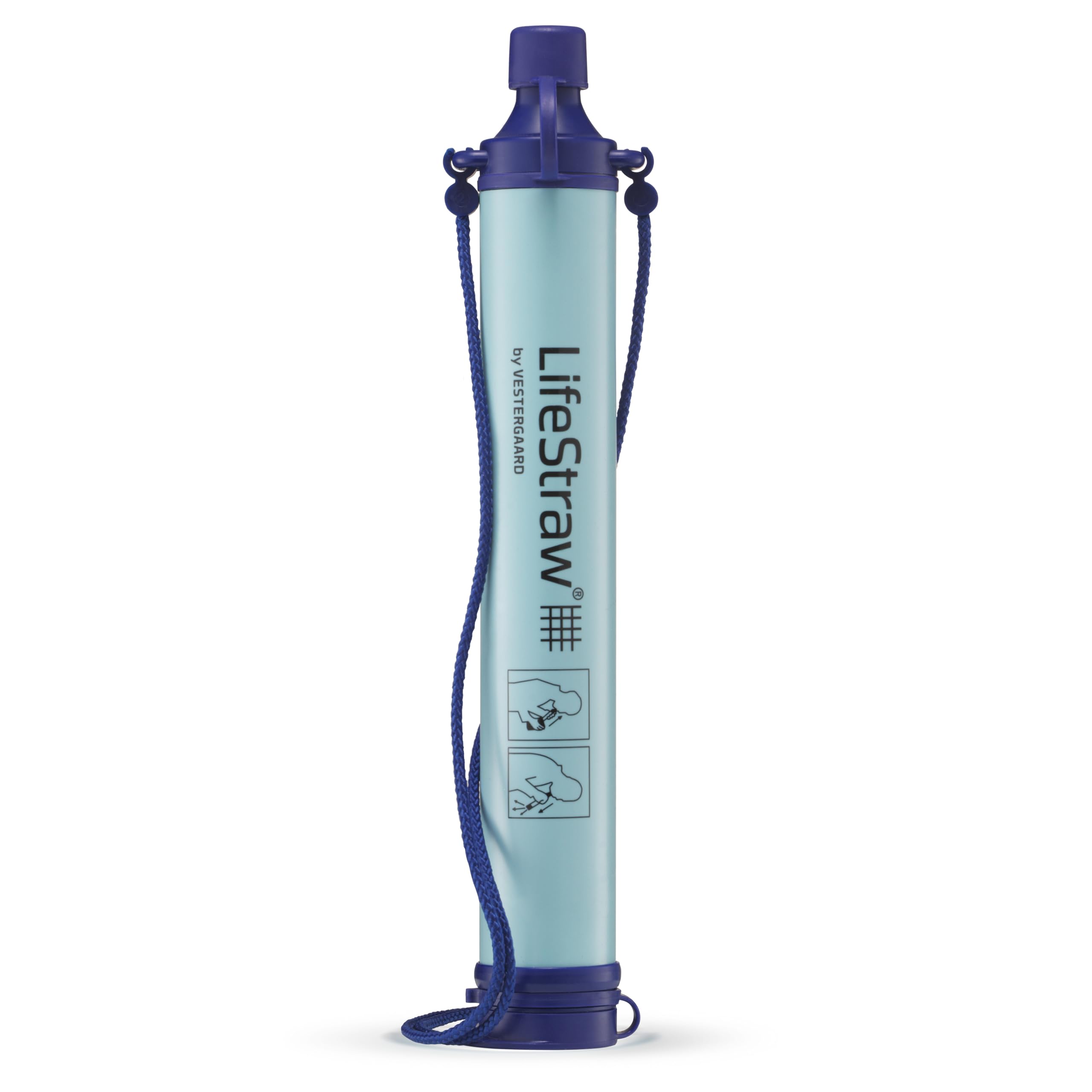
LifeStraw Personal Filter
Key Features
- Type: Direct-sip straw filter
- Weight: 1.6 oz (45 g)
- Rated life: 4,000 L (1,000 gal)
- Price: Midrange
The LifeStraw will not fill your bottle. It is a straw: one end in the stream, the other in your mouth, and you drink where you stand. We carry one anyway, because at 45 grams with no assembly, no batteries, and nothing to prime, it is the filter that always works, the thing in the top pocket that turns a questionable tarn into a drink without any setup at all.
The numbers are serious for something this small: 4,000 liters (1,000 gallons) of rated life, 99.999999% of waterborne bacteria and 99.999% of parasites removed, plus microplastics down to 1 micron. That is years of trips for most of us. The catch is the one above, since you cannot carry water away from the source, so it sits alongside a bottle-filling filter rather than instead of one. Purge it once before the first trip and the new-plastic taste goes away. Ours live in a day pack, a fishing vest, and the glovebox.
Pros
- Nothing to assemble or charge
- 4,000 liters of rated life
- Light enough to carry as a second filter
Cons
- Only works at the water source
The simplest filter here and the one that never needs assembling, so it earns its place as the pack-always backup beside a bottle filler.
Best for Filtering for Two
Sawyer Squeeze Filter
Key Features
- Weight: 2.5 oz (71 g)
- Included: Two 32-oz pouches
- Flow rate: 1.7 L per minute
- Rated life: 100,000 gal
- Price: Premium
Same membrane as the Mini, with more built around it. The Squeeze kit adds two 32-ounce collapsible pouches, a drinking straw, and inline adapters for a hydration pack, and those pouches are the reason we hand this version to two people sharing a tent rather than one.
Fill a pouch from the stream, screw the filter on, and either squeeze or hang it and let gravity work; the listed flow rate is 1.7 liters a minute with a clean membrane. Two pouches means one can be settling while the other is being filled, which turns a group water stop into something you barely notice.
We rate it the better camp filter of the three here, and the one to buy if you are filtering for more than yourself. The pouches are the consumable part: do not overtighten the filter onto them, do not sit on a full one, and a pinhole stays a small annoyance rather than a trip-ending event. Backflush after every trip and the flow comes back.
Pros
- Two 32-ounce pouches speed up group filtering
- Gravity or squeeze, filter to bottle or mouth
- Same 100,000-gallon rated membrane as the Mini
Cons
- Heaviest and bulkiest filter kit here
Worth the extra space when two or more of you are filling bottles at camp: the same membrane, with pouches big enough to make a round of drinks.
Best for Mild-Weather Camping
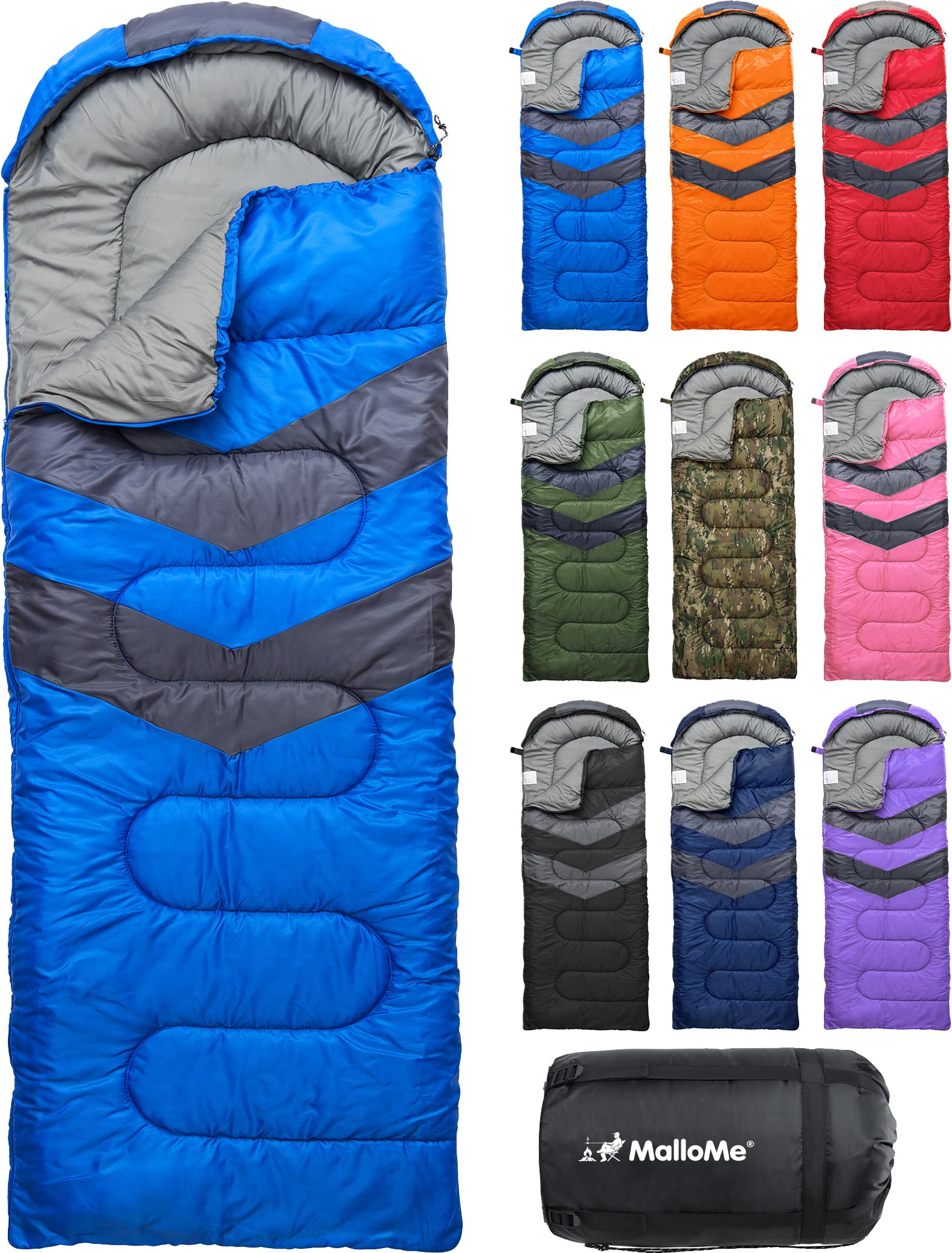
MalloMe Sleeping Bag
Key Features
- Weight: About 3 lb
- Dimensions: 86.6 x 31.5 in
- Temperature rating: 50-80°F
- Price: Midrange
If your season runs from late spring to early fall, this is the bag we point first-time buyers to. The rating is 50 to 80°F, which is honest about what it is: a warm-weather bag, whatever the cold-weather language in the title suggests.
It weighs around 3 pounds and rolls into its own sack without a fight, which matters more than any figure on a spec sheet when you are packing at six in the morning with cold hands. The 86.6 by 31.5 inch cut fits a 6-foot adult with room at the foot, and the polyester shell is listed as waterproof, which is enough for a night of tent condensation.
Two things shape the fit. There is no insulation underneath you, so a sleeping pad is part of the purchase rather than an accessory, and the ground comes straight through without one. And the cut is narrower than a standard rectangular bag, which most people will never notice and broader shoulders will.
As a first bag or a spare for guests it earns its place: light enough for a couple of miles of walking, warm enough for a summer night, and inexpensive enough that you are not precious about it. Take it car camping without a second thought.
Pros
- Roomy enough for a 6-foot adult
- Around 3 pounds and easy to stuff
- Lowest-cost way into a real sleeping bag
Cons
- 50°F floor rules out shoulder-season nights
- Zipper is the weak point of the bag
A warm-weather bag for first-timers and summer overnights: roomy, light enough to carry, and honest about its 50-degree floor.
Best for Cold Camp Mornings
Alvada Merino Socks
Key Features
- Sizing: Unisex adult
- Material: Merino wool
- Pack size: 3 pairs
- Price: Budget
Frost on the tent and boots stiff as boards is the test that matters for a sock, and these came through it with toes still warm. Merino, thick, and soft enough that we stopped thinking about them by the second mile.
The real argument is the pack rather than the pair: three of them means one on your feet, one drying on the outside of the pack, and one clean for the sleeping bag. Sizing is unisex and the cuff stays up through a full day of walking, which is the thing inexpensive wool socks usually get wrong.
Care is where you protect the investment. Wash them cool, skip the dryer, since heat takes a size out of wool, and let them air dry overnight. Do that and a three-pack covers a full season of weekend trips.
Pros
- Warmth holds up on frosty mornings
- Cuffs stay up all day
- Three pairs per pack
Cons
- Heels wear through within a season
- Too thick for hot-weather trips
Buy them as warm camp and sleep socks and expect to replace them; three pairs makes that a fair trade for the warmth.
Best for Pack-Light Washing
Rainleaf Microfiber Towel
Key Features
- Care: Machine wash
- Size: 48 x 24 in
- Fabric: 85% polyester, 15% polyamide
- Price: Budget
Cotton is the heaviest thing in a pack after water, and it stays wet. This is 48 by 24 inches of microfiber, 85% polyester and 15% polyamide, that rolls into its own vented bag and is dry again by the time you have finished breakfast.
In the hand it feels closer to suede than to terry, soft rather than scratchy against the face. It absorbs several times its own weight, but the technique is different: you pat yourself dry rather than scrubbing, and a second pass gets the rest. The snap loop hangs it off a pack strap or a branch so it dries while you break camp.
We take one on every trip and have stopped carrying any other kind of camp towel. The advice we give is to size up: 48 by 24 inches dries you off but does not wrap around an adult, and the bigger sizes add a zip pocket for a key or a phone. It goes in the machine with everything else when you get home.
Pros
- Dry again within a morning
- Rolls down to almost nothing in the pack
- Soft enough for face and hair
Cons
- The 48 x 24 size does not wrap an adult
The towel that earns its pack space: fast-drying, soft, and compact, as long as you are not expecting a bath sheet.
Best for Cold-Weather Camp
Nalgene 32 oz Bottle

Key Features
- Mouth: 63 mm wide
- Capacity: 32 oz
- Empty weight: 6.25 oz (177 g)
- Temperature range: -40°F to 212°F
- Price: Midrange
The 63 mm mouth is the whole point. You can fill it from a shallow seep, drop in ice cubes, and get a hand inside to scrub it, none of which is true of a bottle with a sports cap. That width is also why it survives a trip where a narrow bottle would be a hassle.
The body is Tritan Renew, which has taken every drop we have given it, and the lid seals well enough that a full bottle has never wet the inside of a pack. Measurement lines down the side are more useful than they sound when you are rationing, and it goes in the dishwasher at the end of the trip.
Rated from -40 to 212°F, it covers everything from a frosty morning to a hot drink. On a cold trip we fill it with hot water at bedtime, screw the lid down tight, and put it in the foot of the sleeping bag, which is within the bottle’s stated range and makes the first hour in a tent considerably better.
At 6.25 ounces empty it is a commitment, and on a long-mileage trip a collapsible bottle wins on weight alone. Where it earns its place is the cold-weather camp and the base camp: a bottle you can drop, scrub, fill with near-boiling water, and hand to a friend without a lecture about treating it gently.
Pros
- Wide mouth makes filling and scrubbing easy
- Rated from -40°F to 212°F
- Lifetime warranty and dishwasher safe
Cons
- Heavy at 6.25 ounces empty
- 63 mm mouth will not take a 28 mm screw-on filter
The bottle we take when weight is not the only thing that matters: tough, easy to clean, and happy with boiling water.
Best for Pocket Backup Light
Victoper LED Flashlight

Key Features
- Pack: 2 lights
- Batteries: 3 x AAA each
- Beam reach: 656 ft
- Brightness: 120 lumens
- Price: Budget
The cheapest way to put a light in every pack, and you get two of them. That is the pitch: one in the top pocket, one in the glovebox, and no worry about losing either. Each is 5.12 inches of anodized aluminum with a lanyard, small enough to forget until you need it.
Brightness is the surprise. The listed output is 120 lumens, which sounds modest next to the figures printed on bigger torches, but the beam is rated to reach 656 feet and the zoom takes it from a wide wash for cooking to a tight spot for finding a trail marker. There are five modes including SOS and strobe, and the lanyard has kept one attached to a pack strap all season.
Power is the compromise. Each light takes three AAA cells, six in total, and alkalines fade in the cold and run down faster on high. Rechargeable AAA cells are the fix if you use it often, but then you are carrying a charger for the light that was meant to be the simple option.
We keep one in a pack pocket as a backup rather than a primary. A handheld ties up a hand on the trail, and you cannot cook, pitch, or read a map with it, which is why it does not replace a hands-free light. For finding a zip in the dark or a dropped spoon under the picnic table, having two of them around is worth more than the spec sheet suggests.
Pros
- Two lights for the lowest outlay here
- Zoomable beam with five modes
- Aluminum body with anodized finish
Cons
- Drains AAA cells quickly on high
- Handheld only, so it ties up a hand
A cheap, bright, spare-everywhere light. Buy the pair, keep one in the pack, and do not expect it to replace a hands-free lamp.
How We Tested Backpacking Gear
We built the shortlist by comparing specs first—packed size, weight, temperature ratings, battery type and claimed runtime, and materials—then filtering out anything that looked undersized, overbuilt for its job, or vague about sizing. We also weighed price against what the piece was actually made of, because value in backpacking gear rarely means the cheapest option; it means the one that survives a season of abuse without forcing a mid-trip replacement.
Then we took those 14 items into the field for six months: weekend overnights, a five-day section hike, and a cold, wet backyard shakedown when we wanted to isolate a draft or a leak. We pitched shelters in wind and rain, slept on rocky ground, stuffed and re-stuffed sleeping bags, cooked in breezy campsites, and ran headlamps on fresh batteries until the light dimmed. We opened and closed every zipper dozens of times, including one-handed in the dark, and noted snags, split teeth, and sliders that blew out.
After each trip, we checked seams, abrasion points, buckles, and fabric for wear—the quality signals you can’t judge in a store aisle. We compared how warm each sleep system felt on 35-degree nights against the rating on the tag, weighed packed kits to see whether each item fit the space it claimed, timed headlamp runtimes, and asked whether the piece still worked with cold hands and a headlamp on. The gear that stayed in our packs held up, packed small, kept us warm, and felt worth its price after six months, not just on the sales floor.
How to Choose Backpacking Gear
Backpacking gear is bought in grams and paid for in comfort, and the pieces that matter most are the ones you use every day, not the ones with the longest feature list.
Weight Is a Budget, and Water Spends Most of It
Every liter of water you carry weighs about a kilogram, and on a two-day trip that is the single biggest variable in your pack. That is why we start with the water plan rather than the shelter. A 41-gram filter that lets you drink from streams takes two or three liters off your back at the start of every day, and it does it without the weight ever coming back.
Work out where the water is on your route before you buy anything else, then let that answer decide whether you need a straw, a squeeze kit, or a spare bottle. Gear that solves your actual water situation is worth more than gear that solves a theoretical one.
Straw, Squeeze, or Gravity
All three filters here use the same hollow-fiber idea: water is pushed through pores small enough to stop bacteria and protozoa, and the flow weakens as the membrane loads up until you backflush it. The difference is how you push. A straw filter puts you at the waterline, a squeeze filter takes hands, and a pouch hung from a branch fills a bottle while you pitch the tent.
Check the thread as well as the flow. Sawyer filters screw onto standard 28 mm bottles, the thread on most disposable water bottles, and a wide-mouth Nalgene at 63 mm is not one of them.
Read the Temperature Rating as Comfort, Not Survival
A bag rated 50 to 80°F is a summer bag. Those figures describe where the maker expects you to be comfortable, not the point at which you are in danger, and they assume a sleeping pad underneath doing the actual insulation. If you camp in the shoulder season, buy the warmer bag or plan on a liner and a warmer pad rather than trusting the label.
For a first bag used between June and September, a 50°F rating is enough. For anything colder, it is not, and no amount of layers makes up for a bag with no loft beneath you.
The Small Gear Is Where Budget Kits Fail
Pouches split, zippers jam, sock heels thin out, and O-rings go missing. The failure points on an inexpensive kit are almost never the expensive parts, which is where the money should go. Two habits protect you: carry a spare for anything soft and structural, such as a second water pouch or an extra pair of socks, and pick a light that runs on the batteries you already carry instead of adding a second charging system.
Frequently Asked Questions
Do I need a water filter for a single overnight?
Only if your route passes reliable water. Carrying everything for one night means two to three liters, which is two to three kilograms on your back for the whole walk in, and that is usually the heaviest single decision in the pack.
Carry a liter, filter the rest. A 41-gram filter is the better trade on nearly any route with water on it.
Are merino socks worth it for backpacking?
For cold and shoulder-season trips, yes. Merino stays warm when it is damp and does not hold odor the way synthetics do, which matters on the third day. It is also softer and less abrasion-resistant, so the heel goes first.
Wash cool, air dry, and take two pairs so one can dry on the outside of the pack while you wear the other.
Is a handheld flashlight enough instead of a headlamp?
For camp chores, no. A handheld light ties up a hand exactly when you need both, whether you are pitching, cooking, or reading a map, and that is the whole reason hands-free lights exist.
Carry a hands-free light as your primary and keep a small handheld in the pack as the spare. If you only carry one light, make it the one that leaves your hands free.
How do I keep a quick-dry towel from smelling?
Rinse it in clean water before you pack it, wring it out hard, and hang it by its loop rather than stuffing it damp into a bag. Microfiber sealed wet comes out sour, and no amount of washing fixes a towel that keeps going back in damp.
One machine wash with the rest of the laundry at the end of the trip resets it.
Final Verdict
Start with the Sawyer Mini. It is the lightest complete water plan here, it fits the bottles you can buy at any gas station, and its rated life is long enough that the filter stops being something you think about. Build the rest around your season: the MalloMe bag for warm-weather overnights, the Alvada socks and Rainleaf towel for comfort at camp.
If you filter for two, the Sawyer Squeeze is the one upgrade worth making.