This post contains affiliate links. We may earn a small commission when you buy through our links — at no extra cost to you.
The blister showed up nine miles in, halfway down a descent I’d hiked a dozen times without a second thought. I dug out the first aid kit I’d carried for years and found bandages that peeled off my heel before I’d even shouldered my pack again. That’s the odd bargain of a backpacking first aid kit: it has to be small enough that you never think twice about stuffing it in your pack, and complete enough to actually do something an hour from the trailhead. The right one handles both — a flat, light pouch that disappears into a lid pocket and still holds the tape, gauze, and painkillers you’d genuinely reach for.
Over the past eight months, my team and I have carried 12 kits on day hikes, overnighters, and one long wet weekend, repacking and refilling each one along the way. The pattern that emerged wasn’t the one I expected: the kits that earned a permanent spot weren’t the ones with the longest item lists, but the ones whose contents you’d actually know how to use and whose pouches didn’t split at the zipper. A kit you leave in the car because it’s bulky or rattles is worth exactly nothing. Below are the ones that kept coming back out of the pack.
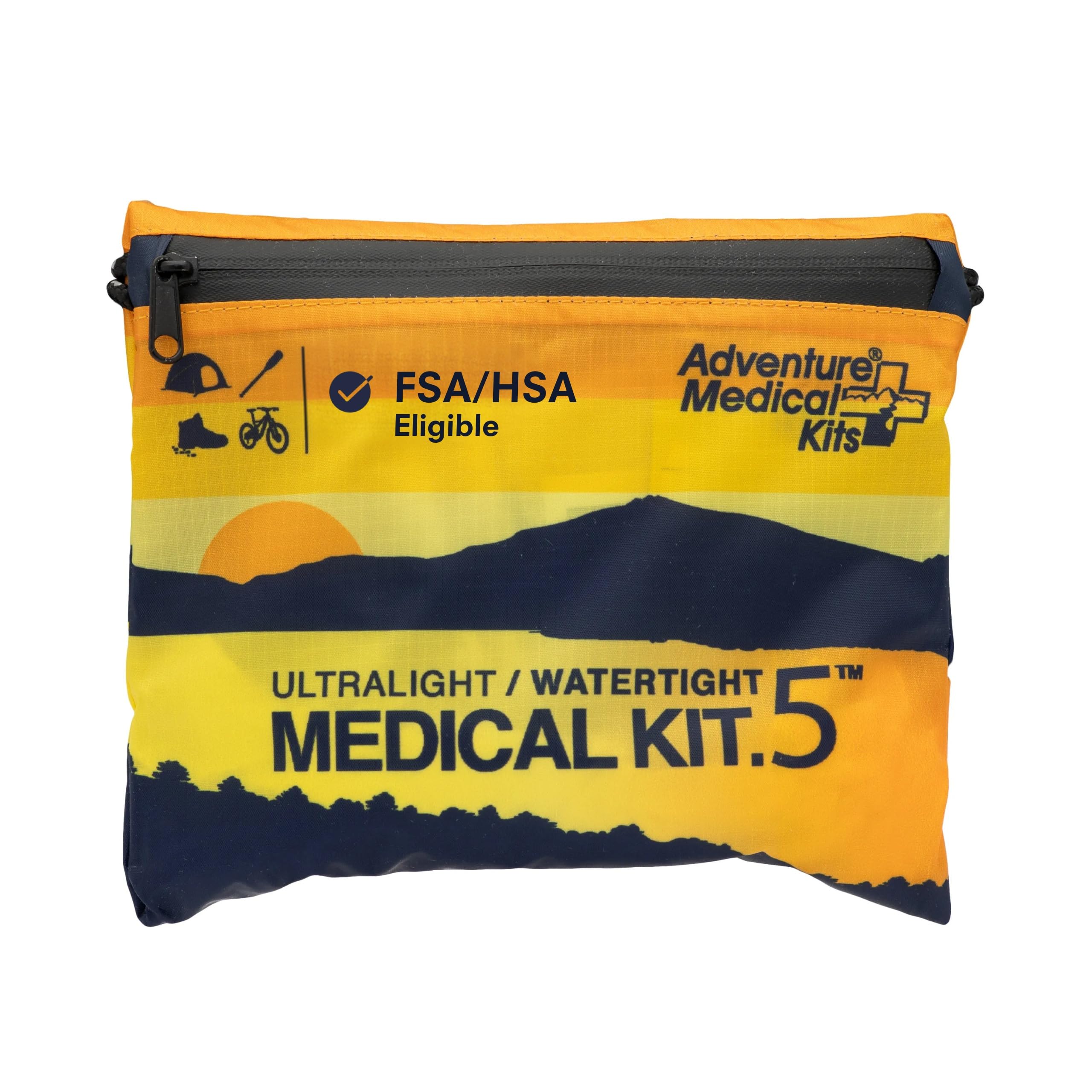


Best for Backpacking
Adventure Medical Ultralight .5
Key Features
- Capacity: 2 person
- Packed size: 7 x 5 x 1 in
- Listed weight: 3.5 oz
- Water protection: Waterproof DryFlex bag
- Price: Premium
At 3.5 ounces and roughly 7 by 5 by 1 inch, the Adventure Medical Kits Ultralight/Watertight .5 is the kit that disappears into a pack. The DryFlex inner bag is the detail that earns its place on a multi-day hike: it keeps gauze and bandages dry even when the outer bag gets soaked. The two-person capacity is honest rather than generous, so it suits a solo hiker with room for personal meds or a pair traveling light.
What separates it from the bigger, cheaper kits here is the content mix. We found the moleskin, antiseptic wipes, antibiotic ointment, and sting relief more useful than another twenty bandages, and the splinter picker is the sort of small tool that saves an evening. The kit is not a clinic in a bag; it is a thoughtful starting point for the injuries that actually happen on trail. We did wish for a little more room for a second blister dressing, but the compact pouch has enough slack for a few additions.
The trade-off is cost. It is the most expensive pick in this group and the piece count looks modest beside 150-piece kits. That is the right call only if you value low weight and waterproofing over sheer volume. For a dedicated backpacker, that trade feels easy; for a family basecamp, it does not. We also like that the bag is easy to find in a pack and easy to repack, which matters more than a bigger inventory when you are tired and it is getting dark.
Pros
- Light enough to forget in a pack
- Waterproof DryFlex inner bag
- Blister care and wound essentials
- Compact enough for a side pocket
Cons
- Premium price for a modest piece count
- Two-person capacity limits group use
For backpackers who count ounces, this is the kit we recommend: light, waterproof, and stocked for blisters and small wounds.
Best for Value Backpacking
General Medi 150-Piece Mini
Key Features
- Case: Soft pouch
- Packed size: 7.4 x 5.2 x 2.3 in
- Piece count: 150 pieces
- Listed weight: 7.8 oz
- Price: Budget
The General Medi 150-piece kit is the value pick we keep coming back to for a simple reason: it packs a broad assortment into a small, light pouch. At 7.8 ounces and 7.4 by 5.2 by 2.3 inches, it takes up about as much room as a paperback and weighs less than many hard-shell kits with fewer supplies. For a solo hiker or a pair, that is a sensible baseline for cuts, scrapes, and the small miseries that show up on trail.
The pouch is the main compromise. Soft-sided means less crush protection than a hard shell, and it will not survive being sat on. For backpacking, though, that is often the right trade: it conforms to the pack and weighs less. It still belongs inside a dry bag in wet weather. If you want a kit that covers a two-person weekend without much fuss, this is the one we reach for.
Pros
- Light for a 150-piece kit
- Broad basic assortment
- Soft pouch conforms to pack
Cons
- Soft pouch offers little crush protection
The best value here for backpackers who want a light, broad kit and do not need a hard shell.
Best for Compact Hard Case
Vriexsd Mini 150
Key Features
- Case: Waterproof EVA hard shell
- Packed size: 6.5 x 4.9 x 2.8 in
- Piece count: 150+ pieces
- Listed weight: 10.9 oz
- Price: Budget
The Vriexsd Mini arrives in a hard EVA shell that feels more like a small camera case than a first aid pouch. At 6.5 by 4.9 by 2.8 inches and about 11 ounces, it is not the lightest kit here, but the case holds its shape and keeps the contents from being crushed at the bottom of a pack. The zipper runs smoothly and the interior sleeves separate bandages from tools, which makes a mid-trail search less frantic.
We think the organization is the real selling point. The 150-piece count is generous, and the compartments mean you can find gauze or a plaster without dumping everything into the dirt. The trade-off is bulk: the hard shell takes up more room than a soft pouch of similar capacity, and it does not squash into odd corners. On a short trip where the kit rides in the top lid, that is fine. On an ultralight trip, it is more kit than you need.
We still add a small tube of antibiotic ointment and a couple of blister dressings, because those are the items we reach for most. Those additions fit in the case, though they eat into the spare room. For a hiker who wants a protected, organized kit and does not mind the extra ounces, this is a strong choice.
Pros
- Waterproof EVA hard shell
- Generous 150-piece assortment
- Separate interior compartments
Cons
- Bulky for ultralight packing
- Heavier than soft pouches
A well-organized hard-shell kit for hikers who want protected supplies and do not mind a little extra bulk.
Best for Emergency Blanket
Protect Life 100-Piece
Key Features
- Includes: Emergency blanket and guide
- Packed size: 7.5 x 5.2 x 1.5 in
- Piece count: 100 pieces
- Listed weight: 9.9 oz
- Price: Midrange
The emergency blanket is the first thing we noticed in the Protect Life kit, and it is more than a gimmick. At 7.5 by 5.2 by 1.5 inches and just under 10 ounces, the kit slips into a pack without much fuss, but it adds a thermal layer that most compact kits leave out. For a three-season backpacker, that is a meaningful extra in a cold snap or an unplanned night out.
The rest of the package is a sensible 100-piece baseline: bandages, gauze, antiseptic wipes, gloves, scissors, and a doctor-written guide. We like the guide more than we expected; it is a calm reference when you are tired and unsure. The hard case is waterproof and protects the contents, though it is thicker than a soft pouch and takes up more room in a lid pocket. The 100-piece count is not huge, so this is a kit for a solo hiker or a pair, not a group.
What we appreciate most is the balance. It does not try to be a survival kit, and it does not skimp on the items you need for a cut or a scrape. The blanket and guide make it feel more complete than the piece count suggests. If you want a compact kit with a bit more security for cold, wet trips, this is the one to look at.
Pros
- Emergency blanket adds warmth
- Doctor-written first aid guide
- Waterproof hard case
- Compact 100-piece layout
Cons
- Hard case is thicker than a soft pouch
- 100 pieces may be thin for groups
A compact kit with a genuinely useful emergency blanket and guide, best for solo hikers and pairs.
Best for Small Hard Case
THRIAID 100-Piece Mini
Key Features
- Case: Water-resistant EVA hard shell
- Packed size: 6.2 x 4.4 x 2.1 in
- Piece count: 100 pieces
- Listed weight: 8.5 oz
- Price: Midrange
The THRIAID kit is the smallest hard-shell kit in this group at 6.2 by 4.4 by 2.1 inches, and that is exactly why it earns a place. It fits in a bike frame bag, a daypack lid, or the top of a hiking pack without hogging space. The black EVA shell is water-resistant, the zipper is protected, and the whole thing weighs about half a pound.
Inside, the 100-piece assortment covers the basics: bandages, iodine pads, burn gel, and the small supplies you want for a scrape or a minor burn. The layout is simple rather than lavishly organized, and the case has a little room for personal additions. We added a couple of blister dressings and a small packet of pain reliever, which is the kind of customization most backpackers end up doing anyway.
The limitation is capacity. This is a solo or pair kit, and the 100 pieces disappear quickly if you are treating more than one person or a multi-day problem. We also noticed the hard shell adds bulk compared with a flat pouch, even though the footprint is small. For a day hiker or a fast-and-light backpacker who wants protected supplies, those are easy compromises. For a group, they are not.
Pros
- Very small hard-shell footprint
- Water-resistant EVA case
- Enough basics for a solo hiker
- Room for small additions
Cons
- Limited capacity for groups
- Hard shell adds bulk versus a pouch
The best small hard case here for solo hikers and fast-and-light trips.
Best for Budget Ultralight
QIO CHUANG 87-Piece
Key Features
- Case: Water-resistant nylon pouch
- Packed size: 7.5 x 5.4 x 1 in
- Piece count: 87 pieces
- Listed weight: 5 oz
- Price: Budget
The QIO CHUANG kit is barely thicker than a folded map: 7.5 by 5.4 by 1 inch, and about 5 ounces. That flat shape is the whole appeal. It slides into a pack lid, a hipbelt pocket, or the sleeve behind a hydration bladder, and you forget it is there until you need it. The nylon pouch has a water-resistant outer and a waterproof inner bag, which is sensible for a kit that will live in a damp pack.
The 87-piece contents are basic but useful, with bandages and small wound-care supplies for everyday problems. This is not the kit for a serious wound or a multi-day expedition, and the soft pouch offers little crush protection. But it is a sensible first layer for a day hike or an ultralight overnight, especially if you add a couple of items you know you use.
We keep coming back to the price. It is the least expensive kit here, and it still covers the cuts and scrapes that make up most trail first aid. The pouch is not built for years of abuse, and the contents are basic, but those are fair trade-offs at this end of the range. If you want a cheap kit to throw in every pack, this is the one.
Pros
- Very flat and packable
- Lightweight at about 5 ounces
- Water-resistant nylon with inner bag
- Lowest cost in this group
Cons
- Soft pouch offers little crush protection
- Not enough for multi-day or group use
A cheap, flat, ultralight pouch for day hikers who want basic coverage without weight or bulk.
Best for Minimalist Solo
Coleman Mini 27-Piece

Key Features
- Case: Metal tin
- Packed size: 3.9 x 2.5 x 0.9 in
- Piece count: 27 pieces
- Price: Budget
The Coleman kit is the size of a pack of cards: 3.9 by 2.5 by 0.9 inches, in a metal tin that disappears into a pocket. It is the kit we reach for when the question is not what if but what is the smallest thing that will handle a blister and a small cut. The tin is not much bigger than a matchbox, and that makes it easy to justify carrying on every hike.
The 27 pieces are bare-bones: adhesive bandages and basic wound-care supplies, with no room for a blanket, a guide, or much customization. The tin is sturdy enough to protect the contents, but it is not much of a organizer. A small zip-top bag around it is a sensible addition in wet weather.
This is not a kit for a multi-day trip with a partner, and it is not the one we pick for a group. It is a solo emergency layer, the thing that handles the small stuff so you do not have to stop and dig through a bigger kit. We pair it with a few personal medications and a blister dressing, and it still fits in a jacket pocket.
What we like most is the discipline of it. The Coleman kit forces you to decide what you actually need, and it rewards that with a footprint you will never resent. If you already carry a larger kit in your car or basecamp, this is a good second kit for short hikes. If you are building one kit for everything, start bigger.
Pros
- Pocket-sized metal tin
- Small enough to carry every hike
- Budget-friendly second kit
Cons
- Only 27 pieces
- Very little room for extras
A tiny, cheap tin for solo day hikes and as a second kit, not a full backpacking loadout.
Best for Organized Compact
Atickyaid 120-Piece

Key Features
- Case: Waterproof hard shell
- Packed size: 5.9 x 4.3 x 1.9 in
- Piece count: 120 pieces
- Listed weight: 7.9 oz
- Price: Midrange
The Atickyaid 120-piece kit opens like a small tackle box: a hard shell, a smooth zipper, and interior pockets that keep bandages separate from gauze and tools. At 5.9 by 4.3 by 1.9 inches and 7.9 ounces, it is compact enough for a daypack and organized enough that you do not have to empty it to find a plaster.
The 120 pieces cover the basics well, and the case has a little spare room for a few personal items. The hard shell is waterproof and protects the contents from being crushed, but it is still a hard box, so it does not mold to the shape of a pack. The interior pockets are the feature that makes it feel more expensive than it is.
For a solo hiker or a pair, this is a sensible middle ground between a tiny tin and a larger group kit. It is not as light as the flat pouches here, and it does not have the blister-specific focus of the Adventure Medical kit. What it does have is organization, which matters when you are bleeding and do not want to unpack everything.
We liked the Atickyaid for car-to-trail use and for hikers who keep a kit in the same pack week after week. The hard case is the reason: it holds its shape in a pack and does not let supplies get crushed. For strict ultralight trips, the extra ounces are hard to justify. For everyone else, the tidiness is worth it.
Pros
- Organized interior pockets
- Waterproof hard shell
- Compact 7.9-ounce package
- Spare room for personal items
Cons
- Hard case does not compress into a pack
- Heavier than flat pouches
A tidy, protective 120-piece kit for day hikers and casual backpackers who value organization.
Best for Group Basecamp
Band-Aid 160-Piece

Key Features
- Case: Hard plastic case
- Packed size: 9.5 x 7 x 3.3 in
- Piece count: 160 pieces
- Listed weight: 1.19 lb
- Price: Premium
The Band-Aid kit is the big one here: 160 pieces in a hard plastic case that measures 9.5 by 7 by 3.25 inches and weighs 1.19 pounds. That is a lot of first aid for a backpack, and it is not the kit we carry on a solo ultralight trip. It belongs in a basecamp bin, a car, or a group pack where someone else is sharing the load.
The contents are reassuringly familiar: BAND-AID bandages in several sizes, cleansing wipes, gauze, antibiotic cream, and a few over-the-counter medications. The case has compartments and internal organization, so it is easy to find what you need without dumping everything out. The plastic shell is sturdy, but it is bulky and does not compress.
For a family or a small group, the size is the point. A 160-piece kit can handle a week of scrapes and still have supplies left over, and the hard case protects the contents in a way a soft pouch does not. The trade-off is that it is heavy and awkward to pack. It takes up a serious chunk of a daypack, and it is overkill for a solo hiker.
We also found the medication assortment useful, though it is not a substitute for a personal kit. The antibiotic cream and pain reliever are the kind of things you might otherwise forget. The case is not waterproof, so we still pack it in a dry bag when rain is likely.
This is the kit for the car, the cabin, or the group basecamp, not the top of a solo pack. If you want one kit that covers a family weekend and does not mind the weight, it is a good buy. If you are counting ounces, leave it behind.
Pros
- 160-piece assortment
- Hard plastic case protects contents
- Includes antibiotic cream and medications
- Good for groups and basecamp
Cons
- Heavy and bulky for backpacking
A sturdy, well-stocked kit for basecamp, car, and group use, not solo backpacking.
How We Tested a Dozen Backpacking First Aid Kits
We started with roughly three dozen kits sold by outdoor retailers and general stores, reading through contents lists item by item. We dropped anything that was essentially a bag of assorted bandages with a couple of alcohol wipes, anything that weighed close to two pounds before we’d added a thing, and several whose refills couldn’t be sourced without buying a whole new kit. That left 12, which we bought ourselves and rotated through real use.
Those 12 went out for eight months: short day hikes close to home, a handful of overnighters, and a five-day trip that rained on us twice. We treated actual blisters, a shin scrape from a rock garden, a stove burn, and a rolled ankle, and we stuck bandages over sweaty knuckles and damp heels and checked them again after an hour of walking — adhesion is where most kits quietly fail, and the difference between brands was obvious by the end of a climb.
At camp we emptied and repacked each kit from scratch, which showed us how the pouch organized or didn’t, and how much empty air we were carrying for the sake of a stiff outer shell. Back home we weighed every kit on a kitchen scale, both as shipped and after we’d restocked it, and priced out replacing the consumables to see what a second season would actually cost. We also tallied what we had to add ourselves — tape, ibuprofen, a second pair of gloves — and checked expiration dates on everything that touches skin.
How to Choose a Backpacking First Aid Kit
The right backpacking kit is the one you will actually carry and can repack with cold hands.
Start With Weight and Packed Shape
A first aid kit only helps if it is in your pack, so we start with weight and shape. A solo kit in the three-to-six-ounce range disappears into a lid pocket; a one-pound kit is a basecamp tool, not something we want on a long climb. Soft pouches conform to odd corners, while hard cases protect supplies but take up more room. Check the packed dimensions against the pocket you plan to use, not just the piece count. A flat pouch like the QIO CHUANG slides behind a hydration bladder; the Band-Aid kit needs a shelf or a large group pack.
Read the Contents, Not the Piece Count
A 150-piece kit can be mostly bandages, while an 87-piece kit may have the tools you actually need. We look for gauze, antiseptic wipes, medical tape, gloves, tweezers, and a way to handle blisters. For multi-day trips, moleskin or blister dressings matter more than another dozen adhesive bandages. The Adventure Medical kit is the clearest example: it carries fewer pieces than the bulk kits here but includes blister care and a waterproof bag. Add a small supply of any medication you personally use, and check expiry dates before the season starts.
Choose Protection for Your Conditions
A waterproof hard shell is reassuring on a wet trip, but it adds bulk. A soft pouch with a waterproof inner bag is often the better backpacking compromise: it keeps supplies dry and still squashes into a pack. If you hike in sustained rain or cross streams, put any kit inside a dry bag regardless of the case. For three-season backpacking, we prioritize a watertight inner bag and a smooth zipper over a crushproof shell. The Vriexsd and THRIAID hard cases make sense for bike bags and rough handling; the General Medi pouch makes sense for weight-conscious hikers.
Match Capacity to People and Trip Length
A two-person kit is the right starting point for a solo hiker or a pair, with room left for personal medications. Groups need more: the Band-Aid 160-piece kit is a basecamp kit, not a solo carry, because it weighs over a pound and takes up real space. For one to four people, we prefer a light two-person kit plus a few group extras, rather than one enormous kit that nobody wants to carry. Repacking matters too: pockets and a slightly roomy pouch make it easier to put everything back after a scare. Check the kit before every trip and replace what you used.
Frequently Asked Questions
Can I fly with a backpacking first aid kit?
Yes, but the security line is where kits get picked apart. Scissors must be under 4 inches from the pivot, and liquids and gels must follow the 3.4-ounce carry-on limit. Pack prescription medications in labeled containers and keep the kit in an accessible pocket so you can pull it out if asked.
Can I turn a car first aid kit into a backpacking kit?
Yes, and it is often cheaper than starting over. Empty the kit, remove bulky packaging and duplicate bandages, then add blister dressings, a few pain relievers, and a small dry bag. Repack it in a soft pouch or zip-top bag and weigh it. If the result is over about a pound, it is probably a basecamp kit, not a backpacking one.
Where should I pack a first aid kit in my backpack?
Put it where you can reach it without taking off the pack: a lid pocket, a hipbelt pocket, or the top of the main compartment. The bottom of a pack is the worst place because you have to unload everything to get to it. A small kit can also go in a side pocket, but secure it so it does not fall out when you bend over.
Final Verdict
For most backpackers, the Adventure Medical Kits Ultralight/Watertight .5 is the kit we recommend: it weighs almost nothing, keeps supplies dry, and includes the blister and wound-care items a trail day actually demands. If you want more supplies for a lower outlay, the General Medi 150-piece kit is the value choice; for a group basecamp, the larger Band-Aid kit makes more sense. Match the kit to the trip, then add the medications you personally need.