This post contains affiliate links. We may earn a small commission when you buy through our links — at no extra cost to you.
The worst place to find out your zipper is a fair-weather zipper is eight miles from the trailhead with the light going. Backpacking gear has one dull job: keep working when you’re tired, wet, and far from the car. I once bought a pack for its weight instead of its fit and spent a full day with a strap digging into my shoulder. Good gear doesn’t make you a better hiker — it just stops small failures from wrecking a trip.
Over the past eight months, my team and I have carried, inflated, zipped, and recharged 15 pieces of backpacking equipment — packs, headlamps, sleep pads, and the quick-dry layers and towels that go inside them. The keepers rarely win on specs. They win because the strap still sits right at mile nine, a soaked shirt dries by morning, and the beam shows trail instead of a bright circle at your feet. Every pick below survived that.


Best for Stream Water
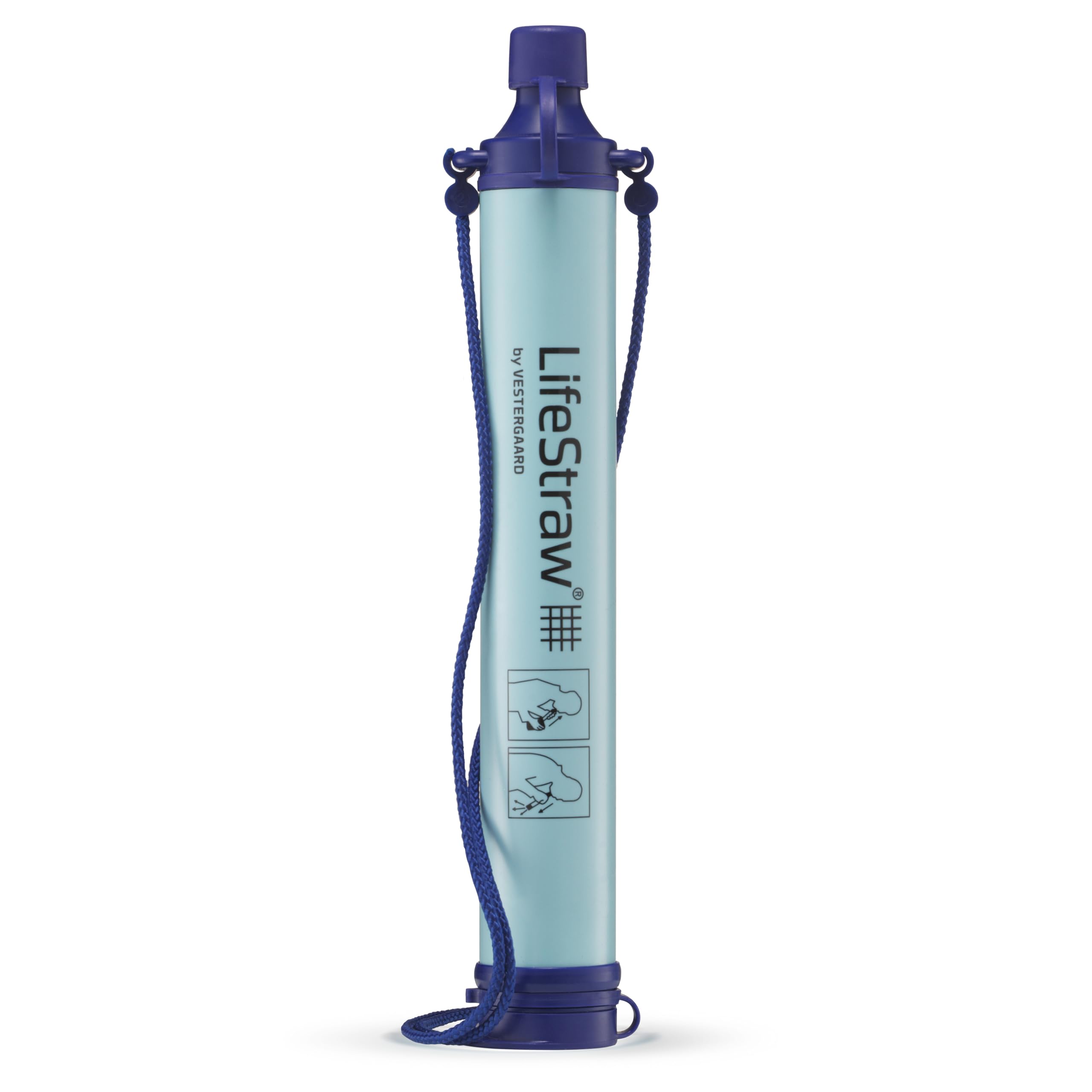
LifeStraw Personal Water Filter
Key Features
- Length: 12 in
- Weight: 1.59 oz
- Removes: Bacteria, parasites, microplastics to 1 micron
- Filter capacity: 4,000 L (1,000 gal)
- Price: Midrange
Forty-five grams is the whole argument. A liter of water weighs a kilogram, and the LifeStraw is 45 grams of plastic and hollow fiber that turns a stream into a water source — which means the liters stay in the stream instead of on your back. That trade is the reason it sits at the top of this guide rather than being just another filter in the pile.
The specifications hold up their end: 99.999999% of waterborne bacteria, 99.999% of parasites, microplastics down to 1 micron, and a 4,000-liter rating, a thousand gallons, before the filter is spent. We especially like that there is nothing to pump, charge, or replace — it is a tube you put in the water and draw on. On a long carry, that low weight and zero fuss is worth more than any feature list.
The catch is the drinking position. There is no hose and no bottle thread, so you kneel at the edge, drink your fill there, and carry on. On a route with frequent water that is a pleasure; on a dry stretch where you want to leave a source with two full bottles, it is the wrong tool and the Membrane Solutions straw below does that job properly.
At this weight there is no reason to leave it home on any trip where water comes from the ground, and the 12-inch body is the only packing consideration: it wants a side pocket or a lid, not the bottom of the pack where it gets bent.
Pros
- 45 grams and 12 inches, so it disappears into a pack
- Rated for 4,000 liters before replacement
- No pumping, batteries, or moving parts
- Removes bacteria, parasites, and microplastics to 1 micron
Cons
- You drink at the source; no bottle or bladder hookup
For backpacking water, this is the one we carry: 45 grams, nothing to pump or charge, and 4,000 liters of filtration before it is spent.
Best for Bottle Refills
Membrane Solutions S1 Straw
Key Features
- Weight: 2 oz
- Pore size: 0.1 micron
- Bottle fit: 28 mm thread
- Filter capacity: 1,320 gal
- Price: Premium
If the kneeling-at-the-bank routine does not appeal, this is the upgrade: the S1 threads onto any 28 mm bottle, so you fill, screw it on, and drink standing up. We think that bottle fit plus real third-party certification is what the extra money buys, and it is the filter we want on trips where we drink while walking.
The certification is unusually thorough for a straw: NSF/ANSI 42 for chlorine and taste, 372 for lead-free materials, and 401 for microplastics and particulates, on top of a 0.1-micron hollow-fiber membrane and a coconut-shell carbon stage. Rated capacity is 1,320 gallons, flow runs up to 500 milliliters a minute, and it handles water up to 1,000 ppm TDS. At 2 ounces and 7.1 inches it is still a pocket item.
The carbon stage is why the water tastes like water instead of like a stream bed, which matters more on day three than on day one. Two things to keep in mind: it is the priciest water option in this group, and a membrane loaded with silt will slow down, so a small bottle of tablets in the hipbelt is cheap insurance.
Pros
- Threads onto standard 28 mm bottles
- NSF/ANSI 42, 372, and 401 certified
- Carbon stage improves taste and reduces chlorine
- 2 ounces and 7.1 inches
Cons
- The priciest water option in this group
We rate the S1 the most capable filter here: certified filtration that screws onto your own bottle, with a carbon stage that improves taste.
Best for Backup Treatment
Potable Aqua Purification Tablets
Key Features
- Weight: 2.24 oz
- Tablets: 50 + 50 count
- Targets: Bacteria and Giardia
- Price: Budget
This is not a filter, and that distinction is the whole reason to buy it. Potable Aqua is a chemical treatment — two small bottles, 2.24 ounces together — labeled for bacteria and Giardia lamblia. It will not pull silt out of a muddy creek; it makes water that is already reasonably clear suitable to drink.
The kit is 50 iodine tablets plus 50 PA Plus neutralizing tablets, and the second bottle is the step people skip. The neutralizer is what removes the iodine taste and color, so both tablets go in. A season of weekend trips fits in a hipbelt pocket, and there is nothing in there to clog or break.
We treat it as the insurance policy rather than the plan: it is what you carry so that a filter failure on day two does not end the trip. Check the date stamp when the bottles arrive, because these live in a pack for years and an expired tablet is one you cannot count on.
Pros
- Two bottles cover a full season of trips
- Neutralizer removes iodine taste and color
- Labeled for bacteria and Giardia
- 2.24 ounces for the pair
Cons
- Not a filter, so sediment stays in the water
We keep the Potable Aqua kit as the backup that weighs almost nothing and covers the day a filter stops flowing.
Best for Camp Lighting
GearLight S500 Headlamp 2-Pack
Key Features
- Pack: 2 headlamps
- Power: 3x AAA (not included)
- Runtime: 10 hours
- Brightness: 200 lumens
- Price: Budget
Cooking after dark is the test: one hand on the stove, the other holding a light, which leaves you one hand short. The S500 sits on your head at 3 ounces with batteries, tilts 45 degrees down into the pot, and gives both hands back.
Brightness is 200 lumens across seven modes, including red for night vision and a strobe. The red mode is the one we used most around camp, because it is easier on everyone else’s eyes at nine in the evening, and the adjustable band stays put while you stir.
The power decision is deliberate: three AAA cells, ten hours of runtime, no charging cable to lose and no internal battery to be flat at the trailhead. The cells are not in the box, so buy a set before the first trip and keep a spare pair in the pack. The headband is adjustable and washable.
What we appreciate most is the arithmetic of the two-pack at this price: one lamp on your head, one in the lid pocket as a spare or for whoever forgot theirs. That redundancy is worth more than another hundred lumens, and it is why this is the lighting pick rather than a fancier single lamp.
Pros
- 200 lumens with a 45-degree tilt
- Seven modes including red and strobe
- Two lamps in the pack
- Runs on standard AAA cells
Cons
- Headband strap is the first part to fail
For camp chores and night walks, the S500 two-pack is the lighting buy we recommend: bright enough, tilts where you aim it, and runs on AAA cells.
Best for Drying Off
Rainleaf Microfiber Towel
Key Features
- Size: 48 x 24 in
- Fabric: 85% polyester, 15% polyamide
- Absorbency: 5x its own weight
- Fabric weight: 200 gsm
- Price: Budget
Microfiber towels get sold on absorbency, and the Rainleaf’s claim is five times its own weight in water. What actually decides whether you like it is technique: you pat yourself dry rather than wiping, and once you stop fighting that, it works properly.
The 48 by 24 inch version is the one here: an 85/15 polyester-polyamide blend at 200 grams per square meter, a snap loop for hanging, and a ventilated carry bag. It is machine washable and shakes sand off, which is more than a terry towel manages after a day at the water.
Where it earns its place is the morning after. A soaked cotton towel is a kilogram of regret in a pack, while this one clips to the outside of the bag and is ready to use again by the next camp. The 48-inch length is a body towel, not a wrap, so if you want to change under it, order a size up.
Pros
- Absorbs five times its own weight
- Snap loop and ventilated bag for drying
- Machine washable and sand resistant
- Rolls up small enough for a lid pocket
Cons
- 48 by 24 inches is small for wrapping up in
The Rainleaf is the towel we take backpacking, with one caveat: size up if you want it to wrap around you.
Best for Summer Sleeping
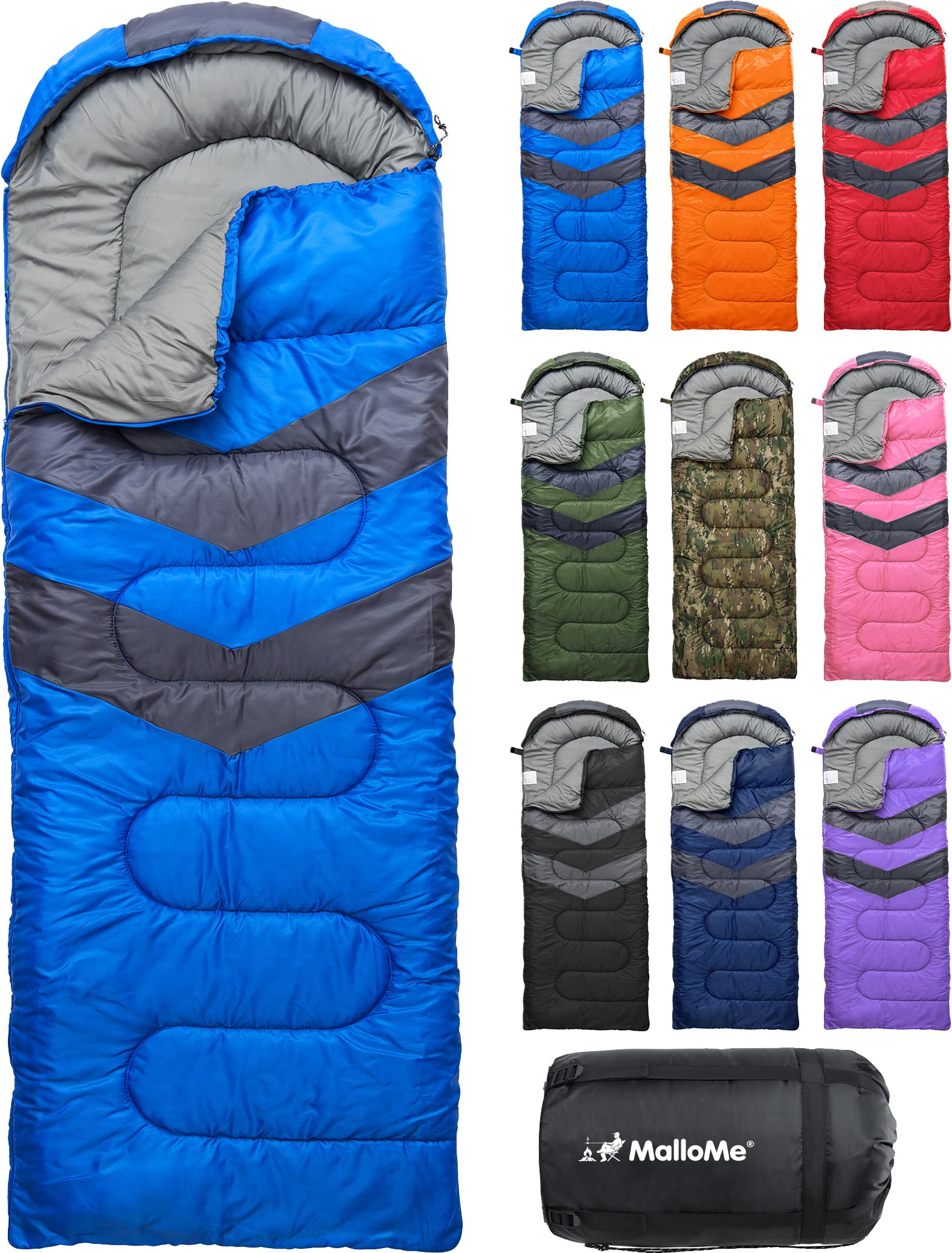
MalloMe Sleeping Bag
Key Features
- Weight: 1.3 kg (2.9 lb)
- Seasons: 3 seasons
- Dimensions: 86.6 x 31.5 in
- Temperature rating: 50 to 80°F
- Price: Midrange
Fifty to eighty degrees is the entire story with this bag. Read as a summer bag, which is exactly what that range says it is, the MalloMe makes a lot of sense: it is light, it is long, and it never pretends to be a winter bag.
At 1.3 kilograms, about 2.9 pounds, it is a bag you carry without thinking about it, and 86.6 inches of length fits a six-foot sleeper with room at the foot. We think the value is the point: polyester shell and fill, a bag that rolls into its own sack, and nothing in the construction that feels like it is trying to be a down bag and failing.
The width is where it narrows, literally. 31.5 inches is snugger than a lot of bags, so broad-shouldered sleepers should check that number against their own shoulders before ordering. And run the zipper its full length when it arrives — a bag lives or dies by that zip, and it is the part to test at home rather than at eleven at night in a tent.
Pros
- 2.9 pounds and rolls into its own sack
- 86.6 inches fits tall sleepers
- Rated 50 to 80°F for summer use
- Costs a fraction of a down bag
Cons
- Rated only to 50°F, so it is a summer bag
- 31.5-inch width is snug for broad sleepers
For warm-weather trips the MalloMe is the bag we hand to first-timers: 2.9 pounds, long enough for a six-foot sleeper, and rated for the nights most people actually camp in.
Best for Ground Protection
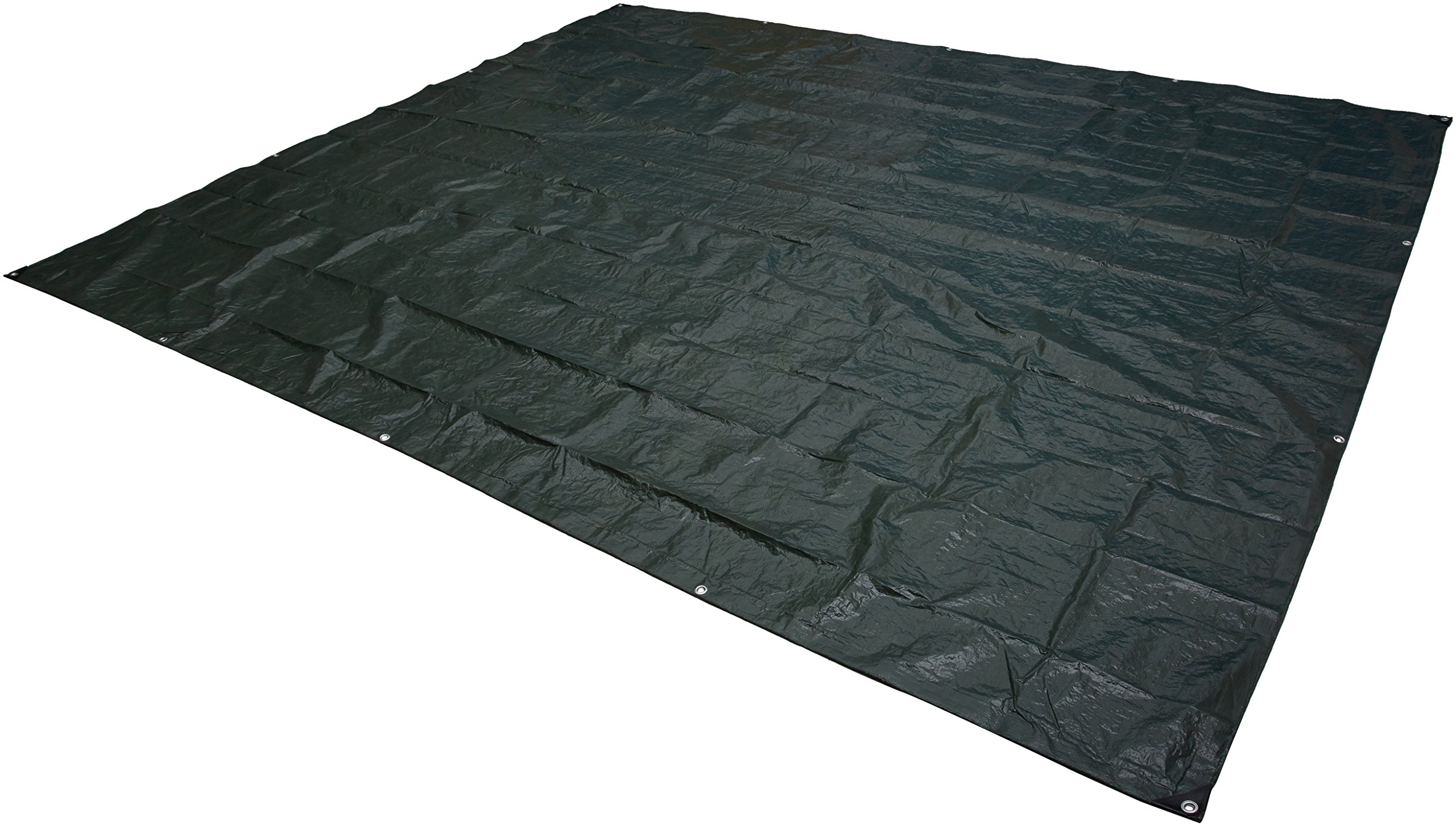
Amazon Basics Camping Tarp
Key Features
- Size: 9.5 x 11.3 ft
- Weight: 2.2 lb
- Corners: Reinforced, with grommets
- Material: Laminated polyethylene
- Price: Midrange
A footprint is the least glamorous item in a pack and the one that quietly saves a tent floor from roots, grit, and the abrasion that turns a waterproof coating into a sieve. At 9.5 by 11.3 feet this tarp is bigger than most purpose-cut footprints and does the same job for far less money, which is why we rate it the best value in this guide for shelter insurance.
The construction is what you want under a tent: polyethylene laminated on both sides, a rip-stop weave that stops a tear from spreading, and reinforced corners and edges with grommets for tie-downs. It is UV-treated too, so it doubles as shade at lunch or a cover for a woodpile at home, and the dark green disappears against a forest floor.
Set it up once at home before you pack it, and fold or tuck it so the sheet sits slightly inside the tent floor. A groundsheet that sticks out past the edges catches rain and channels it under you, which is the opposite of the job you carried it for.
Where it earns its place is rough ground and shoulder-season trips, when a thin purpose-cut footprint would tear on the first rock. Split between two packs it is barely noticeable; on a fast summer trip over clean duff, it is the first thing to leave behind.
Pros
- Polyethylene laminated on both sides
- Reinforced corners and edges with grommets
- 9.5 by 11.3 feet of coverage
- Doubles as shade or a gear cover
Cons
- 2.2 pounds is heavy for a solo pack
We recommend the Amazon Basics tarp as cheap, versatile protection under a tent floor, with the caveat that 2.2 pounds is a two-person carry.
Best for Rest Stops
AnorTrek Camping Hammock

Key Features
- Straps: Two 8.2 ft tree straps
- Weight: 0.59 kg (1.3 lb)
- Capacity: 500 lb
- Dimensions: 118 x 78 in
- Price: Budget
Not every piece of backpacking kit has to be a sleep system. A hammock that weighs 1.3 pounds and hangs between two trees earns its place by turning a long lunch stop into an hour of flat, off-the-ground rest, and that is the job this one does well.
The numbers are straightforward: 118 by 78 inches of 210T parachute nylon, a 500-pound capacity, two steel carabiners, and two 8.2-foot tree straps with five adjustment loops plus a head loop. It packs into its own attached sack, and setup is a two-minute job once you have found two trunks at the right distance.
The width matters more than the length here. 78 inches across lets you lie on the diagonal, which is how a gathered-end hammock stays comfortable past the twenty-minute mark, and it is the reason this one is worth carrying instead of a sit pad.
So we rate it for what it is: the best comfort value in this group, a small luxury that pays for itself the first time a ridge line leaves you with an hour to kill. Just do not count on it as your only bed without a tarp and a bug net over the top.
Pros
- 1.3 pounds and packs into its own sack
- 500-pound capacity
- Straps and carabiners included
- Two-minute setup on two trees
Cons
- Straps are thin with few adjustment loops
We treat the AnorTrek as the lounger that makes a long day better rather than a shelter, and at 1.3 pounds it is an easy thing to pack.
How We Tested the Gear
We started with a list of roughly 60 pieces from brands that have held up on past trips and models that kept surfacing in reviews, then cut it down by weight, price, and whether the small parts — buckles, strap keepers, zipper pulls — can be replaced instead of retiring the whole item. That left 15 pieces: packs, headlamps, sleep pads, and the layers and towels that ride inside them.
Testing ran eight months, across two weekend trips on rocky ridge terrain, one overnight in steady rain, a rotating cast of friends who borrowed gear and reported back, and a dozen pack-outs on my living room floor. Every pack was loaded to about 30 pounds and carried at least six miles; I checked for hot spots under the straps, watched whether the adjusters crept, and worked each zipper one-handed with gloves on, stuffed past the point I’d normally load them. Pads were inflated by count of breaths, laid on frozen ground, and pressed with a thumbnail to judge thickness and whether a hip bone bottomed out.
Headlamps went out on the same unlit trail after dark, where I noted how far the beam actually reached and whether it lit the ground at my feet; then each ran on high until it stepped down, with the drop timed. Quick-dry layers and towels were soaked, wrung, hung at dusk, and checked at dawn. Everything was weighed on a kitchen scale and packed into a 40-liter bag to see what it displaced. At the end, we weighed what each piece cost against how it looked after eight months — seams, hardware, and zipper pulls included — and whether the brand would repair it if something failed.
How to Choose Backpacking Equipment
The gear that earns pack space is the gear that solves a problem you will actually meet on the trail — water, light, sleep, shelter — at a weight you stop noticing.
Weight is the one budget you cannot overspend
Every item in a pack is paid for in the same currency, and the exchange rate is worse than it looks: a liter of water is a kilogram, a 2.2-pound tarp costs about the same as a day of food. We start by weighing the three heaviest things — usually shelter, sleep, and water — and cut there first, because shaving twenty grams off a stuff sack is a rounding error.
A 45-gram filter that replaces two carried liters does more for your shoulders than any other single swap in this guide, and it is the clearest example of the principle: spend weight where it removes a bigger weight.
Filters, straws, and tablets are three different tools
A filter physically removes things from water. A chemical tablet disinfects what is already in it. That difference decides which one you reach for. A straw like the LifeStraw keeps you at the water source, a threaded filter like the Membrane Solutions S1 lets you fill a bottle and walk away, and tablets cover the day the filter clogs.
The trap is treating tablets as a filter for cloudy water, and treating a filter as a permanent purchase. The tablets are labeled for bacteria and Giardia, not sediment; a membrane loaded with silt slows down and needs cleaning. Carry the cheap backup, and check the date stamp on the tablets, because they sit in a pack for years.
Pick the power source before the lumen count
Lumens sell lights; batteries and runtime decide whether you like one. A 200-lumen lamp on AAA cells means no cable to lose and a swap you can do in the dark, at the cost of carrying spares. A rechargeable lamp saves the cells and adds a cable, a power bank, and the risk of a flat battery at the trailhead.
For a headlamp that lives in a pack all season, we lean toward disposable cells and put the money into a red mode and a genuinely dim setting. Nobody at 2 a.m. wants 200 lumens.
Read the rating, then read the dimensions
A temperature rating is a range, not a promise, and the number at the bottom of it is the one that decides your night. The MalloMe is rated 50 to 80°F, which makes it a summer bag; if your trips run colder, it is not the bag, whatever the three-season label suggests.
Then check width and length together. A 31.5-inch bag is snugger than plenty of sleepers expect, and 86.6 inches of length only helps if the shoulders fit. Measure the sleeper, not the tent.
The straps and zippers fail before the parts that work
The headlamp emitter, the filter membrane, and the tarp grommets are rarely what ends a trip. The headband, the sleeping bag zipper, and the hammock strap are. Before you leave, run every zipper the full length, tug the headband, and look at where a strap is stitched.
This is where cheap gear actually shows its price, and it is why a two-pack of lamps can beat one brighter lamp: the spare is a repair kit you do not have to use in the dark.
Frequently Asked Questions
How long does a backpacking water filter actually last?
Long enough that the rating is rarely the reason to replace one. The LifeStraw is rated for 4,000 liters and the Membrane Solutions S1 for 1,320 gallons; at three liters of drinking water a day, the LifeStraw rating works out to well over a thousand days on the trail.
Real life is shorter than the rating, because sediment loads the membrane. Rinse or backflush after a silty trip, store it dry, and replace it when flow drops and cleaning no longer brings it back.
What size tarp should go under a two-person tent?
Measure the tent floor and go slightly smaller, never bigger. The Amazon Basics tarp is 9.5 by 11.3 feet, which is generous for most two-person floors; fold or tuck the excess so no edge sticks out past the tent.
A groundsheet that extends beyond the floor catches rain and channels it underneath you, which is the opposite of the job you carried it for.
Do I still need a compass if I carry a phone?
Yes, as a backup, and any cheap compass needs checking before you trust it. Hold it flat and let the needle settle: it should swing freely and come to rest pointing the same way twice, with the housing level.
A needle that sticks or drags makes every bearing meaningless. Catch that at home, with a known direction to compare against, rather than on a ridge in the wind.
Final Verdict
If you buy one thing from this guide, buy the LifeStraw. Forty-five grams, nothing to pump or charge, and 4,000 liters before it is spent is the best weight-to-benefit trade in a pack, and it turns every stream on the map into a water source. Add the Potable Aqua tablets as the backup that costs almost nothing in weight and covers the day a filter stops flowing.
The exception worth naming: if you drink while walking rather than kneeling at the bank, the Membrane Solutions S1 is the filter to carry, and its three certifications are the reason to pay for it.