This post contains affiliate links. We may earn a small commission when you buy through our links — at no extra cost to you.
Ultralight tents promise big weight savings, but the numbers on the box don’t always match what goes in your pack. Many listings include the footprint and stakes in the trail weight, shaving ounces that reappear when you actually hit the trail.
Condensation is another hidden trade-off: single-wall designs shave ounces but trap moisture in humid conditions. And that ‘2-person’ tent often leaves two adults sleeping with their gear outside.
This guide cuts through the marketing to find shelters that balance real weight, lived-in space, and durability no matter your budget.



Best for Solo Thru-Hikers
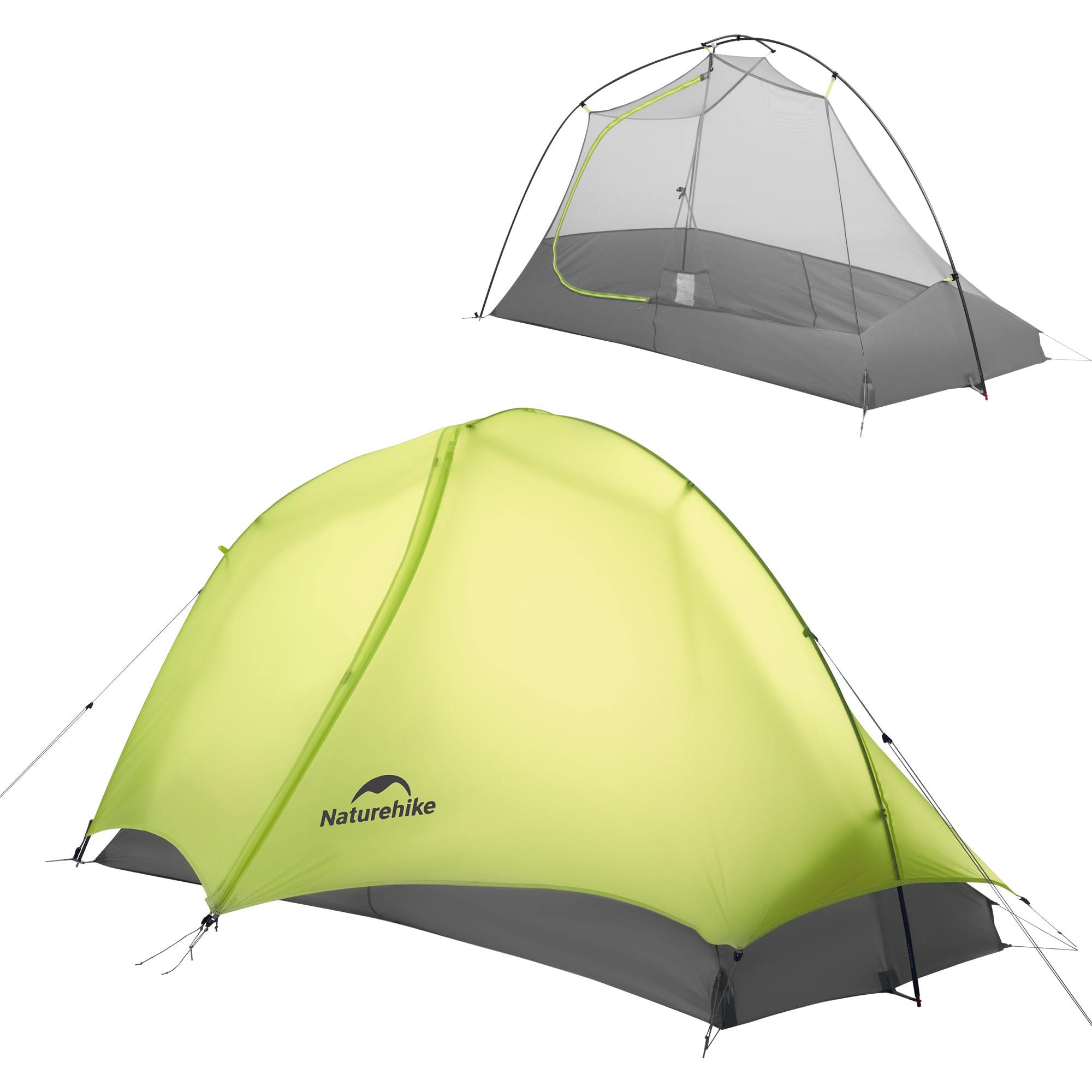
Featherstone Backbone 1P
Key Features
- Trail Weight: 2.5 lbs
- Floor Area: 85×32 in
- Waterproofing: Silnylon
- Doors & Vestibules: 2 doors, 2 vest.
- Price: Mid-Range
At 2.5 pounds with two doors and two vestibules, the Featherstone Backbone delivers ultralight performance without the typical one-door penalty. The trekking-pole pitch is intuitive and fast, and the silnylon single-wall fabric holds up well in wind and repeated use.
Condensation is the main tradeoff of the single-wall design. In humid conditions or with minimal airflow, moisture can accumulate inside. Choosing a well-ventilated campsite and cracking the vestibules helps manage it. A few reports also note water seepage near the head end during heavy rain — seam-sealing before a wet trip is advisable.
This tent fits solo thru-hikers and ultralight enthusiasts who want more room than a bivvy and dual entry points without the weight of a double-wall shelter. If you frequently camp in consistently humid climates, a double-wall design may be a better match.
Compared to freestanding solo tents at similar weight, the Backbone offers two doors and two vestibules at a lower price — a meaningful livability upgrade for anyone who already uses trekking poles.
Pros
- Ultralight weight reduces pack load significantly
- Intuitive and fast setup with trekking poles
- Spacious interior for a solo shelter
- Durable construction handles wind and repeated use
Cons
- Condensation requires careful campsite selection and ventilation in humid conditions
- Water may seep near the head end during heavy rain
For solo backpackers who want ultralight weight and two-vestibule access without crossing $200, the Featherstone Backbone is the tent to get.
Best for Budget Pairs
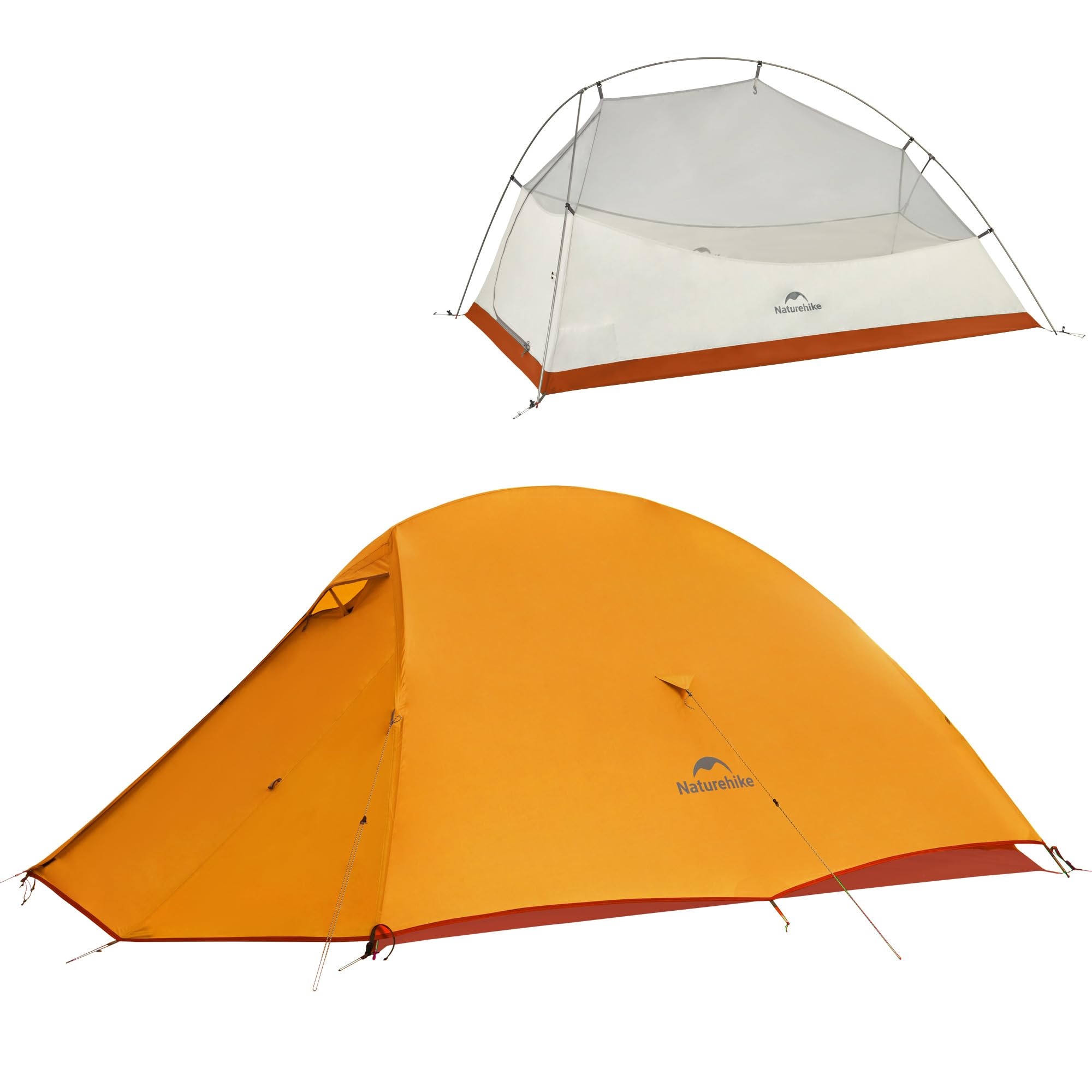
Naturehike Cloud-Up 2P
Key Features
- Trail Weight: 4.25 lbs
- Floor Area: 82.7×49.2 in
- Waterproofing: PU3000mm+
- Doors & Vestibules: 1 door, 1 vest.
- Price: Budget
The Naturehike Cloud-Up 2P sets up in minutes with color-coded clips and a simple hub design, and it comes with a footprint included — a rare perk at this price. Its 4.25-pound pack weight keeps it competitive for short backpacking trips, and over two thousand buyers have confirmed the ease of assembly and solid stitching.
This tent works best for budget-conscious pairs or solo campers who want extra room. For two adults with gear, interior space can feel cramped — better suited as a roomy solo shelter. The rainfly seams and stakes can show wear on abrasive ground, and a minority of units may allow some moisture during heavy, sustained rain.
Pros
- Sets up in minutes with color-coded clips and simple hub design
- Lightweight for a budget 2-person tent at 4.25 pounds
- Solid build quality with good stitching and materials for the price
- Includes a footprint, adding value and floor protection
Cons
- Water resistance can vary between units — some may seep during heavy rain
- Rainfly seam durability and stake strength may be limiting on rough terrain
- Tight for two adults with gear — better as a spacious solo shelter
For budget-conscious backpackers who want an easy-pitch tent that won’t weigh them down, the Cloud-Up delivers strong value — just plan for a solo setup or pack light as a pair.
Best for Solo Freestanding
Naturehike Star Trail 1P
Key Features
- Trail Weight: 2.3 lbs
- Floor Area: 86.6×59.1 in
- Waterproofing: 3000mm floor
- Price: Mid-Range
At 2.3 lbs including the footprint, the Naturehike Star Trail is the lightest freestanding tent in this comparison. That weight savings comes without relying on trekking poles for setup, which matters for hikers who prefer traditional poles or go on routes where poles aren’t practical. The top pick (Featherstone Backbone) sheds another ounce or two by using trekking poles, but gains two doors and better cross-ventilation as a result. For solo backpackers who want a quick, freestanding pitch and don’t want pole-dependent shelter, the Star Trail is the clear alternative.
This tent works best for weight-conscious solo hikers who value a simple, freestanding setup and don’t mind a single door. The interior is genuinely roomy for one person with gear — headroom at 45.3 inches allows sitting up comfortably, and the floor length of 86.6 inches suits most sleepers up to about 6 feet. Taller users (over 6 ft) will find the length and peak height tight, and the single door means you enter and exit on one side only. That tradeoff is acceptable for the weight savings and ease of pitching, but only if your height and camping style align.
Setup is straightforward: two aluminum poles cross at the center, clips attach the body, and the fly goes over. Users new to ultralight tents will appreciate that the included footprint clips directly to the poles, keeping the floor clean. Weather protection is adequate for 3-season use with a 3000mm waterproof floor and fully taped seams. Ventilation is adequate with the fly partially staked open, but the single door limits airflow compared to two-door designs — something to note in humid conditions.
Pros
- Extremely lightweight for a freestanding tent, saving pack weight without pole dependency.
- Spacious for a solo shelter, with enough room for one adult and gear plus good headroom.
- Quick and simple setup with color-coded poles and clip attachments.
Cons
- Interior length and peak height may be snug for individuals over 6 feet tall.
- Only one door limits ventilation and ease of access compared to two-door alternatives.
Choose the Star Trail if your priority is the lightest freestanding solo tent with a footprint included, and you don’t need two doors or extra length for taller sleepers.
Best for Serious Backpackers
Big Agnes Copper Spur 2P
Key Features
- Trail Weight: 3.2 lbs
- Floor Area: 29 sq ft
- Waterproofing: 1200mm fly/floor
- Doors & Vestibules: 2 doors, 2 vest.
- Price: Premium
The Copper Spur HV UL 2P delivers a rare combination of freestanding design under 3.5 pounds and enough headroom and floor space for two adults with gear. Big Agnes uses high-denier fabrics and robust zippers that hold up after seasons of use, while the TipLok hub system simplifies pitching into a single-person job.
Two large doors and vestibules provide easy entry and storage for packs, and the mesh panels allow good airflow in warm weather. The 1200mm waterproof coating on fly and floor handles moderate rain, though the included rainfly does not extend to the ground on all sides, requiring care in site selection to avoid splash-up.
This tent is built for couples or hiking partners sharing gear on multi-day trips who value a dependable shelter without needing trekking poles. It is not the cheapest option — expect to pay a premium — and the footprint is sold separately, adding to the initial cost. Solo hikers focused on the lightest possible pack weight may prefer a trekking-pole shelter, but for a freestanding tent that is both light and livable, this is a top contender.
Pros
- Low trail weight for a fully freestanding two-person design
- Durable fabrics, zippers, and hardware withstand repeated use
- TipLok system makes setup quick and frustration-free
- Two large doors and mesh allow comfortable airflow and easy access
Cons
- Footprint not included, adding to overall cost if you want floor protection
- Premium price point places it beyond casual backpackers’ budgets
For backpackers who can invest in a shelter that will hold up over years of trips, the Copper Spur HV UL 2P delivers on its promises of lightweight freestanding convenience and real two-person comfort.
Best for Budget Ultralight
Night Cat Lanshan 1P
Key Features
- Trail Weight: 2 lbs
- Floor Area: 106.3×31.5 in
- Doors & Vestibules: 1 door, 1 vest.
- Price: Budget-Mid
At just 2 lbs and under $120, the Night Cat Lanshan 1P is one of the lightest budget tents available – a clear option for backpackers who prioritize weight above all else. The double-layer nylon construction keeps rain out, and stitching holds up well for a tent at this price point. However, the same materials that keep weight down also raise durability questions: some units have shown pole sections separating and fabric tearing after a handful of nights.
This tent works best for weekend warriors who need to shave ounces on short trips and aren’t planning repeated rough handling or multi-week treks. Weight-conscious hikers on a tight budget will appreciate the low pack weight and low cost, but anyone considering a thru-hike or extended backcountry adventure should look elsewhere. The pole and fabric vulnerability makes it a fair-weather companion rather than a long-term investment.
Setup requires trekking poles (not included) and a bit of practice to get the tension right. The single door and vestibule are adequate for one person but leave little room for gear inside. For its intended use – short, weight-critical outings – the tradeoff in durability is manageable with careful handling.
Pros
- Weighs only 2 lbs – a remarkable figure for a tent under $120.
- Stitching and fabric quality exceed expectations at this price point.
- Cost-effective entry into ultralight backpacking for weekend trips.
Cons
- Pole sections can separate during setup or use – requires regular inspection.
- Fabric has been noted to tear at stress points after a limited number of nights.
For weekend warriors who prioritize weight over longevity, the Night Cat Lanshan 1P offers a rare combination of ultralight weight and low price. Just keep expectations moderate for long-term durability.
Best for Ultra-Budget Solo
ShinHye 1-Person Tent

Key Features
- Trail Weight: 3.8 lbs
- Floor Area: 45.2 in wide
- Waterproofing: 2000mm
- Price: Budget
This tent delivers on quick setup and interior space for a single camper with gear — a rare combination at its low price. The 3.8-pound weight is manageable for short hikes but quickly becomes a burden on multi-day trips, where dedicated ultralight shelters save over a pound. Zipper quality is another boundary: some units have shown wear after limited use, which is acceptable for occasional outings but risky for extended trips. If your plan involves hiking more than a mile or two, the Featherstone or Naturehike alternatives offer better weight and durability for the dollar.
Pros
- Roomy interior fits one adult and gear comfortably
- Sets up quickly with intuitive pole design
Cons
- Zipper may show wear after limited use — more of an issue on trips with frequent entry
- At 3.8 pounds, heavier than typical ultralight tents, limiting appeal for backpacking
For car camping or the occasional overnight hike where weight isn’t critical, the low price and roomy interior make this a sensible backup tent.
Best for Budget Occasional
Underwood UA 1P

Key Features
- Trail Weight: 4.2 lbs
- Floor Area: 86.6×31.8 in
- Waterproofing: PU5000mm
- Price: Budget
The Underwood Aggregator 1P sets up quickly with its two aluminum poles and packs down smaller than its weight suggests. For short overnight hikes or car camping, the simplicity is a clear plus. However, at 4.2 lbs it carries a noticeable weight penalty compared to true ultralight models, and the limited long-term usage reports make it hard to assess durability for extended trips. This tent suits budget-conscious campers who prioritize low cost over minimal pack weight.
Pros
- Poles snap together quickly for a straightforward setup.
- Packs down to a compact size relative to its weight class.
Cons
- At 4.2 lbs it adds noticeable weight to a backpack for multiday trips.
Best for short hikes or car camping where weight matters less than cost and ease of setup.
How to Choose
The listed trail weight often excludes the footprint and stakes; the real pack weight can be up to half a pound more.
Trail Weight
Manufacturers advertise a ‘minimum trail weight’ that omits the footprint, stakes, and stuff sack. For a true pack weight, add 4-8 oz. A tent that claims 2.3 lbs might actually weigh 2.7 lbs on the scale.
That extra half-pound matters more on a 10-day trip than a weekend overnighter. Always check the product description for the ‘packed weight’ or ‘total weight’ unless you plan to replace stakes and skip the footprint.
Floor Space
Floor dimensions tell only part of the story. A 86-inch length sounds generous, but if the walls slope inward, your head and feet may brush against wet fabric. Look for near-vertical walls or a rectangular floor plan for real sleeping comfort.
A 2-person tent with a 50-inch width gives each person 25 inches – narrower than a twin mattress. Most couples prefer a 52-60 inch floor for gear storage inside. If you sleep with a partner, the ‘2-person’ label usually means ‘tight for two’.
Waterproofing
Hydrostatic head ratings (e.g., 3000mm) are measured on new fabric in a lab. After UV exposure and abrasion, real-world performance drops. A 3000mm floor is adequate for most 3-season use, but a 1200mm fly on a premium tent like the Big Agnes relies on a well-tensioned pitch and seam sealing to stay dry.
Single-wall tents (like the Featherstone) are inherently more prone to condensation than double-wall designs. In humid climates, a double-wall tent or careful campsite selection (away from valleys and near breeze) becomes critical.
Doors & Vestibules
Two doors mean each person can enter and exit without climbing over the other, and two vestibules provide dedicated gear storage. A single door forces one person to crawl out or store all gear on one side, which can be claustrophobic on multi-day trips.
Every vestibule adds a few ounces. For a solo hiker who never stores gear outside, one door may be enough. For pairs or those who hike in wet conditions, a second vestibule keeps muddy packs and boots separate from the sleeping area.
FAQ
Why does my ultralight tent get so much condensation inside?
Single-wall tents lack a separate fly to let interior moisture escape. Your breath and body heat condense on the cold fabric. To reduce it, pitch in a breezy spot, leave the doors partially open in dry weather, and avoid camping in low-lying areas where humid air collects.
Can I set up a trekking pole tent without trekking poles?
Yes, but you need dedicated replacement poles (often sold separately) or use branches/sticks. Most trekking-pole tents like the Featherstone use two adjustable-pole supports. If you don’t carry poles, buy the brand’s specific pole set, or look for a freestanding design.
What’s a good price for a 1-person ultralight backpacking tent?
For a reliable 1-person ultralight tent (under 3 lbs), expect to spend $120-$200. Budget options around $60 exist but often sacrifice durability and weather protection. Premium models above $300 add weight savings and features, but the mid-range sweet spot delivers the best value.
How small should an ultralight tent pack down for backpacking?
A good ultralight tent should compress to roughly the size of a Nalgene bottle or smaller – about 6-7 inches in diameter and 12-14 inches long. Check the packed dimensions, not just the weight. Some tents that are light on the scale may still require a large stuff sack.