This post contains affiliate links. We may earn a small commission when you buy through our links — at no extra cost to you.
Many budget spin bikes boast quiet operation, but a closer look reveals they use friction pads that wear out and get progressively louder. The real cost of a bargain bike isn’t just the price tag – it’s the noise, the seat you can’t sit on past 20 minutes, and the pedals that may give out mid-ride.
The bikes that actually work well focus on the basics: genuine magnetic resistance for silence, a flywheel heavy enough to smooth out pedal strokes, and a seat that doesn’t require an immediate upgrade. App connectivity is nice, but it doesn’t fix a wobbly frame or a crank that snaps.
Whether you’re training for a century ride or just trying to get 30 minutes of cardio before work, the right spin bike won’t fight you. It’ll be quiet enough for early mornings, stable enough for standing climbs, and comfortable enough to actually use.



Best for Budget Quiet Rides
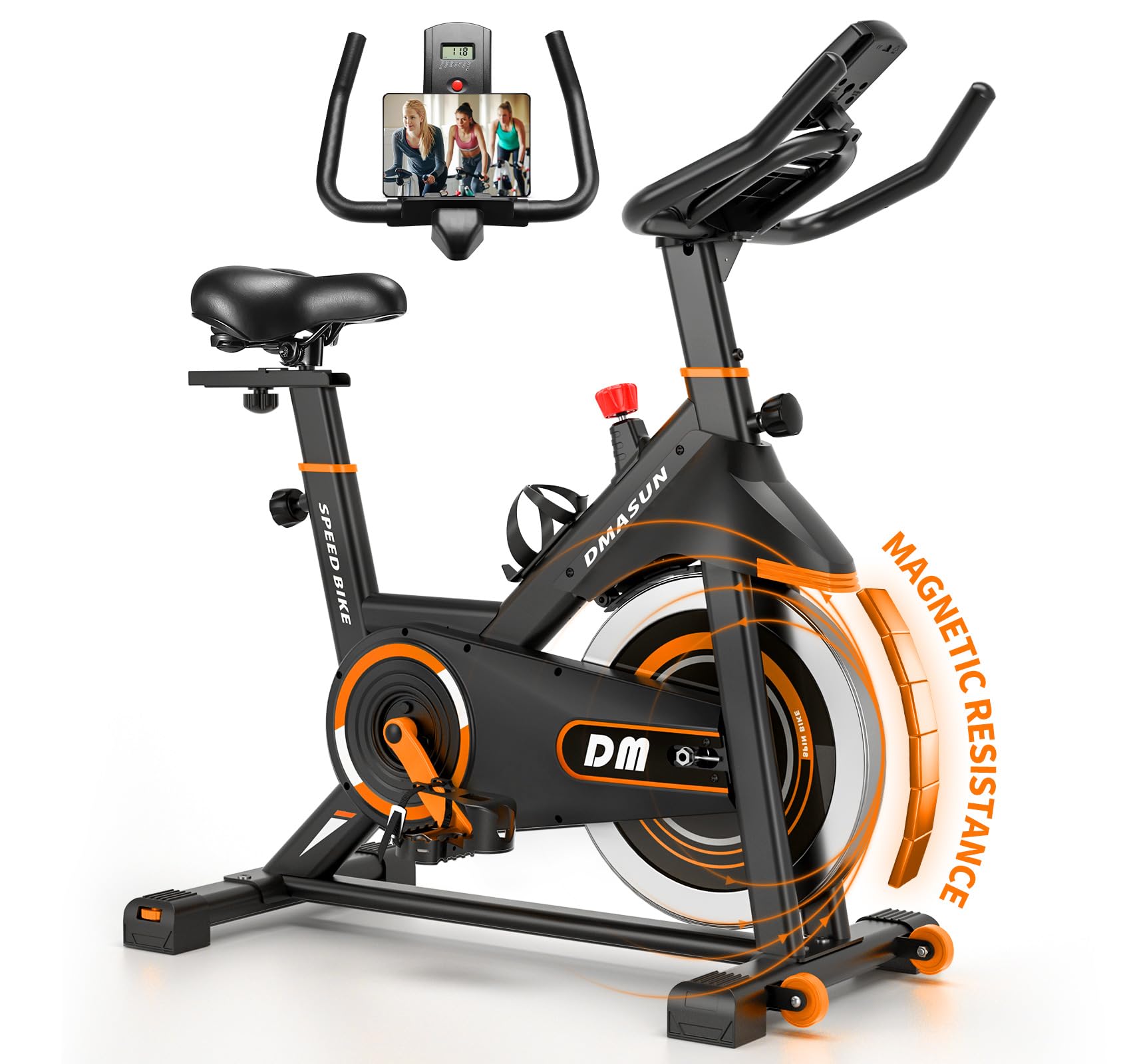
DMASUN Magnetic
Key Features
- Resistance: Magnetic (100 levels)
- Flywheel: 35 lbs
- Weight Cap.: 330 lbs
- Drive: Belt
- Adjustability: 4-way seat, fixed handlebar
- Price: $
The DMASUN Magnetic delivers a near-silent ride thanks to its magnetic resistance system and a 35 lb fully filled flywheel, making it a strong fit for apartments or shared-wall homes. The frame stays rock-solid even during standing sprints, and the seat cushion earns rare praise from owners who typically upgrade budget bike seats immediately.
Handlebar adjustability is limited to fore-aft and height – the angle is fixed. For most riders the range is sufficient, but those accustomed to tilting their bars may find the position restrictive. It’s worth checking your comfort before final assembly, since the angle can’t be changed afterward.
This bike suits budget-conscious buyers who prioritize quiet operation, a comfortable seat, and a stable frame over extensive ergonomic adjustability. Beginners and intermediate riders will find it ready out of the box, and the 330 lb weight capacity accommodates a wide range of body types. Unlike some bikes in this price range that use friction pads, the DMASUN uses genuine magnetic resistance – no noisy replacement pads needed.
Pedal durability is a common concern on budget magnetic bikes, but the DMASUN includes anti-loosening nuts and has not shown the crank arm issues seen on some competing models. The digital display and tablet holder add convenience without inflating the cost, making this a well-rounded entry-level package.
Pros
- Near-silent operation ideal for noise-sensitive environments
- Comfortable seat cushion that doesn’t need immediate replacement
- Frame stays stable even during standing pedaling
- Solid value for a magnetic bike with a high weight capacity
Cons
- Handlebar angle is fixed, limiting riding position customization for some body geometries
The DMASUN Magnetic is the right choice for riders who want a quiet, comfortable, and sturdy indoor bike without spending more than necessary – just confirm the fixed handlebar angle works for your preferred riding posture.
Best for Proven Budget Pick
CHAOKE 520A
Key Features
- Resistance: Magnetic (100 levels)
- Weight Cap.: 300 lbs
- Drive: Belt
- Adjustability: Seat & handlebar adjustable
- Price: $
The CHAOKE 520A offers quiet magnetic resistance and straightforward assembly at a budget price. Its 100 levels of magnetic resistance cover a range suitable for most home cardio workouts, and the belt drive keeps operation near-silent. Where the top pick DMASUN shines with a comfortable stock seat, the CHAOKE asks riders to make a small adjustment – adding a cushion or swapping the saddle for longer sessions.
This bike fits budget-conscious buyers who value a quiet ride and don’t mind spending a few extra dollars on seat accessories. Riders who do standing climbs or high-intensity intervals may want to consider the DMASUN for its stability and comfort, but for steady-state cardio and casual spinning, the CHAOKE delivers consistent performance. The frame supports up to 300 lbs and feels stable during moderate use.
Pros
- Simple assembly that gets you riding within 20 minutes
- Near-silent magnetic resistance – suitable for apartment workouts
- Good build quality for the price
Cons
- Seat comfort can be a limiting factor for rides over 30 minutes; some riders prefer a cushion or replacement
If you can accept the seat as a tradeoff, this bike delivers quiet, budget-friendly magnetic resistance and easy assembly. For those who want a comfortable saddle out of the box, the DMASUN Magnetic is the better pick.
Best for Connected Mid-Range
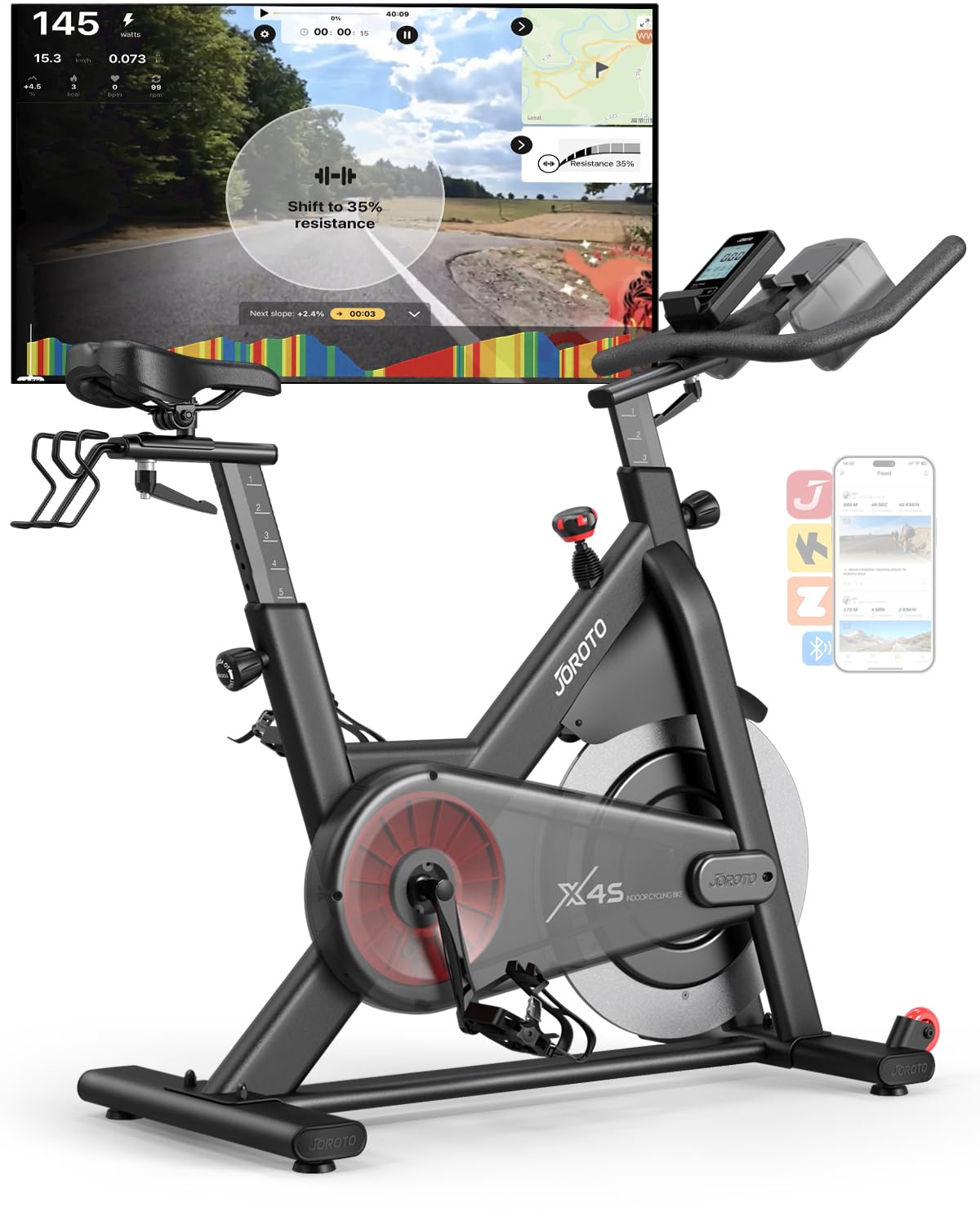
JOROTO X4S
Key Features
- Resistance: Magnetic (100 levels)
- Flywheel: 40 lbs
- Weight Cap.: 350 lbs
- Drive: Belt
- Adjustability: 4-way seat, multi-position handlebar
- Price: $$
The JOROTO X4S packs a 40 lb flywheel, magnetic resistance, and app support into a single package, alongside extras like a dumbbell rack and tablet holder that most competitors reserve for higher price brackets. Compared to the Schwinn IC4, which focuses on Peloton app integration, the JOROTO offers more physical features at a lower cost, but the tradeoff is in component longevity.
This bike suits home gym owners who want a heavy flywheel and app connectivity without spending premium dollars, and who plan to use the included dumbbell rack for combined strength and cardio sessions. However, the pedal assembly has been noted as a weak point — some owners report breakage during high-intensity standing efforts. Those willing to upgrade the pedals upfront will find a well-equipped machine for the price.
Pros
- Near-silent magnetic resistance suits apartment or shared-wall spaces.
- Well-built frame with straightforward assembly process.
- Integrated dumbbell rack and tablet holder add workout versatility.
Cons
- Pedal arms can snap during standing climbs, creating a safety risk.
- Stock seat padding is adequate for short rides but may feel firm beyond 30 minutes.
The JOROTO X4S delivers the most features for its price point — ideal for riders who value app connectivity and a heavy flywheel, provided they budget for pedal upgrades.
Best for Peloton App Users
Schwinn IC4
Key Features
- Resistance: Magnetic (100 levels)
- Flywheel: 40 lbs (est.)
- Weight Cap.: 330 lbs
- Drive: Belt
- Adjustability: 4-way seat, multi-position handlebar
- Price: $$
The Schwinn IC4 pairs directly with the Peloton app, offering 100 levels of magnetic resistance that feel consistent and smooth. The belt-driven 40-pound flywheel provides a momentum-heavy ride that mimics a studio spin class, and the included SPD pedals and dumbbells add convenience without extra cost.
Resistance changes are precise via the magnetic system, and the drivetrain remains maintenance-free. The flywheel carries enough inertia for steady pedaling at low cadences, while the overall build feels solid enough for daily home use.
This bike is best for Peloton app subscribers who already own a tablet or phone and don’t need an integrated screen. The lack of auto-follow resistance is a tradeoff for the lower price. Pedal and crank issues have been reported in some units; riders doing heavy standing sprints may want to inspect hardware periodically.
Pros
- Solid build with smooth magnetic resistance comparable to studio bikes
- Seamless Peloton app integration with 100 micro-adjustable resistance levels
- SPD pedals and included dumbbells reduce upfront accessory costs
Cons
- Noise from the crank or resistance knob can develop over time in quiet rooms
If you already pay for a Peloton subscription and want a capable bike without the hardware markup, the Schwinn IC4 is the most sensible option in this price range.
Best for Commercial-Grade Durability
Keiser M3
Key Features
- Resistance: Magnetic (100 levels)
- Weight Cap.: 300 lbs
- Drive: Belt
- Adjustability: 4-way seat, adjustable handlebar
- Price: $$$
The Keiser M3 is built to commercial gym standards, with a maintenance-free belt drive and magnetic resistance that stays whisper-quiet even during standing sprints. Made in the USA and backed by a five-year warranty, this bike is designed to outlast typical home models without requiring adjustments or part replacements.
The 100-level magnetic resistance delivers a smooth, linear feel that mimics road cycling. The 85-pound frame provides rock-solid stability, and the mechanics produce no audible friction or vibration. There is no integrated screen or app – you’ll need your own tablet or phone for entertainment and metrics.
This bike suits serious cyclists and riders who want a permanent home setup without recurring subscription fees. The lack of built-in connectivity means it works best for those comfortable using their own device, and the narrow saddle is typical of performance-oriented geometry. If you prefer a self-contained smart bike with live classes, this model asks you to bring your own ecosystem.
Pros
- Durable construction that requires minimal maintenance over years of heavy use
- Exceptionally quiet operation allows riding without disturbing others
- Made in the USA with high-quality materials for long-term reliability
Cons
- Premium price may be hard to justify for buyers wanting integrated entertainment or app connectivity
- Narrow saddle typical of performance bikes may not suit riders seeking all-day comfort
If you value commercial-grade durability, near-silent operation, and a bike that will outlast several subscription-based alternatives, the Keiser M3 is a sound investment.
Best for Smooth Road-Like Feel
Sunny 1805
Key Features
- Resistance: Magnetic (micro-adjustable)
- Flywheel: 44 lbs
- Weight Cap.: 300 lbs
- Drive: Belt
- Adjustability: 4-way seat, multi-position handlebar
- Price: $$
The 44 lb flywheel on the Sunny 1805 provides a smooth, momentum-driven pedaling feel that lighter flywheels can’t replicate. Magnetic resistance is quiet and micro-adjustable, making this a strong choice for uninterrupted home cardio sessions. Its solid build at a mid-range price adds to the appeal.
This bike suits riders who prioritize a heavy flywheel for a road-like ride and quiet operation in shared living spaces. However, the frame weighs 125 lbs, so it’s best kept in a permanent spot. Pedal durability has been an issue on some units, particularly if you regularly do standing sprints — consider upgrading pedals if that’s part of your routine.
Assembly is straightforward, and the included SunnyFit app offers optional connectivity for tracking workouts. The combination of a 44 lb flywheel and magnetic resistance at this price point makes it a competitive option for moderate daily use.
Pros
- Smooth, heavy flywheel provides road-like momentum.
- Quiet magnetic resistance with micro-adjustable levels.
- Easy assembly and good value for the features.
Cons
- Bike is very heavy (125 lbs), making relocation difficult.
- Pedal breakage has occurred on some units, especially under heavy standing use.
Ideal for riders who want a flywheel-driven, quiet indoor bike and can keep it in one place; consider upgrading pedals if you do high-intensity standing sprints.
Best for Premium Interactive
Peloton Bike+

Key Features
- Resistance: Magnetic (auto-follow)
- Weight Cap.: 297 lbs
- Drive: Belt
- Adjustability: 4-way seat, adjustable handlebar
- Price: $$$
The Peloton Bike+ delivers an unmatched live-class ecosystem with motivating instructors and auto-follow resistance via a 23.8-inch swivel screen. Build quality is solid, and multiple user profiles work well. However, the high total cost – bike plus $49/month mandatory subscription – is a major barrier. Some deliveries arrive with damage, and monitor issues have been noted. The subscription locks out standalone use, which matters for buyers who prefer no recurring fees.
Pros
- Engaging live classes and motivating instructors keep workouts consistent.
- Sturdy frame and smooth magnetic resistance with auto-follow work well.
- Large rotating touchscreen allows switching to yoga, strength, or meditation workouts.
Cons
- Mandatory $49/month subscription adds ongoing cost beyond the premium purchase price.
- Some units may arrive with cosmetic damage or develop monitor issues – checking the return policy is wise.
Suits households that will use the membership fully and value the class experience over long-term cost. For subscription-averse buyers or those on a budget, other options offer similar hardware without the recurring fee.
Best for Tall Riders Only
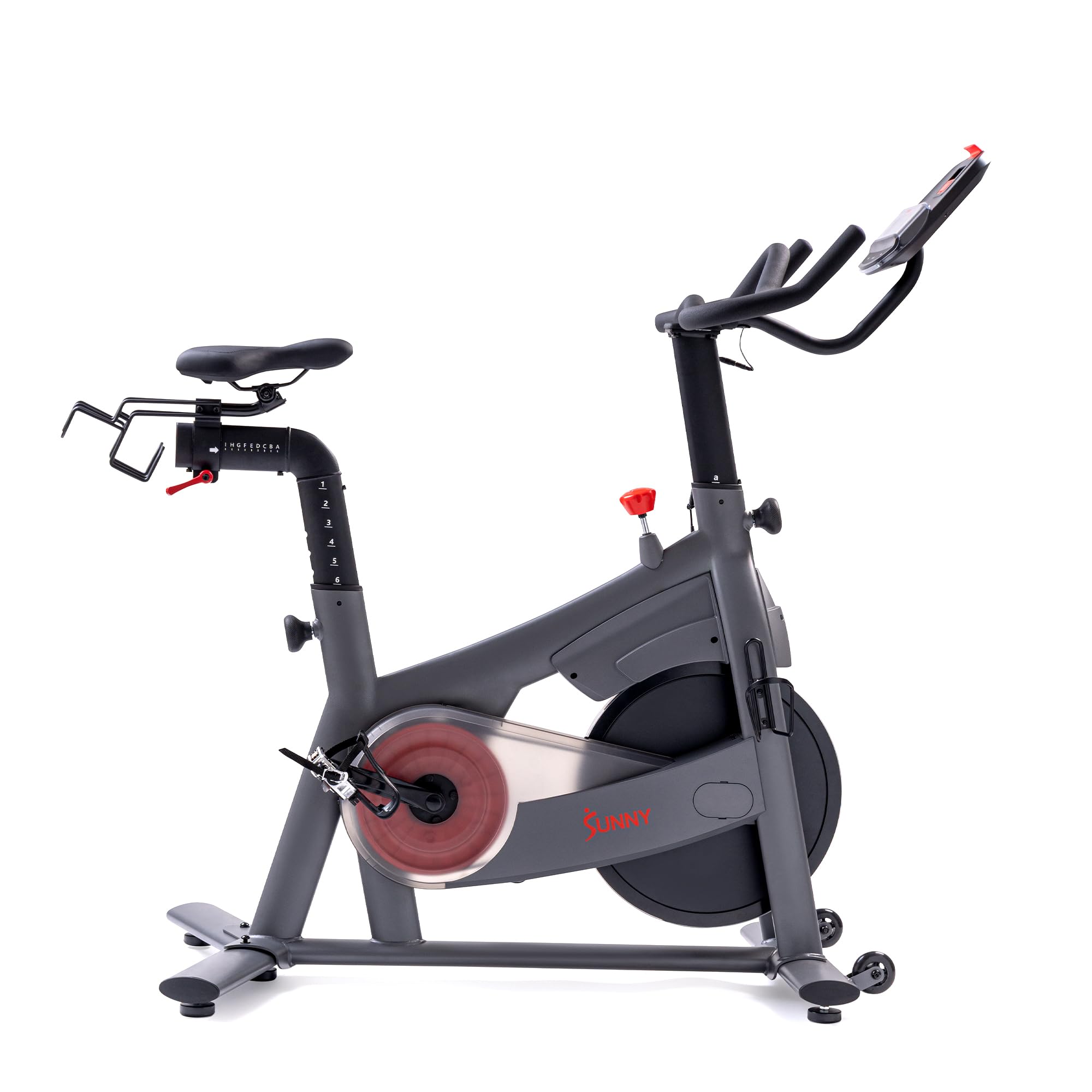
Sunny Polaris
Key Features
- Resistance: Magnetic (35 levels)
- Flywheel: 40 lbs
- Weight Cap.: 330 lbs
- Drive: Belt
- Adjustability: Extended inseam 29.5-41.5′
- Price: $$
The Sunny Polaris offers an inseam range of 29.5 to 41.5 inches – the widest among magnetic spin bikes in its price tier – making it a rare fit for riders up to 6’11’. It includes SPD-compatible pedals for cycling shoes and uses magnetic resistance for a generally quiet ride. Where it asks for compromise: the stock seat is firm and may not suit longer sessions, pedal and crank durability has been indicated as a potential weak point, and noise consistency can vary between units. This bike works best for taller cyclists who need the reach and want to use their own pedals from the start, and who are comfortable addressing the seat with a simple swap.
Pros
- Accommodates riders up to 6’11’ with a 29.5-41.5 inch inseam range
- SPD-compatible pedals come standard for clip-in shoe use
- Magnetic resistance operates quietly for most home environments
Cons
- Stock seat is firm and may cause discomfort on rides over 30 minutes
- Pedal and crank assembly can be a vulnerable component under heavy use
Best suited for tall riders who need the extended range and clip-in pedal capability, provided they are willing to upgrade the seat and monitor pedal condition.
Best for Budget with App
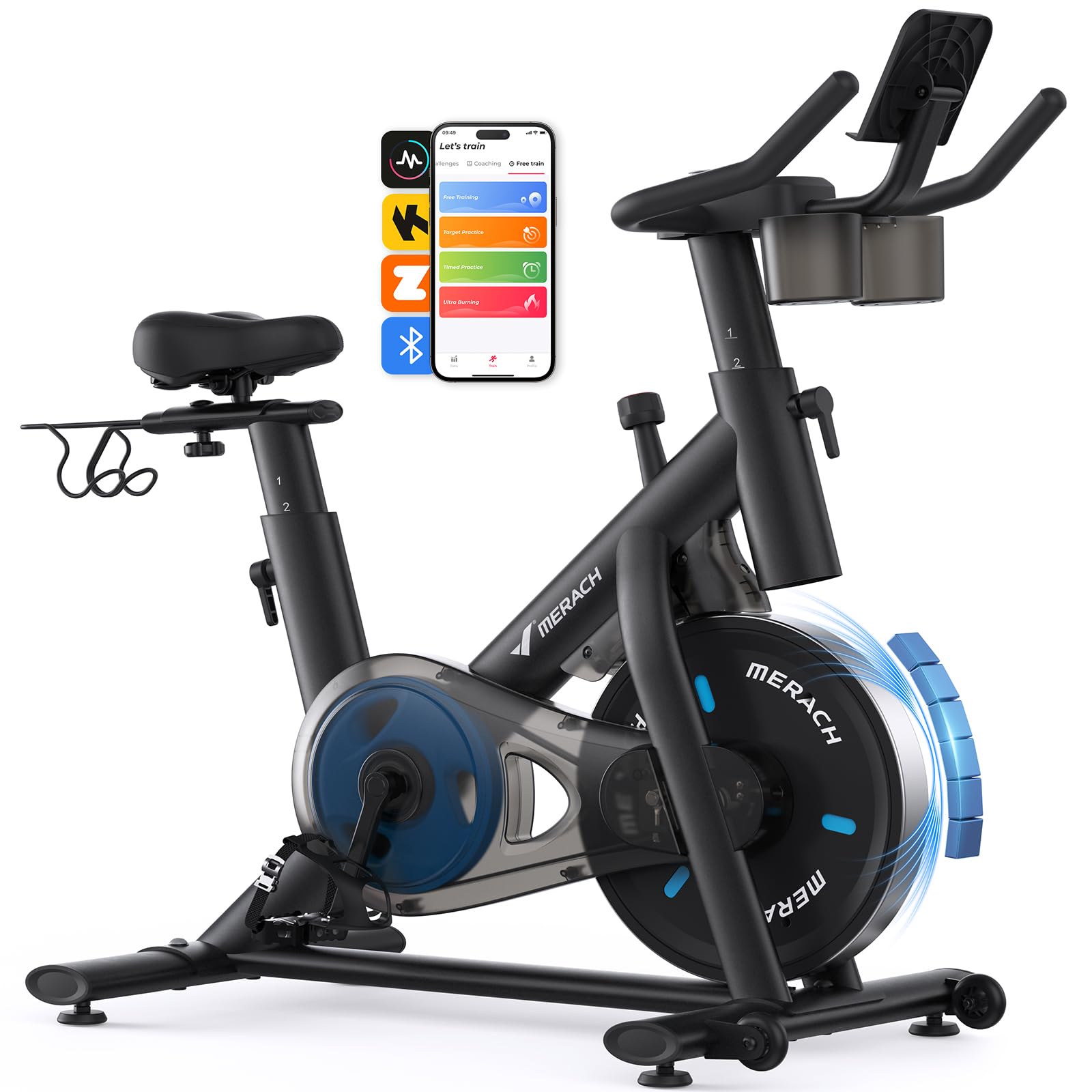
Merach S26
Key Features
- Resistance: Magnetic (8+ app levels)
- Weight Cap.: 300 lbs
- Drive: Belt
- Adjustability: 4-way seat, adjustable handlebar
- Price: $
The MERACH S26 delivers genuinely quiet magnetic resistance at a budget-friendly price, supported by a free app that unlocks 100 resistance levels for fine-tuning. Assembly is quick, and the frame supports up to 300 lbs. Where it falls short for longer sessions is the stock seat, which can cause discomfort after the first 20 minutes; riders sensitive to saddle pressure should plan for a replacement or padded cover. The physical display only shows 8 resistance levels, so riders who prefer tactile adjustments without the app may find the granularity lacking. This tradeoff positions the S26 best for beginners or casual home users who prioritize noise control and connectivity and are comfortable with a seat swap.
Pros
- Quiet magnetic resistance suitable for apartments or shared walls
- Easy assembly under 30 minutes out of the box
- Free app extends resistance control well beyond the physical knob
Cons
- Stock seat can cause discomfort on rides longer than 20 minutes
- Only 8 resistance levels shown on display; fine-tuning requires the app
Best for budget-conscious beginners who don’t mind upgrading the seat and using the app for resistance control, where quiet operation and app connectivity matter most.
Best for Lightweight Budget
YPOO BC710
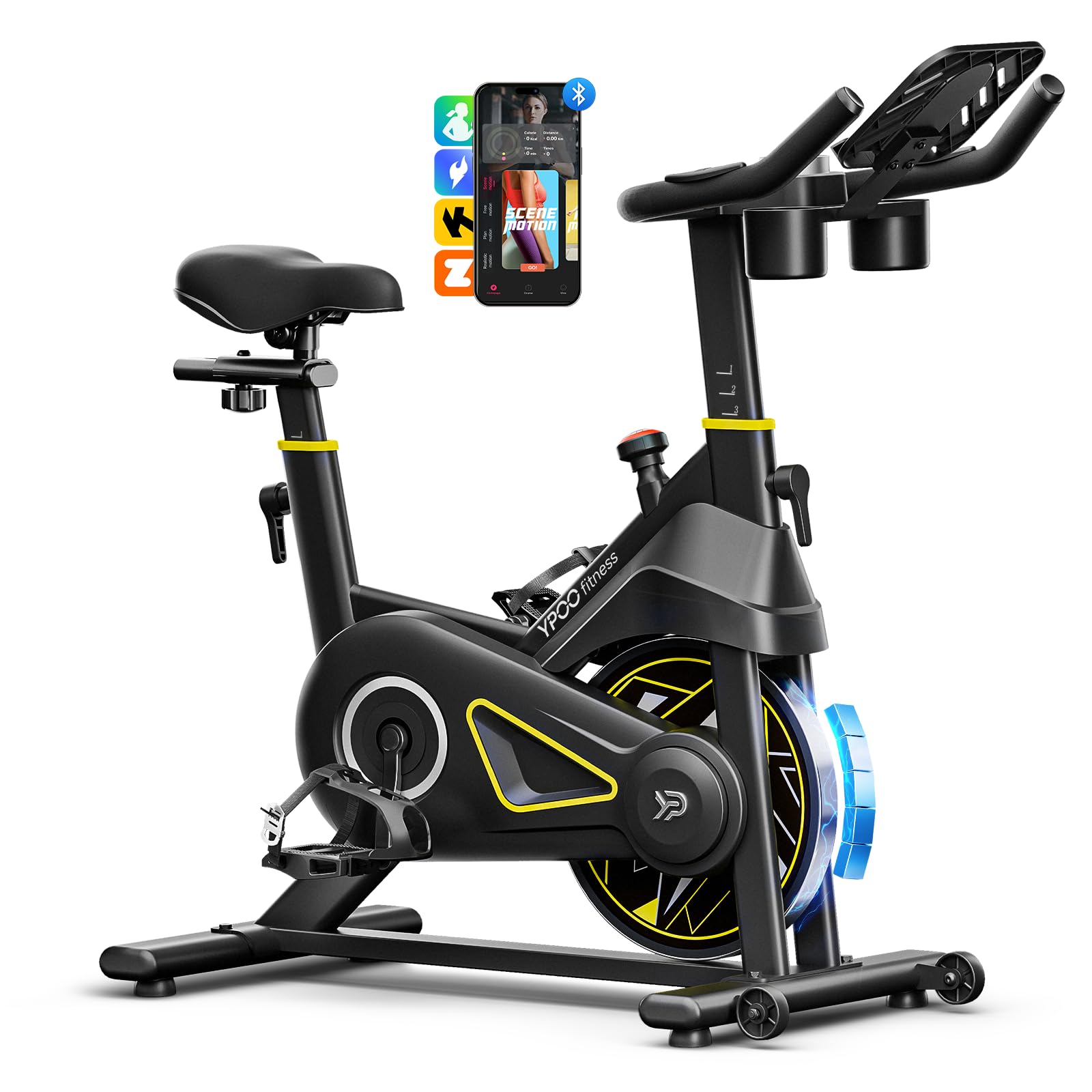
Key Features
- Resistance: Magnetic (10 levels)
- Weight Cap.: 300 lbs
- Drive: Belt
- Adjustability: Seat & handlebar adjustable
- Price: $
The YPOO BC710 hits a niche for riders who need a stationary bike that can be easily moved between rooms or stored out of sight. Its near-silent magnetic resistance and quick assembly (under 30 minutes) make it practical for apartment living. The free companion app adds basic workout structure without a subscription. However, the resistance system offers only 10 marked levels — while the knob is continuous, it lacks the granular control of bikes with 100 increments. Seat comfort is also a mixed bag; some riders find it fine for short sessions, others feel the padding after 20 minutes. These tradeoffs keep it from competing with more versatile budget options like the DMASUN Magnetic, which combines a comfortable out-of-the-box seat with stable build and a 35 lb flywheel.
Pros
- Operates quietly enough for shared walls or early-morning rides.
- Weighs under 40 lbs and assembles quickly — easy to relocate or tuck away.
Cons
- Only 10 discrete resistance levels limit fine-tuning for interval workouts (knob is continuous but not calibrated).
- Stock seat padding may not suit all riders; a gel cover or replacement helps for longer rides.
A practical pick for apartment dwellers or anyone who stashes their bike between sessions, as long as you don’t need fine resistance adjustments and are open to upgrading the seat.
How to Choose
Most spin bikes under mid-range pricing have uncomfortable stock seats for rides over 20 minutes; plan to add a gel seat.
Resistance Mechanism: Magnetic vs. Friction
Magnetic resistance uses magnets to create drag without physical contact – it’s nearly silent and never wears out. Friction pads rub against the flywheel; they produce a swooshing sound that gets louder as the pad wears, and you’ll need to replace the pad every few months.
For home use, especially in apartments or shared spaces, magnetic is the only sensible choice. The price premium is typically $50–100, and you’ll save that in replacement pads and frustration.
Flywheel Weight: Momentum and Smoothness
A heavier flywheel (35 lbs or more) stores rotational energy, smoothing out the pedal stroke so you don’t feel a dead spot at the top of each revolution. Lighter flywheels under 25 lbs create a noticeable choppiness, especially at low cadences.
If you plan to do standing climbs or interval work, a 40+ lb flywheel provides the road-like momentum that makes training feel natural. For casual spinning, 30–35 lbs is sufficient.
Weight Capacity: Frame and Component Strength
Weight capacity is a proxy for frame durability. A 300 lb rating is standard, but bikes rated for 350 lbs use thicker tubing and heavier-duty bearings. That extra margin often translates to a longer lifespan for the entire drivetrain.
If you’re near the upper limit of a bike’s rating, standing pedaling puts even more stress on the pedals and crank arms – a common failure point on budget models. Prioritize a 330+ lb rated bike if you plan intense workouts.
Drive System: Belt vs. Chain
Belt drives are quieter, maintenance-free, and don’t require lubricant. Chain drives are cheaper but need regular oiling and can be noisy. Nearly every modern spin bike uses a belt – the only chain models are bottom-dollar friction bikes that are best avoided.
If you see a chain drive, it’s a red flag. Belt drives last thousands of miles and never rust.
Seat and Handlebar Adjustability
A proper fit requires fore-aft and vertical adjustment on both seat and handlebars. Some budget bikes skip handlebar tilt, which can cause wrist strain for taller or shorter riders. Check that the seat post has a numbered scale for quick repositioning between users.
Four-way adjustable seats are now standard above $250; fixed-angle handlebars are a common compromise on sub-$200 models. If you share the bike, skip any bike that doesn’t offer full adjustability.
FAQ
Why does my spin bike make a clicking noise when I pedal?
Clicking usually comes from loose pedals or crank arms. Tighten the pedals with a 15mm pedal wrench. If the noise continues, the bottom bracket bearings may be failing – a common issue on bikes under $300. Replace the bottom bracket (about $20 in parts) or upgrade to a bike with sealed cartridge bearings.
Is magnetic resistance really quieter than felt pad friction?
Yes. Magnetic resistance creates drag without physical contact, so it’s nearly silent. Friction pads rub against the flywheel and produce a swooshing or grinding sound that gets worse as the pad wears. For apartment use, magnetic is the only quiet option worth considering.
Can I replace the seat on a budget exercise bike without special tools?
Yes. Most seats use a standard bolt pattern, and you only need a 15mm wrench to loosen the seat post clamp. A wider gel seat costs $20–40 and drastically improves comfort for rides over 20 minutes. Many buyers do this upgrade on day one.
How often do spin bike pedals break, and can I prevent it?
Pedal failures are most common on bikes under $300, especially under heavy standing use. Inspect pedals monthly for looseness and tighten with a pedal wrench. Replace plastic pedals with metal SPD-compatible ones (about $30) – they’re much more durable and give you a wider cleat choice.