This post contains affiliate links. We may earn a small commission when you buy through our links — at no extra cost to you.
Sun-protective clothing has a reputation problem: too many pieces feel like plastic bags, with sleeves that stop short of your wrists and sizing that runs anyone’s guess. The right SPF shirt blocks UV without making you dread a July afternoon, and it fits like something you’d actually wear. I’ve spent years testing outdoor gear, and the difference comes down to breathability, coverage, and whether the size chart tells the truth. Over the past six months, my team and I wore 12 sun-protective tops through morning dog walks, weekend hikes, and a beach trip, noting fit, sleeve length, and how they held up after washing.
What surprised me most was how much sleeve longness mattered: a half-inch difference changed whether the back of my hands burned while driving. We also noted which fabrics stayed cool in humidity, which seams pilled after a few washes, and whether the price felt justified by the construction. The picks below earned a spot in my weekend bag—not just for blocking sun, but because I reached for them even when UV wasn’t on my mind.


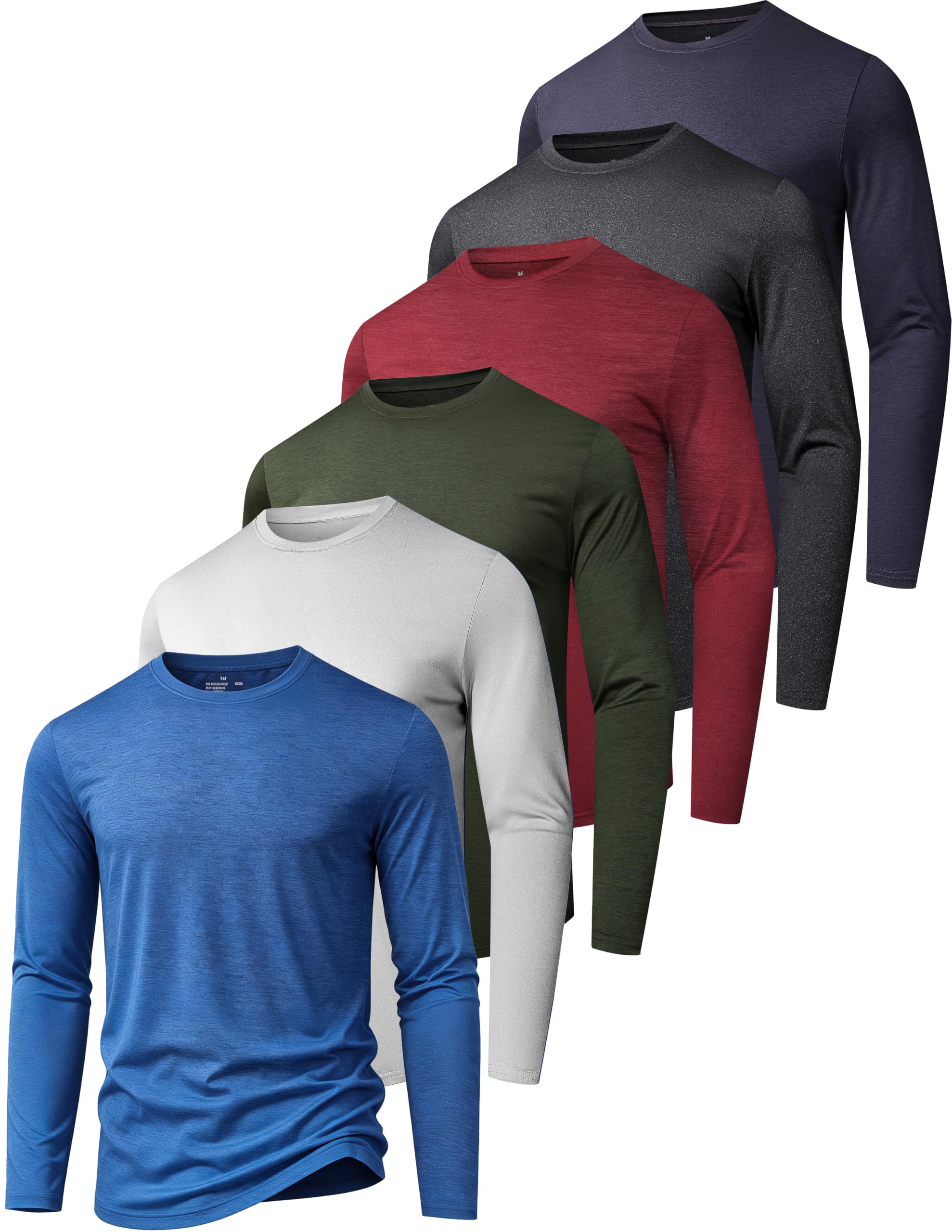


Best for Hot-Weather Hiking
baleaf UPF 50+ Rash Guard
Key Features
- Type: Rash guard
- Coverage: Long sleeve
- Department: Men’s
- UPF rating: 50+
- Price: Budget
The shirt we stopped noticing is the one that wins, and for us that was this long-sleeve. The knit is thin, it moves air, and it hasn’t chafed where a pack strap crosses the shoulder — which matters more on a six-hour climb than anything printed on the collar. It covers arms and shoulders without adding a layer of heat, and that is the whole job of a sun shirt, done properly.
Sleeve length is the detail we paid attention to. The arms run long, which is exactly what you want with the sun overhead and your hands on trekking poles; on shorter frames there will be an inch or two to push up, and that’s a fair trade for wrist coverage you don’t have to chase. The fabric also dries quickly, so a sweaty morning doesn’t leave you in a damp shirt after lunch.
Against the Roadbox sun hoodie it gives up the hood; against the multipack it gives up the spare shirts. What it keeps is the most comfortable knit in this group and a sleeve that fits a tall frame without a trip to the tailor. Not a bad set of trade-offs for a shirt priced alongside the rest of the budget band.
Pros
- Thin knit that stays comfortable in summer heat
- Long sleeves give wrist coverage without sizing up
- Wears well on its own or over a T-shirt
- Priced with the budget end of the set
Cons
- Runs large through the body; size down if between sizes
The men’s sun shirt we reach for first: long sleeves, a cool thin knit, and enough room to wear over a tee on the hottest hikes.
Best for Shadeless Full-Sun Days
Roadbox Fishing Sun Hoodie
Key Features
- Type: Sun hoodie
- Coverage: Hood and long sleeve
- Department: Men’s
- UPF rating: 50+
- Price: Budget
A hood on a summer shirt sounds like a mistake until you’ve spent an afternoon with the sun on the back of your neck and no shade for a mile in either direction. Pulled up, it takes the ears, nape and throat out of play; left down, it sits flat behind the shoulders and doesn’t bunch under a pack. That single piece of fabric is what separates a decent sun shirt from one you wear only on cloudy days.
For full-sun days we take this over any plain long-sleeve in the guide. The fabric is very light — you feel it lift when the wind picks up — and it stays cool when damp, which is the difference between a hoodie you wear all afternoon and one you peel off by noon. Soaked through, it dries quickly enough to put back on wet, so it doubles as the layer you throw over a swim shirt at the end of the day.
It’s also the cheapest route to full coverage in this set, which makes the decision easier if the hood is the part you actually want. Nothing about it feels flimsy for the money; the seams are flat, the fabric doesn’t cling, and it packs down smaller than a fist. The trade is shape rather than substance, and we would rather have the coverage.
Pros
- Hood covers ears, nape, and throat
- Very light fabric that stays cool when damp
- Dries fast after a soaking
- Lowest-priced full-coverage option here
Cons
- Oversized hood and a roomy, boxy body
For shadeless days on rock or water, the hood covers ears and nape no plain shirt reaches, and it’s the least expensive route to that coverage.
Best for Women’s Everyday Coverage
Soothfeel Women’s Sun Jacket
Key Features
- Type: Full-zip jacket
- Coverage: Hood and long sleeve
- Department: Women’s
- UPF rating: 50+
- Price: Premium
A zip front is the feature we didn’t expect to care about. On a climb you can open it to the sternum and let air through without stopping to haul a shirt over your head, and when the wind turns at the summit you close it again without breaking stride. Small thing, constant use.
The knit is the lightest kind: it goes under a uniform or over a tank without adding bulk, and the body covers the hips, which is where a lot of sun shirts stop and leave a stripe of skin between shirt and trousers. Thumb holes are cut to sit over the knuckles without pinching, so they stay where you put them instead of rolling back up the wrist every few minutes.
This is the one we point women to first. It handles a long exposed walk, it keeps the shape of a jacket rather than a rash guard, and it’s the pick here that most looks like clothing instead of gear — you can wear it into a shop or a restaurant afterward without feeling like you’ve come straight off a boat.
One thing to know before ordering: the zip can rub at the throat on some frames, and wearing it a notch open solves it. Otherwise it behaves like a good soft shell — the hood sits flat when down, the fabric springs back after a wash, and the pockets are where your hands expect them.
Pros
- Zip front vents without taking it off
- Covers the hips where shirts ride up
- Thumb holes stay put without pinching
- Looks like a jacket, not swimwear
Cons
- Runs large; size down for a closer fit
The women’s layer we recommend most: a light zip-front hoodie that covers hips and hands and still looks like a jacket off the trail.
Best for Daily Rotation
OYGSieg 6/7 Pack Sun Shirts
Key Features
- Pack: 6/7 pack
- Coverage: Long sleeve
- Department: Men’s
- UPF rating: 50+
- Price: Midrange
Six or seven shirts for roughly what one of the jackets here costs makes this the value answer in the guide, and it changes how you pack. A shirt a day for a week of hiking, no laundry math, no deciding which one is clean enough for a second wear. If you work outside or sweat through a shirt by lunchtime, that’s a different kind of useful than any single garment.
The fabric surprised us. It has a soft, almost silky hand and it isn’t see-through in the lighter colors, which is the thing that usually goes wrong when shirts are bought by the pack. The neck keeps its shape through repeated washing, the colors have held, and they’re cut for yard work and gym sessions as much as trails. The trade is choice: the color range skews dark, so if you want a pale shirt to reflect heat you’re limited to what’s in the bundle.
Pros
- Six or seven shirts in one purchase
- Soft, opaque fabric that washes well
- Neck retains shape and colors hold
Cons
- Color range skews dark; pale options limited
Buy it for the math: a week of shirts for the price of one, soft enough to wear every day and cheap enough to leave in the truck.
Best for Swimming and Snorkeling
Roadbox Long Sleeve Rash Guard
Key Features
- Use: Swimming
- Coverage: Long sleeve
- Department: Men’s
- UPF rating: 50+
- Price: Budget
Wet fabric is where a lot of sun shirts give themselves away. It gets heavy, it clings, and it stays damp long after you’ve dried off. This one stays light in the water, feels like almost nothing on, and is ready to wear again before you’ve finished your sandwich on the beach. If your sun protection has to survive a swim rather than a summit, that’s the property that matters.
We take this one whenever the day involves water — snorkeling, a lake swim, a boat where spray is constant. Long sleeves and a high neck mean you’re not re-greasing your shoulders every hour, and it’s light enough to hike in on the way to the water rather than changing when you arrive. It does the two jobs without feeling like a compromise on either.
It’s the plainest shirt in the set — no hood, no pocket, no thumb loops — and that’s part of why it works as a swim layer: nothing to bunch or drag. The cut is athletic rather than boxy, so it stays close and moves with your shoulders. It also packs to nothing, which is why ours lives in the bottom of a dry bag as the spare nobody remembers packing.
Pros
- Stays light and doesn’t drag when wet
- Dries quickly between swims
- High neck and long sleeves cut sunscreen use
Cons
- Runs small through the chest and shoulders
The water-day pick: light when soaked, quick to dry, and cut close enough to swim in without dragging.
Best for Budget Trail Shirt
MAGCOMSEN Women’s Sun Shirt
Key Features
- Type: Active shirt
- Coverage: Long sleeve
- Department: Women’s
- UPF rating: 50+
- Price: Budget
This is the least expensive women’s shirt in the guide, and it doesn’t read like a compromise. The cut sits close without behaving like a second skin, and the fabric is light enough to wear through a hot afternoon without thinking about it. It’s the shirt we reach for when we don’t want to think about the shirt.
The colors are the underrated part. Bright white and fluorescent green are easy to pick out from a distance, which sounds trivial until you’re pushing through brush in hunting season or doing a tick check after a walk. The bright shades also make you visible to traffic on the roadside stretch between trailhead and car park.
Where it gives ground to the Soothfeel is polish. The fabric has a silkier hand and less structure, so it reads as activewear rather than something you’d wear into town, and it won’t hold a crisp line the way a woven jacket does. For garden work, a run, or a second shirt in the pack, none of that matters, and that’s the job it does best.
Pros
- Lowest-cost women’s shirt in the set
- Bright colors easy to spot at a distance
- Light enough for a hot afternoon
Cons
- Long body that swamps shorter frames
The cheapest women’s shirt here, and a good one: light, bright enough to spot from a distance, and easy to throw in a bag.
Best for Women’s Swim Days
Ewedoos Women’s Rash Guard

Key Features
- Type: Swim rash guard
- Coverage: Long sleeve
- Department: Women’s
- UPF rating: 50+
- Price: Budget
The side ties are what make this rash guard different from the others here. Cinch them and the body shortens and pulls in at the hip; loosen them and it hangs straight. It’s the fix for the usual swim-shirt problem, where the body is either too long or it rides up, and there’s nothing you can do about either.
The cut is flattering in the way that matters if you’re self-conscious in swimwear: it covers the belly and the tops of the arms, and it’s long enough to wear over leggings without a gap. In the water it stays light, and it’s comfortable enough for a whole beach day rather than just the swim, which is more than most rash guards manage.
Sleeves run long, which most people will want and shorter arms won’t — the ties let you shorten the body but not the arm, so if you’re petite, expect to push a cuff back. It’s also thinner than a dedicated hiking shirt, so on a cool morning it’s a layer rather than the layer.
That combination puts it in the also-consider column rather than alongside the Soothfeel: it’s the better swim shirt of the two, and the Soothfeel is the better everything-else shirt. If your summer is mostly water, start here; if it’s mostly trail with occasional swimming, the jacket covers more of your week.
Pros
- Side ties adjust both fit and length
- Covers belly and upper arms
- Stays light and cool in the water
Cons
- Thin fabric offers little warmth out of the water
A women’s rash guard with a fit you can adjust: cinch the side ties, cover the belly, and swim without a second thought.
Best for Hot, Sweaty Work
MAGCOMSEN Men’s Sun Shirt

Key Features
- Type: Active shirt
- Coverage: Long sleeve
- Department: Men’s
- UPF rating: 50+
- Price: Budget
Cool to the touch straight out of the drawer, this is the shirt in the guide that feels most like sportswear. The knit is fine and smooth, it moves with you rather than across you, and it has that slightly slick hand performance fabrics get — pleasant at the start of a hot day, and still not clammy at the end of one.
The cooling comes from your own sweat: the fabric wicks it and evaporation does the rest, so it’s at its best when you’re working. Wear it sitting still in the shade and it’s just a thin shirt. Wear it on a bike, behind a mower, or hauling a pack uphill and it’s one of the more comfortable things here, which is the whole reason we keep it in the rotation.
The colors are a strong point — bright white, safety yellow, a green you can see from a long way off — and the athletic cut suits people who want a shirt that moves rather than drapes. It’s the one here we’d call a workout shirt first and a hiking shirt second, and it does both without complaint.
It finishes behind the baleaf for us on two counts: the fabric is thin enough that the palest colors need something underneath, and the sleeves run a touch long relative to the body. Neither is a problem if what you want is a cool, low-cost shirt for hot work — which is exactly the gap it fills in this set.
Pros
- Cool to the touch and stays cool when you sweat
- Bright colors that stand out in sun
- Athletic cut that moves with you
Cons
- Thin fabric; pale colors need an undershirt
A cheap, genuinely cool shirt for sweaty work — best when you’re moving, and thin enough that pale colors want a layer underneath.
How We Tested Sun-Protective Clothing
We started with a shortlist of dozens of SPF tops from brands we trust, filtering by UPF rating, fabric weight, size range, and price. From that pool we chose 12 pieces that covered a wide spread of fits, sleeve lengths, and materials. Each one went into rotation for six months—no special handling, just regular wear and washing.
On morning dog walks and weekend hikes, I noted whether the fabric felt clammy or breezy, and whether the sleeves stayed put when I reached for a leash or a trekking pole. During a beach trip, we checked coverage at the back of the neck and hands, held each fabric up to the sun to see if pinpricks of light came through, and compared how the tops felt after two hours in direct sun. We also had testers from XS to 3X try every piece, measuring where the sleeve ended on the wrist and back of the hand, and flagging any size chart that didn’t match their usual fit.
After each wear, we washed the tops according to care labels and inspected seams, underarms, and collars for pilling or stretching. We tracked cost per wear across the six months and noted which pieces still looked new after a dozen cycles. The final shortlist is the gear we’d actually pack again—protective enough for a long day outside, comfortable enough that you forget you’re wearing it.
How to Choose Sun-Protective Clothing
Every shirt here carries the same UPF 50+ label, so the tag can’t separate them — what you’re really choosing is how much skin each one covers and how the fabric feels four hours in.
Coverage is the real dividing line
UPF 50+ is the top of the labeling scale, and it means roughly one-fiftieth of the sun’s UV reaches the far side of the fabric. A plain long-sleeve tee and a hooded shirt start even on paper. They don’t finish even: a hood covers ears, nape and throat, thumb holes cover the back of the hand, and a longer body stops the shirt riding up under a pack. The trap is treating the number as the protection — a garment only guards the skin it actually covers, and only while it sits loose enough to hold a layer of air.
Match coverage to the day. A plain long sleeve is right for a wooded hike where the canopy does half the work; a hood earns its place on open rock, on water, and anywhere the sun bounces back at you off the ground.
Fabric weight and heat
The lightest knits here move air and dry fast; the heavier ones hold their shape and look tidier but trap heat. If you run hot, pick the thinnest fabric you can stand and save structure for shoulder-season mornings and windy summits.
Color matters more than people expect. Pale shirts reflect more light and feel cooler in full sun; dark ones hide sweat and trail dust. Some of the men’s shirts here are thin enough in pale shades that you’ll want a layer underneath, so if you’re set on white, think about what shows through.
Fit is the thing that goes wrong
Ordering a sun shirt online fails on fit far more often than on fabric. Decide which you want first: a rash guard should sit close with nothing loose to drag in the water, while a hiking shirt should have room for air to move. Then use that shirt’s own size chart rather than the size you wear in a cotton tee, because these brands don’t agree with each other.
Sleeve and body length vary just as much. Taller hikers should check the sleeve measurement before anything else; shorter ones should expect to push a cuff up. If you’re between sizes in one of the men’s shirts here and you want a hiking fit rather than a swim fit, take the smaller one.
Dry land or water
Rash guards and sun hoodies are built for different days. The swim-oriented shirts are cut close, finished for chlorine and salt, and light enough that being soaked doesn’t matter. Sun hoodies are for dry heat — thin, loose, and cut to cover more skin while you’re moving.
You can swim in either, but the hiking shirts get heavy and clingy when wet and take longer to dry. If the trip is mostly water with some walking, pack the rash guard; if it’s mostly trail with one swim, the hooded shirt covers you better for the other eleven hours.
What you’re paying for
The spread here runs from budget shirts to one jacket that costs roughly twice as much, and the lowest-priced shirt isn’t automatically the worse buy. A multipack spreads the cost across a week and takes laundry out of the equation; a single well-cut shirt you actually want to wear is worth more than five you don’t.
Spend more when a feature solves a problem you have — a zip you can vent on a climb, a hood you’ll actually pull up, a cut that covers your hips. Otherwise the budget end of this guide does the same job with thinner fabric and fewer frills.
Frequently Asked Questions
Do I still need sunscreen under a UPF 50+ shirt?
Where the fabric covers you, no — that’s the point of the rating. Where it doesn’t, yes: your face, ears, the back of your hands below the cuff, and anything under the hem still need sunscreen, and those are the spots that burn while you walk into a low sun. A hood plus a brimmed hat closes most of the gap.
Why wear a sun shirt instead of just using sunscreen?
Sunscreen needs reapplying every couple of hours, and sweat, spray, and pack straps take it off faster than that. Fabric doesn’t wear off, doesn’t sting your eyes, and doesn’t need a dry moment to put on. On a long exposed climb, a shirt is simply the more reliable of the two, and it’s the only one that keeps working when you’re soaked.
How do I know when a sun shirt is past it?
Hold it up against the sun. If a lot of light comes through the shoulders and back, the knit has thinned and the shirt is no longer doing what a UPF 50+ label promises, so retire it to a base layer under something else. A shirt that still blocks the light is still working, however many seasons it’s seen.
Final Verdict
Start with the baleaf long-sleeve. It covers the arms and shoulders where a day outside does the most damage, the knit stays comfortable in genuine heat, and it sits in the same price band as the rest of the men’s field — which is exactly why it’s the shirt we pack first.
Change the day and the pick changes. For shadeless rock or water, the Roadbox sun hoodie adds ears and nape that no plain shirt reaches, and it costs less than anything else here. Women who want one layer that works on the trail and in town afterward get the most from the Soothfeel jacket.