This post contains affiliate links. We may earn a small commission when you buy through our links — at no extra cost to you.
Every winter camper knows the feeling: a 0°F bag that leaves you shivering at 20°F because you skimped on the pad or the bag simply overstates its rating. The real trap is weight — many affordable bags that claim freezing-point warmth are so heavy they only work for car camping.
This guide sorts through the trade-offs you actually face: mummy vs rectangular, synthetic vs down, and whether you need extreme cold protection that adds ten pounds. The goal is to match a bag to your specific trip type and body size, not just a number on the tag.
No single bag does it all. The right choice depends on whether you carry it on your back, sleep in a truck bed, or share with a partner — and how much you value room to move over thermal efficiency.


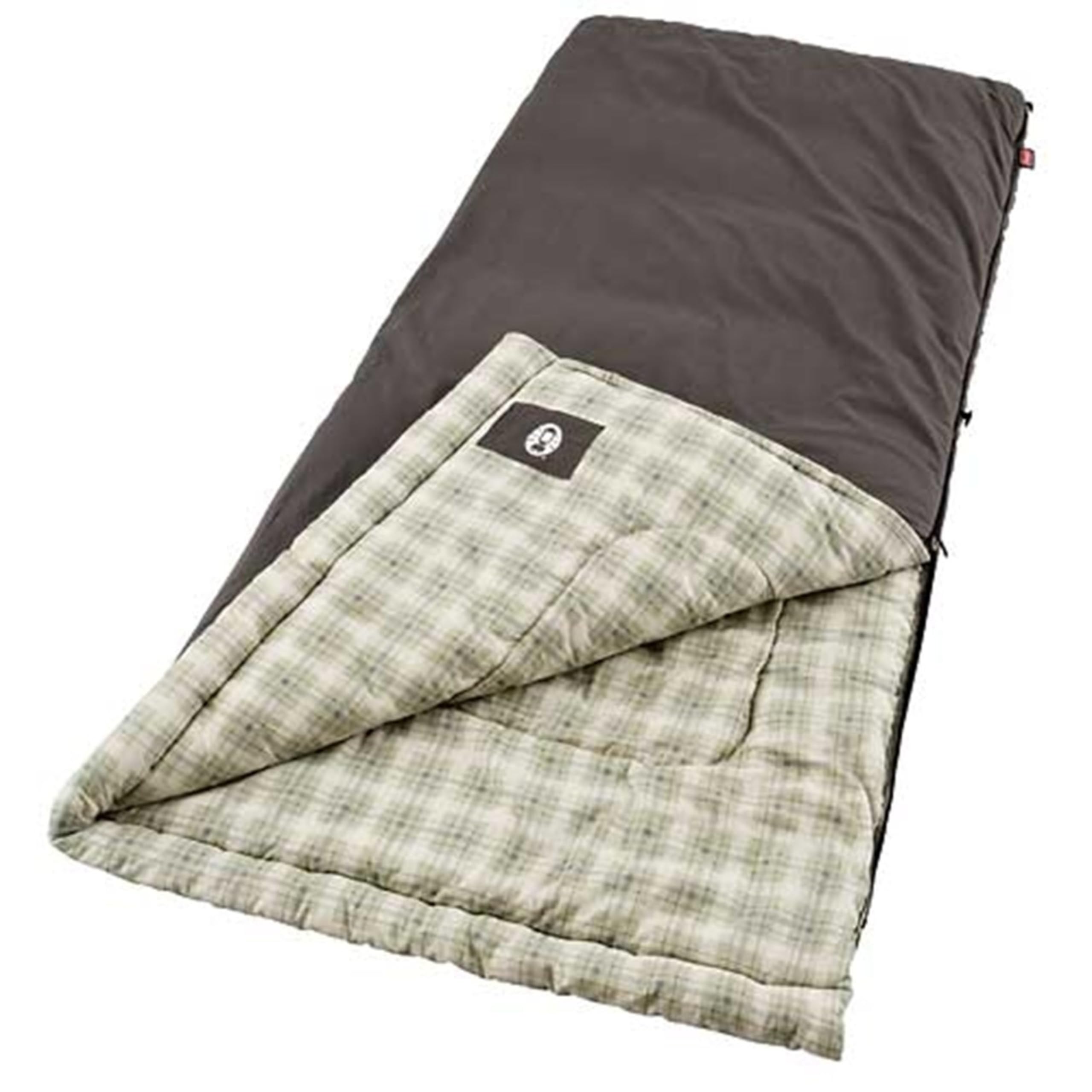


Best for Budget Winter Car Camping
Coleman North Rim 0°F
Key Features
- Fill: Polyester
- Shape: Mummy
- Weight: 6.5 lbs
- Temperature Rating: 0°F
- Price: Budget
The Coleman North Rim 0°F sleeping bag delivers consistent warmth in sub-freezing temperatures, making it one of the most budget-friendly options for cold-weather camping. The polyester fill and mummy shape trap heat effectively, and the adjustable hood lets you control ventilation without letting cold air in.
Over years of use, the fill retains its loft, and the no-snag zipper operates smoothly even when temperatures drop. The durable shell handles rough ground and repeated packing without tearing, which is why many owners keep the bag for seasons.
This bag suits average-built adults under 6 feet who car camp or make short hikes to base camp. The mummy cut is narrow — broad-shouldered or tall sleepers will find the shoulder area restrictive. Packing it into the stuff sack takes practice; expect to spend a few extra minutes breaking camp until you get the technique down.
For the price, no other 0°F mummy bag has the same track record of warmth and durability. It sacrifices roominess and packability compared to premium models, but for budget-focused winter campers, it’s a solid choice that won’t leave you cold.
Pros
- Stays warm at 0°F and below — holds up in extreme cold conditions.
- Budget-friendly option for a 0°F mummy bag with solid insulation.
- Durable construction that lasts through years of regular use.
Cons
- Mummy cut is snug around the shoulders and torso — tall or broad-shouldered sleepers may feel cramped.
- Repacking into the stuff sack requires effort and patience to compress fully.
The Coleman North Rim 0°F is the sensible choice for budget-minded winter car campers who prioritize warmth over roominess and packability.
Best for Extreme Cold Car Camping
ALPS Redwood -25°
Key Features
- Fill: TechLoft Silver
- Shape: Rectangular
- Weight: 13 lbs
- Temperature Rating: -25°F
- Price: Premium
The ALPS Redwood -25° stands apart with its unmatched -25°F temperature rating and a rugged cotton canvas shell that shrugs off abuse. This is a bag built for extreme sub-zero conditions where lesser synthetic bags would fail.
In real sub-zero cold, the Redwood delivers — owners report sleeping comfortably at 4°F and below, with the TechLoft Silver fill providing consistent warmth. The rectangular cut offers genuine room to move, accommodating side sleepers and larger body types without that mummy-bag claustrophobia.
The canvas exterior and heavy-duty zipper mean this bag can take years of rough handling, from ice fishing shanties to the back of a pickup. Its 13-pound weight and massive packed size rule out any foot travel — this is strictly for vehicle-based camping where the payload is irrelevant.
This bag is for winter car campers, ice fishermen, and anyone who faces genuine sub-zero temperatures and has a truck or SUV to transport gear. The canvas can feel abrasive on bare skin, so a base layer or liner is recommended. It is overkill for any climate above 0°F.
Pros
- Genuine -25°F warmth that performs in real sub-zero cold
- Durable cotton canvas shell and heavy-duty zipper for decades of use
- Spacious rectangular shape fits large sleepers and allows movement
- Built to withstand rough handling in hunting and ice-fishing camps
Cons
- Extremely heavy (13 lbs) and bulky — only suitable for vehicle-based camping
- Canvas exterior can feel rough against exposed skin without a liner
If your winter trips involve driving to sub-zero campsites and you want a bag that will outlast your truck, the Redwood is the clear choice. For anyone carrying gear on foot, it is simply too heavy.
Best for Big & Tall Sleepers
Coleman Heritage 10°F XL
Key Features
- Fill: Holofill 808
- Shape: Rectangular
- Weight: 8.9 lbs
- Temperature Rating: 10°F
- Price: Budget
The Heritage Big & Tall’s 84×40-inch interior is the most spacious among cold-weather bags in this price range. It offers significantly more volume than the top pick’s mummy shape, at the cost of substantial bulk and heft.
For tall or large-framed sleepers who drive to camp, the Heritage delivers comfort no mummy bag can match. The 8.9-lb weight and 40-inch width mean it won’t fit in a backpack and takes up half a duffel — a non-issue for car campers. Also, the lining on some units is a printed synthetic rather than 100% cotton flannel; worth checking before purchase if that matters to you.
Pros
- Spacious 84×40-inch interior fits tall and broad-shouldered sleepers without restriction
- Holds warmth down to the 30s with proper base layers, as confirmed by many users
- Quiet, non-snag flannel lining and durable cotton shell withstand repeated use
Cons
- At 8.9 lbs and over two feet wide when packed, this bag is impractical for any hike longer than from car to campsite
- Some units have a printed synthetic lining rather than 100% cotton flannel – buyers who want genuine cotton should verify before buying
A roomy, warm sleeping bag for tall car campers who prioritize space over portability — just be ready to carry it a short distance.
Best for Backpacking 20°F
Kelty Cosmic 20 Down
Key Features
- Fill: 550FP Down
- Shape: Mummy
- Weight: 2.6 lbs
- Temperature Rating: 20°F
- Price: Mid-Range
At 2.6 pounds and packing down to 13×7 inches, the Kelty Cosmic 20 Down is the only real backpacking option among cold-weather sleeping bags here. Its 550-fill down provides enough insulation to stay comfortable near freezing, yet the whole bundle fits inside a medium stuff sack — a clear win for multi-day hikes where every ounce counts.
This bag suits backpackers who sleep warm, value compact gear, and don’t mind a close-fitting mummy cut. The snug shoulder area can be tight for broad-shouldered campers, and down loses insulating power when wet without a waterproof shell or bivvy. In dry cold conditions it performs well, but in humid or rainy environments it demands extra protection.
Pros
- Lightweight and packs small for backpacking
- Warmth holds up to freezing temperatures
- Built with recycled fabrics and PFAS-free DWR
- Consistent stitching and durable shell
Cons
- In wet conditions without a bivvy, down insulation loses effectiveness
- Mummy cut restricts shoulder room for broader sleepers
If you need a sleeping bag that won’t weigh down your pack for sub-freezing nights, this Kelty delivers. It’s not for wet climates or broad frames, but for dry cold-weather backpacking, it’s a standout.
Best for Couples Car Camping
Kelty Doublewide 20°
Key Features
- Fill: Cloud Loft synthetic
- Shape: Double-wide rectangular
- Weight: 9 lbs
- Temperature Rating: 20°F
- Price: Mid-Range
The Kelty Tru.Comfort Doublewide gives two people full control over their own temperature in one bag. Dual side zippers let each sleeper vent or seal their side, and the removable top layer adds an extra blanket when temperatures drop. At 64 inches wide, it actually exceeds the width of a queen bed – couples get real space to spread out without tangling.
In practice, the generous room and modular top layer work well for car camping down to about 30°F. At the stated 20°F limit, some couples report cold spots, especially if one sleeper is more active. The synthetic Cloud Loft fill retains heat when damp, but the bag’s bulk (9 lbs) makes it impractical for anything beyond vehicle-based trips.
This bag is built for couples and families who drive to camp and want comfort over pack weight. It suits glampers, those who sleep at different temperatures, and anyone who values space over portability. The 9-pound weight and 30°F effective comfort zone mean it is not for backpacking, extreme cold, or solo use. If you need a lighter, packable option for sub-20°F nights, consider a mummy bag like the backpacking-focused alternative in this review set.
Pros
- Exceptional room for two people – wider than a queen bed
- Each sleeper can adjust warmth independently with dual zippers and removable top layer
- High-quality build with interior blankets and hoods for comfort
Cons
- Heavy and bulky – only suitable for car camping or glamping
- Comfort closer to 30°F than the rated 20°F – cold spots may develop at the limit
For couples who prioritize room and independent temperature control over weight and extreme cold, this bag delivers a spacious, flexible sleep system for car camping in mild winter conditions.
Best for Budget Cold Weather
TETON Celsius 0°F
Key Features
- Fill: Polyester
- Shape: Rectangular
- Weight: 5 lbs
- Temperature Rating: 0°F
- Price: Budget
The TETON Celsius delivers 0°F warmth in a spacious rectangular cut with a soft flannel interior — a rare combination at its price point. Unlike the mummy-shaped top pick, this bag offers more room to shift around, making it feel less restrictive on cold nights. The trade-off is significant weight and bulk: at 5 pounds, it suits vehicle-based camping rather than backpacking.
Ideal for shorter, average-sized adults who camp from a car or cabin and value a cozy feel over packability. The zipper does not unzip fully at the foot, which limits ventilation on milder nights and prevents full blanket-mode use. Sizing can also be hit-or-miss — sleepers over 6 feet or with broader shoulders may find the bag too short or narrow.
Owners consistently note that the bag keeps them comfortable near its 0°F limit when paired with proper layers and a sleeping pad. The flannel lining is genuinely soft and non-itchy, adding to the appeal for those who dislike the slick feel of synthetic interiors. For the price, the warmth-to-dollar ratio is hard to argue with.
Pros
- Warmth at a budget price — keeps users comfortable near its 0°F limit with proper layers.
- Soft flannel lining provides a cozy, non-itchy interior that feels like a home blanket.
- Good value for cold-weather use — buyers feel the quality justifies the cost.
Cons
- Zipper does not unzip fully at the bottom, preventing full ventilation or blanket-mode use.
- Sizing can be inconsistent — the bag may be too short or narrow for taller or broader frames.
The Celsius offers 0°F warmth and a soft flannel interior at a budget-friendly price, as long as you can work with the partial zipper and accept the weight penalty for car camping.
Best for Extreme Cold Car Camping
TETON Deer Hunter 0°F

Key Features
- Shape: Rectangular
- Weight: 8.5 lbs
- Temperature Rating: 0°F
- Price: Mid-Range
The TETON Deer Hunter’s canvas exterior resists punctures and snags better than typical nylon shells, making it a top choice for hunters crawling through brush or loading gear into a truck bed. The 0°F rating holds up in subzero conditions when paired with an insulated pad, and the rectangular cut allows side sleepers to shift position without feeling trapped.
That ruggedness comes with a steep weight penalty at 8.5 pounds, ruling out any hike-in use. The interior lining is printed synthetic, not the flannel advertised on the tag, which can feel slick against skin. At a mid-range price it also costs more than the similarly warm Coleman North Rim, so budget-minded car campers should look there first.
Pros
- Canvas shell withstands rough handling in hunting camps without ripping
- Warm enough for subzero temperatures with a proper sleeping pad
- Spacious rectangular shape gives side sleepers room to move
Cons
- At 8.5 pounds the bag is heavy and bulky, limited to vehicle-based camping
- Interior lining is a slippery synthetic print, not the flannel shown in marketing materials
Best for hunters who need a tear-resistant shell and can accept the weight; car campers on a budget will get more value from the Coleman North Rim.
Best for Big & Tall Campers
HiZYNICE 0°F XXL

Key Features
- Fill: Cotton blend
- Shape: Rectangular
- Weight: 7 lbs
- Temperature Rating: 0°F
- Price: Mid-Range
The HiZYNICE delivers on its promise of a soft cotton flannel liner and generous 90×39-inch dimensions that accommodate tall sleepers comfortably. The 0°F rating holds up when layered properly, making it a viable choice for car camping in sub-freezing weather. However, at 7 pounds it’s strictly vehicle-based, and occasional zipper issues mean it can’t match the durability of better-known alternatives like the Coleman Heritage for long-term use.
Pros
- Warm and comfortable in cold weather down to the teens with proper layering.
- Spacious XXL size offers room to move without claustrophobia for big and tall sleepers.
- Soft 100% cotton flannel lining as advertised for cozy interior.
Cons
- Zipper can stop or lose teeth after limited use in some cases.
- Heavy and bulky at 7 lbs, limiting use to car camping or cabin trips.
Situated for tall campers who prioritize cotton flannel comfort over weight and want a budget-friendly option for vehicle-based cold-weather trips.
Best for Moderate Cold Car Camping
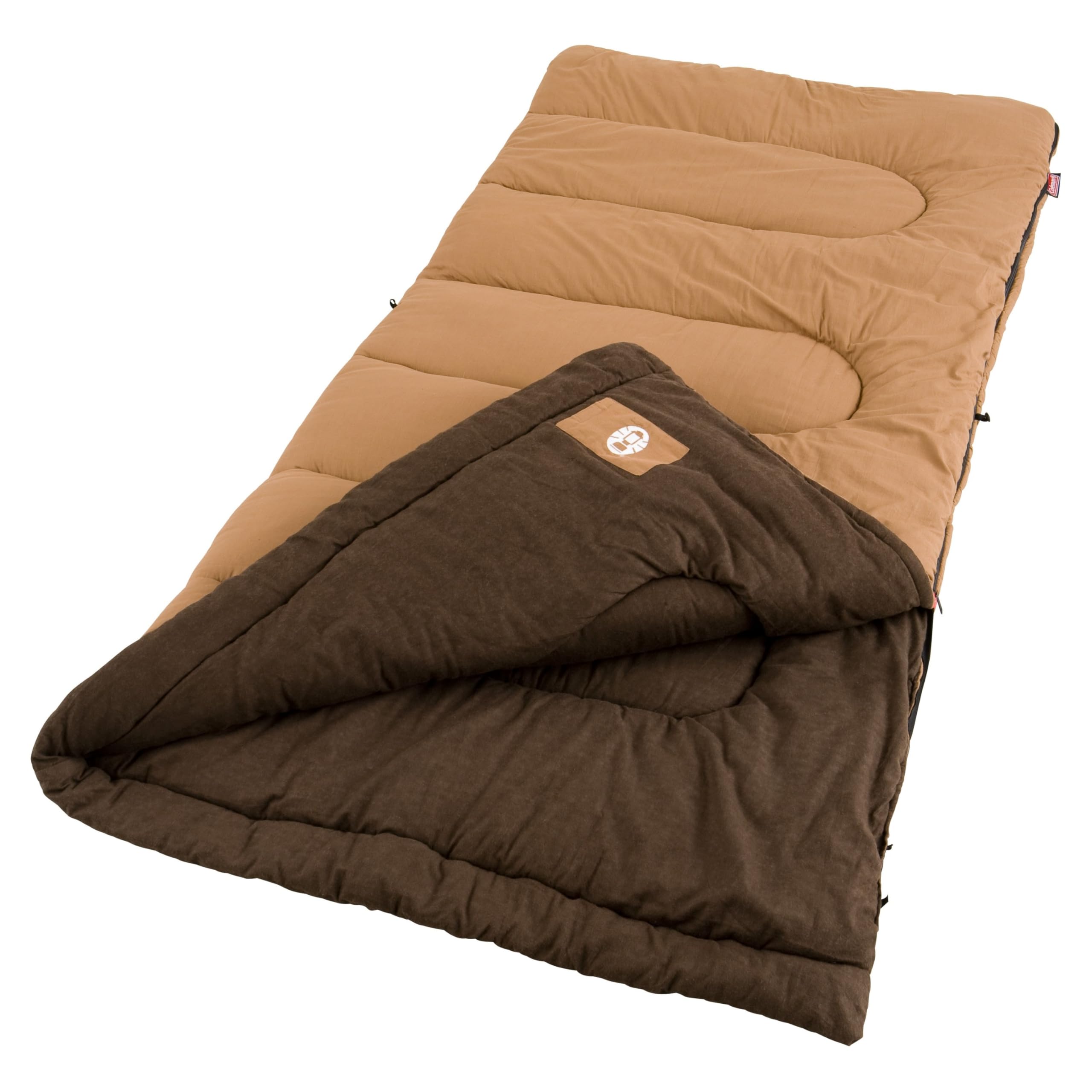
Coleman Dunnock 20°F
Key Features
- Shape: Rectangular
- Weight: 5 lbs (est.)
- Temperature Rating: 20°F
- Price: Budget
The Coleman Dunnock 20°F delivers a genuinely soft cotton flannel liner inside a rectangular bag that feels comfortable against skin, making it a pleasant option for car camping in moderate cold down to around 20°F. The budget price adds to its appeal. However, the bag is notably bulky and heavy for its temperature rating, and the zipper can slide open during sleep if not secured. It is not suitable for extreme cold below 10°F or for backpacking, where weight and packed size matter more.
Pros
- Soft 100% cotton flannel liner feels pleasant against skin
- Warm enough for moderate cold in the 30°F range with layers
- Good value for a 20°F rated bag
Cons
- Bulky and heavy for its temperature rating; hard to roll up and store
- Zipper can slide down on its own if not secured during sleep
For car campers who prioritize a soft cotton interior and budget pricing over packability and sub-20°F warmth, this bag works well.
Best for Versatile Car Camping
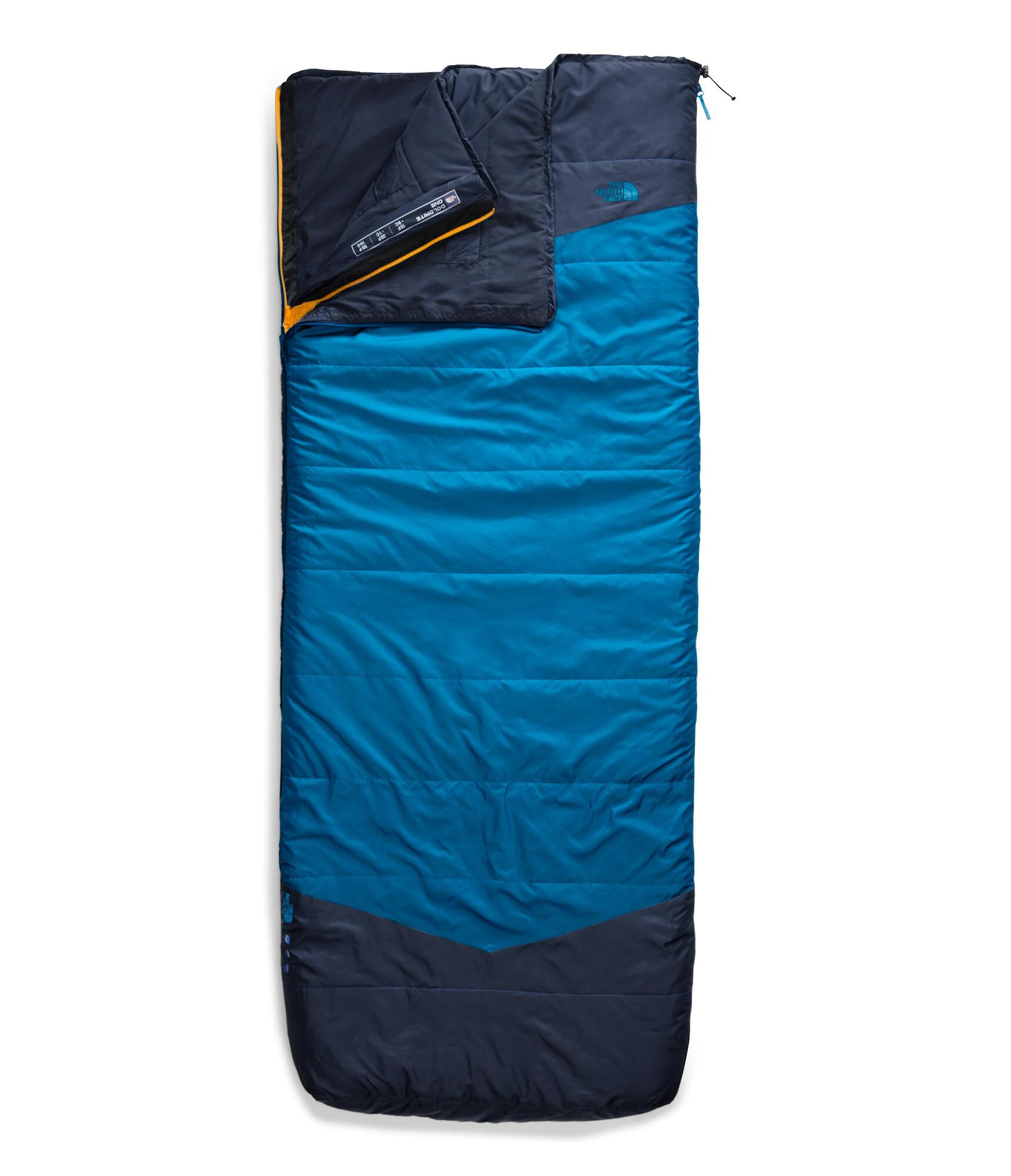
TNF Dolomite One 15°
Key Features
- Shape: Rectangular
- Weight: 5 lbs
- Temperature Rating: 15°F
- Price: Premium
The Dolomite One’s three-layer system lets you mix a 50°F top, 30°F mid, and a water-repellent outer to cover a wide temperature range. The fleece-lined mid layer adds comfort. However, the 5-pound weight and rectangular shape make it a poor fit for backpacking. The multi-layer zipper system can snag fabric and takes some practice to operate smoothly. With a limited track record, long-term durability across many seasons is not yet established. Best for car campers who value modular flexibility and North Face build, but those seeking a simpler or lighter bag may prefer a dedicated single-layer option.
Pros
- Modular layers cover 15°F to 50°F by combining or separating shells
- Fleece-lined mid layer adds softness and extra warmth
Cons
- Bulky and heavy for its temperature rating, limiting use to car camping
- Zipper system can snag fabric and requires practice to use smoothly
This modular bag fits best for car campers who want one bag that adapts to varying temperatures without swapping gear, provided they can accept the weight and the learning curve with the zippers.
Best for Extreme Cold Car Camping
Browning McKinley -30°

Key Features
- Fill: TechLoft Silver
- Shape: Rectangular with hood
- Weight: 12.8 lbs
- Temperature Rating: -30°F
- Price: Premium
The Browning McKinley delivers extreme -30°F warmth with a durable ripstop exterior and a roomy rectangular shape that accommodates larger adults. However, its 12.8-pound weight and bulky compression size make it impractical for anything beyond car camping, ice fishing, or heated wall tents. The zipper can snag the polyester lining if not carefully aligned, adding a minor frustration for an otherwise robust bag. Compared to similarly rated options, it is notably heavier and larger, reinforcing its role as a stationary cold-weather shelter rather than a portable one.
Pros
- Extremely warm for sub-zero conditions
- Well-built with ripstop outer and sturdy materials
Cons
- Extremely heavy (12.8 lbs) and bulky – only for vehicle-based camping
- Zipper can snag the lining if not aligned properly
A serious cold-weather workhorse for extreme temperatures, but only if you can drive it to camp.
Best for Mild Cold Camping
SOULOUT 3-4 Season

Key Features
- Fill: Polyester
- Shape: Rectangular
- Weight: 4.2 lbs
- Temperature Rating: 32°F
- Price: Budget
This bag’s 32°F rating is optimistic – comfort drops off once temperatures fall below 40°F, making it unsuitable for freezing conditions. It’s best reserved for summer and mild spring/fall nights where weight and packability matter more than extreme warmth. Zipper and seam durability can be inconsistent, so this isn’t a bag for heavy use.
Pros
- Lightweight and packable design suits budget-conscious backpackers.
- Provides adequate warmth for mild spring/fall nights at a low cost.
Cons
- Narrow cut can feel restrictive for side sleepers or larger body types.
- Zipper may snag on fabric and seams can separate with regular use.
For car camping or casual trips where overnight lows stay above 40°F, this bag offers a low-cost option if you don’t need long-term durability.
How to Choose
The single most important buying insight: a bag’s temperature rating is based on survival, not comfort — always plan for 10-15°F warmer than the forecast low and pair it with a proper sleeping pad.
Temperature Rating: Comfort vs. Limit
Manufacturers provide three numbers: comfort, limit, and extreme. Comfort is the low end where a typical sleeper stays warm; limit is the survival threshold (you will be cold but safe). Extreme ratings are emergency-only.
Most reviewers report that a 0°F bag feels marginal at 0°F unless they wear fleece layers and use a high-R-value pad. For genuine comfort at 20°F, a 0°F-rated bag is appropriate. Always subtract 15-20°F from the limit rating to find your real comfort zone.
Fill Type: Down vs. Synthetic
Down packs smaller and weighs less for the same warmth, but loses nearly all insulation when wet. Synthetic (polyester, hollow-fiber) retains loft when damp and dries faster, but is heavier and compresses poorly over time.
If you camp in dry climates or can guarantee a waterproof bivvy, down is excellent for backpacking. For wet snow, coastal trips, or car camping where weight is secondary, synthetic is more forgiving and easier to maintain.
Shape: Mummy vs. Rectangular
Mummy bags taper to reduce dead air space, making them up to 20% more thermally efficient at the same fill weight. The trade-off is restriction: broad shoulders and restless sleepers often feel claustrophobic.
Rectangular bags allow rolling over and splaying out, but they leak heat through the extra volume. For car camping, the comfort gain often outweighs the warmth loss. For backpacking, a mummy is the standard unless you sleep very warm.
Shell Material Durability
Canvas and heavy-duty nylon shells resist abrasion from tent floors, brush, and camp chairs, but add significant weight. Lightweight ripstop nylon packs smaller but tears more easily against rough surfaces.
If you drag your bag out of a truck or use it in a hunting camp, a canvas shell like those on the ALPS Redwood or TETON Deer Hunter can last decades. For backpacking, a lighter shell with careful ground sheet usage is a better trade-off.
Packed Size and Weight
A bag’s packed size determines whether it fits inside a backpack or takes up half the trunk. Down bags compress to about half the volume of synthetic equivalents of the same warmth. Synthetic bags rarely compress below 10 liters for a 20°F mummy.
Weigh the carrying distance. A 13-pound bag is fine for a 50-yard walk from the car to the tent, but impossible for a mile-long hike. For backpacking, look for bags under 4 pounds and pack volumes under 12 liters.
FAQ
Why does my 0°F sleeping bag feel cold at 20°F when I’m using it on the ground?
The bag’s insulation compresses under your body weight, losing most of its loft beneath you. Without a sleeping pad with an R-value of at least 4, the cold ground sucks heat directly from your back. Add a foam or insulated air pad and wear a thermal base layer to regain the rated warmth.
Can I machine wash a down sleeping bag without ruining the loft?
Yes, but use a front-loading machine on a gentle cycle with a down-specific cleaner — never top-loaders with agitators. Dry on low heat with clean tennis balls or dryer balls to break up clumps. Down can take several cycles to fully re-loft; never store it compressed.
What’s the real difference between a -25°F bag and a 0°F bag for winter camping?
A 0°F bag keeps most people comfortable down to about 15°F with proper layers, while a -25°F bag extends that comfort well below 0°F. The penalty is massive bulk and weight: the ALPS Redwood -25° weighs 13 pounds versus 6.5 pounds for the Coleman North Rim. Unless you regularly camp below -10°F, a 0°F bag is much more practical.
How do I fix a snagging zipper on my sleeping bag without tearing the fabric?
Rub the zipper teeth with a bar of soap or a wax candle to reduce friction. If the slider catches fabric, gently back the zipper up and guide the fabric away while zipping. For persistent snags on Coleman or Kelty bags, apply a silicone-based zipper lube — never use oil, which attracts dirt and accelerates wear.