This post contains affiliate links. We may earn a small commission when you buy through our links — at no extra cost to you.
Rooftop tents promise quick camp setup and a bed off the ground, but the real-world choice comes down to a trade-off: easy setup versus long-term durability. Hard shells pop open in seconds and slice through wind, while soft shells offer more space for less money but take practice to fold and create more highway noise.
Weight is the hidden trap—many buyers ignore roof rack limits until they are stuck with a 200-pound box they cannot safely mount. The right pick balances your vehicle’s load capacity, your tolerance for assembly, and the features that actually matter for your trip style.
This guide helps you match a rooftop tent to your roof rack, your budget, and the kind of camping you do—without overspending on features you will rarely use.



Best for Budget-Conscious Adventurers
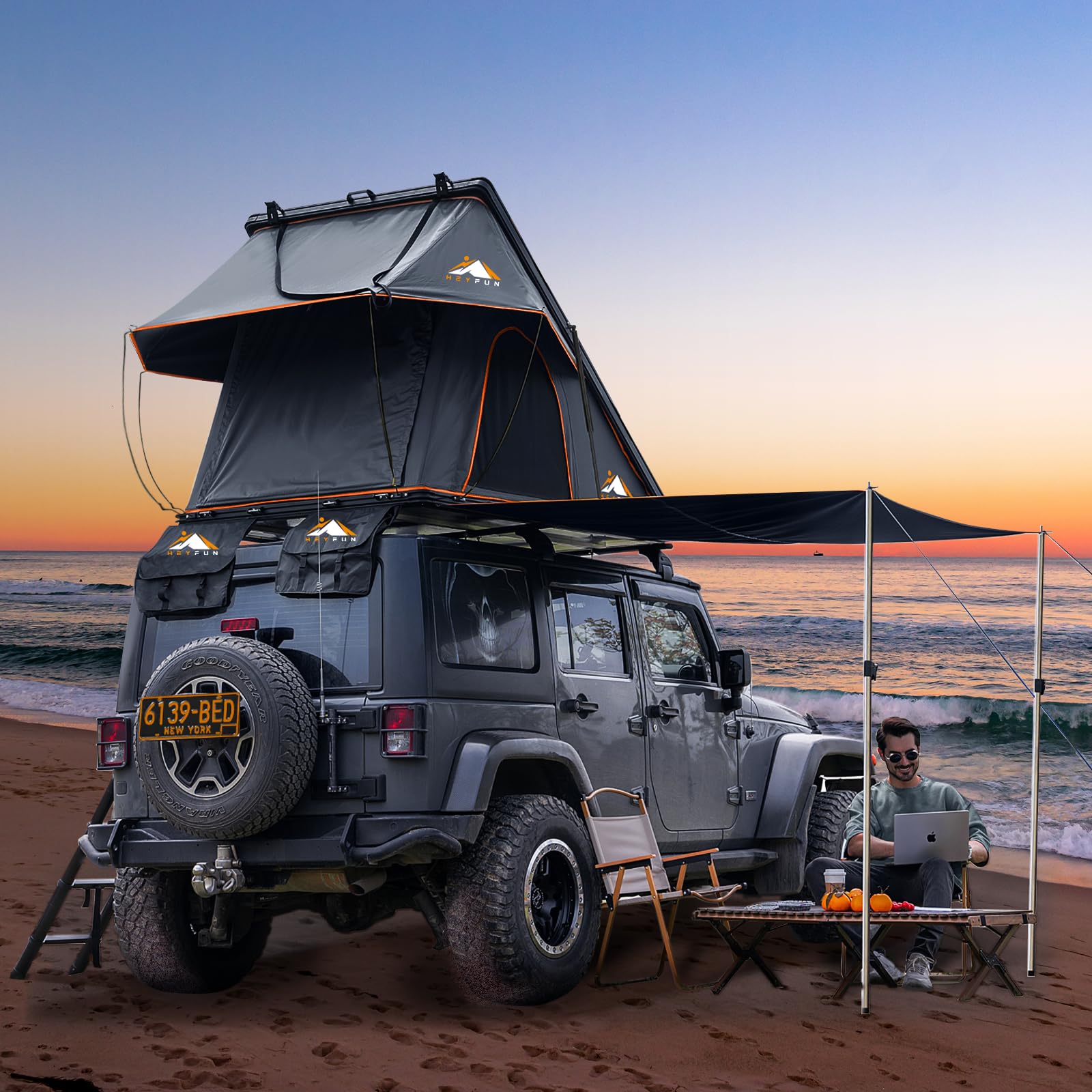
HEYFUN Adventurer Pro Hard Shell
Key Features
- Construction Style: Hard shell pop-up
- Closed Height: 7 in
- Weight: 160 lbs
- Accessories: Awning, LED strip
- Price: Mid-Range
The Adventurer Pro pops open in about 5 seconds, making it one of the quickest rooftop tents to deploy. The included side awning and built-in LED light strip add genuine camping convenience that typically costs extra on competing hard shells. At 160 pounds, the weight is standard for this class but not for solo lifting.
Once set up, the 2-3 person interior feels spacious for a couple with a child. The mattress is comfortable, and the aluminum frame handles rain and wind well. Owners consistently note the build quality feels comparable to brands that cost twice as much. Thirteen storage pockets keep gear organized inside.
This tent is best suited for budget-conscious families who value quick setup and integrated accessories over long-term ruggedness. Quality control can vary — some units arrive with cosmetic dents or missing small parts, so a thorough inspection upon delivery is essential. For buyers who prioritize bombproof construction over value, the all-aluminum alternative in this roundup may be a better fit.
Pros
- 5-second pop-up setup — fastest in its class
- Exceptional value with side awning and LED strip included
- Sturdy aluminum construction handles weather well
- Comfortable interior with ample storage
Cons
- Some units arrive with cosmetic dents or missing small parts — check everything on delivery
If you want a hard shell that sets up instantly and comes with extras like an awning and lights without breaking the bank, the Adventurer Pro delivers. Just plan to inspect the box thoroughly when it arrives.
Best for Rugged Overlanders
WildFinder Hard Shell RTT
Key Features
- Construction Style: Aluminum hard shell
- Closed Height: 9 in
- Weight: 198 lbs
- Price: Mid-Range
The WildFinder’s 100% aluminum alloy shell and stainless steel hardware give it a robust feel that the top pick’s composite body doesn’t match. Where the HEYFUN wins on five-second deployment, this tent wins on long-term resilience — owners report no rust, fading, or leaks after extended use in rain and sun.
This tent suits couples or partners who value rugged construction over convenience. The 198-lb weight demands a capable roof rack and two people for installation, and the closing latches can be finicky when you’re solo or brushing against branches on narrow trails. For overlanders who accept these tradeoffs, the build quality holds up trip after trip.
Pros
- All-aluminum shell and stainless steel hardware resist rust and dents over years of use.
- Withstands harsh weather without fading, rust, or leaks.
- Deploys in about 2 minutes and includes a comfortable foam mattress.
Cons
- Closing the tent can be challenging solo and latches may release if snagged on branches.
For overlanders who expect their gear to survive rough terrain and harsh weather, the WildFinder’s aluminum build justifies the extra weight and closing quirks.
Best for First-Time Buyers
OVS TMBK Soft Shell 3P
Key Features
- Construction Style: Soft shell fold-out
- Closed Height: 11.5 in
- Weight: 108 lbs
- Accessories: Rainfly, ladder
- Price: Budget
At 108 pounds and under $1,000, the OVS TMBK is one of the lightest full-size roof top tents you can mount on a small SUV or truck. The stitching, zippers, and pole construction hold up well for the price, and the 2.25-inch mattress provides adequate comfort for two adults. Owners consistently report a smooth installation process thanks to the manageable weight and universal crossbar fitment.
This tent suits first-time rooftop campers who want a low-cost entry point without sacrificing build quality. It also works well for vehicles with limited roof load capacity. That said, the soft shell design introduces more wind noise on the highway and less insulation than hard shells, making it better suited to mild-weather trips. The folding sequence takes a few tries to master, so expect a learning curve on initial setup.
Pros
- Offers strong value for a rooftop tent under $1,000, with materials that feel well above the price
- Lightweight at 108 pounds, making it one of the easier soft shells to lift and mount alone
- Comfortably sleeps two adults with room to spare, and the mattress provides decent support for the category
Cons
- Folding the tent closed requires practice; first attempts may feel confusing without a demo
- Soft shell design produces more wind noise at highway speeds and retains less heat than hard shells — fine for mild weather, not ideal for cold or high-mileage trips
For first-time buyers on a budget or anyone with a lightweight roof rack, this tent delivers a solid build and comfortable sleep at a price that hard to beat — just expect a brief learning curve and accept the wind noise as part of the soft shell package.
Best for Off-Grid Campers
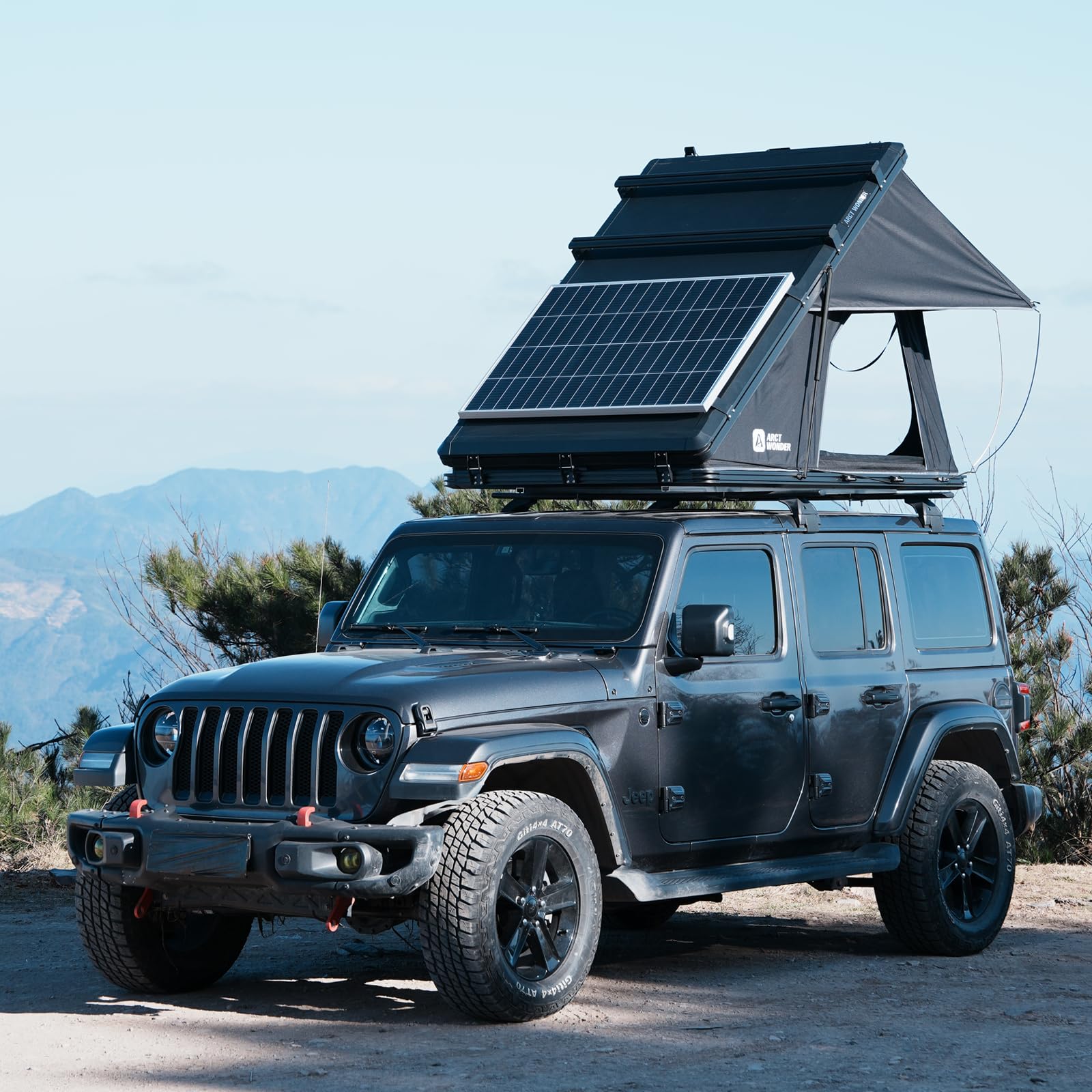
ARCTWONDER Solar RTT
Key Features
- Construction Style: Hard shell solar
- Closed Height: 7 in
- Weight: 198 lbs
- Accessories: 216W solar panel
- Price: Mid-Range
Integrated 216W solar panel and charge controller let you run devices and lights for days without hookups, a feature no other hard shell in this roundup offers. The build quality of the shell and ladder feels substantial, and the pop-up mechanism deploys in seconds.
This tent suits campers who spend multiple nights away from power and want to skip carrying a separate solar kit. At 198 pounds it is heavy, and the closed height of 7 inches may exceed some garage clearances. Some units have arrived with a broken ladder hinge or dented shell, so inspect thoroughly on delivery.
Pros
- Built-in 216W solar panel adds self-sufficient off-grid charging without extra accessories
- Pop-up mechanism sets up in seconds, saving time and effort at camp
- Solid materials and assembly give a premium feel for the price class
Cons
- Some shells arrive with a damaged hinge or dented shell – inspect immediately upon delivery
- At 198 pounds, mounting requires two people or a lift assist – not ideal for frequent roof swaps
If off-grid device charging is a priority, this is the only hard shell that delivers it built-in – but budget extra time for delivery inspection and account for the weight when choosing a vehicle.
Best for Garage-Friendly Tech
Sanhima Hotham Lite Hard Shell
Key Features
- Construction Style: Hard shell slim
- Closed Height: 5.43 in
- Weight: 163 lbs
- Accessories: USB ports, LED
- Price: Premium
The Hotham Lite stands out for its ultra-slim 5.43-inch closed height, a feature that lets it fit in a standard garage without removing it from the vehicle. Setup is quick — under a minute — and the integrated USB-C/A ports and AC duct hole make it easy to power devices or connect a heater. The tri-color LED strip adds a customizable glow for late-night reading.
This tent is best for urban dwellers who need a garage-friendly profile and appreciate tech conveniences. The 1.97-inch mattress is thinner than many competitors — adequate for weekend trips but not plush for side sleepers. Zipper operation can feel sticky on some units, so inspecting and lubricating the tracks on arrival helps avoid frustration. At this premium price, the tradeoffs are manageable for buyers who prioritize a low profile and modern features over absolute comfort or foolproof hardware.
Pros
- Ultra-slim closed height fits standard garages without removal.
- Built-in USB-C/A ports and AC duct hole simplify device charging and heating.
- Can be deployed in under a minute, reducing campground setup time.
Cons
- Zipper quality can vary; some units require effort to close smoothly.
- Mattress at 1.97 inches is thinner than many rivals, less forgiving for side sleepers.
A premium-priced hard shell that rewards garage-limited campers and tech enthusiasts, but the zipper and mattress tradeoffs mean careful inspection on arrival is wise.
Best for Solo Campers
Body Armor Sky Ridge 2P

Key Features
- Construction Style: Soft shell wedge
- Closed Height: 13 in
- Weight: 117 lbs
- Price: Mid-Range
The Sky Ridge Pike’s long, narrow footprint fits a 5-foot truck bed and gives a solo camper generous length and a comfortable mattress. However, the 48-inch width is too tight for two average adults to sleep side by side, making the two-person claim optimistic. Hardware looseness can develop within a year, so it’s best for those who use it occasionally rather than as a primary shelter. This tent works well for solo campers or small-framed individuals who need a budget-friendly option that fits in a truck bed.
Pros
- Offers good build quality and fabric at a budget-friendly price.
- Comfortable sleeping for solo campers with ample length and a supportive mattress.
Cons
- The 48-inch width means two average adults will sleep side by side with little extra room.
- Hardware components can loosen over time, requiring occasional tightening.
Best for solo campers or small-framed couples with a 5-foot truck bed who want a low-cost tent and accept that it’s not a true two-person shelter and may need minor maintenance.
Best for Large Families
OVS Nomadic 4 Soft Shell

Key Features
- Construction Style: Soft shell extended
- Weight: 185 lbs
- Accessories: King mattress, LED
- Price: Luxury
The king-size mattress and spacious interior genuinely sleep four adults, making this the largest soft shell available. However, its 185-lb weight requires two people for mounting, and the premium price reflects its size rather than luxury materials. Some units have had issues with the vestibule pole bending and sharp edges on the cover during handling. This tent suits large families who prioritize interior space over weight and cost, not solo campers or couples.
Pros
- King-size mattress provides room for four adults without crowding.
- Solid build quality with robust fabric and frame materials.
Cons
- Vestibule pole can be prone to bending in windy conditions; cover edges may be sharp during handling.
- Off-size mattress makes finding replacement covers difficult.
This tent fits large families who need genuine four-person sleeping capacity and are prepared to handle its weight and occasional durability quirks.
How to Choose
The most overlooked factor is your roof rack’s dynamic load rating — it must exceed the tent’s weight plus two adults, not just the tent alone.
Hard Shell vs Soft Shell
Hard shells use a rigid lid that pops up in seconds, offering better aerodynamics and quieter highway driving. The trade-off is higher weight and a higher price, plus less interior headroom once deployed.
Soft shells fold out like a traditional tent, providing more interior volume for the money. They are lighter and easier on roof capacity, but require 10–15 minutes to set up and fold, and the fabric flaps create noticeable wind noise above 60 mph.
Closed Profile Height
A low closed height (under 8 inches) lets you park in a standard garage and reduces wind drag. But slim shells often have thinner mattresses (1.5–2 inches) that may feel firm on rocky ground.
If your vehicle has a low garage door or you frequently drive on highways, prioritize a closed height of 7 inches or less. For truck bed campers who don’t park indoors, height matters less.
Total Weight and Roof Load
Every rooftop tent adds 100–200 lbs to your roof. Your vehicle’s dynamic roof load (while driving) is typically 150–220 lbs — that includes the tent plus the weight of the crossbars themselves.
A 165-lb tent may exceed the limit for a compact SUV once you add the rack system. Always check the owner’s manual for the dynamic load rating, not just the static (parked) capacity.
Included Accessories
Extras like awnings, LED strips, and solar panels can save you $200–500 in aftermarket purchases. However, these add-ons also increase the tent’s weight and complexity.
A built-in solar panel is a genuine advantage for off-grid campers, but verify the panel’s wattage and charge controller type matches your device needs. An awning is useful for rain protection but adds wind resistance when deployed.
Mattress Thickness and Comfort
Thicker mattresses (2.5 inches or more) provide better insulation from the cold roof and more comfort for side sleepers. Thinner foam (1.5–2 inches) is lighter and packs lower but may leave you feeling the aluminum base.
Most stock mattresses are medium-firm. If you have back issues, plan to add a 1-inch foam topper — it adds negligible weight but significantly improves sleep quality.
FAQ
How much weight can a typical roof rack hold for a rooftop tent?
Most factory roof racks have a dynamic load limit of 150–220 lbs while driving. That includes the weight of the tent, the crossbars, and any gear on the rack. Check your owner’s manual for the exact figure. If the tent plus rack weight exceeds that, you need aftermarket crossbars with a higher rating or a lighter tent.
Can I park a hard shell rooftop tent in a garage with a 7-foot clearance?
Yes, if the tent’s closed height is 8 inches or less and your vehicle’s roof height plus tent height stays under 84 inches. Measure your garage door opening and the height of your vehicle’s roof rails. Most hard shells with closed heights of 7 inches or less will clear a 7-foot door on a typical SUV or truck.
Are soft shell rooftop tents more prone to leaks than hard shells?
Soft shells can leak over time because their fabric seams and zippers are exposed to UV and rain. Hard shells have a rigid top that sheds water better. However, even hard shells can leak around the hinge or seal if not closed properly. A good tent cover or maintenance of seals prevents most issues regardless of type.
Do I need crossbars to install a rooftop tent?
Yes, all rooftop tents require crossbars that span the width of your roof. Most tents mount to crossbars with universal brackets. If your vehicle has raised rails, you need aftermarket crossbars with an appropriate weight rating. Never mount a tent directly to the roof sheet metal.