This post contains affiliate links. We may earn a small commission when you buy through our links — at no extra cost to you.
A 20°F temperature rating on a sleeping bag rarely means you’ll sleep comfortably at 20°F. Most backpackers discover this on a chilly night — shivering in a bag they trusted. The gap between survival limits and actual comfort is often 15-20 degrees, especially in budget-friendly synthetic bags. This guide cuts through those numbers to help you find a bag that actually keeps you warm at the temperatures you’ll encounter.
Beyond mislabeled ratings, the choice between down and synthetic, mummy and rectangular shapes, changes how your bag performs on trail. Zipper snags, narrow cuts, and stuff sack failures are common headaches that turn a good night into a frustrating one. We focus on the trade-offs that matter most for multi-day hiking: weight-to-warmth efficiency, packability, and durability for the price.
Whether you need a 20°F down bag for spring shoulder seasons or a sub-2-pound sack for summer ridges, this guide matches each bag to its real-world use case.


Best for 3-Season Backpacking
Kelty Cosmic 20 Down
Key Features
- Weight: 2.6 lbs
- Fill Type: 550 FP Down
- Temp. Rating: 20°F
- Shape: Mummy
- Packed Size: 13 x 7 inches
- Price: Mid-Range
The Kelty Cosmic 20 Down uses 550-fill RDS-certified down and a recycled shell to provide consistent warmth through freezing nights. At 2.6 lbs and packing to 13×7 inches, it hits a sweet spot between weight savings and insulation that most 20°F bags in this price range miss.
In real use, the bag keeps sleepers comfortable down to about 30°F, with the 20°F limit rating leaving a useful margin for cold nights. The draft collar and snug mummy hood seal in heat effectively, and the full-length zipper runs smoothly without catching.
This bag suits backpackers with average to slender builds who want a lightweight, packable option for multi-day trips. Side sleepers or those with broad shoulders will find the mummy cut restrictive through the chest – a deliberate tradeoff for the reduced weight and bulk.
Compression is straightforward with the included stuff sack, and the down loft recovers quickly after unpacking. For the price, you get build quality that matches bags costing significantly more, with no corner-cutting on the zipper or shell fabric.
Pros
- Down fill holds warmth reliably at 20°F with enough margin for sub-freezing nights
- Build quality is consistent across shell, zipper, and baffles – no weak points
- Packs small enough for a weekend pack without sacrificing warmth
- Cost-effective relative to other 20°F down bags with similar features
Cons
- Side sleepers or broad-shouldered hikers find the mummy cut snug through the chest and shoulders
A dependable 20°F bag that balances warmth, weight, and cost – ideal for average-framed backpackers who prioritize packability over sleeping-room comfort.
Best for Budget 3-Season
Teton Sports 20F
Key Features
- Weight: 2.9 lbs
- Fill Type: Microfiber synthetic
- Temp. Rating: 20°F / 35°F comfort
- Shape: Mummy
- Packed Size: Compression sack incl.
- Price: Budget
At a budget-friendly price, the Teton Sports 20F delivers a lightweight synthetic mummy bag that packs down tightly with its included compression sack — a strong option for backpackers who need to shave ounces without spending on down. While the top pick (Kelty Cosmic 20 Down) offers more reliable warmth per degree, this bag undercuts it significantly on cost and weight, making it a smart alternative for weight-conscious hikers on a tight budget.
This bag suits average-sized adults comfortable with a mummy cut who prioritize low weight and low cost over absolute warmth and roominess. The shoulder area is snug — broad-shouldered users will find it restrictive — and the 20°F rating is optimistic; comfortable use sits closer to 35-40°F. That makes it ideal for summer and mild shoulder-season trips, not deep cold.
Build quality holds up well for the price point, with durable materials and stitching that instill confidence over multiple trips. The included compression sack makes it easy to stow in a backpack without fighting bulk, though the synthetic fill won’t compress as tightly as down.
Pros
- Very light for a 20°F synthetic bag at this price — saves ounces without breaking the bank
- Build quality is durable for the budget segment, with solid stitching and materials
- Outstanding value for money — one of the most affordable lightweight 20°F options
- Packs down easily with the included compression sack, saving backpack space
Cons
- Tight fit in the shoulders — broad-shouldered or larger users will find it restrictive
- Temperature rating is optimistic; comfortable use is around 35-40°F, not 20°F
A lightweight, budget-friendly synthetic mummy bag for backpackers who understand its warmth and fit boundaries — best for warmer three-season trips where every ounce counts.
Best for Summer Warm-Weather
ECOOPRO Warm Weather
Key Features
- Weight: 1.7 lbs
- Fill Type: Polyester synthetic
- Temp. Rating: 55-60°F
- Shape: Envelope rectangular
- Packed Size: 11 inches tall
- Price: Budget
Weighing 1.7 lbs and packing down to 11 inches, this bag delivers the lightest, most compressible summer shelter for the price. The rectangular cut offers more foot room than a mummy, while synthetic fill handles damp conditions without losing loft. At this weight-to-cost ratio, there’s nothing else in the same class for warm-weather backpacking.
This bag is built for small-framed adults, teens, and kids who spend summer nights above 60°F. The narrow width (about 30 inches at the shoulders) suits petite builds but restricts movement for broader or taller users. The temperature rating is realistic – comfortable only above 50°F – so it’s strictly a one-season solution for warm climates or hut-to-hut trips where indoor sleeping is an option.
In practice, the envelope shape and polyester liner breathe well on humid nights, and the full-length zipper lets you vent or use the bag as a blanket. Packability is a standout: it rolls into a stuff sack that fits inside a daypack or clips to the outside of a larger pack. For gram-conscious hikers who prioritize weight and cost over warmth, this bag hits the mark without pretending to do more.
Pros
- Ultralight at 1.7 lbs – one of the lightest summer sleeping bags at this price
- Exceptional value – best price-to-weight ratio for warm-weather backpacking
- Compact storage – rolls up quickly and fits in small packs
- Comfortable in summer temperatures – breathable and cozy above 60°F
Cons
- Narrow width – may feel snug for broad-shouldered or larger-framed users
- Limited warmth – not usable below 50°F, restricted to summer use only
For warm-weather backpackers who fit the narrow cut and need to save every ounce, this bag delivers the lightest packing weight for the lowest cost – no compromises on that front.
Best for Side Sleepers
Kelty Supernova Down
Key Features
- Weight: 2 lbs
- Fill Type: 550 FP Down
- Temp. Rating: 40°F
- Shape: Semi-rectangular
- Packed Size: 12 x 6 inches
- Price: Mid-Range
The Kelty Supernova Down splits the difference between a restrictive mummy bag and a bulky rectangular one. At 2 lbs it stays light enough for multi-day trips, yet the semi-rectangular cut provides genuine shoulder and hip space. A 2-way zipper adds venting options, and the 550-fill down holds warmth without shifting around inside the baffles.
This bag is built for backpackers who prioritize sleeping comfort over every last ounce. Side sleepers and stomach sleepers who find mummy bags claustrophobic will appreciate the freedom to roll naturally. The tradeoff: the zipper can catch on the fabric during closure, and the bag’s short time on the market means long-term durability remains unverified for those logging heavy mileage season after season.
Down retention and stitch quality are solid — no loose down escaping through seams. The 40°F comfort limit suits warm-weather backpacking; a lightweight baselayer can extend the range a few degrees, but this isn’t a bag for frosty nights. Packed size (12×6 inches) fits comfortably inside a 40-50 liter pack.
Pros
- Spacious interior that lets side and stomach sleepers move without feeling trapped
- Good build quality with no loose down or leaking baffles
- Lightweight for a semi-rectangular bag at just 2 lbs, packs small
- Comfortable lack of restriction compared to mummy-style bags
Cons
- Zipper can catch on fabric during closure, requiring careful one-handed management
For backpackers who value a full night’s rest over shaving a few ounces, the Supernova delivers the space of a rectangular bag in a packable down design — just keep an eye on the zipper track.
Best for Warm-Weather Down
QEZER Down 600
Key Features
- Weight: 1.3 lbs
- Fill Type: 600 FP Duck Down
- Temp. Rating: 59-68°F
- Shape: Mummy
- Packed Size: 9.84 x 5.51 inches
- Price: Mid-Range
At 1.3 pounds, the QEZER Down 600 is one of the lightest down sleeping bags available without a premium price tag. Its 600-fill duck down compresses to a 9.8-by-5.5-inch bundle, making it a compelling alternative to heavier 20°F bags favored for three-season use — you swap warmth for a notably smaller pack footprint.
This bag fits summer backpackers counting every gram and needing minimal volume for multi-day trips. The comfort limit sits around 55°F, so it works best on nights above 60°F; if you expect cooler conditions, the top-pick Kelty Cosmic 20 Down offers broader temperature coverage at a weight penalty. Zipper consistency has shown occasional variability, something to check before extended outings.
For its weight and down construction, the QEZER costs noticeably less than many competitors with similar specs, making it a cost-effective choice for the gram-conscious hiker who doesn’t need winter insulation. The soft fabric adds a touch of comfort that belies its ultralight build.
Pros
- Weighs just 1.3 lbs, a standout for gram-conscious backpackers.
- Compresses to a 9.8×5.5-inch bundle for easy pack storage.
- Costs less than most down bags of similar weight and fill.
- Soft fabric with a cozy feel in summer conditions.
Cons
- Zip consistency can vary; some units may experience catching or premature wear.
The QEZER Down 600 is the right call for ultralight summer thru-hikers who prioritize a gram-worthy pack weight over temperature versatility.
Best for Ultralight Summer
WERTYCITY Summer

Key Features
- Weight: 1.5 lbs
- Fill Type: Synthetic fiber
- Temp. Rating: 59°F+
- Shape: Rectangular
- Packed Size: 6.9 inches tall
- Price: Budget
This sleeping bag delivers on its weight promise – at 1.5 lbs it ranks among the lightest synthetic options under $50. Compressing to a 6.9-inch tall bundle, it stows easily inside a pack. The breathable rectangular cut keeps you comfortable above 60°F, making it a solid choice for summer backpacking. However, the narrow fit restricts use to petite adults, teens, and kids – broader shoulders will find it tight. Warmth drops off below 55°F, so it’s strictly a warm-weather bag. Compared to the top summer pick in this category, the WERTYCITY offers similar warmth but an even tighter fit, which is why it’s better reserved for very small frames or those who prioritize minimal weight above all else.
Pros
- Weighs 1.5 lbs for ultralight packing
- Compresses to a compact 6.9-inch bundle
- Cost-effective for warm-weather use
Cons
- Shoulder area may feel restrictive for broader frames
- Insufficient warmth below 55°F limits use to summer nights
A valid option for lightweight summer backpackers who sleep warm and have a slim build; those needing shoulder room or cooler-weather insulation should look elsewhere.
Best for Ultrabudget Summer
NewDoar Ultralight
Key Features
- Weight: 1.5 lbs
- Fill Type: Cotton/nylon synthetic
- Temp. Rating: 50-70°F
- Shape: Rectangular
- Packed Size: 11.8 x 6.5 inches
- Price: Budget
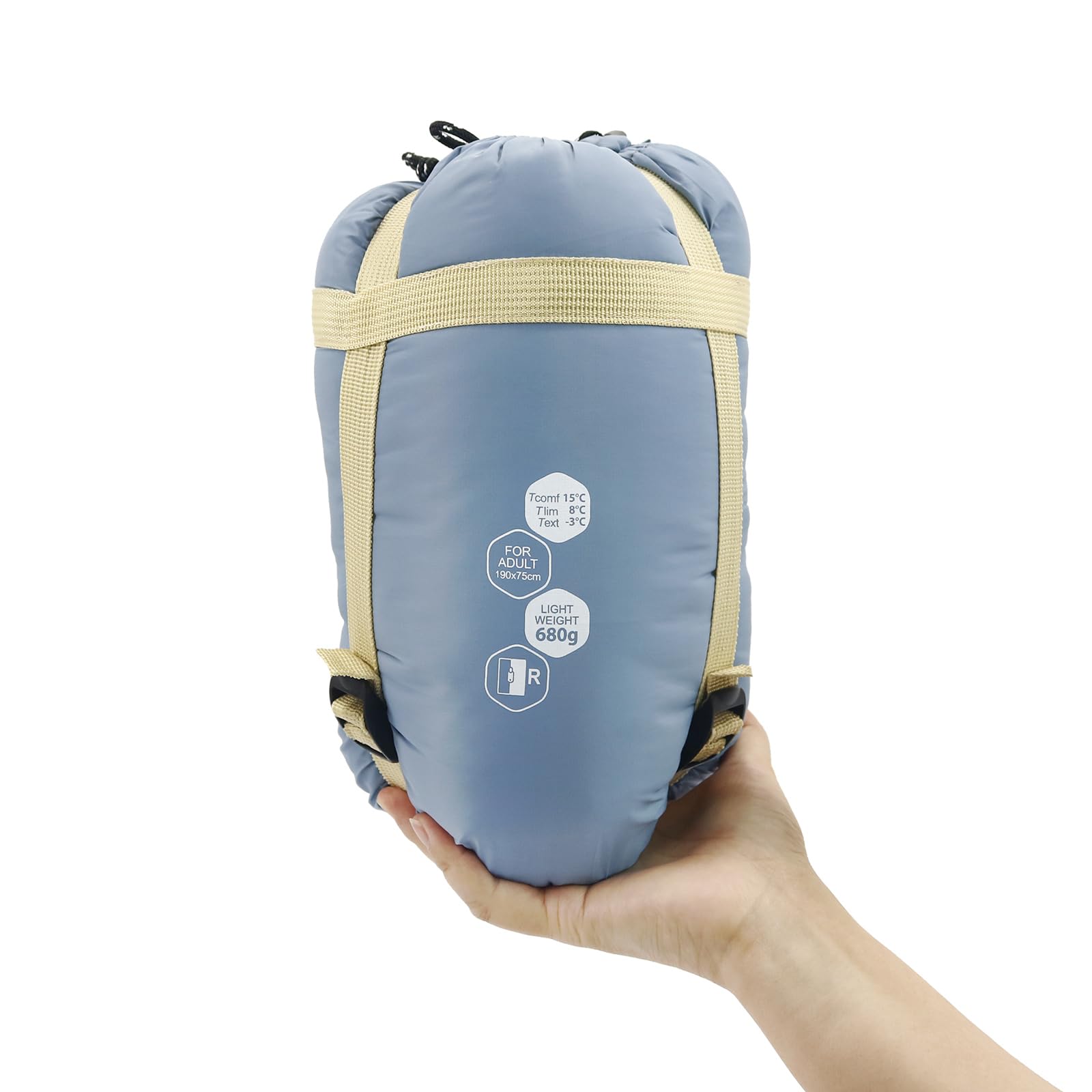
At 1.5 lbs and under $30, this is the lightest bag for the price in the warm-weather category. The synthetic fill breathes well on hot summer nights, and the rectangular shape allows some wiggle room. However, the cut is noticeably narrow – it suits children and slender adults, not average or broad builds. Also, the comfort rating is optimistic below 55°F; a chilly night requires a liner or extra clothing. For ultrabudget summer backpackers or kids on a warm-weather trip, this is a capable, carry-friendly sack that won’t weigh down the pack.
Pros
- Weighs only 1.5 lbs – easy to carry on long hikes
- Under $30 – one of the most affordable ultralight options
- Comfortable and breathable in warm weather
Cons
- Narrow width – may not accommodate average or broad body types
- Limited warmth – works best above 55°F; cooler nights may require extra layers
A lightweight, affordable bag for warm-weather backpacking when you’re small-framed or outfitting a child – skip it if you need room to move or sleep in cooler conditions.
Best for Family Camping
MalloMe 3 Season
Key Features
- Weight: 2.87 lbs
- Fill Type: Polyester synthetic
- Temp. Rating: 50-80°F
- Shape: Rectangular
- Packed Size: Compression sack incl.
- Price: Budget
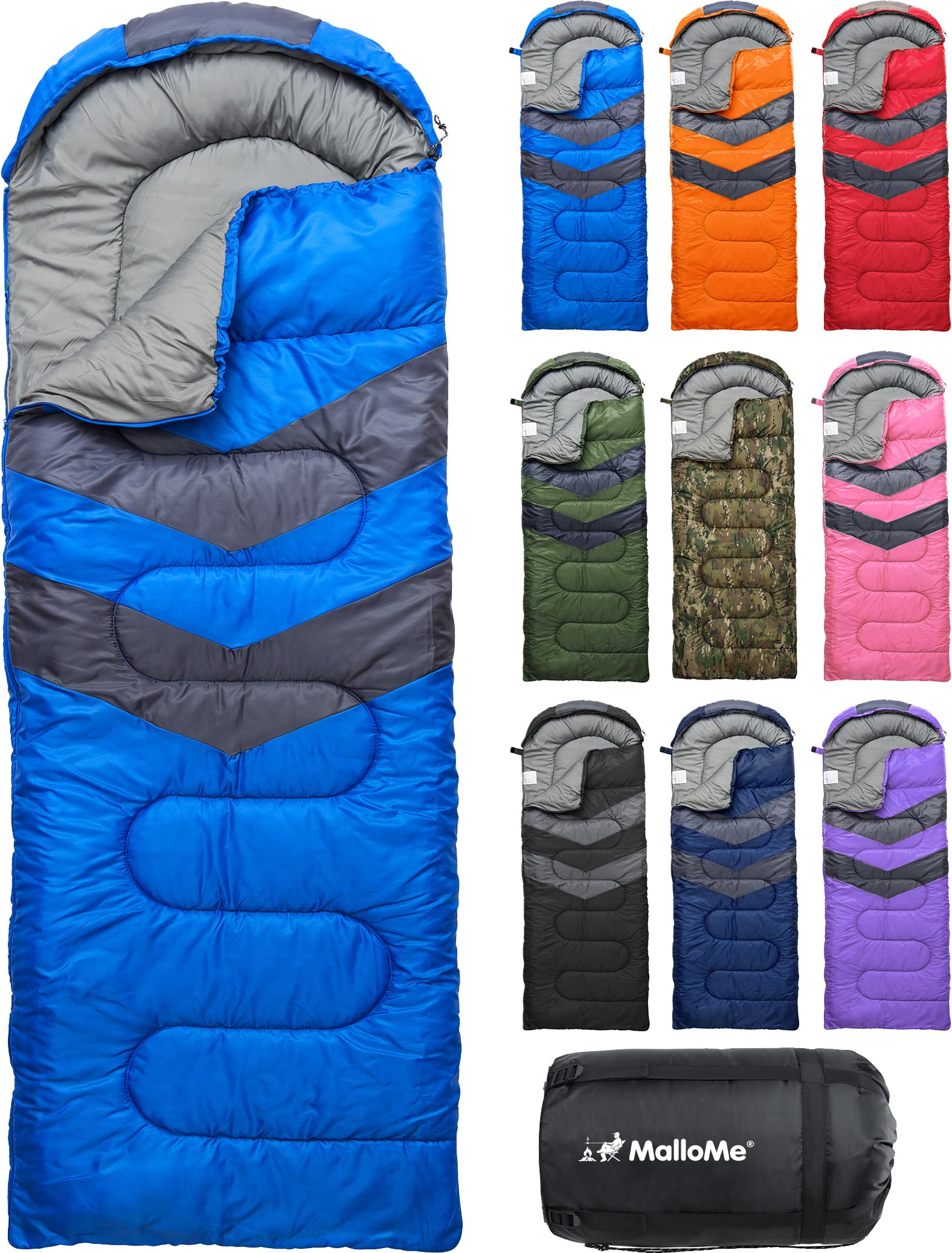
The MalloMe Sleeping Bag delivers soft rectangular comfort and a consistently praised build quality for a budget summer bag. Its 2.87 lb weight and rectangular shape make it bulkier to pack than mummy-style backpacking bags, and zipper snagging has been noted during extended use. This bag suits casual car camping and warm-weather trips where pack weight is less critical.
Pros
- Perceived quality stands out for the low price
- Comfortable and cozy in warm weather with a soft interior
- Strong value as an affordable summer bag
Cons
- Zipper snagging can occur during use, which may affect long-term reliability
- Limited length restricts comfortable use for individuals over 6 feet tall
A solid choice for budget-conscious campers who prioritize comfort over pack weight, but backpackers needing a lighter, more durable bag should look at mummy options.
Best for Hammock Camping
Naturehike Ultralight

Key Features
- Weight: 1.67 lbs
- Fill Type: Synthetic
- Temp. Rating: ~59°F
- Shape: Envelope rectangular
- Packed Size: 7-inch ball approx.
- Price: Budget
This Naturehike bag saves significant weight and volume in a pack, making it a practical choice for warm-weather backpackers. The comfort limit around 60°F restricts use to summer conditions, and the narrow cut can feel snug for broader-shouldered users. Its envelope shape works well across tent and hammock setups, adding versatility for those setups. It shares the same warmth and width limitations as the ECOOPRO bag but with a shape that hammock campers may prefer.
Pros
- Saves pack weight and volume for multi-day hikes.
- Well-stitched synthetic bag at an entry-level price.
- Fits both ground sleeping and hammock setups without issue.
Cons
- Snug fit may restrict movement for broader-shouldered users.
- Comfort rating is optimistic below 60°F – can be chilly on cooler summer nights.
Best for warm-weather hammock campers and slender backpackers who prioritize packability over warmth and width.
Best for Premium Ultralight
Sea to Summit Spark
Key Features
- Weight: 0.91 lbs
- Fill Type: 850+ FP Down
- Temp. Rating: 45°F
- Shape: Mummy
- Packed Size: Ultra-compact
- Price: Luxury
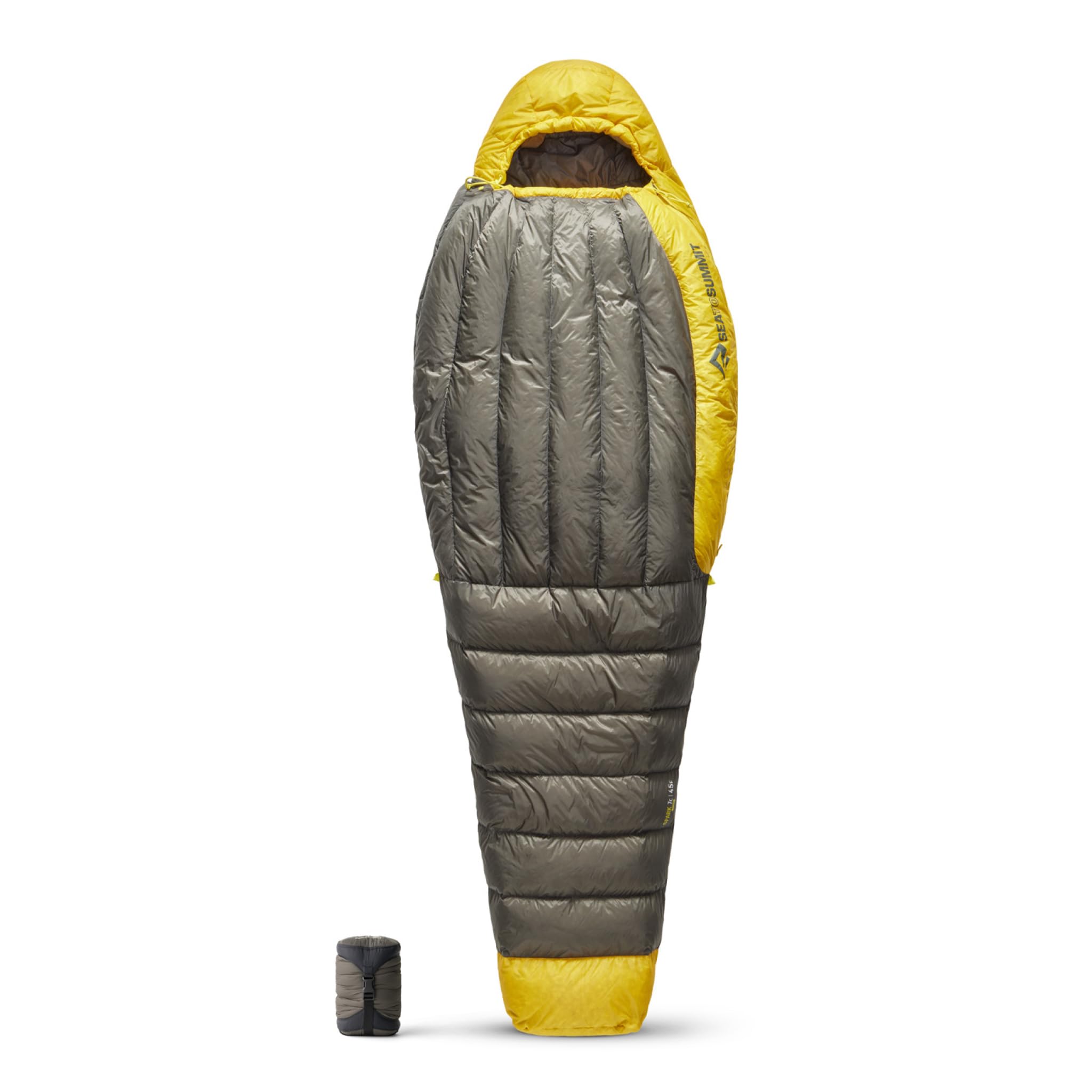
Weighing just 0.91 lb, the Spark uses 850+ fill down with a water-resistant treatment for minimal bulk and moisture resilience. This makes it a top choice for ultralight thru-hikers chasing sub-1 lb sleep systems in warm weather. However, the 45°F comfort limit means it’s only for balmy nights, and the $379 price tag is steep for a bag with only 23 reviews — long-term durability is unverified. It’s a calculated gamble for committed gram-counters.
Pros
- Weighs under 1 lb — among the lightest full-feature down bags available.
- 850+ fill down with water-resistant treatment reduces bulk and handles moisture.
Cons
- 45°F comfort limit restricts use to warm nights only.
- High price places it beyond most budget-conscious backpackers.
This bag suits the ultralight hiker who prioritizes weight above all else and is willing to pay a premium for it — and who can tolerate a warmer sleep system and the uncertainty of a small review base.
Best for Warm-Weather Synthetic
Kelty Cosmic Synth 40
Key Features
- Weight: 2.6 lbs
- Fill Type: Cirroloft Synthetic
- Temp. Rating: 40°F
- Shape: Mummy
- Packed Size: 15 x 8 inches
- Price: Mid-Range
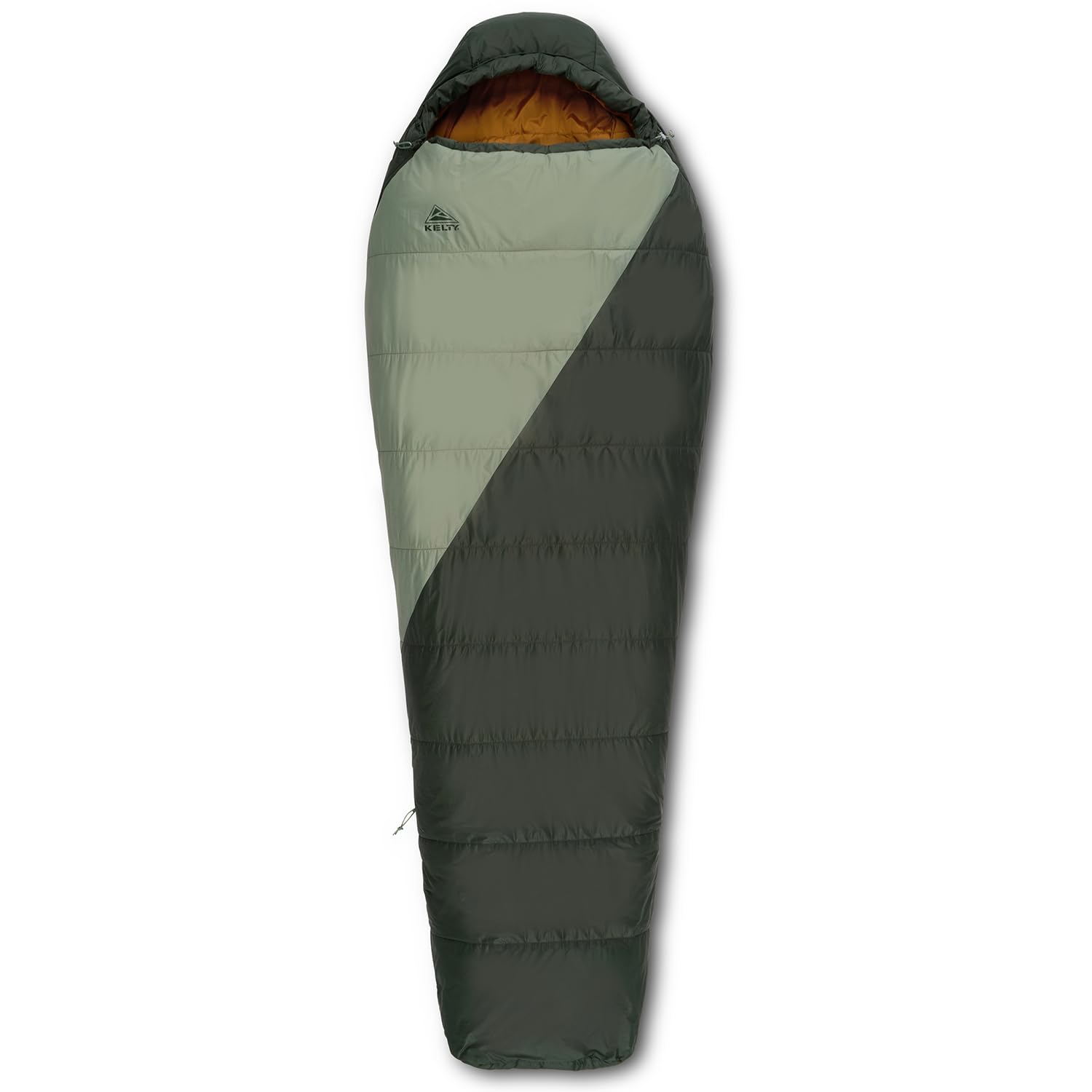
Weighing 2.6 lbs and packing to 15×8 inches, this synthetic mummy bag fits well into a summer backpacking kit for warm nights. The Cirroloft synthetic fill retains insulation in damp conditions, a clear advantage over down in humid environments. However, the narrow cut and cramped foot box restrict it to small-framed users; those with size 11+ shoes or broad shoulders will find it too snug. This makes it a niche choice for lightweight summer trips where packability and moisture resistance matter more than interior space.
Pros
- Lightweight construction for a synthetic bag at this temperature rating
- Sufficient insulation for summer nights
- Pack size that fits in a standard backpack
Cons
- In a mummy bag, the foot box can feel cramped for hikers with size 11+ shoes, limiting toe room
- The narrow cut works for small frames but may restrict movement for broader shoulders or larger builds
Best suited for small-framed backpackers who need a lightweight synthetic bag for warm, damp summer nights and don’t need extra toe room.
Best for Budget Down
SYWSKW Down 15F
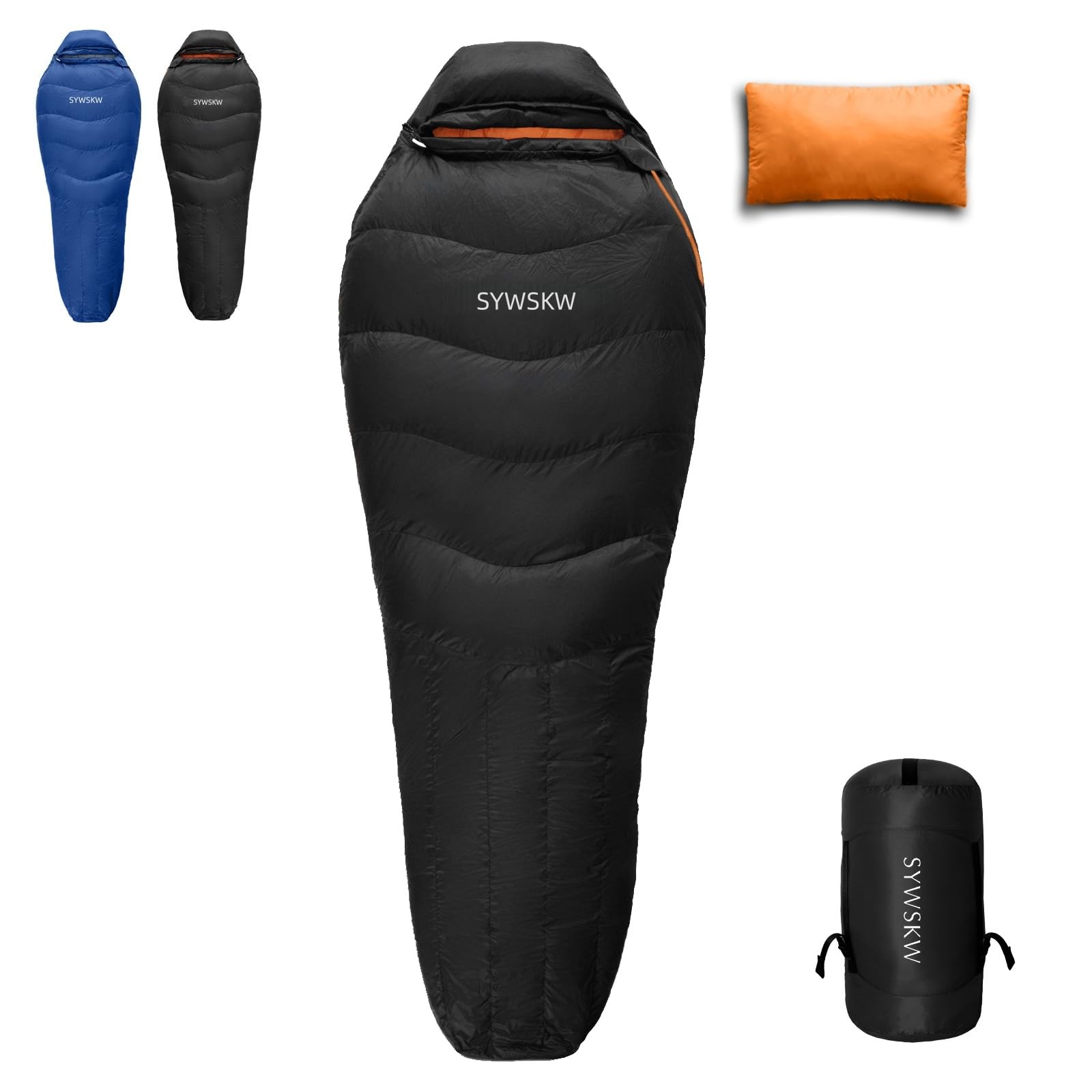
Key Features
- Weight: 2.38 lbs
- Fill Type: 680 FP Duck Down
- Temp. Rating: ~46°F comfort
- Shape: Mummy
- Packed Size: 7.08 x 11.8 inches
- Price: Budget
At under $100 and with a removable pillow, this down bag offers solid warmth-to-weight for budget-conscious hikers. The 680-fill down compresses well and the stitching is tidy for the price. It meets the needs of its intended user — slender backpackers on fair-weather trips — but its narrow cut and zipper behavior may frustrate others.
Pros
- Down fill provides warmth without excessive weight for this price tier.
- Packs down compactly for multi-day backpacking trips.
- Includes a removable pillow as a welcome bonus.
Cons
- Very confining for larger or broad-shouldered individuals – not suitable for average builds.
- Zipper can catch fabric when closing, requiring careful alignment to avoid snags.
A capable entry-level down bag for small-framed hikers who need a compact, warm option for mild-weather trips and don’t mind a finicky zipper.
Best for Blanket Convertible
Kelty Rambler 50

Key Features
- Weight: 2 lbs
- Fill Type: CloudLoft Synthetic
- Temp. Rating: 50°F
- Shape: Semi-rectangular
- Packed Size: 7 x 11 inches
- Price: Budget
This bag works well for hot sleepers and couples who want a single blanket, packing down to 7×11 inches at 2 lbs — reasonable for summer backpacking. The semi-rectangular shape and full-length zipper allow conversion to a comforter, but the narrow shoulder area and 50°F comfort limit mean it’s best for small-framed hikers who stick to warm nights. For broader builds or cooler temperatures, a slimmer 40°F synthetic option in this set offers a tighter fit but slightly more warmth.
Pros
- Lightweight and packable for a 50°F synthetic bag
- Unzips fully into a 2-person blanket
- Breathable and comfortable for hot sleepers
Cons
- Narrow shoulder area may restrict movement for broader users
- Not warm enough for nights below 50°F – comfort drops quickly
Best for small-framed backpackers who prioritize blanket conversion and only camp in warm climates (above 55°F).
How to Choose
The temperature rating on a sleeping bag is almost always a survival limit, not a comfort rating — plan for 15-20°F warmer than the number.
Weight
A lighter bag saves ounces but often uses thinner fabrics and less insulation, reducing warmth per pound. Below 2 pounds, you’re usually looking at summer-only bags or premium down. The trade-off is durability: ultralight fabric can tear on rough ground or snag on zippers.
Temperature Rating
Manufacturers list an EN/ISO lower limit, which assumes you’re wearing a base layer and using a pad. Comfort rating is typically 15-20°F higher. A 20°F bag is comfortable for most people around 35-40°F. If you sleep cold, add another 10°F to your target.
Fill Type
Down compresses smaller and lasts longer, but loses all insulation when wet. Synthetic fill retains warmth when damp and dries faster, but packs twice the volume for the same warmth. For multi-day trips in dry environments, down wins. For wet climates or stream crossings, synthetic is safer.
Shape
Mummy bags cut weight by eliminating excess fabric, but restrict arm and leg movement. Side sleepers often find mummy bags uncomfortable because they can’t bend knees freely. Semi-rectangular and rectangular shapes add 0.5-1 lb but allow natural sleeping positions.
Packed Size
A bag’s packed size matters when your backpack is full. Down bags compress to a fraction of synthetic’s volume. However, over-compressing down with a tight stuff sack can damage loft over time — use a loose compression sack for storage.
FAQ
Why does my 20°F sleeping bag feel cold at 40°F?
The 20°F rating is typically a survival limit, not a comfort rating. Most bags are designed to keep you alive at that temperature with proper layering and a pad. For actual comfort, plan on 15-20°F warmer than the number. If you sleep cold, add another layer or choose a bag rated 10°F lower than the temperatures you expect.
Can I use a rectangular sleeping bag for backpacking?
Yes, for warm-weather trips where weight and packed size aren’t critical. Rectangular bags are roomier but weigh 1-2 lbs more and pack down larger than mummy bags. They work well for summer car camping or short hikes, but for multi-day backpacking, a mummy or semi-rectangular bag is more practical.
How do I fix a sleeping bag zipper that keeps snagging?
First, check if fabric is caught in the zipper track — gently pull it free. Then apply beeswax or a zipper lubricant to the teeth to reduce friction. If snagging persists, the slider may be misaligned; try squeezing the slider sides with pliers to restore tension. For budget bags with chronic issues, upgrading to a bag with a YKK zipper is the reliable fix.
Is down or synthetic better for a 3-season backpacking bag?
Down wins for weight and compressibility — it’s ideal for dry conditions and long hikes where every ounce matters. Synthetic is better for damp environments because it insulates when wet and dries faster. For a typical 3-season backpacker who avoids constant rain, a 550-600 fill down bag offers the best balance of warmth, weight, and packability.