This post contains affiliate links. We may earn a small commission when you buy through our links — at no extra cost to you.
A sleeping bag with a 20°F rating sounds ideal for three-season backpacking — until you wake up shivering at 40°F. That gap between the printed number and real-world comfort is the most common frustration in this category.
Weight claims are equally slippery. Bags marketed as ‘lightweight’ often tip past three pounds, which is heavy for a backpacking sleep system. The real test is total pack weight versus actual warmth.
This guide cuts through those marketing gaps. It focuses on the handful of bags that deliver honest temperature ratings, meaningful weight savings, and the durability to survive a season on the trail.


Best for Three-Season Backpacking
Kelty Cosmic 20 Down
Key Features
- Fill: 550-fill down (RDS)
- Shape: Mummy
- Weight: 2.58 lbs
- Temp Rating: 20°F (-11°F limit)
- Price: $$
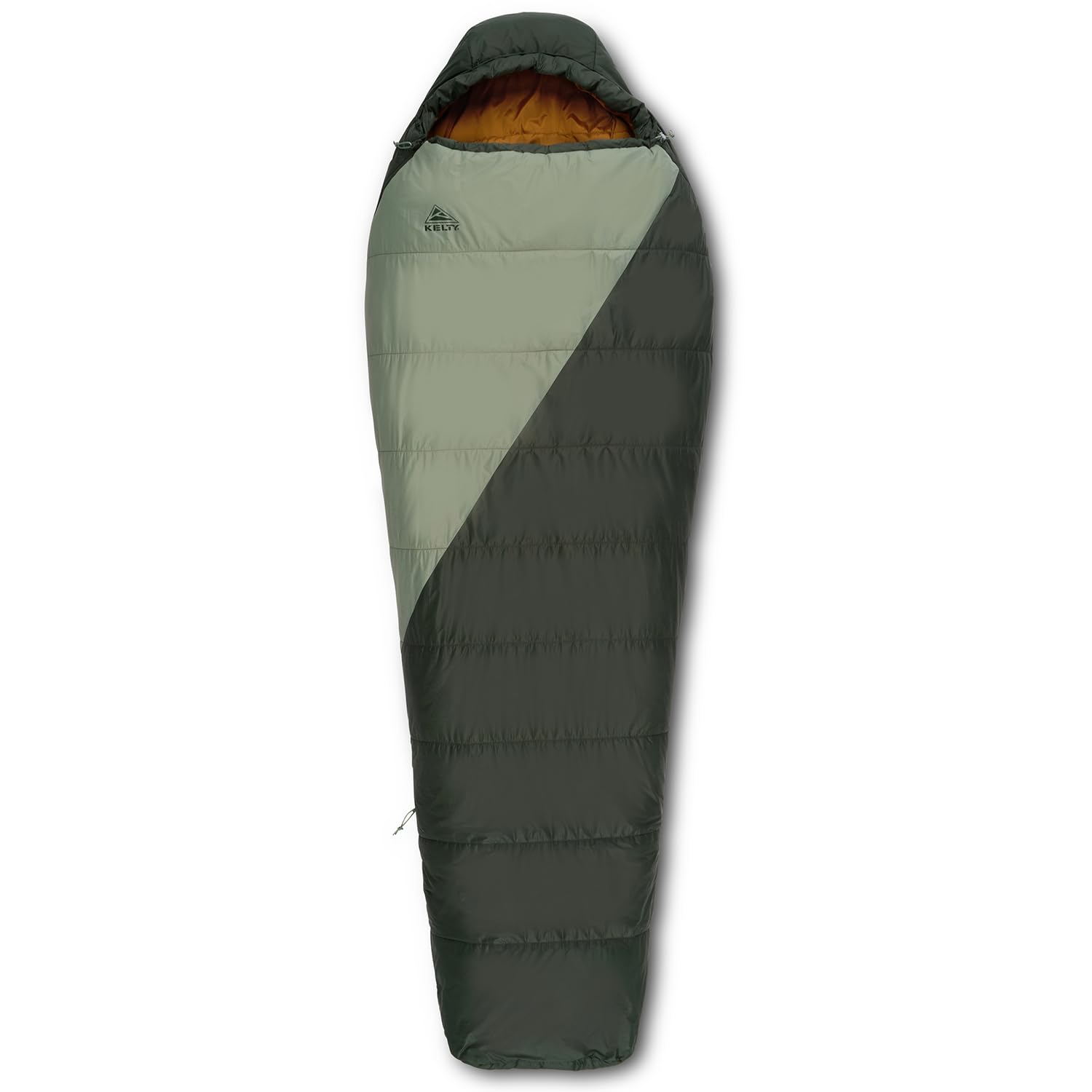
The Kelty Cosmic 20 Down delivers an honest 20°F temperature rating (ISO limit of -11°F) in a 2.58-pound package, making it a rare find for backpackers who need genuine warmth without a three-pound burden. The 550-fill-power down, certified by the Responsible Down Standard, compresses into a 13×7-inch stuff sack that fits easily in a mid-sized pack, leaving room for other gear.
Field reports consistently note that the bag holds its loft after repeated compression and that the recycled shell fabric with PFAS-free DWR shrugs off light condensation. The draft tube along the zipper and the snug mummy hood effectively trap heat, so you can comfortably sleep through nights that dip into the teens. The tradeoff is the mummy cut itself: broad-shouldered or larger sleepers will find the shoulder girth restrictive — a design that prioritizes thermal efficiency over sprawl room.
This bag suits backpackers who value a reliable 20°F rating under three pounds and who are willing to accept a trim fit in exchange for that performance. It works well for three-season trips where nighttime lows range from the high 20s to freezing, and for colder shoulder-season outings when combined with a liner. If you sleep on your side or need extra space to toss and turn, the envelope-style bags in this test (like the synthetic alternative) offer more freedom but add weight and bulk.
Pros
- Genuine 20°F warmth in a 2.58 lb package — rare for a down bag at this price.
- High-quality construction with recycled fabrics and PFAS-free DWR holds up to repeated trips.
- Compresses small enough for a medium backpack without sacrifice to loft recovery.
- Cost-effective compared to similar-spec down bags from premium brands.
Cons
- Mummy cut runs narrow in the shoulders — side sleepers and larger frames may feel confined.
If you need a verified 20°F sleeping bag that fits under the 3-pound mark without blowing your budget, this is the one to buy. The snug fit is the only real compromise, and it’s a fair trade for the warmth-to-weight ratio.
Best for Ultralight Summer Backpacking
ECOOPRO Warm Weather
Key Features
- Fill: Synthetic
- Shape: Envelope
- Weight: 1.5 lbs
- Temp Rating: 55°F – 60°F
- Price: $
The ECOOPRO Warm Weather bag is one of the lightest synthetic options near its price point: 1.5 lbs with a compression sack that shrinks it to roughly the size of a football. That low weight and small packed size make it a natural choice for ultralight backpacking and hiking where every ounce matters.
This bag is intended for smaller users — the envelope shape is snug and best accommodates narrow frames. It is also strictly a warm-weather bag, comfortable only above 55°F. If you sleep warm and don’t need extra room to roll over, these boundaries won’t interfere with performance.
The synthetic fill handles humidity reasonably well, and the lack of draft tubes or a hood keeps weight down. For summer trips where lows stay in the 60s, the ECOOPRO offers a comfortable sleep system without the bulk of a three-season bag.
Pros
- Ultralight at 1.5 pounds — easy to carry on long backpacking trips.
- Packs down extremely small with included compression sack.
- Cost-effective summer option — delivers ultralight performance at a budget price.
Cons
- Not suitable below 55°F — use only for mild summer nights.
If you are a smaller backpacker heading out in reliably warm weather and want a lightweight bag that won’t strain your pack weight or wallet, the ECOOPRO is a strong option. Just be aware of its snug fit and limited temperature range.
Best for Budget Summer Backpacking
TETON Sports 20F
Key Features
- Fill: Synthetic microfiber
- Shape: Mummy
- Weight: 2.9 lbs
- Temp Rating: 20°F (survival)
- Price: $
At just 2.9 pounds and under $60, the TETON Sports 20F delivers a lightweight synthetic mummy bag that works for summer backpacking. Its microfiber fill compresses enough for a daypack, and the hood and draft collar help trap heat on cool nights.
The bag is best for slender users and youth who will appreciate the narrow mummy cut – those with broader shoulders will find it constricting. While marketed for 20°F, comfortable use is more realistic above 40°F, making this a fair-weather companion rather than a three-season bag.
Pros
- Lightweight for a budget synthetic carry, easy to pack for backpacking trips.
- Good value at its price point for mild-weather camping and occasional use.
- Comfortable in temperatures above 40°F with basic insulation features.
Cons
- Temperature rating is optimistic; comfort is typical only above 40°F despite the 20°F claim.
- Mummy cut can be tight for broad-shouldered or larger users due to narrow design.
A suitable starter bag for warm-weather backpacking if you understand its temperature limits and fit constraints.
Best for Mild-Weather Ultralight
QEZER Down 600FP
Key Features
- Fill: 600-fill duck down
- Shape: Semi-rectangular
- Weight: 1.54 lbs
- Temp Rating: 59°F – 68°F
- Price: $$
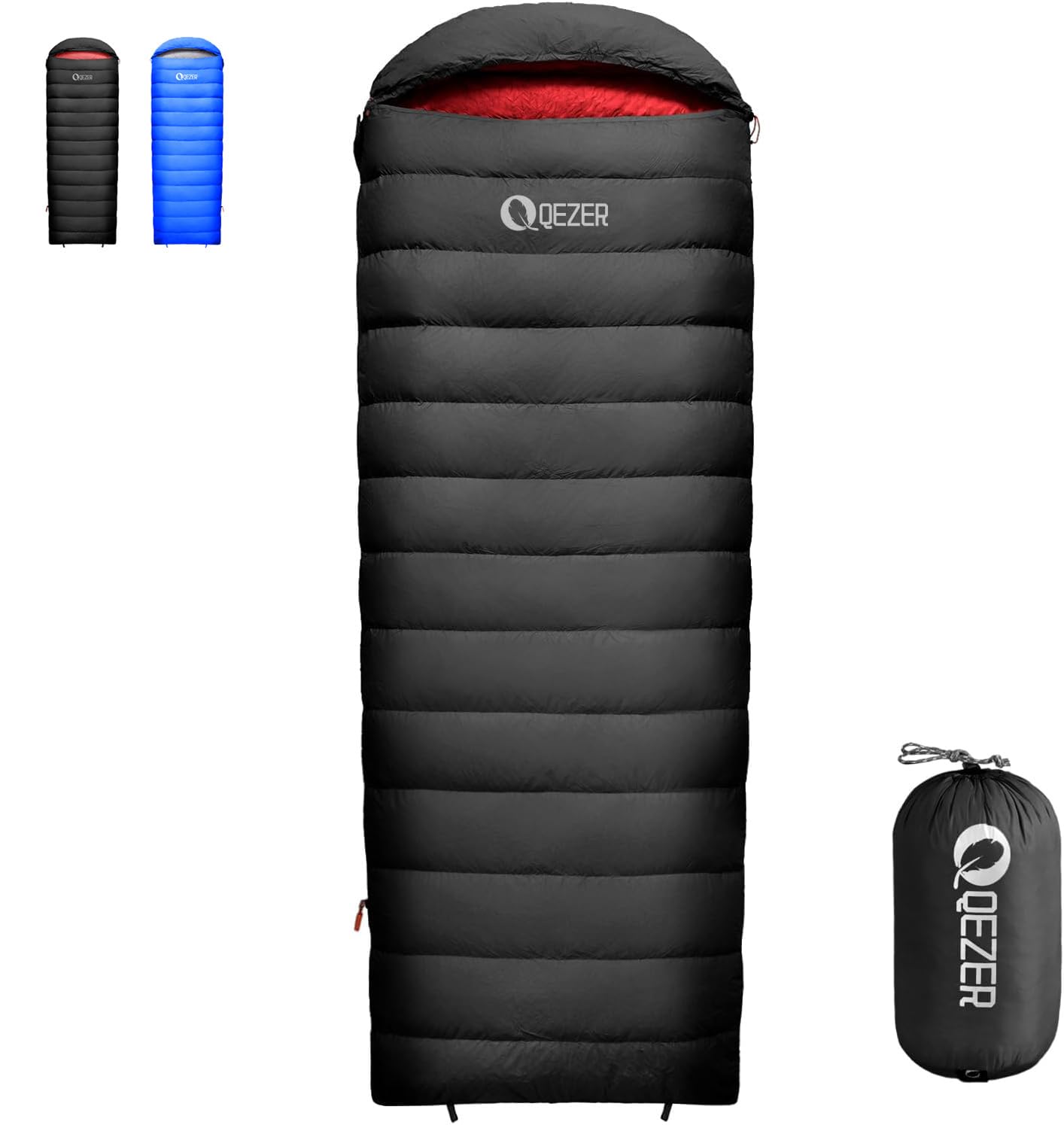
At 1.54 pounds with 600-fill duck down and a price under $80, this bag delivers genuine ultralight weight without the premium cost. The semi-rectangular shape offers more freedom than a mummy bag, though warmth is realistically limited to 50°F and above — not a bag for three-season shoulder trips.
This bag suits smaller individuals and ultralight backpackers who prioritize pack weight over warmth range. The envelope cut runs snug for broader shoulders or taller frames — worth checking dimensions before purchase. Zipper operation can be finicky when the fabric catches, so gentle handling is advised.
For mild summer nights and budget-conscious hikers, the value proposition is clear: you get genuine down insulation and compression sack portability at a fraction of the cost of premium options. The main tradeoff is temperature — this is a warm-weather tool, not a three-season solution.
Pros
- Lightweight and compact for backpacking
- Warm enough for mild weather conditions
- Good value for a down-insulated bag
Cons
- Fit can be too snug for larger or taller users
- Zipper can catch fabric, requiring careful closure
A capable ultralight down bag for warm-weather backpackers on a budget — just stay above 50°F and give the zipper a second look when closing.
Best for Summer Synthetic Backpacking
Kelty Cosmic Synth 40
Key Features
- Fill: Cirroloft synthetic
- Shape: Mummy
- Weight: 2.55 lbs
- Temp Rating: 40°F
- Price: $$
At 2.55 lbs, the Kelty Cosmic Synthetic 40 is a lightweight option for summer backpacking that doesn’t sacrifice insulation performance when wet. Unlike down bags that lose loft with moisture, the Cirroloft synthetic fill retains warmth even after a drizzle, making it a sensible pick for humid trails or unpredictable weather. Kelty’s reputation for consistent build quality shows in the stitching and zipper action.
This bag targets summer backpackers who prioritize a synthetic fill over the lighter pack weight of down. The 40°F rating works for warm nights above 50°F, but the mummy cut and footbox may feel snug for anyone with size 11 or larger feet — worth testing before committing. If you’re after a bag for colder conditions or need a roomy toe box, consider the top pick down option instead.
Pros
- Weighs only 2.55 lbs, making it one of the lighter synthetic bags for backpacking.
- Kelty’s construction quality is consistent, with smooth zippers and durable stitching.
- Synthetic fill maintains warmth even when damp, unlike down.
Cons
- Footbox may be cramped for hikers with size 11+ feet.
For summer backpackers who need a synthetic bag that stays warm when damp, the Kelty Cosmic 40 delivers a lightweight package from Kelty — just confirm the footbox suits your foot size.
Best for Ultralight Summer Hiking
Naturehike Ultralight

Key Features
- Fill: Synthetic
- Shape: Envelope
- Weight: 1.67 lbs
- Temp Rating: 50°F – 60°F
- Price: $
The Naturehike Ultralight delivers on its core promise: a lightweight, packable sleeping bag that compresses small enough for a daypack. The envelope cut gives some wiggle room for side sleepers, but the narrow width fits average-sized adults closely — broad-shouldered users or those over 6 feet will find it snug. For summer conditions above 50°F, the synthetic fill provides sufficient warmth; below that, you will need layers or a different bag. Compared to the slimmest ultralight budget option, this bag is slightly heavier and offers less room, which keeps it from being the top pick for weight-conscious hikers.
Pros
- Weighs only 1.67 pounds, making it one of the lightest envelope bags available.
- Compression sack reduces packed size to fit easily in a backpack.
Cons
- Insulation is only comfortable above 50°F — cold sleepers or alpine trips will need a warmer bag.
- Slightly heavier than the leading ultralight competitor, a tradeoff for those chasing the lightest possible pack.
Ideal for warm-weather hikers who prioritize low weight and packability over ultimate warmth or room — particularly suited for smaller individuals.
Best for Luxury Ultralight Travel
Sea to Summit Traveller

Key Features
- Fill: 650-fill duck down
- Shape: Rectangular blanket
- Weight: 1.29 lbs
- Temp Rating: 45°F
- Price: $$$
The Sea to Summit Traveller delivers genuine ultralight weight with premium duck down insulation, and the full-length zipper lets it convert to a camp blanket or quilt. At 1.29 pounds, it’s among the lightest options for warm-weather backpacking, and the 650-fill RDS down packs down small enough for a daypack. The rectangular shape provides generous shoulder room compared to typical mummy cuts.
The 45°F comfort rating means this bag is strictly for summer or mild conditions — drafts can creep in below that temperature, and the blanket-style design offers less heat retention than a mummy bag. The premium price puts it above many comparable ultralight bags, and limited real-world feedback makes long-term durability a question mark for high-mileage use. This is a specialized piece for those who prioritize pack weight and versatility over proven track records.
Pros
- Weighs just over a pound, making it one of the lightest convertible bag-blankets available.
- 650-fill RDS down efficiently insulates while compressing to a small packed size.
- Unzips fully to function as a blanket or quilt for camp lounging or shared use.
Cons
- The 45°F comfort rating limits use to summer nights; cooler conditions require extra layers or a liner.
- The premium price and absence of extensive real-world wear data mean this is a bet on build quality rather than a known quantity.
For the ultralight traveler who values minimal pack weight and a convertible design over upfront cost, this bag delivers on those priorities. It’s a luxury bet — best suited for well-maintained summer trails with predictable weather.
Best for Ultralight Summer Backpacking
ZOOOBELIVES Alplive T400

Key Features
- Fill: 650-fill down
- Shape: Envelope
- Weight: 1.7 lbs
- Temp Rating: 32°F – 50°F
- Price: $$
This bag delivers impressive portability for its price point, compressing to a compact size that frees up pack space. However, the temperature rating does not align with real-world comfort — expect reliable warmth only above 50 degrees Fahrenheit, making it a summer-only option. The narrow cut fits smaller users snugly but can feel restrictive for average builds. Additionally, some units carry a noticeable duck down odor that may persist despite airing out. These tradeoffs limit its appeal to ultralight backpackers who prioritize weight and pack size over warmth and fit versatility.
Pros
- Weighs only 1.7 lbs and compresses very small for easy packing.
- 650-fill down offers good warmth-to-weight value at a mid-range price.
Cons
- Narrow cut can feel restrictive for users with average or broader builds.
- Realistic comfort zone is above 50 degrees Fahrenheit, not the advertised 32 degrees.
Best for ultralight summer backpackers who value pack size over warmth and can tolerate a snug fit and possible odor.
How to Choose
The most important buying insight for a lightweight sleeping bag is that the temperature rating on the tag is almost always a survival estimate, not a comfort rating — plan to add 10 to 20 degrees unless the bag lists an ISO comfort limit.
Weight
Every ounce counts when you carry it on your back. A bag under 2 pounds qualifies as ultralight for backpacking, while bags between 2 and 3 pounds are still reasonable for three-season trips. Above 3 pounds, you are carrying a car-camping bag that happens to be marketed as lightweight.
Packed Size
A bag that packs to the size of a football can fit inside a 40-liter pack with room for other gear. Down bags compress smaller than synthetic for the same warmth, but they lose loft when wet. If you pack a down bag, a dry bag or pack liner is essential to keep moisture away.
Temperature Rating
The number printed on the tag is the temperature at which a person in full base layers can survive without hypothermia, not the temperature for a comfortable night’s sleep. Look for ISO comfort ratings — that figure is the lower limit for comfort. Budget bags rarely provide this, so assume a 20-degree bag is actually comfortable only to 40 degrees.
Fill Type
Down offers the best warmth-to-weight ratio and packability, but loses insulating ability when wet. Synthetic insulation retains warmth when damp and dries faster, but is heavier and bulkier for the same temperature rating. For dry climates and dedicated backpacking, down wins. For wet environments or casual use, synthetic is more forgiving.
Shape
Mummy bags minimize weight and heat loss by hugging your body, but they can feel restrictive for side sleepers or broad-shouldered people. Rectangular and envelope shapes offer more room but weigh more and let heat escape. Semi-rectangular designs like the envelope shape strike a balance for ultralight summer bags.
FAQ
Why does my lightweight sleeping bag feel cold even though it’s rated for 20°F?
Because most budget bags use a survival rating, not a comfort rating. A 20°F survival rating means you won’t die at 20°F, but you’ll be uncomfortably cold. For real comfort, look for an ISO comfort limit or add 15°F to the advertised number.
How do I fix a zipper that keeps catching on my sleeping bag liner?
The simplest fix is to hold the liner fabric taut away from the zipper track as you zip. If the zipper snags, back it up slightly and pull the fabric clear. For persistent jams, apply a silicone lubricant to the zipper teeth. If the zipper is physically damaged, replacement is the only long-term solution.
Can I use a 40°F sleeping bag for backpacking in the mountains?
Yes, but only in summer when nighttime temperatures stay above 50°F. Mountain nights can drop 20 degrees from daytime highs, so a 40°F bag is risky if you aren’t prepared to sleep in extra layers. Always carry a backup insulation layer like a puffy jacket.
Is down or synthetic better for a lightweight backpacking sleeping bag?
Down wins for weight and packability in dry conditions, while synthetic is better for wet climates where moisture is unavoidable. Down bags require careful storage and a waterproof stuff sack; synthetic bags are more forgiving but bulkier. Choose based on your typical camping environment.