This post contains affiliate links. We may earn a small commission when you buy through our links — at no extra cost to you.
When the grid goes down, the last thing you want is a lantern that quits after two hours or never turns on at all. Many product pages promise high lumens and long runtimes, but real-world performance often falls short due to inflated specs and battery degradation. The real difference between a good emergency light and a frustrating one lies in honest engineering – consistent brightness, reliable charging, and construction that survives being stored for months.
The lanterns that deliver on their claims share honest spec sheets and reliable battery systems – from budget multi-packs to rugged single units. Rechargeable models offer convenience but can degrade; battery-powered ones need spares. The right choice comes down to balancing runtime, brightness, and battery type for your specific outage scenario.
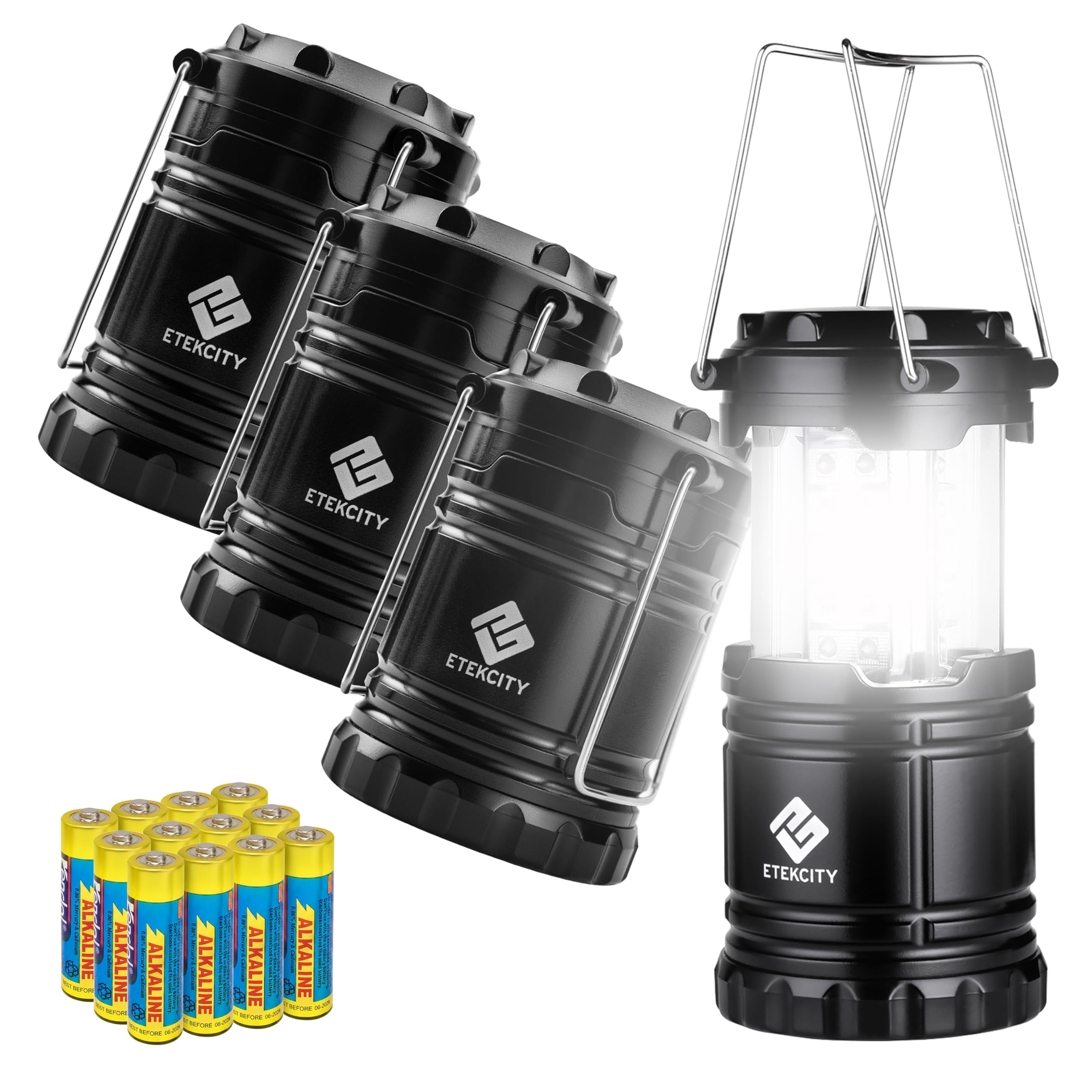


Best for Emergency Kits
Etekcity 4-Pack Lantern
Key Features
- Brightness: 154 lumens
- Power Source: 3 AA batteries
- Runtime: Up to 50 hours
- Water Resistance: Water resistant
- Portability: Collapsible, lightweight
- Price: $
Each lantern delivers 154 lumens from three AA batteries — enough to light a small room or tent, with up to 50 hours of runtime on a single set. The collapsible design folds flat for storage, and the included batteries mean it works right out of the box. Operation is straightforward: pull open to turn on, push closed to turn off — simple enough for children to use. For a 4-pack at this budget price, the per-unit cost is hard to beat.
This set is aimed at families needing multiple lights scattered around during a power outage or for budget-conscious campers stocking an emergency kit. The lack of a true dimmer switch means brightness is adjusted by how far you pull the lantern open, which can be imprecise — acceptable for general area lighting but not for situations requiring fine control. Those who need over 300 lumens per unit or warm dimmable light should look at higher-output alternatives.
Pros
- Bright output for its compact size
- Compact and lightweight when collapsed
- Simple to operate, even for children
Cons
- No true dimmer switch; brightness controlled by pull height, which can be imprecise
For a budget-friendly multi-pack that balances brightness, battery life, and ease of use, this set covers the essentials without unnecessary complexity — ideal for emergency preparedness.
Best for Rechargeable Backup
EZORKAS 2-Pack Rechargeable
Key Features
- Power Source: Rechargeable + AA backup
- Runtime: Up to 12 hours
- Water Resistance: Water resistant
- Portability: Lightweight, compact
- Price: $
The EZORKAS 2-pack delivers the flexibility of built-in rechargeable batteries plus the option to run on three AA batteries when USB power isn’t available. That makes it a more versatile choice than the rugged single-lantern options that rely solely on disposable cells.
This set is ideal for campers and preppers building a low-cost emergency lighting kit with multiple lights. Keep in mind that a minority of units may develop charging problems after several months — the tradeoff for getting two rechargeable lanterns at this price.
Pros
- Dual power source — USB rechargeable with AA backup
- Excellent value for a 2-pack at a budget price
- Lightweight and compact design
Cons
- Some units may develop charging issues over months of use
A smart addition to any emergency lighting kit, especially if you want the flexibility of rechargeable and battery power without spending much.
Best for Durability Priority
Streamlight Siege 540
Key Features
- Brightness: 540 lumens
- Power Source: 3 D batteries
- Runtime: Up to 295 hours low
- Water Resistance: IPX7 (floats)
- Portability: Heavier, rugged
- Price: $$$
The Streamlight Siege delivers 540 lumens of even 360-degree light with an IPX7 rating that survives submersion and even floats – a design built for harsh conditions. Its low mode lasts 295 hours, far longer than typical collapsible lanterns, making it a strong candidate for extended power outages. However, the rugged polymer body and three D batteries make it heavier than rechargeable competitors, and the batteries themselves are not included.
This lantern suits campers, preppers, and anyone in hurricane-prone areas who values durability and runtime over price. The D-cell power source means ongoing cost, but for a light that can take a drop into a puddle and keep running, the tradeoff is clear.
Pros
- Extremely bright and even 360-degree illumination fills an average room.
- Rugged construction with IPX7 waterproofing and flotation for use in wet conditions.
Cons
- Heavier than collapsible lanterns due to D batteries and robust build – noticeable when carried in a pack.
- D batteries not included and replacement cost adds up over time compared to rechargeable alternatives.
For users who need a nearly indestructible light that can run for days on low and withstand the elements, the Streamlight Siege is a long-term investment that outperforms collapsible options in durability.
Best for Emergency Lights
Lichamp 4-Pack Collapsible
Key Features
- Brightness: 350 lumens
- Power Source: 3 AA batteries
- Runtime: Up to 30 hours
- Water Resistance: IPX4
- Portability: Collapsible, foldaway handles
- Price: $
Each lantern delivers 350 lumens, noticeably brighter than most competitors at this price. The collapsible design stores flat, making it simple to stash several in a drawer or emergency kit. Battery compartment cap can be tricky to screw on/off, but the output and price make this a strong choice for families wanting to scatter bright lights across rooms during a power outage.
Pros
- Very bright at 350 lumens for its compact size
- Collapsible shape stores flat and saves space
- Consistent build quality across the set
Cons
- Battery compartment cap may be difficult to screw on or off
For buyers who prioritize brightness per dollar and need multiple lights, this 4-pack delivers.
Best for Magnetic Hands-Free
GearLight 2-Pack Magnetic
Key Features
- Brightness: 600 lumens
- Power Source: 3 AA batteries
- Runtime: Up to 2 hours high
- Water Resistance: Water resistant
- Portability: Magnetic base, foldable hook
- Price: $$
The magnetic base sticks to metal surfaces like car hoods or fridge doors, and the foldable hook lets you hang it from a tent ridge or shelf — hands-free light where others need a flat surface. The included AA batteries mean zero delay: twist the base and light is ready.
For emergency kits, the quick out-of-box use and compact storage are practical. On high mode the batteries drain in roughly two hours, so this lantern works best when you have spare cells handy or plan to use lower brightness for longer stretches. It suits short-term power outages or car camping where battery replacement is easy.
Pros
- Magnetic base and hook for hands-free placement in any orientation.
- Comes with AA batteries, ready to use immediately.
- Compact collapsible design stores easily in glovebox or emergency bag.
Cons
- High brightness drains AA batteries in about two hours.
- No built-in rechargeable battery; requires replacement cells for extended use.
Good for quick emergency light in a car kit or campsite, but plan for extra batteries if you need prolonged high output.
Best for Spotlight+lanten
LE Rechargeable 1000LM
Key Features
- Brightness: 1000/150 lumens
- Power Source: Built-in rechargeable
- Runtime: 2-12 hours modes
- Water Resistance: IPX4
- Portability: Lightweight, compact
- Price: $$
The spotlight delivers a genuinely bright 1000-lumen beam for searching or emergency signaling, while the side lantern provides a softer 150-lumen glow suitable for close-up tasks inside a tent or reading. The whole unit is compact and light, making it easy to pack. Battery life on high spotlight is limited to about 2.2 hours, and some units may develop charging issues over time.
This is a solid choice for hikers who want a dual-function light: a powerful beam for navigation or scanning, plus a dim area light for a small tent. For grid-down situations where steady room lighting is needed, the side is too weak — it works better as a backup beam source rather than a primary area lantern. Charging failures are possible, so verify function before relying on it for critical use.
Pros
- Super bright 1000-lumen spotlight for searching and signaling
- Very lightweight and compact for backpacking
- Dual flashlight and lantern modes in one device
Cons
- In a tent or room, the side light is only 150 lumens — fine for close-up use but dim for area lighting
- Battery life on high spotlight is short (2.2 hours) and some units may stop charging over time
If you need a bright, portable search light that also works as a basic tent lantern, this rechargeable combo fits the bill — just don’t expect it to light up a room or rely on it for extended runtime without verifying charging behavior.
Best for Basic Emergency
Lepro 4-Pack Collapsible

Key Features
- Brightness: 190 lumens
- Power Source: 3 AA batteries
- Runtime: Up to 14 hours
- Water Resistance: IPX4
- Portability: Collapsible, pull-tab
- Price: $
The Lepro 4-pack offers 190-lumen collapsible lanterns with a simple pull-to-turn-on design. Brightness is adequate for close-up emergency use but underwhelming for lighting larger areas. IPX4 water resistance is included. For basic emergency kits where moderate light is acceptable, this budget pack gets the job done.
Pros
- Adequate brightness for camping and emergency use
- Very easy to use – pull up to turn on
Cons
- 190 lumens is fine for close tasks but not bright enough to illuminate a large room
Best suited for emergency kits where you need multiple lights and 190 lumens per unit is enough for close-up tasks.
Best for Indoor Emergency
MalloMe 4-Pack Colored

Key Features
- Brightness: 146 lumens
- Power Source: 3 AA batteries
- Portability: Compact, fun colors
- Price: $
The MalloMe 4-pack delivers enough light (146 lumens per unit) to illuminate a room during a power outage or to scatter around a tent on a dry camping trip. The four distinct colors make it easy to assign one to each family member or room, and the price is low enough to buy multiple packs. However, these lanterns are not water-resistant, so they belong indoors or under cover, and a small number of units may arrive non-functional – testing each one right away is wise. For buyers who need brighter area lighting or outdoor rain protection, a single higher-output lantern would be a better fit.
Pros
- Bright enough for indoor emergency use in a typical room.
- Four lanterns at a budget-friendly price – easy to place lights throughout a house.
Cons
- Some units may arrive non-functional; immediate testing recommended.
Best for indoor emergency kits or dry-weather kids’ camping where multiple low-cost lights are more important than maximum brightness or water resistance.
Best for Family Emergency
Eveready 3-Pack PRO

Key Features
- Brightness: 350 lumens
- Power Source: 3 AA batteries
- Runtime: Up to 16 hours
- Water Resistance: IPX4
- Portability: Lightweight plastic
- Price: $
Eveready’s 3-pack includes batteries and three lanterns for the price—a ready-to-use emergency kit. Bright enough for most blackouts with 350 lumens and SOS modes, but the plastic build feels lightweight and no rechargeable means ongoing AA battery cost. A solid budget choice for families needing multiple lights from a familiar name, though not for those seeking premium feel or rechargeable convenience.
Pros
- Bright enough for most camping and blackout needs
- Includes flashlight and SOS modes for added utility
Cons
- Plastic construction may not feel premium in hand; no rechargeable option means ongoing AA battery cost
An affordable 3-pack for emergency kits where multiple lights are needed and AA battery cost is acceptable.
Best for Budget Bright
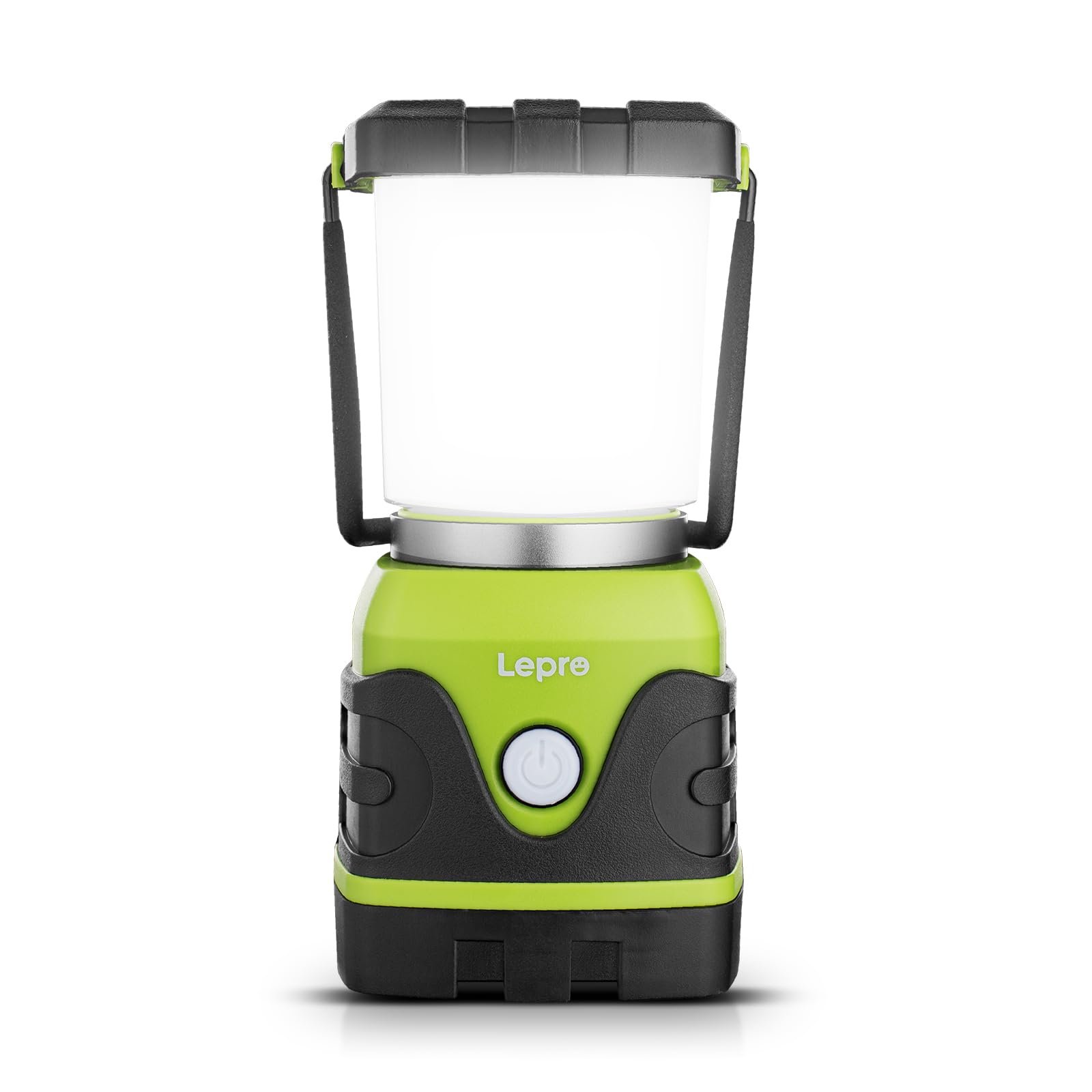
Lepro 1000LM D-Cell
Key Features
- Brightness: 1000 lumens
- Power Source: 3 D batteries
- Runtime: Up to 12 hours high
- Water Resistance: IPX4
- Portability: Compact for D-cell
- Price: $
This Lepro lantern delivers impressive 1000-lumen brightness at a budget price, with compact handling for a D-cell design. However, some units may cease to operate after limited use, and the heavy, non-rechargeable D batteries add ongoing cost. Best for short-term emergencies where brightness is the priority and you accept some risk.
Pros
- 1000-lumen output with dimmable modes for flexible lighting.
- Lightweight frame makes it easy to carry despite using D batteries.
Cons
- Some units may cease to operate after limited use, making long-term dependability uncertain.
For occasional campers who want maximum brightness for the lowest upfront cost and are willing to keep spare batteries handy, this lantern can work well – just don’t count on it as your sole emergency light.
Best for Bright Dimmable
Consciot 2-Pack 1000LM

Key Features
- Brightness: 1000 lumens
- Power Source: 3 D batteries
- Runtime: Up to 12 hours high
- Water Resistance: IPX4
- Portability: Compact
- Price: $$
This two-pack delivers 1000 lumens with four light modes in a compact D-cell design. The battery compartment can be difficult to open, and some units may arrive with one non-functional. Good brightness for the price, but D battery cost and occasional defects hold it back.
Pros
- Bright 1000-lumen output with adjustable modes including warm white for comfortable ambient light.
- Compact size for the brightness level, fitting easily in emergency kits and camping bags.
Cons
- Battery compartment can be difficult to open and close, making battery changes frustrating in the dark.
A capable emergency lantern when you already have D batteries on hand and can test each unit upon arrival.
How to Choose
The best power outage lantern is the one that matches your expected blackout duration and battery preference, not just the highest lumen count.
Brightness (Lumens)
Lumens measure raw light output, but the way that light spreads matters more for area lighting. A 150-lumen lantern with a wide diffuser can illuminate a small room better than a 500-lumen spotlight that creates a hot spot. For reading or navigating a hallway, 150-300 lumens is plenty. For lighting a living room during dinner, 400-600 lumens gives comfortable coverage.
Be aware that many budget brands inflate lumen claims by measuring the LED chip alone, not the diffused output. A lantern that claims 1000 lumens may actually deliver 400-600 once the light passes through the plastic globe. Checking verified reviews that compare brightness to familiar objects (like a 60W bulb) is more reliable than trusting the package.
Power Source
The choice between battery-only, rechargeable, or dual-power hinges on how often you use the lantern and how long outages last. Battery-powered lanterns (AA or D cells) never suffer from charge degradation and can be stored for years. The downside is the ongoing cost and need to keep spare batteries on hand, especially for high-drain D-cell models that can eat through a set in a few hours on high.
Rechargeable models offer convenience and lower long-term cost, but built-in lithium-ion batteries lose capacity over time – expect 20-30% reduction after 300-500 charge cycles. Dual-power lanterns that accept both a rechargeable battery and disposable AA backups give you flexibility: use rechargeable daily, switch to alkalines during a long outage. This is the most outage-proof setup.
Runtime
Runtime is almost always quoted on the lowest brightness setting, which is useless for blackout lighting. A lantern that claims 50 hours on eco mode may only run 2-3 hours on high. The real-world figure that matters is runtime on the highest setting you will actually use. For most people, that is the medium or high setting, not the dimmest. Look for runtime on high (or at least 50% brightness) in reviews.
Also consider that rechargeable lanterns lose runtime as the battery ages. A unit that started at 4 hours on high may drop to 3 hours after a year of monthly charges. Battery-powered lanterns maintain full runtime until the cells are drained, but you have to replace them. If you plan to use a lantern only for rare outages, battery power is more predictable.
Durability and Weather Resistance
Water resistance is rated by IP codes: IPX4 handles splashing rain, IPX7 allows brief submersion (the lantern floats). For indoor power outages, IPX4 is sufficient. For camping or outdoor emergency use during storms, IPX7 adds peace of mind. Build quality matters beyond water – check for impact resistance. Collapsible lanterns with thin plastic hinges are more prone to cracking if dropped. A rugged unit like the Streamlight Siege uses thick polymer and rubber bumpers that survive falls from a table.
The trade-off is that rugged lanterns are heavier and more expensive. For a lantern that lives in a drawer and only comes out during outages, a lightweight collapsible model is fine. For a lantern that goes in a backpack or lives in a hurricane kit, invest in impact-rated construction.
Portability
Portability includes collapsed size, weight, hanging options, and whether it has a handle or magnet. Collapsible lanterns compress to a flat disc that fits in a glove box or emergency kit. Fixed-body lanterns are bulkier but often have stronger hooks or larger handles. Magnetic bases are useful for sticking to metal shelves, car hoods, or fridge doors – but the magnet strength varies widely. Some are strong enough to hold the lantern vertically; others are just for horizontal surfaces.
For hiking or car camping, weight matters: a collapsible AA lantern weighs about 5-6 ounces with batteries, while a D-cell model weighs over a pound. For home emergency use, weight is less of a concern, but storage space may be. Consider where you will keep the lantern and how easy it is to grab in the dark.
FAQ
How long do rechargeable camping lanterns last on a single charge during a power outage?
It depends heavily on the brightness setting and battery capacity. On high, most rechargeable lanterns last 4-6 hours before needing a recharge. On medium or low, they can extend to 12-24 hours. But battery capacity degrades over time – after a year of regular use, expect a 20-30% reduction in runtime. For long outages, a dual-power model that also runs on AA batteries offers a backup plan.
Can I use AA batteries in a lantern that claims to be rechargeable?
Only if the lantern explicitly supports dual power. Some rechargeable lanterns have a built-in lithium battery that cannot be removed; they require a USB port or AC adapter to recharge. Others include a separate compartment for AA batteries as a backup. Check the product description for ‘battery backup’ or ‘dual power’ – if it only says ‘rechargeable’, it likely does not accept disposables.
Why does my LED lantern dim after a few hours even when fully charged?
Many lanterns have a non-linear brightness curve: they start at full output but gradually dim as the battery voltage drops. This is especially common with cheap rechargeables that lack regulation circuitry. Higher-quality lanterns use constant-current drivers that maintain brightness until the battery is nearly depleted. If your lantern dims noticeably after a couple of hours, it likely has a weak voltage regulation design.
Is a collapsible lantern more durable than a fixed one for hiking?
Collapsible lanterns are more portable but less impact-resistant due to their sliding or folding mechanisms. The plastic joints can crack if dropped on rocks. Fixed-body lanterns, especially those with rubber bumpers and thick polymer shells, survive drops better. For hiking where weight is critical, a collapsible is fine if handled carefully. For rough use, a non-collapsible rugged design is more reliable.