This post contains affiliate links. We may earn a small commission when you buy through our links — at no extra cost to you.
Every indoor trainer listing promises a quiet ride. Then you mount your bike, spin the pedals, and the hum fills the room. The reality is simple: wheel-on trainers make noise, especially with knobby tires on hard floors. That’s not a flaw in the product – it’s a physics problem between rubber and metal.
The right setup changes everything. A slick road tire and a thick mat cut the sound enough for most homes. What you actually need to match is your training intensity. Magnetic trainers offer fixed resistance steps that often top out too low for strong cyclists. Fluid trainers give a progressive curve that feels more like the road. And direct-drive options eliminate tire noise entirely at a much higher cost.
This guide helps you pick the type that fits your space, your bike, and your pedaling power – so you ride indoors without regrets.




Best for Mid-Range All-Around
Alpcour Magnetic Trainer
Key Features
- Resistance Type: Magnetic
- Resistance Levels: 6
- Wheel Size: 26-28, 700C
- Load Capacity: 150-250 lbs
- Price: Mid-Range
The Alpcour Magnetic Trainer stands out among mid-range wheel-on trainers for its stainless steel frame and integrated carrying bag — features that add durability and portability without pushing the price. Six resistance levels cover steady-paced indoor rides, and the foldable design stores easily between sessions.
This trainer suits cyclists who want a foldable setup with a storage bag and value ease of assembly. A slick road tire and a thick mat are recommended to manage noise on hard floors. It is not intended for riders who need high resistance or near-silent operation — fluid or direct-drive models serve those demands better.
Pros
- Easy to assemble and use
- Solid construction and stable ride
- Good value for a magnetic trainer with carrying bag
Cons
- Resistance may feel low for high-intensity training efforts
- Noise levels vary with tire type and can be noticeable on hard floors
A practical magnetic trainer that balances build quality, portability, and price — best for riders who prioritize convenience over top-end resistance or silence.
Best for Occasional Users
Sportneer Magnetic Bike Trainer
Key Features
- Resistance Type: Magnetic
- Resistance Levels: 6
- Wheel Size: 26-28, 700C
- Load Capacity: 299.8 lbs
- Price: Budget
The Sportneer Bike Trainer keeps things simple and affordable. Setting up your bike takes minutes, and the frame feels stable during rides. Budget-conscious riders with standard quick-release bikes get a solid indoor training stand without excess cost. However, noise may be noticeable in quiet spaces — especially with knobby tires — and the magnetic resistance may not provide enough challenge for strong cyclists. For casual winter training or staying active without a big investment, the Sportneer delivers exactly what it promises.
Pros
- Extremely easy to set up and mount your bike
- Great value for the price, offering solid build quality
Cons
- Noise level can be loud, especially with knobby tires
- Magnetic resistance may feel insufficient for strong cyclists
The Sportneer is a straightforward pick for budget-conscious riders who want a low-cost way to ride indoors without complicated setup.
Best for Budget Beginners
BalanceFrom Magnetic Trainer
Key Features
- Resistance Type: Magnetic
- Resistance Levels: 8
- Wheel Size: 26-28, 700C
- Load Capacity: 330 lbs
- Price: Budget
The BalanceFrom Magnetic Trainer leads the budget category with an 8-level resistance dial that gives riders more control than typical entry-level units. Noise from the magnetic unit and tire contact can be noticeable in quiet spaces, particularly on hard floors with knobby tires. This makes it better suited for garages or basements than living areas. For budget-conscious beginners looking for a simple indoor ride, this trainer offers easy setup and a stable platform that folds away when not in use. Its 330-pound capacity suits most bikes, including heavier models.
Pros
- Sets up quickly with clear instructions
- Sturdy and stable during intense riding
- Folds compactly for storage when not in use
Cons
- In quiet indoor spaces, the tire and magnetic resistance produce audible noise, especially on hard floors with knobby tires
A practical budget choice for casual indoor riding when noise is not a concern, and storage space is limited.
Best for Zwift Cyclists
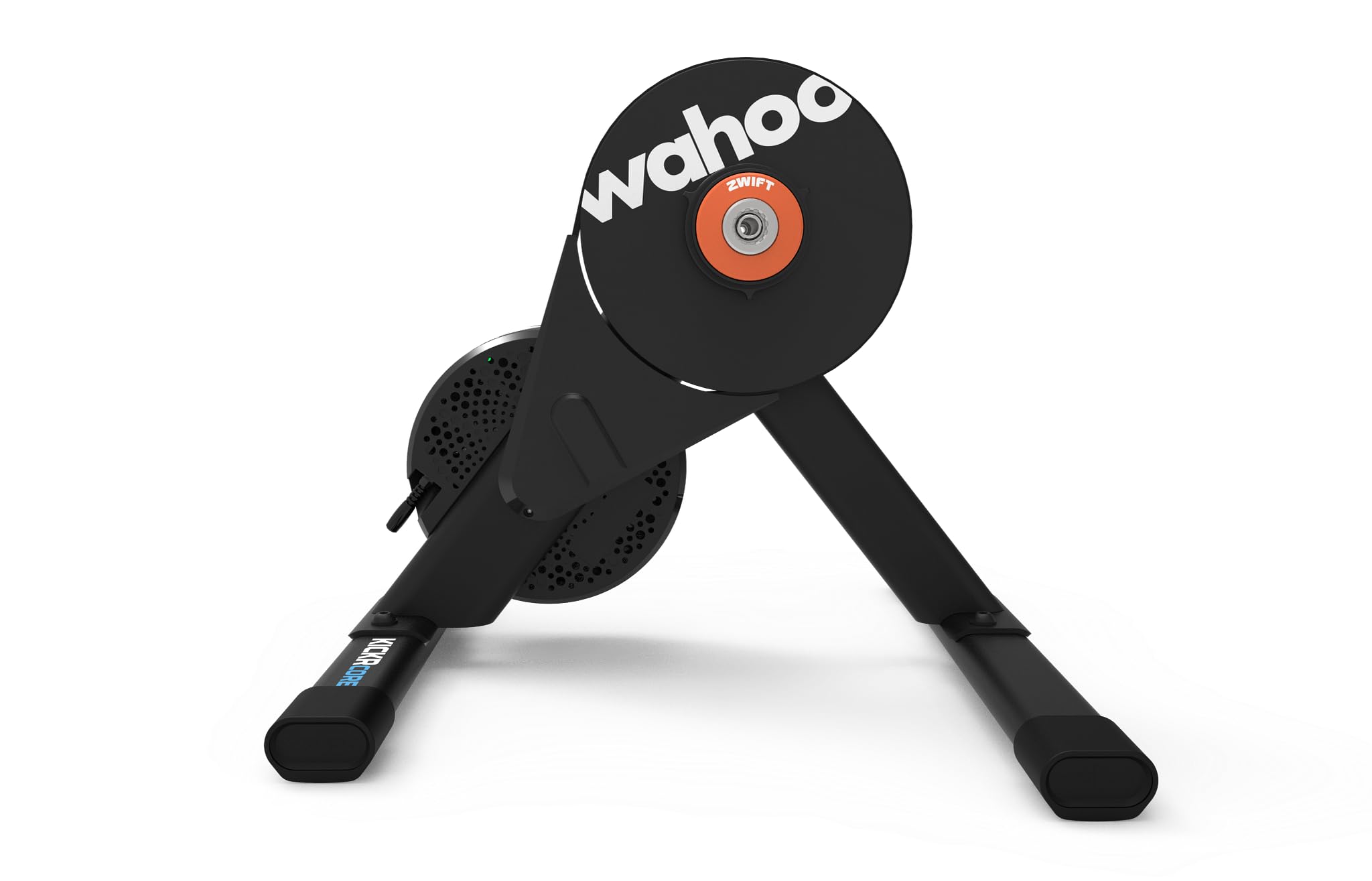
Wahoo KICKR CORE 2
Key Features
- Resistance Type: Electronic
- Resistance Levels: Infinite (simulated grade up to 20%)
- Wheel Size: Direct drive
- Load Capacity: 200 lbs
- Price: Premium
Direct-drive design eliminates tire noise and delivers accurate power measurement for a realistic indoor ride. Seamless Zwift integration and WiFi/Bluetooth connectivity create an immersive virtual training experience. The high price and required Zwift subscription make this best suited for dedicated riders committed to app-based training, not casual users looking for a simple stationary setup.
Pros
- Silent direct-drive design removes tire noise and provides consistent resistance
- Seamless integration with Zwift and other smart training apps for realistic virtual riding
- Easy setup and solid build quality out of the box
Cons
- Premium price may be prohibitive for riders who train occasionally
- Full app features require an ongoing Zwift subscription, adding to long-term cost
If you train seriously on Zwift and want a quiet, accurate, and app-connected trainer, this delivers — but the investment and recurring subscription put it out of reach for casual riders.
Best for Realistic Feel
Alpcour Fluid Trainer
Key Features
- Resistance Type: Fluid
- Resistance Levels: Infinite progressive
- Wheel Size: 26-29, 700C
- Load Capacity: 300 lbs approx
- Price: Mid-Range
Progressive fluid resistance mimics outdoor road feel at a mid-range price, with stainless steel build that adds durability. Unlike the top pick magnetic Alpcour, this model delivers a more realistic ride by simulating infinite resistance levels as you pedal harder.
This trainer suits cyclists who want a natural resistance curve without electronics but are willing to accept more involved assembly and noticeable noise in quiet spaces. It is best for those who prioritize road feel over absolute silence or easy setup.
Pros
- Quality construction with a solid feel
- Progressive resistance provides a realistic road feel mimicking outdoor riding
- Good value for a fluid trainer in its price range
Cons
- Noise may still be noticeable, especially in quiet indoor spaces
- Assembly requires more effort and the instructions are unclear
A fluid trainer that delivers realistic resistance at a reasonable price, best suited for riders who value road feel and can accept the assembly and noise tradeoffs.
Best for E-Bike Owners
CXWXC Magnetic Bike Trainer
Key Features
- Resistance Type: Magnetic
- Resistance Levels: 6
- Wheel Size: 26-29, 700C
- Load Capacity: 330 lbs
- Price: Mid-Range
The CXWXC Bike Trainer supports e-bikes and 29-inch wheels with a 330-pound load capacity and a stable frame — a key advantage for heavy bikes that challenge standard trainers. The magnetic unit provides six resistance levels, but noise can be noticeable, especially with knobby mountain bike tires. This trainer suits riders with heavier bikes who have a garage or basement where sound is less disruptive.
Pros
- Sturdy frame handles heavy bikes and larger wheels without wobble
- Works with e-bikes and 29-inch wheels, expanding compatibility beyond typical trainers
- Good value for a high-capacity magnetic trainer
Cons
- Noise may be noticeable in quiet spaces, particularly with knobby mountain bike tires
A capable choice for riders with e-bikes or large wheels who can tolerate some noise, but lighter bikes and quiet apartments are better served by the top-pick Alpcour.
Best for Tight Budgets
Yaheetech Magnetic Trainer

Key Features
- Resistance Type: Magnetic
- Resistance Levels: 1
- Wheel Size: 26-28, 700C
- Load Capacity: 265 lbs
- Price: Budget
At this price point, the Yaheetech gets you spinning indoors for minimal investment. Assembly is quick and the frame stays stable under light use. However, the single magnetic resistance setting may feel too easy for anyone used to climbing hills, and noise from the roller can be noticeable in a quiet room. It works best with smooth road tires and for riders who just want to turn the pedals without intensity targets.
Pros
- Quick to assemble and stable on the floor for casual spinning sessions.
- Entry-level price that makes indoor riding accessible on a tight budget.
Cons
- Noise from the magnetic unit can be intrusive in shared living spaces.
A functional budget trainer for the rider who occasionally wants to pedal indoors without spending much — provided noise and limited resistance aren’t deal-breakers.
How to Choose
The single most overlooked factor in indoor trainer satisfaction is noise – and it depends more on your tire and floor than the trainer itself.
Resistance Type
Magnetic trainers use magnets to create resistance against a spinning flywheel. They offer preset levels that you adjust manually, and the resistance curve tends to be flat – each level feels similar to the last. This works well for steady moderate effort but can leave strong cyclists wanting more at high speeds.
Fluid trainers replace magnets with a sealed unit of silicone oil. The faster you pedal, the thicker the fluid becomes, creating a progressive resistance that closely matches the feel of a real hill climb or tailwind. The trade-off is higher cost and occasional assembly difficulty.
Electronic trainers use a motor or electromagnet to simulate gradients up to 20%. They pair with apps like Zwift to auto-adjust resistance as you climb a virtual hill. The ride feel is unmatched, but you pay for the electronics and often a subscription.
Number of Resistance Levels
Budget magnetic trainers typically offer 1 to 8 fixed levels. In practice, the difference between adjacent levels is small, and the top setting may still feel too easy for fit cyclists. If you average 12-15 mph outdoors, an 8-level magnetic trainer will likely max out before you break a sweat.
Fluid and electronic trainers eliminate the level count problem because resistance is infinitely variable and tied to your speed or grade. This makes them a better choice if you plan to push hard or follow structured workouts.
Noise Level
Noise from a wheel-on trainer comes from two sources: the resistance unit and the tire contacting the roller. Magnetic units produce a low hum that varies by brand, but the dominant sound is tire tread slapping against metal. A slick road tire can reduce that noise by more than half compared to a knobby mountain bike tire.
The surface under the trainer also matters. A thick exercise mat or a piece of carpet absorbs vibration that would otherwise transfer through hard floors. In apartments, even a mat may not be enough to avoid disturbing neighbours – direct-drive trainers are the only near-silent option.
Compatibility
Almost all wheel-on trainers work with 26-28 inch wheels and 700C road sizes, and they require a quick-release skewer on the rear axle. Mountain bikes with thru-axles (common on modern models) need an adapter, often sold separately. Check your axle type before ordering.
The roller width also matters. Some trainers have a narrow roller that suits road tires but may not centre a wide mountain bike tire properly. If you plan to switch bikes, look for a trainer with a wide roller and adjustable width arms.
Build Quality
Stability during out-of-saddle sprints depends on the frame material and leg design. Stainless steel arms resist flex better than alloy steel, and triangular or A-frame legs provide a wider stance than folding legs. A trainer that wobbles at high effort is unsafe and annoying.
Wheel-on trainers with a heavy base (15+ pounds) are less likely to slide on smooth floors. A carrying bag adds convenience for storage or travel, but check that it benefits your use case – if you never move the trainer, a lighter build is fine.
FAQ
Why is my bike trainer so loud even though it says quiet?
The noisemaker is usually your tire, not the trainer. Knobby mountain bike tires slap against the roller and vibrate through the frame. A slick road tire with a smooth tread pattern cuts volume by half or more. Also check your floor: a thin rug or mat does more than the trainer’s own sound dampening.
Can I use a mountain bike with knobby tires on a magnetic trainer?
You can, but expect significant noise and vibration. Knobs dig into the roller and create a rhythmic thumping. If you must use knobby tires, place the trainer on thick carpet or a padded mat. A dedicated slick trainer tire costs around $20 and is worth it if you ride indoors more than once a week.
Do I need a special tire for indoor bike training?
Not strictly, but a slick trainer tire is a smart upgrade. It eliminates tread noise, wears slower than a road tire, and won’t transfer rubber dust onto your roller. Standard road tires work but will wear faster and may get hot. If you train indoors regularly, a $20-30 trainer tire pays for itself in noise reduction and tire longevity.
How do I increase resistance on a magnetic bike trainer?
Magnetic trainers have a manual dial or lever that moves magnets closer to the flywheel. Crank it to the highest setting. If that still feels too easy, you have two options: shift to a harder gear on your bike (bigger chainring, smaller cog) or upgrade to a fluid or electronic trainer that provides realistic higher resistance levels. No amount of dial twisting will overcome the physics limit of a small magnetic unit.