This post contains affiliate links. We may earn a small commission when you buy through our links — at no extra cost to you.
Hiking gear listings promise impressive specs: 500-pound capacity, water resistance, ultralight weight. But real-world use often reveals a gap between the marketing copy and what actually happens on the trail. A hammock that rips mid-use or a filter that clogs in murky water can turn a pleasant day hike into a frustrating ordeal.
This guide cuts through the exaggerated claims. Instead of chasing lowest price or highest numbers, we focus on gear that delivers consistent performance under real conditions. The picks here balance weight, durability, and ease of use — the three factors that matter most when you’re miles from the trailhead.
You won’t find items that fall apart after three uses or fail when you need them most. What you will find is a shortlist of reliable tools that match their advertised capabilities, backed by thousands of actual hikers’ experiences.


Best for Solo Backpackers
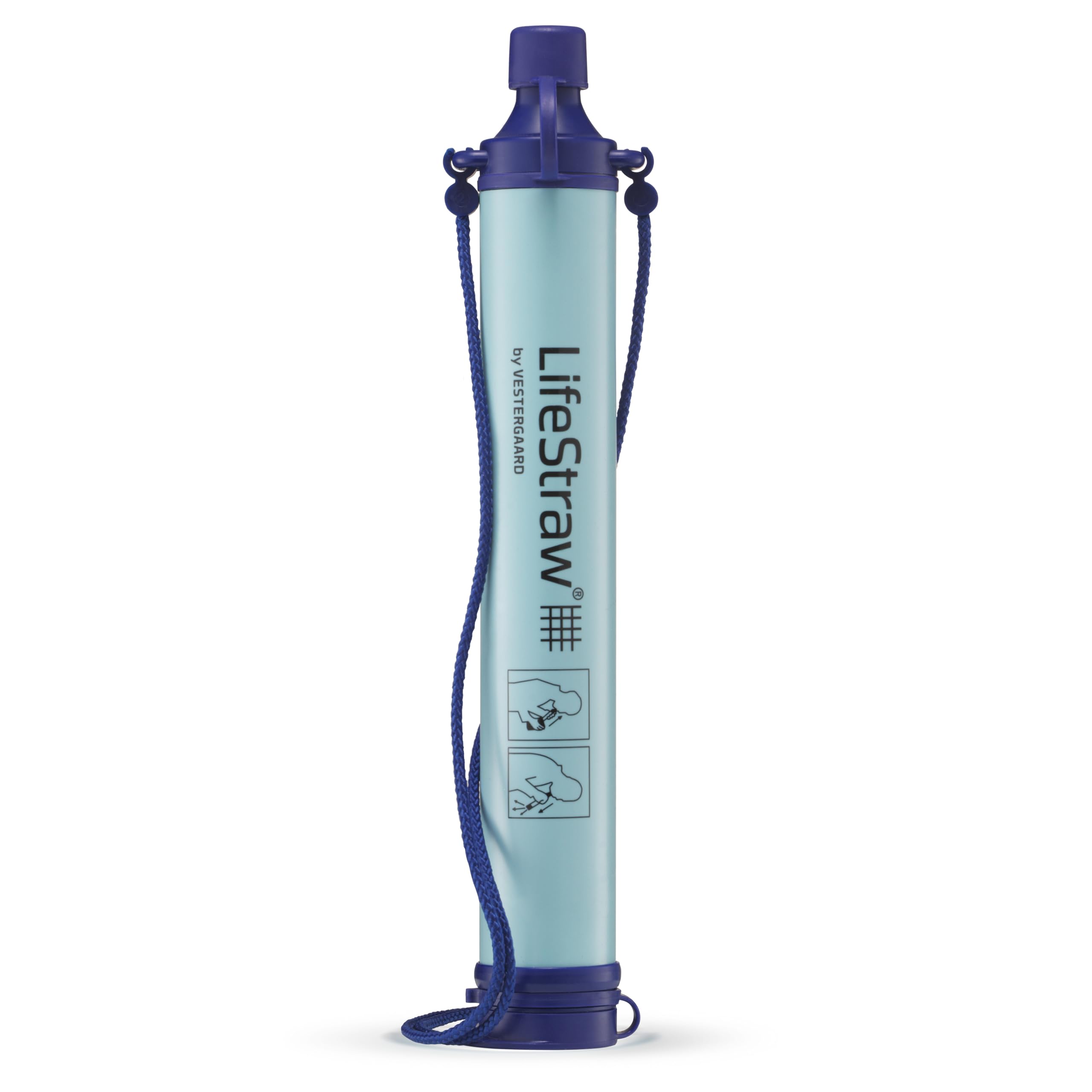
LifeStraw Personal Filter
Key Features
- Weight & Packability: 2.1 oz, 12×1.4 in
- Durability & Build: Proven, 124k reviews
- Ease of Use & Setup: Suck-to-drink, backflush needed
- Water Resistance or Filtration: 99.999999% bacteria removal
- Versatility: Solo, emergency kits
- Price: Budget
The LifeStraw Personal Water Filter removes 99.999999% of bacteria, 99.999% of parasites, and 99.999% of microplastics from surface water, all within a 2.1-ounce, straw-shaped package that fits in a hip belt pocket. It filters up to 1,000 gallons with no moving parts or batteries — straightforward design that has been used by hikers, aid workers, and survivalists for over a decade.
This filter is built for solo trips where weight and simplicity matter most: day hikes, ultralight backpacking, emergency kits, and bug-out bags. The tradeoff is suction effort — drinking requires more lung power than a squeeze filter or gravity system. In silty water, the hollow-fiber membrane can clog and needs occasional backflushing. For group trips or high-flow needs, look at bottle-based alternatives. But for one person moving fast, this remains the most field-tested option at the price.
Pros
- Stops bacteria, parasites, and microplastics to a high log reduction — no chemicals or electricity needed.
- Weighs 2.1 ounces and tucks into any pocket — ideal for minimalists and day-hikers.
- Long-standing staple for emergency kits and survival packs with decades of field use.
Cons
- Does not remove viruses — chemical treatment or UV is required for that.
- Suction resistance is noticeable, and the filter may clog with sediment, requiring backflushing.
For solo hikers and emergency kits, this filter delivers what matters most: light weight, long lifespan, and proven bacteria/parasite removal at a price that makes it an easy addition to any pack.
Best for Day Hikers
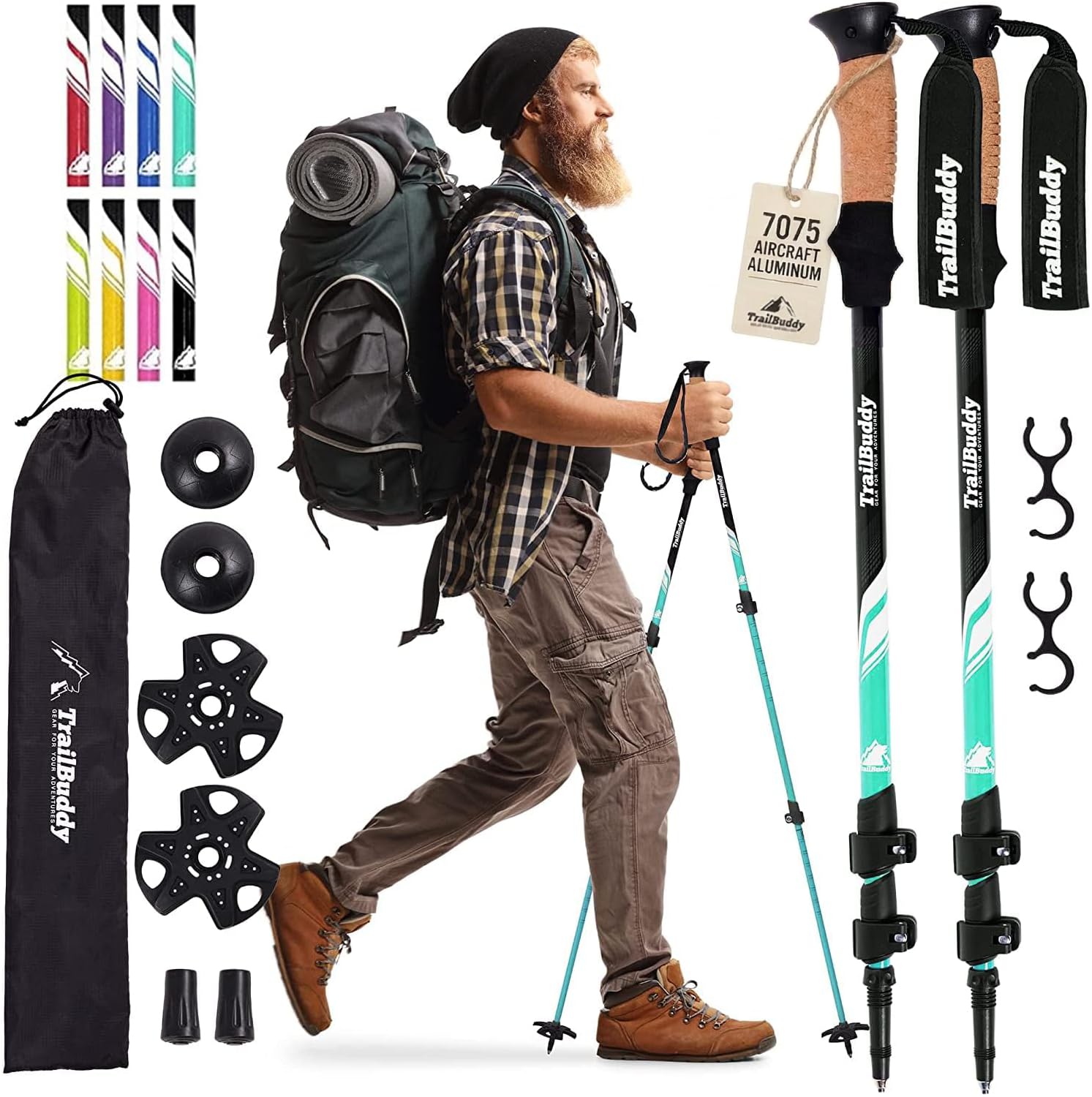
TrailBuddy Trekking Poles
Key Features
- Weight & Packability: 9.7 oz per pole, collapsible
- Durability & Build: 7075 aluminum, lever locks
- Ease of Use & Setup: One-hand adjustment, included tips
- Versatility: Day hikes, travel, seniors
- Price: Mid-Range
The TrailBuddy poles are built with 7075 aluminum and cork grips, keeping weight low while providing a secure, moisture-wicking hold. One-hand lever locks allow quick height adjustments on the trail. This mid-range option fits day hikers, weekend warriors, seniors, and travelers who need collapsible sticks. It handles steady use on moderate trails without the bulk of heavier models, though it is not intended for extreme mountaineering where lock integrity is critical.
Pros
- Lightweight yet strong 7075 aluminum construction
- Easy height adjustment with one-hand lever locks
- Outstanding value with included accessories
Cons
- Lever locks may slip under heavy load; rubber tips can detach over time
For day hikers and weekend warriors, the TrailBuddy poles deliver solid performance without the premium cost – a smart choice for those who value adjustability and low weight over extreme load tolerance.
Best for Couples and Duo
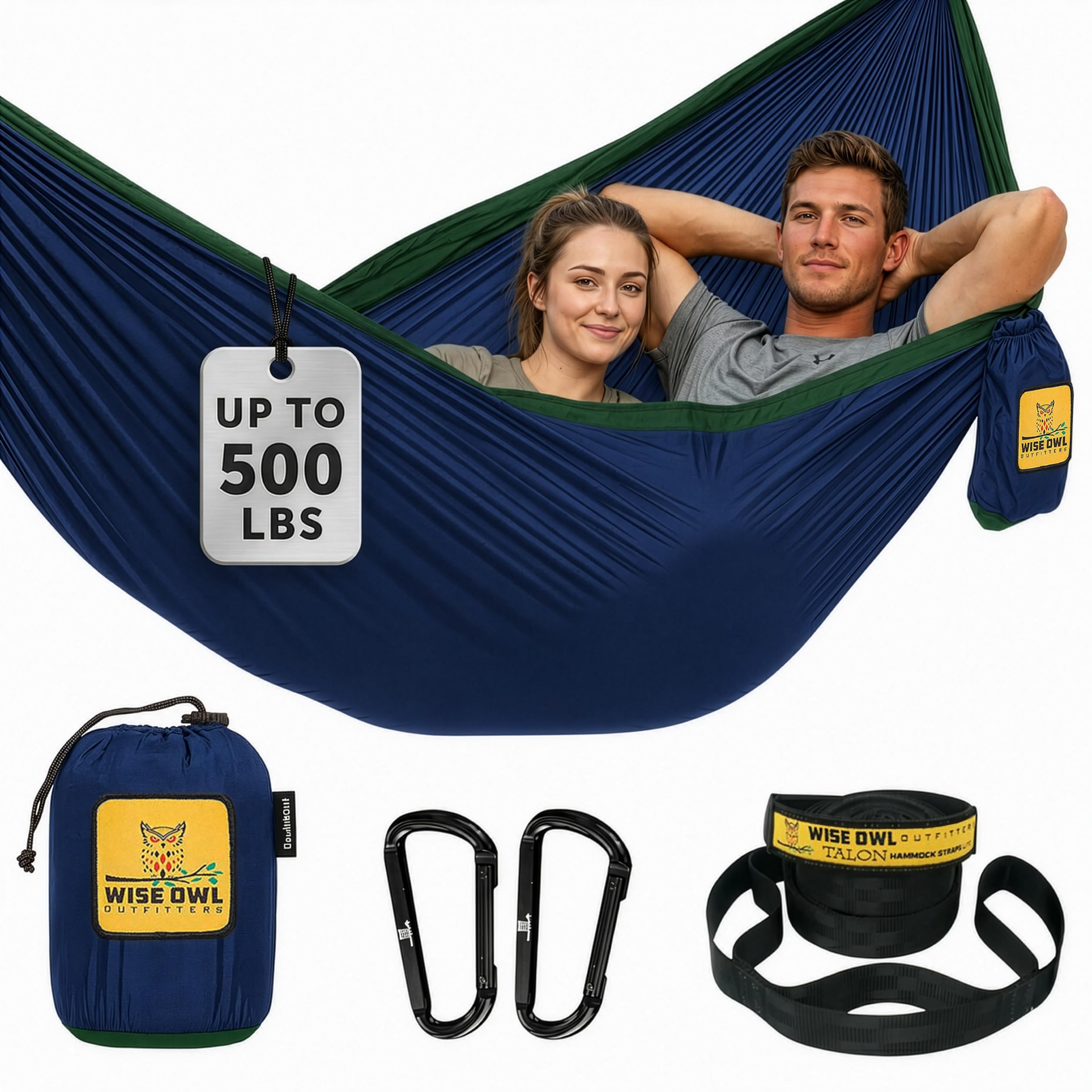
Wise Owl Hammock
Key Features
- Weight & Packability: 24 oz, 10×6.5 ft
- Durability & Build: 210T nylon, 500 lb cap
- Ease of Use & Setup: Straps included, quick setup
- Versatility: Couples, backyard, backpacking
- Price: Mid-Range
With a 10-foot length and 500-pound rating, this hammock provides generous space for two people or one sprawled-out sleeper. Setup takes minutes using the included tree straps, and the 210T parachute nylon is comfortable against skin. At 24 ounces, it is not ultralight but packs easily for car camping or short backpacking trips where weight is not critical. Some units have shown fabric tearing after limited use – regular inspection before each hang is a sensible precaution.
Pros
- Spacious 10-foot design with 500-pound capacity fits two adults or a solo lounger with room to spare.
- Tool-free setup with included tree straps gets you hanging in minutes.
- Solid build quality supports the weight rating and holds up to regular use.
Cons
- Fabric tearing has been noted in some units after limited use – inspect before each outing for safety.
For couples or solo campers who value space and comfort over minimal weight, this hammock offers strong value – just stay vigilant with pre-use checks.
Best for Day Hikers
Protect Life First Aid Kit
Key Features
- Weight & Packability: 7.5×5.2×1.5 in, hard case
- Durability & Build: Waterproof case
- Ease of Use & Setup: Grab-and-go, tight packing
- Versatility: Car, day hike, family
- Price: Budget
This 100-piece kit includes a tourniquet, emergency blanket, and first aid guide at a budget-friendly price. The waterproof hard case is compact enough for a glove compartment or daypack. The tight packing means slower access to specific items, and some supplies like adhesive bandages are basic — a tradeoff acceptable for car emergencies and day hikes where quick access is less critical than having a stocked kit available.
Pros
- Comprehensive selection for minor emergencies.
- Compact and portable design fits easily in car or daypack.
- Good build quality and value for the price.
Cons
- Tight packing makes it hard to access items quickly; some supplies are basic.
A cost-effective starter kit for car and daypack use, best for casual hikers and families who want a stocked backup without the bulk.
Best for Backpackers
Rainleaf Microfiber Towel
Key Features
- Weight & Packability: Ultra-light, multiple sizes
- Durability & Build: 85% polyester, 15% polyamide
- Ease of Use & Setup: Pat dry, wring out
- Versatility: Hiking, gym, beach, travel
- Price: Budget
The Rainleaf Microfiber Towel dries five times faster than cotton and absorbs five times its weight, making it a natural fit for backpackers trimming ounces from their pack. Sizing runs smaller than expected, so patting — not rubbing — delivers best absorption. Best for travelers and gym goers who need a compact, quick-drying alternative to cotton, not a plush bath towel.
Pros
- Dries five times faster than cotton, reducing pack dampness.
- Absorbs five times its weight despite compact size.
- Lightweight and packs down small for backpacking.
Cons
- Sizing can run smaller than expected; patting works best for absorption.
For backpackers and travelers who value weight savings over towel thickness, this is a practical choice at a budget-friendly price.
Best for Day Hikers
PTEROMY Rain Poncho
Key Features
- Weight & Packability: 10 oz, packs small
- Durability & Build: Waterproof fabric, side snaps
- Ease of Use & Setup: Pull over, hood, pocket
- Water Resistance or Filtration: Light to moderate rain
- Versatility: Day hikes, festivals, emergencies
- Price: Mid-Range
The PTEROMY Rain Poncho weighs just 10 ounces and packs into its own stuff sack, making it easy to carry for unexpected showers. It fits over a backpack and includes a front pocket and side snaps. However, sizing can be inconsistent, the hood may be floppy in wind, and heavy rain can eventually soak through the fabric. This poncho suits day hikers and festival-goers who want a lightweight emergency layer to tuck into a backpack, but it is not a replacement for a dedicated rain jacket in sustained downpours.
Pros
- Lightweight at 10 ounces and packs into its own stuff sack
- Roomy fit accommodates a daypack and extra layers
- Front pocket provides quick access to small items
Cons
A useful backup for those who prioritize packability over heavy-weather protection.
Best for Women Hikers
baleaf Hiking Pants
Key Features
- Weight & Packability: Lightweight, quick-dry
- Durability & Build: Nylon blend, elastic waist
- Ease of Use & Setup: Zip pockets, stretch fit
- Water Resistance or Filtration: Water-resistant, not waterproof
- Versatility: Hiking, travel, everyday
- Price: Mid-Range
The baleaf Women’s Hiking Pants combine an elastic waist and multiple zippered pockets with a quick-dry nylon blend that keeps you comfortable on warm trails. The material sheds light moisture but won’t replace rain pants in a downpour, and sizing can vary between batches – checking the size guide is wise before ordering. These pants suit women who prioritize pocket security and all-day comfort over waterproofing.
Pros
- Elastic waist and soft fabric make them comfortable for active use
- Zippered pockets keep phone and keys secure on the trail
- Lightweight and quick-drying for warm-weather hikes
Cons
- For wet conditions, water resistance is light – not a substitute for rain pants
- Sizing can be inconsistent between color and size options
A cost-effective option for women who want comfortable, pocket-loaded pants for fair-weather hiking and travel, provided you check the sizing.
Best for Budget Beginners
Cascade MT Trekking Poles

Key Features
- Weight & Packability: 10 oz per pole, 26-54 in
- Durability & Build: 6061 aluminum, quick lock
- Ease of Use & Setup: Easy adjust, cork grip
- Versatility: Light walking, flat terrain
- Price: Budget
These poles offer an entry-level price point with cork grips and an extended EVA down grip for light walking. The quick lock mechanism can slip under load, and the 6061 aluminum may bend with heavier use, making them a practical choice for casual day hikes rather than demanding backpacking trips.
Pros
- Affordable price for a set with cork grips
- Lightweight 10 oz per pole, easy to adjust
Cons
- Locking mechanism can slip under load; poles may bend with heavy use.
Best for budget-conscious hikers on flat, easy trails who want cork grips without the higher price.
Best for Ultra-Compact Trips
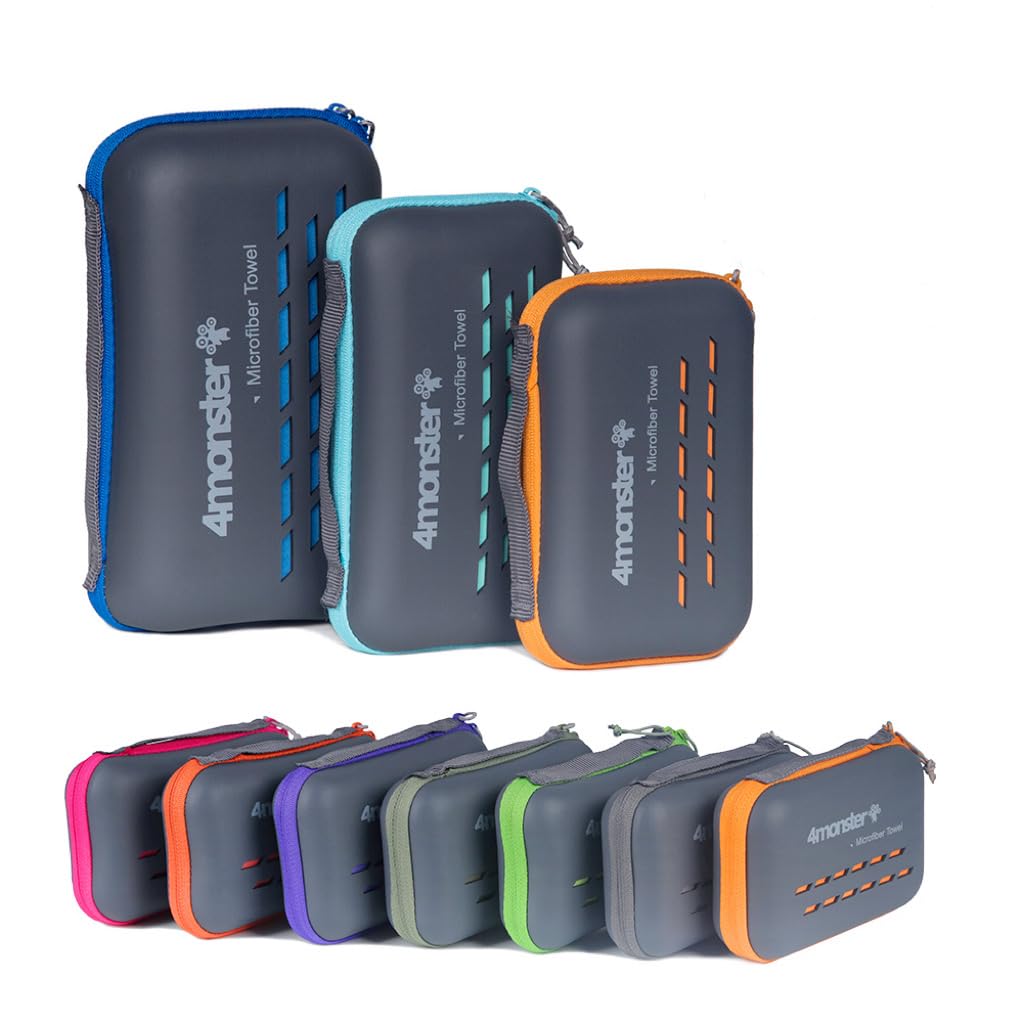
4Monster Travel Towel
Key Features
- Weight & Packability: Ultra-compact, case included
- Durability & Build: 100% microfiber
- Ease of Use & Setup: Quick dry, carabiner
- Versatility: Gym, swim, backpacking
- Price: Budget
This compact towel dries quickly and packs in a hard case with carabiner, ideal for gym bags or daypacks. The smallest size is too small for full-body drying, and the case is not waterproof – it works best as a backup or for wipe-downs, not as a primary camping towel.
Pros
- Dries quickly and absorbs well
- Ultra-portable with convenient EVA case and carabiner
Cons
- Smallest size may be too small for full-body drying after a shower or swim; case cannot keep a wet towel sealed.
Best for gym-goers or travelers who need a compact backup towel for wiping down, not for full-body drying after a hike.
Best for Emergency Kits
QIO CHUANG Thermal Blankets

Key Features
- Weight & Packability: 4-pack, 84×55 in each
- Durability & Build: Aluminized mylar, tears easily
- Ease of Use & Setup: Unfold and wrap
- Water Resistance or Filtration: Retains 90% body heat
- Versatility: Emergency kits, car survival
- Price: Budget
Offering up to 90% heat retention in a compact 4-pack, these mylar blankets are a sensible addition to any emergency kit. The material tears easily, so treat them as single-use items. They cost a bit more per blanket than the Mart Cobra pack, but the larger review base provides more confidence in consistent performance.
Pros
- Retains up to 90% body heat to prevent hypothermia in emergencies.
- Individually wrapped and small enough to fit in a pocket or bag.
Cons
- Mylar foil can tear during use, so expect single-use performance.
For stocking emergency kits and car survival bags where single-use is acceptable, this 4-pack offers dependable heat retention at a budget price.
Best for Budget Survival
Mart Cobra Mylar Blankets

Key Features
- Weight & Packability: 4-pack, 82×52 in each
- Durability & Build: Aluminized mylar, single-use
- Ease of Use & Setup: Unfold and wrap
- Water Resistance or Filtration: Retains 90% body heat
- Versatility: Emergency kits, prepper supplies
- Price: Budget
These mylar blankets offer the same heat retention and compact storage as the QIO CHUANG pack at a slightly lower price — a cost-effective addition to emergency kits. The thin material tears easily with rough handling, so treat them as single-use emergency layers rather than reusable camping gear.
Pros
- Good heat retention for emergencies
- Compact and easy to store
Cons
- Mylar tears easily; not truly reusable despite claims.
Best for building emergency kits or car survival bags where light weight and low cost matter more than durability.
Best for Faster Hydration
LifeStraw Peak Filter

Key Features
- Weight & Packability: 2.3 oz, bottle-compatible
- Durability & Build: Improved flow, 4000L capacity
- Ease of Use & Setup: Screws onto bottles
- Water Resistance or Filtration: Same as original
- Versatility: Bottle use, gravity systems
- Price: Mid-Range
The Peak Series threads directly onto standard water bottles and delivers a 2.5 L/min flow rate – noticeably easier than the original LifeStraw’s suction. At a mid-range price, it costs more than the original for only a marginal improvement in flow, making it a better fit for those who value bottle compatibility and reduced effort over saving money.
Pros
- Improved flow rate reduces suction effort
- Versatile attachment to bottles and bags
Cons
- Costs more than the original LifeStraw while offering only modest flow rate improvement
A good fit for backpackers who prefer bottle-based hydration and need faster flow; the original remains the better deal for most.
Best for Day Hikers Bear Country
Coghlan’s Bear Bell

Key Features
- Weight & Packability: 0.8 oz, magnetic silencer
- Durability & Build: Metal bell, Velcro strap
- Ease of Use & Setup: Clip on pack or dog collar
- Versatility: Wildlife alert, dog tracking
- Price: Budget
The Coghlan’s Magnetic Bear Bell weighs just 0.8 oz and includes a magnetic silencer for quiet travel. It attaches via Velcro strap and offers an affordable way to alert wildlife on the trail. However, the bell may not be loud enough to reach distant animals, and the Velcro can loosen over time. Use this as a backup to bear spray and awareness, not as a sole deterrent.
Pros
- Simple, effective way to alert wildlife
- Inexpensive and easy to attach
Cons
- Bell may not be loud enough to alert distant wildlife; Velcro attachment can fail.
Works as a budget-friendly noise maker for day hikers who already carry bear spray and want a lightweight extra layer of alert.
Best for Gear Organization
Oupeng Carabiner 6-pack

Key Features
- Weight & Packability: 6-pack, D-ring shape
- Durability & Build: Iron, 800 lb static load
- Ease of Use & Setup: Clip and go
- Versatility: Keychain, light camping tasks
- Price: Budget
This 6-pack offers solid value for organizing keys, hanging lightweight items, or as giveaways. The D-ring shape and keyrings included make it convenient for daily carry. But the carabiners are smaller than expected, limiting them to light tasks only – they should not be used for climbing or any load-bearing application.
Pros
- Sturdy feel for organizing keys and light gear
- Cost-effective multipack with six keyrings included
Cons
- Smaller than expected; not suitable for climbing or heavy loads
Works well for keychain organization, light camping tasks, or bulk giveaways, but skip it for any load-bearing or safety-critical use.
How to Choose
The best hiking gear balances weight, durability, and ease of use — but every category has hidden trade-offs that only become apparent after a few miles.
Weight & Packability
Every ounce adds up over a long day, but ultralight often comes at the cost of durability. A 2-ounce water filter saves space but may clog faster in silty water; a 10-ounce poncho packs small but might tear in wind. Decide whether you’re willing to sacrifice sturdiness for a lighter pack, especially on multi-day trips where repairs are impossible.
For day hikes, weight matters less than convenience. A heavier hammock with built-in straps might be worth the extra ounces if you set up multiple times. The key is matching the weight to your typical trip length and terrain.
Durability & Build Quality
Durability is the most overstated spec in hiking gear. A 500-pound capacity hammock can still rip if the stitching fails; a ‘waterproof’ poncho may leak at the seams after 30 minutes of rain. The real measure is how components behave under repeated stress: aluminum pole locks can slip, mylar blankets tear after one use, and Velcro attachments weaken over time.
Look for reinforced stitching, metal versus plastic hardware, and user reports of long-term wear. A budget item might last a season of light use, while a mid-range piece often survives years of abuse.
Ease of Use & Setup
Gear that’s complicated to use on the trail gets left behind. A water filter that requires frequent backflushing will frustrate when you’re thirsty; trekking poles with finicky locks slow down your pace. Quick-setup features like pre-attached straps or one-hand adjustments save real time when you’re tired or in bad weather.
But easy setup sometimes trades off security. Lever locks adjust fast but can slip under heavy load; twist locks are more reliable but slower. Consider your typical use: a quick nap hammock doesn’t need the same lock as poles supporting a steep descent.
Water Resistance & Filtration
Water resistance is rarely absolute. A ‘water-resistant’ fabric may bead light rain but soak through in a downpour. Sealed seams and a DWR coating matter more than the label. For filtration, the micron rating tells you what’s removed, but real-world performance depends on water clarity and flow rate. A filter that works great in clear streams will clog fast in muddy puddles.
Emergency mylar blankets reflect body heat but create condensation against your skin; they are not breathable. For heavy rain, a poncho that fits over your pack is more practical than a tight jacket, but expect wind to lift the hood.
Versatility
Versatile gear can be used across multiple trips or activities. A microfiber towel works for hiking, swimming, and gym; a first aid kit belongs in both car and backpack. However, versatility usually means compromises: a 3-in-1 poncho isn’t as breathable as a dedicated rain jacket, and an all-purpose hammock lacks the comfort of a sleeping-specific model.
Think about your gear rotation: items you can use year-round or for different hobbies justify a higher spend. Single-purpose items like an emergency blanket should be cheap and packable.
FAQ
Why does my LifeStraw get clogged so easily?
LifeStraw filters clog when used in silty or muddy water. The hollow-fiber membrane traps particulates, so backflushing by blowing air through the mouthpiece clears some sediment. For very cloudy water, pre-filter through a bandana or let sediment settle first. If clogging is frequent, consider the Peak series with a faster flow rate or a pump-style filter.
Are budget camping hammocks safe for overnight sleeping?
Budget hammocks like the Kootek have multiple reported cases of fabric ripping during normal use, posing a fall risk. They are best for short-term lounging on level ground close to the ground. For overnight sleep, invest in a hammock with reinforced stitching and a higher denier fabric, like the Wise Owl Outfitters model, and always inspect for wear before use.
How do I keep my trekking pole locks from slipping?
Lever locks slip most often when they are not fully engaged or when mud and dirt accumulate. Clean the locking mechanism regularly with a dry brush and tighten the adjustment screw if present. Avoid leaning heavily on poles on steep descents; if slipping persists, upgrade to twist-lock poles which are more resistant to load-induced failure.
What size microfiber towel do I need for backpacking?
For backpacking, a towel around 24×48 inches provides enough coverage to dry off after a stream bath or swim without adding bulk. The Rainleaf large (40×72 inches) is better for full-body drying but takes up more pack space. Choose the X-Large if you prioritize comfort over weight; the small sizes are only suitable for face or hands.