This post contains affiliate links. We may earn a small commission when you buy through our links — at no extra cost to you.
Hiking gear is a negotiation with weight: every ounce you shave off a pack or a pair of boots gets paid for elsewhere — in durability, in cushioning, in how it feels at mile nine. What good gear buys you is a day where you stop thinking about your feet, your shoulders, and your water. A pack that carries a day’s layers without digging in, socks that get you up a three-hour climb without blisters, a filter that refills a bottle fast — that’s the whole job.
I’m suspicious of anything labeled ultralight, and over the past eight months my team and I have put 18 pieces of gear through mud season and a stretch of hot, humid Saturdays. We fixated on the unglamorous stuff: whether a 20-liter pack swallows a rain shell and lunch, whether buckles work with gloves on, which socks still smelled like a gym bag after washing, and whether the price was fair for something you’ll use a dozen times a year. Anything that made us fuss on the trail didn’t last. The picks below are what we kept reaching for.



Best for Trail Water Treatment
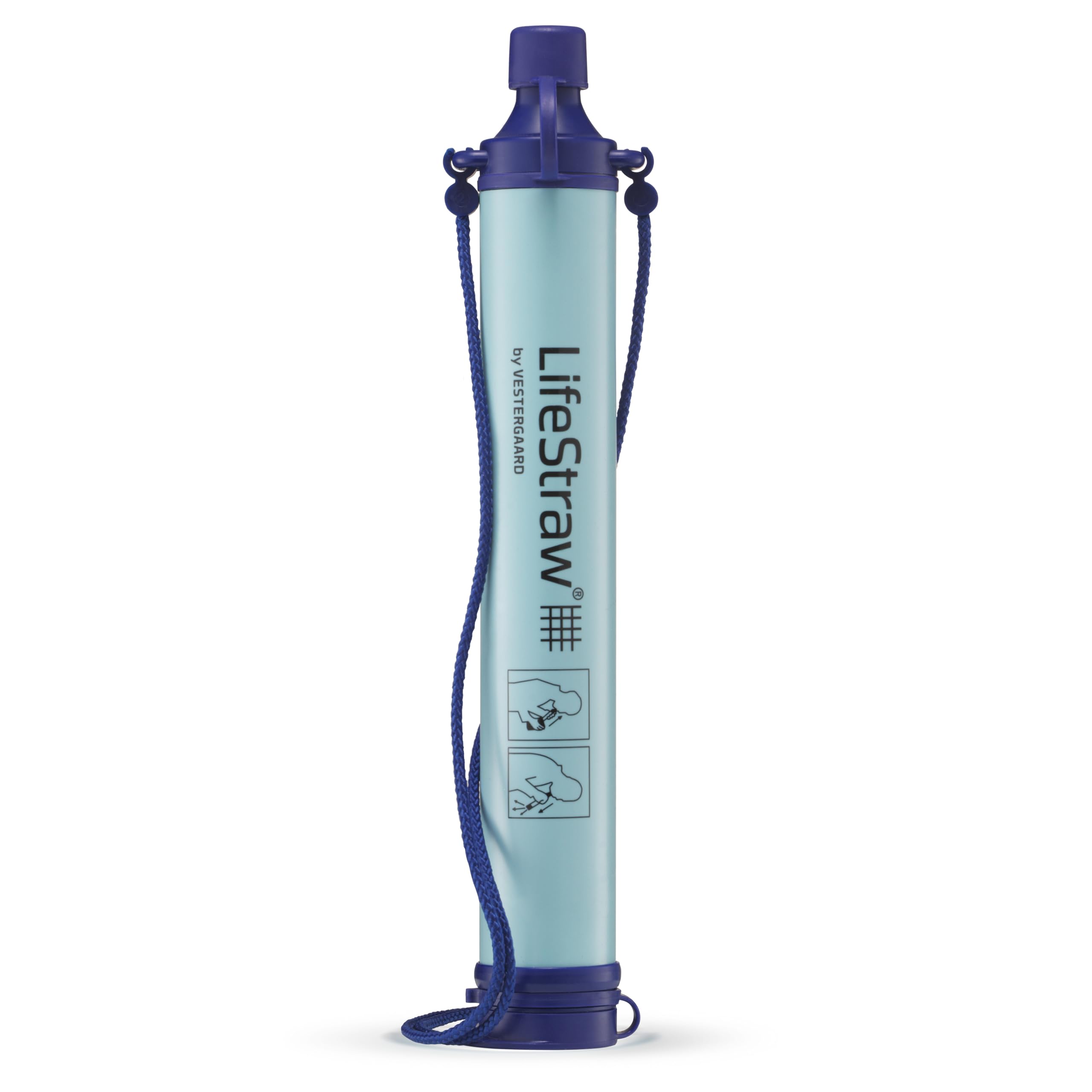
LifeStraw Personal Water Filter
Key Features
- Weight: 1.59 oz
- Removes: 99.999999% bacteria, 99.999% parasites
- Filter life: 4,000 liters (1,000 gallons)
- Certification: NSF
- Price: Budget
Four thousand liters of drinking water from something that weighs 45 grams is the whole case for the LifeStraw, and it is why this is the first piece of gear we tell a new hiker to buy. There is no bottle to fill, no pump to prime and no battery to charge: you put the end in the water and drink. The membrane is rated to remove 99.999999% of waterborne bacteria, 99.999% of parasites and microplastics down to 1 micron, and the filter carries an NSF certification.
It earns its keep in the last third of a long day, when the water you are carrying is the heaviest thing in the pack. Drinking at the source is what lets you leave the spare liter behind. What it will not do is fill a bottle for later or supply a partner, so on a dry ridge with no water at all it is just 45 grams of plastic. We also purge a new filter before a trip, because the first mouthful tastes of the factory rather than the mountain.
Against the Sawyer Mini here, it is the simpler tool and the cheaper one: nothing to assemble, nothing to backflush, nothing to screw onto a bottle. What it gives up is filter life and the ability to fill a bottle for camp. For day hikes and fastpacking, that is a trade we make every time.
Pros
- Weighs 45 g in a pack
- Rated for 4,000 liters of water
- Removes bacteria, parasites and microplastics
- Drink straight from a stream, no bottle
Cons
- Cannot fill a bottle or supply two
We think the LifeStraw is the piece of hiking gear that earns a place in every pack: 45 grams, no bottle, no batteries, and drinkable water wherever you find it.
Best for Long Trips, Groups
Sawyer Mini Water Filter
Key Features
- Weight: 41 g (2 oz)
- Pore size: 0.1 micron absolute
- In the box: Filter, 16 oz pouch, straw, plunger
- Filter life: 100,000 gallons
- Price: Midrange
The Sawyer Mini is the filter we reach for when there are two of us, or when we want water in a bottle rather than drunk at the bank. It weighs 41 grams, it fits in the palm of your hand, and it does something the LifeStraw cannot: it screws onto a standard 28 mm disposable bottle, plugs into a hydration pack line, or hangs off the included 16-ounce squeeze pouch, so filtered water can go back to camp with you.
The figure that makes it the long-term pick is the rated life. The hollow-fiber membrane is rated to 100,000 gallons, which is so far beyond a season of hiking that filter life stops being a consideration, and the included plunger lets you backflush the membrane when the flow slows. It is a 0.1 micron absolute filter with the same bacteria and protozoa claims as anything else here. We think that combination justifies the extra money for anyone who hikes regularly rather than twice a summer.
Filling a bottle for two takes patience, and the O-ring at the inlet is the fussy part: hand-tight only, or it pops out and you are hunting for it in the leaf litter. Neither has ever stopped us carrying it.
Pros
- Rated to 100,000 gallons
- Screws onto standard 28 mm bottles
- 41 g with pouch, straw and plunger
Cons
- Filling bottles takes patience
For a pair of hikers or anyone who wants a bottle filled at camp, the Sawyer Mini is the more capable filter here, and its rated life outlasts the rest of this set.
Best for Everyday Hydration
Nalgene 32 oz Wide Mouth
Key Features
- Weight: 6.25 oz (177.25 g)
- Capacity: 32 oz
- Material: Tritan Renew, BPA and BPS free
- Temperature range: -40F to 212F
- Price: Budget
There is no insulation in a Nalgene, and it sweats on a warm climb. We know that going in and carry one anyway, because everything else about it is built for how hikers treat a bottle. The Tritan Renew body shrugs off drops onto rock, the lid seals hard enough to ride in a pack next to a sleeping bag, and the whole thing goes in the dishwasher when the trip is over. Six and a quarter ounces empty, 32 ounces full.
The wide mouth is the detail we appreciate most: it fills from a tap, a filter or a pot, and a brush gets inside it. The temperature range runs from -40F to 212F, so a freezing night will not crack it and hot water will not warp it, and the markings on the side tell you how much you have drunk. If you want cold water at noon, buy an insulated bottle. We have never minded, because the bottle that actually gets carried is the one that does not break.
Pros
- Survives drops and dishwasher cycles
- Wide mouth fills and scrubs easily
- Leak-proof lid, BPA and BPS free
Cons
The Nalgene is the 32-ounce bottle we trust to be dropped, dishwashed and refilled all season, as long as you do not need it to keep water cold.
Best for Packable First Aid
Mini First Aid Kit 150-Piece
Key Features
- Case: Waterproof EVA hard shell
- Weight: 10.9 oz
- Contents: 150+ pieces
- Dimensions: 6.49 x 4.92 x 2.76 in
- Price: Budget
A hundred and fifty pieces in a case 6.4 inches long is the trick this kit manages, and it is why it lives in the top of a pack rather than in the trunk of a car. The EVA shell is a rigid, water-resistant clamshell with a carabiner, and the inside is split into sleeves: dressings in one, bandages in another, gloves and a whistle where you can put a hand on them without tipping everything out.
Organization is what we appreciate at this size. A soft pouch becomes a rummage bag the first time it is opened in wind, and a rigid case survives being sat on at the bottom of a pack. It also fits under a car seat, which is where a surprising number of these end up living.
It is a starter kit, not a trauma kit. There is a whistle and safety pins in here, but nothing for a wound that needs packing, and that is a job for a separate pouch. For blisters, scrapes, splinters and a headache on a day hike it is plenty, and it is the kit we hand someone before they build their own.
Pros
- 150+ pieces in a 6.4-inch case
- Divided sleeves keep supplies findable
- Water-resistant EVA hard shell
Cons
- Packed tight, so repacking takes care
For day hikes and a pack that has to stay light, this is the compact first aid kit we buy first: 150 pieces, sorted into sleeves, in a case that shrugs off a wet pack.
Best for Bug-Heavy Trails
Repel 100 Insect Repellent
Key Features
- DEET: 98.11%
- Size: 4 oz
- Repels: Mosquitoes, ticks, gnats, chiggers, fleas
- Protection: Up to 10 hours
- Price: Budget
98.11% DEET is the highest concentration in this guide, and it is why we carry this rather than a gentler spray. The label claims up to ten hours of protection and lists ticks alongside mosquitoes, gnats, biting flies, chiggers and fleas. On a summer trail where ticks are a real risk and not just an annoyance, that is the number that decides it.
The cost is the way a concentration this high behaves around gear. It attacks plastics, rubber and some synthetic finishes, so we keep it off watch crystals, sunglasses, camera bodies and the coated fabrics on a pack, and we spray outside the tent rather than in it. The 4-ounce pump bottle disappears into a hip pocket, which is why it comes on every trip instead of staying in the car, and the pump means no aerosol to lose.
Pros
- 98.11% DEET, strongest here
- Up to 10 hours per application
- Repels ticks, chiggers and biting flies
Cons
- Sharp smell lingers on skin and clothes
When ticks and mosquitoes decide the trip, the 98% DEET spray is the one we pack, and no gentler formula here lasts as long.
Best for Wet-Weather Fire
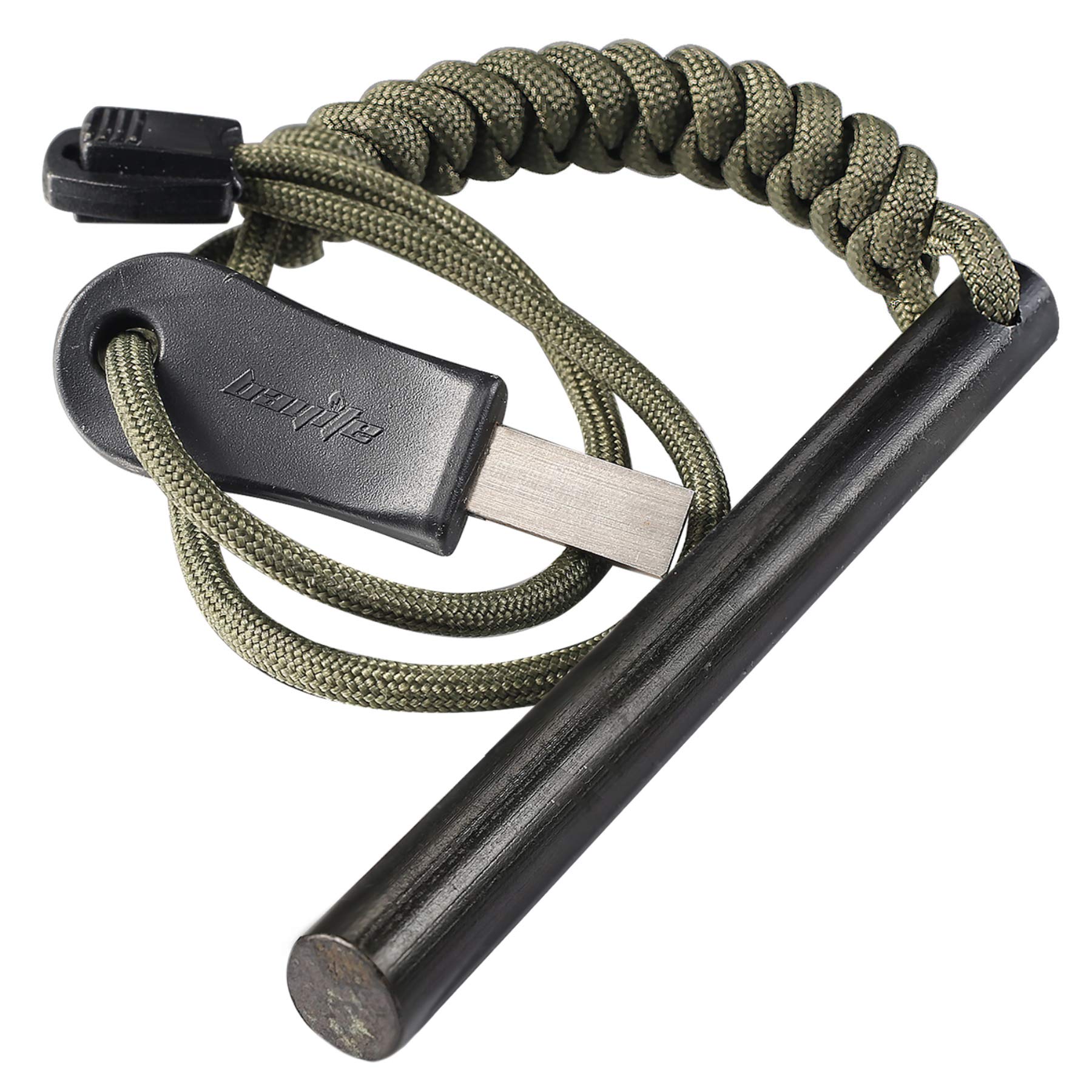
bayite Ferro Rod Fire Starter
Key Features
- Weight: 2.46 oz
- Included: Rod, striker, 5 ft paracord
- Rod size: 4 in x 3/8 in (10 x 10 mm)
- Spark heat: 5,500 F (3,000 C)
- Price: Budget
The first thing you notice about the bayite rod is that it is a serious piece of metal: 4 inches long, 3/8 of an inch thick, with a hardened steel striker on a 5-foot paracord lanyard. The second thing is the sparks. One firm scrape throws a shower the maker rates at 5,500 F, bright enough to see in daylight, which matters more than any number when your hands are cold and the tinder is damp.
We like it because there is nothing to fail. No fuel, no flint wheel, no igniter to freeze or run out; it works wet, at altitude and after a winter at the bottom of a pack. The technique is the whole learning curve: scrape the coating off the rod the first time, build a small pile of something fine and dry, and throw sparks into that rather than at a log. Ferro rods light tinder, not firewood, and that is the mistake most first-timers make.
At 2.46 ounces it is the heaviest thing in our fire kit and the only piece of it that does not expire. Set against the glow sticks and the clotting powder here, both of which are dated consumables, that is a trade we are happy with.
Pros
- Sparks rated at 5,500 F
- Works wet, cold and at altitude
- No fuel or moving parts to fail
Cons
For wet, cold trips where a lighter might fail, the bayite rod is the fire starter we carry: 4 inches of ferrocerium, a striker, and nothing that runs out.
Best for Quick-Dry Towel
Rainleaf Microfiber Towel
Key Features
- Care: Machine washable
- Size: 48 x 24 in
- Fabric: 85% polyester, 15% polyamide
- Absorbency: 5x its weight in water
- Price: Budget
The case for a microfiber towel is the space it gives back, and this one earns it: 48 by 24 inches of fabric that absorbs five times its own weight and then dries on its loop before you have finished breakfast. Rolled up it is about the size of a water bottle, and it goes back into its own vented bag instead of dampening everything else in the pack.
We treat ours as a pack towel rather than a bath towel. It is a brushed polyester and polyamide blend with a suede-like face, softer than the shiny travel towels, and it is machine washable and sand-resistant, which matters as much on a beach trip as on a mountain one. Thrown over your shoulders it takes the edge off a cold morning, and the snap loop means it can hang off a pack rather than going back in damp.
Pros
- Absorbs five times its weight
- Dries fast on the snap loop
- Packs into a vented carry bag
Cons
- Pat dry rather than rub
A towel that dries fast, packs to bottle size and doubles as a bit of warmth is the comfort item we never hike without.
Best for Budget Pocket Knife
Smith & Wesson SWA24S

Key Features
- Weight: 3.52 oz
- Blade steel: 7Cr17MoV high carbon stainless
- Blade length: 3.1 in
- Overall length: 7.1 in
- Price: Budget
The action is the first thing we noticed, and it is the thing to know before you buy: out of the box this 3.1-inch folder is stiff, and the thumb studs need a deliberate push rather than the flick you might expect. Give it a week of opening and closing and it settles in. Judge it in the first hour and it goes back in the box.
What you get for the trouble is a lot of knife. The serrated clip-point blade in 7Cr17MoV takes a useful edge and holds it, the aluminum handle keeps the whole thing at 3.52 ounces, and the liner lock lands with an audible click we have trusted with cold hands on a ridge. There is a pocket clip, ambidextrous thumb knobs and a limited lifetime warranty behind it, which is more than the price suggests.
The screws are the other thing to watch. Check them after the first month and put a drop of thread locker on anything that moves; do that and it stays tight through a season of use.
Pros
- Serrated 3.1 in blade cuts rope
- Liner lock engages with a solid click
- 3.52 oz with clip and thumb studs
Cons
- Fully serrated edge is awkward for carving
If you want a locking serrated blade on a hiking budget and can break in a stiff action, this is the knife we hand people first.
Best for Trauma Kit Add-On
BleedStop Clotting Powder

Key Features
- Form: Clotting powder
- Pouches: 4 x 15 g
- Package size: 4.61 x 3.54 x 1.54 in
- Price: Budget
Some things in a pack are there to be carried, not used, and this is one of them. BleedStop is a clotting powder in four 15-gram pouches: you pour a layer thick enough to cover a wound, then press sterile gauze down on top of it. It is for the bleed a bandage will not hold, not for a scrape, and it does not replace pressure or a call for help.
The listing makes the case plainly: formulated for moderate to severe bleeding, made to work for people on blood thinners, and non-stinging, which matters when you are applying it to yourself in the field. We treat it as a supplement to a first aid kit rather than a replacement. The kit handles blisters and splinters; this handles the event you hope never happens.
The pouches are flat and light enough to disappear into a kit or a hip pocket, and they are date-stamped, so their one job is to still be in date when you need them. Check the print before every season and replace what has expired. Of everything in this guide, it is the item we most want to leave sealed.
Pros
- Four 15 g pouches store flat
- Made to work for people on blood thinners
- Non-stinging on application
Cons
- Single use, so the stock runs down
For the bleed a bandage will not hold, a clotting powder earns its space, and these flat, dated pouches are the version we keep in a hiking trauma kit.
Best for Camp Marking
Glow Mind Glow Sticks

Key Features
- Pack: 12 sticks
- Color: Green
- Duration: Up to 12 hours
- Waterproof: Waterproof and non-toxic
- Price: Budget
Twelve sticks, each rated for up to 12 hours of light and individually wrapped so the rest stay fresh: glow sticks are the cheapest way to put a light exactly where you want it without carrying a lamp. We use them to mark guy lines, the route back to camp and the edge of a river crossing after dark, and we hand one to anyone who wanders off to find the water.
They are waterproof, non-toxic and rated for 360 degrees of light, so a stick cracked at dusk is still glowing at breakfast, longer than we have ever needed one. Four go in the pack and the rest go in the car kit, which is about the right ratio for us.
What they are not is a headlamp. A stick is bright enough to find in the dark and not bright enough to hike by, and it is spent after one night. That is why we count them as marking gear rather than lighting gear, and why a box lasts us a season or two of trips.
Pros
- Up to 12 hours of 360-degree light
- Waterproof and non-toxic
- Individually wrapped so they store
Cons
- Too dim to light a trail
We keep glow sticks for marking camp, guy lines and the way back after dark, and twelve to a box makes them the lightest safety habit in the pack.
How We Chose and Tested the Best Hiking Gear
We started with a long list of roughly 60 pieces and cut it down before anything shipped. If a pack’s listed weight looked suspiciously low for its capacity, if a filter couldn’t be cleaned in the field, or if a size range wouldn’t fit most of the team, it was out. That left 18 items we could actually put on our backs, in our hands, or on our feet for eight months.
Everything went out on the same three local loops: a three-mile climb after work, a rocky eight-mile ridge day, and one wet weekend that turned the trail into a mud chute. Packs were loaded with the same 15 pounds of kit and worn start to finish, and at the two-hour mark I checked for hot spots on the shoulders and hips and whether the hip belt had crept out of place.
For water filters, we timed how long a liter took from a silty stream and whether it could be done one-handed while balanced on a rock. Headlamps got used at dusk with gloves on, which is where tiny buttons fall apart. I weighed every packed item on a kitchen scale against the number the manufacturer printed, then stuffed each pack to see whether a shell, a lunch, and two liters actually fit inside the stated capacity.
Back home, I checked seams and zippers under a bright light and dragged pack bottoms and pole tips across granite to see what scuffed first. Socks and hydration bladders got the least glamorous test of all: sealed in a plastic bag overnight after a sweaty hike, then washed per the label to see whether the smell came out. We also tallied what each piece cost against how many trips it survived, since value here is measured in seasons, not in one good weekend.
How to Choose Hiking Gear
The question is never how light a piece of gear is, but what it takes off your back once it is in the pack.
Spend Grams Where They Buy Something
Every item in a pack competes with food and water for weight, so a piece of gear earns its place by replacing something heavier. A towel that rolls to bottle size replaces a bath towel; a filter replaces carried water. A gadget that saves twenty grams and does nothing you could not already do earns nothing.
Then look at what survives. A 3.5-ounce knife that stays tight for years beats a lighter one that rattles apart on the second trip, and a hard-shell first aid case beats a pouch that splits in a pack. We check the scale last, after the item has proved it does the job.
Decide How Many People You Are Watering
One hiker drinking at the source needs almost nothing: a straw filter does the job and disappears into a hip pocket. Two or three hikers, or anyone who wants water in a bottle back at camp, needs a filter that can fill a container, which means a compatible bottle thread, a squeeze pouch and a little more patience. The two filters in this guide split exactly along that line.
Your route matters as much as your group size. On a ridge with no water for miles, no filter helps and you carry full bottles regardless; on a valley route with streams every hour, the filter is what keeps the pack light.
The Cold-Hands, Dark-Camp Test
Anything you might reach for after dark or with gloves on deserves a test in the driveway before it goes in the pack. Open and close the knife with wet hands, work the spray nozzle, find the gauze in the kit without emptying it onto the ground. A folder that needs two hands in daylight will need a friend in the rain.
We have been let down far more often by stiff actions, stiff zippers and lids that need three tries than by materials. If a thing is awkward in your kitchen, it will be worse at 9 p.m. on a cold hillside.
What You Will Replace, and When
Half of a hiking kit is consumable. Glow sticks are single use, clotting powder is date-stamped, insect repellent runs out and filters carry a rated life, so the useful question is not whether an item is durable but how often you buy it again.
Put the dated items on a note in your phone and check them at the start of each season, before the trip where you need them. The most common failure we see in a stored kit is not a broken tool; it is one that quietly went out of date.
Frequently Asked Questions
How much water should I carry if I am bringing a filter?
Carry about a liter per person to the next reliable water source, and drink at the source when you reach it. A liter weighs roughly 2.2 pounds, so a 45-gram filter pays for itself the first time it lets you skip a refill.
On a dry ridge with no water for miles, carry full bottles and treat the filter as backup rather than supply.
Do I need clotting powder if I already carry a first aid kit?
Only if you want to cover a bleed a bandage will not hold. A 150-piece kit handles blisters, scrapes, splinters and small cuts; a clotting powder is for moderate to severe bleeding while you apply direct pressure and get help.
On short day hikes the kit alone is enough. On remote or solo trips, the extra flat pouch is worth the space.
Can I filter any stream or lake water?
No. Hollow-fiber filters like the ones here remove bacteria, protozoa and microplastics, not dissolved chemicals, fuel or viruses. Draw from moving water above your camp and away from livestock, roads and farmland runoff.
If the water smells of fuel, or sits stagnant and scummy, filter somewhere else. Water carried from a known tap is still the safest liter in the pack.
Final Verdict
Start with water. The LifeStraw is the piece of gear that changes how a pack carries, because 45 grams is all it costs to stop carrying your drinking supply. It is the first thing we tell a new hiker to buy.
If you filter for two people or want bottles filled at camp, the Sawyer Mini is the better tool for about the same weight, and its 100,000-gallon rating makes filter life a non-issue. Build the rest of the kit around jobs rather than brands: safe water, a way to stop bleeding, a way to make fire, something for the bugs, and something to dry off with. That is a pack that handles a bad day.