This post contains affiliate links. We may earn a small commission when you buy through our links — at no extra cost to you.
Many budget hardtails skimp on crucial components like derailleurs and pedals, leading to frustration after a few rides. The reality is that a $200 bike often needs another $100 in tune-ups. But some models manage to offer aluminum frames, disc brakes, and suspension forks with a lockout feature without breaking $400. This guide focuses on those that deliver reliable trail performance for the money, while flagging the compromises you should expect at each price tier.
One often overlooked spec is the suspension fork’s lockout – it makes climbing steep hills far more efficient by preventing the fork from bobbing. Many sub-$300 bikes omit this, while the better picks here include it. We’ve separated the true hardtails from misleading dual-suspension listings, and identified where durability is a known weak point. Knowing which features matter most – and which flaws are tolerable – is the key to buying a hardtail you’ll actually enjoy riding.


Best for Value Seekers
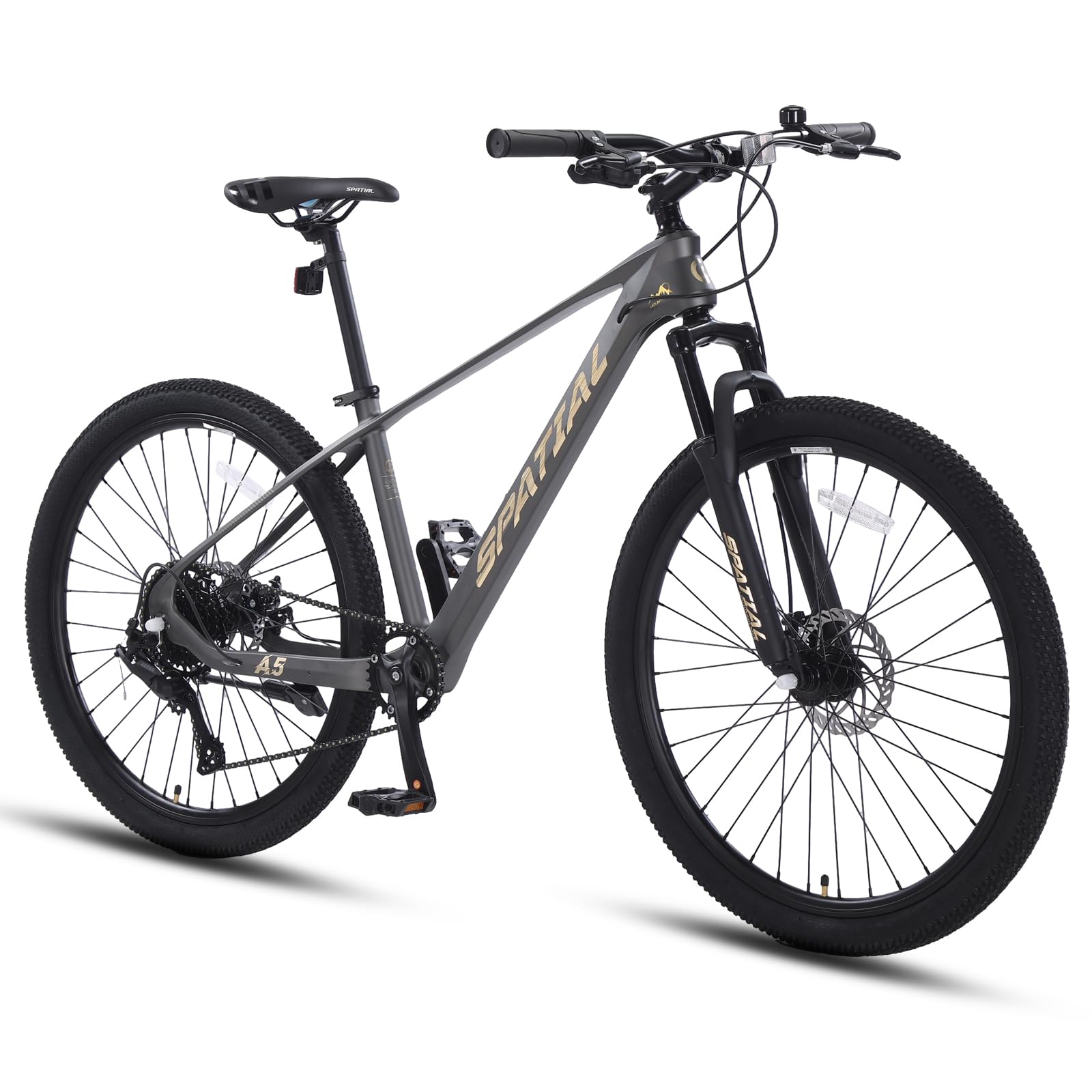
SPATIAL AIVA 27.5"
Key Features
- Frame Material: Aluminum
- Brake Type: Mechanical Disc
- Suspension: Front w/ lockout
- Drivetrain: 8-speed
- Price: $$
The SPATIAL AIVA pairs a lockout fork with Shimano 8-speed gearing and mechanical disc brakes, a combination normally seen at higher price points. The ride is smooth on moderate trails, and the lockout fork makes paved climbs noticeably more efficient than a standard suspension fork. Mechanical disc brakes deliver consistent stopping power in wet conditions, a step up from the rim brakes common at this price.
This bike is a strong match for riders who want modern trail features without stepping up to premium pricing. The aluminum frame and 27.5-inch wheels keep the weight manageable and the handling responsive on rolling terrain. Long-term durability under sustained use is still being established, so those planning aggressive year-round riding may want to weigh that against the immediate value. For weekend trail outings and mixed-surface commutes, the AIVA delivers a package that rivals bikes costing substantially more.
Pros
- Lockout fork improves climbing efficiency on paved or smooth sections.
- Shimano 8-speed drivetrain offers reliable shifting across varied terrain.
- Aluminum frame keeps the bike light and responsive on climbs and descents.
Cons
- Assembly can be challenging for those without mechanical experience, particularly derailleur and brake tuning.
For riders who want a lockout fork and solid components at a mid-range price, the SPATIAL AIVA delivers where many competitors cut corners.
Best for Entry-Level Trail Riders
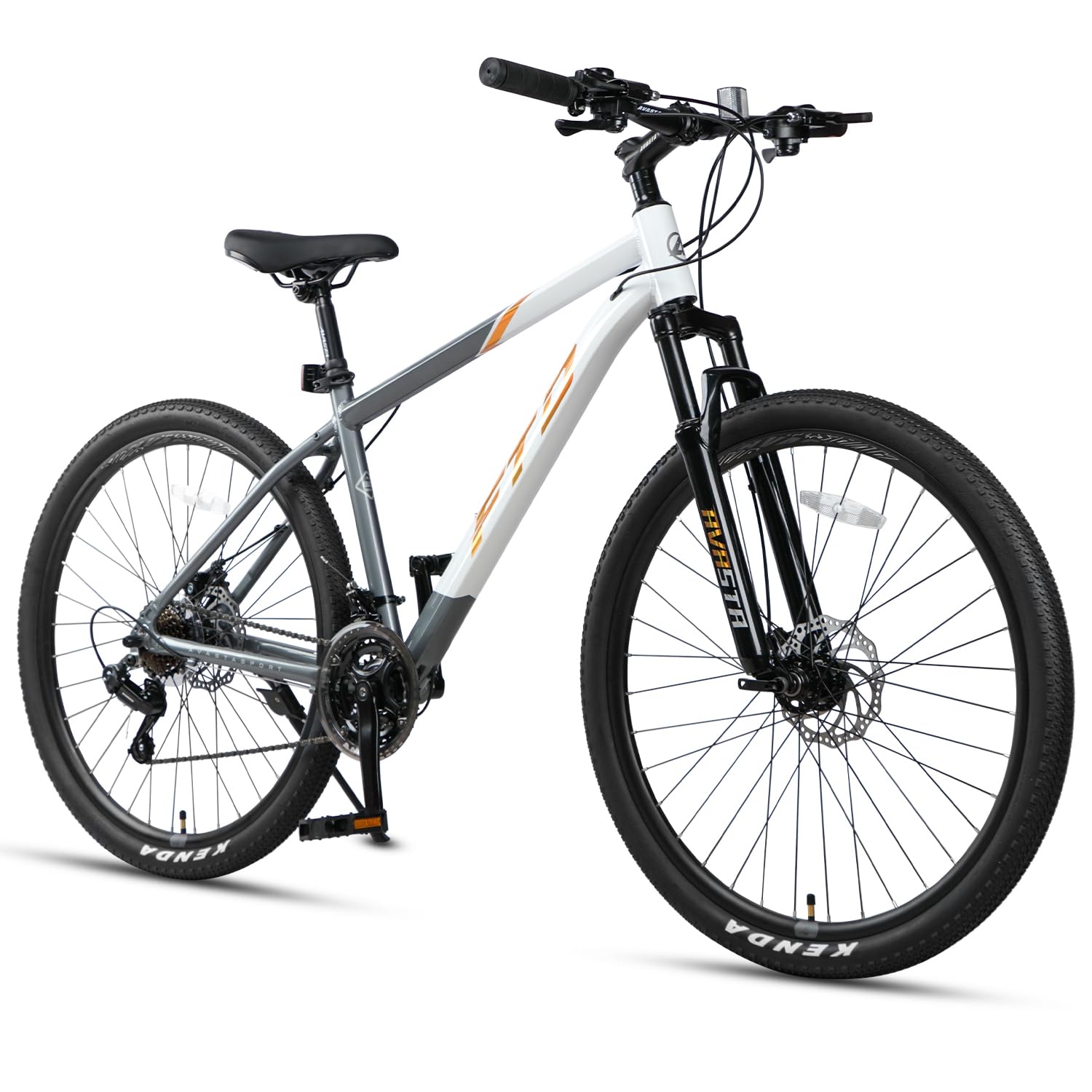
AVASTA Earth 27.5"
Key Features
- Frame Material: Aluminum
- Brake Type: Mechanical Disc
- Suspension: Front w/ lockout
- Drivetrain: 21-speed
- Price: $
The lockout fork on the AVASTA Earth delivers a noticeable climbing advantage on fire roads and gravel climbs – a feature typically reserved for bikes costing more. It trades a few component refinements found on the top pick (like a Shimano drivetrain) for a lower price, making it a smart alternative for budget-conscious riders. Best suited for entry-level trail riders who prioritize climbing efficiency over drivetrain polish, the AVASTA Earth does require a quick inspection out of the box – the chain guard or bolts may need attention, and the assembly illustrations are basic.
Pros
- Switchable suspension fork improves climbing efficiency on varied terrain.
- Aluminum frame keeps weight manageable for a budget hardtail.
- Disc brakes provide consistent stopping power on loose surfaces.
Cons
- Chain guard and bolts may arrive needing adjustment – worth checking before hitting the trail.
- Assembly diagrams are minimal; some steps rely on mechanical intuition.
For entry-level trail riders who want a climbing-efficient hardtail without stretching the budget, the AVASTA Earth is a strong choice – just plan for a quick hardware check out of the box.
Best for Tall Cross-Country Riders
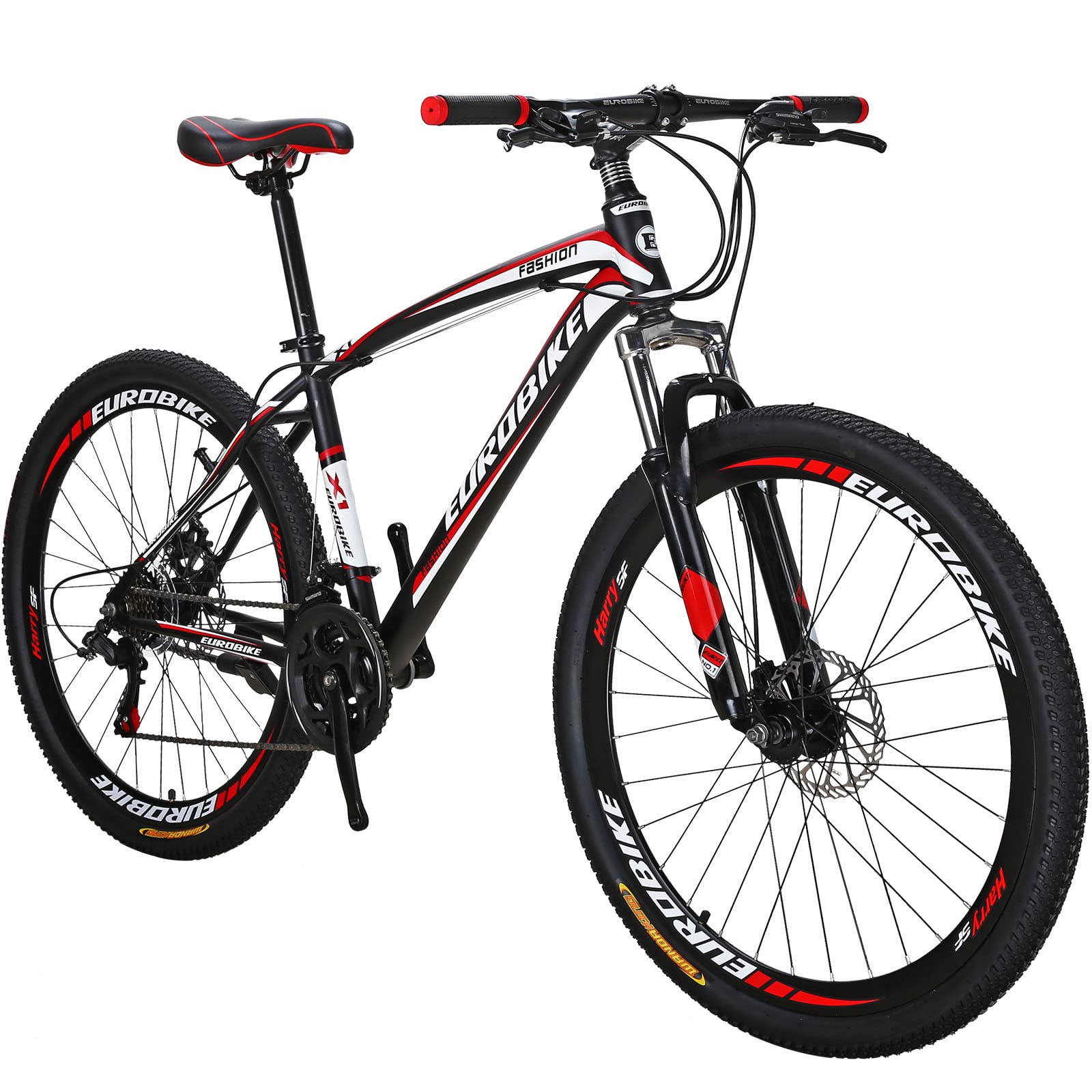
EUROBIKE 29" Aluminum
Key Features
- Frame Material: Aluminum
- Brake Type: Mechanical Disc
- Suspension: Front
- Drivetrain: 21-speed
- Price: $$
The EUROBIKE pairs a lightweight aluminum frame with 29-inch wheels, making it a strong option for tall riders who want less weight than steel-framed competitors. Assembly is straightforward out of the box, and the 21-speed drivetrain handles varied terrain. For riders under 5’8”, the 27.5-inch wheel version provides a better fit.
Pros
- Lightweight aluminum frame with clean appearance.
- Easy assembly and good value for the price.
Cons
- Mechanical disc brakes require more hand effort and periodic adjustment than hydraulic brakes.
Best suited for tall riders on a budget who prioritize a lightweight frame over advanced braking or suspension features.
Best for Intermediate Upgraders
Mongoose Tyax 29"
Key Features
- Frame Material: Aluminum
- Brake Type: Hydraulic Disc
- Suspension: Front 100mm
- Drivetrain: 18-speed
- Price: $$$
The Mongoose Tyax stands apart from the top pick by focusing on frame quality rather than component completeness. The hydroformed aluminum frame, internal cable routing, and hydraulic disc brakes give it a premium feel that competes with brands like Trek or Giant. What you gain in frame sophistication, you give up in initial trail-readiness — the stock coil fork is heavy and basic.
This bike suits intermediate to advanced riders who plan to upgrade components over time. The frame is a strong foundation, but the factory fork and occasional QC issues (bent hanger, frayed cables) mean it’s not ready to hit serious trails straight out of the box. Riders who treat it as a build kit rather than a finished product will get the most value.
Pros
- Hydroformed aluminum frame with internal cable routing delivers a premium feel at this price.
- Lightweight 29-inch wheels and efficient geometry make climbing a strength.
- Frame quality and finish are on par with bikes costing hundreds more.
Cons
- The stock coil fork is heavy and basic — riders seeking responsive trail performance will likely want to upgrade to an air fork.
- Some units arrive with bent derailleur hanger or frayed cables, so a thorough inspection upon delivery is wise.
A frame this well-sorted deserves better components out of the box — it’s a smart buy if you’re willing to invest in a fork upgrade.
Best for Shorter Adults
Royce Union RTT 24"
Key Features
- Frame Material: Aluminum
- Brake Type: V-brakes
- Suspension: Front
- Drivetrain: 21-speed
- Price: $$
The Royce Union RTT is one of the few adult hardtails with 24-inch wheels that actually fit riders between 5’0" and 5’4". The aluminum frame keeps weight manageable, and the drivetrain delivers smooth shifting at a mid-range price. This is not a bike for rocky singletrack—think paved paths, light gravel, and casual commutes where the included front suspension soaks up minor bumps.
Buyers should be aware that the pedals, chain, and rear derailleur have a higher-than-average chance of needing early replacement. That makes this bike best for shorter adults who prioritize fit over trail readiness and are comfortable with a post-purchase tune-up.
Pros
- Good-quality drivetrain for the price
- Attractive aluminum frame and clean appearance
Cons
- No kickstand included – may need to buy separately
- Pedals and drivetrain components may wear early
If you’re a shorter adult looking for a budget-friendly cruiser or commuter that fits, the Royce Union RTT works well—just plan for early component attention.
Best for Heavier Budget Riders
EUROBIKE OBK 27.5"
Key Features
- Frame Material: Steel
- Brake Type: Mechanical Disc
- Suspension: Front
- Drivetrain: 21-speed
- Price: $
The EUROBIKE OBK stands apart from lighter hardtails with its 300-lb rider rating and dual mechanical disc brakes, making it a rare option for heavier riders on a tight budget. Assembly is straightforward, and the steel frame feels sturdy on paved paths and light gravel. That said, the seat is noticeably firm even on short rides, and some owners note drivetrain wear after the first year of regular use. Riders sticking to smooth surfaces and willing to swap the saddle will get decent value here – it’s not meant for technical singletrack or repeated off-road abuse.
Pros
- Supports riders up to 300 lbs – rare at this price.
- Mechanical disc brakes offer more stopping power than rim brakes on wet pavement.
- Assembles in under an hour with basic tools.
Cons
- Saddle padding is insufficient for rides longer than 30 minutes – plan on replacing it.
- Chain and derailleur may require adjustment or replacement during the second year of use.
A passable entry-level commuter for heavier riders on flat pavement, but off-road aspirations should be dialed back – the top pick or a used aluminum hardtail will serve trail use better.
Best for Budget Mechanically Inclined
AVASTA AV300

Key Features
- Frame Material: Aluminum
- Brake Type: Mechanical Disc
- Suspension: Front
- Drivetrain: 21-speed
- Price: $
The AVASTA AV300 delivers an aluminum frame and mechanical disc brakes at a price that undercuts most competitors. The 21-speed shifting handles moderate trails smoothly. However, the lack of a suspension lockout is a tradeoff — the Earth variant from the same brand adds one for minimal extra cost. Some units may need drivetrain adjustments out of the box.
Pros
- Lightweight aluminum frame with responsive mechanical disc brakes
- Smooth 21-speed shifting suitable for moderate trail riding
Cons
- No suspension lockout — noticeable on sustained climbs where a locked fork improves pedaling efficiency
Best for riders on a tight budget who can live without a lockout fork and don’t mind performing basic setup checks.
Best for Casual Trail Riders
Schwinn High Timber

Key Features
- Frame Material: Aluminum
- Brake Type: Mechanical Disc
- Suspension: Front
- Drivetrain: 21-speed
- Price: $$
The Schwinn High Timber offers a smooth ride on fire roads and packed dirt, with an aluminum frame that keeps handling light. The brand is widely recognized. However, component durability is inconsistent — pedal threads and derailleur alignment may need attention after assembly. This bike makes sense for riders who are comfortable with a tune-up.
Pros
- Smooth ride quality on moderate trails
- Lightweight aluminum frame improves handling and climbing
Cons
- Post-assembly adjustments to shifting and brakes are often needed
A reasonable entry for occasional off-road use when you’re willing to invest a little extra time on setup.
Best for Aesthetic Upgraders
Mongoose Switchback Comp

Key Features
- Frame Material: Aluminum
- Brake Type: Mechanical Disc
- Suspension: Front
- Drivetrain: 18-speed
- Price: $$
The Switchback Comp’s aluminum frame and clean finish make a strong visual impression at its mid-range price. But the stock pedals and drivetrain can wear quickly on trails, often requiring replacement within the first few rides. For serious off-road use, the Tyax model offers more durable components without these compromises.
Pros
- Polished aluminum frame with a clean, attractive finish.
- Good component value for the price point.
Cons
- Bike arrives partially assembled and may need a professional tune-up for optimal shifting and braking.
Best suited for riders who want a good-looking foundation bike and plan to upgrade components gradually, rather than those seeking a ready-to-ride trail machine.
Best for Inspection Required
Tommaso Gran Sasso

Key Features
- Frame Material: Aluminum
- Brake Type: Hydraulic Disc
- Suspension: Front
- Price: $$
The Tommaso Gran Sasso delivers hydraulic disc brakes and a well-built aluminum frame at a mid-range price. However, the crank arm can loosen during rides, meaning a thorough bolt check before each ride is necessary. This bike suits riders who are comfortable performing regular inspections and minor adjustments.
Pros
- Well-built aluminum frame provides a solid foundation
- Hydraulic disc brakes offer strong stopping power at this price tier
Cons
- Crank arm can loosen during rides, making pre-ride bolt checks important
A reasonable choice for riders who treat initial assembly as a starting point and are prepared to inspect critical fasteners before each ride.
Best for Mechanically Inclined
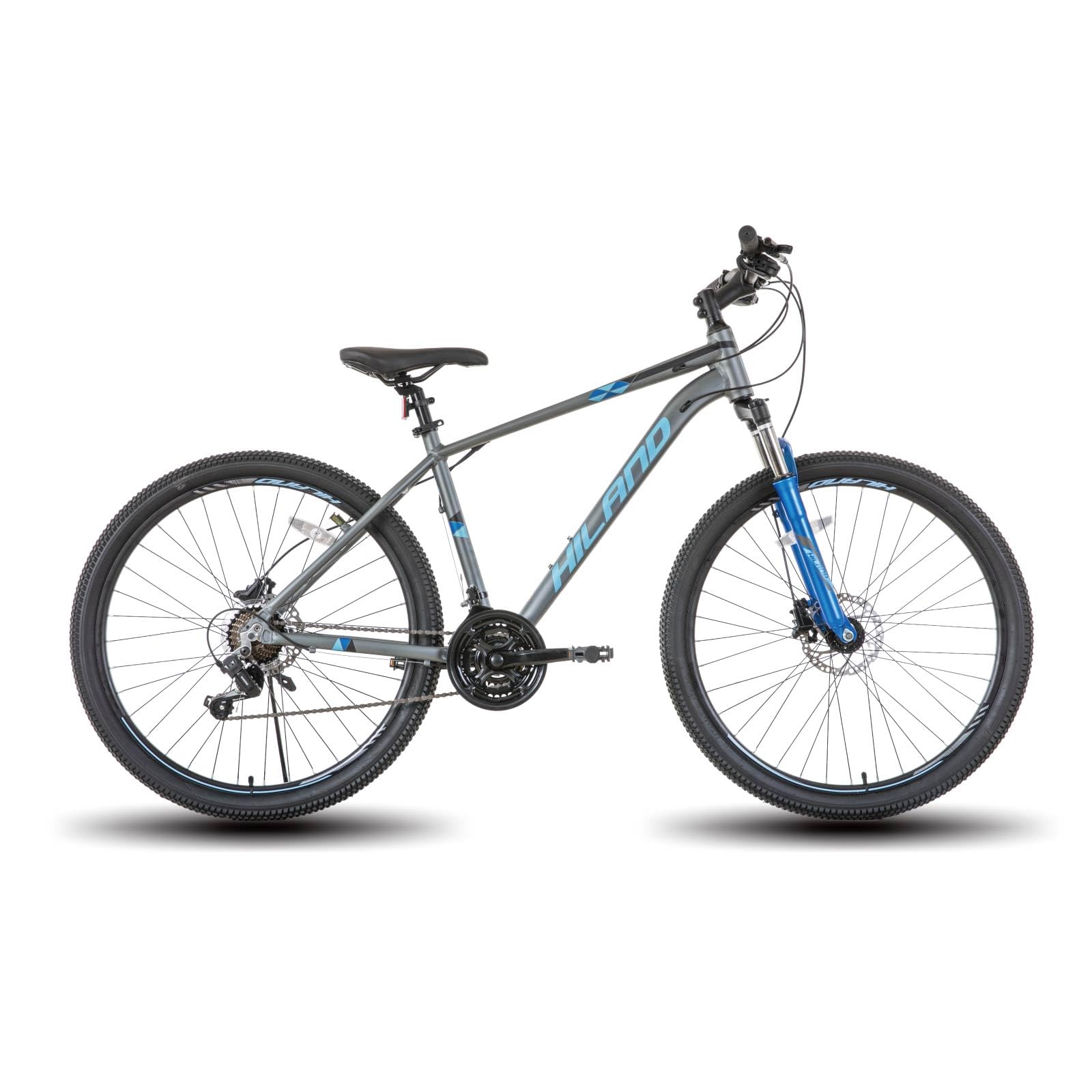
HILAND Alu 27.5"
Key Features
- Frame Material: Aluminum
- Brake Type: Hydraulic Disc
- Suspension: Front w/ lockout
- Drivetrain: 21-speed
- Price: $
At this price, hydraulic brakes and a lockout suspension fork are uncommon — the HILAND offers both in an aluminum frame. The bike looks the part and rides with confidence on initial outings. However, brake line and pedal component durability can vary; occasional gear shifting may need adjustment. These are points to check but not dealbreakers for a buyer comfortable with minor setup work.
Pros
- Hydraulic disc brakes at a price where mechanical discs are typical
- Lockout fork and aluminum frame give a polished, higher-end appearance
Cons
- Brake and pedal components can require early replacement under off-road use
A good fit for mechanically savvy riders who want hydraulic brakes and a lockout fork without spending more, provided they are prepared to address occasional post-purchase adjustments.
Best for Budget Paved Use
HILAND Steel 27.5"

Key Features
- Frame Material: Steel
- Brake Type: V-brakes
- Suspension: Front
- Drivetrain: 21-speed
- Price: $
The HILAND offers the lowest price for a new hardtail, with straightforward assembly and reliable V-brakes for paved roads. However, the steel frame and rim brakes limit its off-road capability — for $80 more, the AVASTA Earth delivers a noticeably better riding experience on trails.
Pros
- Excellent value for money
- Easy assembly with clear instructions
Cons
- Front brake and derailleur durability concerns have been noted in some units.
Ideal for budget shoppers who need a basic bike for pavement and gentle paths; not a trail bike.
How to Choose
The single most important decision for a hardtail mountain bike under $500 is whether the frame is aluminum and the fork has a lockout — these two specs determine how much trail performance you get without frequent repairs.
Frame Material: Steel vs. Aluminum
Aluminum frames are lighter and won’t rust, making them the standard for any bike that will see dirt. Steel frames are heavier and more forgiving when it comes to road vibration, but they add 5-8 pounds to the total weight. That extra weight becomes noticeable on climbs and when you have to lift the bike over obstacles.
A steel frame can be a good choice for flat paved paths or if you carry heavy loads regularly — the added heft actually helps stability. But for any singletrack or hilly terrain, an aluminum frame is worth the $50-100 premium.
Brake Type: Mechanical vs. Hydraulic Disc vs. Rim
Mechanical disc brakes are the most common on budget hardtails. They stop reliably in dry conditions but require more hand strength to modulate than hydraulic discs. Hydraulic disc brakes self-adjust and offer smoother braking with one-finger pull, especially valuable on wet descents. Rim brakes (V-brakes) are lighter and cheaper but lose stopping power when wet and wear down the wheel rims over time.
For any off-road use, choose at least mechanical disc brakes. Hydraulic brakes are a noticeable upgrade for about $100 more — they reduce hand fatigue and perform consistently in mud. If you see rim brakes on a hardtail, consider it a commuter, not a trail bike.
Suspension Fork: Lockout Feature Matters
A front suspension fork absorbs bumps, but without a lockout, it compresses every time you stand to pedal, turning climbing effort into wasted energy. A lockout fork lets you stiffen the fork for climbs or pavement, then open it for descents. On a hardtail, this single feature can make the difference between a bike that feels sluggish on hills and one that rides efficiently.
Many budget bikes (under $300) omit the lockout entirely. If you plan to ride mixed terrain with climbs, prioritize a lockout fork over other features like a slightly better drivetrain. The AVASTA Earth and SPATIAL AIVA are examples that include it at low prices.
Drivetrain: Speed Count and Brand
Most budget hardtails use 21-speed drivetrains (3 front chainrings, 7 rear cogs). This gives a wide gear range but is heavier and more complex than modern 1x systems (single front ring, 8-12 rear cogs). A 1x system is simpler to operate and less prone to chain drops, but it’s rare on bikes under $500.
Shimano and SRAM are the two major brands. Shimano Tourney is entry-level and functional, while Altus or Acera offer slightly better shifting. On a hardtail under $400, any brand-name group is acceptable — the bigger concern is whether the derailleur is properly adjusted out of the box. Budget for a tune-up to get crisp shifts.
FAQ
Why does my cheap mountain bike keep dropping the chain?
Chain drops on budget hardtails usually result from a poorly adjusted front derailleur or a drivetrain that uses a 3x chainring setup without a chain guide. The simplest fix is to adjust the limit screws on the front derailleur, which often come misaligned from the factory. If that doesn’t help, consider a 1x conversion kit — it eliminates the front derailleur and reduces drops significantly.
Can I upgrade the fork on a budget hardtail later?
Yes, but with caveats. The fork must match the head tube diameter (usually 1-1/8 inch straight or tapered) and the wheel size. A quality air fork like a Rockshox Recon costs $250–$400, which often exceeds what you paid for the bike. On a sub-$300 hardtail, the frame and other components may not justify the upgrade. It’s usually smarter to buy a bike that already has a decent fork.
Is a 24-inch wheel mountain bike a good choice for an adult?
Only if you are under 5’5" and cannot find a properly sized 27.5-inch or 29-inch hardtail. 24-inch wheels roll over obstacles less easily and have fewer tire options, but they allow a shorter standover height and a more natural riding position for shorter riders. The Royce Union RTT is one of the few adult hardtails built around 24-inch wheels, and it works well for casual riding. For taller adults, a 27.5-inch bike with a small frame is a better fit.
How important is a lockout suspension fork for climbing?
Extremely important if you ride mixed terrain or hills. A lockout fork prevents the fork from compressing when you put weight on the pedals, converting more energy into forward motion. Without it, the fork bobs on every pedal stroke, reducing efficiency by 10-15% on moderate climbs. If you mainly ride flat, paved paths, a lockout is less critical. But for trail riding, it’s one of the most valuable features under $400.